



Liposome
Liposomes (NPs typically 100–500 nm in diameter) are fabricated from the self-assembly of phospholipids, which consist of a polar phosphate head group and hydrophobic lipid tails. In aqueous environments, the hydrophobic tails self-orient, resulting in a spherical structure comprised of an aqueous core surrounded by a lipophilic bilayer membrane. Liposomes are both biocompatible and biodegradable (e.g., at certain pH and temperature), which can be controlled by modifying the lipid composition. Furthermore, liposomes are amenable to various modifications that improve their efficacy as drug delivery carriers.
All Product Categories
-
Liposome Related Products (1265)
Related Products (1265)

-
Decanoic acid, 2-hexyl-, 6-oxohexyl ester-1
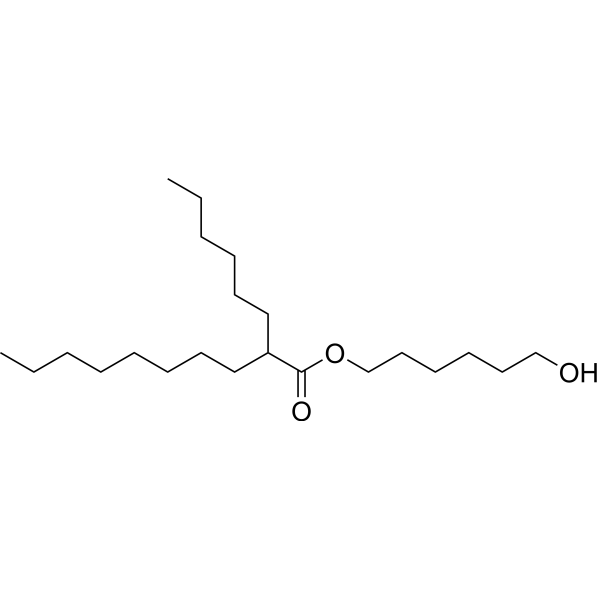 0 ImagesDecanoic acid, 2-hexyl-, 6-oxohexyl ester-1 is a lipid product can be used for drug delivery.
-
DSPE-PEG3400-TAT
 0 ImagesCat. No.: HY-172279CDSPE-PEG3400-TAT is a PEG compound which composed of DSPE (HY-112530) and a cell-penetrating peptide (TAT) (HY-P0281). DSPE-PEG3400-TAT can be used for drug delivery.

-
1-Arachidonoyl-sn-glycerol 3-phosphate ammonium
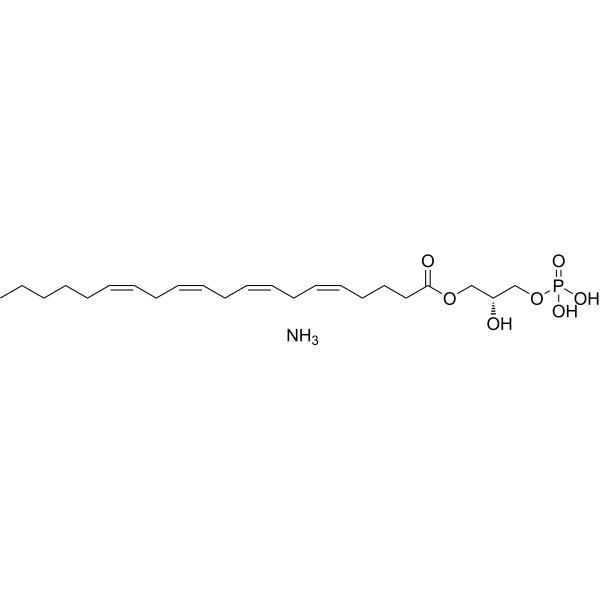 0 ImagesCat. No.: HY-145486CAS No.: 799268-65-8Synonyms: 20:4 Lyso PA1-Arachidonoyl-sn-glycerol 3-phosphate ammonium (20:4 Lyso PA) is a phospholipid and an LPA derived from arachidonic acid. The concentration of 1-Arachidonoyl-sn-glycerol 3-phosphate ammonium in plasma is significantly correlated with the age of onset of cocaine use and the duration of abstinence. 1-Arachidonoyl-sn-glycerol 3-phosphate ammonium can be used in the research of biomarkers for cocaine use disorder (CUD).
-
DSPE-PEG2000-MTP
 0 ImagesCat. No.: HY-182100ADSPE-PEG2000-MTP is a PEG compound which composed of DSPE and a muscle-targeting peptide (MTP). MTP is a muscle-targeting peptide with the property of targeting muscle tissue. DSPE-PEG2000-MTP can be used for drug delivery.
-
DOPE-GA
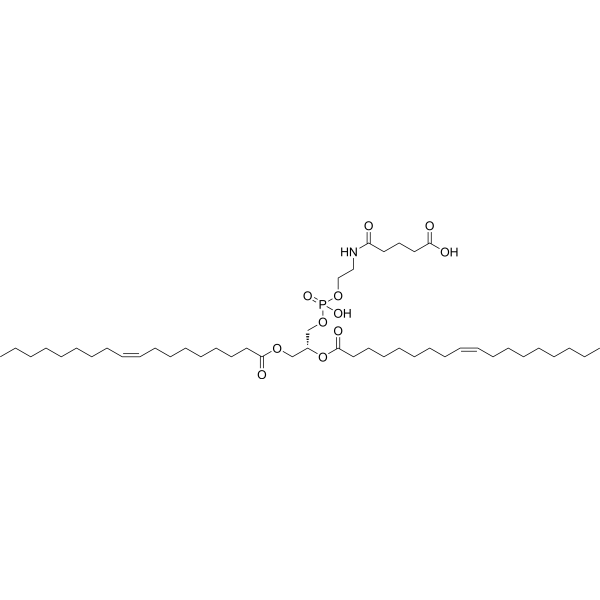 0 ImagesDOPE-GA can be used in the preparation of liposomes for research on drug delivery and other applications.
-
Tetramyristoylcardiolipin diammonium
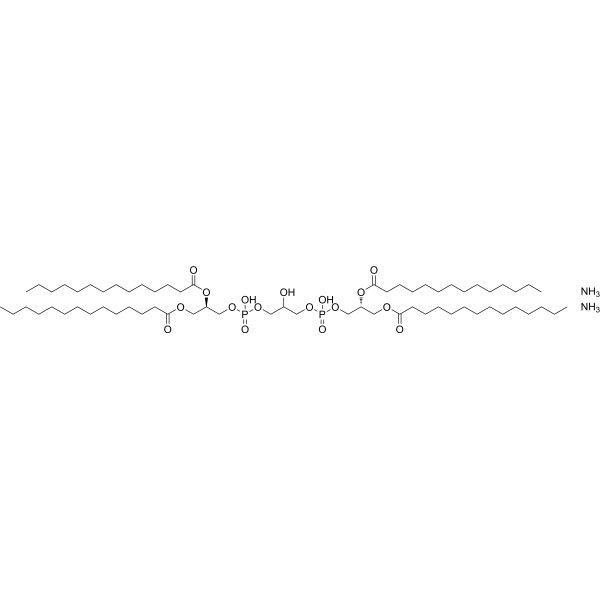 0 ImagesSynonyms: TMCL diammoniumTetramyristoylcardiolipin (TMCL) is an anionic lipid. Tetramyristoylcardiolipin can be used to study cell membrane function and drug delivery.
-
DSPE-PEG2000-NGR
 0 ImagesCat. No.: HY-172473DSPE-PEG2000-NGR is a PEG compound which composed of DSPE and an Asn-Gly-Arg (NGR) peptide. NGR peptide can target tumor vascular antigen CD13. DSPE-PEG2000-NGR can be used for drug delivery.
-
2-Arachidonoyl-sn-glycero-3-phosphocholine
 0 ImagesCat. No.: HY-W587499CAS No.: 67341-29-12-Arachidonoyl-sn-glycero-3-phosphocholine is a phospholipid molecule that is a major component of the plasma membrane. It is a phospholipid molecule that is involved in the regulation of membrane fluidity, signal transduction, cell-cell communication, and mediator of inflammation.
-
1,2-DImyristoyl-rac-glycero-3-phosphocholine
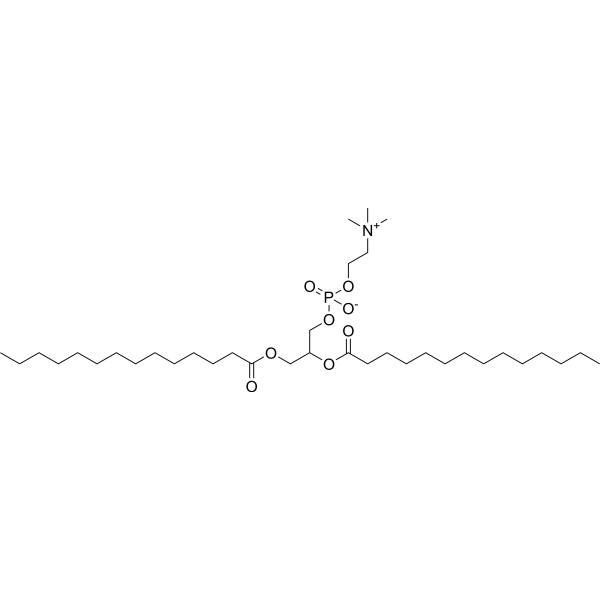 0 Images1,2-DImyristoyl-rac-glycero-3-phosphocholine (DMPC), a zwitterionic phospholipid, is chosen as a simple eukaryotic cell membrane, mimicking the neutral charge of the surface membrane of eukaryotic plasma membranes.
-
DSPE-PEG2000-YIGSR
 0 ImagesCat. No.: HY-172476DSPE-PEG2000-YIGSR is a PEG compound which composed of DSPE and a biomimetic peptide YIGSR. YIGSR interacts with the 67 kDa laminin binding protein (LBP) and promotes adhesion and spreading of a large number of cell types including endothelial cells, fibroblasts and smooth muscle cells. DSPE-PEG2000-YIGSR can be used for drug delivery.
-
C8 PEG750 Ceramide
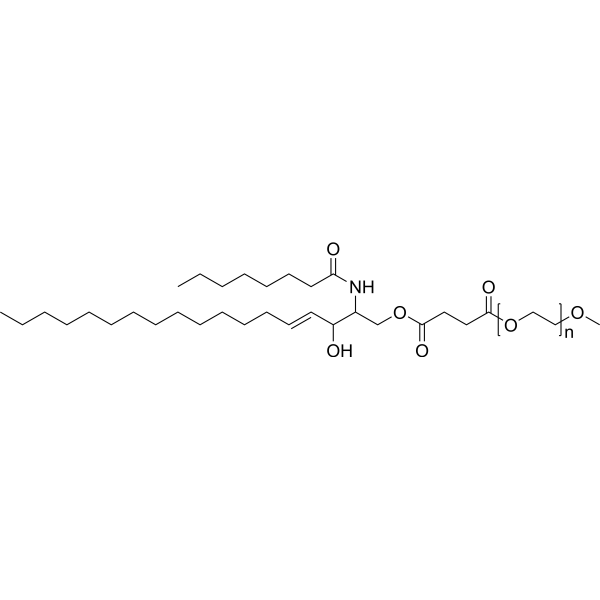 0 ImagesC8 PEG750 Ceramide is a lipid product. C8 PEG750 Ceramide synthesizes a lipid bilayer carrier for the selective delivery of various diagnostic and therapeutic agents to acidic diseased cells.
-
Stearic acid-PEG2000-CH2CO2H
 0 ImagesCat. No.: HY-W440954Stearic acid-PEG2000-CH2CO2H is a heterobifunctional polyPEG with 18-carbon aliphatic chain and carboxyl. The polymer has stearic acid as the hydrophobic tail and PEG as the hydrophilic chain, therefore it forms micelles in water. Carboxyl can react with amine in the presence of activator, such as HATU/EDC to generate a stable amide bond. Reagent grade, for research use only.
-
DSPE-PEG2000-THRPPMWSPVWP
 0 ImagesCat. No.: HY-172690DSPE-PEG2000-THRPPMWSPVWP is a PEG compound which composed of DSPE and a transferrin receptor (TfR) peptide (THRPPMWSPVWP). THRPPMWSPVWP binds to the TfR and is subsequently internalized into TfR-expressing cells.
-
Lipid HTO12
 0 ImagesLipid HTO12 is an ionizable lipid that can be used for the generation of lipid nanoparticles (LNPs). Lipid HTO12 is a carrier for both siRNA and mRNA.
-
Lipopeptide CPK4 TFA
 0 ImagesCat. No.: HY-P11456APurity: 98.92%Lipopeptide CPK4 TFA is a Cholesterol (HY-N0322)-modified peptide K4 [(KIAALKE)3]. Lipopeptide CPK4 TFA is capable of coiled-coil formation when attached to liposomes. Lipopeptide CPK4 TFA triggers membrane fusion between liposomes and living cells with concomitant efficient cytosolic delivery of a variety of compounds such as fluorescent dyes Propidium Iodide (PI) (HY-D0815) and TO-PRO-3 iodide (HY-117070), and Doxorubicin (DOX) (HY-15142A). Lipopeptide CPK4 TFA can be used for drug delivery research.

-
C14-O2
 0 ImagesC14-O2 is an ionizable cationic lipid that can be used to synthesize lipid nanoparticles (LNP) for delivering mRNA and other payloads.
-
Lipid 20b
 0 ImagesLipid 20b is a thiophene ionizable cationic lipid. Lipid 20 b can be used to generate lipid nanoparticles (LNPs) for the delivery of mRNA in vivo. Lipid 20b can be studied in research for enhancing mRNA vaccine delivery and transfection efficacy.
-
DMG-PEG(2k)-DBCO
 0 ImagesDMG-PEG(2k)-DBCO is a Clickable PEG lipid containing a DBCO group. DSPE-PEG8-DBCO can be used to prepare lipid nanoparticles for drug delivery.



