



Vildagliptin-d7
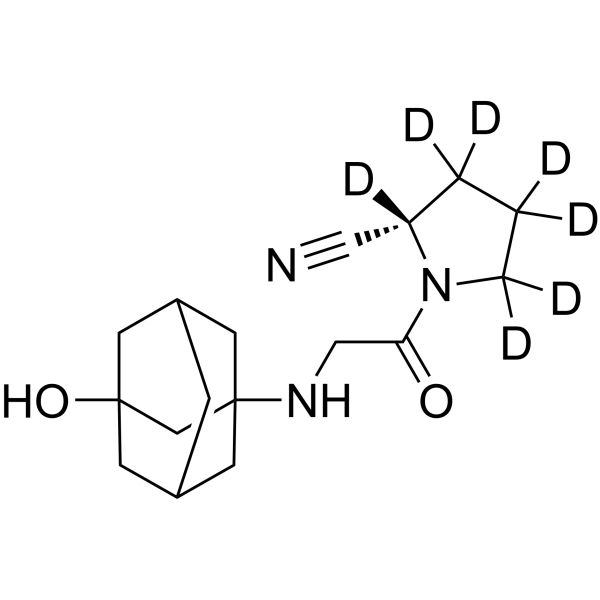
Vildagliptin-d7 is deuterium labeled Vildagliptin. Vildagliptin (LAF237) is a potent, stable, selective dipeptidyl peptidase IV (DPP-IV) inhibitor with an IC50 of 3.5 nM in human Caco-2 cells. Vildagliptin possesses excellent oral bioavailability and potent antihyperglycemic activity.
Nur für Forschungszwecke. Wir verkaufen nicht an Patienten.
- CAS. Nr.: 1133208-42-0
- Formel: C17H18D7N3O2
- Molecular Weight:310.44
-
Speicherung:
Please store the product under the recommended conditions in the Certificate of Analysis.

To place orders, for customer services and technical support, please contact: MedChemExpress USA
Tel: 609-228-6898 E-mail: [email protected] [email protected]


-
 Biologische Aktivität
-
Chemical Information
- Protokoll
- Reinheit & Dokumentation
- Verweise
-
 Help & FAQs


-
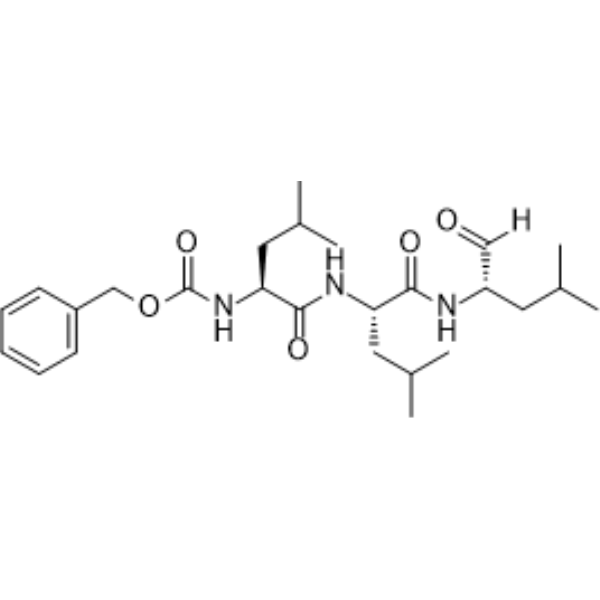
HY-13259
MG-132Proteasome Inhibitor -
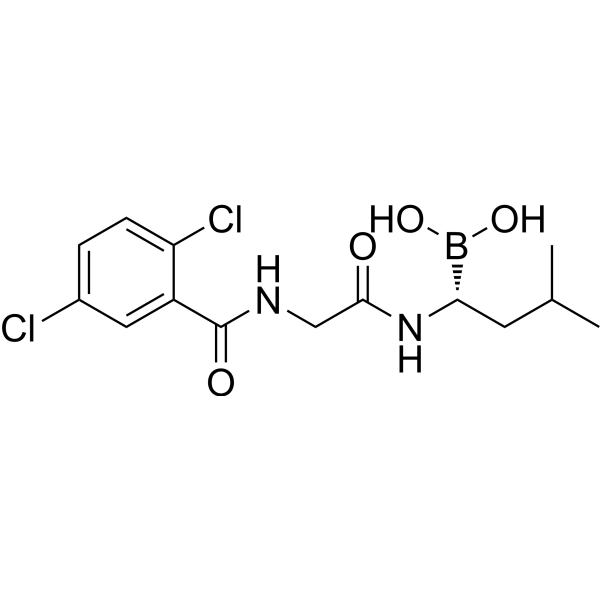
HY-10453
IxazomibProteasome Inhibitor -
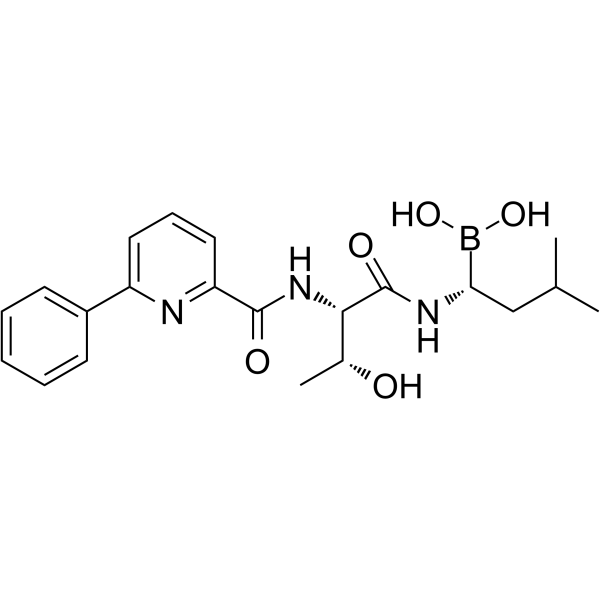
HY-10454
DelanzomibProteasome Inhibitor -
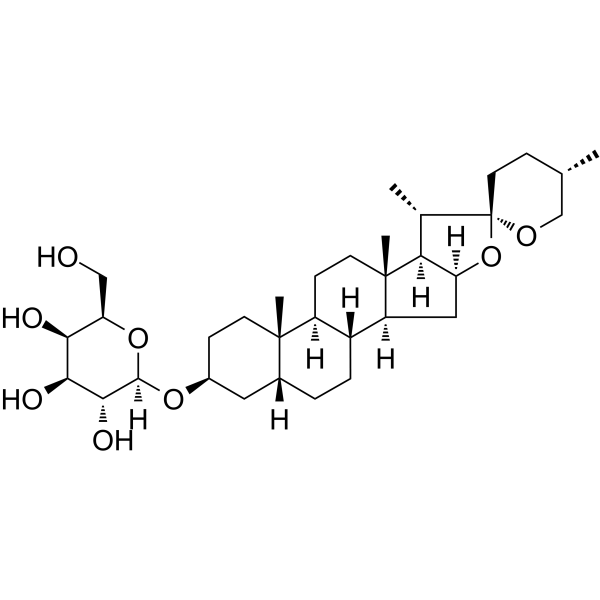
HY-N6079
Timosaponin A15-LO/COX-2/DPP-4 Inhibitor -
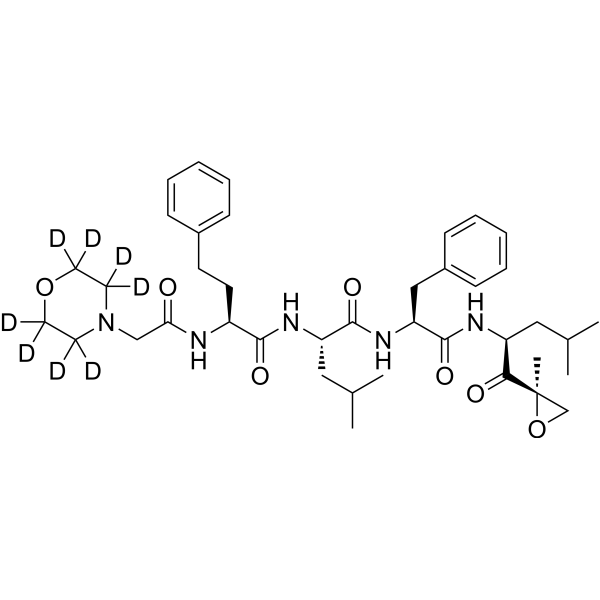
HY-10455S
Carfilzomib-d8Stable Isotope -
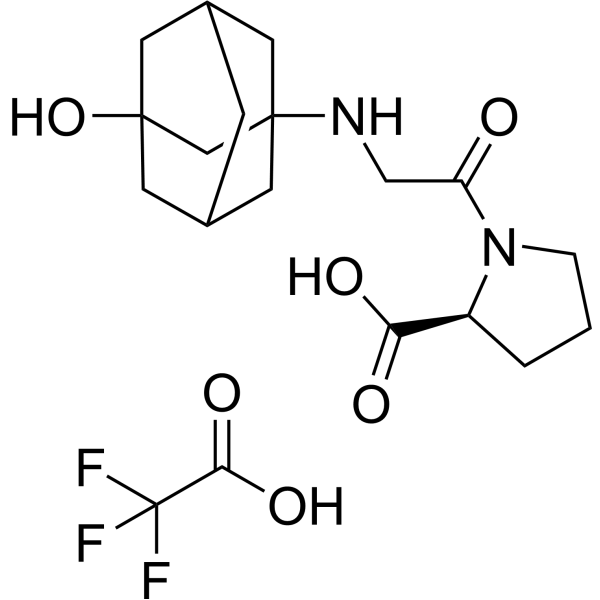
HY-G0024A
Vildagliptin carboxylic acid metabolite TFAP450 Inhibitor -
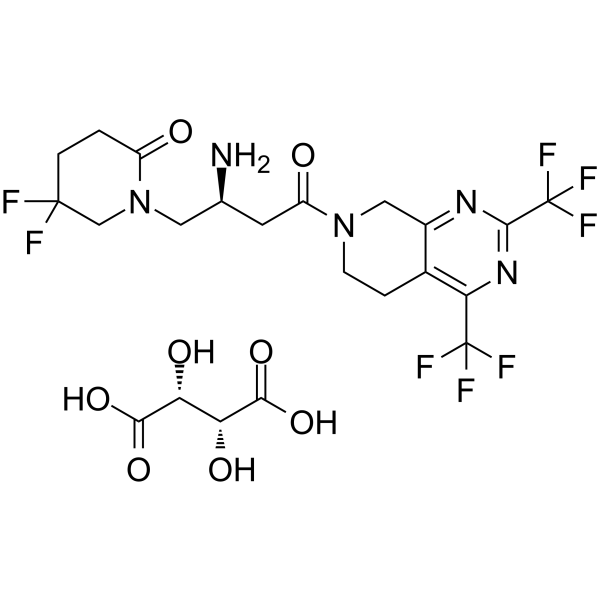
HY-14892A
Gemigliptin tartrateDPP-4 Inhibitor -

HY-13259G
MG-132 (GMP)Proteasome Inhibitor -

HY-10453R
Ixazomib (Standard)Proteasome Inhibitor


Biologische Aktivität
Beschreibung
IC50 & Target
|
DPP-4 |
In Vitro
Stable heavy isotopes of hydrogen, carbon, and other elements have been incorporated into drug molecules, largely as tracers for quantitation during the drug development process. Deuteration has gained attention because of its potential to affect the pharmacokinetic and metabolic profiles of drugs[1].
MedChemExpress (MCE) has not independently confirmed the accuracy of these methods. They are for reference only. Further protocols information, click here.
Anwendung
1. This compound can be used as a tracer
2. This compound can be used as an internal standard for quantitative analysis by NMR, GC-MS, or LC-MS.


Chemical Information
-
CAS. Nr. 1133208-42-0
-
Unlabeled CAS 274901-16-5
-
Molecular Weight 310.44
-
Formel C17H18D7N3O2
-
SMILES
[2H]C1([2H])C([2H])([2H])C([2H])([2H])[C@@]([2H])(C#N)N1C(CNC2(C3)CC4(O)CC3CC(C4)C2)=O
-
Synonyms
LAF237-d7; NVP-LAF 237-d7
-
Versand
Room temperature in continental US; may vary elsewhere.
-
Speicherung
Please store the product under the recommended conditions in the Certificate of Analysis.

Protokoll
-
Cell Cytotoxicity Assay
Cytotoxicity assays are usually based on the assessment of cell membrane damage, which can also be indirectly detected by measuring cell viability. Detection methods include MTT assay, CKK-8 assay, LDH assay and ATP assay, etc.
-
Protocol for Pharmacokinetic Study
Pharmacokinetic studies quantify how an organism handles a drug over time through absorption, distribution, metabolism, and excretion, and the core experimental readout is the concentration-time profile of parent drug and, when relevant, metabolites in biological matrices such as plasma, whole blood, urine, bile, or tissue. Pharmacokinetic analysis links dose, route, exposure, clearance, half-life, distribution, bioavailability, and systemic exposure to drug efficacy and toxicity hypotheses rather than measuring a signaling pathway directly. The literature links pharmacokinetics to drug-development phenotypes by showing that drug metabolism and pharmacokinetics influence compound progression, exposure-response interpretation, safety margins, dosing strategy, and failure risk during discovery and development. DMPK science contributes to compound optimization by integrating physicochemical properties, in vitro metabolism, transporter behavior, in vivo exposure, and pharmacodynamic contex


Reinheit & Dokumentation
Verweise
[1]. Russak EM, et al. Impact of Deuterium Substitution on the Pharmacokinetics of Pharmaceuticals. Ann Pharmacother. 2019;53(2):211-216. [Content Brief]
[2]. Villhauer EB, et al. 1-[[(3-hydroxy-1-adamantyl)amino]acetyl]-2-cyano-(S)-pyrrolidine: a potent, selective, and orally bioavailable dipeptidyl peptidase IV inhibitor with antihyperglycemic properties. J Med Chem. 2003 Jun 19;46(13):2774-89. [Content Brief]
[3]. Wu YJ, et al. Dipeptidyl peptidase-4 inhibitor, vildagliptin, inhibits pancreatic beta cell apoptosis in associationwith its effects suppressing endoplasmic reticulum stress in db/db mice. Metabolism. 2015 Feb;64(2):226-35. [Content Brief]

Calculators
Konzentration (Stammlösung) × Volumen (Stammlösung) = Konzentration (Ziellösung) × Volumen (Ziellösung)


Vildagliptin-d7 Related Classifications
HY-14291S1 Related Classifications
 Powered by Bioz