



Ginsenoside Rh2
Based on 6 publication(s) in Google Scholar
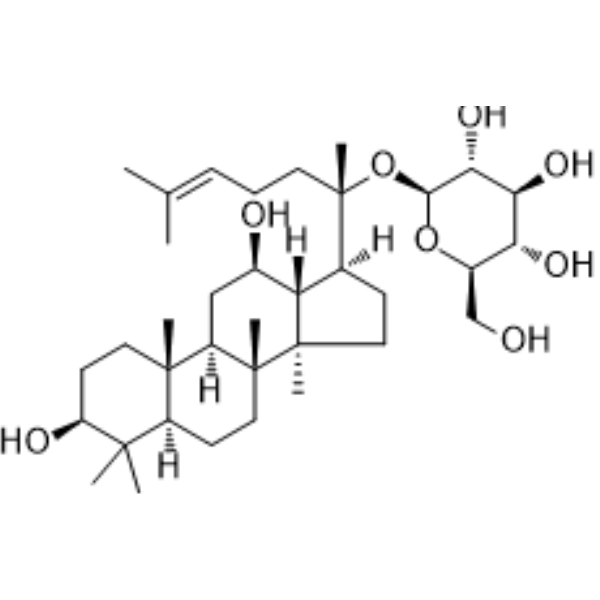
Ginsenoside Rh2 (20(S)-Ginsenoside Rh2) induces the activation of caspase-8 and caspase-9. Ginsenoside Rh2 induces cancer cell apoptosis in a multi-path manner.
Nos produits utilisent uniquement pour la recherche. Nous ne vendons pas aux patients.
- Pureté : 99.28%
- CAS No.: 78214-33-2
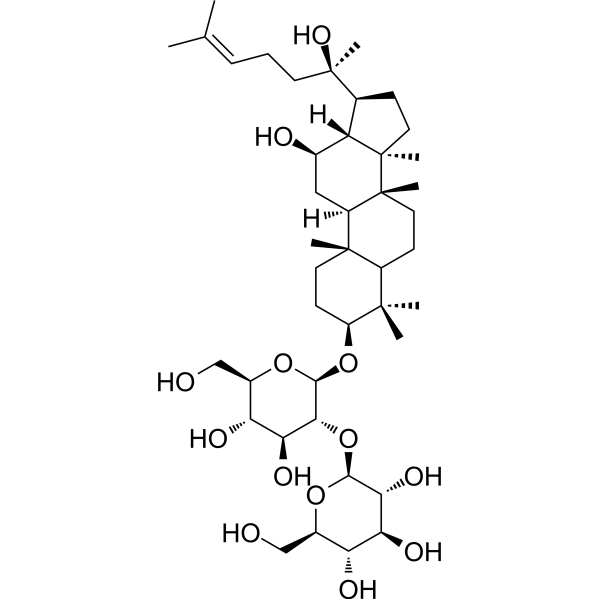
- Formule: C36H62O8
- Masse moléculaire:622.87
-
Stockage:Powder -20°C, 3 years , 4°C, 2 years ; In solvent -80°C, 6 months , -20°C, 1 month

To place orders, for customer services and technical support, please contact: MedChemExpress USA
Tel: 609-228-6898 E-mail: [email protected] [email protected]


-
 Activité biologique
-
Chemical Information
-
Solvant et solubilité
- Protocole
- Pureté et documentation
- Références
-
 Help & FAQs


-
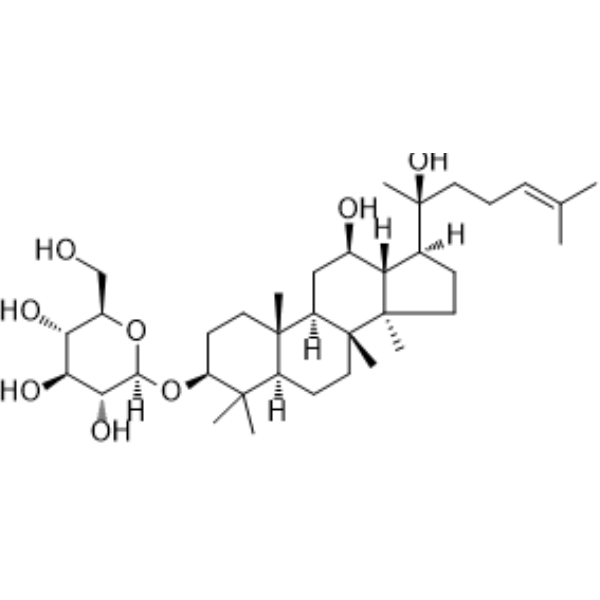
HY-N0603
20(S)-Ginsenoside Rg3Sodium Channel Inhibitor -
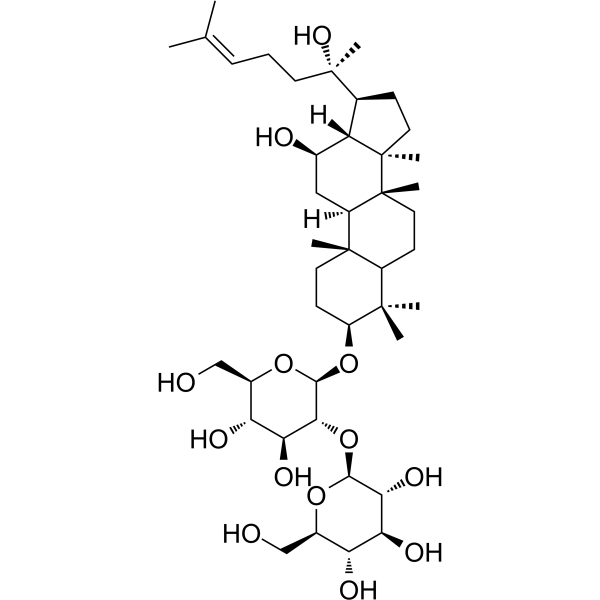
HY-N0039
Ginsenoside Rb1Autophagy Inducer -
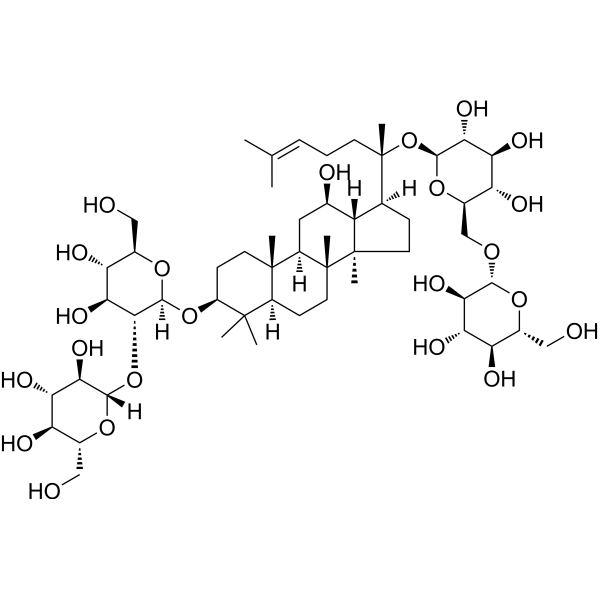
HY-N0904
Ginsenoside C-KNO Synthase/COX Inhibitor -
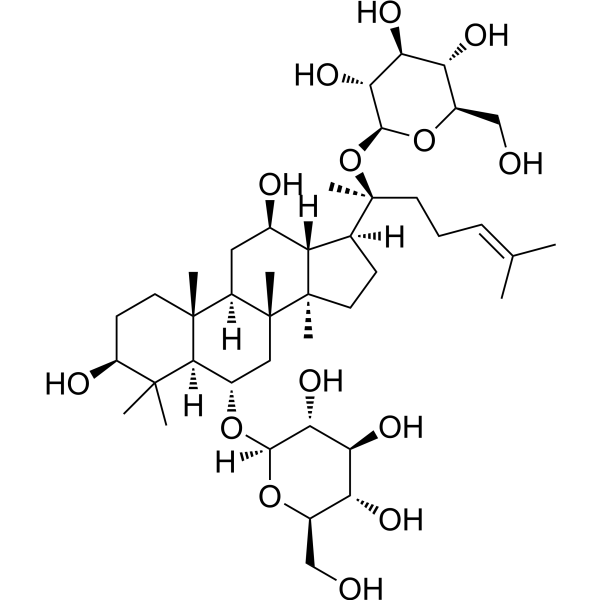
HY-N0045
Ginsenoside Rg1Apoptosis Inducer -
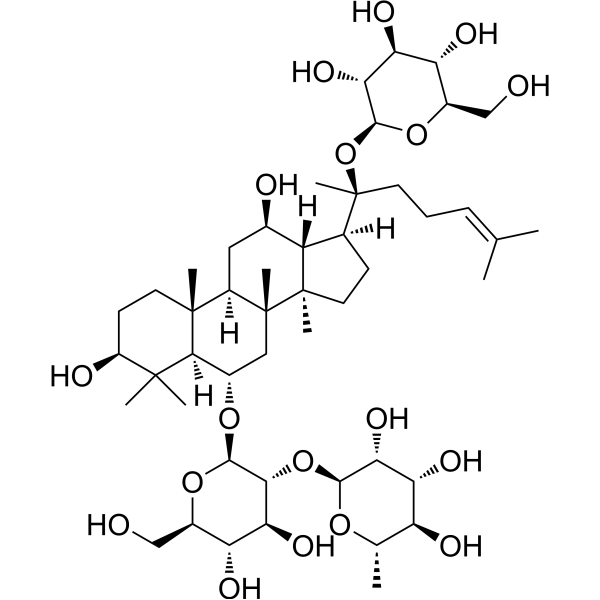
HY-N0044
Ginsenoside ReEndogenous Metabolite -
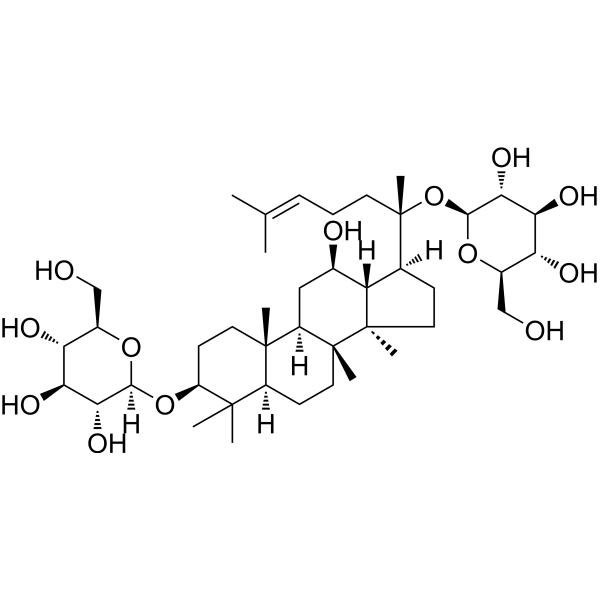
HY-125848
Ginsenoside F2Metabolic and Inflammatory Regulator -
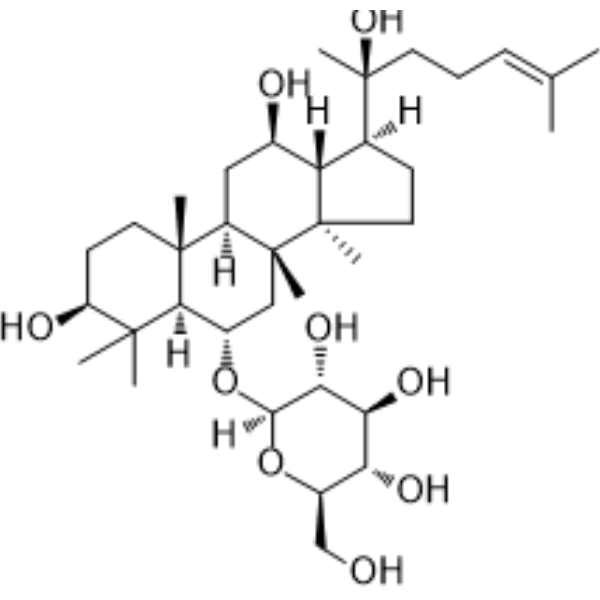
HY-N0604
Ginsenoside Rh1Endogenous Metabolite -
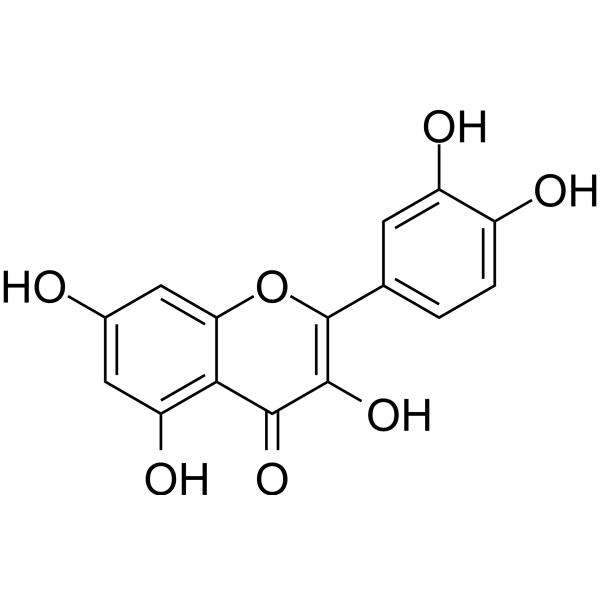
HY-18085
QuercetinFlavonoid Antioxidant -
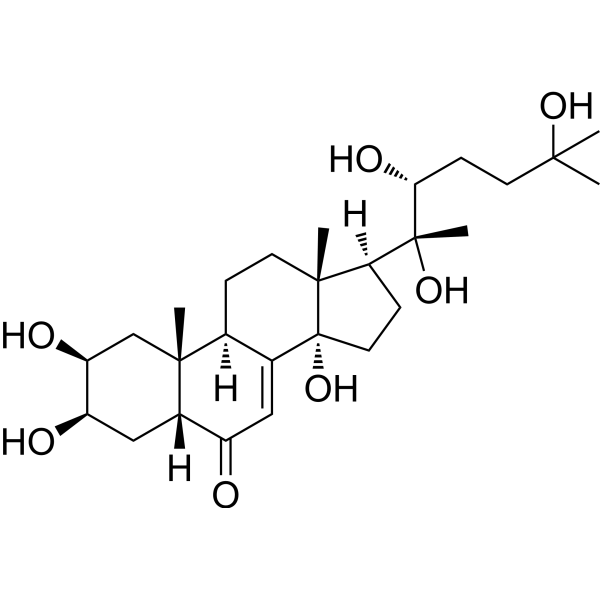
HY-N6979
CrustecdysoneCaspase Inhibitor -
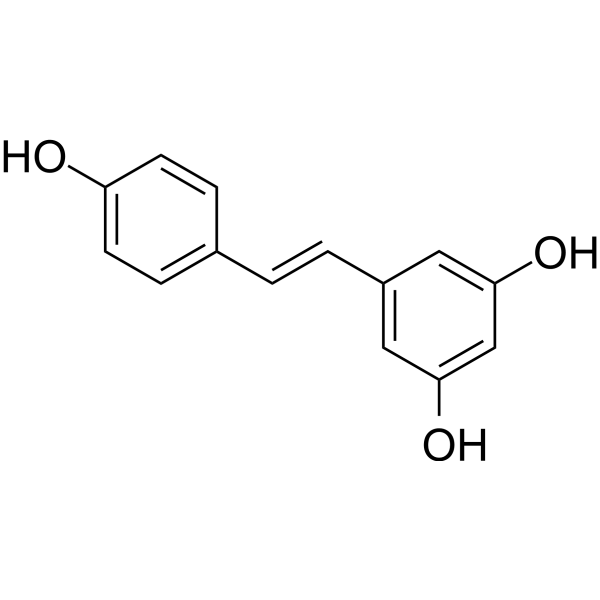
HY-16561
ResveratrolPolyphenolic Phytoalexin -
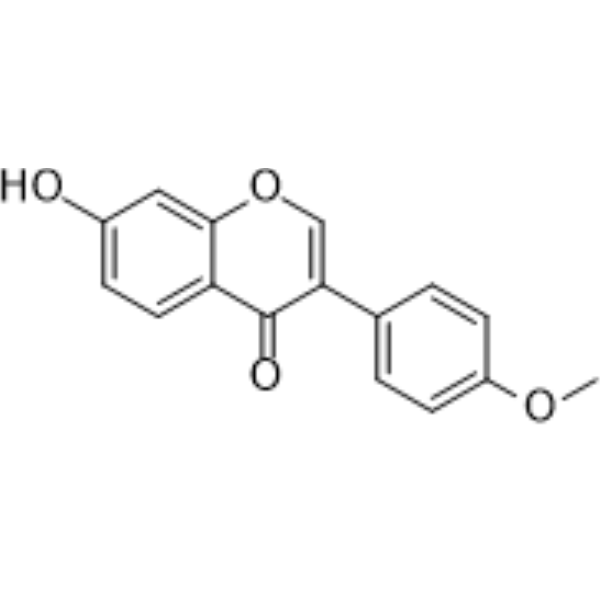
HY-N0183
FormononetinFGFR2 Inhibitor -
HY-N1376
(20R)-Ginsenoside Rg3Anticancer Agent
Publications Citing Use of MedChemExpress (MCE) Ginsenoside Rh2
More Customer Validation & Images

-
Flow Cytometry
-
RT-PCR
-
WB
Voir tous les produits spécifiques à Isoform Caspase
MoreVoir tous les produits spécifiques à Isoform Endogenous Metabolite
More

Activité biologique
Description
IC50 & Target
[1]|
Caspase-8 |
Caspase-9 |
Apoptosis |
Cellular Effect
|
Cell Line

|
Type | Value | Description | References |
|---|---|---|---|---|
| A549 | IC50 |
28.5 mg/L
Compound: Rh2
|
Antiproliferative activity against human A549 cells
Antiproliferative activity against human A549 cells
|
[PMID: 32702586] |
| B16 | IC50 |
4.1 μg/mL
Compound: Rh2
|
Growth inhibition of mouse B16 cells
Growth inhibition of mouse B16 cells
|
[PMID: 32702586] |
| B16-F10 | IC50 |
35.6 μM
Compound: Rh2
|
Induction of cell death in mouse B16-F10 cells
Induction of cell death in mouse B16-F10 cells
|
[PMID: 32702586] |
| DU-145 | IC50 |
38 μM
Compound: Rh2
|
Antiproliferative activity against human DU-145 cells incubated for 3 days
Antiproliferative activity against human DU-145 cells incubated for 3 days
|
[PMID: 32702586] |
| HCT-116 | IC50 |
19.6 μM
Compound: Rh2
|
Cytotoxicity against human HCT-116 assessed as reduction in cell viability by MTT assay
Cytotoxicity against human HCT-116 assessed as reduction in cell viability by MTT assay
|
[PMID: 32702586] |
| HCT-116 | IC50 |
35 μM
Compound: Rh2
|
Induction of cell death in human HCT-116 cells incubated for 48 hrs by trypan blue staining based analysis
Induction of cell death in human HCT-116 cells incubated for 48 hrs by trypan blue staining based analysis
|
[PMID: 32702586] |
| HeLa | IC50 |
2.52 μg/mL
Compound: Rh2
|
Induction of apoptosis in human HeLa cells incubated for 2 hrs by fluorescence microscopic analysis
Induction of apoptosis in human HeLa cells incubated for 2 hrs by fluorescence microscopic analysis
|
[PMID: 32702586] |
| HepG2 | IC50 |
1.648 μg/mL
Compound: Rh2
|
Induction of apoptosis in human HepG2 cells incubated for 72 hrs
Induction of apoptosis in human HepG2 cells incubated for 72 hrs
|
[PMID: 32702586] |
| HepG2 | IC50 |
100 μM
Compound: Rh2
|
Induction of apoptosis in human HepG2 cells incubated for 48 hrs by PI/Annexin V-FITC analysis
Induction of apoptosis in human HepG2 cells incubated for 48 hrs by PI/Annexin V-FITC analysis
|
[PMID: 32702586] |
| HepG2 | IC50 |
129.2 μM
Compound: Rh2
|
Induction of apoptosis in human HepG2 beta-catenin cells incubated for 48 hrs by PI/Annexin V-FITC analysis
Induction of apoptosis in human HepG2 beta-catenin cells incubated for 48 hrs by PI/Annexin V-FITC analysis
|
[PMID: 32702586] |
| HepG2 | IC50 |
42.12 μM
Compound: Rh2
|
Induction of apoptosis in human HepG2 cells incubated for 24 hrs
Induction of apoptosis in human HepG2 cells incubated for 24 hrs
|
[PMID: 32702586] |
| HepG2 | IC50 |
58.12 μM
Compound: Rh2
|
Induction of apoptosis in human HepG2 cells incubated for 72 hrs by PI/Annexin V-FITC analysis
Induction of apoptosis in human HepG2 cells incubated for 72 hrs by PI/Annexin V-FITC analysis
|
[PMID: 32702586] |
| HepG2 | IC50 |
83.33 μM
Compound: Rh2
|
Induction of apoptosis in human HepG2 beta-catenin cells incubated for 72 hrs by PI/Annexin V-FITC analysis
Induction of apoptosis in human HepG2 beta-catenin cells incubated for 72 hrs by PI/Annexin V-FITC analysis
|
[PMID: 32702586] |
| HL-60 | IC50 |
25 μM
Compound: Rh2
|
Induction of apoptosis in human HL-60 cells
Induction of apoptosis in human HL-60 cells
|
[PMID: 32702586] |
| HL-60 | IC50 |
25.59 μM
Compound: Rh2
|
Induction of apoptosis in human HL-60 cells assessed as reduction in cell viability incubated for 72 hrs by CCK-8 assay
Induction of apoptosis in human HL-60 cells assessed as reduction in cell viability incubated for 72 hrs by CCK-8 assay
|
[PMID: 32702586] |
| HL-60 | IC50 |
38 μM
Compound: Rh2
|
Cytotoxicity against human HL-60 cells measured after 24 hrs by MTT assay
Cytotoxicity against human HL-60 cells measured after 24 hrs by MTT assay
|
[PMID: 32702586] |
| Huh-7 | IC50 |
39 μM
Compound: Rh2
|
Induction of cell death in human Huh-7 cells
Induction of cell death in human Huh-7 cells
|
[PMID: 32702586] |
| Jurkat | IC50 |
35 μM
Compound: Rh2
|
Induction of apoptosis in human Jurkat cells
Induction of apoptosis in human Jurkat cells
|
[PMID: 32702586] |
| Jurkat | IC50 |
35 μM
Compound: Rh2
|
Inhibition of proliferation in human Jurkat cells assessed as reduction in cell viability incubated for 48 hrs by CCK-8 assay
Inhibition of proliferation in human Jurkat cells assessed as reduction in cell viability incubated for 48 hrs by CCK-8 assay
|
[PMID: 32702586] |
| K562 | IC50 |
60 μM
Compound: Rh2
|
Cytotoxicity against human K562 cells incubated for 48 hrs by CCK-8 assay
Cytotoxicity against human K562 cells incubated for 48 hrs by CCK-8 assay
|
[PMID: 32702586] |
| Kasumi 1 | IC50 |
60.06 μM
Compound: Rh2
|
Induction of apoptosis in human Kasumi 1 cells assessed as reduction in cell viability incubated for 72 hrs by CCK-8 assay
Induction of apoptosis in human Kasumi 1 cells assessed as reduction in cell viability incubated for 72 hrs by CCK-8 assay
|
[PMID: 32702586] |
| KG-1 | IC50 |
60 μM
Compound: Rh2
|
Cytotoxicity against human KG-1 alpha cells incubated for 48 hrs by CCK-8 assay
Cytotoxicity against human KG-1 alpha cells incubated for 48 hrs by CCK-8 assay
|
[PMID: 32702586] |
| KG-1 | IC50 |
75 μM
Compound: Rh2
|
Cytotoxicity against human KG-1 alpha cells
Cytotoxicity against human KG-1 alpha cells
|
[PMID: 32702586] |
| LNCaP | EC50 |
4.4 μM
Compound: Rh2
|
Antiproliferative activity against human LNCaP cells
Antiproliferative activity against human LNCaP cells
|
[PMID: 32702586] |
| LNCaP | IC50 |
17 μM
Compound: Rh2
|
Antiproliferative activity against human LNCaP cells incubated for 3 days
Antiproliferative activity against human LNCaP cells incubated for 3 days
|
[PMID: 32702586] |
| MCF7 | EC50 |
52.53 μM
Compound: Rh2
|
Antiproliferative activity against human MCF7 cells
Antiproliferative activity against human MCF7 cells
|
[PMID: 32702586] |
| MCF7 | IC50 |
50 μM
Compound: Rh2
|
Induction of apoptosis in human MCF7 cells assessed as inhibition of cell viability
Induction of apoptosis in human MCF7 cells assessed as inhibition of cell viability
|
[PMID: 32702586] |
| MDA-MB-231 | EC50 |
57.35 μM
Compound: Rh2
|
Antiproliferative activity against human MDA-MB-231 cells
Antiproliferative activity against human MDA-MB-231 cells
|
[PMID: 32702586] |
| MDA-MB-231 | IC50 |
39.9 μM
Compound: Rh2
|
Induction of cell death in human MDA-MB-231 cells
Induction of cell death in human MDA-MB-231 cells
|
[PMID: 32702586] |
| MDA-MB-231 | IC50 |
50 μM
Compound: Rh2
|
Induction of apoptosis in human MDA-MB-231 cells assessed as inhibition of cell viability
Induction of apoptosis in human MDA-MB-231 cells assessed as inhibition of cell viability
|
[PMID: 32702586] |
| PC-3 | EC50 |
5.5 μM
Compound: Rh2
|
Antiproliferative activity against human PC-3 cells
Antiproliferative activity against human PC-3 cells
|
[PMID: 32702586] |
| PC-3 | IC50 |
35 μM
Compound: Rh2
|
Antiproliferative activity against human PC-3 cells incubated for 3 days
Antiproliferative activity against human PC-3 cells incubated for 3 days
|
[PMID: 32702586] |
| REH | IC50 |
40 μM
Compound: Rh2
|
Induction of apoptosis in human REH cells
Induction of apoptosis in human REH cells
|
[PMID: 32702586] |
| SK-HEP1 | IC50 |
3.15 μg/mL
Compound: Rh2
|
Induction of apoptosis in human SK-HEP1 cells incubated for 2 hrs by fluorescence microscopic analysis
Induction of apoptosis in human SK-HEP1 cells incubated for 2 hrs by fluorescence microscopic analysis
|
[PMID: 32702586] |
| SW480 | IC50 |
35 μM
Compound: Rh2
|
Induction of cell death in human SW480 cells incubated for 48 hrs by trypan blue staining based analysis
Induction of cell death in human SW480 cells incubated for 48 hrs by trypan blue staining based analysis
|
[PMID: 32702586] |
| SW480 | IC50 |
4.06 μg/mL
Compound: Rh2
|
Induction of apoptosis in human SW480 cells incubated for 2 hrs by fluorescence microscopic analysis
Induction of apoptosis in human SW480 cells incubated for 2 hrs by fluorescence microscopic analysis
|
[PMID: 32702586] |
| THP-1 | IC50 |
15 μg/mL
Compound: Rh2
|
Induction of apoptosis in human THP-1 cells
Induction of apoptosis in human THP-1 cells
|
[PMID: 32702586] |
| U-937 | IC50 |
38 μM
Compound: Rh2
|
Cytotoxicity against human U-937 cells measured after 24 hrs by MTT assay
Cytotoxicity against human U-937 cells measured after 24 hrs by MTT assay
|
[PMID: 32702586] |
In Vitro
Ginsenoside Rh2 induces the activation of two initiator caspases, caspase-8 and caspase-9 in human cancer cells. Ginsenoside Rh2 induces cancer cell apoptosis in a multi-path manner and is therefore a promising candidate for anti-tumor drug development. Ginsenoside Rh2 triggers p53-dependent Fas expression and consequent activation of caspase-8 and p53-independent caspase-9-mediated intrinsic pathway to cause cancer cell death.The cytotoxic activity of Ginsenoside Rh2 in the human tumor cell lines HeLa, SK-HEP-1, SW480, and PC-3 is assessed by MTT. The cell viability of HeLa cells is remarkably inhibited by Ginsenoside Rh2, with an IC50 value of 2.52 μg/mL, whereas SK-HEP-1 and SW480 cells are less sensitive to Ginsenoside Rh2, with IC50 values of 3.15 μg/mL and 4.06 μg/mL, respectively. PC-3 cells are the least vulnerable to Ginsenoside Rh2, with an IC50 value of 7.85 μg/mL, 3-fold higher than HeLa cells[1].
MedChemExpress (MCE) has not independently confirmed the accuracy of these methods. They are for reference only.
In Vivo
MedChemExpress (MCE) has not independently confirmed the accuracy of these methods. They are for reference only.


Chemical Information
-
CAS No. 78214-33-2
-
Appearance Solid
-
Masse moléculaire 622.87
-
Formule C36H62O8
-
Color White to off-white
-
SMILES
C[C@]([C@@](C[C@H]1O)([H])[C@]2(CC[C@@H]3O[C@]([C@@H]([C@@H](O)[C@@H]4O)O)([H])O[C@@H]4CO)C)(CC[C@@]2([H])C3(C)C)[C@]5([C@@]1([H])[C@]([C@@](C)(O)CC/C=C(C)/C)([H])CC5)C
-
Synonyms
20(S)-Ginsenoside Rh2; 20(S)-Rh2
-
Structure Classification
-
Livraison
Room temperature in continental US; may vary elsewhere.
-
Stockage
Powder -20°C 3 years 4°C 2 years In solvent -80°C 6 months -20°C 1 month


Publications (6)
-
Journal Impact Factor
-
Most Recent
-
Pharmacol Res
Cardamonin retards progression of autosomal dominant polycystic kidney disease via inhibiting renal cyst growth and interstitial fibrosis. [Abstract]2020 May:155:104751. PMID: 32151678 -
-
J Ginseng Res
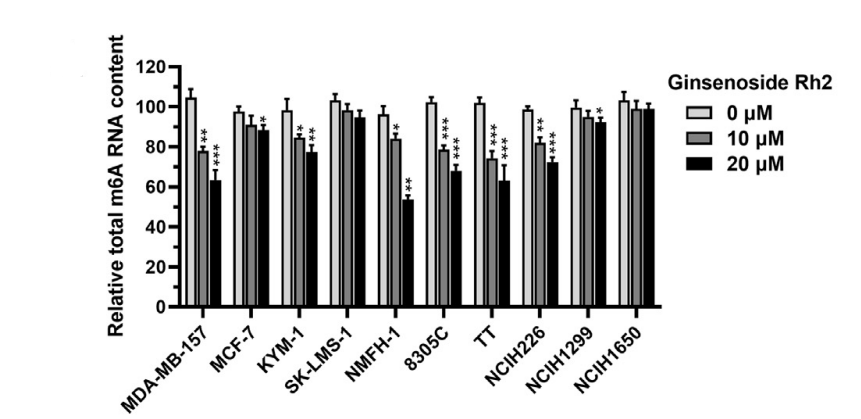
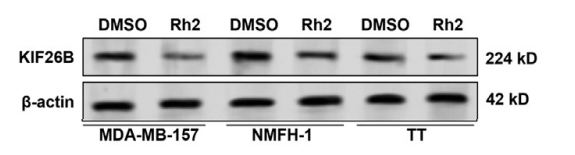
Ginsenoside Rh2 reduces m6A RNA methylation in cancer via the KIF26B-SRF positive feedback loop. [Abstract]2021 Nov;45(6):734-743. PMID: 34764728
Ginsenoside Rh2 purchased from MedChemExpress. Usage Cited in: J Ginseng Res. 2021 Nov;45(6):734-743. [Abstract]
mRNA m6A content in Ginsenoside Rh2 treated (10 or 20 nM, 24 h) cancer cell lines.
Ginsenoside Rh2 purchased from MedChemExpress. Usage Cited in: J Ginseng Res. 2021 Nov;45(6):734-743. [Abstract]
Basal expression of KIF26B protein in three selected cancer cell lines (MDA-MB-157, NMFH-1 and TT) after treatment with Ginsenoside Rh2 (20 nM, 24 h).
-
-
Food Sci Biotechnol
Fermented red ginseng extract improves sarcopenia-related muscle atrophy in old mice through regulation of muscle protein metabolism. [Abstract]2024 Sep 23;34(3):793-802. PMID: 39958181 -
Viruses
Death Receptor DR5 as a Proviral Factor for Viral Entry and Replication of Coronavirus PEDV. [Abstract]2022 Dec 6;14(12):2724. PMID: 36560727
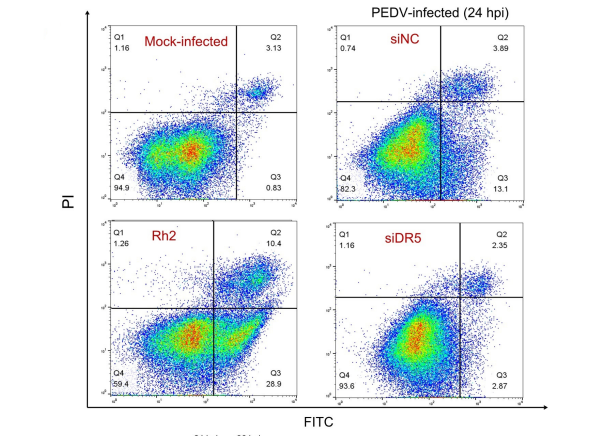
Ginsenoside Rh2 purchased from MedChemExpress. Usage Cited in: Viruses. 2022 Dec 6;14(12):2724. [Abstract]
Apoptosis was analyzed by Annexin V-PI double-labeling flow cytometry. Vero cells were transfected with siDR5 or siNC for 24 hours, followed by sham infection or infection with PEDV at a MOI of 0.1%. 24 hours post-infection, cells were collected, double-labeled with Annexin V and PI, and analyzed by flow cytometry. As a positive control, cells were pretreated with 100 μM Ginsenoside Rh2 (an apoptosis inducer) for 1 hour.


Solvant et solubilité
In Vitro:
DMSO : 50 mg/mL (80.27 mM; Need ultrasonic; Hygroscopic DMSO has a significant impact on the solubility of product, please use newly opened DMSO)
Please refer to the solubility information to select the appropriate solvent. Once prepared, please aliquot and store the solution to prevent product inactivation from repeated freeze-thaw cycles.
Storage method and period of stock solution: -80°C, 6 months; -20°C, 1 month. When stored at -80°C, please use it within 6 months. When stored at -20°C, please use it within 1 month.
Please refer to the solubility information to select the appropriate solvent. Once prepared, please aliquot and store the solution to prevent product inactivation from repeated freeze-thaw cycles.
Storage method and period of stock solution: -80°C, 6 months; -20°C, 1 month. When stored at -80°C, please use it within 6 months. When stored at -20°C, please use it within 1 month.
Concentration (start) × Volume (start) = Concentration (final) × Volume (final)
In Vivo:
Select the appropriate dissolution method based on your experimental animal and administration route.
- For the following dissolution methods, please ensure to first prepare a clear stock solution using an In Vitro approach and then sequentially add co-solvents:
- To ensure reliable experimental results, the clarified stock solution can be appropriately stored based on storage conditions. As for the working solution for In Vivo experiments, it is recommended to prepare freshly and use it on the same day.
- The percentages shown for the solvents indicate their volumetric ratio in the final prepared solution. If precipitation or phase separation occurs during preparation, heat and/or sonication can be used to aid dissolution.
Add each solvent one by one: 10% DMSO 40% PEG300 5% Tween-80 45% Saline
Solubility: ≥ 1.25 mg/mL (2.01 mM); Clear solution
This protocol yields a clear solution of ≥ 1.25 mg/mL (saturation unknown).
Taking 1 mL working solution as an example, add 100 μL DMSO stock solution (12.5 mg/mL) to 400 μL PEG300, and mix evenly; then add 50 μL Tween-80 and mix evenly; then add 450 μL Saline to adjust the volume to 1 mL.
Preparation of Saline: Dissolve 0.9 g sodium chloride in ddH₂O and dilute to 100 mL to obtain a clear Saline solution.
Add each solvent one by one: 10% DMSO 90% (20% SBE-β-CD in Saline)
Solubility: ≥ 1.25 mg/mL (2.01 mM); Suspended solution
This protocol yields a suspended solution of ≥ 1.25 mg/mL (saturation unknown). Suspended solution can be used for oral and intraperitoneal injection.
Taking 1 mL working solution as an example, add 100 μL DMSO stock solution (12.5 mg/mL) to 900 μL 20% SBE-β-CD in Saline, and mix evenly.
Preparation of 20% SBE-β-CD in Saline (4°C, storage for one week): 2 g SBE-β-CD powder is dissolved in 10 mL Saline, completely dissolve until clear.
In Vivo Dissolution Calculator
Please enter the basic information of animal experiments:
-
-
-
-
Recommended: Prepare an additional quantity of animals to account for potential losses during experiments.
Please enter your animal formula composition:
-
%DMSO +
Recommended: Keep the proportion of DMSO in working solution below 2% if your animal is weak.
-
%+
-
+%Tween-80 + +
-
%Saline +
The co-solvents required include: DMSO, . All of co-solvents are available by MedChemExpress (MCE). , Tween 80. All of co-solvents are available by MedChemExpress (MCE).
Working solution concentration: 0.22 mg/mL
Method for preparing stock solution: mg drug dissolved in μL DMSO. Stock solution concentration: mg/mL.
1. Take μL DMSO stock solution;
2. Add μL .
μL , mix evenly;
3. Then add μL Tween 80, mix evenly;
4. Then add μL
Please ensure that the stock solution in the first step is dissolved to a clear state, and add co-solvents in sequence. You can use ultrasonic heating (ultrasonic cleaner, recommended frequency 20-40 kHz), vortexing, etc. to assist dissolution.


Pureté et documentation
-
Fiche technique (280 KB)
-
SDS (393 KB)
- English - EN (393 KB)
- Français - FR (393 KB)
- Deutsch - DE (393 KB)
- Norwegian - NO (393 KB)
- Español - ES (393 KB)
- Swedish - SV (393 KB)
- Italian - IT (393 KB)
- Korean - KR (393 KB)
- Portuguese - PT (393 KB)
-
Instruction de manipulation (2659 KB)
Références
[1]. Guo XX, et al. p53-dependent Fas expression is critical for Ginsenoside Rh2 triggered caspase-8 activation in HeLa cells. Protein Cell. 2014 Mar;5(3):224-34. [Content Brief]
[2]. Wang M, et al. Ginsenoside Rh2 enhances the antitumor immunological response of a melanoma mice model. Oncol Lett. 2017 Feb;13(2):681-685. [Content Brief]


Complete Stock Solution Preparation Table
Please refer to the solubility information to select the appropriate solvent. Once prepared, please aliquot and store the solution to prevent product inactivation from repeated freeze-thaw cycles.
Storage method and period of stock solution: -80°C, 6 months; -20°C, 1 month. When stored at -80°C, please use it within 6 months. When stored at -20°C, please use it within 1 month.
| Optional Solvent | Concentration Solvent Mass | 1 mg | 5 mg | 10 mg | 25 mg |
|---|---|---|---|---|---|
| DMSO | 1 mM | 1.6055 mL | 8.0274 mL | 16.0547 mL | 40.1368 mL |
| 5 mM | 0.3211 mL | 1.6055 mL | 3.2109 mL | 8.0274 mL | |
| 10 mM | 0.1605 mL | 0.8027 mL | 1.6055 mL | 4.0137 mL | |
| 15 mM | 0.1070 mL | 0.5352 mL | 1.0703 mL | 2.6758 mL | |
| 20 mM | 0.0803 mL | 0.4014 mL | 0.8027 mL | 2.0068 mL | |
| 25 mM | 0.0642 mL | 0.3211 mL | 0.6422 mL | 1.6055 mL | |
| 30 mM | 0.0535 mL | 0.2676 mL | 0.5352 mL | 1.3379 mL | |
| 40 mM | 0.0401 mL | 0.2007 mL | 0.4014 mL | 1.0034 mL | |
| 50 mM | 0.0321 mL | 0.1605 mL | 0.3211 mL | 0.8027 mL | |
| 60 mM | 0.0268 mL | 0.1338 mL | 0.2676 mL | 0.6689 mL | |
| 80 mM | 0.0201 mL | 0.1003 mL | 0.2007 mL | 0.5017 mL |


Ginsenoside Rh2 Related Classifications
HY-N0605 Related Classifications
 Powered by Bioz