



STING-IN-5

Based on 1 Customer Validation
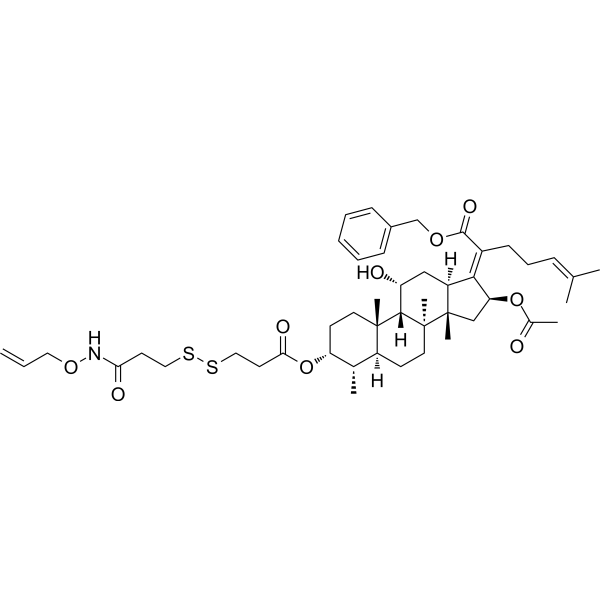
STING-IN-5 is a potent STING inhibitor, inhibiting LPS-induced NO synthesis in macrophages with an IC50 value of 1.15 μM. STING-IN-5 inhibits the inflammatory response. STING-IN-5 can be used to research anti-inflammatory diseases and sepsis.
Nos produits utilisent uniquement pour la recherche. Nous ne vendons pas aux patients.
- Pureté : 99.89%
- CAS No.: 2920064-17-9
- Formule: C47H67NO9S2
- Masse moléculaire:854.17
-
Stockage:
-20°C, stored under nitrogen
* In solvent : -80°C, 6 months; -20°C, 1 month (stored under nitrogen)

To place orders, for customer services and technical support, please contact: MedChemExpress USA
Tel: 609-228-6898 E-mail: [email protected] [email protected]


-
 Activité biologique
-
Chemical Information
-
Solvant et solubilité
- Protocole
- Pureté et documentation
- Références
-
 Help & FAQs


-
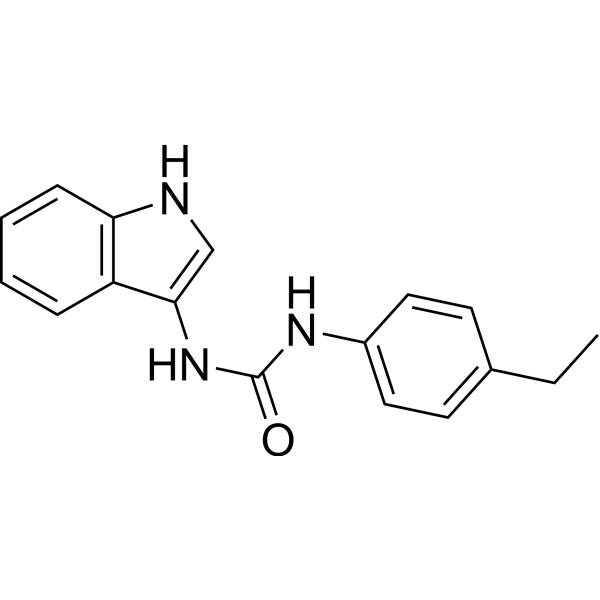
HY-112693
H-151STING Antagonist -
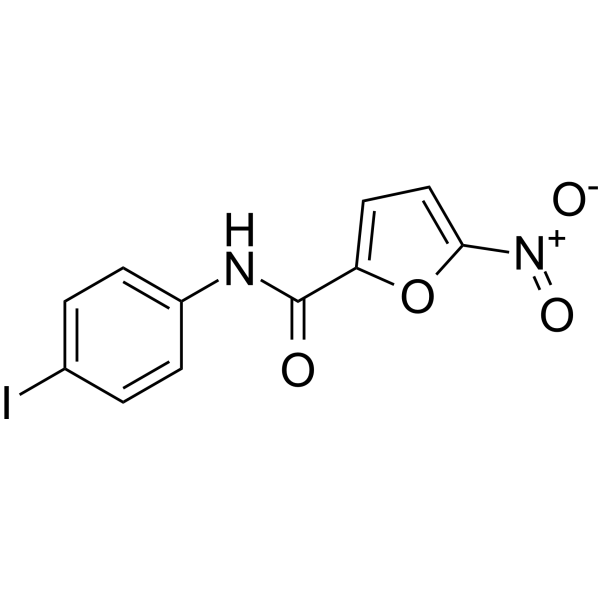
HY-112906
C-176STING Inhibitor -
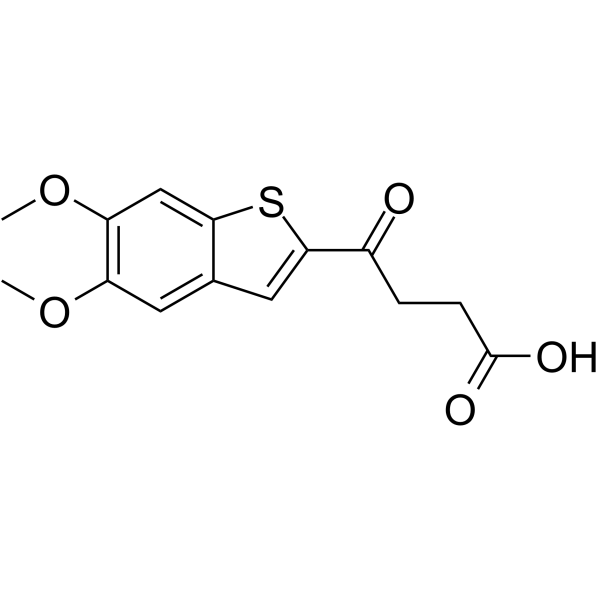
HY-136927
MSA-2STING Agonist -
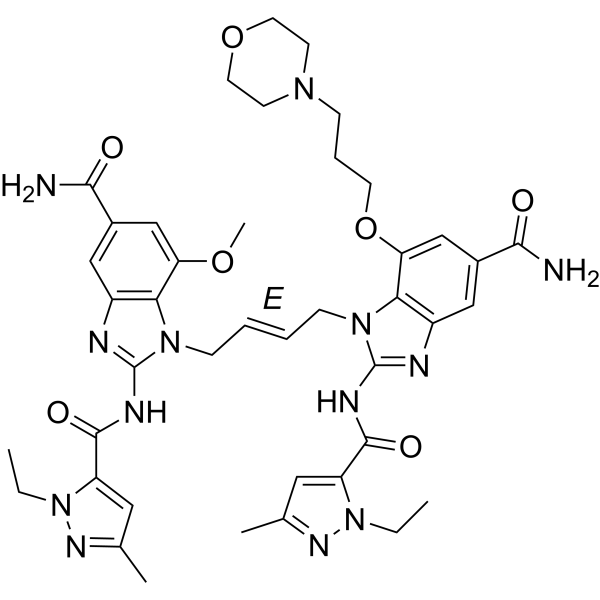
HY-112921A
diABZI STING agonist-1STING Agonist -
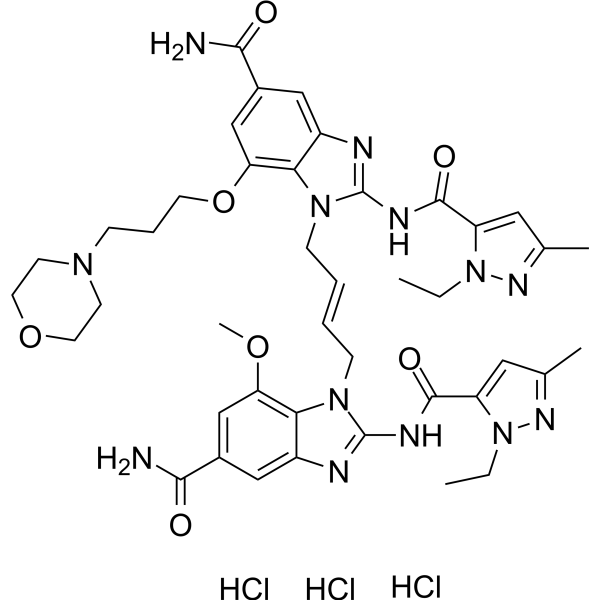
HY-112921B
diABZI STING agonist-1 trihydrochlorideSTING Receptor Agonist -
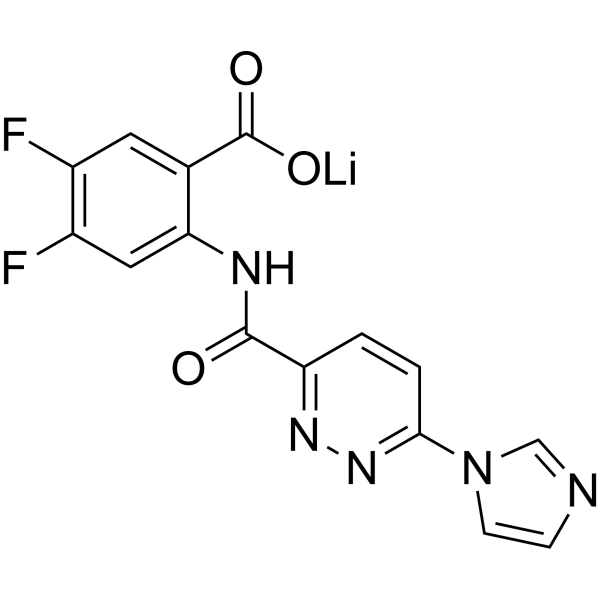
HY-131454
SR-717STING Agonist -
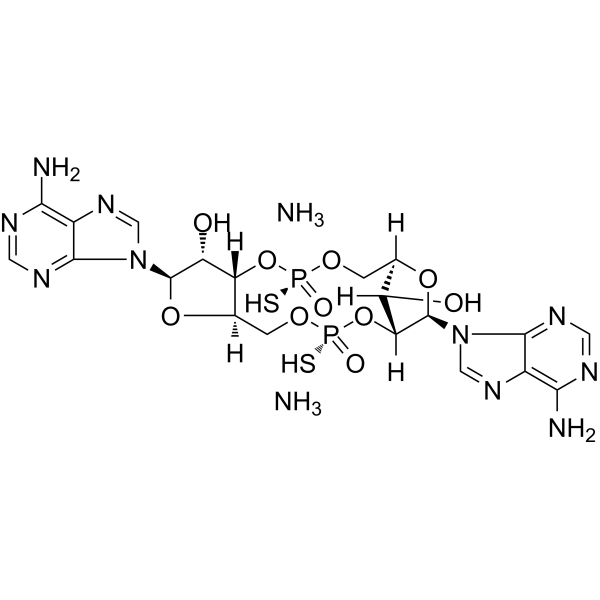
HY-12885B
2’3’-c-di-AM(PS)2 (Rp,Rp) ammonium saltSTING Agonist -
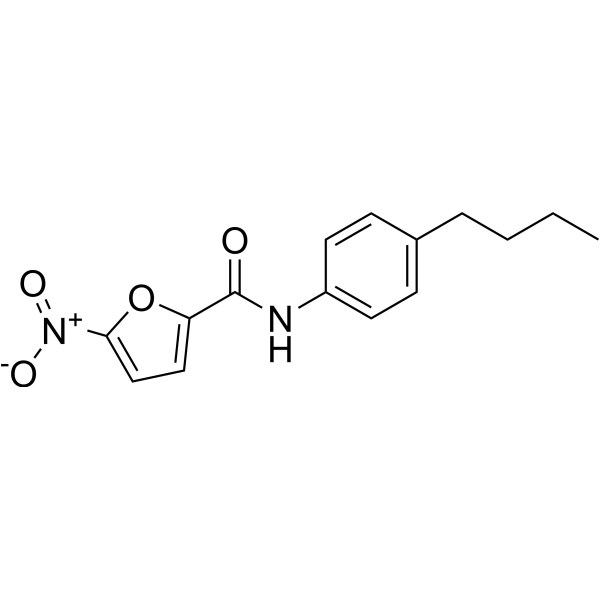
HY-138682
STING-IN-2STING Inhibitor -
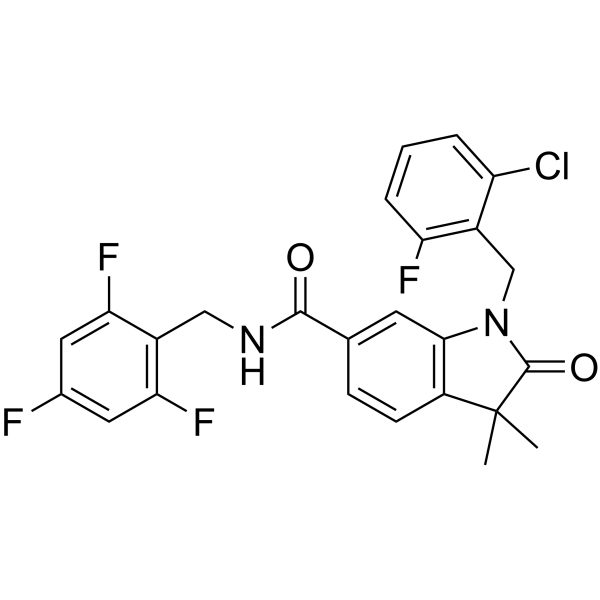
HY-147010
STING agonist-12STING Activator -
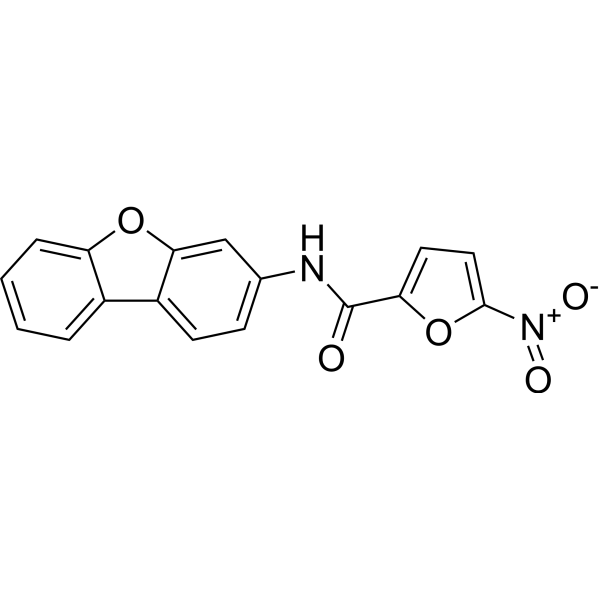
HY-123963
C-178STING Inhibitor -
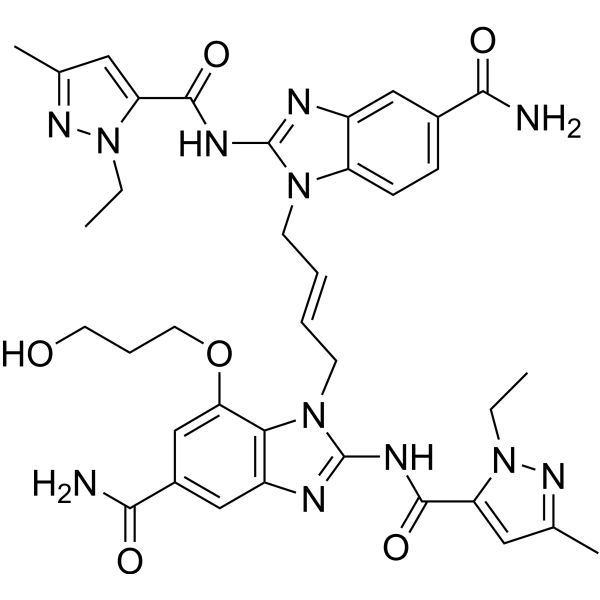
HY-103665
STING agonist-3STING Agonist -
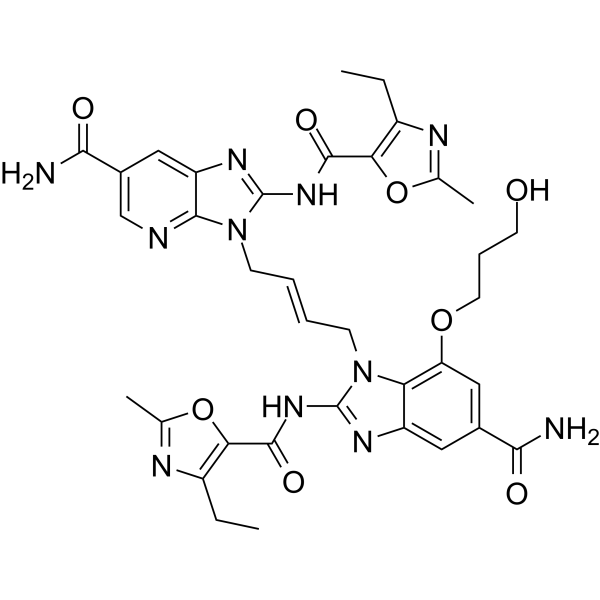
HY-148068
STING agonist-20STING Agonist


Activité biologique
Description
In Vitro
STING-IN-5 (compound 30) (40 μM; 24 h) exhibits less effect on RAW264.7 cell viability[1].
STING-IN-5 (2.5 and 5 μM; 2 h) inhibits NO production in LPS-stimulated RAW264.7 with inhibition rate of 69.28 ± 2.36 and 78.66 ± 2.73 at 2.5 and 5 μM, respectively, and exhibits IC50 of 1.15 ± 0.15 μM[1].
STING-IN-5 (0.5-2 μM; 2 h) suppresses STING, as well as TBK1/IRF3/NF-κB activation[1].
MedChemExpress (MCE) has not independently confirmed the accuracy of these methods. They are for reference only. Further protocols information, click here.
-
Cell Line:RAW264.7
-
Concentration:40 μM
-
Incubation Time:24 h
-
Result:Exhibited less effect on RAW264.7 cell viability of 91.08 ± 1.09%
-
Cell Line:RAW264.7 (stimulated by LPS for 6 h)
-
Concentration:0.5, 1 and 2 μM
-
Incubation Time:2 h
-
Result:Significantly inhibited the protein expression of STING and the phosphorylation of the downstream targets TBK1, IRF3, p65, and IκB in a concentration-dependent manner.
In Vivo
Pharmacokinetic Parameters of STING-IN-5 in male Sprague-Dawley rats[1].
| Tmax (h) | Cmax (ng/mL) | AUC0-t (ng/mL·h) | AUC0-∞ (ng/mL·h) | T1/2 (h) | MRT0-t (h) | MRT0-∞ (h) |
| 1 | 66.52 | 81.08 | 135.7 | 1.11 | 0.99 | 2.02 |
MedChemExpress (MCE) has not independently confirmed the accuracy of these methods. They are for reference only.
-
Animal Model:Male BALB/c mice (6-8 weeks; acute liver injury induced by injection of 10 mg/kg LPS)[1]
-
Dosage:1.25, 2.5, 5 mg/kg
-
Administration:i.g.; once daily; for 3 days
-
Result:Significantly improved pathological changes including disorderly arranged liver cells, blurred boundaries, congested hepatic sinusoids, swollen hepatocytes, a small number of hepatocytes were necrotic, and inflammatory cells infiltrated local areas.
Significantly reduced the levels of AST, ALT, and ALP (liver function specific indicators).


Chemical Information
-
CAS No. 2920064-17-9
-
Appearance Solid
-
Masse moléculaire 854.17
-
Formule C47H67NO9S2
-
Color White to off-white
-
SMILES
C[C@H]([C@H](OC(CCSSCCC(NOCC=C)=O)=O)CC[C@@]1([C@@]2([C@@H](C[C@]3(/C4=C(CC/C=C(C)/C)\C(OCC5=CC=CC=C5)=O)[H])O)[H])C)[C@@]1(CC[C@]2(C)[C@@]3(C)C[C@@H]4OC(C)=O)[H]
-
Livraison
Room temperature in continental US; may vary elsewhere.
-
Stockage
-20°C, stored under nitrogen
* In solvent : -80°C, 6 months; -20°C, 1 month (stored under nitrogen)


Solvant et solubilité
In Vitro:
DMSO : 100 mg/mL (117.07 mM; Need ultrasonic; Hygroscopic DMSO has a significant impact on the solubility of product, please use newly opened DMSO)
Please refer to the solubility information to select the appropriate solvent. Once prepared, please aliquot and store the solution to prevent product inactivation from repeated freeze-thaw cycles.
Storage method and period of stock solution: -80°C, 6 months; -20°C, 1 month (stored under nitrogen). When stored at -80°C, please use it within 6 months. When stored at -20°C, please use it within 1 month.
Please refer to the solubility information to select the appropriate solvent. Once prepared, please aliquot and store the solution to prevent product inactivation from repeated freeze-thaw cycles.
Storage method and period of stock solution: -80°C, 6 months; -20°C, 1 month (stored under nitrogen). When stored at -80°C, please use it within 6 months. When stored at -20°C, please use it within 1 month.
Concentration (start) × Volume (start) = Concentration (final) × Volume (final)

Protocole
-
Cell Cytotoxicity Assay
Cytotoxicity assays are usually based on the assessment of cell membrane damage, which can also be indirectly detected by measuring cell viability. Detection methods include MTT assay, CKK-8 assay, LDH assay and ATP assay, etc.
-
LPS-Induced Endotoxemia/Systemic Inflammation
Lipopolysaccharide (LPS)-induced endotoxemia is a widely used in vivo model of acute systemic inflammation in which LPS, a Gram-negative bacterial endotoxin, activates innate immune signaling primarily through TLR4, leading to rapid and transient induction of pro-inflammatory cytokines such as TNF-α, IL-6, and IL-1β in circulation and tissues. This cytokine surge is commonly used as a measurable readout of systemic inflammatory activation and immune dysregulation, and is typically assessed within hours after intraperitoneal LPS administration in mouse models of endotoxemia. The model captures key features of systemic inflammatory response syndrome, including cytokine release, immune cell activation, and downstream tissue responses, and has been used to evaluate anti-inflammatory interventions such as cytokine modulation, lipid mediators, and immune cell-targeting therapies.
-
Research Protocol for Inflammation-related Diseases
The NLRP3 inflammasome is a cytosolic innate immune signaling platform that integrates priming signals and danger-signal activation to promote caspase-1 activation, maturation of IL-1β and IL-18, and gasdermin D-mediated pyroptotic cell death. The core experimental logic is to determine whether inflammatory disease phenotypes are driven by increased NLRP3 expression, ASC-containing inflammasome assembly, caspase-1 cleavage, GSDMD cleavage, and extracellular release of IL-1β/IL-18 rather than by nonspecific cell injury alone. The pathway is strongly linked to inflammation-related disease phenotypes because monosodium urate crystals activate NALP3/NLRP3 inflammasome signaling in gout-like crystal inflammation, cholesterol crystals activate NLRP3 inflammasomes in atherogenesis models, and DSS-induced intestinal inflammation has been reported to involve NLRP3 inflammasome activity. However, experimental colitis studies also show context-dependent protective effects of NLRP3 inflammasome co


Pureté et documentation
-
Fiche technique (274 KB)
-
SDS (251 KB)
- English - EN (251 KB)
- Français - FR (251 KB)
- Deutsch - DE (251 KB)
- Norwegian - NO (251 KB)
- Español - ES (251 KB)
- Swedish - SV (251 KB)
- Italian - IT (251 KB)
- Korean - KR (251 KB)
- Portuguese - PT (251 KB)
-
Instruction de manipulation (2659 KB)
Références


Complete Stock Solution Preparation Table
Please refer to the solubility information to select the appropriate solvent. Once prepared, please aliquot and store the solution to prevent product inactivation from repeated freeze-thaw cycles.
Storage method and period of stock solution: -80°C, 6 months; -20°C, 1 month (stored under nitrogen). When stored at -80°C, please use it within 6 months. When stored at -20°C, please use it within 1 month.
| Optional Solvent | Concentration Solvent Mass | 1 mg | 5 mg | 10 mg | 25 mg |
|---|---|---|---|---|---|
| DMSO | 1 mM | 1.1707 mL | 5.8536 mL | 11.7073 mL | 29.2682 mL |
| 5 mM | 0.2341 mL | 1.1707 mL | 2.3415 mL | 5.8536 mL | |
| 10 mM | 0.1171 mL | 0.5854 mL | 1.1707 mL | 2.9268 mL | |
| 15 mM | 0.0780 mL | 0.3902 mL | 0.7805 mL | 1.9512 mL | |
| 20 mM | 0.0585 mL | 0.2927 mL | 0.5854 mL | 1.4634 mL | |
| 25 mM | 0.0468 mL | 0.2341 mL | 0.4683 mL | 1.1707 mL | |
| 30 mM | 0.0390 mL | 0.1951 mL | 0.3902 mL | 0.9756 mL | |
| 40 mM | 0.0293 mL | 0.1463 mL | 0.2927 mL | 0.7317 mL | |
| 50 mM | 0.0234 mL | 0.1171 mL | 0.2341 mL | 0.5854 mL | |
| 60 mM | 0.0195 mL | 0.0976 mL | 0.1951 mL | 0.4878 mL | |
| 80 mM | 0.0146 mL | 0.0732 mL | 0.1463 mL | 0.3659 mL | |
| 100 mM | 0.0117 mL | 0.0585 mL | 0.1171 mL | 0.2927 mL |


STING-IN-5 Related Classifications
HY-152034 Related Classifications
 Powered by Bioz