



THX-B
Based on 1 publication(s) in Google Scholar
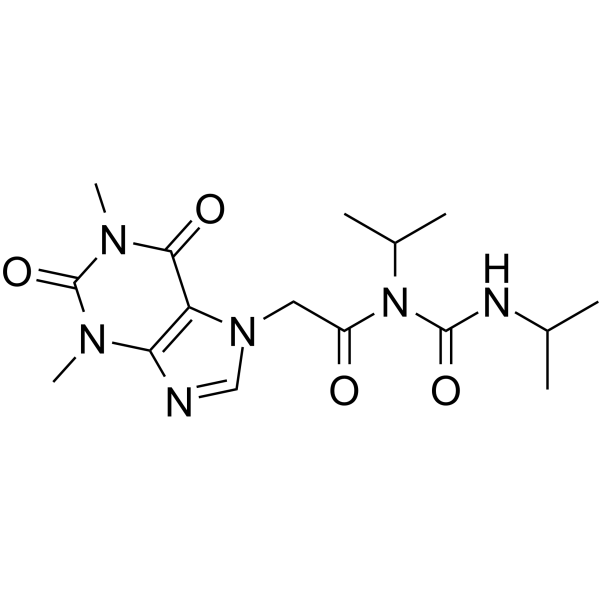
THX-B is a potent and non-peptidic p75NTR (neurotrophin receptor p75) antagonist. THX-B can be used in the research of diabetic kidney disease, neurodegenerative and inflammatory disorders.
Nos produits utilisent uniquement pour la recherche. Nous ne vendons pas aux patients.
- Pureté : 99.84%
- CAS No.: 1372206-64-8
- Formule: C16H24N6O4
- Masse moléculaire:364.40
-
Stockage:
4°C, protect from light
* In solvent : -80°C, 6 months; -20°C, 1 month (protect from light)

To place orders, for customer services and technical support, please contact: MedChemExpress USA
Tel: 609-228-6898 E-mail: [email protected] [email protected]


-
 Activité biologique
-
Chemical Information
-
Solvant et solubilité
- Pureté et documentation
- Références
-
 Help & FAQs


-
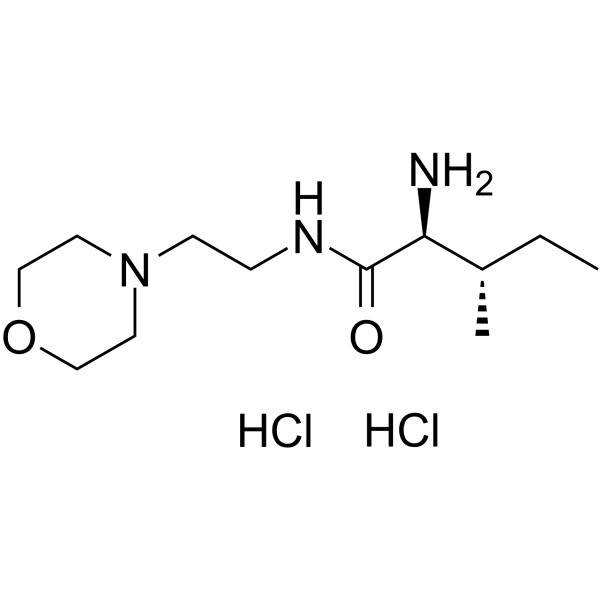
HY-110155
LM11A-31 dihydrochlorideproNGF Antagonist -
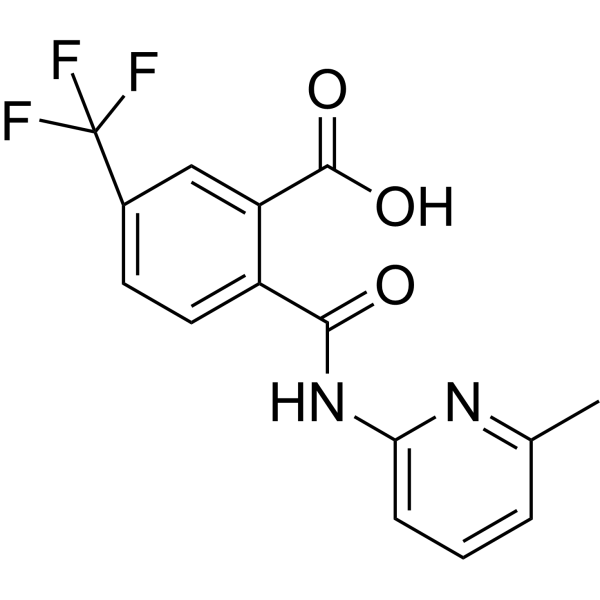
HY-12802
AF38469Sortilin Inhibitor -
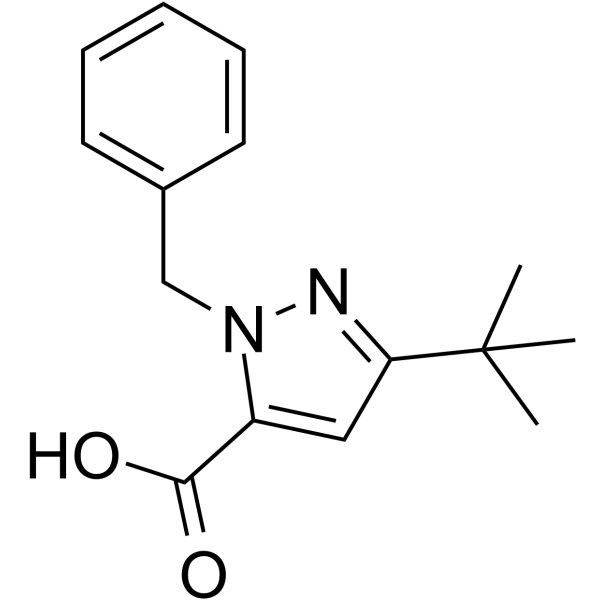
HY-115213
SORT-PGRN interaction inhibitor 1Sortilin-Progranulin Interaction Inhibitor -
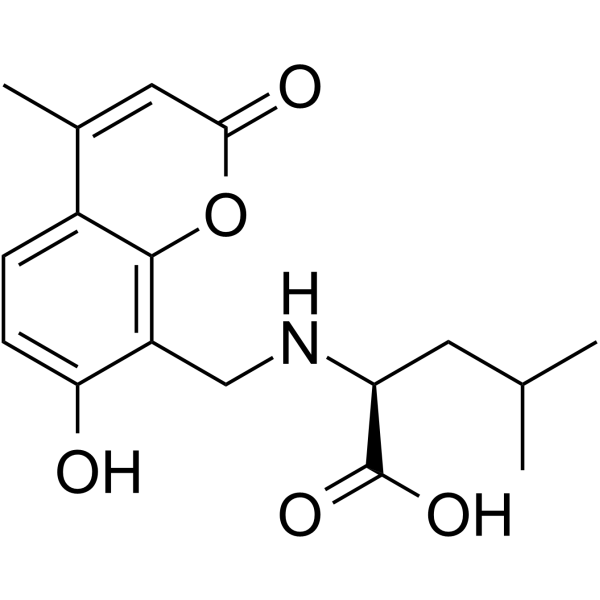
HY-124673
AF40431Sortilin Ligand -
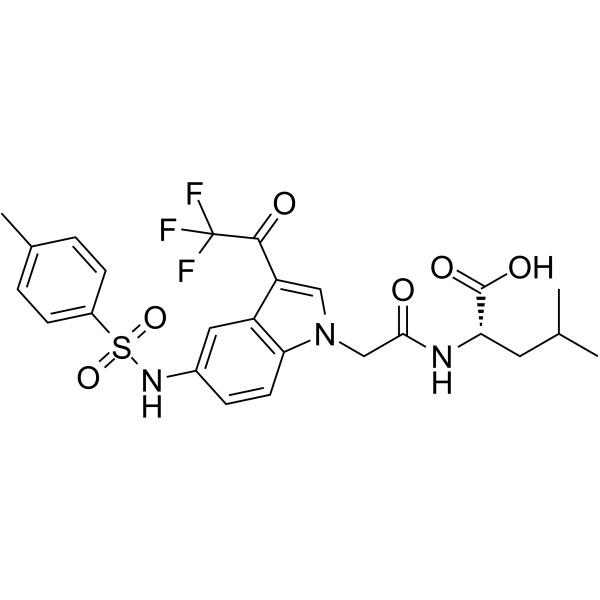
HY-12436
NTRC-824NTS2 Antagonist -
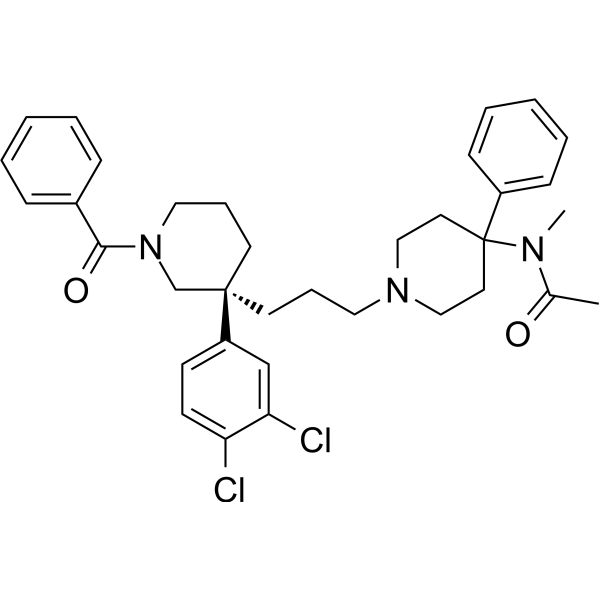
HY-14551B
(S)-OsanetantNK3 Receptor Antagonist -
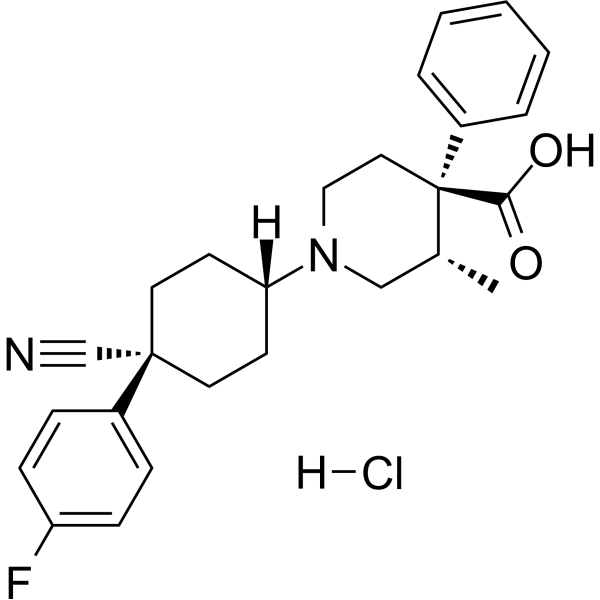
HY-14277A
Levocabastine hydrochlorideVLA-4 Antagonist -
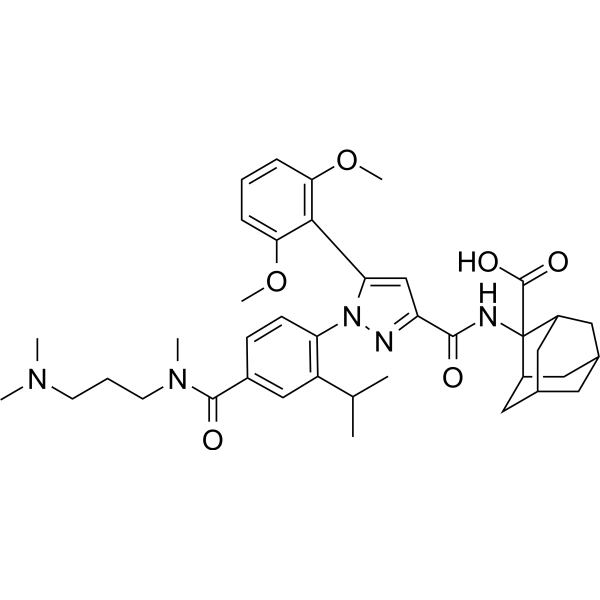
HY-107664
SR 142948NT Antagonist -
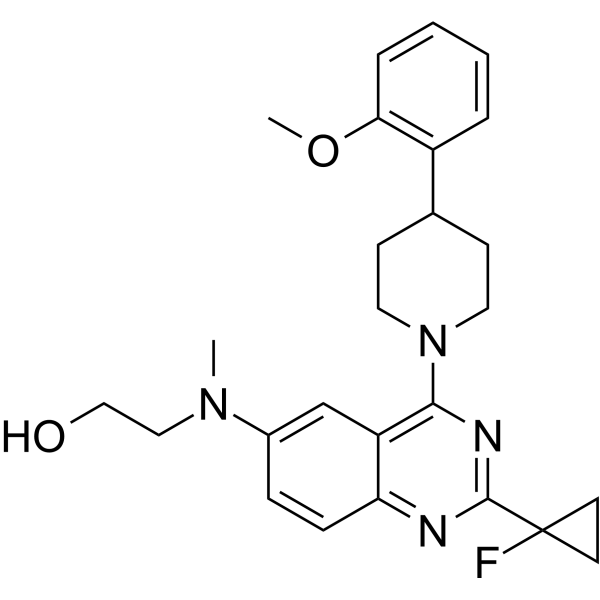
HY-125880
SBI-553NTR1 Allosteric Modulator -
![[Lys8, Lys9]-Neurotensin (8-13)](https://file.medchemexpress.com/product_pic/hy-p2544.gif)
HY-P2544
[Lys8, Lys9]-Neurotensin (8-13) -
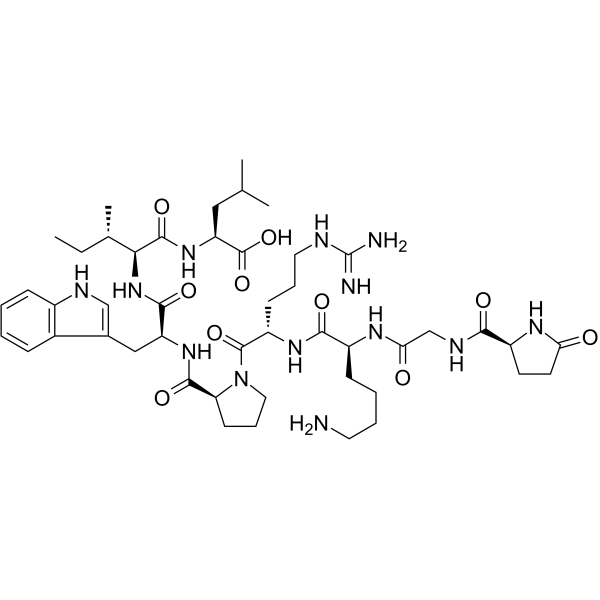
HY-P0253
XenopsinNeurotensin Octapeptide -
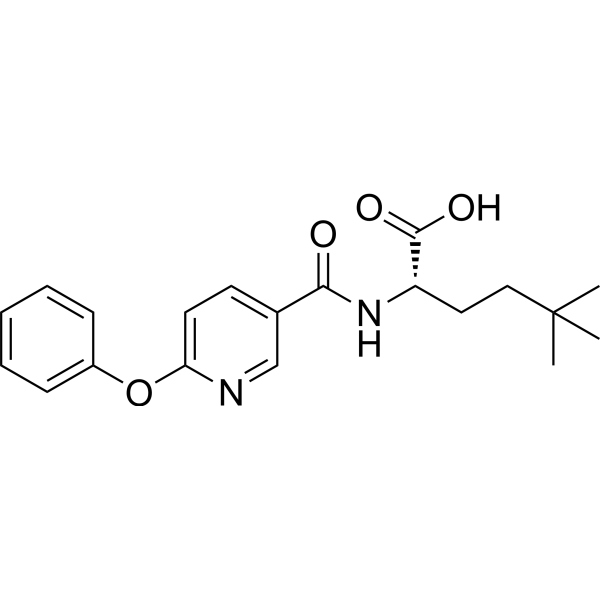
HY-148650
Sortilin antagonist 1Sortilin Antagonist
Publications Citing Use of MedChemExpress (MCE) THX-B
More

Activité biologique
Description
In Vitro
THX-B (10 μM, 4 days) decreases proliferation of myoblasts[1].
THX-B (10 μM, 1 h) inhibits NGF-induced phosphorylation of ERK1/2 in C2C12 myoblasts[1].
THX-B (20 μM, 24 h) decreases photoreceptor cell death and reactive gliosis in cultured rd10 retinas[2].
MedChemExpress (MCE) has not independently confirmed the accuracy of these methods. They are for reference only.
-
Cell Line:C2C12 myoblasts
-
Concentration:10 μM
-
Incubation Time:Pre-treated for 1 hour
-
Result:Inhibited βNGF-induced ERK2 phosphorylation by 67%.
Inhibited proNGF-induced ERK2 phosphorylation by 90%.
-
Cell Line:Cultured P22 rd10 retinas.
-
Concentration:20 μM
-
Incubation Time:24 h
-
Result:Attenuated the thickening and enlargement of processes of astrocytes and Müller glia cells.
In Vivo
THX-B (2 μL of 2 μg/μL, IVT injection, a single dose) elicits a neuroprotective effect on photoreceptor cells in P17 rd10 mice[2].
THX-B (40 μg in 20 μL, IVT injection) resolves the inflammatory, vascular, and neurodegenerative phases of the retinal pathology[4].
MedChemExpress (MCE) has not independently confirmed the accuracy of these methods. They are for reference only.
-
Animal Model:Mouse model of diabetic voiding dysfunction
-
Dosage:50 μg in 125 μL PBS
-
Administration:Intraperitoneal injection (i.p.)
-
Result:Prevented bladder weight increase, which was 18% (95% CI 3%, 32%) and 37% (95% CI 14%, 60%) lower after 2 and 4 weeks of treatment.
-
Animal Model:P17 rd10 mice[1]
-
Dosage:2 μL of 2 μg/μL, single dose
-
Administration:Intravitreal (IVT) injected in one eye
-
Result:Increased the number of photoreceptor rows as well as the ONL/INL ratio.
Decreased the total number of microglial cells in the treated retinas, as well as some of the inflammatory signs, such as GFAP, α2M and the proinflammatory cytokines IL-1β and TNFα.


Chemical Information
-
CAS No. 1372206-64-8
-
Appearance Solid
-
Masse moléculaire 364.40
-
Formule C16H24N6O4
-
Color White to off-white
-
SMILES
O=C(N(C(C)C)C(NC(C)C)=O)CN1C=NC(N(C)C(N2C)=O)=C1C2=O
-
Livraison
Room temperature in continental US; may vary elsewhere.
-
Stockage
4°C, protect from light
* In solvent : -80°C, 6 months; -20°C, 1 month (protect from light)


Publications (1)
-
Journal Impact Factor
-
Most Recent
-
Cell Rep
2026 May 26;45(5):117287. PMID: 42024502


Solvant et solubilité
In Vitro:
DMSO : 100 mg/mL (274.42 mM; Need ultrasonic; Hygroscopic DMSO has a significant impact on the solubility of product, please use newly opened DMSO)
Please refer to the solubility information to select the appropriate solvent. Once prepared, please aliquot and store the solution to prevent product inactivation from repeated freeze-thaw cycles.
Storage method and period of stock solution: -80°C, 6 months; -20°C, 1 month (protect from light). When stored at -80°C, please use it within 6 months. When stored at -20°C, please use it within 1 month.
Please refer to the solubility information to select the appropriate solvent. Once prepared, please aliquot and store the solution to prevent product inactivation from repeated freeze-thaw cycles.
Storage method and period of stock solution: -80°C, 6 months; -20°C, 1 month (protect from light). When stored at -80°C, please use it within 6 months. When stored at -20°C, please use it within 1 month.
Concentration (start) × Volume (start) = Concentration (final) × Volume (final)
In Vivo:
Select the appropriate dissolution method based on your experimental animal and administration route.
- For the following dissolution methods, please ensure to first prepare a clear stock solution using an In Vitro approach and then sequentially add co-solvents:
- To ensure reliable experimental results, the clarified stock solution can be appropriately stored based on storage conditions. As for the working solution for In Vivo experiments, it is recommended to prepare freshly and use it on the same day.
- The percentages shown for the solvents indicate their volumetric ratio in the final prepared solution. If precipitation or phase separation occurs during preparation, heat and/or sonication can be used to aid dissolution.
Add each solvent one by one: 10% DMSO 40% PEG300 5% Tween-80 45% Saline
Solubility: ≥ 2.5 mg/mL (6.86 mM); Clear solution
This protocol yields a clear solution of ≥ 2.5 mg/mL (saturation unknown).
Taking 1 mL working solution as an example, add 100 μL DMSO stock solution (25.0 mg/mL) to 400 μL PEG300, and mix evenly; then add 50 μL Tween-80 and mix evenly; then add 450 μL Saline to adjust the volume to 1 mL.
Preparation of Saline: Dissolve 0.9 g sodium chloride in ddH₂O and dilute to 100 mL to obtain a clear Saline solution.
Add each solvent one by one: 10% DMSO 90% (20% SBE-β-CD in Saline)
Solubility: ≥ 2.5 mg/mL (6.86 mM); Clear solution
This protocol yields a clear solution of ≥ 2.5 mg/mL (saturation unknown).
Taking 1 mL working solution as an example, add 100 μL DMSO stock solution (25.0 mg/mL) to 900 μL 20% SBE-β-CD in Saline, and mix evenly.
Preparation of 20% SBE-β-CD in Saline (4°C, storage for one week): 2 g SBE-β-CD powder is dissolved in 10 mL Saline, completely dissolve until clear.
For the following dissolution methods, please prepare the working solution directly:
It is recommended to prepare fresh solutions and use them promptly within a short period of time.
The percentages shown for the solvents indicate their volumetric ratio in the final prepared solution. If precipitation or phase separation occurs during preparation, heat and/or sonication can be used to aid dissolution.
Add each solvent one by one: Saline
Solubility: 5 mg/mL (13.72 mM); Clear solution; Need ultrasonic and warming and heat to 60°C
In Vivo Dissolution Calculator
Please enter the basic information of animal experiments:
-
-
-
-
Recommended: Prepare an additional quantity of animals to account for potential losses during experiments.
Please enter your animal formula composition:
-
%DMSO +
Recommended: Keep the proportion of DMSO in working solution below 2% if your animal is weak.
-
%+
-
+%Tween-80 + +
-
%Saline +
The co-solvents required include: DMSO, . All of co-solvents are available by MedChemExpress (MCE). , Tween 80. All of co-solvents are available by MedChemExpress (MCE).
Working solution concentration: 0.22 mg/mL
Method for preparing stock solution: mg drug dissolved in μL DMSO. Stock solution concentration: mg/mL. * In solvent : -80°C, 6 months; -20°C, 1 month (protect from light)
1. Take μL DMSO stock solution;
2. Add μL .
μL , mix evenly;
3. Then add μL Tween 80, mix evenly;
4. Then add μL
Please ensure that the stock solution in the first step is dissolved to a clear state, and add co-solvents in sequence. You can use ultrasonic heating (ultrasonic cleaner, recommended frequency 20-40 kHz), vortexing, etc. to assist dissolution.


Pureté et documentation
-
Fiche technique (280 KB)
-
SDS (252 KB)
- English - EN (252 KB)
- Français - FR (252 KB)
- Deutsch - DE (252 KB)
- Norwegian - NO (252 KB)
- Español - ES (252 KB)
- Swedish - SV (252 KB)
- Italian - IT (252 KB)
- Korean - KR (252 KB)
- Portuguese - PT (252 KB)
-
Instruction de manipulation (2659 KB)
Références
[1]. Keren Ettinger, et al. Nerve growth factor stimulation of ERK1/2 phosphorylation requires both p75NTR and α9β1 integrin and confers myoprotection towards ischemia in C2C12 skeletal muscle cell model. Cell Signal. 2012 Dec;24(12):2378-88. [Content Brief]
[2]. María Platón-Corchado, et al. p75NTR antagonists attenuate photoreceptor cell loss in murine models of retinitis pigmentosa. Cell Death Dis. 2017 Jul 13;8(7):e2922. [Content Brief]
[3]. Abubakr H Mossa, et al. Antagonism of proNGF or its receptor p75 NTR reverses remodelling and improves bladder function in a mouse model of diabetic voiding dysfunction. Diabetologia. 2020 Sep;63(9):1932-1946. [Content Brief]
[4]. Alba Galan, et al. Subconjunctival Delivery of p75NTR Antagonists Reduces the Inflammatory, Vascular, and Neurodegenerative Pathologies of Diabetic Retinopathy. Invest Ophthalmol Vis Sci. 2017 Jun 1;58(7):2852-2862. [Content Brief]


Complete Stock Solution Preparation Table
Please refer to the solubility information to select the appropriate solvent. Once prepared, please aliquot and store the solution to prevent product inactivation from repeated freeze-thaw cycles.
Storage method and period of stock solution: -80°C, 6 months; -20°C, 1 month (protect from light). When stored at -80°C, please use it within 6 months. When stored at -20°C, please use it within 1 month.
| Optional Solvent | Concentration Solvent Mass | 1 mg | 5 mg | 10 mg | 25 mg |
|---|---|---|---|---|---|
| DMSO | 1 mM | 2.7442 mL | 13.7212 mL | 27.4424 mL | 68.6059 mL |
| 5 mM | 0.5488 mL | 2.7442 mL | 5.4885 mL | 13.7212 mL | |
| 10 mM | 0.2744 mL | 1.3721 mL | 2.7442 mL | 6.8606 mL | |
| 15 mM | 0.1829 mL | 0.9147 mL | 1.8295 mL | 4.5737 mL | |
| 20 mM | 0.1372 mL | 0.6861 mL | 1.3721 mL | 3.4303 mL | |
| 25 mM | 0.1098 mL | 0.5488 mL | 1.0977 mL | 2.7442 mL | |
| 30 mM | 0.0915 mL | 0.4574 mL | 0.9147 mL | 2.2869 mL | |
| 40 mM | 0.0686 mL | 0.3430 mL | 0.6861 mL | 1.7151 mL | |
| 50 mM | 0.0549 mL | 0.2744 mL | 0.5488 mL | 1.3721 mL | |
| 60 mM | 0.0457 mL | 0.2287 mL | 0.4574 mL | 1.1434 mL | |
| 80 mM | 0.0343 mL | 0.1715 mL | 0.3430 mL | 0.8576 mL | |
| 100 mM | 0.0274 mL | 0.1372 mL | 0.2744 mL | 0.6861 mL |


THX-B Related Classifications
HY-137322 Related Classifications
 Powered by Bioz