



Lurasidone
Based on 11 publication(s) in Google Scholar
Lurasidone (SM-13496) is an antagonist of both dopamine D2 and 5-HT7 with IC50s of 1.68 and 0.495 nM, respectively. Lurasidone (SM-13496) is also a partial agonist of 5-HT1A receptor with an IC50 of 6.75 nM.
Nos produits utilisent uniquement pour la recherche. Nous ne vendons pas aux patients.
- Pureté: 99.92%
- CAS No.: 367514-87-2
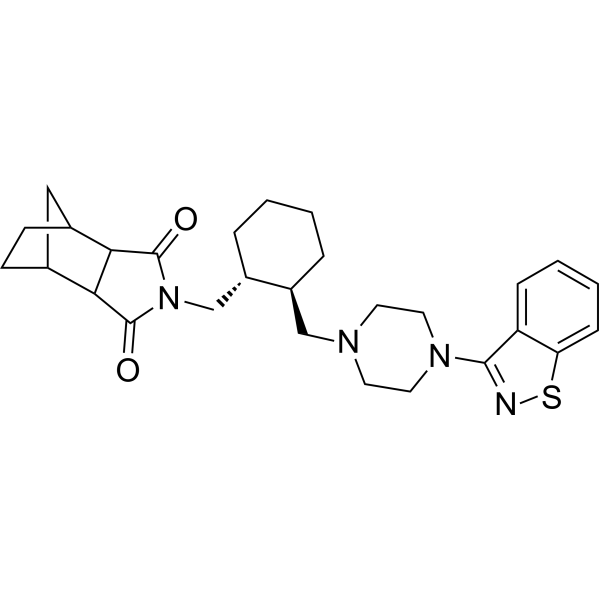
- Formule: C28H36N4O2S
- Masse moléculaire:492.68
-
Stockage:
4°C, protect from light
* The compound is unstable in solutions, freshly prepared is recommended.

To place orders, for customer services and technical support, please contact: MedChemExpress USA
Tel: 609-228-6898 E-mail: [email protected] [email protected]


-
 Activité biologique
-
Chemical Information
-
Solvant et solubilité
- Protocole
- Pureté et documentation
- Références
-
 Help & FAQs


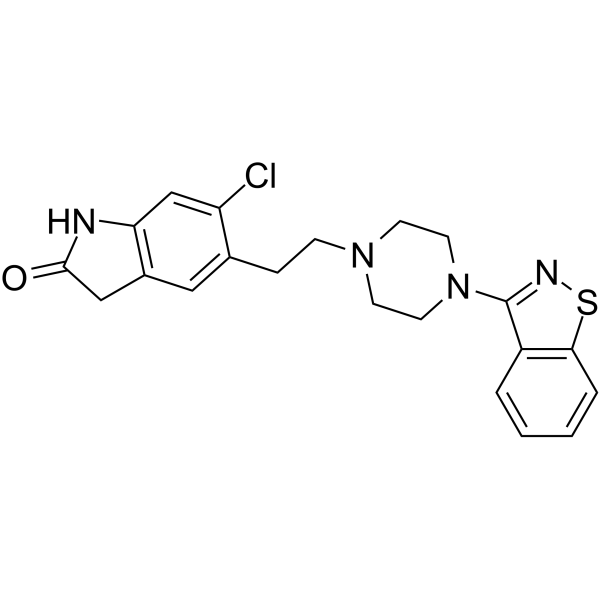
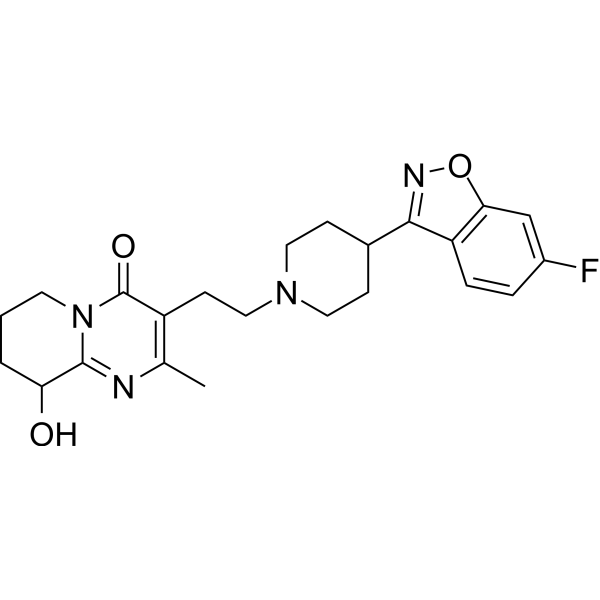
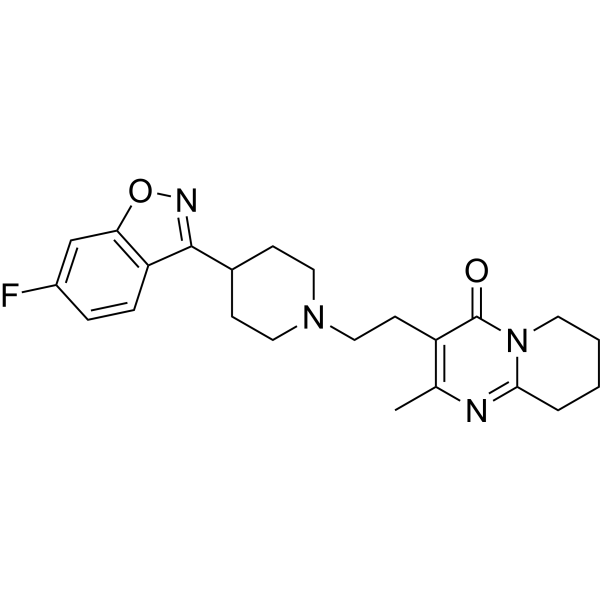
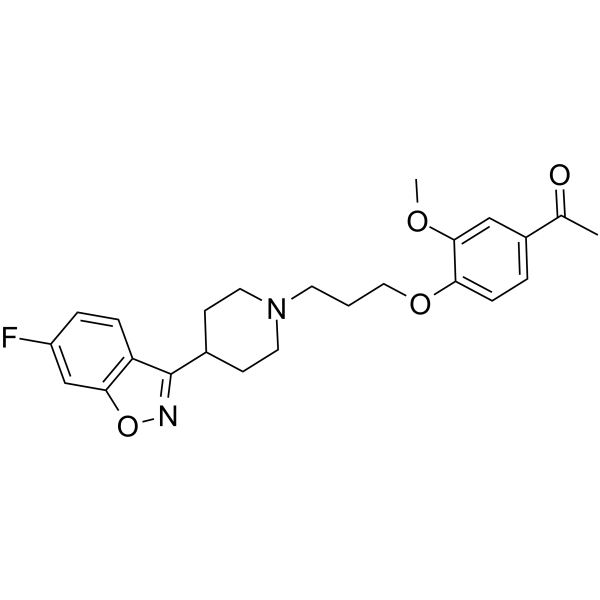
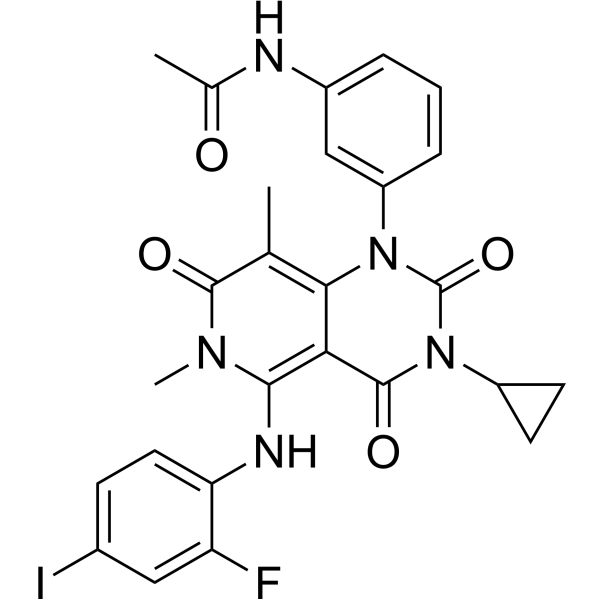
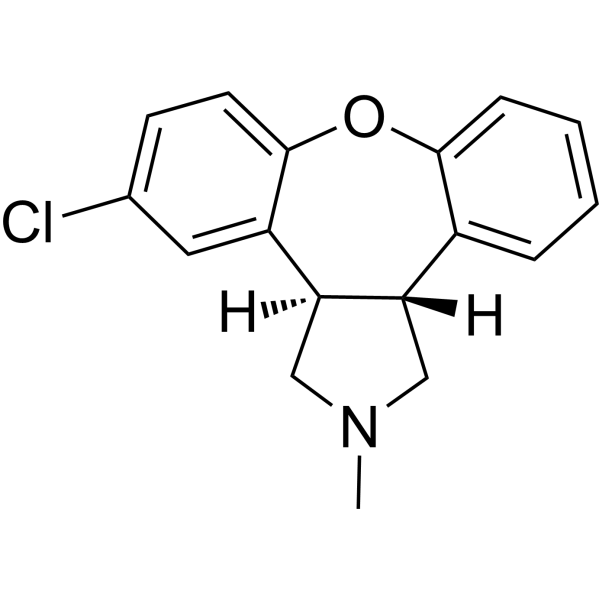
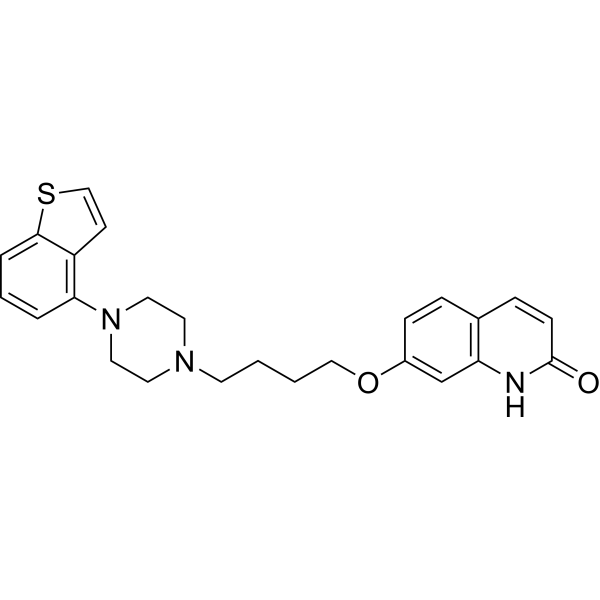
Publications Citing Use of MedChemExpress (MCE) Lurasidone
More- Nature. 2023 Dec;624(7992):672-681. [Abstract]
- Nat Immunol. 2025 Apr 11. [Abstract]
- J Med Chem. 2024 Apr 25;67(8):6144-6188. [Abstract]
- Antibiotics (Basel). 2024 Mar 28;13(4):308. [Abstract]
- ACS Chem Neurosci. 2020 Jan 15;11(2):173-183. [Abstract]
- Physiol Behav. 2026 Feb:304:115176. [Abstract]
- J Ocul Pharmacol Ther. 2024 Oct;40(8):536-542. [Abstract]
- bioRxiv. 2025 Sep 9.
- bioRxiv. 2024 Jan 14.
- Marmara Pharm J. 2017;21 (4): 931-937.
- Marmara Pharm J. 2017;21 (4): 931-937.
Voir tous les produits spécifiques à Isoform 5-HT Receptor
MoreVoir tous les produits spécifiques à Isoform Dopamine Receptor
More

Activité biologique
|
5-HT1A Receptor |
5-HT7 Receptor |
5-HT7 Receptor 0.495 nM (IC50) |
5-HT1A Receptor 6.75 nM (IC50) |
D2 Receptor 1.68 nM (IC50) |
Lurasidone (SM-13496) is an antagonist of dopamine D2 and 5-HT7 with IC50s of 1.68±0.09 and 0.495±0.090 nM, respectively. Lurasidone (SM-13496) is also a partial agonist of 5-HT1A receptor with an IC50 of 6.75±0.97 nM. In vitro receptor binding experiments reveal that Lurasidone (SM-13496) demonstrates affinity for dopamine D2 and 5-HT2A receptors higher than other tested antipsychotics. Lurasidone (SM-13496) does not increase [35S]GTPγS binding to the membrane preparations for dopamine D2 receptors by itself, but it antagonizes dopamine-stimulated [35S]GTPγS binding in a concentration-dependent manner with a KB value of 2.8±1.1 nM[1].
MedChemExpress (MCE) has not independently confirmed the accuracy of these methods. They are for reference only.
MedChemExpress (MCE) has not independently confirmed the accuracy of these methods. They are for reference only.


Chemical Information
-
CAS No. 367514-87-2
-
Appearance Solid
-
Masse moléculaire 492.68
-
Formule C28H36N4O2S
-
Color White to off-white
-
SMILES
O=C([C@H]1[C@H]2C[C@H](CC2)[C@@H]31)N(C[C@H](CCCC4)[C@@H]4CN5CCN(CC5)C6=NSC7=CC=CC=C67)C3=O
-
Synonyms
SM-13496
-
Livraison
Room temperature in continental US; may vary elsewhere.
-
Stockage
4°C, protect from light
* The compound is unstable in solutions, freshly prepared is recommended.


Publications (11)
-
Journal Impact Factor
-
Most Recent
-
Nature
2023 Dec;624(7992):672-681. PMID: 37935376 -
Nat Immunol
2025 Apr 11. PMID: 40217111 -
J Med Chem
Synthesis and Structure-Activity Relationships of 2,5-Dimethoxy-4-Substituted Phenethylamines and the Discovery of CYB210010: A Potent, Orally Bioavailable and Long-Acting Serotonin 5-HT2 Receptor Agonist. [Abstract]2024 Apr 25;67(8):6144-6188. PMID: 38593423 -
Antibiotics (Basel)
NRX-101 (D-Cycloserine + Lurasidone) Is Active against Drug-Resistant Urinary Pathogens In Vitro. [Abstract]2024 Mar 28;13(4):308. PMID: 38666984 -
ACS Chem Neurosci
Discovery of Procognitive Antipsychotics by Combining Muscarinic M1 Receptor Structure-Activity Relationship with Systems Response Profiles in Zebrafish Larvae. [Abstract]2020 Jan 15;11(2):173-183. PMID: 31850734 -
Physiol Behav
Voluntary wheel running improves cognitive deficits and abnormal agonistic behavior induced by social isolation stress in mice. [Abstract]2026 Feb:304:115176. PMID: 41242457 -
J Ocul Pharmacol Ther
2024 Oct;40(8):536-542. PMID: 39206555 -
-
-
-


Solvant et solubilité
DMSO : 20.83 mg/mL (42.28 mM; Need ultrasonic; Hygroscopic DMSO has a significant impact on the solubility of product, please use newly opened DMSO)
Ethanol : 3.33 mg/mL (6.76 mM; ultrasonic and warming and heat to 60°C)
Please refer to the solubility information to select the appropriate solvent. The compound is unstable in solutions, freshly prepared is recommended.
Please refer to the solubility information to select the appropriate solvent. The compound is unstable in solutions, freshly prepared is recommended.
Concentration (start) × Volume (start) = Concentration (final) × Volume (final)
Select the appropriate dissolution method based on your experimental animal and administration route.
- For the following dissolution methods, please ensure to first prepare a clear stock solution using an In Vitro approach and then sequentially add co-solvents:
- To ensure reliable experimental results, the clarified stock solution can be appropriately stored based on storage conditions. As for the working solution for In Vivo experiments, it is recommended to prepare freshly and use it on the same day.
- The percentages shown for the solvents indicate their volumetric ratio in the final prepared solution. If precipitation or phase separation occurs during preparation, heat and/or sonication can be used to aid dissolution.
Please enter the basic information of animal experiments:
-
-
-
-
Recommended: Prepare an additional quantity of animals to account for potential losses during experiments.
Please enter your animal formula composition:
-
%DMSO +
Recommended: Keep the proportion of DMSO in working solution below 2% if your animal is weak.
-
%+
-
+%Tween-80 + +
-
%Saline +
The co-solvents required include: DMSO, . All of co-solvents are available by MedChemExpress (MCE). , Tween 80. All of co-solvents are available by MedChemExpress (MCE).
Working solution concentration: 0.22 mg/mL
Method for preparing stock solution: mg drug dissolved in μL DMSO. Stock solution concentration: mg/mL. * The compound is unstable in solutions, freshly prepared is recommended.
1. Take μL DMSO stock solution;
2. Add μL .
μL , mix evenly;
3. Then add μL Tween 80, mix evenly;
4. Then add μL
Please ensure that the stock solution in the first step is dissolved to a clear state, and add co-solvents in sequence. You can use ultrasonic heating (ultrasonic cleaner, recommended frequency 20-40 kHz), vortexing, etc. to assist dissolution.

Protocole
SD rats are individually isolated in clear plastic cages and injected with methamphetamine (MAP) (1 mg/kg i.p.) 1 h after the administration of drugs or vehicle. In the test of persistence of the effect, Lurasidone (SM-13496) is administered 1, 2, 4, and 8 h before the MAP injection. Locomotor activity is measured for 80 min from 10 min after MAP injection. Four or five groups of 6 to 13 rats are used to calculate the ED50 value that inhibits MAP-induced hyperactivity by 50% of the animals tested[1].
MedChemExpress (MCE) has not independently confirmed the accuracy of these methods. They are for reference only.


Pureté et documentation
-
Fiche technique (277 KB)
-
SDS (394 KB)
- English - EN (394 KB)
- Français - FR (394 KB)
- Deutsch - DE (394 KB)
- Norwegian - NO (394 KB)
- Español - ES (394 KB)
- Swedish - SV (394 KB)
- Italian - IT (394 KB)
- Korean - KR (394 KB)
- Portuguese - PT (394 KB)
-
Instruction de manipulation (2659 KB)
Références


Complete Stock Solution Preparation Table
Please refer to the solubility information to select the appropriate solvent. The compound is unstable in solutions, freshly prepared is recommended.
| Optional Solvent | Concentration Solvent Mass | 1 mg | 5 mg | 10 mg | 25 mg |
|---|---|---|---|---|---|
| Ethanol / DMSO | 1 mM | 2.0297 mL | 10.1486 mL | 20.2972 mL | 50.7429 mL |
| 5 mM | 0.4059 mL | 2.0297 mL | 4.0594 mL | 10.1486 mL | |
| DMSO | 10 mM | 0.2030 mL | 1.0149 mL | 2.0297 mL | 5.0743 mL |
| 15 mM | 0.1353 mL | 0.6766 mL | 1.3531 mL | 3.3829 mL | |
| 20 mM | 0.1015 mL | 0.5074 mL | 1.0149 mL | 2.5371 mL | |
| 25 mM | 0.0812 mL | 0.4059 mL | 0.8119 mL | 2.0297 mL | |
| 30 mM | 0.0677 mL | 0.3383 mL | 0.6766 mL | 1.6914 mL | |
| 40 mM | 0.0507 mL | 0.2537 mL | 0.5074 mL | 1.2686 mL |


Lurasidone Related Classifications
HY-B0032A Related Classifications
 Powered by Bioz