



Cariprazine
Based on 9 publication(s) in Google Scholar
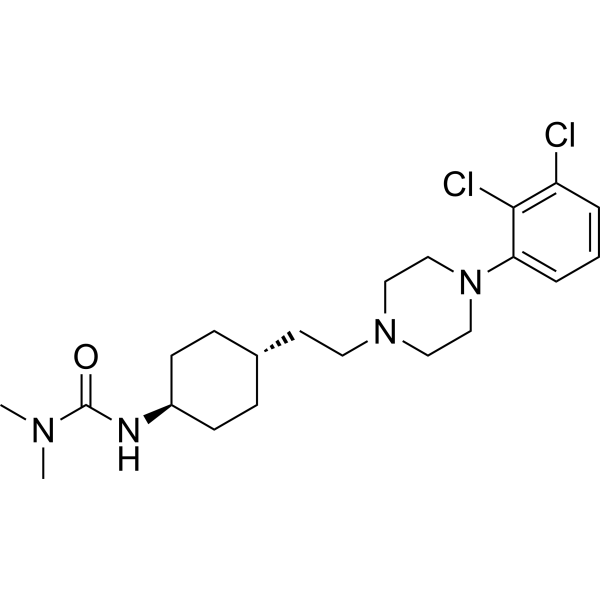
Cariprazine is a novel antipsychotic agent candidate that exhibits high affinity for the D3 (Ki=0.085 nM) and D2 (Ki=0.49 nM) receptors, and moderate affinity for the 5-HT1A receptor (Ki=2.6 nM).
For research use only. We do not sell to patients.
- Purity : 99.67%
- CAS No.: 839712-12-8
- Formula: C21H32Cl2N4O
- Molecular Weight:427.41
-
Storage:Powder -20°C, 3 years , 4°C, 2 years ; In solvent -80°C, 2 years , -20°C, 1 year

To place orders, for customer services and technical support, please contact: MedChemExpress USA
Tel: 609-228-6898 E-mail: [email protected] [email protected]


-
 Biological Activity
-
Chemical Information
-
Solvent & Solubility
- Purity & Documentation
- References
-
 Help & FAQs


-
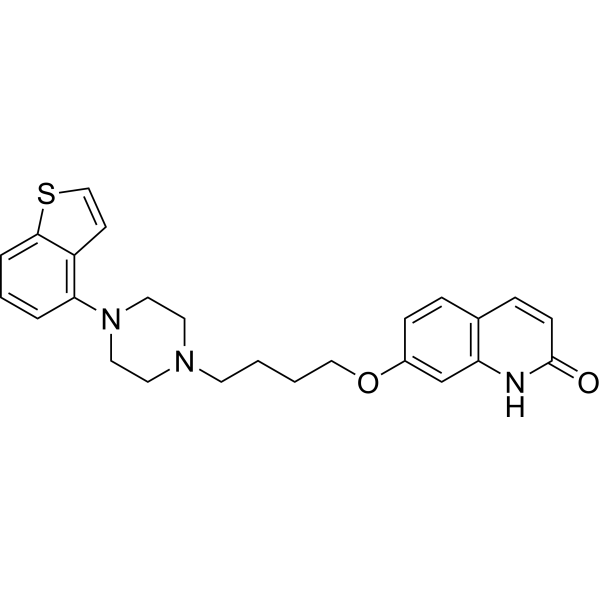
HY-15780
BrexpiprazoleAntipsychotic Agent -
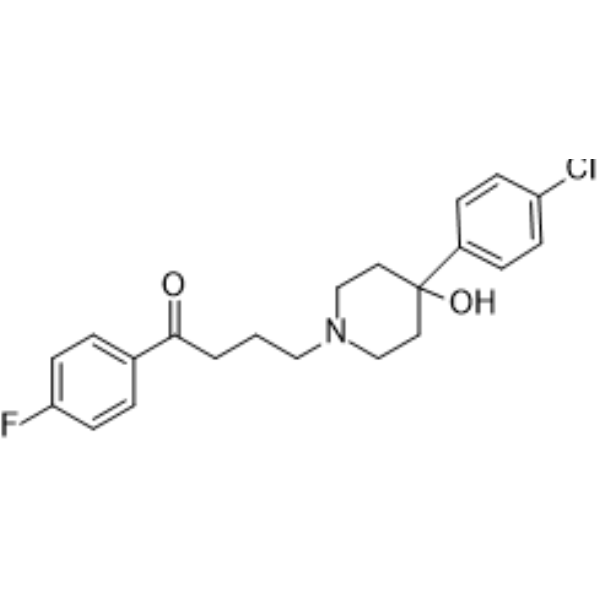
HY-14538
HaloperidolDopamine Receptor Antagonist -
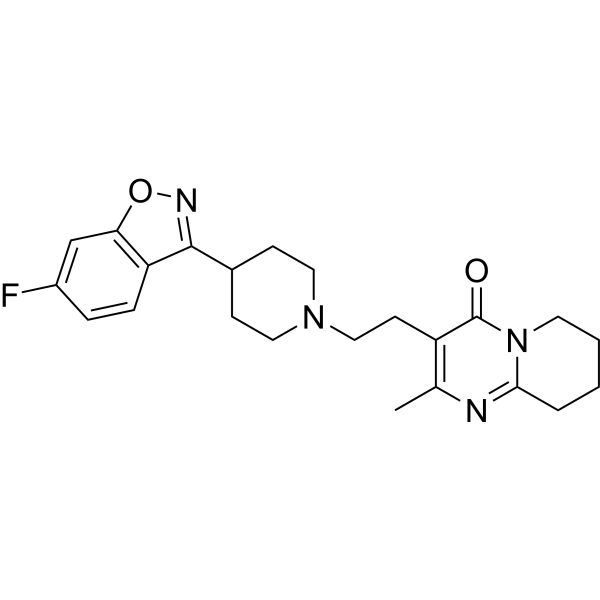
HY-11018
Risperidone5-HT2 Receptor Blocker -
HY-14541
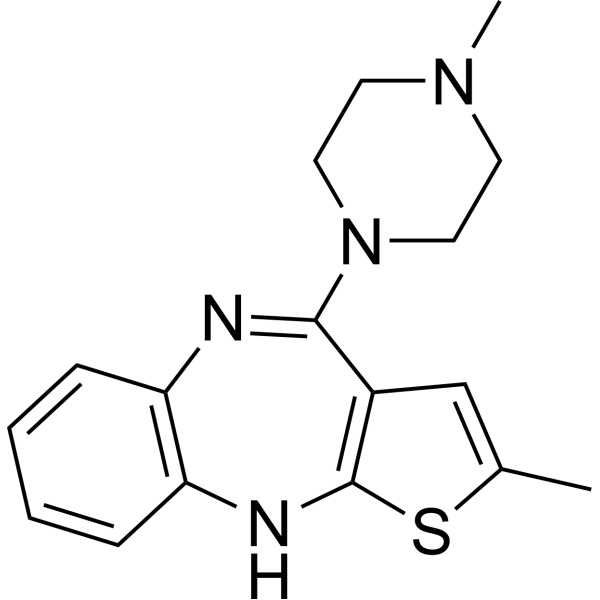
Olanzapine5-HT2/D1/D2 Antagonist -
HY-14546
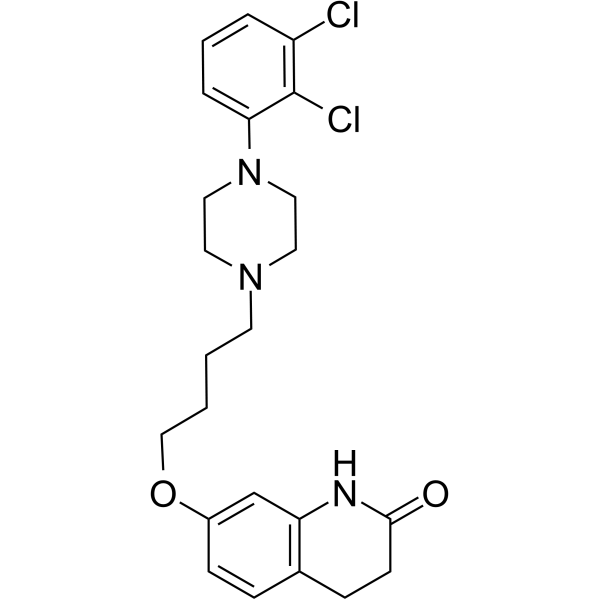
AripiprazoleD2/5-HT1A Agonist -
HY-14539
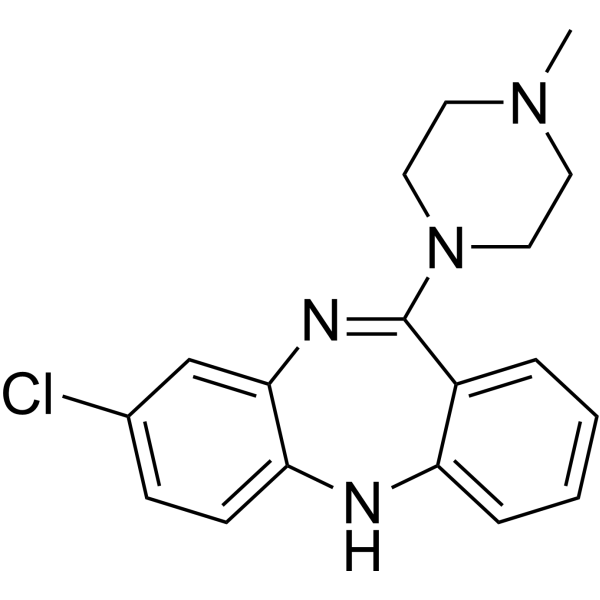
ClozapineAntipsychotic Agent -
HY-14763A
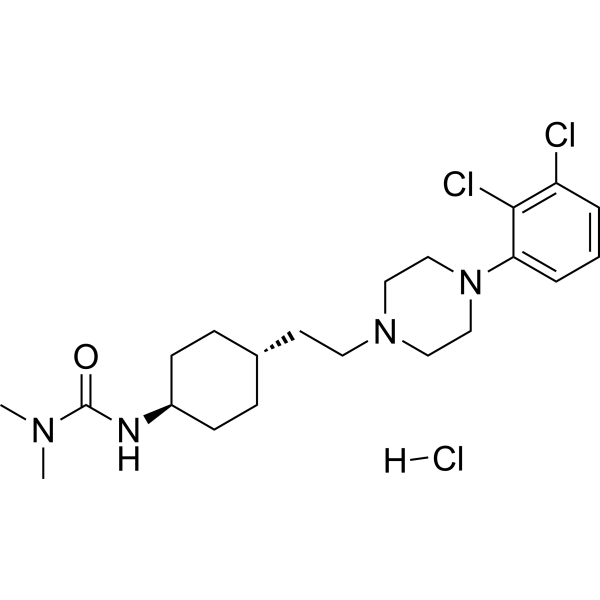
Cariprazine hydrochlorideDopamine Receptor Modulator -
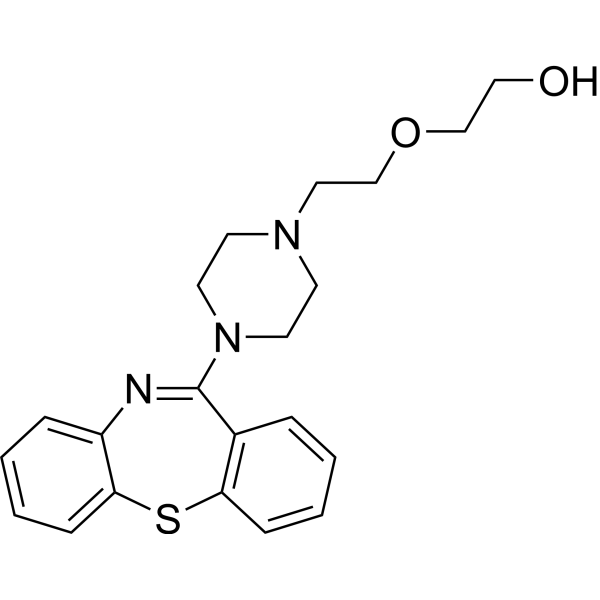
HY-14544
Quetiapine5-HT Agonist/D2 Antagonist -
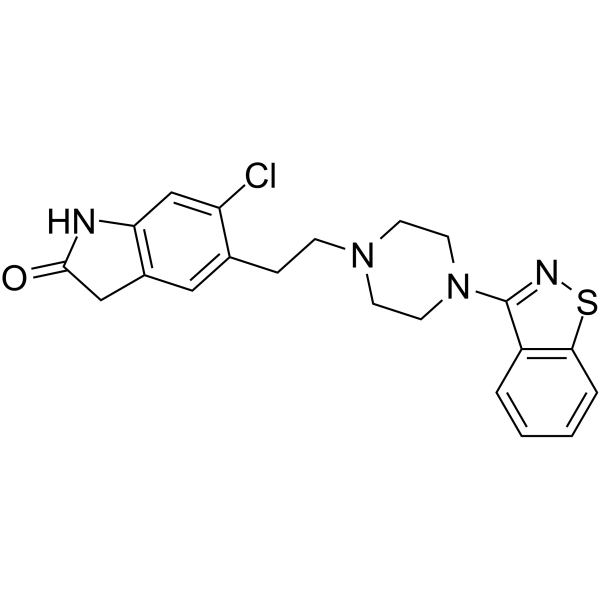
HY-14542
Ziprasidone5-HT/DA Receptor Antagonist -
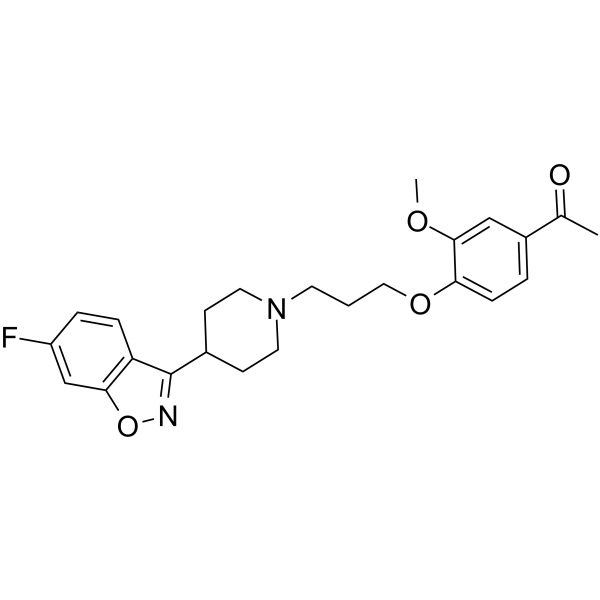
HY-17410
IloperidoneD2/5-HT2 Receptor Antagonist -
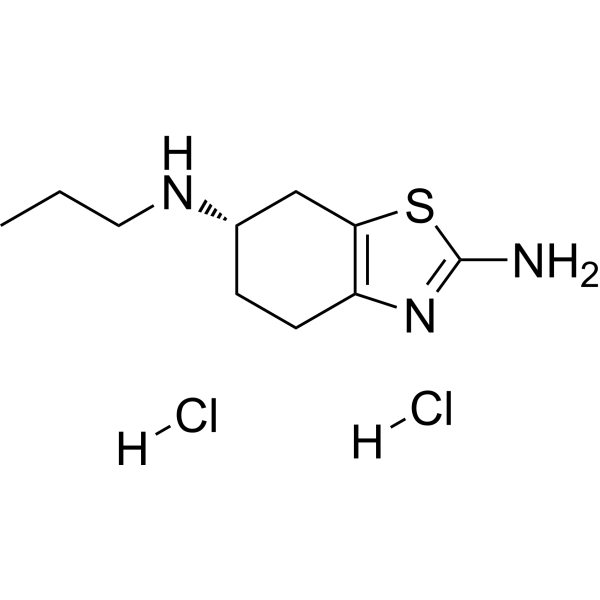
HY-17355
Pramipexole dihydrochlorideDopamine Receptor Agonist -
HY-B0032A
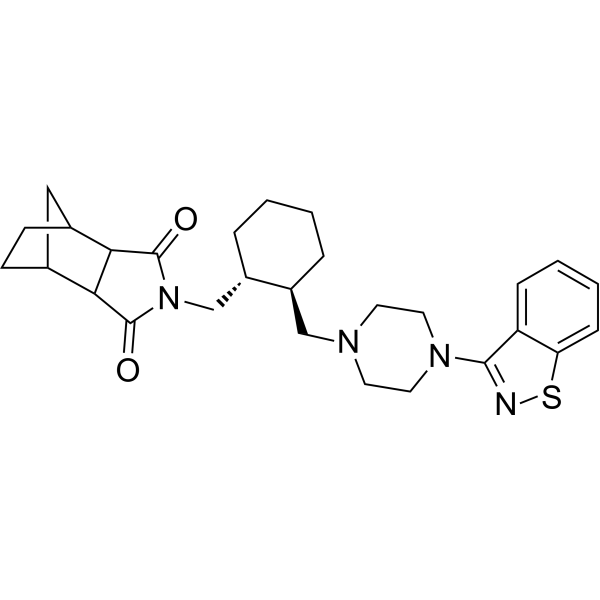
Lurasidone
Publications Citing Use of MedChemExpress (MCE) Cariprazine
More- Nature. 2024 Feb;626(7998):411-418. [Abstract]
- Nat Neurosci. 2022 Jan;25(1):39-49. [Abstract]
- Genes Dis. 2025 Jun 18;13(2):101718. [Abstract]
- Pharmaceuticals (Basel). 2026 Aug 3;19(8):1219.
- ACS Chem Neurosci. 2020 Jan 15;11(2):173-183. [Abstract]
- J Pharm Biomed Anal. 2023 Nov 30:236:115740. [Abstract]
- Fundam Clin Pharmacol. 2022 Dec;36(6):976-984. [Abstract]
- Curr Zool. 2025 Jun 27.
- Preprints. 2026 Jun 19.
All Dopamine Receptor Isoforms
MoreAll 5-HT Receptor Isoforms
More

Biological Activity
Description
IC50 & Target
|
5-HT1A Receptor |
D2 Receptor 0.49 nM (Ki) |
D3 Receptor 0.085 nM (Ki) |
5-HT1A Receptor 2.6 nM (Ki) |
Cellular Effect
|
Cell Line

|
Type | Value | Description | References |
|---|---|---|---|---|
| CHO-K1 | IC50 |
20.72 μM
Compound: Cariprazine
|
Inhibition of recombinant human ERG expressed in CHOK1 cells at -80 mV holding potential after 2 mins by patch clamp assay
Inhibition of recombinant human ERG expressed in CHOK1 cells at -80 mV holding potential after 2 mins by patch clamp assay
|
[PMID: 27487565] |
| HEK293 | EC50 |
110 nM
Compound: 2b, cariprazine, RGH-188
|
Agonist activity at human dopamine D2 short receptor transiently expressed in HEK293 cells co-expressing Galphai2 after 30 mins by [35S]GTPgammaS binding assay
Agonist activity at human dopamine D2 short receptor transiently expressed in HEK293 cells co-expressing Galphai2 after 30 mins by [35S]GTPgammaS binding assay
|
[PMID: 24831693] |
| HEK293 | EC50 |
5.8 nM
Compound: 2b, cariprazine, RGH-188
|
Agonist activity at human dopamine D3 receptor transiently expressed in HEK293 cells co-expressing Galphao1 after 30 mins by [35S]GTPgammaS binding assay
Agonist activity at human dopamine D3 receptor transiently expressed in HEK293 cells co-expressing Galphao1 after 30 mins by [35S]GTPgammaS binding assay
|
[PMID: 24831693] |
| HEK293 | IC50 |
1.7 nM
Compound: 2b, cariprazine, RGH-188
|
Antagonist activity at human dopamine D2 short receptor transiently expressed in HEK293 cells assessed as inhibition of beta-arrestin recruitment after 6 hrs by chemiluminescence assay
Antagonist activity at human dopamine D2 short receptor transiently expressed in HEK293 cells assessed as inhibition of beta-arrestin recruitment after 6 hrs by chemiluminescence assay
|
[PMID: 24831693] |
In Vitro
Cariprazine stimulates inositol phosphate (IP) formation with a high potency (pEC50 8.5) with relatively low efficacy (Emax 30%)[2]. Cariprazine, a novel candidate antipsychotic, demonstrated approximately 10-fold higher affinity for human D3 versus human D2L and human D2S receptors (pKi 10.07, 9.16, and 9.31, respectively). Cariprazine displays high affinity at human serotonin (5-HT) type 2B receptors (pKi 9.24) with pure antagonism. Cariprazine has lower affinity at human and rat hippocampal 5-HT1A receptors (pKi 8.59 and 8.34, respectively) and demonstrates low intrinsic efficacy. Cariprazine displays low affinity at human 5-HT2A receptors (pKi 7.73). Moderate or low affinity for histamine H1 and 5-HT2C receptors (pKi 7.63 and 6.87, respectively) suggest Cariprazine's reduced propensity for adverse events related to these receptors[2]. Cariprazine is over sixfold more potent (EC50=1.4 nM) than Aripiprazole (EC50=9.2 nM) in inhibiting isoproterenol-induced cAMP production in HEK-293 cells[4].
MedChemExpress (MCE) has not independently confirmed the accuracy of these methods. They are for reference only. .
In Vivo
MedChemExpress (MCE) has not independently confirmed the accuracy of these methods. They are for reference only.


Chemical Information
-
CAS No. 839712-12-8
-
Appearance Solid
-
Molecular Weight 427.41
-
Formula C21H32Cl2N4O
-
Color White to light brown
-
SMILES
O=C(N[C@H]1CC[C@H](CCN2CCN(C3=CC=CC(Cl)=C3Cl)CC2)CC1)N(C)C
-
Synonyms
RGH-188
-
Shipping
Room temperature in continental US; may vary elsewhere.
-
Storage
Powder -20°C 3 years 4°C 2 years In solvent -80°C 2 years -20°C 1 year


Publications (9)
-
Journal Impact Factor
-
Most Recent
-
Nature
2024 Feb;626(7998):411-418. PMID: 38297130 -
Nat Neurosci
Structure-based design of a novel third-generation antipsychotic drug lead with potential antidepressant properties. [Abstract]2022 Jan;25(1):39-49. PMID: 34887590 -
Genes Dis
circFKBP8(5S,6)-encoded protein promotes stress susceptibility in mice by down-regulating dopamine D3 receptor expression and its downstream AMPK/mTOR/ULK1 autophagy signaling. [Abstract]2025 Jun 18;13(2):101718. PMID: 41459113 -
-
ACS Chem Neurosci
Discovery of Procognitive Antipsychotics by Combining Muscarinic M1 Receptor Structure-Activity Relationship with Systems Response Profiles in Zebrafish Larvae. [Abstract]2020 Jan 15;11(2):173-183. PMID: 31850734 -
J Pharm Biomed Anal
Volumetric absorptive microsampling for the therapeutic drug monitoring of psychiatric patients treated with cariprazine. [Abstract]2023 Nov 30:236:115740. PMID: 37776628 -
Fundam Clin Pharmacol
Receptor density influences the recruitment bias of aripiprazole and brexpiprazole at the dopamine D2L receptor. [Abstract]2022 Dec;36(6):976-984. PMID: 35767599 -
-


Solvent & Solubility
In Vitro:
DMSO : 2 mg/mL (4.68 mM; ultrasonic and warming and heat to 60°C; Hygroscopic DMSO has a significant impact on the solubility of product, please use newly opened DMSO)
Please refer to the solubility information to select the appropriate solvent. Once prepared, please aliquot and store the solution to prevent product inactivation from repeated freeze-thaw cycles.
Storage method and period of stock solution: -80°C, 2 years; -20°C, 1 year. When stored at -80°C, please use it within 2 years. When stored at -20°C, please use it within 1 year.
Please refer to the solubility information to select the appropriate solvent. Once prepared, please aliquot and store the solution to prevent product inactivation from repeated freeze-thaw cycles.
Storage method and period of stock solution: -80°C, 2 years; -20°C, 1 year. When stored at -80°C, please use it within 2 years. When stored at -20°C, please use it within 1 year.
Concentration (start) × Volume (start) = Concentration (final) × Volume (final)
In Vivo:
Select the appropriate dissolution method based on your experimental animal and administration route.
- For the following dissolution methods, please ensure to first prepare a clear stock solution using an In Vitro approach and then sequentially add co-solvents:
- To ensure reliable experimental results, the clarified stock solution can be appropriately stored based on storage conditions. As for the working solution for In Vivo experiments, it is recommended to prepare freshly and use it on the same day.
- The percentages shown for the solvents indicate their volumetric ratio in the final prepared solution. If precipitation or phase separation occurs during preparation, heat and/or sonication can be used to aid dissolution.
Add each solvent one by one: 10% DMSO 40% PEG300 5% Tween-80 45% Saline
Solubility: ≥ 1 mg/mL (2.34 mM); Clear solution
This protocol yields a clear solution of ≥ 1 mg/mL (saturation unknown).
Taking 1 mL working solution as an example, add 100 μL DMSO stock solution (10.0 mg/mL) to 400 μL PEG300, and mix evenly; then add 50 μL Tween-80 and mix evenly; then add 450 μL Saline to adjust the volume to 1 mL.
Preparation of Saline: Dissolve 0.9 g sodium chloride in ddH₂O and dilute to 100 mL to obtain a clear Saline solution.
In Vivo Dissolution Calculator
Please enter the basic information of animal experiments:
-
-
-
-
Recommended: Prepare an additional quantity of animals to account for potential losses during experiments.
Please enter your animal formula composition:
-
%DMSO +
Recommended: Keep the proportion of DMSO in working solution below 2% if your animal is weak.
-
%+
-
+%Tween-80 + +
-
%Saline +
The co-solvents required include: DMSO, . All of co-solvents are available by MedChemExpress (MCE). , Tween 80. All of co-solvents are available by MedChemExpress (MCE).
Working solution concentration: 0.22 mg/mL
Method for preparing stock solution: mg drug dissolved in μL DMSO. Stock solution concentration: mg/mL.
1. Take μL DMSO stock solution;
2. Add μL .
μL , mix evenly;
3. Then add μL Tween 80, mix evenly;
4. Then add μL
Please ensure that the stock solution in the first step is dissolved to a clear state, and add co-solvents in sequence. You can use ultrasonic heating (ultrasonic cleaner, recommended frequency 20-40 kHz), vortexing, etc. to assist dissolution.


Purity & Documentation
-
Data Sheet (282 KB)
-
SDS (393 KB)
- English - EN (393 KB)
- Français - FR (393 KB)
- Deutsch - DE (393 KB)
- Norwegian - NO (393 KB)
- Español - ES (393 KB)
- Swedish - SV (393 KB)
- Italian - IT (393 KB)
- Korean - KR (393 KB)
- Portuguese - PT (393 KB)
-
Handling Instructions (2659 KB)
References
[1]. Seneca N, et al. Occupancy of dopamine D2 and D3 and serotonin 5-HT1A receptors by the novel antipsychotic drug candidate, cariprazine (RGH-188), in monkey brain measured using positron emission tomography. Psychopharmacology (Berl). 2011 Dec;218(3):579-8 [Content Brief]
[2]. Kiss B, et al. Cariprazine (RGH-188), a dopamine D(3) receptor-preferring, D(3)/D(2) dopamine receptor antagonist-partial agonist antipsychotic candidate: in vitro and neurochemical profile. J Pharmacol Exp Ther. 2010 Apr;333(1):328-40. [Content Brief]
[3]. Zimnisky R, et al. Cariprazine, a dopamine D(3)-receptor-preferring partial agonist, blocks phencyclidine-induced impairments of working memory, attention set-shifting, and recognition memory in the mouse. Psychopharmacology (Berl). 2013 Mar;226(1):91-100 [Content Brief]
[4]. Gao Y, et al. Cariprazine exerts antimanic properties and interferes with dopamine D2 receptor β-arrestin interactions. Pharmacol Res Perspect. 2015 Feb;3(1):e00073. [Content Brief]


Complete Stock Solution Preparation Table
Please refer to the solubility information to select the appropriate solvent. Once prepared, please aliquot and store the solution to prevent product inactivation from repeated freeze-thaw cycles.
Storage method and period of stock solution: -80°C, 2 years; -20°C, 1 year. When stored at -80°C, please use it within 2 years. When stored at -20°C, please use it within 1 year.
| Optional Solvent | Concentration Solvent Mass | 1 mg | 5 mg | 10 mg | 25 mg |
|---|---|---|---|---|---|
| DMSO | 1 mM | 2.3397 mL | 11.6984 mL | 23.3967 mL | 58.4918 mL |


Cariprazine Related Classifications
HY-14763 Related Classifications
 Powered by Bioz