



VER-246608
Based on 4 publication(s) in Google Scholar
VER-246608 is a potent and ATP-competitive inhibitor of pyruvate dehydrogenase kinase (PDK) with IC50s of 35 nM, 40 nM, 84 nM, and 91 nM for PDK-1, PDK-3, PDK-2, and PDK-4, respectively.
Nos produits utilisent uniquement pour la recherche. Nous ne vendons pas aux patients.
- Pureté : 99.10%
- CAS No.: 1684386-71-7
- Formule: C28H23ClF2N4O4
- Masse moléculaire:552.96
-
Stockage:Powder -20°C, 3 years , 4°C, 2 years ; In solvent -80°C, 2 years , -20°C, 1 year

To place orders, for customer services and technical support, please contact: MedChemExpress USA
Tel: 609-228-6898 E-mail: [email protected] [email protected]


-
 Activité biologique
-
Chemical Information
-
Solvant et solubilité
- Pureté et documentation
- Références
-
 Help & FAQs


-
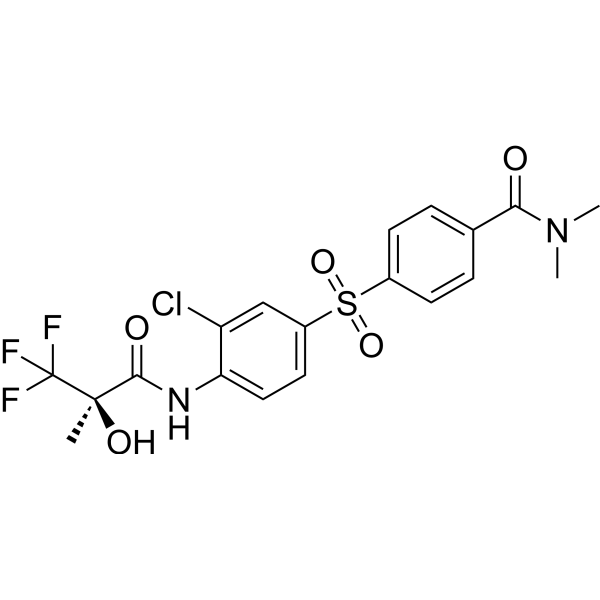
HY-16082
AZD7545PDHK2 Inhibitor -
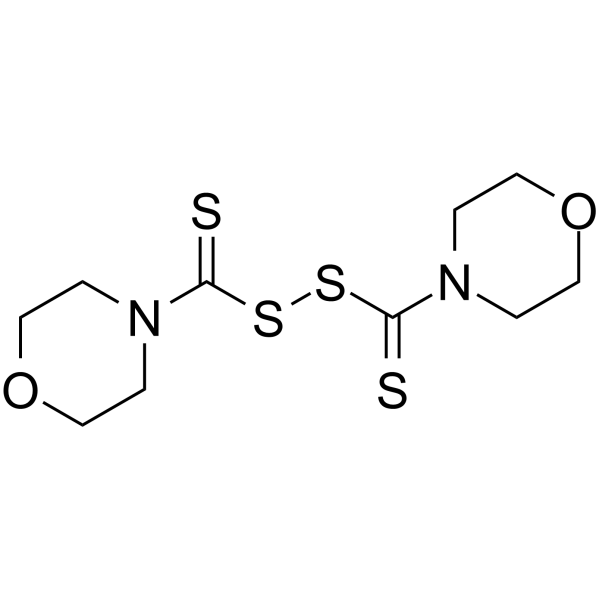
HY-19564
JX06PDK Inhibitor -
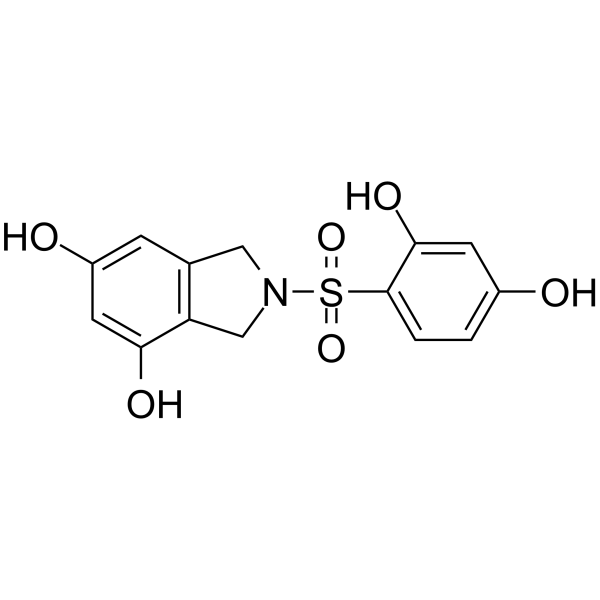
HY-121744
PS10PDK Inhibitor -
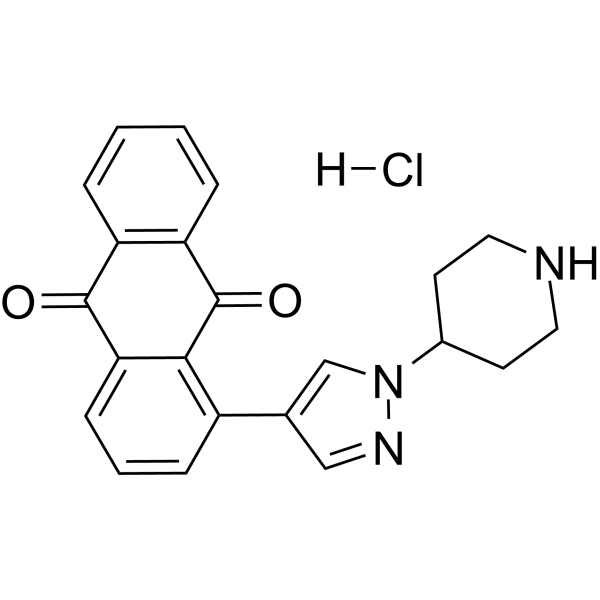
HY-135954A
PDK4-IN-1 hydrochloridePDK4 Inhibitor -
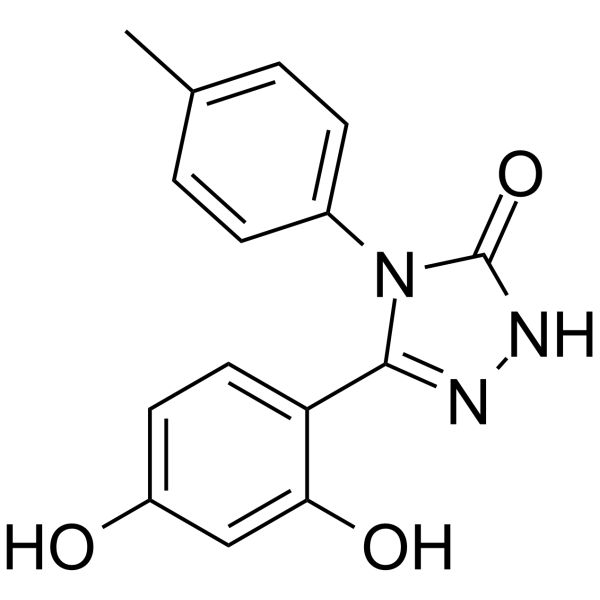
HY-128578
KPLH1130PDK Inhibitor -
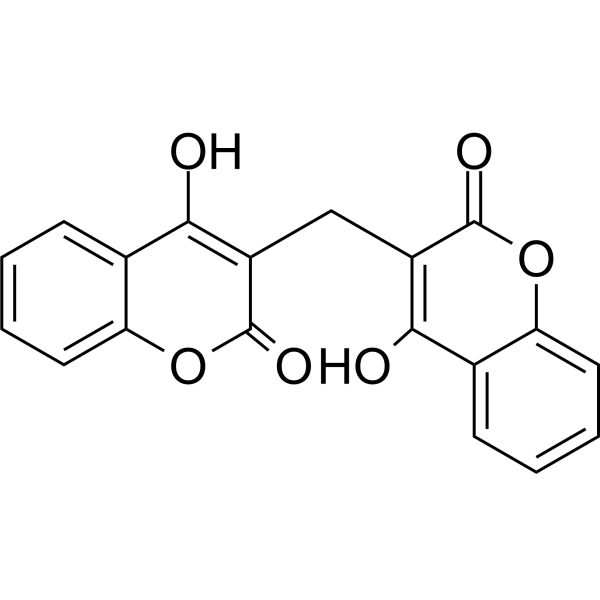
HY-N0645
DicoumarolPDHK Inhibitor -
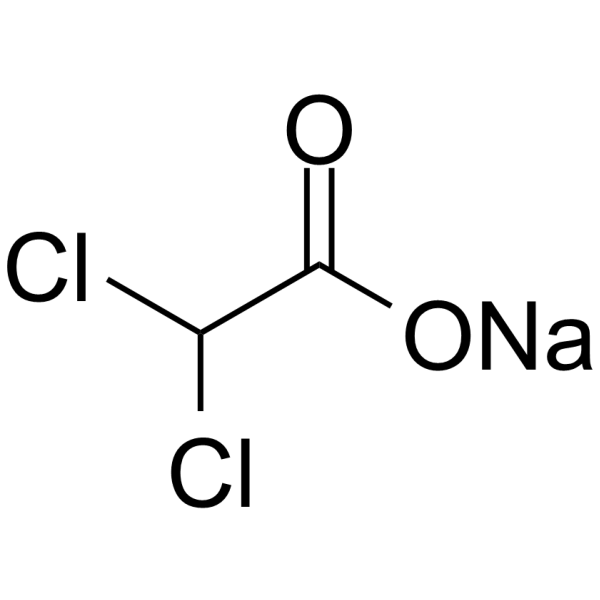
HY-Y0445A
Sodium dichloroacetatePDK Inhibitor -
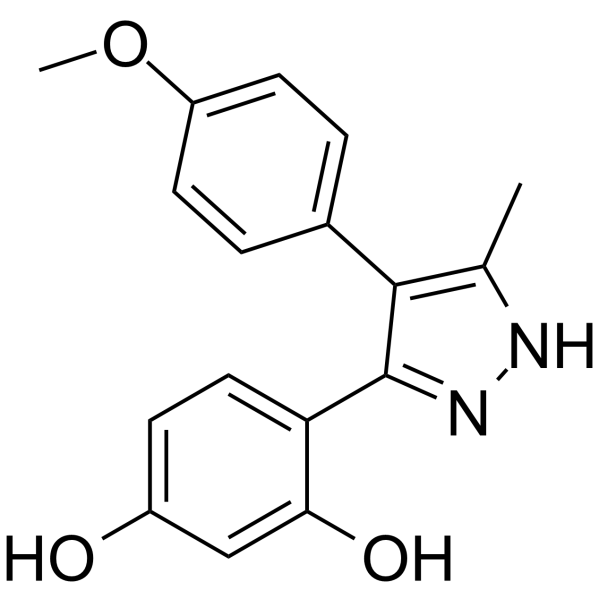
HY-114702
M77976PDK4 Inhibitor -
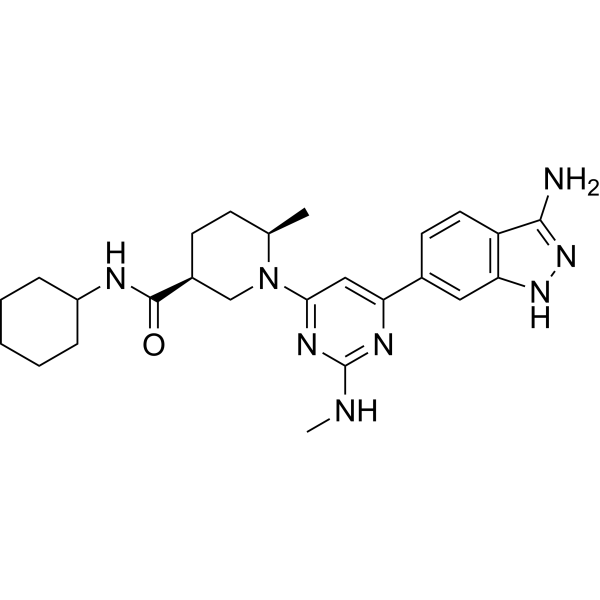
HY-14981
GSK2334470PDK1 Inhibitor -
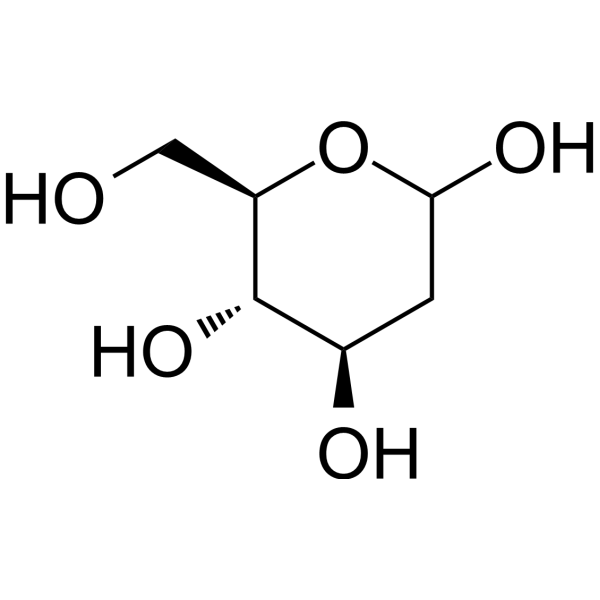
HY-13966
2-Deoxy-D-glucoseGlycolysis Inhibitor -
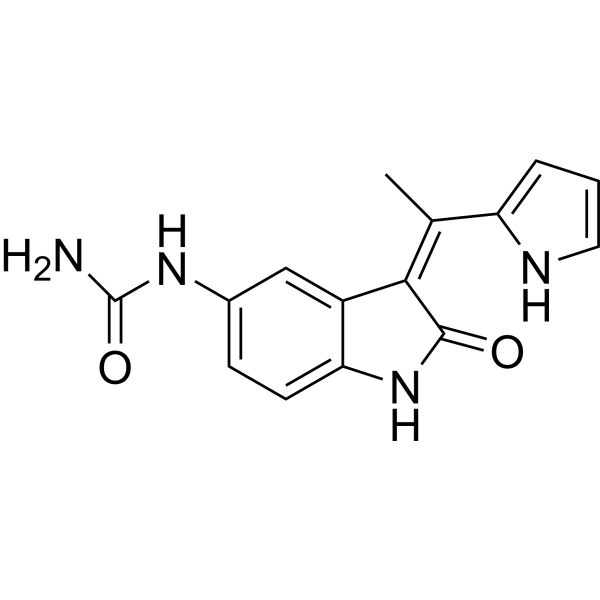
HY-13842
BX517PDK-1 Inhibitor -
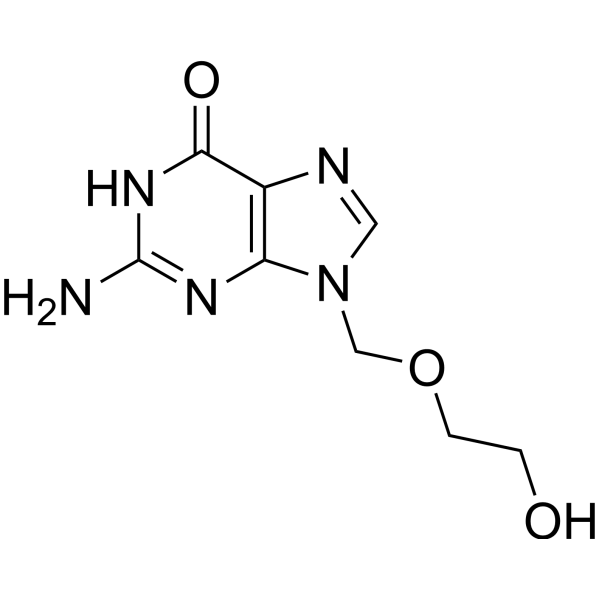
HY-17422
AcyclovirHSV Inhibitor
Publications Citing Use of MedChemExpress (MCE) VER-246608
More Customer Validation & Images

-
WB

-
Cell Proliferation/Viability Assay


Activité biologique
Description
IC50 & Target
IC50: 35 nM (PDK-1), 40 nM (PDK-3), 84 nM (PDK-2), 91 nM (PDK-4)[1]
Cellular Effect
|
Cell Line

|
Type | Value | Description | References |
|---|---|---|---|---|
| DU-145 | GI50 |
>50 μM
Compound: 6; VER-246608
|
Antiproliferative activity against p53 deficient human DU145 cells incubated for 72 hrs by CellTiter-Glo assay
Antiproliferative activity against p53 deficient human DU145 cells incubated for 72 hrs by CellTiter-Glo assay
|
[PMID: 31469962] |
| NCI-H1299 | GI50 |
>50 μM
Compound: 6; VER-246608
|
Antiproliferative activity against p53 deficient human H1299 cells incubated for 72 hrs by CellTiter-Glo assay
Antiproliferative activity against p53 deficient human H1299 cells incubated for 72 hrs by CellTiter-Glo assay
|
[PMID: 31469962] |
| PC-3 | GI50 |
26.2 μM
Compound: 40
|
Antiproliferative activity against human PC3 cells after 96 hrs by sulphorhodamine B assay
Antiproliferative activity against human PC3 cells after 96 hrs by sulphorhodamine B assay
|
[PMID: 28199108] |
In Vitro
VER-246608 is a novel pan-isoform ATP competitive inhibitor of PDK. VER-246608 demonstrates similar potency across all four PDK isoforms in a DELFIA-based enzyme functional assay in the sub 100 nM range. In terms of cellular biomarker modulation, VER-246608 suppresses the phosphorylation of the Ser293 residue of E1α (phosphorylated by all four PDK isozymes) with IC50 values of 266 nM. Treatment of PC-3 cells with 9 μM and 27 μM VER-246608 results in a 21% and 42% reduction, respectively, in media L-lactate levels following a 1 h incubation. VER-246608 also decreases D-glucose consumption at the same concentrations that result in reduced L-lactate production. An approximately 50% reduction in spheroid volume is achieved at concentrations of 10 μM and above, suggesting an increase in VER-246608 potency compared to monolayer growth[1].
MedChemExpress (MCE) has not independently confirmed the accuracy of these methods. They are for reference only. .


Chemical Information
-
CAS No. 1684386-71-7
-
Appearance Solid
-
Masse moléculaire 552.96
-
Formule C28H23ClF2N4O4
-
Color White to off-white
-
SMILES
O=C(C1=CC=C(O)C=C1O)N(CC2=CC=C(CNC(C(F)F)=O)C=C2)C(C=C3)=CC=C3C4=NC(Cl)=NC=C4C
-
Livraison
Room temperature in continental US; may vary elsewhere.
-
Stockage
Powder -20°C 3 years 4°C 2 years In solvent -80°C 2 years -20°C 1 year


Publications (4)
-
Journal Impact Factor
-
Most Recent
-
Cell Metab
2025 Apr 1;37(4):903-919.e10. PMID: 39933514
VER-246608 purchased from MedChemExpress. Usage Cited in: Cell Metab. 2025 Apr 1;37(4):903-919.e10. [Abstract]
Western blot analysis of phosphoPDHA1 (S293)/total PDHA1 in TPO3 and TPO4, with or without 50 µM VER-246608 (VER, 24 hours).
-
Adv Sci (Weinh)
Cordycepin Modulates Microglial M2 Polarization Coupled with Mitochondrial Metabolic Reprogramming by Targeting HKII and PDK2. [Abstract]2024 Aug;11(31):e2304687. PMID: 38889331
VER-246608 purchased from MedChemExpress. Usage Cited in: Adv Sci (Weinh). 2024 Aug;11(31):e2304687. [Abstract]
BV2 cells were treated with VER-246608 (VER) to investigate whether PDK2 can regulate oxidative phosphorylation (OXPHOS). The results showed that VER at a concentration of 100 nmol could restore LPS+Aβ-induced reduction in PDH activity, similar to the effect of COR.
-
Int J Biol Macromol
Targeting the PDK/PDH axis to reverse metabolic abnormalities by structure-based virtual screening with in vitro and in vivo experiments. [Abstract]2024 Feb 6;262(Pt 1):129970. PMID: 38325689 -


Solvant et solubilité
In Vitro:
DMSO : 100 mg/mL (180.84 mM; Need ultrasonic; Hygroscopic DMSO has a significant impact on the solubility of product, please use newly opened DMSO)
Please refer to the solubility information to select the appropriate solvent. Once prepared, please aliquot and store the solution to prevent product inactivation from repeated freeze-thaw cycles.
Storage method and period of stock solution: -80°C, 2 years; -20°C, 1 year. When stored at -80°C, please use it within 2 years. When stored at -20°C, please use it within 1 year.
Please refer to the solubility information to select the appropriate solvent. Once prepared, please aliquot and store the solution to prevent product inactivation from repeated freeze-thaw cycles.
Storage method and period of stock solution: -80°C, 2 years; -20°C, 1 year. When stored at -80°C, please use it within 2 years. When stored at -20°C, please use it within 1 year.
Concentration (start) × Volume (start) = Concentration (final) × Volume (final)
In Vivo:
Select the appropriate dissolution method based on your experimental animal and administration route.
- For the following dissolution methods, please ensure to first prepare a clear stock solution using an In Vitro approach and then sequentially add co-solvents:
- To ensure reliable experimental results, the clarified stock solution can be appropriately stored based on storage conditions. As for the working solution for In Vivo experiments, it is recommended to prepare freshly and use it on the same day.
- The percentages shown for the solvents indicate their volumetric ratio in the final prepared solution. If precipitation or phase separation occurs during preparation, heat and/or sonication can be used to aid dissolution.
Add each solvent one by one: 10% DMSO 40% PEG300 5% Tween-80 45% Saline
Solubility: ≥ 2.5 mg/mL (4.52 mM); Clear solution
This protocol yields a clear solution of ≥ 2.5 mg/mL (saturation unknown).
Taking 1 mL working solution as an example, add 100 μL DMSO stock solution (25.0 mg/mL) to 400 μL PEG300, and mix evenly; then add 50 μL Tween-80 and mix evenly; then add 450 μL Saline to adjust the volume to 1 mL.
Preparation of Saline: Dissolve 0.9 g sodium chloride in ddH₂O and dilute to 100 mL to obtain a clear Saline solution.
In Vivo Dissolution Calculator
Please enter the basic information of animal experiments:
-
-
-
-
Recommended: Prepare an additional quantity of animals to account for potential losses during experiments.
Please enter your animal formula composition:
-
%DMSO +
Recommended: Keep the proportion of DMSO in working solution below 2% if your animal is weak.
-
%+
-
+%Tween-80 + +
-
%Saline +
The co-solvents required include: DMSO, . All of co-solvents are available by MedChemExpress (MCE). , Tween 80. All of co-solvents are available by MedChemExpress (MCE).
Working solution concentration: 0.22 mg/mL
Method for preparing stock solution: mg drug dissolved in μL DMSO. Stock solution concentration: mg/mL.
1. Take μL DMSO stock solution;
2. Add μL .
μL , mix evenly;
3. Then add μL Tween 80, mix evenly;
4. Then add μL
Please ensure that the stock solution in the first step is dissolved to a clear state, and add co-solvents in sequence. You can use ultrasonic heating (ultrasonic cleaner, recommended frequency 20-40 kHz), vortexing, etc. to assist dissolution.


Pureté et documentation
-
Fiche technique (281 KB)
-
SDS (393 KB)
- English - EN (393 KB)
- Français - FR (393 KB)
- Deutsch - DE (393 KB)
- Norwegian - NO (393 KB)
- Español - ES (393 KB)
- Swedish - SV (393 KB)
- Italian - IT (393 KB)
- Korean - KR (393 KB)
- Portuguese - PT (393 KB)
-
Instruction de manipulation (2659 KB)
Références


Complete Stock Solution Preparation Table
Please refer to the solubility information to select the appropriate solvent. Once prepared, please aliquot and store the solution to prevent product inactivation from repeated freeze-thaw cycles.
Storage method and period of stock solution: -80°C, 2 years; -20°C, 1 year. When stored at -80°C, please use it within 2 years. When stored at -20°C, please use it within 1 year.
| Optional Solvent | Concentration Solvent Mass | 1 mg | 5 mg | 10 mg | 25 mg |
|---|---|---|---|---|---|
| DMSO | 1 mM | 1.8084 mL | 9.0422 mL | 18.0845 mL | 45.2112 mL |
| 5 mM | 0.3617 mL | 1.8084 mL | 3.6169 mL | 9.0422 mL | |
| 10 mM | 0.1808 mL | 0.9042 mL | 1.8084 mL | 4.5211 mL | |
| 15 mM | 0.1206 mL | 0.6028 mL | 1.2056 mL | 3.0141 mL | |
| 20 mM | 0.0904 mL | 0.4521 mL | 0.9042 mL | 2.2606 mL | |
| 25 mM | 0.0723 mL | 0.3617 mL | 0.7234 mL | 1.8084 mL | |
| 30 mM | 0.0603 mL | 0.3014 mL | 0.6028 mL | 1.5070 mL | |
| 40 mM | 0.0452 mL | 0.2261 mL | 0.4521 mL | 1.1303 mL | |
| 50 mM | 0.0362 mL | 0.1808 mL | 0.3617 mL | 0.9042 mL | |
| 60 mM | 0.0301 mL | 0.1507 mL | 0.3014 mL | 0.7535 mL | |
| 80 mM | 0.0226 mL | 0.1130 mL | 0.2261 mL | 0.5651 mL | |
| 100 mM | 0.0181 mL | 0.0904 mL | 0.1808 mL | 0.4521 mL |


VER-246608 Related Classifications
HY-12492 Related Classifications
 Powered by Bioz