



CVT-313
Based on 12 publication(s) in Google Scholar
CVT-313 (Cdk2 Inhibitor III) is a potent, selective, reversible, and ATP-competitive inhibitor of CDK2 with IC50 of 0.5 μM. CVT-313 inhibits CDC5L phosphorylation.
Nur für Forschungszwecke. Wir verkaufen nicht an Patienten.
- Reinheit : 99.90%
- CAS. Nr.: 199986-75-9
- Formel: C20H28N6O3
- Molecular Weight:400.47
-
Speicherung:Powder -20°C, 3 years , 4°C, 2 years ; In solvent -80°C, 2 years , -20°C, 1 year

To place orders, for customer services and technical support, please contact: MedChemExpress USA
Tel: 609-228-6898 E-mail: [email protected] [email protected]


-
 Biologische Aktivität
-
Chemical Information
-
Lösungsmittel & Löslichkeit
- Protokoll
- Reinheit & Dokumentation
- Verweise
-
 Help & FAQs


-
HY-12529
Ro-3306CDK1 Inhibitor -
HY-16297A
AbemaciclibCDK4/6 Inhibitor -
HY-10492
DinaciclibCDK2/5/9 Inhibitor -
HY-30237
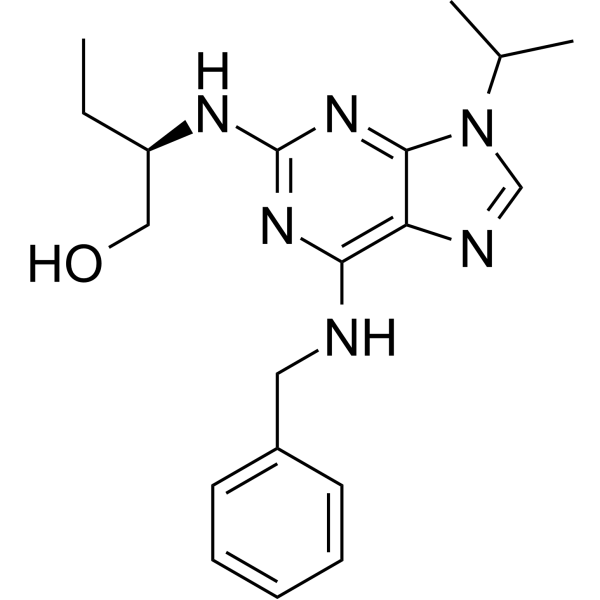
(R)-RoscovitineCDKs Inhibitor -
HY-15777
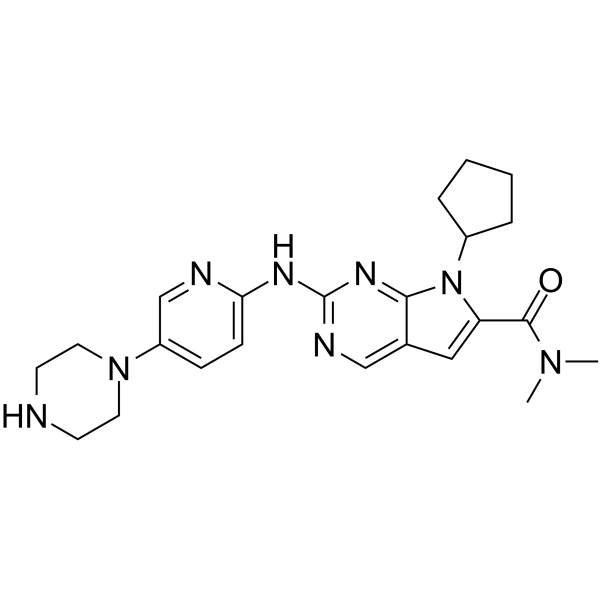
RibociclibCDK4/6 Inhibitor -
HY-50767
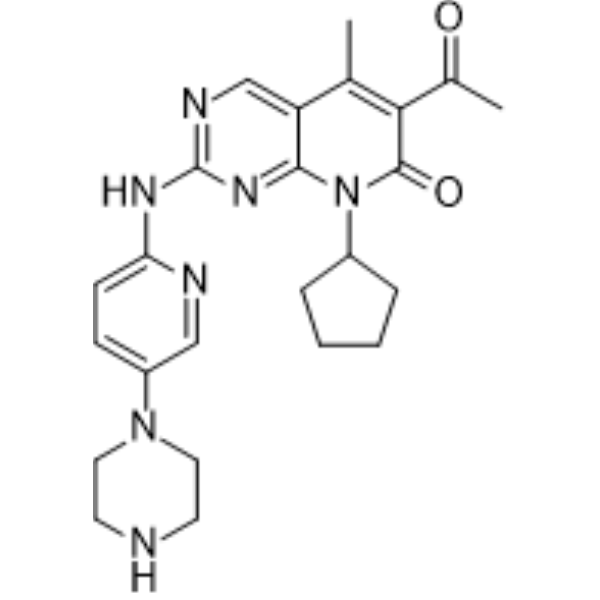
PalbociclibCDK4/6 Inhibitor -
HY-80013
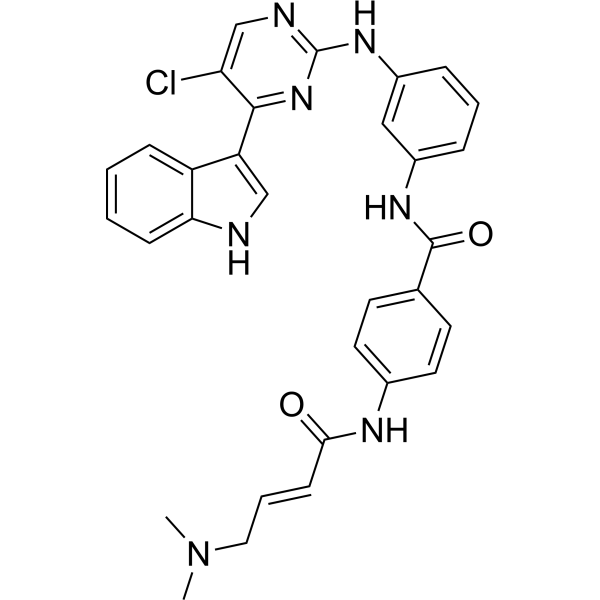
THZ1CDK7 Inhibitor -
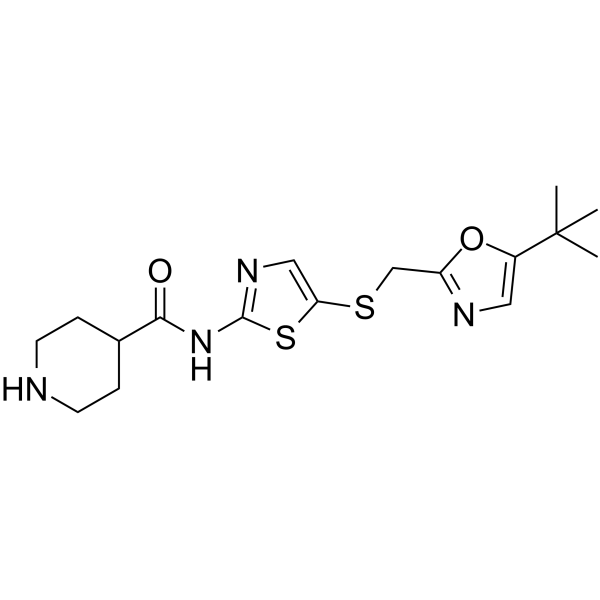
HY-10008
SNS-032CDK Inhibitor -
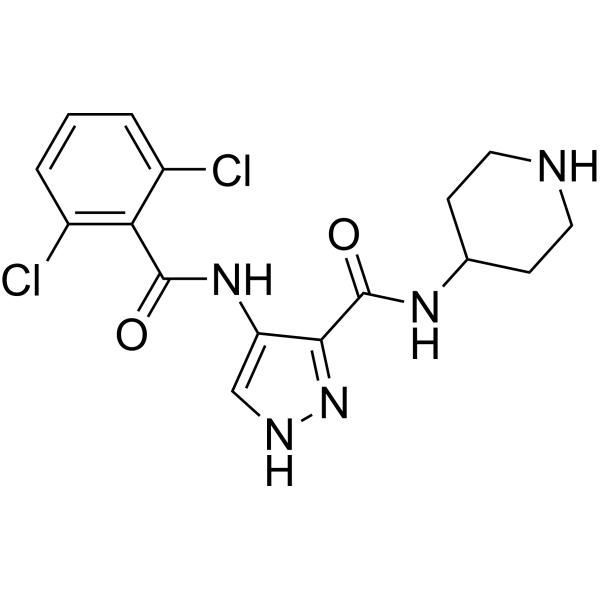
HY-50940
AT7519CDK Inhibitor -
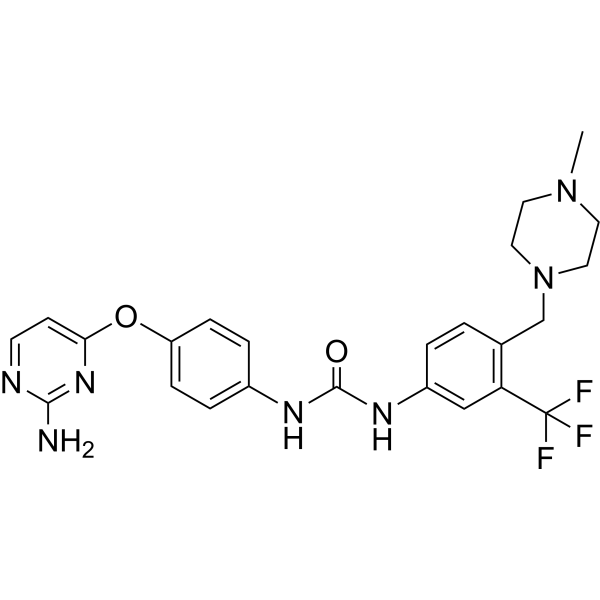
HY-15004
AUZ 454CDK2 Inhibitor -
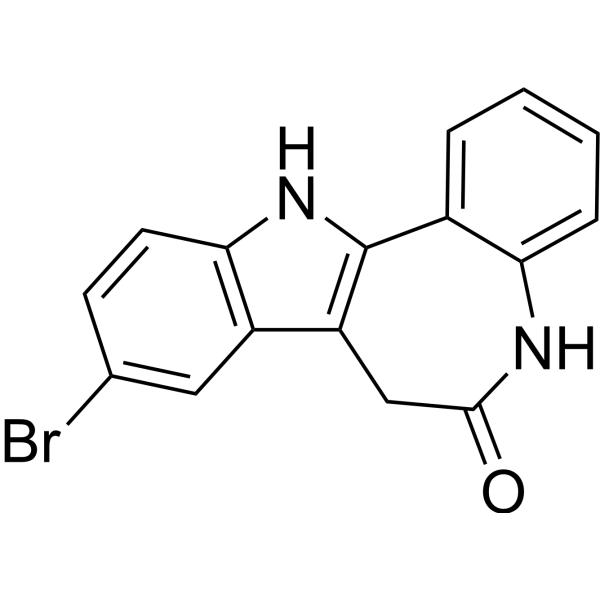
HY-12302
KenpaulloneCDK1/GSK-3β Inhibitor -
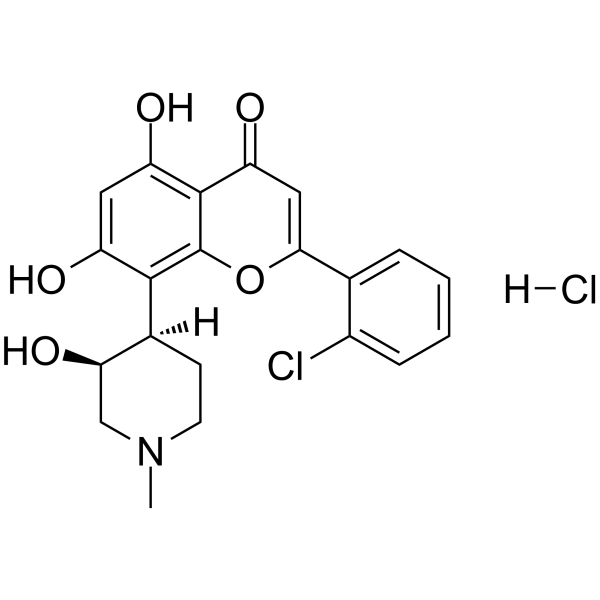
HY-10006
Flavopiridol HydrochlorideCDK Inhibitor
Publications Citing Use of MedChemExpress (MCE) CVT-313
More- Signal Transduct Target Ther. 2025 Dec 15;10(1):406. [Abstract]
- Mol Cancer. 2024 Apr 29;23(1):86. [Abstract]
- Cancer Res. 2026 Sep 8. [Abstract]
- Cell Death Dis. 2026 Jul 1.
- Clin Cancer Res. 2024 Sep 13;30(18):4179-4189. [Abstract]
- Int J Mol Med. 2025 Dec;56(6):198. [Abstract]
- Cell Rep. 2024 Dec 30;44(1):115116. [Abstract]
- Int J Mol Sci. 2022 Feb 24;23(5):2493. [Abstract]
- Arab J Chem. 2023 May 16, 104994.
- Toxicol Appl Pharmacol. 2021 Nov 15:431:115739. [Abstract]
- Biomed Res Int. 2019 May 16:2019:2821731. [Abstract]
- Oncol Lett. 2026 Jul 10;32(3):405.


Biologische Aktivität
Beschreibung
IC50 & Target
[1]|
cdk2/cyclin A 0.5 μM (IC50) |
Cdk1/cyclin B 4.2 μM (IC50) |
Cdk4/cyclin D1 215 μM (IC50) |
Cellular Effect
|
Cell Line

|
Type | Value | Description | References |
|---|---|---|---|---|
| Sf9 | IC50 |
>20 μM
Compound: CVT313
|
Inhibition of GST-tagged CDK4/cyclin D1 (unknown origin) expressed in Baculovirus infected Sf9 cells using RPPTLSPIPHIPR peptide as substrate in presence of [gamma-33P]-ATP by radiometric filter binding assay
Inhibition of GST-tagged CDK4/cyclin D1 (unknown origin) expressed in Baculovirus infected Sf9 cells using RPPTLSPIPHIPR peptide as substrate in presence of [gamma-33P]-ATP by radiometric filter binding assay
|
[PMID: 30234987] |
| Sf9 | IC50 |
0.176 μM
Compound: CVT313
|
Inhibition of His-tagged CDK2/cyclin E (unknown origin) expressed in Baculovirus infected Sf9 cells using histone H1 as substrate in presence of [gamma-33P]-ATP by radiometric filter binding assay
Inhibition of His-tagged CDK2/cyclin E (unknown origin) expressed in Baculovirus infected Sf9 cells using histone H1 as substrate in presence of [gamma-33P]-ATP by radiometric filter binding assay
|
[PMID: 30234987] |
| Sf9 | IC50 |
0.419 μM
Compound: CVT313
|
Inhibition of GST-tagged CDK5/p25 (unknown origin) expressed in Baculovirus infected Sf9 cells using histone H1 as substrate as substrate in presence of [gamma-33P]-ATP by radiometric filter binding assay
Inhibition of GST-tagged CDK5/p25 (unknown origin) expressed in Baculovirus infected Sf9 cells using histone H1 as substrate as substrate in presence of [gamma-33P]-ATP by radiometric filter binding assay
|
[PMID: 30234987] |
| Sf9 | IC50 |
2.3 μM
Compound: CVT313
|
Inhibition of GST-tagged CDK9/CyclinT1 (unknown origin) expressed in Baculovirus infected Sf9 cells using YSPTSPS-2 KK peptide as substrate as substrate in presence of [gamma-33P]-ATP by radiometric filter binding assay
Inhibition of GST-tagged CDK9/CyclinT1 (unknown origin) expressed in Baculovirus infected Sf9 cells using YSPTSPS-2 KK peptide as substrate as substrate in presence of [gamma-33P]-ATP by radiometric filter binding assay
|
[PMID: 30234987] |
| Sf9 | IC50 |
3.7 μM
Compound: CVT313
|
Inhibition of His-tagged CDK1/cyclin B1 (unknown origin) expressed in Baculovirus infected Sf9 cells using histone H1 as substrate in presence of [gamma-33P]-ATP by radiometric filter binding assay
Inhibition of His-tagged CDK1/cyclin B1 (unknown origin) expressed in Baculovirus infected Sf9 cells using histone H1 as substrate in presence of [gamma-33P]-ATP by radiometric filter binding assay
|
[PMID: 30234987] |
| Sf9 | IC50 |
9.2 μM
Compound: CVT313
|
Inhibition of GST-tagged CDK7/cyclinH/MAT1 (unknown origin) expressed in Baculovirus infected Sf9 cells using YSPTSPS-2 KK peptide as substrate as substrate in presence of [gamma-33P]-ATP by radiometric filter binding assay
Inhibition of GST-tagged CDK7/cyclinH/MAT1 (unknown origin) expressed in Baculovirus infected Sf9 cells using YSPTSPS-2 KK peptide as substrate as substrate in presence of [gamma-33P]-ATP by radiometric filter binding assay
|
[PMID: 30234987] |
In Vitro
CVT-313 (Cdk2 Inhibitor III) has been shown to inhibit other kinases, but at much higher IC50 values, i.e., CDK1 (IC50=4.2 μM), CDK4 D1 (IC50=215 μM), and MAPK/PKA/PKC (IC50>1.25 mM), compared to CDK2 (IC50=0.5 μM). CVT-313 has been shown to have profound effects on cell proliferation at concentrations of 5-20 μM[1]. CVT-313 is a potent CDK2 inhibitor, which is identified from a purine analog library with an IC50 of 0.5 μM in vitro. Inhibition is competitive with respect to ATP (Ki=95 nM), and selective CVT-313 has no effect on other, nonrelated ATP-dependent serine/threonine kinases. When added to CDK1 or CDK4, a 8.5- and 430-fold higher concentration of CVT-313 is required for half-maximal inhibition of the enzyme activity. Using normal and tumor human/murine cell lines, the effects of CVT-313 on cell proliferation is measured. The IC50 for growth inhibition ranged from 1.25 to 20 μM[2].
MedChemExpress (MCE) has not independently confirmed the accuracy of these methods. They are for reference only.


Chemical Information
-
CAS. Nr. 199986-75-9
-
Appearance Solid
-
Molecular Weight 400.47
-
Formel C20H28N6O3
-
Color White to off-white
-
SMILES
CC(N1C=NC2=C(NCC3=CC=C(OC)C=C3)N=C(N(CCO)CCO)N=C12)C
-
Synonyms
Cdk2 Inhibitor III
-
Versand
Room temperature in continental US; may vary elsewhere.
-
Speicherung
Powder -20°C 3 years 4°C 2 years In solvent -80°C 2 years -20°C 1 year


Publications (12)
-
Journal Impact Factor
-
Most Recent
-
Signal Transduct Target Ther
Selective depletion of tumor-associated SAMHD1 enhances chemotherapeutic efficacy and antitumor immune responses. [Abstract]2025 Dec 15;10(1):406. PMID: 41392286 -
Mol Cancer
2024 Apr 29;23(1):86. PMID: 38685067 -
Cancer Res
Detection of Single-Stranded DNA Gaps Reveals a Functional Biomarker of Therapeutic Response. [Abstract]2026 Sep 8. PMID: 42708806 -
-
Clin Cancer Res
CDK9 inhibition by dinaciclib is a therapeutic vulnerability in epithelioid hemangioendothelioma. [Abstract]2024 Sep 13;30(18):4179-4189. PMID: 39052240 -
Int J Mol Med
CDC5L binds to ELAVL1 to inhibit pyroptosis in hepatocellular carcinoma through the Caspase 3/GSDME signaling pathway. [Abstract]2025 Dec;56(6):198. PMID: 40937577 -
Cell Rep
IMPDH2 dephosphorylation under FGFR signaling promotes S-phase progression and tumor growth. [Abstract]2024 Dec 30;44(1):115116. PMID: 39739531 -
Int J Mol Sci
Cyclin-Dependent Kinases (CDKs) and the Human Cytomegalovirus-Encoded CDK Ortholog pUL97 Represent Highly Attractive Targets for Synergistic Drug Combinations. [Abstract]2022 Feb 24;23(5):2493. PMID: 35269635 -
-
Toxicol Appl Pharmacol
A network pharmacology approach to investigate the anticancer mechanism of cinobufagin against hepatocellular carcinoma via downregulation of EGFR-CDK2 signaling. [Abstract]2021 Nov 15:431:115739. PMID: 34619160 -
Biomed Res Int
MiR-21-3p Plays a Crucial Role in Metabolism Alteration of Renal Tubular Epithelial Cells during Sepsis Associated Acute Kidney Injury via AKT/CDK2-FOXO1 Pathway. [Abstract]2019 May 16:2019:2821731. PMID: 31223614 -


Lösungsmittel & Löslichkeit
In Vitro:
DMSO : ≥ 100 mg/mL (249.71 mM; Hygroscopic DMSO has a significant impact on the solubility of product, please use newly opened DMSO)
* "≥" means soluble, but saturation unknown.
Please refer to the solubility information to select the appropriate solvent. Once prepared, please aliquot and store the solution to prevent product inactivation from repeated freeze-thaw cycles.
Storage method and period of stock solution: -80°C, 2 years; -20°C, 1 year. When stored at -80°C, please use it within 2 years. When stored at -20°C, please use it within 1 year.
Please refer to the solubility information to select the appropriate solvent. Once prepared, please aliquot and store the solution to prevent product inactivation from repeated freeze-thaw cycles.
Storage method and period of stock solution: -80°C, 2 years; -20°C, 1 year. When stored at -80°C, please use it within 2 years. When stored at -20°C, please use it within 1 year.
Konzentration (Stammlösung) × Volumen (Stammlösung) = Konzentration (Ziellösung) × Volumen (Ziellösung)
In Vivo:
Select the appropriate dissolution method based on your experimental animal and administration route.
- For the following dissolution methods, please ensure to first prepare a clear stock solution using an In Vitro approach and then sequentially add co-solvents:
- To ensure reliable experimental results, the clarified stock solution can be appropriately stored based on storage conditions. As for the working solution for In Vivo experiments, it is recommended to prepare freshly and use it on the same day.
- The percentages shown for the solvents indicate their volumetric ratio in the final prepared solution. If precipitation or phase separation occurs during preparation, heat and/or sonication can be used to aid dissolution.
Add each solvent one by one: 10% DMSO 40% PEG300 5% Tween-80 45% Saline
Solubility: ≥ 2.5 mg/mL (6.24 mM); Clear solution
This protocol yields a clear solution of ≥ 2.5 mg/mL (saturation unknown).
Taking 1 mL working solution as an example, add 100 μL DMSO stock solution (25.0 mg/mL) to 400 μL PEG300, and mix evenly; then add 50 μL Tween-80 and mix evenly; then add 450 μL Saline to adjust the volume to 1 mL.
Preparation of Saline: Dissolve 0.9 g sodium chloride in ddH₂O and dilute to 100 mL to obtain a clear Saline solution.
Add each solvent one by one: 10% DMSO 90% (20% SBE-β-CD in Saline)
Solubility: ≥ 2.5 mg/mL (6.24 mM); Clear solution
This protocol yields a clear solution of ≥ 2.5 mg/mL (saturation unknown).
Taking 1 mL working solution as an example, add 100 μL DMSO stock solution (25.0 mg/mL) to 900 μL 20% SBE-β-CD in Saline, and mix evenly.
Preparation of 20% SBE-β-CD in Saline (4°C, storage for one week): 2 g SBE-β-CD powder is dissolved in 10 mL Saline, completely dissolve until clear.
In Vivo Dissolution Calculator
Please enter the basic information of animal experiments:
-
-
-
-
Recommended: Prepare an additional quantity of animals to account for potential losses during experiments.
Please enter your animal formula composition:
-
%DMSO +
Recommended: Keep the proportion of DMSO in working solution below 2% if your animal is weak.
-
%+
-
+%Tween-80 + +
-
%Saline +
The co-solvents required include: DMSO, . All of co-solvents are available by MedChemExpress (MCE). , Tween 80. All of co-solvents are available by MedChemExpress (MCE).
Working solution concentration: 0.22 mg/mL
Method for preparing stock solution: mg drug dissolved in μL DMSO. Stock solution concentration: mg/mL.
1. Take μL DMSO stock solution;
2. Add μL .
μL , mix evenly;
3. Then add μL Tween 80, mix evenly;
4. Then add μL
Please ensure that the stock solution in the first step is dissolved to a clear state, and add co-solvents in sequence. You can use ultrasonic heating (ultrasonic cleaner, recommended frequency 20-40 kHz), vortexing, etc. to assist dissolution.


Reinheit & Dokumentation
-
Data Sheet (281 KB)
-
SDS (396 KB)
- English - EN (396 KB)
- Français - FR (396 KB)
- Deutsch - DE (396 KB)
- Norwegian - NO (396 KB)
- Español - ES (396 KB)
- Swedish - SV (396 KB)
- Italian - IT (396 KB)
- Korean - KR (396 KB)
- Portuguese - PT (396 KB)
-
Handling Instructions (2659 KB)
Verweise
[1]. Graub R, et al. Cell cycle-dependent phosphorylation of human CDC5 regulates RNA processing. Cell Cycle. 2008 Jun 15;7(12):1795-803. [Content Brief]
[2]. Brooks EE, et al. CVT-313, a specific and potent inhibitor of CDK2 that prevents neointimal proliferation. J Biol Chem. 1997 Nov 14;272(46):29207-11. [Content Brief]


Complete Stock Solution Preparation Table
Please refer to the solubility information to select the appropriate solvent. Once prepared, please aliquot and store the solution to prevent product inactivation from repeated freeze-thaw cycles.
Storage method and period of stock solution: -80°C, 2 years; -20°C, 1 year. When stored at -80°C, please use it within 2 years. When stored at -20°C, please use it within 1 year.
| Optional Solvent | Concentration Solvent Mass | 1 mg | 5 mg | 10 mg | 25 mg |
|---|---|---|---|---|---|
| DMSO | 1 mM | 2.4971 mL | 12.4853 mL | 24.9707 mL | 62.4266 mL |
| 5 mM | 0.4994 mL | 2.4971 mL | 4.9941 mL | 12.4853 mL | |
| 10 mM | 0.2497 mL | 1.2485 mL | 2.4971 mL | 6.2427 mL | |
| 15 mM | 0.1665 mL | 0.8324 mL | 1.6647 mL | 4.1618 mL | |
| 20 mM | 0.1249 mL | 0.6243 mL | 1.2485 mL | 3.1213 mL | |
| 25 mM | 0.0999 mL | 0.4994 mL | 0.9988 mL | 2.4971 mL | |
| 30 mM | 0.0832 mL | 0.4162 mL | 0.8324 mL | 2.0809 mL | |
| 40 mM | 0.0624 mL | 0.3121 mL | 0.6243 mL | 1.5607 mL | |
| 50 mM | 0.0499 mL | 0.2497 mL | 0.4994 mL | 1.2485 mL | |
| 60 mM | 0.0416 mL | 0.2081 mL | 0.4162 mL | 1.0404 mL | |
| 80 mM | 0.0312 mL | 0.1561 mL | 0.3121 mL | 0.7803 mL | |
| 100 mM | 0.0250 mL | 0.1249 mL | 0.2497 mL | 0.6243 mL |


CVT-313 Related Classifications
HY-15339 Related Classifications
 Powered by Bioz