



D-Galacturonic acid hydrate
Based on 2 publication(s) in Google Scholar
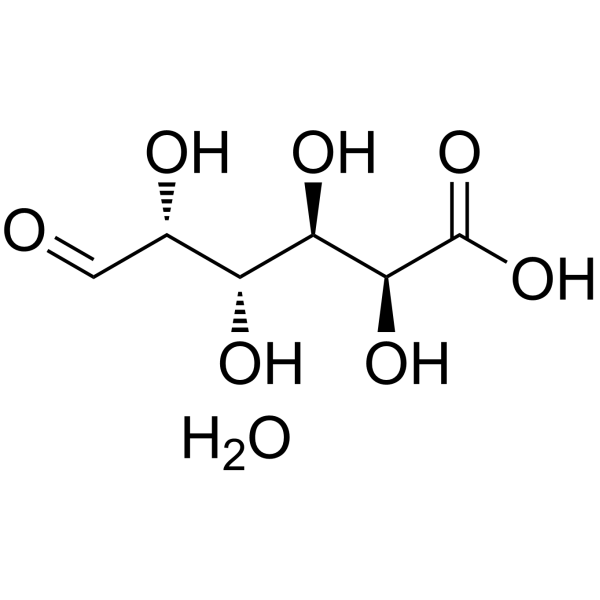
D-Galacturonic acid (D-galUA) hydrate, as the main component of pectin, is abundantly present in plants. The carboxyl group of D-Galacturonic acid hydrate can bind to metal cations. D-Galacturonic acid hydrate plays an important role in the food industry, pharmaceutical field, and heavy metal removal, among other aspects.
For research use only. We do not sell to patients.
- Purity : 99.92%
- CAS No.: 91510-62-2
- Formula: C6H12O8
- Molecular Weight:212.15
-
Storage:
4°C, sealed storage, away from moisture
* In solvent : -80°C, 6 months; -20°C, 1 month (sealed storage, away from moisture)

To place orders, for customer services and technical support, please contact: MedChemExpress USA
Tel: 609-228-6898 E-mail: [email protected] [email protected]


-
 Biological Activity
-
Chemical Information
-
Solvent & Solubility
- Purity & Documentation
- References
-
 Help & FAQs


-
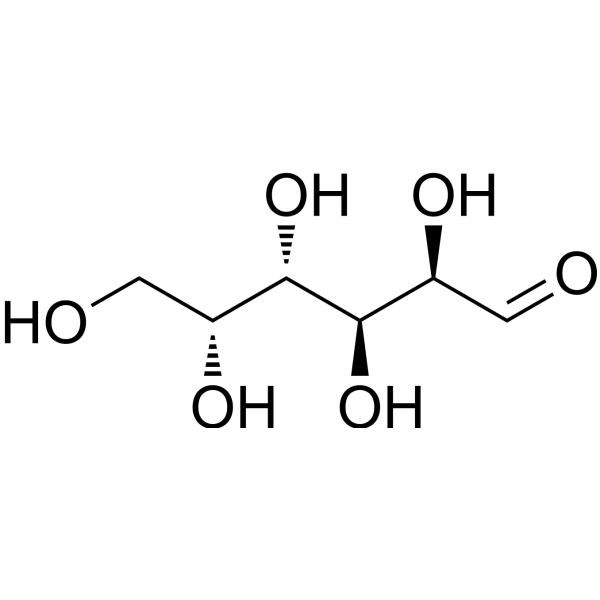
HY-N0210
D-Galactose -
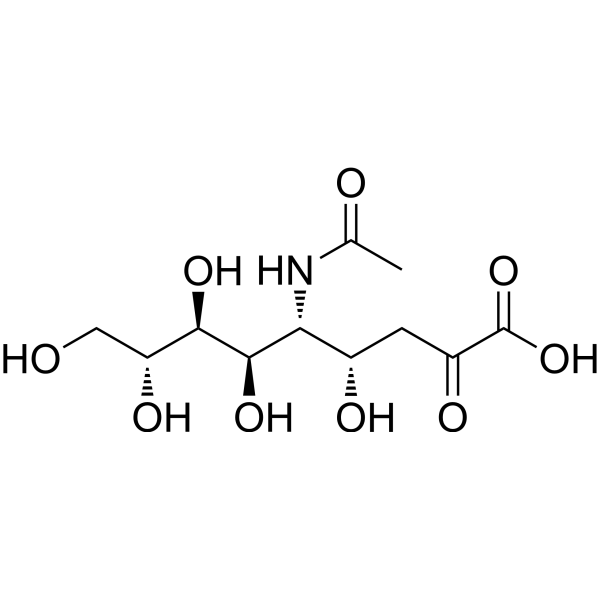
HY-I0400
N-Acetylneuraminic acid -
HY-N6612
D-Glucuronic acid -
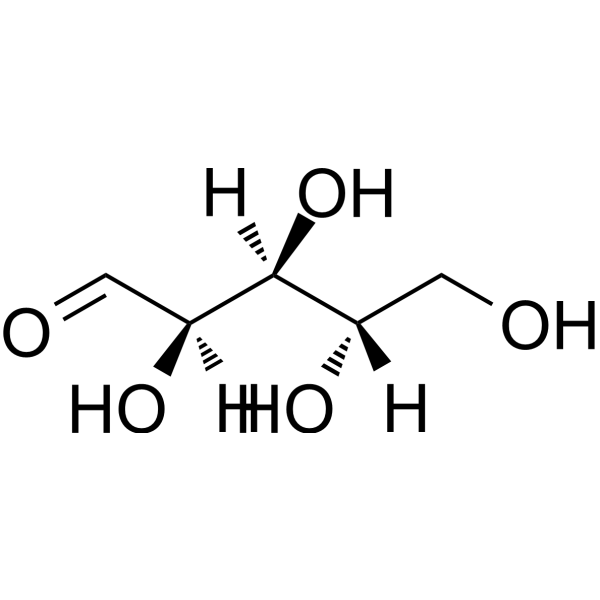
HY-W015611
L-(+)-Arabinose -
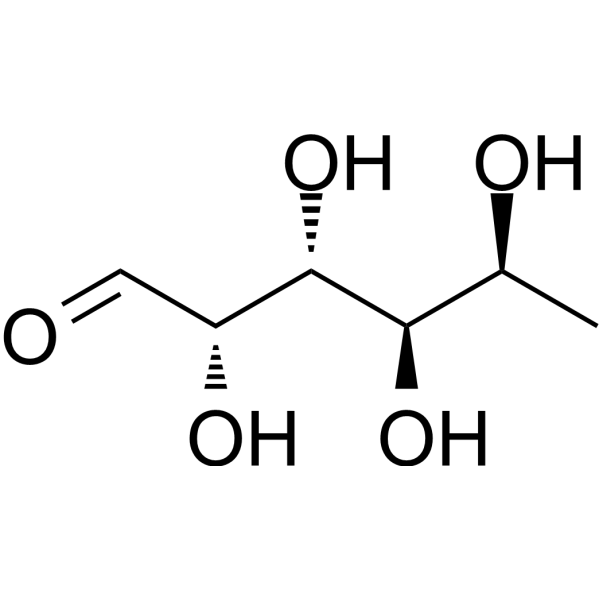
HY-N1480
(-)-Fucose -
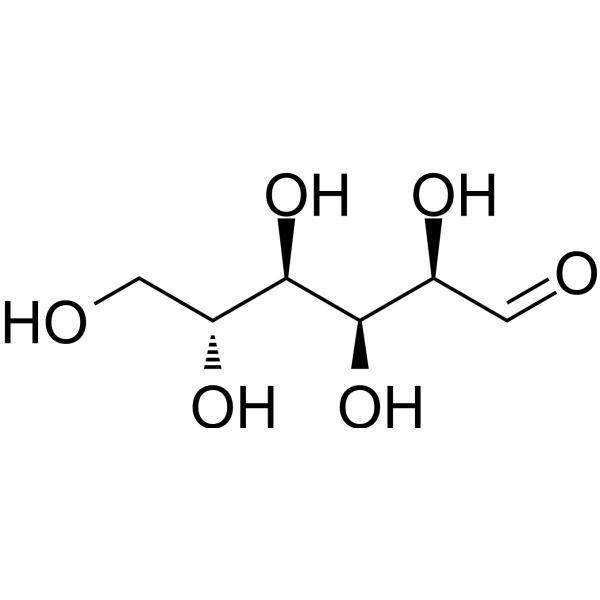
HY-B0389
D-Glucose -

HY-B1827R
D-Galacturonic acid hydrate (Standard) -
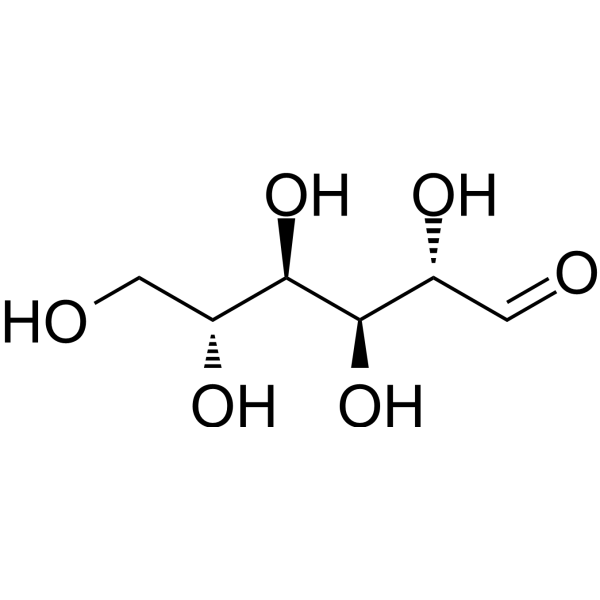
HY-N0379
D-Mannose -
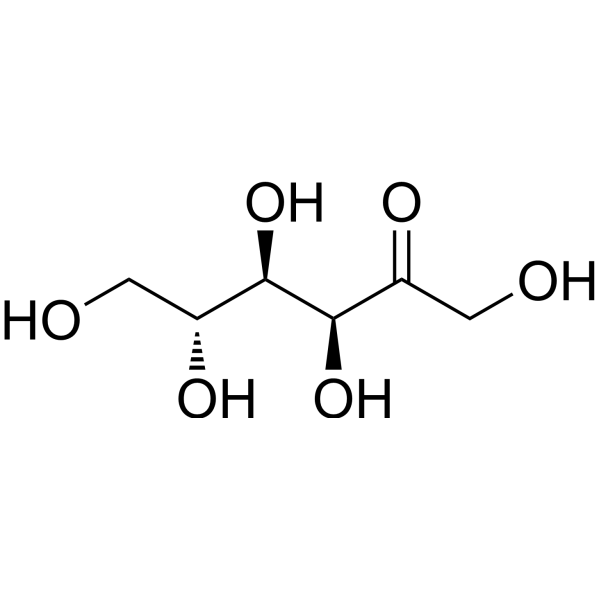
HY-N7092
D-Fructose -

HY-B0389R
D-Glucose (Standard) -
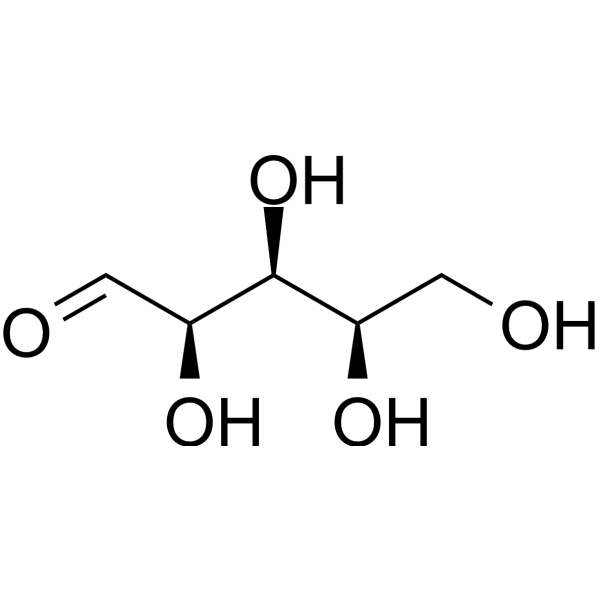
HY-N0537
Xylose -

HY-N0379R
D-Mannose (Standard)
Publications Citing Use of MedChemExpress (MCE) D-Galacturonic acid hydrate
MoreAll Endogenous Metabolite Isoforms
More

Biological Activity
Description
In Vitro
D-Galacturonic acid hydrate has a much faster mutarotation rate than reducing sugars due to the presence of a carboxylic group, and it easily undergoes decarboxylation during thermal degradation to release carbon dioxide and generate browning precursors such as α-ketoglutaraldehyde. The decarboxylative degradation of its polymer pectin affects the quality of food during processing and storage[2].
MedChemExpress (MCE) has not independently confirmed the accuracy of these methods. They are for reference only.


Chemical Information
-
CAS No. 91510-62-2
-
Appearance Solid
-
Molecular Weight 212.15
-
Formula C6H12O8
-
Color White to off-white
-
SMILES
O=C[C@@H]([C@H]([C@H]([C@@H](C(O)=O)O)O)O)O.O
-
Synonyms
D-galUA hydrate
-
Structure Classification
-
Initial Source
-
Shipping
Room temperature in continental US; may vary elsewhere.
-
Storage
4°C, sealed storage, away from moisture
* In solvent : -80°C, 6 months; -20°C, 1 month (sealed storage, away from moisture)


Publications (2)
-
Journal Impact Factor
-
Most Recent
-
Nature
2025 Jul;643(8070):192-200. PMID: 39695227 -
Ultrason Sonochem
Ultrasonic complexation with Lycium barbarum polysaccharide significantly enhances the aqueous solubility and bioavailability of curcumin. [Abstract]2025 Dec:123:107673. PMID: 41223460


Solvent & Solubility
In Vitro:
H2O : 125 mg/mL (589.21 mM; Need ultrasonic)
DMSO : 125 mg/mL (589.21 mM; Need ultrasonic; Hygroscopic DMSO has a significant impact on the solubility of product, please use newly opened DMSO)
Please refer to the solubility information to select the appropriate solvent. Once prepared, please aliquot and store the solution to prevent product inactivation from repeated freeze-thaw cycles.
Storage method and period of stock solution: -80°C, 6 months; -20°C, 1 month (sealed storage, away from moisture). When stored at -80°C, please use it within 6 months. When stored at -20°C, please use it within 1 month.
* Note: If you choose water as the stock solution, please dilute it to the working solution, then filter and sterilize it with a 0.22 μm filter before use.
Please refer to the solubility information to select the appropriate solvent. Once prepared, please aliquot and store the solution to prevent product inactivation from repeated freeze-thaw cycles.
Storage method and period of stock solution: -80°C, 6 months; -20°C, 1 month (sealed storage, away from moisture). When stored at -80°C, please use it within 6 months. When stored at -20°C, please use it within 1 month.
* Note: If you choose water as the stock solution, please dilute it to the working solution, then filter and sterilize it with a 0.22 μm filter before use.
Concentration (start) × Volume (start) = Concentration (final) × Volume (final)
In Vivo:
For the following dissolution methods, please prepare the working solution directly:
It is recommended to prepare fresh solutions and use them promptly within a short period of time.
The percentages shown for the solvents indicate their volumetric ratio in the final prepared solution. If precipitation or phase separation occurs during preparation, heat and/or sonication can be used to aid dissolution.
Add each solvent one by one: PBS
Solubility: 100 mg/mL (471.36 mM); Clear solution; Need ultrasonic


Purity & Documentation
-
Data Sheet (275 KB)
-
SDS (393 KB)
- English - EN (393 KB)
- Français - FR (393 KB)
- Deutsch - DE (393 KB)
- Norwegian - NO (393 KB)
- Español - ES (393 KB)
- Swedish - SV (393 KB)
- Italian - IT (393 KB)
- Korean - KR (393 KB)
- Portuguese - PT (393 KB)
-
Handling Instructions (2659 KB)
References
[1]. Synytsya A, et al. The complexation of metal cations by D-galacturonic acid: a spectroscopic study. Carbohydr Res. 2004 Oct 4;339(14):2391-405. [Content Brief]
[2]. Fatouros A, et al. Influence of the Carboxylic Function on the Degradation of d-Galacturonic Acid and Its Polymers. J Agric Food Chem. 2021 Aug 18;69(32):9376-9382. [Content Brief]
[3]. Allam A, et al. Synthesis, physico-chemical properties and complexing abilities of new amphiphilic ligands from D-galacturonic acid. Carbohydr Res. 2010 Apr 19;345(6):731-9. [Content Brief]


Complete Stock Solution Preparation Table
Please refer to the solubility information to select the appropriate solvent. Once prepared, please aliquot and store the solution to prevent product inactivation from repeated freeze-thaw cycles.
Storage method and period of stock solution: -80°C, 6 months; -20°C, 1 month (sealed storage, away from moisture). When stored at -80°C, please use it within 6 months. When stored at -20°C, please use it within 1 month.
| Optional Solvent | Concentration Solvent Mass | 1 mg | 5 mg | 10 mg | 25 mg |
|---|---|---|---|---|---|
| H2O / DMSO | 1 mM | 4.7136 mL | 23.5682 mL | 47.1365 mL | 117.8412 mL |
| 5 mM | 0.9427 mL | 4.7136 mL | 9.4273 mL | 23.5682 mL | |
| 10 mM | 0.4714 mL | 2.3568 mL | 4.7136 mL | 11.7841 mL | |
| 15 mM | 0.3142 mL | 1.5712 mL | 3.1424 mL | 7.8561 mL | |
| 20 mM | 0.2357 mL | 1.1784 mL | 2.3568 mL | 5.8921 mL | |
| 25 mM | 0.1885 mL | 0.9427 mL | 1.8855 mL | 4.7136 mL | |
| 30 mM | 0.1571 mL | 0.7856 mL | 1.5712 mL | 3.9280 mL | |
| 40 mM | 0.1178 mL | 0.5892 mL | 1.1784 mL | 2.9460 mL | |
| 50 mM | 0.0943 mL | 0.4714 mL | 0.9427 mL | 2.3568 mL | |
| 60 mM | 0.0786 mL | 0.3928 mL | 0.7856 mL | 1.9640 mL | |
| 80 mM | 0.0589 mL | 0.2946 mL | 0.5892 mL | 1.4730 mL | |
| 100 mM | 0.0471 mL | 0.2357 mL | 0.4714 mL | 1.1784 mL |
* Note: If you choose water as the stock solution, please dilute it to the working solution, then filter and sterilize it with a 0.22 μm filter before use.


D-Galacturonic acid hydrate Related Classifications
HY-B1827 Related Classifications
 Powered by Bioz