



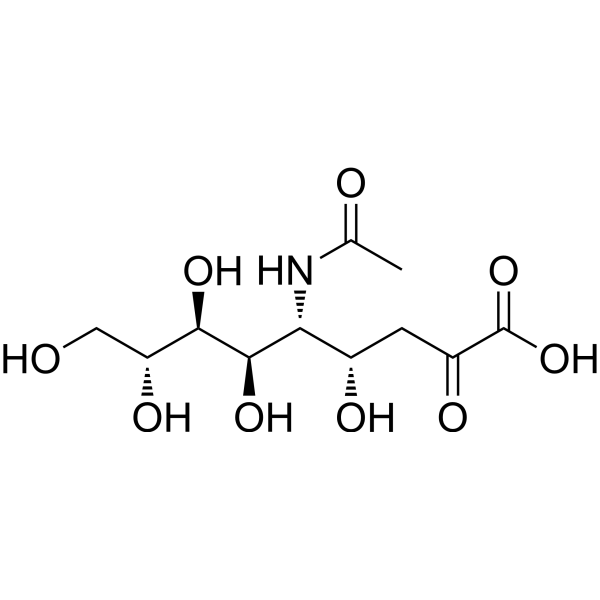
N-Acetylneuraminic acid
Based on 6 publication(s) in Google Scholar
N-Acetylneuraminic acid (NANA; Lactaminic acid), a nonphenolic structure, is the predominant form of sialic from Collocalia esculenta. N-Acetylneuraminic acid plays a biological role in myocardial injury, melanoma and viral or bacterial infection. N-Acetylneuraminic acid inhibits melanogenesis by reducing tyrosinase activity and triggers myocardial injury in vitro and in vivo by activation of the Rho/Rho-associated signaling pathway through binding to RhoA and Cdc42. N-Acetylneuraminic acid may prevent high fat diet (HFD)-induced inflammation and oxidative stress, thereby prevents hyperlipidemia-associated inflammation and oxidative stress. N-Acetylneuraminic acid is promising for research in the field of melanoma, coronary artery, obesity-related diseases and hyperlipidemia.
For research use only. We do not sell to patients.
- Purity : 99.95%
- CAS No.: 131-48-6
- Formula: C11H19NO9
- Molecular Weight:309.27
-
Storage:
-20°C, stored under nitrogen
* In solvent : -80°C, 6 months; -20°C, 1 month (stored under nitrogen)

To place orders, for customer services and technical support, please contact: MedChemExpress USA
Tel: 609-228-6898 E-mail: [email protected] [email protected]


-
 Biological Activity
-
Chemical Information
-
Solvent & Solubility
- Purity & Documentation
- References
-
 Help & FAQs



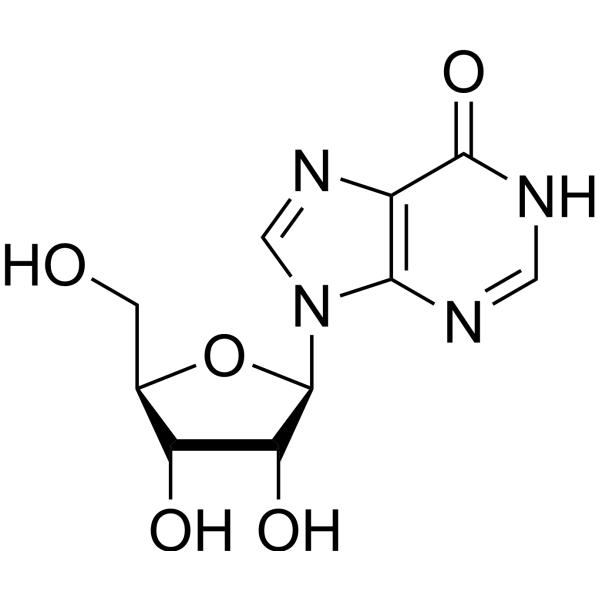
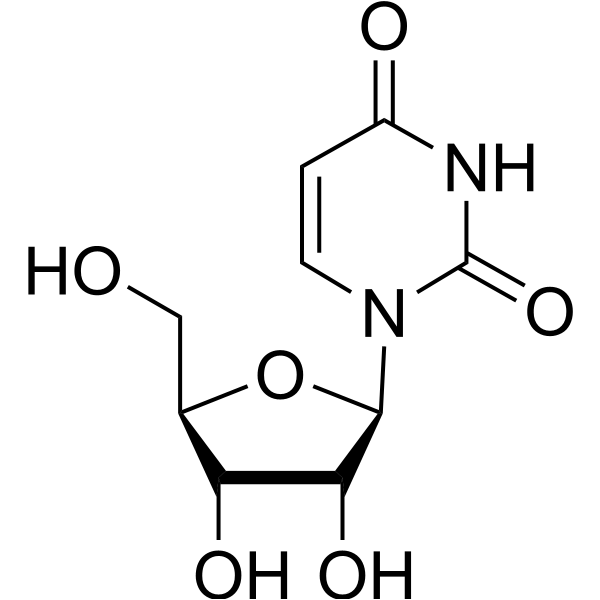
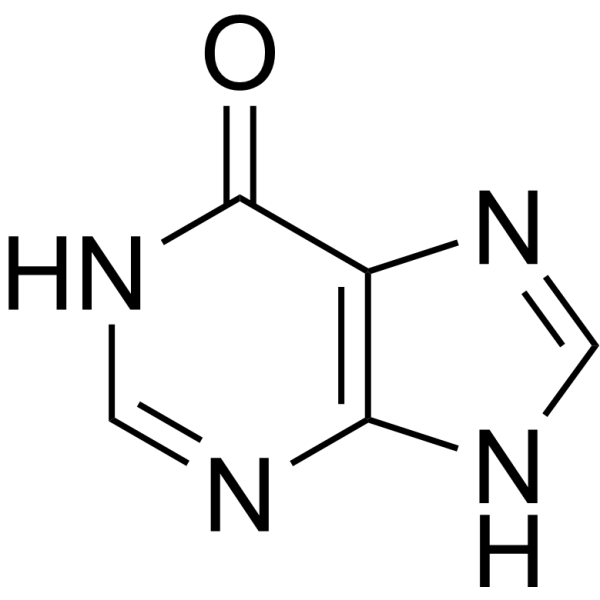
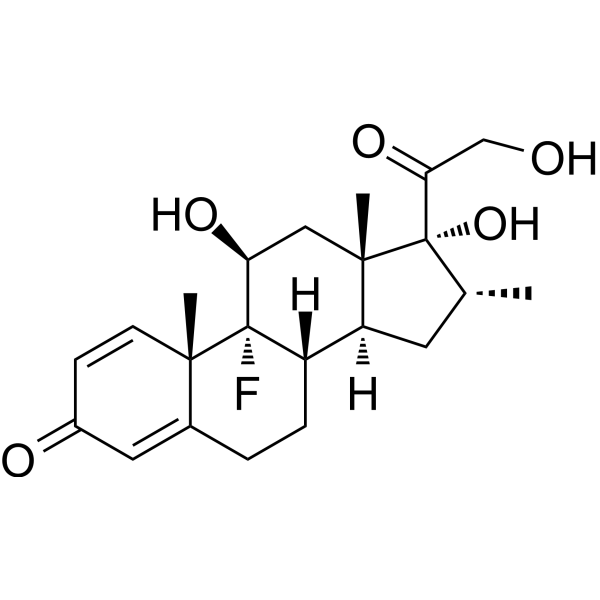
Publications Citing Use of MedChemExpress (MCE) N-Acetylneuraminic acid
More Customer Validation & Images

-
Flow Cytometry
-
Cell Imaging/Staining
-
RT-PCR
-
WB
-
Histological Imaging/Staining
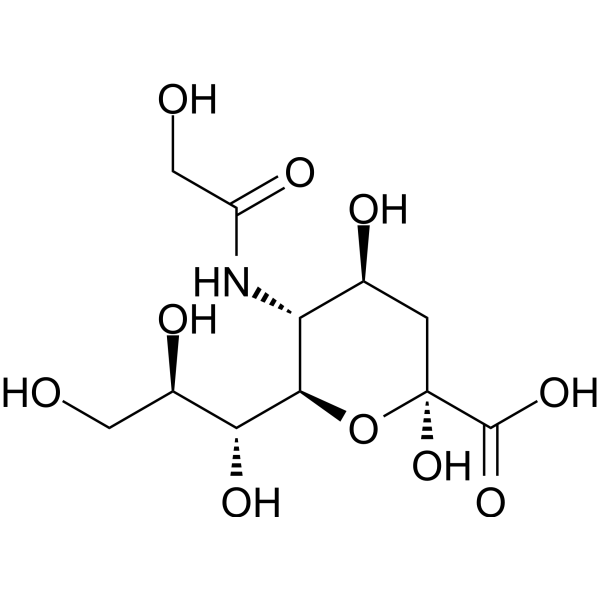
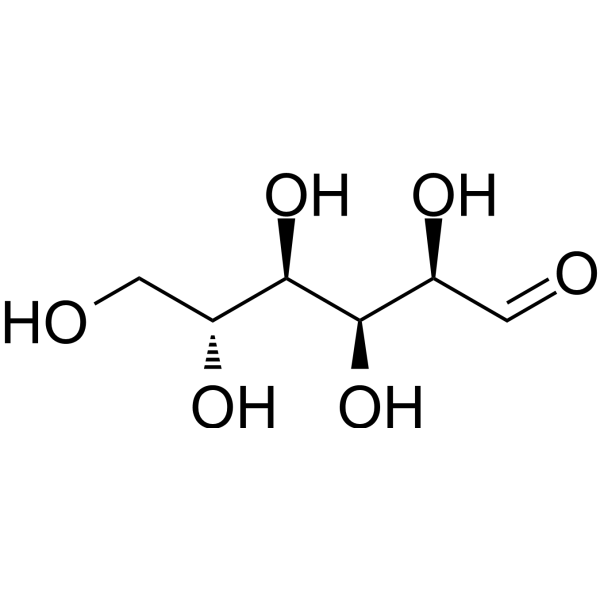
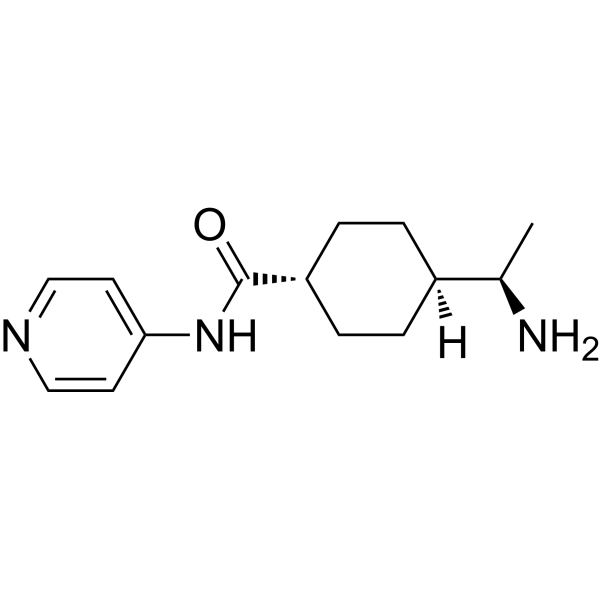
All Endogenous Metabolite Isoforms
More

Biological Activity
Description
IC50 & Target
|
Microbial Metabolite |
Human Endogenous Metabolite |
In Vitro
N-Acetylneuraminic acid (0 - 2 mg/mL, 2 days) has no effect on cell proliferation, but significantly decreases tyrosinase protein level, the number of melanosomes, p62 protein level and increases CCT3, CCT5, LC3-II protein level mRNA levels in B16 melanoma cells[1].
N-Acetylneuraminic acid (0 - 500 μM, 12 h) specifically binds to RhoA and Cdc42 and activates Rho/ROCK-JNK/ERK signaling in cardiomyocytes[2].
MedChemExpress (MCE) has not independently confirmed the accuracy of these methods. They are for reference only.
-
Cell Line:B16 melanoma cells
-
Concentration:0 - 2 mg/mL
-
Incubation Time:2 days
-
Result:Was colocalized in the presence of tyrosinase, LAMP-1 and cathepsin L2 at 1 and 2 mg/mL concentrations and reduced p62 levels in B16 melanoma cells.
-
Cell Line:B16 melanoma cells
-
Concentration:0 - 2 mg/mL
-
Incubation Time:2 days
-
Result:Significantly decreased tyrosinase protein level in a concentration-dependent manner and increased CCT3 and CCT5 mRNA levels in B16 melanoma cells.
-
Cell Line:B16 melanoma cells
-
Concentration:0 - 2 mg/mL
-
Incubation Time:2 days
-
Result:Significantly increased the LC3-II protein level and decreased the p62 protein level at 1 and 2 mg/mL in B16 melanoma cells.
-
Cell Line:Neonatal rat ventricular myocytes (NRVMs)
-
Concentration:0.05 - 5 mM
-
Incubation Time:12 h
-
Result:Decreased the NRVMs cells viability and increased the release of lactate dehydrogenase and creatine kinase-MB.
-
Cell Line:NRVMs cells
-
Concentration:0 - 500 μM
-
Incubation Time:12 h
-
Result:Induced significant increase and activation in RhoA and Cdc42, also enhanced the phosphorylation of JNK and ERK in NRVMs cells.
In Vivo
MedChemExpress (MCE) has not independently confirmed the accuracy of these methods. They are for reference only.
-
Animal Model:Healthy rats[2]
-
Dosage:0 - 20 mg/kg
-
Administration:i.p., twice a day for 6 weeks
-
Result:Increased left ventricular end-diastolic pressure, -dP/dtmax and dp/dtmax, but showed no significant effects on left ventricular systolic pressure in rats.


Chemical Information
-
CAS No. 131-48-6
-
Appearance Solid
-
Molecular Weight 309.27
-
Formula C11H19NO9
-
Color White to off-white
-
SMILES
OC[C@@H](O)[C@@H](O)[C@H](O)[C@H](NC(C)=O)[C@@H](O)CC(C(O)=O)=O
-
Synonyms
NANA; Lactaminic acid
-
Structure Classification
-
Initial Source
-
Shipping
Room temperature in continental US; may vary elsewhere.
-
Storage
-20°C, stored under nitrogen
* In solvent : -80°C, 6 months; -20°C, 1 month (stored under nitrogen)


Publications (6)
-
Journal Impact Factor
-
Most Recent
-
-
Int Immunopharmacol
Sialic acids promote macrophage M1 polarization and atherosclerosis by upregulating ROS and autophagy blockage. [Abstract]2023 Jul:120:110410. PMID: 37270929
N-Acetylneuraminic acid purchased from MedChemExpress. Usage Cited in: Int Immunopharmacol. 2023 Jul:120:110410. [Abstract]
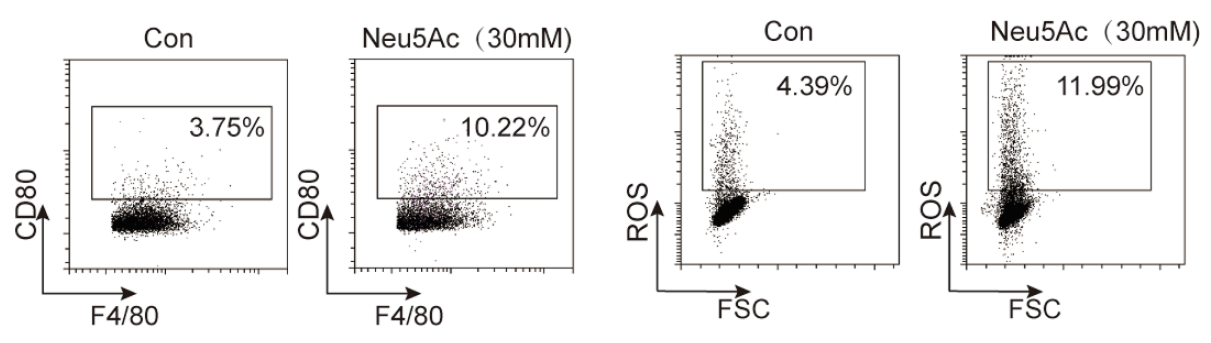
Flow cytometry analysis of F4/80+CD80+ macrophage and ROS levels in RAW264.7 cells under the conditions of control and N-Acetylneuraminic acid (Neu5Ac) (30 mM).
N-Acetylneuraminic acid purchased from MedChemExpress. Usage Cited in: Int Immunopharmacol. 2023 Jul:120:110410. [Abstract]
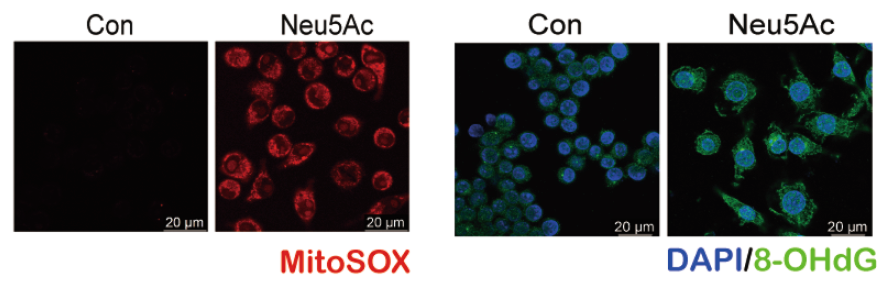
N-Acetylneuraminic acid (Neu5Ac) (15 mM) significantly increased mitoROS and oxidative DNA damage in RAW264.7 cells.
N-Acetylneuraminic acid purchased from MedChemExpress. Usage Cited in: Int Immunopharmacol. 2023 Jul:120:110410. [Abstract]
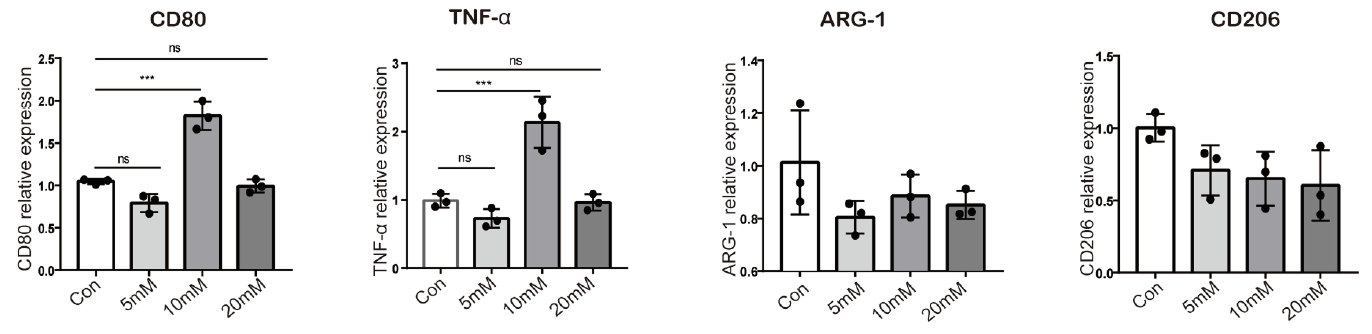
The mRNA expression of CD80 and TNF-α (M1 markers) and ARG-1 and CD206 (M2 markers) following N-Acetylneuraminic acid (Neu5Ac) (5–20 mM) treatment. N-Acetylneuraminic acid (Neu5Ac) up-regulated the mRNA expression of M1 markers CD80 and TNF-α in RAW264.7 cells.
N-Acetylneuraminic acid purchased from MedChemExpress. Usage Cited in: Int Immunopharmacol. 2023 Jul:120:110410. [Abstract]
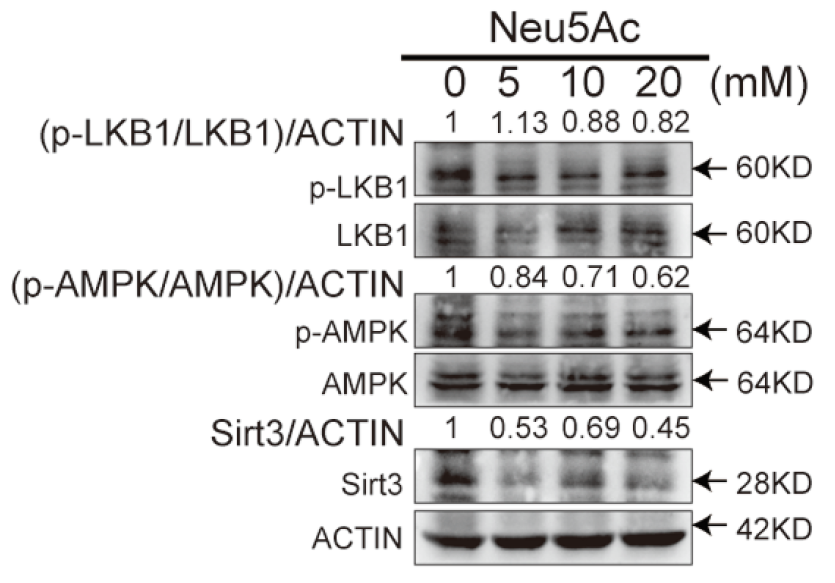
Western blot of p-LKB1, p-AMPK, Sirt3 protein levels in RAW264.7 for different concentrations of N-Acetylneuraminic acid (Neu5Ac) (5-20 mM). N-Acetylneuraminic acid (Neu5Ac) inhibited the LKB1-AMPK-Sirt3 pathway the same as AC5 which led to ROS activation and M1 polarization.
N-Acetylneuraminic acid purchased from MedChemExpress. Usage Cited in: Int Immunopharmacol. 2023 Jul:120:110410. [Abstract]
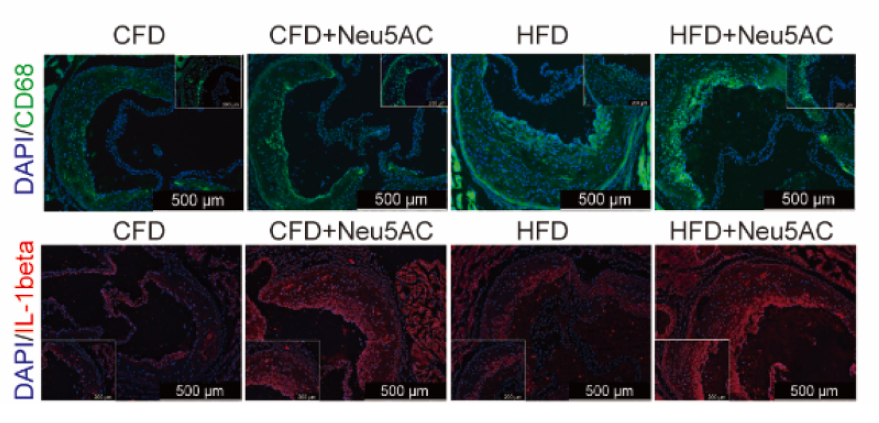
Immunostaining of CD68+ macrophages and IL-1beta in aortic sinuses harvested from APOE-/- mice subjected to CFD, CFD + N-Acetylneuraminic acid (Neu5Ac) (30 mg/kg; i.p.; once daily for 10 weeks), HFD, or HFD + N-Acetylneuraminic acid (Neu5Ac). N-Acetylneuraminic acid (Neu5Ac) notably increased the numbers of CD68+ macrophages and the expression of IL-1beta in aortic sinuses.
-
Biochim Biophys Acta Mol Basis Dis
ST3GAL1 mediates sialylation to promote adhesion of Fusobacterium nucleatum to colorectal cancer cells. [Abstract]2026 Jun 24;1872(7):168332. PMID: 42342164 -
IUBMB Life
N-acetylneuraminic acid modulates SQSTM1/p62 sialyation-mediated ubiquitination degradation contributing to vascular endothelium dysfunction in experimental atherosclerosis mice. [Abstract]2024 Mar;76(3):161-178. PMID: 37818680 -
Vet Microbiol
The Chinese medicine monomer Schisandrin C inhibits PRRSV infection by regulating the OGT-PI3K/AKT/mTOR signaling pathway. [Abstract]2026 May:316:110992. PMID: 41865607 -


Solvent & Solubility
In Vitro:
H2O : 125 mg/mL (404.18 mM; Need ultrasonic)
Please refer to the solubility information to select the appropriate solvent. Once prepared, please aliquot and store the solution to prevent product inactivation from repeated freeze-thaw cycles.
Storage method and period of stock solution: -80°C, 6 months; -20°C, 1 month (stored under nitrogen). When stored at -80°C, please use it within 6 months. When stored at -20°C, please use it within 1 month.
* Note: If you choose water as the stock solution, please dilute it to the working solution, then filter and sterilize it with a 0.22 μm filter before use.
Please refer to the solubility information to select the appropriate solvent. Once prepared, please aliquot and store the solution to prevent product inactivation from repeated freeze-thaw cycles.
Storage method and period of stock solution: -80°C, 6 months; -20°C, 1 month (stored under nitrogen). When stored at -80°C, please use it within 6 months. When stored at -20°C, please use it within 1 month.
* Note: If you choose water as the stock solution, please dilute it to the working solution, then filter and sterilize it with a 0.22 μm filter before use.
Concentration (start) × Volume (start) = Concentration (final) × Volume (final)
In Vivo:
For the following dissolution methods, please prepare the working solution directly:
It is recommended to prepare fresh solutions and use them promptly within a short period of time.
The percentages shown for the solvents indicate their volumetric ratio in the final prepared solution. If precipitation or phase separation occurs during preparation, heat and/or sonication can be used to aid dissolution.
Add each solvent one by one: PBS
Solubility: 100 mg/mL (323.34 mM); Clear solution; Need ultrasonic and warming and heat to 60°C


Purity & Documentation
-
Data Sheet (280 KB)
-
SDS (396 KB)
- English - EN (396 KB)
- Français - FR (396 KB)
- Deutsch - DE (396 KB)
- Norwegian - NO (396 KB)
- Español - ES (396 KB)
- Swedish - SV (396 KB)
- Italian - IT (396 KB)
- Korean - KR (396 KB)
- Portuguese - PT (396 KB)
-
Handling Instructions (2659 KB)
References
[2]. Zhang L, et al. Functional Metabolomics Characterizes a Key Role for N-Acetylneuraminic Acid in Coronary Artery Diseases[J]. Circulation. 2018 Mar 27;137(13):1374-1390. [Content Brief]
[3]. Yida Z, et al. High fat diet-induced inflammation and oxidative stress are attenuated by N-acetylneuraminic acid in rats[J]. J Biomed Sci. 2015 Oct 24;22:96. [Content Brief]
[4]. Kiefel MJ, et al. Synthesis and biological evaluation of N-acetylneuraminic acid-based rotavirus inhibitors[J]. J Med Chem. 1996 Mar 15;39(6):1314-20. [Content Brief]


Complete Stock Solution Preparation Table
Please refer to the solubility information to select the appropriate solvent. Once prepared, please aliquot and store the solution to prevent product inactivation from repeated freeze-thaw cycles.
Storage method and period of stock solution: -80°C, 6 months; -20°C, 1 month (stored under nitrogen). When stored at -80°C, please use it within 6 months. When stored at -20°C, please use it within 1 month.
| Optional Solvent | Concentration Solvent Mass | 1 mg | 5 mg | 10 mg | 25 mg |
|---|---|---|---|---|---|
| H2O | 1 mM | 3.2334 mL | 16.1671 mL | 32.3342 mL | 80.8355 mL |
| 5 mM | 0.6467 mL | 3.2334 mL | 6.4668 mL | 16.1671 mL | |
| 10 mM | 0.3233 mL | 1.6167 mL | 3.2334 mL | 8.0836 mL | |
| 15 mM | 0.2156 mL | 1.0778 mL | 2.1556 mL | 5.3890 mL | |
| 20 mM | 0.1617 mL | 0.8084 mL | 1.6167 mL | 4.0418 mL | |
| 25 mM | 0.1293 mL | 0.6467 mL | 1.2934 mL | 3.2334 mL | |
| 30 mM | 0.1078 mL | 0.5389 mL | 1.0778 mL | 2.6945 mL | |
| 40 mM | 0.0808 mL | 0.4042 mL | 0.8084 mL | 2.0209 mL | |
| 50 mM | 0.0647 mL | 0.3233 mL | 0.6467 mL | 1.6167 mL | |
| 60 mM | 0.0539 mL | 0.2695 mL | 0.5389 mL | 1.3473 mL | |
| 80 mM | 0.0404 mL | 0.2021 mL | 0.4042 mL | 1.0104 mL | |
| 100 mM | 0.0323 mL | 0.1617 mL | 0.3233 mL | 0.8084 mL |
* Note: If you choose water as the stock solution, please dilute it to the working solution, then filter and sterilize it with a 0.22 μm filter before use.


N-Acetylneuraminic acid Related Classifications
HY-I0400 Related Classifications
 Powered by Bioz