



Stearoylethanolamide-d3
Stearoylethanolamide-d3 (Ceamid-d3) is deuterium labeled Stearoylethanolamide. Stearoylethanolamide is an endocannabinoid-like compound with pro-apoptotic activity.
For research use only. We do not sell to patients.
- CAS No.: 2749393-37-9
- Formula: C20H38D3NO2
- Molecular Weight:330.56
-
Storage:Powder -20°C, 3 years ; In solvent -80°C, 6 months , -20°C, 1 month


To place orders, for customer services and technical support, please contact: MedChemExpress USA
Tel: 609-228-6898 E-mail: [email protected] [email protected]


-
 Biological Activity
-
Chemical Information
- Protocols
- Purity & Documentation
- References
-
 Help & FAQs


-
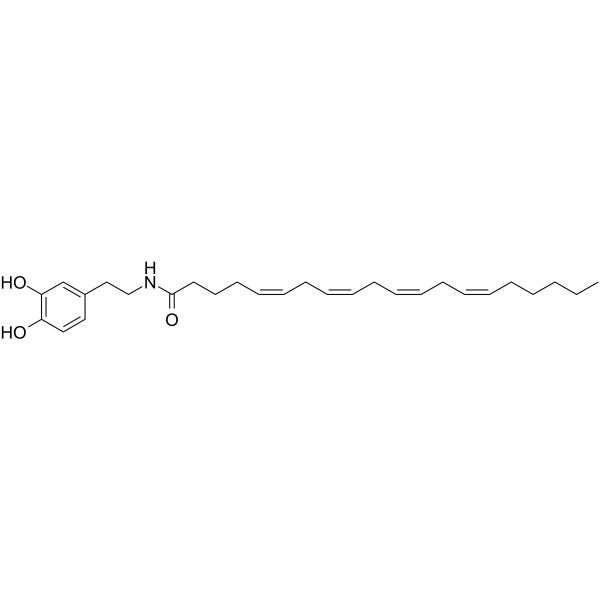
HY-110018
N-ArachidonyldopamineAnandamide Membrane Transporter Inhibitor, Fatty Acid Amide Hydrolase Inhibitor, CB1 Cannabinoid Receptor Ligand, TRPV1 Receptor Agonist -

HY-110016
DocosatetraenylethanolamideCB1 Agonist -

HY-124089S
Eicosapentaenoyl ethanolamide-d4Stable Isotope -

HY-130357
15(S)-HETE EthanolamideCannabinoid Analog -

HY-W778336
Girard's Reagent P-d5Stable Isotope -
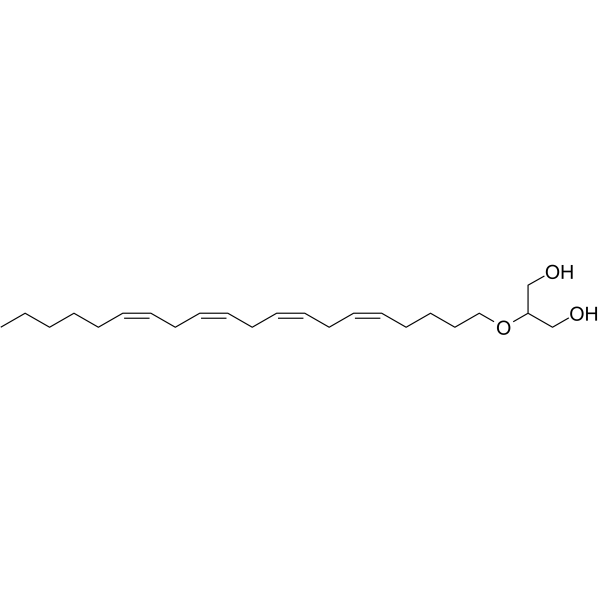
HY-110014
Noladin etherCB1 Agonist -
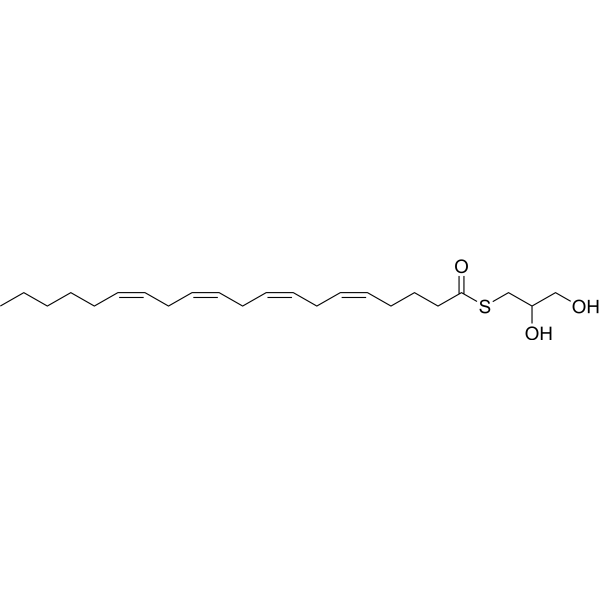
HY-139394
Arachidonoyl-1-thio-glycerolNonretinoid Ligand -
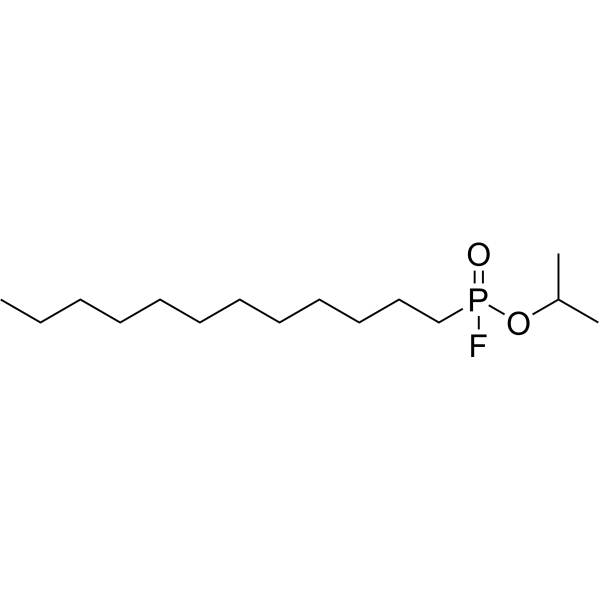
HY-121637
IDFPCB1 Receptor Probe
All Endogenous Metabolite Isoforms
More

Biological Activity
Description
Application
1. This compound can be used as a tracer
2. This compound can be used as an internal standard for quantitative analysis by NMR, GC-MS, or LC-MS.


Chemical Information
-
CAS No. 2749393-37-9
-
Unlabeled CAS 111-57-9
-
Appearance Solid
-
Molecular Weight 330.56
-
Formula C20H38D3NO2
-
Color White to off-white
-
SMILES
O=C(CCCCCCCCCCCCCCCCC([2H])([2H])[2H])NCCO
-
Synonyms
Ceamid-d3; Steaic Acid Ethaolamide-d3
-
Shipping
Room temperature in continental US; may vary elsewhere.
-
Storage
Powder -20°C 3 years In solvent -80°C 6 months -20°C 1 month

Protocols
-
Apoptosis
Apoptosis, also called programmed cell death, is generally characterized by distinct morphological characteristics.
-
Apoptosis Solutions
Apoptosis is a regulated, generally non-lytic cell-death pathway that removes unwanted, damaged, infected, or abnormal cells through coordinated morphological changes, caspase activation, DNA fragmentation, and membrane remodeling. The intrinsic apoptosis pathway is controlled mainly by mitochondrial outer membrane permeabilization, BCL-2 family proteins, cytochrome c release, apoptosome formation, caspase-9 activation, and downstream executioner caspase-3/7 activation. The extrinsic apoptosis pathway is initiated by death receptors such as Fas, TNFR, and TRAIL receptors, which recruit adaptor proteins and activate caspase-8 before engaging executioner caspases or mitochondrial amplification through BID cleavage. Apoptosis is linked to many phenotypes, including cancer cell killing, tissue homeostasis, immune regulation, neurodegeneration, infection response, and treatment-induced cytotoxicity; unresolved questions include how apoptosis interacts with necroptosis, pyroptosis, ferroptos


Purity & Documentation
-
Data Sheet (261 KB)
-
SDS (758 KB)
- English - EN (758 KB)
- Français - FR (758 KB)
- Deutsch - DE (758 KB)
- Norwegian - NO (758 KB)
- Español - ES (758 KB)
- Swedish - SV (758 KB)
- Italian - IT (758 KB)
- Korean - KR (758 KB)
- Portuguese - PT (758 KB)
-
Handling Instructions (2659 KB)
References
[1]. Russak EM, et al. Impact of Deuterium Substitution on the Pharmacokinetics of Pharmaceuticals. Ann Pharmacother. 2019 Feb;53(2):211-216. [Content Brief]
[2]. Maccarrone M, et al. Binding, degradation and apoptotic activity of stearoylethanolamide in rat C6 glioma cells. Biochem J. 2002 Aug 15;366(Pt 1):137-44. [Content Brief]

Calculators
Concentration (start) × Volume (start) = Concentration (final) × Volume (final)


Stearoylethanolamide-d3 Related Classifications
HY-113015S Related Classifications
 Powered by Bioz