



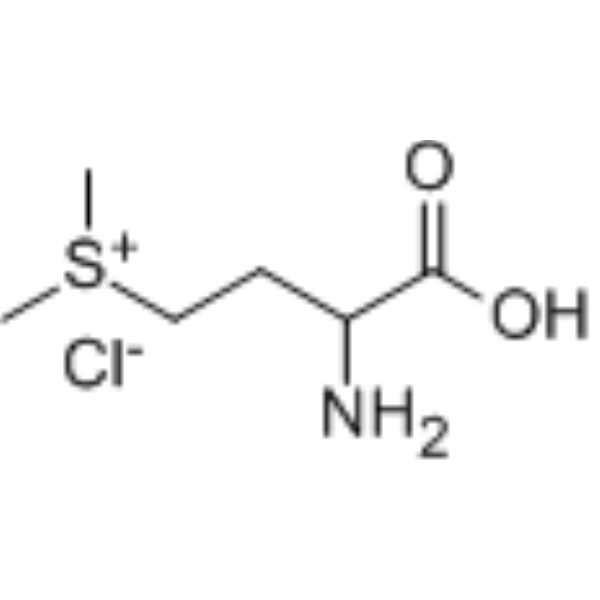
DL-Methionine methylsulfonium chloride

Based on 1 Customer Validation
DL-Methionine methylsulfonium chloride (DL-MMSC) is an orally effective methionine-derived sulfonium salt that promotes gastric emptying and gastrointestinal transit. DL-Methionine methylsulfonium chloride attenuates oxidative stress and inflammatory responses, and enhances anti-apoptotic (apoptosis) signaling, thereby ameliorating Sodium metabisulfite (HY-Y1326)-induced testicular dysfunction and semen quality impairment. DL-Methionine methylsulfonium chloride is applicable for research on functional dyspepsia, gastrointestinal motility, and male reproductive function injury.
For research use only. We do not sell to patients.
- Purity : 98.0%
- CAS No.: 3493-12-7
- Formula: C6H14ClNO2S
- Molecular Weight:199.70
-
Storage:
4°C, sealed storage, away from moisture
* In solvent : -80°C, 6 months; -20°C, 1 month (sealed storage, away from moisture)

To place orders, for customer services and technical support, please contact: MedChemExpress USA
Tel: 609-228-6898 E-mail: [email protected] [email protected]


-
 Biological Activity
-
Chemical Information
-
Solvent & Solubility
- Purity & Documentation
- References
-
 Help & FAQs


-
HY-B0166
L-Ascorbic acid -

HY-N6655R
DL-Methionine methylsulfonium chloride (Standard) -
HY-B0143
Niacin -
HY-15398
Vitamin D3 -
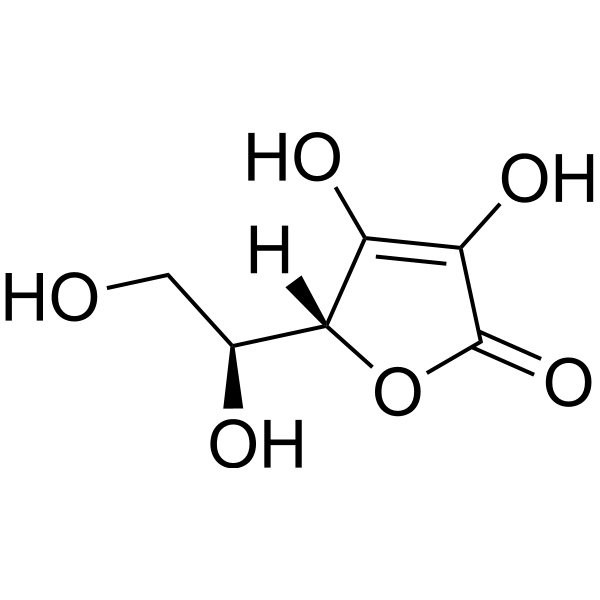
HY-B0166G
L-Ascorbic acid (GMP) -
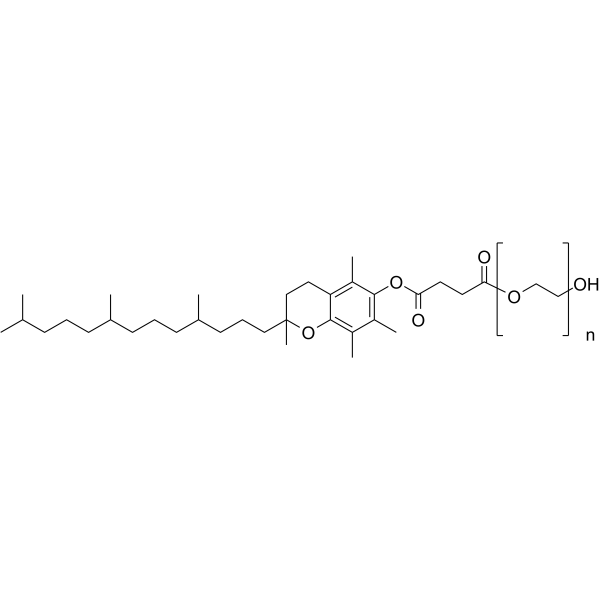
HY-B0717
Tocofersolan -
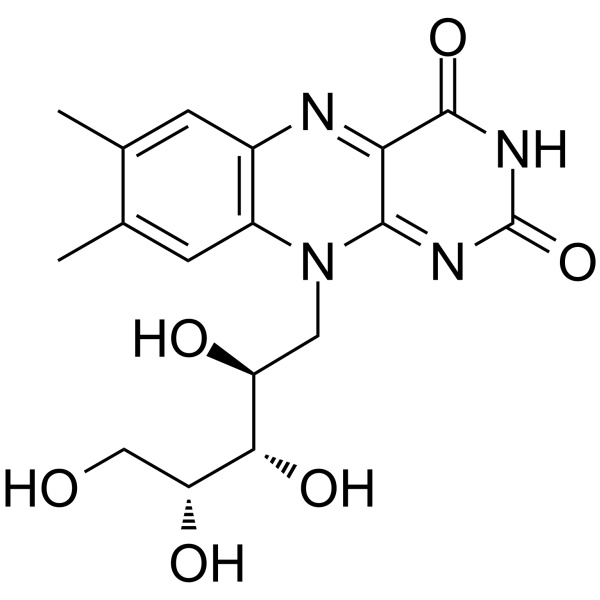
HY-B0456
Riboflavin -

HY-B0166R
L-Ascorbic acid (Standard) -
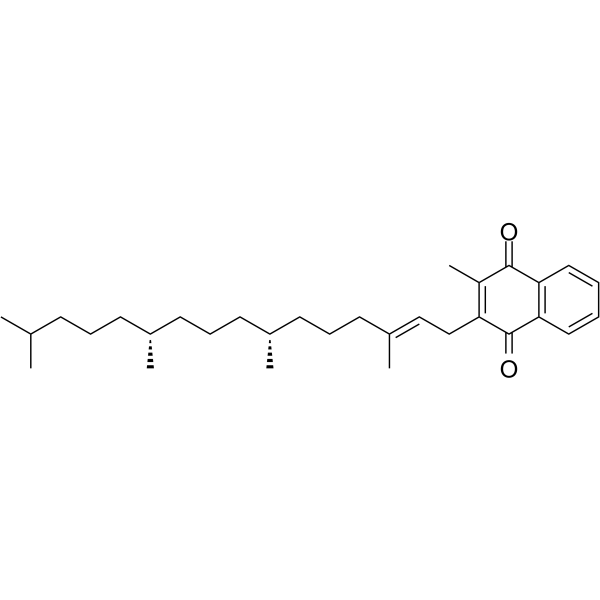
HY-N0684
Vitamin K1 -
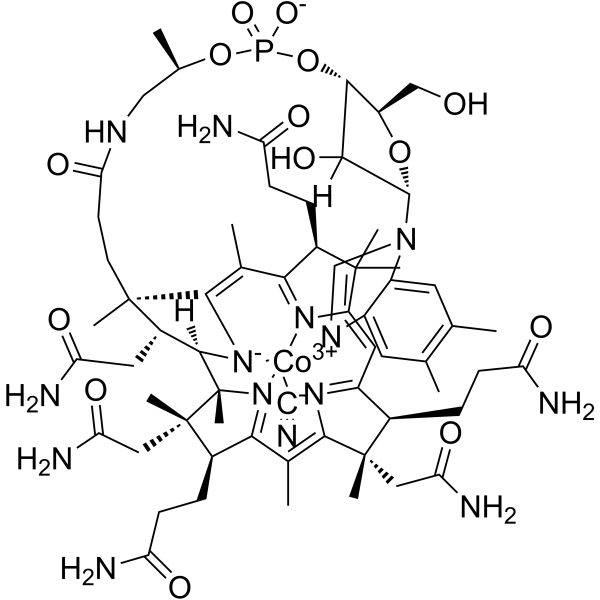
HY-B0315
Vitamin B12 -
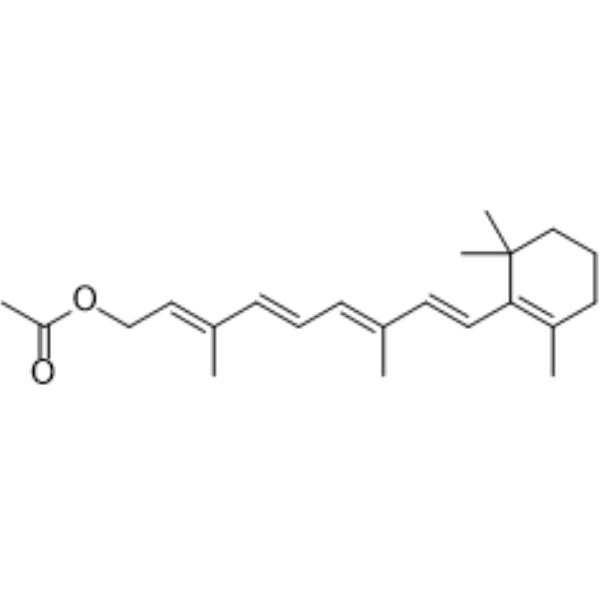
HY-N0679
Retinyl acetate -
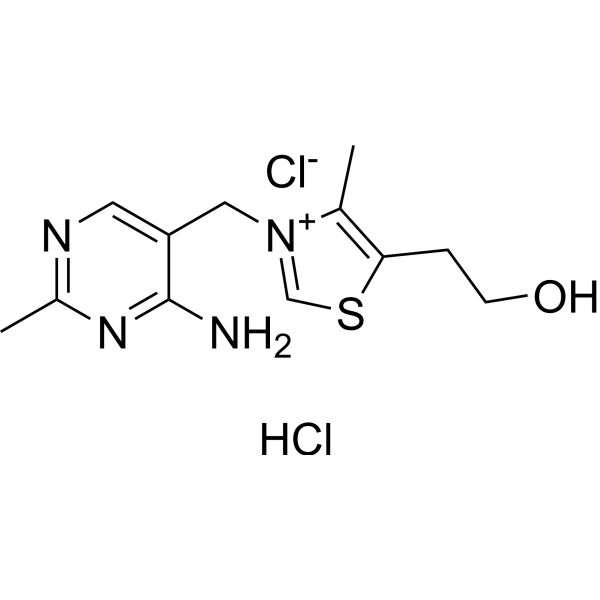
HY-N0680
Thiamine hydrochloride


Biological Activity
Description
In Vitro
DL-Methionine methylsulfonium chloride (DL-MMSC) exhibits docking scores of −4.6, −4.5, −4.4, −4.2, −4.1, and −4.0 kcal/mol against CASP9, BCL2, HSPA5, TP53, NF-κB1, and IL-6, respectively, in computational docking, while its docking scores against CASP3, CASP8, CXCL8, and NOS2 range from −3.4 to −3.5 kcal/mol[3].
MedChemExpress (MCE) has not independently confirmed the accuracy of these methods. They are for reference only.
In Vivo
DL-Methionine methylsulfonium chloride (0, 20, 40, 60, 80, or 100% substitution of DL-methionine on a molar basis; 42 days) causes no differences in final body weight, total weight gain, overall feed intake, or feed efficiency in broilers, and at 100% substitution increases duodenal villus width from 59.38 μm to 143.02 μm and crypt depth from 69.23 μm to 112.56 μm[1].
DL-Methionine methylsulfonium chloride (4 mg/kg; single oral administration; cisplatin 10 mg/kg i.p. induced delayed gastric emptying model) increases the gastric emptying rate in male SD rats from 40.20% in the vehicle group to 68.00%, while the itopride 30 mg/kg positive control group shows 74.20%[2].
DL-Methionine methylsulfonium chloride (4 mg/kg; single oral administration; atropine 1 mg/kg i.p. induced gastrointestinal transit delay model) increases the gastrointestinal geometric center in male SD rats from 5.3 in the vehicle group to 6.3, while the mosapride 10 mg/kg positive control group shows 6.2[2].
DL-Methionine methylsulfonium chloride (100 mg/kg/day; oral administration once daily; 28 days; administered 1 h after SMB 500 mg/kg/day) increases the left and right testicular weights in male Wistar rats, and elevates serum FSH, LH, and testosterone levels as well as 5α-reductase and 17β-HSD activities[3].
DL-Methionine methylsulfonium chloride (100 mg/kg/day; oral administration once daily; 28 days; administered 1 h after SMB 500 mg/kg/day) increases sperm count, sperm motility, the proportion of normal sperm cells, and semen volume in male Wistar rats[3].
DL-Methionine methylsulfonium chloride (0-1000 ppm dietary supplementation; 42 days; Eimeria acervulina, E. maxima, and E. tenella challenge) does not improve body weight gain, feed intake, or feed efficiency in broilers, nor does it reduce fecal scores; DL-Methionine methylsulfonium chloride at 400 ppm increases duodenal crypt depth from 226.62 μm to 333.62 μm, while duodenal villus length and width show no clear improvement[1].
DL-Methionine methylsulfonium chloride (0-1000 ppm dietary supplementation; 42 days; Salmonella kentucky challenge) does not improve body weight gain, feed intake, or feed efficiency in broilers, nor does it reduce the persistent detection of Salmonella; at 1000 ppm, DL-Methionine methylsulfonium chloride increases villus length in the duodenum, jejunum, and ileum from 2070.02, 1017.85, and 460.98 μm to 2476.39, 1256.95, and 846.52 μm, respectively[1].
DL-Methionine methylsulfonium chloride (100 mg/kg/day; administered orally once daily; 28 days; given 1 h after SMB 500 mg/kg/day) reduces MDA levels in rat testes and increases GSH levels as well as SOD and catalase activities[3].
DL-Methionine methylsulfonium chloride (100 mg/kg/day; oral administration once daily; 28 days; administered 1 h after SMB 500 mg/kg/day) reduces testicular NF-κB levels in male Wistar rats[3].
DL-Methionine methylsulfonium chloride (100 mg/kg/day; orally once daily; 28 days; administered 1 h after SMB 500 mg/kg/day) reduces testicular IL-6 and TNF-α levels in male Wistar rats[3].
DL-Methionine methylsulfonium chloride (100 mg/kg/day; administered orally once daily; 28 days; given 1 h after SMB 500 mg/kg/day) increases the level of the anti-apoptotic protein Bcl-2 in the testes of male Wistar rats[3].
MedChemExpress (MCE) has not independently confirmed the accuracy of these methods. They are for reference only.
-
Animal Model:Broiler chickens (mixed-sex, day-old at study start)[1]
-
Dosage:200 ppm, 400 ppm, 600 ppm, 800 ppm, 1000 ppm
-
Administration:Dietary supplementation in corn-soy basal diet; fed ad libitum; 42 days
-
Result:Produced no significant effects on final body weight gain, feed consumption, or feed efficiency at all tested levels.
Failed to improve villi length, villi width, crypt depth, and mucosal depth of the small intestine relative to the 0 ppm control diet.
-
Animal Model:Broiler chickens (mixed-sex, day-old at study start)[1]
-
Dosage:20%, 40%, 60%, 80%, 100% of synthetic DL-methionine replaced by MMSC on a molecular weight equivalency basis
-
Administration:Dietary supplementation in corn-soy basal diet; fed ad libitum; 42 days
-
Result:Produced no significant effects on final body weight gain, feed consumption, or feed efficiency at all tested substitution levels.
Improved villi characteristics of the duodenum, jejunum, and ileum as the proportion of MMSC in the diet increased, with the greatest effects found in duodenal measures.
-
Animal Model:Broiler chickens (straight-run, day-old at study start)[1]
-
Dosage:200 ppm, 400 ppm, 600 ppm, 800 ppm, 1000 ppm
-
Administration:Dietary supplementation in corn-soy basal diet; fed ad libitum; 42 days
-
Result:Produced no significant differences in body weight gain, feed consumption, or feed efficiency in coccidia-challenged birds at all tested levels.
Had little effect on villi length and width measures but provided varying results in crypt depth measures as dietary levels increased.
-
Animal Model:Broiler chickens (straight-run, day-old at study start)[1]
-
Dosage:200 ppm, 400 ppm, 600 ppm, 800 ppm, 1000 ppm
-
Administration:Dietary supplementation in corn-soy basal diet; fed ad libitum; 42 days
-
Result:Produced no significant differences in body weight gain, feed consumption, or feed efficiency in Salmonella-challenged birds at all tested levels.
Provided some positive effects in the intestinal tract, especially within the duodenum at the 800 and 1000 ppm addition levels.
Showed no differences in Salmonella persistence in the ceca among the six treatments.
-
Animal Model:Sprague-Dawley (SD) (male; 6 weeks old; 226.6-229.2 g average body weight; cisplatin-induced gastric emptying delay)[2]
-
Dosage:4 mg/kg
-
Administration:p.o.; single dose; 60 min prior to liquid meal and cisplatin challenge
-
Result:Achieved a gastric emptying rate of 68.00%.
Significantly increased gastric emptying rate compared to the cisplatin-induced delayed gastric emptying control group.
Exhibited a magnitude of improvement comparable to the itopride reference group, with no significant difference between groups.
-
Animal Model:Sprague-Dawley (SD) (male; 180-220 g body weight, average 235.6-242.9 g at experiment; atropine-induced gastrointestinal transit delay)[2]
-
Dosage:4 mg/kg
-
Administration:p.o.; single dose; concurrently with atropine challenge, 60 min prior to FITC-dextran administration
-
Result:Achieved a mean geometric center (MGC) value of 6.3.
Significantly increased gastrointestinal transit compared to the atropine-induced delayed transit control group (MGC 5.3).
Exhibited a slightly higher MGC value than the mosapride reference group (MGC 6.2).
-
Animal Model:Wistar rats (male; adult; 140-160 g; testicular dysfunction induced by oral sodium metabisulfite for 28 days)[3]
-
Dosage:100 mg/kg/day
-
Administration:p.o.; once daily; 28 consecutive days
-
Result:Increased right and left testicular weights compared with the sodium metabisulfite group.
Increased serum levels of FSH, LH, and testosterone.
Increased testicular activities of 17β-hydroxysteroid dehydrogenase and 5α-reductase.
Increased sperm count, sperm motility, percentage of normal sperm cells, and semen volume.
Decreased percentage of abnormal sperm cells.
Decreased testicular MDA level.
Increased testicular GSH level as well as SOD and catalase activities.
Reduced testicular levels of NF-κB, IL-6, and TNF-α.
Increased testicular Bcl-2 protein level.


Chemical Information
-
CAS No. 3493-12-7
-
Appearance Solid
-
Molecular Weight 199.70
-
Formula C6H14ClNO2S
-
Color White to off-white
-
SMILES
C[S+](CCC(N)C(O)=O)C.[Cl-]
-
Synonyms
DL-MMSC
-
Structure Classification
-
Initial Source
milk
-
Shipping
Room temperature in continental US; may vary elsewhere.
-
Storage
4°C, sealed storage, away from moisture
* In solvent : -80°C, 6 months; -20°C, 1 month (sealed storage, away from moisture)


Solvent & Solubility
In Vitro:
H2O : ≥ 200 mg/mL (1001.50 mM)
* "≥" means soluble, but saturation unknown.
Please refer to the solubility information to select the appropriate solvent. Once prepared, please aliquot and store the solution to prevent product inactivation from repeated freeze-thaw cycles.
Storage method and period of stock solution: -80°C, 6 months; -20°C, 1 month (sealed storage, away from moisture). When stored at -80°C, please use it within 6 months. When stored at -20°C, please use it within 1 month.
* Note: If you choose water as the stock solution, please dilute it to the working solution, then filter and sterilize it with a 0.22 μm filter before use.
Please refer to the solubility information to select the appropriate solvent. Once prepared, please aliquot and store the solution to prevent product inactivation from repeated freeze-thaw cycles.
Storage method and period of stock solution: -80°C, 6 months; -20°C, 1 month (sealed storage, away from moisture). When stored at -80°C, please use it within 6 months. When stored at -20°C, please use it within 1 month.
* Note: If you choose water as the stock solution, please dilute it to the working solution, then filter and sterilize it with a 0.22 μm filter before use.
Concentration (start) × Volume (start) = Concentration (final) × Volume (final)
In Vivo:
For the following dissolution methods, please prepare the working solution directly:
It is recommended to prepare fresh solutions and use them promptly within a short period of time.
The percentages shown for the solvents indicate their volumetric ratio in the final prepared solution. If precipitation or phase separation occurs during preparation, heat and/or sonication can be used to aid dissolution.
Add each solvent one by one: PBS
Solubility: 100 mg/mL (500.75 mM); Clear solution; Need ultrasonic


Purity & Documentation
-
Data Sheet (291 KB)
-
SDS (394 KB)
- English - EN (394 KB)
- Français - FR (394 KB)
- Deutsch - DE (394 KB)
- Norwegian - NO (394 KB)
- Español - ES (394 KB)
- Swedish - SV (394 KB)
- Italian - IT (394 KB)
- Korean - KR (394 KB)
- Portuguese - PT (394 KB)
-
Handling Instructions (2659 KB)
References


Complete Stock Solution Preparation Table
Please refer to the solubility information to select the appropriate solvent. Once prepared, please aliquot and store the solution to prevent product inactivation from repeated freeze-thaw cycles.
Storage method and period of stock solution: -80°C, 6 months; -20°C, 1 month (sealed storage, away from moisture). When stored at -80°C, please use it within 6 months. When stored at -20°C, please use it within 1 month.
| Optional Solvent | Concentration Solvent Mass | 1 mg | 5 mg | 10 mg | 25 mg |
|---|---|---|---|---|---|
| H2O | 1 mM | 5.0075 mL | 25.0376 mL | 50.0751 mL | 125.1878 mL |
| 5 mM | 1.0015 mL | 5.0075 mL | 10.0150 mL | 25.0376 mL | |
| 10 mM | 0.5008 mL | 2.5038 mL | 5.0075 mL | 12.5188 mL | |
| 15 mM | 0.3338 mL | 1.6692 mL | 3.3383 mL | 8.3459 mL | |
| 20 mM | 0.2504 mL | 1.2519 mL | 2.5038 mL | 6.2594 mL | |
| 25 mM | 0.2003 mL | 1.0015 mL | 2.0030 mL | 5.0075 mL | |
| 30 mM | 0.1669 mL | 0.8346 mL | 1.6692 mL | 4.1729 mL | |
| 40 mM | 0.1252 mL | 0.6259 mL | 1.2519 mL | 3.1297 mL | |
| 50 mM | 0.1002 mL | 0.5008 mL | 1.0015 mL | 2.5038 mL | |
| 60 mM | 0.0835 mL | 0.4173 mL | 0.8346 mL | 2.0865 mL | |
| 80 mM | 0.0626 mL | 0.3130 mL | 0.6259 mL | 1.5648 mL | |
| 100 mM | 0.0501 mL | 0.2504 mL | 0.5008 mL | 1.2519 mL |
* Note: If you choose water as the stock solution, please dilute it to the working solution, then filter and sterilize it with a 0.22 μm filter before use.


DL-Methionine methylsulfonium chloride Related Classifications
HY-N6655 Related Classifications
 Powered by Bioz