



Fluazifop-P-butyl

Based on 1 Customer Validation
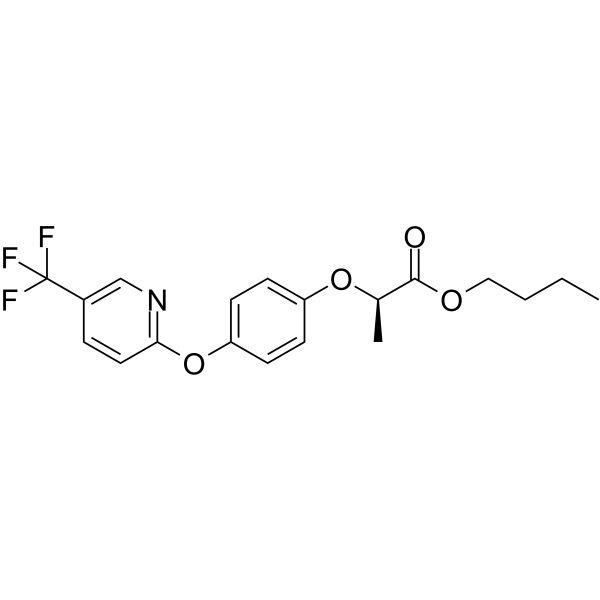
Fluazifop-P-butyl is an orally active herbicide and ACCase inhibitor. Fluazifop-P-butyl blocks the formation of malonyl-CoA, disrupts lipid synthesis in sensitive plants, and exhibits concentration-dependent phytotoxicity to non-target maize seedlings. Fluazifop-P-butyl induces oxidative stress in male Wistar rats, impairs their liver and kidney functions, and disrupts testicular function.
For research use only. We do not sell to patients.
- Purity : 99.66%
- CAS No.: 79241-46-6
- Formula: C19H20F3NO4
- Molecular Weight:383.36
-
Storage:Pure form -20°C, 3 years , 4°C, 2 years ; In solvent -80°C, 6 months , -20°C, 1 month

To place orders, for customer services and technical support, please contact: MedChemExpress USA
Tel: 609-228-6898 E-mail: [email protected] [email protected]


-
 Biological Activity
-
Chemical Information
-
Solvent & Solubility
- Purity & Documentation
- References
-
 Help & FAQs


-
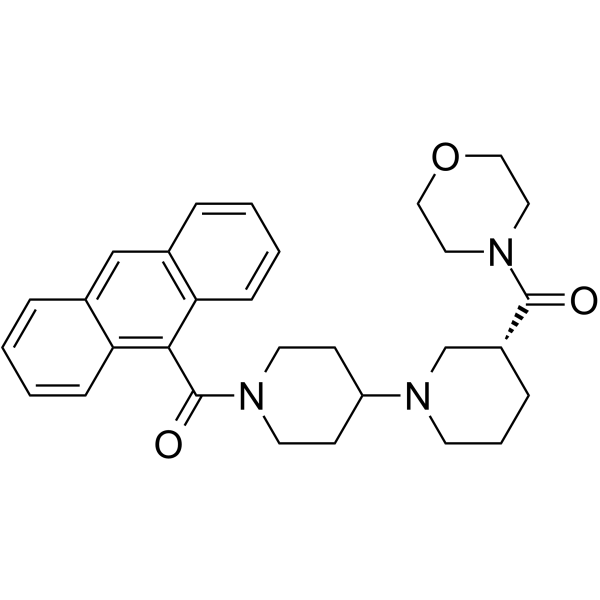
HY-15259
CP-640186ACC Inhibitor -
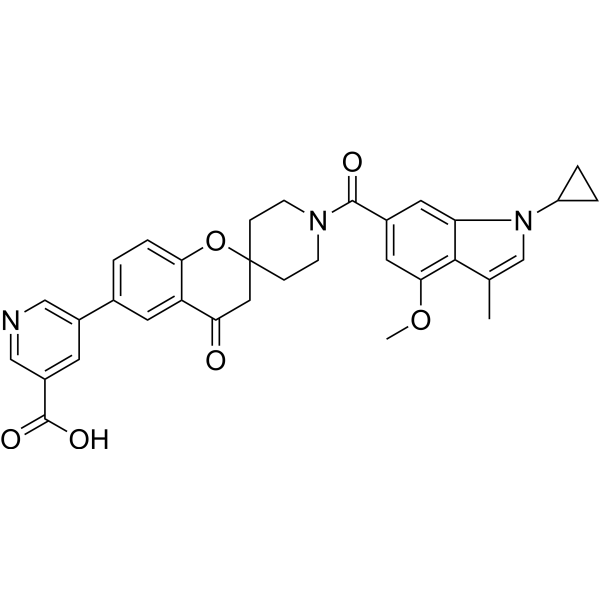
HY-107709
MK-4074Acetyl-CoA Carboxylase Inhibitor -
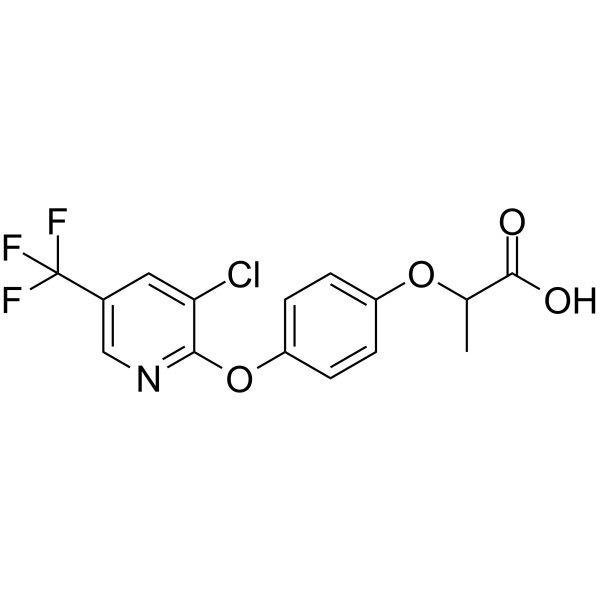
HY-B1856
HaloxyfopHerbicide -
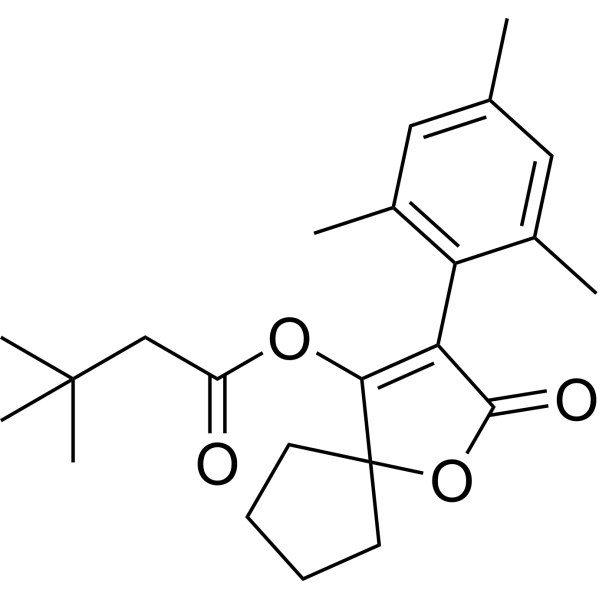
HY-114591
SpiromesifenBroad-spectrum Acaricide -
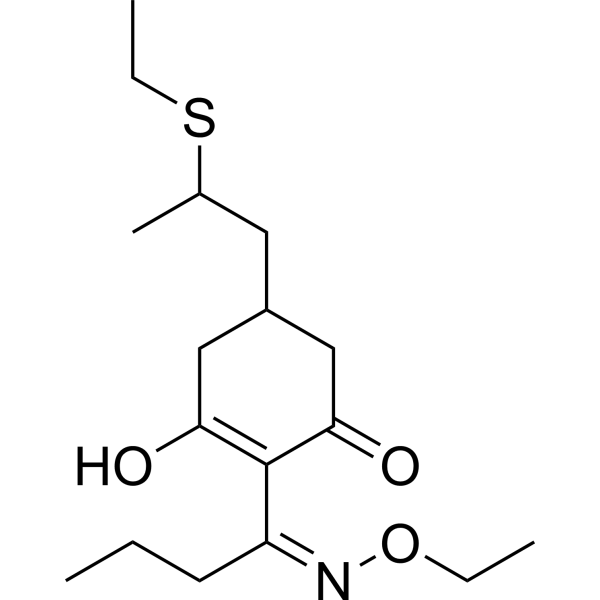
HY-135753
SethoxydimHerbicide -
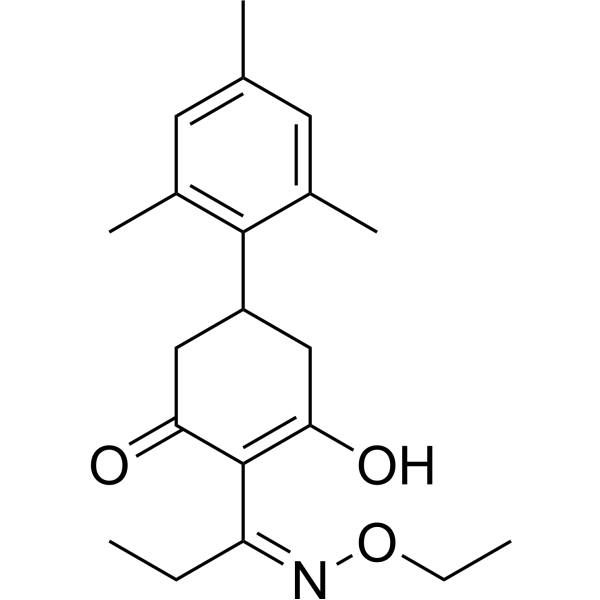
HY-111223
Tralkoxydim -
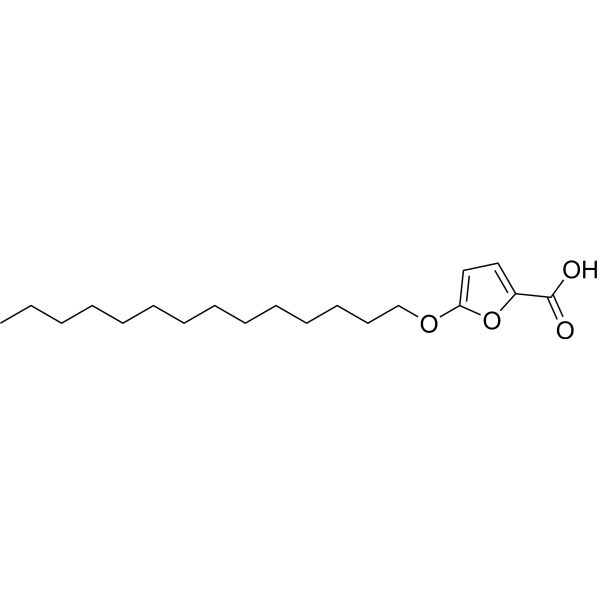
HY-101068
TOFAAcetyl-CoA Carboxylase Inhibitor -
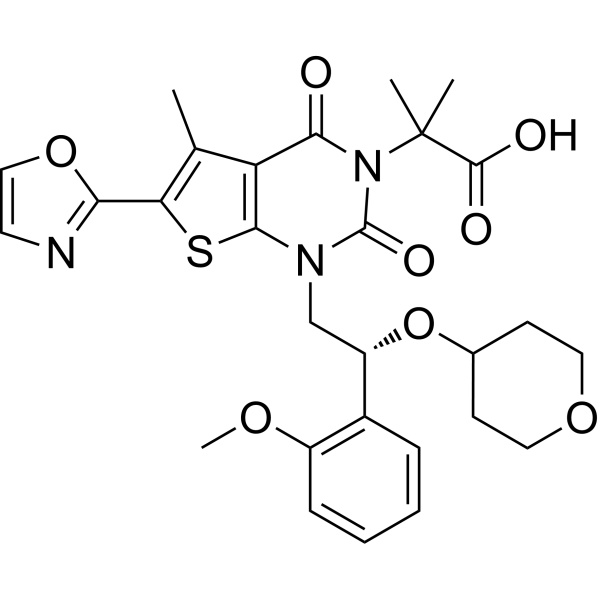
HY-16901
FirsocostatACC Inhibitor -
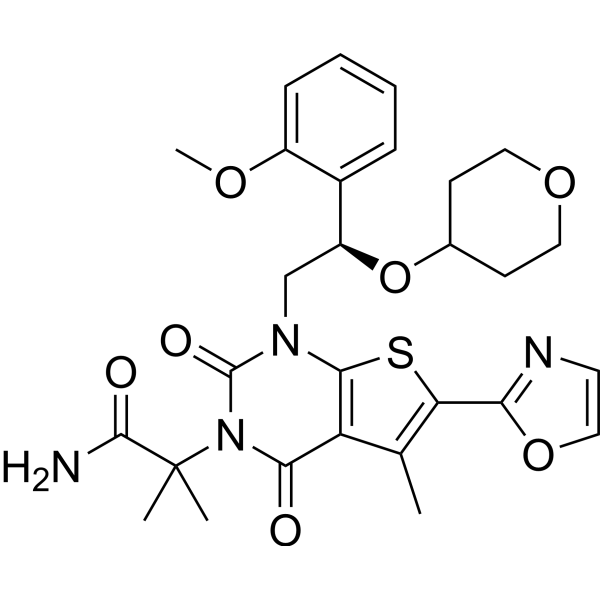
HY-101842
ND-646ACC Inhibitor -
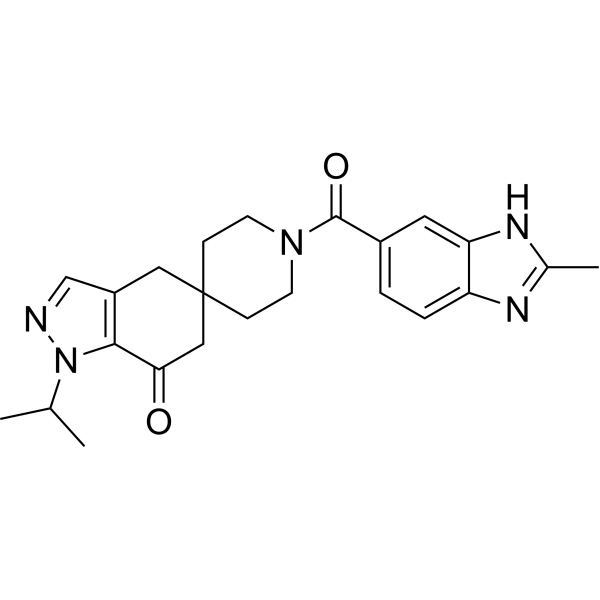
HY-12942
PF-05175157Acetyl-CoA Carboxylase Inhibitor -
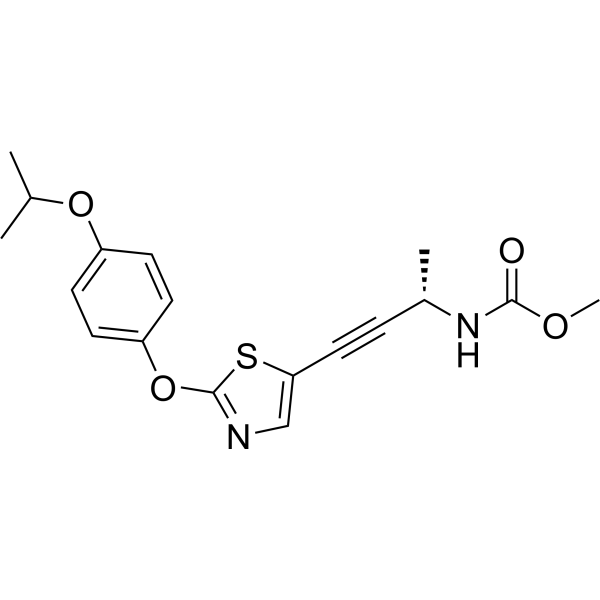
HY-147004
A-908292ACC2 Inhibitor -
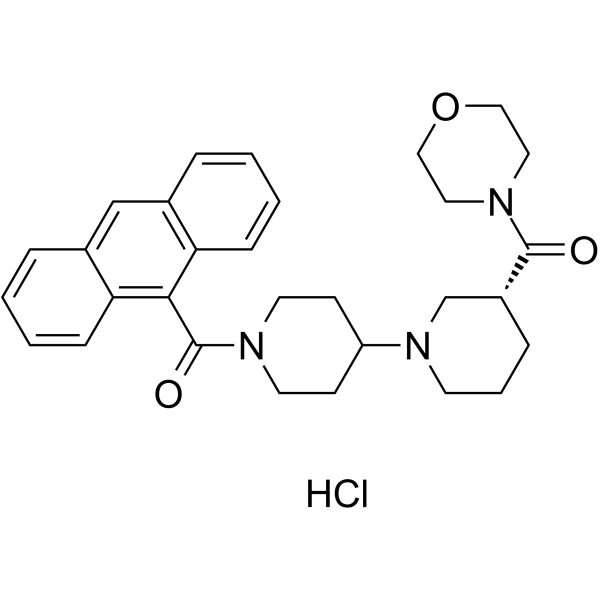
HY-15259A
CP-640186 hydrochlorideACC Inhibitor


Biological Activity
Description
In Vitro
Fluazifop-P-butyl (0.65-65 μM; soaked for 1 min; grown for 7 days) inhibits shoot and root elongation of Zea mays var. saccharata L. cv. Złota Karłowa seedlings in a concentration-dependent manner, with roots showing higher sensitivity than shoots. It also regulates the levels of photosynthetic pigments in seedling leaves[1].
MedChemExpress (MCE) has not independently confirmed the accuracy of these methods. They are for reference only.
In Vivo
MedChemExpress (MCE) has not independently confirmed the accuracy of these methods. They are for reference only.
-
Animal Model:Wistar mice (male, 160-180 g)[2]
-
Dosage:18.75 mg/kg; 37.50 mg/kg; 75.00 mg/kg
-
Administration:p.o.; daily; 21 days
-
Result:Increased plasma urea levels significantly.
Increased plasma creatinine levels significantly.
Increased plasma bilirubin levels significantly.
Increased plasma alkaline phosphatase activity significantly.
Increased plasma alanine aminotransferase activity.
Increased plasma aspartate aminotransferase activity significantly.
Decreased testicular ascorbic acid levels significantly.
Decreased testicular glutathione levels significantly.
Decreased testicular superoxide dismutase activity significantly.
Decreased testicular catalase activity significantly.
Decreased testicular glutathione-S transferase activity significantly.
Increased testicular malondialdehyde levels significantly.
Decreased testicular acid phosphatase and γ-glutamyl transferase activities significantly in a dose-dependent manner.
Increased testicular lactate dehydrogenase activity significantly in a dose-dependent manner across all treatment groups.
Caused congestion of vessels in the tunica albuginea.


Chemical Information
-
CAS No. 79241-46-6
-
Appearance Liquid (Density: 1.21 g/cm3)
-
Molecular Weight 383.36
-
Formula C19H20F3NO4
-
Color Colorless to light yellow
-
SMILES
C[C@@H](OC1=CC=C(OC2=NC=C(C(F)(F)F)C=C2)C=C1)C(OCCCC)=O
-
Shipping
Room temperature in continental US; may vary elsewhere.
-
Storage
Pure form -20°C 3 years 4°C 2 years In solvent -80°C 6 months -20°C 1 month


Solvent & Solubility
In Vitro:
DMSO : 100 mg/mL (260.85 mM; Need ultrasonic; Hygroscopic DMSO has a significant impact on the solubility of product, please use newly opened DMSO)
Please refer to the solubility information to select the appropriate solvent. Once prepared, please aliquot and store the solution to prevent product inactivation from repeated freeze-thaw cycles.
Storage method and period of stock solution: -80°C, 6 months; -20°C, 1 month. When stored at -80°C, please use it within 6 months. When stored at -20°C, please use it within 1 month.
Please refer to the solubility information to select the appropriate solvent. Once prepared, please aliquot and store the solution to prevent product inactivation from repeated freeze-thaw cycles.
Storage method and period of stock solution: -80°C, 6 months; -20°C, 1 month. When stored at -80°C, please use it within 6 months. When stored at -20°C, please use it within 1 month.
Concentration (start) × Volume (start) = Concentration (final) × Volume (final)
In Vivo:
Select the appropriate dissolution method based on your experimental animal and administration route.
- For the following dissolution methods, please ensure to first prepare a clear stock solution using an In Vitro approach and then sequentially add co-solvents:
- To ensure reliable experimental results, the clarified stock solution can be appropriately stored based on storage conditions. As for the working solution for In Vivo experiments, it is recommended to prepare freshly and use it on the same day.
- The percentages shown for the solvents indicate their volumetric ratio in the final prepared solution. If precipitation or phase separation occurs during preparation, heat and/or sonication can be used to aid dissolution.
Add each solvent one by one: 10% DMSO 90% (20% SBE-β-CD in Saline)
Solubility: 2.5 mg/mL (6.52 mM); Suspended solution; Need ultrasonic
This protocol yields a suspended solution of 2.5 mg/mL. Suspended solution can be used for oral and intraperitoneal injection.
Taking 1 mL working solution as an example, add 100 μL DMSO stock solution (25.0 mg/mL) to 900 μL 20% SBE-β-CD in Saline, and mix evenly.
Preparation of 20% SBE-β-CD in Saline (4°C, storage for one week): 2 g SBE-β-CD powder is dissolved in 10 mL Saline, completely dissolve until clear.
In Vivo Dissolution Calculator
Please enter the basic information of animal experiments:
-
-
-
-
Recommended: Prepare an additional quantity of animals to account for potential losses during experiments.
Please enter your animal formula composition:
-
%DMSO +
Recommended: Keep the proportion of DMSO in working solution below 2% if your animal is weak.
-
%+
-
+%Tween-80 + +
-
%Saline +
The co-solvents required include: DMSO, . All of co-solvents are available by MedChemExpress (MCE). , Tween 80. All of co-solvents are available by MedChemExpress (MCE).
Working solution concentration: 0.22 mg/mL
Method for preparing stock solution: mg drug dissolved in μL DMSO. Stock solution concentration: mg/mL.
1. Take μL DMSO stock solution;
2. Add μL .
μL , mix evenly;
3. Then add μL Tween 80, mix evenly;
4. Then add μL
Please ensure that the stock solution in the first step is dissolved to a clear state, and add co-solvents in sequence. You can use ultrasonic heating (ultrasonic cleaner, recommended frequency 20-40 kHz), vortexing, etc. to assist dissolution.


Purity & Documentation
-
Data Sheet (271 KB)
-
SDS (775 KB)
- English - EN (775 KB)
- Français - FR (775 KB)
- Deutsch - DE (775 KB)
- Norwegian - NO (775 KB)
- Español - ES (775 KB)
- Swedish - SV (775 KB)
- Italian - IT (775 KB)
- Korean - KR (775 KB)
- Portuguese - PT (775 KB)
-
Handling Instructions (2659 KB)
References
[1]. Horbowicz M, et al. Effect of fluazifop-p-butyl treatment on pigments and polyamines level within tissues of non-target maize plants. Pestic Biochem Physiol. 2013;107(1):78-85. [Content Brief]
[2]. Ore A, et al. Fluazifop- p-butyl, an aryloxyphenoxypropionate herbicide, diminishes renal and hepatic functions and triggers testicular oxidative stress in orally exposed rats. Toxicol Ind Health. 2017;33(5):406-415. [Content Brief]


Complete Stock Solution Preparation Table
Please refer to the solubility information to select the appropriate solvent. Once prepared, please aliquot and store the solution to prevent product inactivation from repeated freeze-thaw cycles.
Storage method and period of stock solution: -80°C, 6 months; -20°C, 1 month. When stored at -80°C, please use it within 6 months. When stored at -20°C, please use it within 1 month.
| Optional Solvent | Concentration Solvent Mass | 1 mg | 5 mg | 10 mg | 25 mg |
|---|---|---|---|---|---|
| DMSO | 1 mM | 2.6085 mL | 13.0426 mL | 26.0851 mL | 65.2129 mL |
| 5 mM | 0.5217 mL | 2.6085 mL | 5.2170 mL | 13.0426 mL | |
| 10 mM | 0.2609 mL | 1.3043 mL | 2.6085 mL | 6.5213 mL | |
| 15 mM | 0.1739 mL | 0.8695 mL | 1.7390 mL | 4.3475 mL | |
| 20 mM | 0.1304 mL | 0.6521 mL | 1.3043 mL | 3.2606 mL | |
| 25 mM | 0.1043 mL | 0.5217 mL | 1.0434 mL | 2.6085 mL | |
| 30 mM | 0.0870 mL | 0.4348 mL | 0.8695 mL | 2.1738 mL | |
| 40 mM | 0.0652 mL | 0.3261 mL | 0.6521 mL | 1.6303 mL | |
| 50 mM | 0.0522 mL | 0.2609 mL | 0.5217 mL | 1.3043 mL | |
| 60 mM | 0.0435 mL | 0.2174 mL | 0.4348 mL | 1.0869 mL | |
| 80 mM | 0.0326 mL | 0.1630 mL | 0.3261 mL | 0.8152 mL | |
| 100 mM | 0.0261 mL | 0.1304 mL | 0.2609 mL | 0.6521 mL |


Fluazifop-P-butyl Related Classifications
HY-B2007 Related Classifications
 Powered by Bioz
Keywords