



Conessine

Based on 1 Customer Validation
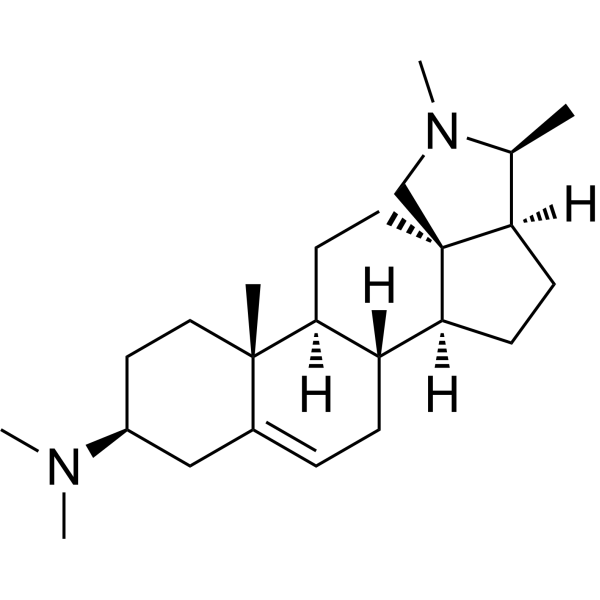
Conessine is an orally active and BBB-penetrable selective histamine H3 receptor antagonist. The pKi values of Conessine for rat and human H3 receptors are 7.61 and 8.27, respectively. Conessine is an inhibitor of the multidrug efflux pump system in Pseudomonas aeruginosa and can enhance the activity of antibiotics. Conessine has antimalarial activity. Conessine can also be used in the research of muscle atrophy.
Para uso exclusivo en investigación. No vendemos a pacientes.
- Pureza : 99.87%
- No. CAS: 546-06-5
- Fòrmula: C24H40N2
- Peso molecular:356.59
-
Almacenamiento:
-20°C, sealed storage, away from moisture and light
* In solvent : -80°C, 6 months; -20°C, 1 month (sealed storage, away from moisture and light)

To place orders, for customer services and technical support, please contact: MedChemExpress USA
Tel: 609-228-6898 E-mail: [email protected] [email protected]


-
 Actividad biológica
-
Chemical Information
-
Solvente y solubilidad
- Pureza y Documentación
- Referencias
-
 Help & FAQs


-
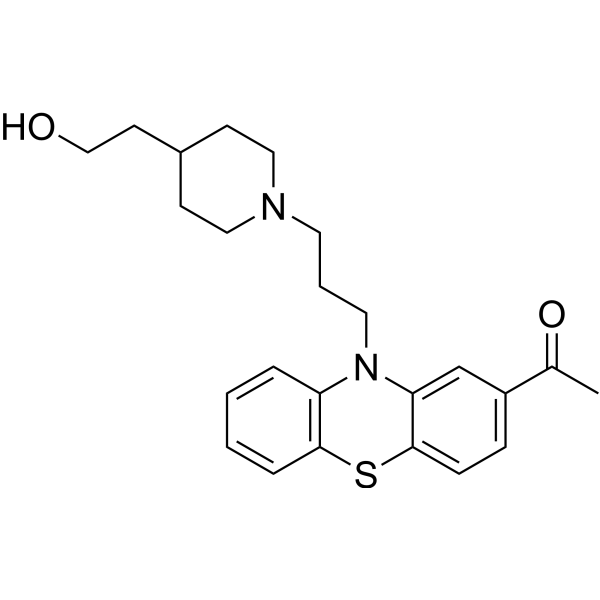
HY-B1152
PiperacetazineAntipsychotic Drug -
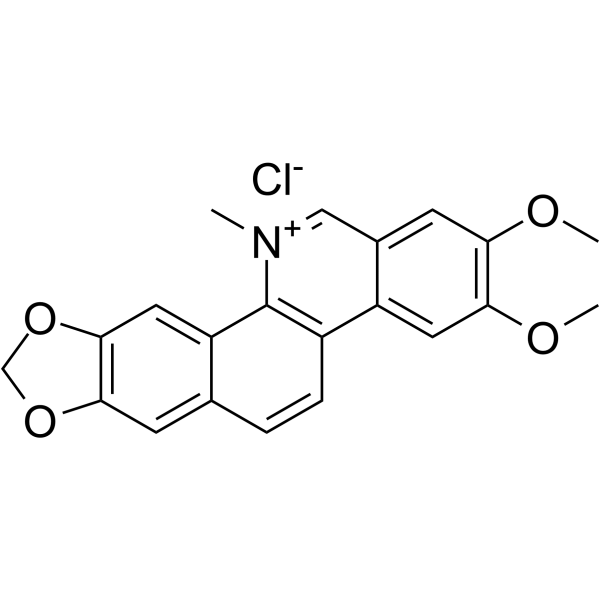
HY-N0498
Nitidine chlorideAnti-malarial Agent -
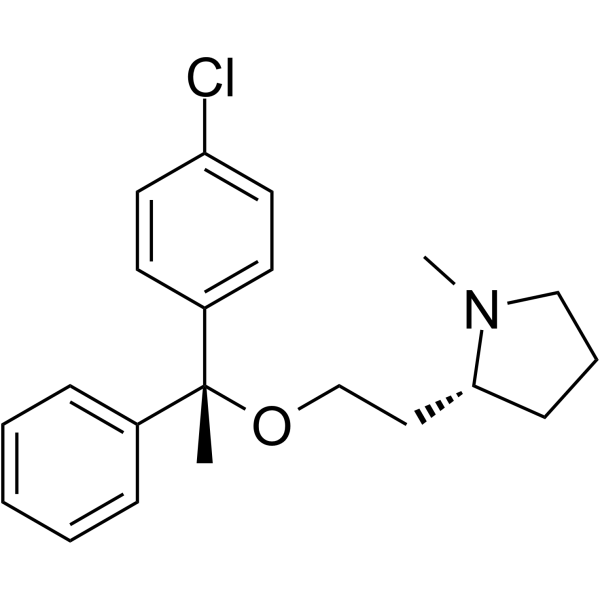
HY-B0298
ClemastineH1 Histamine Receptor Antagonist -
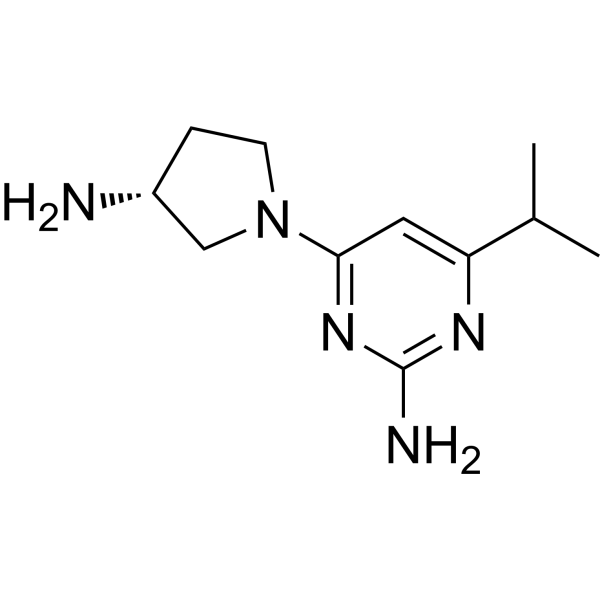
HY-101189
JNJ-39758979Histamine H4 Receptor Antagonist -
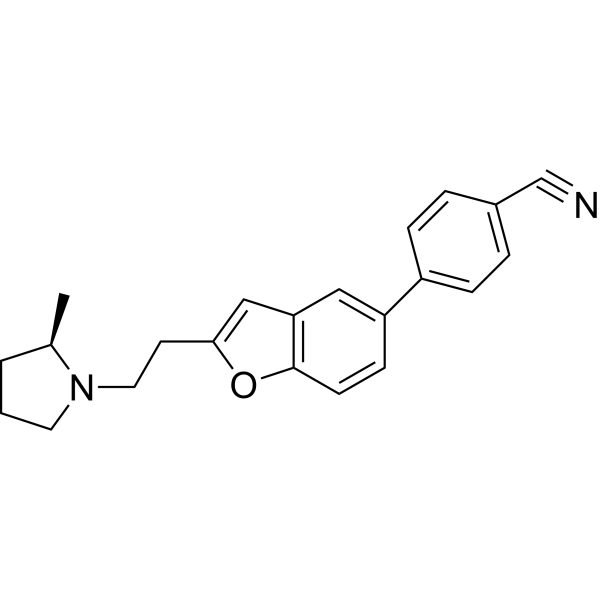
HY-12195
ABT-239 -
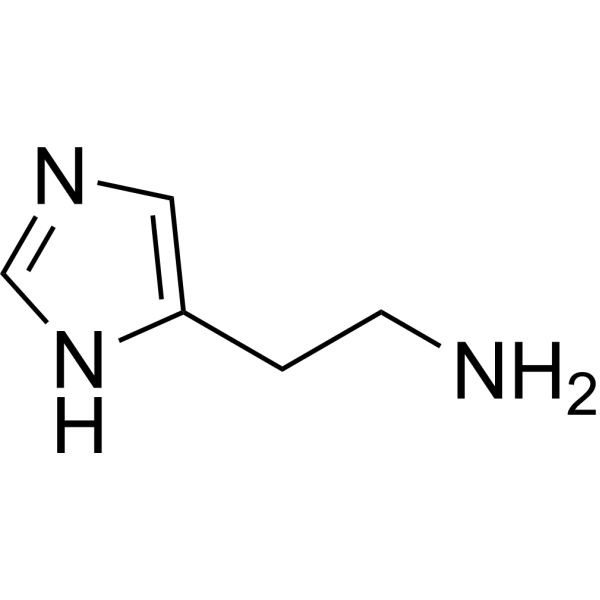
HY-B1204
HistamineNeurotransmitter -
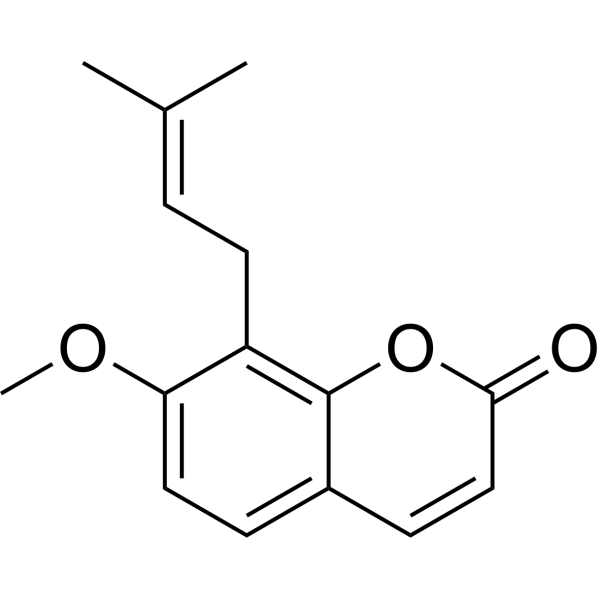
HY-N0054
OstholeApoptosis Inducer -
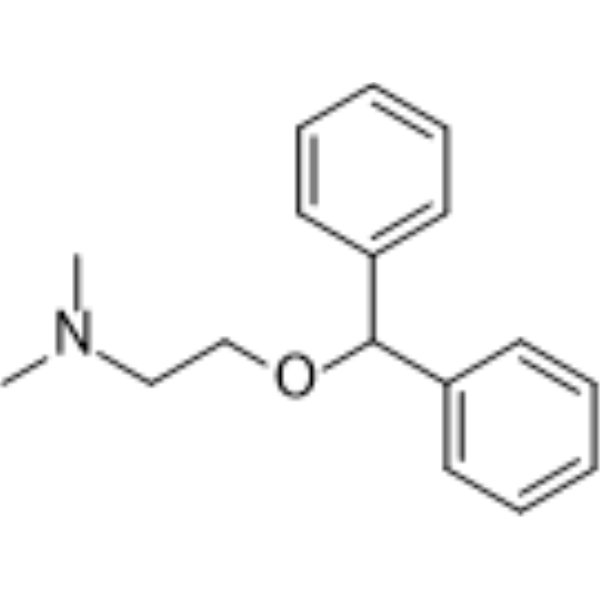
HY-B0303
DiphenhydramineAntihistamine -
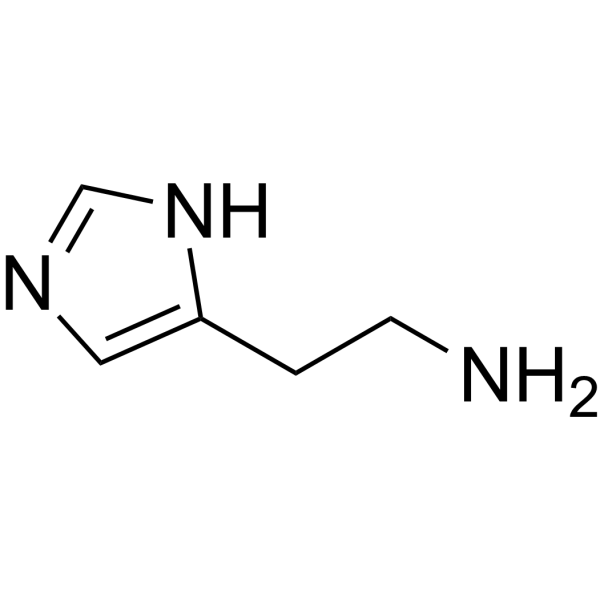
HY-B1204R
Histamine (Standard)Neurotransmitter -

HY-101189R
JNJ-39758979 (Standard)Histamine H4 Receptor Antagonist -
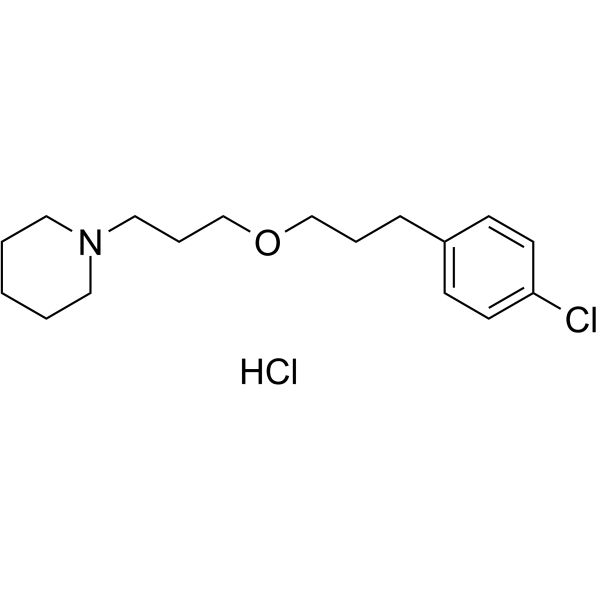
HY-12199B
Pitolisant hydrochlorideH3 Receptor Antagonist -

HY-B0303R
Diphenhydramine (Standard)Antihistamine
Ver todos los productos específicos de isoformas Histamine Receptor
MoreVer todos los productos específicos de isoformas Parasite
More

Actividad biológica
Descripciòn
In Vitro
Conessine (2.5-20 μM; 24 h) inhibits p53-, NF-κB-, and FoxO3a-dependent transcription in HEK293 cells[1].
Conessine (10 μM) reduces the levels of MuRF1 and atrogin-1 in Dexamethasone (HY-14648)-treated C2C12 myotube cells[1].
Conessine (72 h) has antimalarial activity, with IC50 values of 1.9 and 1.3 μg/mL in the schizont maturation method and pLDH assay, respectively[2].
Conessine (74 h) is cytotoxic to L-6 cells, with an IC50 of 14 μg/mL[2].
MedChemExpress (MCE) has not independently confirmed the accuracy of these methods. They are for reference only.
In Vivo
Conessine (0.1-10 mg/kg; subcutaneously; single dose) can exacerbate ethanol-induced psychostimulant effects in mice[3].
MedChemExpress (MCE) has not independently confirmed the accuracy of these methods. They are for reference only.
-
Animal Model:BALB/c mice aged 4-6 weeks old (22-26 g) were infected with Plasmodium berghei[2]
-
Dosage:10, 20 and 50 mg/kg
-
Administration:Oral administration; 4 days
-
Result:Significantly reduced parasitaemia in infected mice. The parasite inhibition rates were 88.95% at 10 mg/kg, 56.6% at 20 mg/kg, and 50.99% at 50 mg/kg on day 7. The mean survival time of mice in the 10 mg/kg group was 13.3 days, in the 20 mg/kg group was 11.6 days, and in the 50 mg/kg group was 11.5 days.
Affected the liver and kidney function of mice, as shown by the changes in the levels of alkaline phosphatase (ALP), bilirubin, urea, and creatinine in serum.
-
Animal Model:Male Swiss mice (30-35 g) treated ethanol[3]
-
Dosage:0.1, 1 and 10 mg/kg
-
Administration:Subcutaneously; single dose
-
Result:Exacerbated ethanol effects on locomotor activity in a dose-dependent manner.
Had reinforcing proprieties per se in the conditionedplace preference (CPP) procedure at dose of 10 mg/kg, but it did not alter the acquisition of ethanol CPP.
Blocked ethanol effects on dopaminergic and noradrenergic neurotransmission.


Chemical Information
-
No. CAS 546-06-5
-
Appearance Solid
-
Peso molecular 356.59
-
Fòrmula C24H40N2
-
Color White to off-white
-
SMILES
C[C@H]1[C@]2([H])[C@]3(CN1C)[C@](CC2)([H])[C@@]4([H])[C@]([C@@]5(C(C[C@H](CC5)N(C)C)=CC4)C)([H])CC3
-
Structure Classification
-
Initial Source
-
Envío
Room temperature in continental US; may vary elsewhere.
-
Almacenamiento
-20°C, sealed storage, away from moisture and light
* In solvent : -80°C, 6 months; -20°C, 1 month (sealed storage, away from moisture and light)


Solvente y solubilidad
In Vitro:
Ethanol : 25 mg/mL (70.11 mM; Need ultrasonic)
DMSO : 3.33 mg/mL (9.34 mM; ultrasonic and warming and heat to 60°C; Hygroscopic DMSO has a significant impact on the solubility of product, please use newly opened DMSO)
Please refer to the solubility information to select the appropriate solvent. Once prepared, please aliquot and store the solution to prevent product inactivation from repeated freeze-thaw cycles.
Storage method and period of stock solution: -80°C, 6 months; -20°C, 1 month (sealed storage, away from moisture and light). When stored at -80°C, please use it within 6 months. When stored at -20°C, please use it within 1 month.
Please refer to the solubility information to select the appropriate solvent. Once prepared, please aliquot and store the solution to prevent product inactivation from repeated freeze-thaw cycles.
Storage method and period of stock solution: -80°C, 6 months; -20°C, 1 month (sealed storage, away from moisture and light). When stored at -80°C, please use it within 6 months. When stored at -20°C, please use it within 1 month.
Concentration (start) × Volume (start) = Concentration (final) × Volume (final)
In Vivo:
Select the appropriate dissolution method based on your experimental animal and administration route.
- For the following dissolution methods, please ensure to first prepare a clear stock solution using an In Vitro approach and then sequentially add co-solvents:
- To ensure reliable experimental results, the clarified stock solution can be appropriately stored based on storage conditions. As for the working solution for In Vivo experiments, it is recommended to prepare freshly and use it on the same day.
- The percentages shown for the solvents indicate their volumetric ratio in the final prepared solution. If precipitation or phase separation occurs during preparation, heat and/or sonication can be used to aid dissolution.
Add each solvent one by one: 10% EtOH 40% PEG300 5% Tween-80 45% Saline
Solubility: ≥ 2.5 mg/mL (7.01 mM); Clear solution
This protocol yields a clear solution of ≥ 2.5 mg/mL (saturation unknown).
Taking 1 mL working solution as an example, add 100 μL EtOH stock solution (25.0 mg/mL) to 400 μL PEG300, and mix evenly; then add 50 μL Tween-80 and mix evenly; then add 450 μL Saline to adjust the volume to 1 mL.
Preparation of Saline: Dissolve 0.9 g sodium chloride in ddH₂O and dilute to 100 mL to obtain a clear Saline solution.
Add each solvent one by one: 10% EtOH 90% (20% SBE-β-CD in Saline)
Solubility: ≥ 2.5 mg/mL (7.01 mM); Clear solution
This protocol yields a clear solution of ≥ 2.5 mg/mL (saturation unknown).
Taking 1 mL working solution as an example, add 100 μL EtOH stock solution (25.0 mg/mL) to 900 μL 20% SBE-β-CD in Saline, and mix evenly.
Preparation of 20% SBE-β-CD in Saline (4°C, storage for one week): 2 g SBE-β-CD powder is dissolved in 10 mL Saline, completely dissolve until clear.
Add each solvent one by one: 10% EtOH 90% Corn Oil
Solubility: ≥ 2.5 mg/mL (7.01 mM); Clear solution
This protocol yields a clear solution of ≥ 2.5 mg/mL (saturation unknown). If the continuous dosing period exceeds half a month, please choose this protocol carefully.
Taking 1 mL working solution as an example, add 100 μL EtOH stock solution (25.0 mg/mL) to 900 μL Corn oil, and mix evenly.
In Vivo Dissolution Calculator
Please enter the basic information of animal experiments:
-
-
-
-
Recommended: Prepare an additional quantity of animals to account for potential losses during experiments.
Please enter your animal formula composition:
-
%DMSO +
Recommended: Keep the proportion of DMSO in working solution below 2% if your animal is weak.
-
%+
-
+%Tween-80 + +
-
%Saline +
The co-solvents required include: DMSO, . All of co-solvents are available by MedChemExpress (MCE). , Tween 80. All of co-solvents are available by MedChemExpress (MCE).
Working solution concentration: 0.22 mg/mL
Method for preparing stock solution: mg drug dissolved in μL DMSO. Stock solution concentration: mg/mL. * In solvent : -80°C, 6 months; -20°C, 1 month (sealed storage, away from moisture and light)
1. Take μL DMSO stock solution;
2. Add μL .
μL , mix evenly;
3. Then add μL Tween 80, mix evenly;
4. Then add μL
Please ensure that the stock solution in the first step is dissolved to a clear state, and add co-solvents in sequence. You can use ultrasonic heating (ultrasonic cleaner, recommended frequency 20-40 kHz), vortexing, etc. to assist dissolution.


Pureza y Documentación
-
Ficha de datos (278 KB)
-
SDS (393 KB)
- English - EN (393 KB)
- Français - FR (393 KB)
- Deutsch - DE (393 KB)
- Norwegian - NO (393 KB)
- Español - ES (393 KB)
- Swedish - SV (393 KB)
- Italian - IT (393 KB)
- Korean - KR (393 KB)
- Portuguese - PT (393 KB)
-
Instrucciones de manejo (2659 KB)
Referencias
[1]. Kim H, et al. Conessine treatment reduces dexamethasone-induced muscle atrophy by regulating MuRF1 and atrogin-1 expression [published online ahead of print, 2018 Feb 1]. J Microbiol Biotechnol. 2018;10.4014.jmb.1711.11009. [Content Brief]
[2]. Dua VK, et al. Anti-malarial property of steroidal alkaloid conessine isolated from the bark of Holarrhena antidysenterica. Malar J. 2013 Jun 10;12:194. [Content Brief]
[3]. Morais-Silva G, et al. Conessine, an H3 receptor antagonist, alters behavioral and neurochemical effects of ethanol in mice. Behav Brain Res. 2016 May 15;305:100-7. [Content Brief]
[4]. Siriyong T, et al. Conessine as a novel inhibitor of multidrug efflux pump systems in Pseudomonas aeruginosa. BMC Complement Altern Med. 2017 Aug 14;17(1):405. [Content Brief]
[5]. Zhao C, et al. The alkaloid conessine and analogues as potent histamine H3 receptor antagonists. J Med Chem. 2008 Sep 11;51(17):5423-30. [Content Brief]


Complete Stock Solution Preparation Table
Please refer to the solubility information to select the appropriate solvent. Once prepared, please aliquot and store the solution to prevent product inactivation from repeated freeze-thaw cycles.
Storage method and period of stock solution: -80°C, 6 months; -20°C, 1 month (sealed storage, away from moisture and light). When stored at -80°C, please use it within 6 months. When stored at -20°C, please use it within 1 month.
| Optional Solvent | Concentration Solvent Mass | 1 mg | 5 mg | 10 mg | 25 mg |
|---|---|---|---|---|---|
| DMSO / Ethanol | 1 mM | 2.8043 mL | 14.0217 mL | 28.0434 mL | 70.1085 mL |
| 5 mM | 0.5609 mL | 2.8043 mL | 5.6087 mL | 14.0217 mL | |
| Ethanol | 10 mM | 0.2804 mL | 1.4022 mL | 2.8043 mL | 7.0109 mL |
| 15 mM | 0.1870 mL | 0.9348 mL | 1.8696 mL | 4.6739 mL | |
| 20 mM | 0.1402 mL | 0.7011 mL | 1.4022 mL | 3.5054 mL | |
| 25 mM | 0.1122 mL | 0.5609 mL | 1.1217 mL | 2.8043 mL | |
| 30 mM | 0.0935 mL | 0.4674 mL | 0.9348 mL | 2.3370 mL | |
| 40 mM | 0.0701 mL | 0.3505 mL | 0.7011 mL | 1.7527 mL | |
| 50 mM | 0.0561 mL | 0.2804 mL | 0.5609 mL | 1.4022 mL | |
| 60 mM | 0.0467 mL | 0.2337 mL | 0.4674 mL | 1.1685 mL |


Conessine Related Classifications
HY-107566 Related Classifications
 Powered by Bioz