



EGTA-AM
Based on 11 publication(s) in Google Scholar
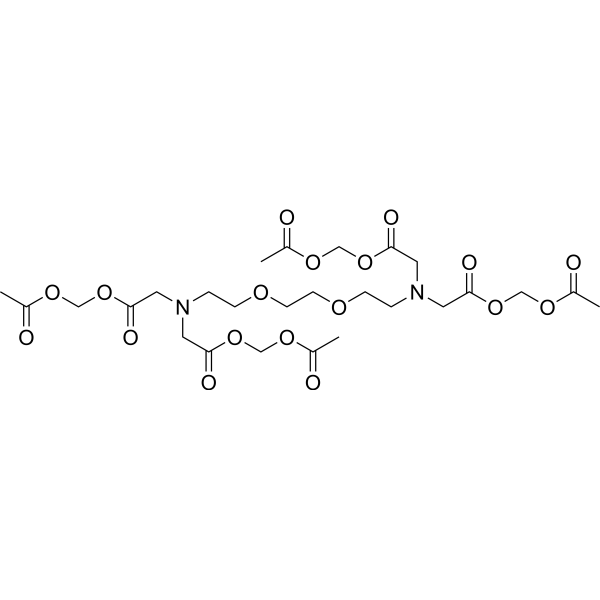
EGTA-AM is a membrane permeable form of EGTA, can be passively loaded into cells to generate intracellular EGTA; EGTA-AM is also a Ca2+ chelator with slow chelating dynamics.
For research use only. We do not sell to patients.
- Purity : 99.81%
- CAS No.: 99590-86-0
- Formula: C26H40N2O18
- Molecular Weight:668.60
-
Storage:
-20°C, protect from light
* In solvent : -80°C, 6 months; -20°C, 1 month (protect from light)

To place orders, for customer services and technical support, please contact: MedChemExpress USA
Tel: 609-228-6898 E-mail: [email protected] [email protected]


-
 Biological Activity
-
Chemical Information
-
Solvent & Solubility
- Protocols
- Purity & Documentation
- References
-
 Help & FAQs


-
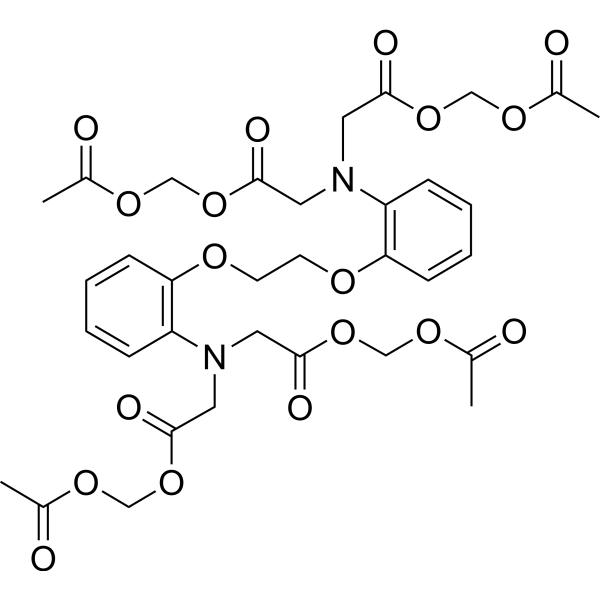
HY-100545
BAPTA-AMCa2+ Chelator -
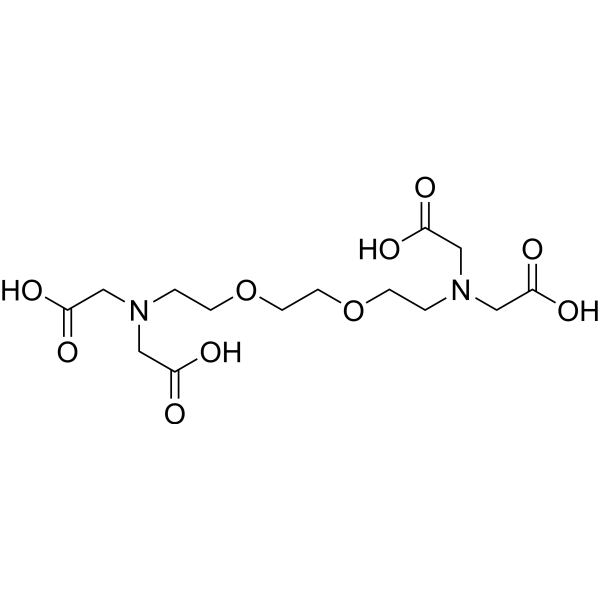
HY-D0861
EGTACalcium Ion Chelator -
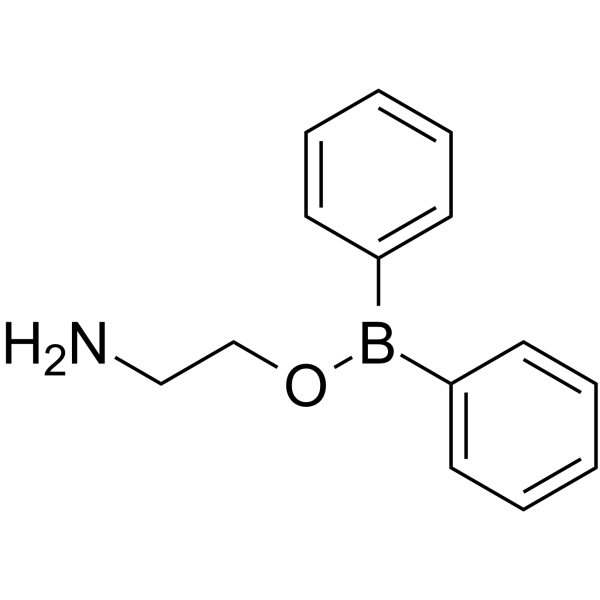
HY-W009724
2-Aminoethyl diphenylborinateIP3R Inhibitor -
HY-D0940
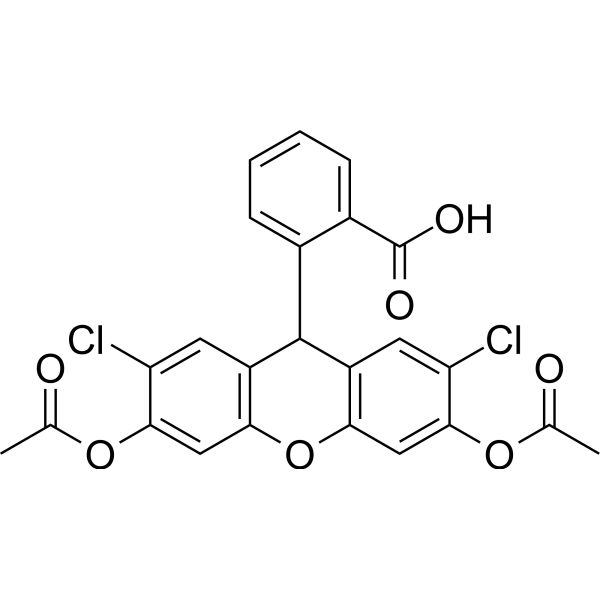
H2DCFDAROS-Sensitive Probe -
HY-D0021
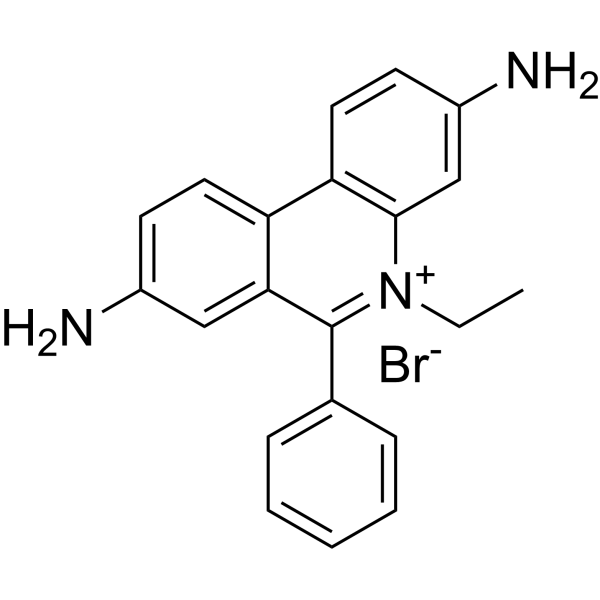
EthD bromideFluorescent Tag -
HY-13433
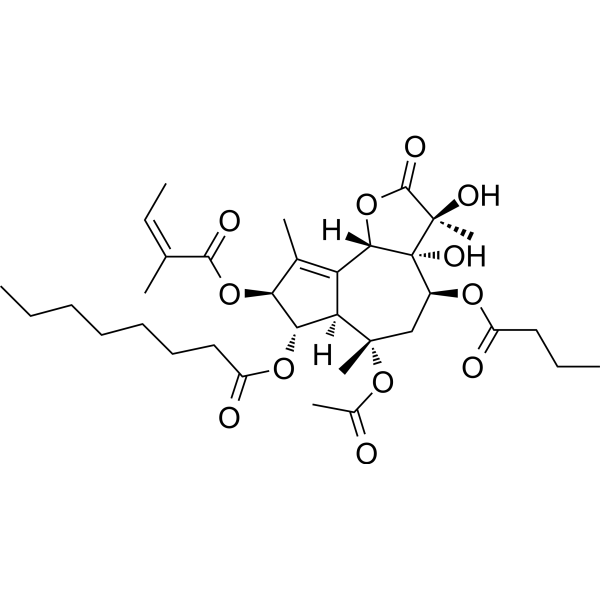
ThapsigarginER Stress Inducer -

HY-DY1050
Ethidium bromide (solution)Fluorescent Tag -
HY-13434
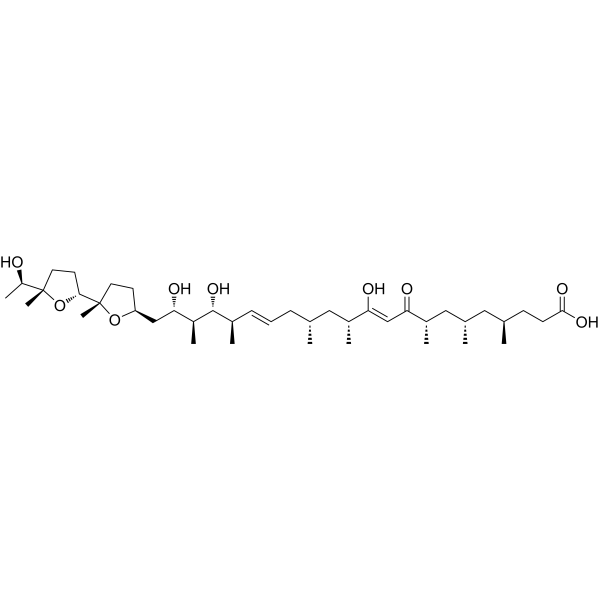
IonomycinCalcium Ionophore -
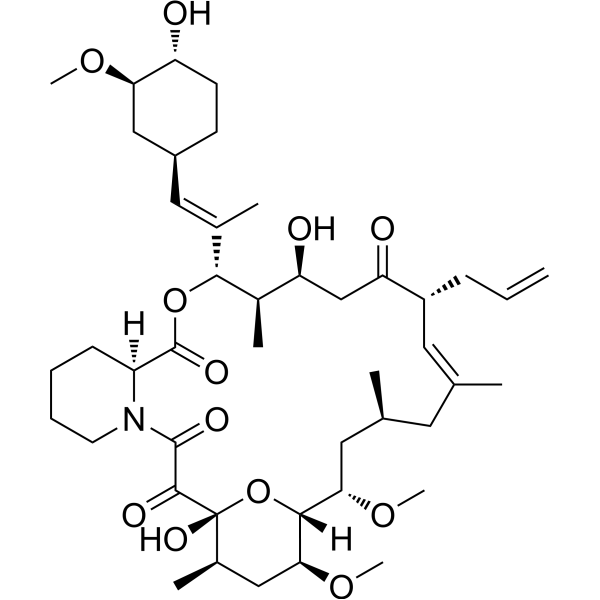
HY-13756
TacrolimusCalcineurin Inhibitor -
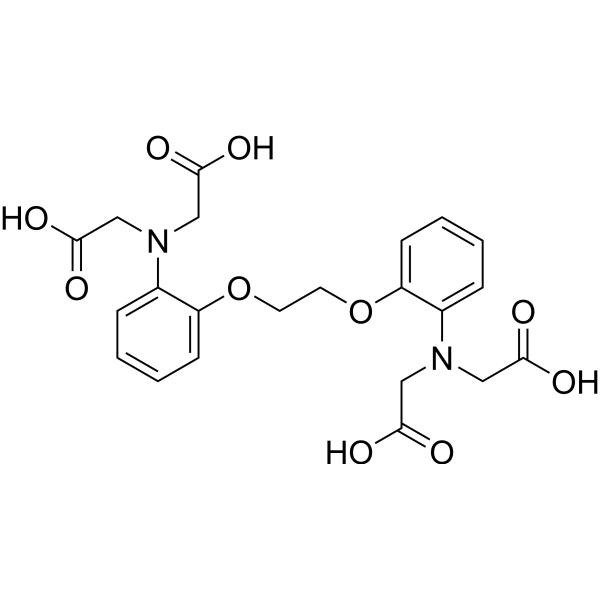
HY-100168
BAPTACalcium Chelator -
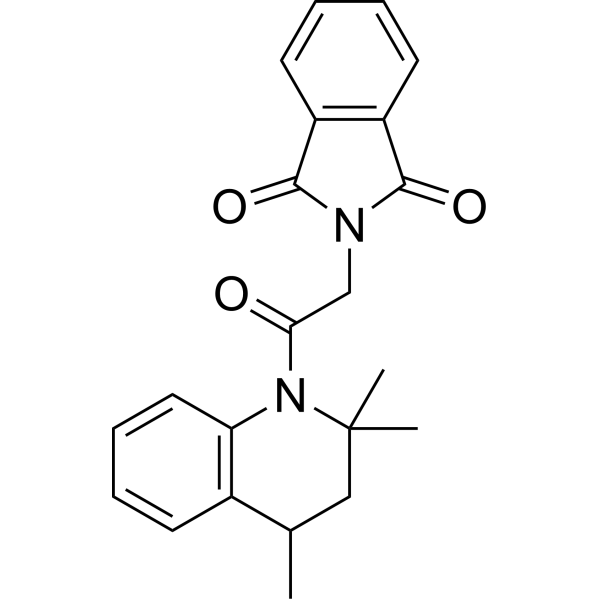
HY-108462
ML-SA1TRPML Agonist
Publications Citing Use of MedChemExpress (MCE) EGTA-AM
More- Cell. 2026 May 28;189(11):3254-3269.e30.
- Nat Commun. 2021 Jan 28;12(1):662. [Abstract]
- Exp Mol Med. 2026 Feb;58(1):143-160. [Abstract]
- Adv Sci (Weinh). 2026 Apr;13(19):e15768. [Abstract]
- Dev Cell. 2024 Jun 3;59(11):1396-1409.e5. [Abstract]
- Cell Rep. 2025 Dec 5;44(12):116659. [Abstract]
- Eur J Pharmacol. 2025 Aug 15:1001:177765. [Abstract]
- PLoS Pathog. 2024 Dec 2;20(12):e1012737. [Abstract]
- Front Physiol. 2022 Jan 5:12:736920. [Abstract]
- Res Sq. 2026 Mar 11.
- Research Square Preprint. 2024 Mar 13.
 Customer Validation & Images

-
Cell Proliferation/Viability Assay
-
WB
-
IP
-
IP
-
IF


Biological Activity
Description
In Vitro
EGTA-AM (50 μM) markedly reduces the asynchronous excitatory postsynaptic currents (aEPSC) to 58.9 ± 8.1% of the control level, but only reduces the synchronous excitatory postsynaptic currents (EPSCs), measured as charge transfer produced by the stimulation train[1].
MedChemExpress (MCE) has not independently confirmed the accuracy of these methods. They are for reference only.


Chemical Information
-
CAS No. 99590-86-0
-
Appearance Liquid (Density: 1.303 g/cm3)
-
Molecular Weight 668.60
-
Formula C26H40N2O18
-
Color Colorless to light yellow
-
SMILES
O=C(OCOC(C)=O)CN(CC(OCOC(C)=O)=O)CCOCCOCCN(CC(OCOC(C)=O)=O)CC(OCOC(C)=O)=O
-
Synonyms
EGTA Acetoxymethyl ester
-
Shipping
Room temperature in continental US; may vary elsewhere.
-
Storage
-20°C, protect from light
* In solvent : -80°C, 6 months; -20°C, 1 month (protect from light)


Publications (11)
-
Journal Impact Factor
-
Most Recent
-
-
Nat Commun
LPA signaling acts as a cell-extrinsic mechanism to initiate cilia disassembly and promote neurogenesis. [Abstract]2021 Jan 28;12(1):662. PMID: 33510165
EGTA-AM purchased from MedChemExpress. Usage Cited in: Nat Commun. 2021 Jan 28;12(1):662. [Abstract]
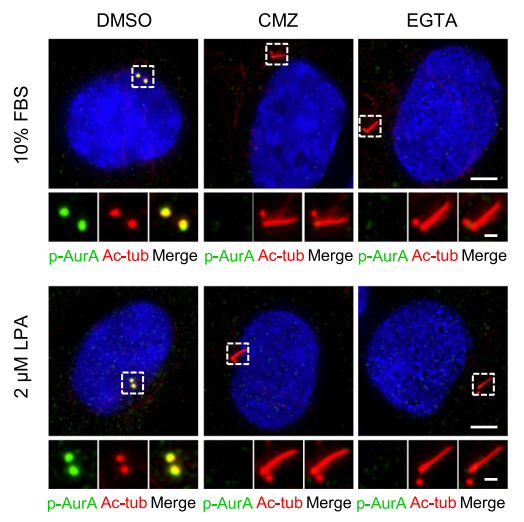
CMZ or EGTA blocks serum- and LPA- induced Aurora A activation. Ciliated RPE-1 cells were pretreated with CMZ (5 μM), EGTA (0.5 mM) or DMSO control for 30 min, and then cells were stimulated with 10% FBS or 2 μM LPA for 2 h. Cells were stained with anti-p-AurA (Aurora A, green), anti-Ac-tub (Ac-tubulin, red) antibodies. Scale bar: 5 μm (main image) and 1 μm (magnified region).
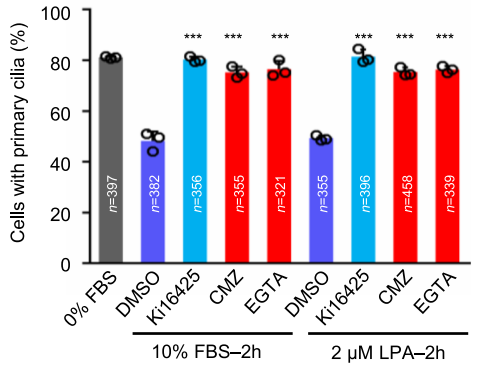
EGTA-AM purchased from MedChemExpress. Usage Cited in: Nat Commun. 2021 Jan 28;12(1):662. [Abstract]
CMZ or EGTA blocks serum- and LPA- induced cilia disassembly. Ciliated RPE-1 cells were pretreated with Ki16425 (40 μM), CMZ (5 μM), EGTA (0.5 mM) or DMSO control for 30 min, and then cells were stimulated with 10% FBS or 2 μM LPA for 2 h.
-
Exp Mol Med
Piezo1 activation in endothelial cells aggravates microvascular ischemia-reperfusion injury in limbs by enhancing ferroptosis. [Abstract]2026 Feb;58(1):143-160. PMID: 41507309 -
Adv Sci (Weinh)
Inhibition of Calcium-Dependent Lipid Droplets Relocation of ACSL4-PKCβ-ALOX15 Complex Alleviates Ferroptosis and Acute Pancreatitis. [Abstract]2026 Apr;13(19):e15768. PMID: 41589658
EGTA-AM purchased from MedChemExpress. Usage Cited in: Adv Sci (Weinh). 2026 Apr;13(19):e15768. [Abstract]
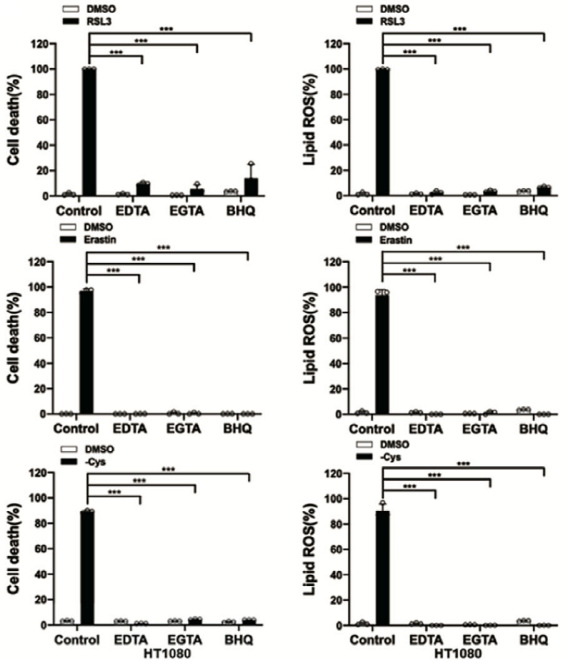
Calcium chelators treatment blocked ferroptosis and lipid peroxidation. HT1080 cells were treated with RSL3 (1 µM, for 10 h), erastin (10 µM, for 20 h) or cystine starvation (for 30 h) with or without calcium chelators, then cell death and lipid ROS were measured. EDTA‐AM (40 µM), EGTA‐AM (50 µM), BHQ (50 µM).
EGTA-AM purchased from MedChemExpress. Usage Cited in: Adv Sci (Weinh). 2026 Apr;13(19):e15768. [Abstract]
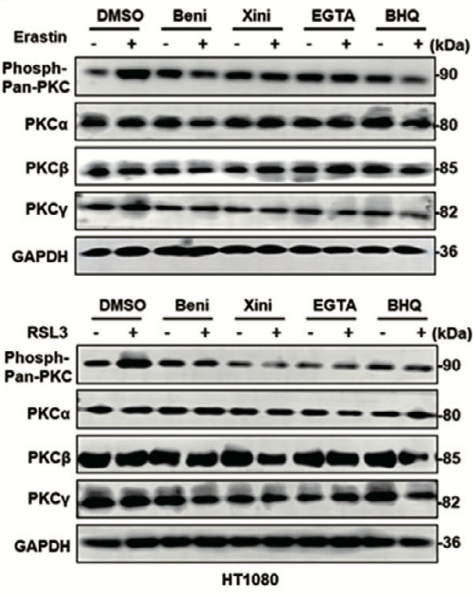
L‐type calcium channel blockers or calcium chelators treatment suppress erastin (10 µM, for 8 h) or RSL3 (1 µM, for 6 h) induced phosphorylation of cPKC without changing their protein level. HT1080 cells were treated with indicated compounds. Western blot images confirmed the expression of the indicated proteins. Erastin (10 µM), Beni: Benidipine (50 µM) Xini: Xinidipine (20 µM), EGTA‐AM (50 µM), BHQ (50 µM).
EGTA-AM purchased from MedChemExpress. Usage Cited in: Adv Sci (Weinh). 2026 Apr;13(19):e15768. [Abstract]
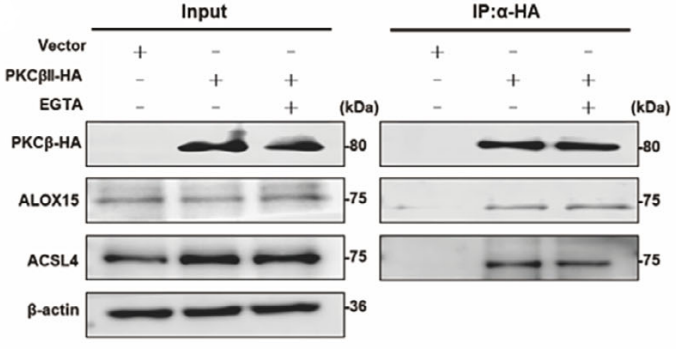
EGTA‐AM (50 µM for 8 h) does not affect the formation of ACSL4‐PKCβ‐ALOX15 complex. The IP assay was performed using an antibody against HA tag using indicated cell lysate. Western blot images confirmed the expression of the indicated proteins.
EGTA-AM purchased from MedChemExpress. Usage Cited in: Adv Sci (Weinh). 2026 Apr;13(19):e15768. [Abstract]
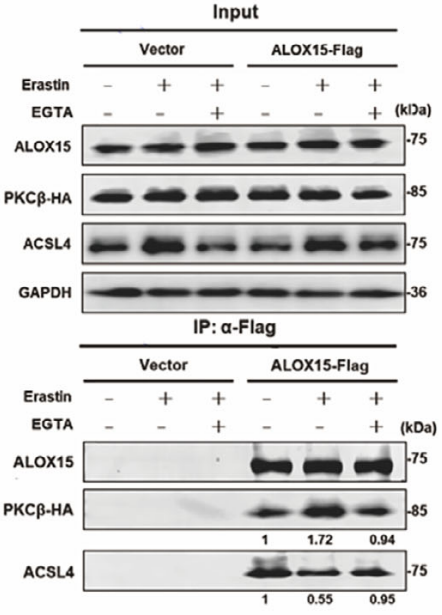
EGTA treatment blocked the effect of the erastin on the formation of ACSL4‐PKCβ‐ALOX15 complex. The IP assay was performed using an antibody against FLAG tag using indicated cell lysate. Western blot images confirmed the expression of the indicated proteins in MDA‐MB‐231 cells. erastin (20 µM for 8 h), EGTA (50 µM for 8 h).
-
Dev Cell
Using an ER-specific optogenetic mechanostimulator to understand the mechanosensitivity of the endoplasmic reticulum. [Abstract]2024 Jun 3;59(11):1396-1409.e5. PMID: 38569547 -
Cell Rep
circATF6 triggers calcium overload to synergize with EGFR-TKI in non-small cell lung cancer via modulation of proteostasis. [Abstract]2025 Dec 5;44(12):116659. PMID: 41351835 -
Eur J Pharmacol
Isoliensinine promotes vasorelaxation and inhibits constriction by regulating the calcium channel in hypertension: In vitro and in vivo approaches. [Abstract]2025 Aug 15:1001:177765. PMID: 40414594 -
PLoS Pathog
2024 Dec 2;20(12):e1012737. PMID: 39621796 -
Front Physiol
Endoplasmic Reticulum Stress/Ca2+-Calmodulin-Dependent Protein Kinase/Signal Transducer and Activator of Transcription 3 Pathway Plays a Role in the Regulation of Cellular Zinc Deficiency in Myocardial Ischemia/Reperfusion Injury. [Abstract]2022 Jan 5:12:736920. PMID: 35069232 -
-


Solvent & Solubility
In Vitro:
DMSO : 100 mg/mL (149.57 mM; ultrasonic and warming and heat to 60°C; Hygroscopic DMSO has a significant impact on the solubility of product, please use newly opened DMSO)
Please refer to the solubility information to select the appropriate solvent. Once prepared, please aliquot and store the solution to prevent product inactivation from repeated freeze-thaw cycles.
Storage method and period of stock solution: -80°C, 6 months; -20°C, 1 month (protect from light). When stored at -80°C, please use it within 6 months. When stored at -20°C, please use it within 1 month.
Please refer to the solubility information to select the appropriate solvent. Once prepared, please aliquot and store the solution to prevent product inactivation from repeated freeze-thaw cycles.
Storage method and period of stock solution: -80°C, 6 months; -20°C, 1 month (protect from light). When stored at -80°C, please use it within 6 months. When stored at -20°C, please use it within 1 month.
Concentration (start) × Volume (start) = Concentration (final) × Volume (final)
In Vivo:
Select the appropriate dissolution method based on your experimental animal and administration route.
- For the following dissolution methods, please ensure to first prepare a clear stock solution using an In Vitro approach and then sequentially add co-solvents:
- To ensure reliable experimental results, the clarified stock solution can be appropriately stored based on storage conditions. As for the working solution for In Vivo experiments, it is recommended to prepare freshly and use it on the same day.
- The percentages shown for the solvents indicate their volumetric ratio in the final prepared solution. If precipitation or phase separation occurs during preparation, heat and/or sonication can be used to aid dissolution.
Add each solvent one by one: 10% DMSO 40% PEG300 5% Tween-80 45% Saline
Solubility: ≥ 2.5 mg/mL (3.74 mM); Clear solution
This protocol yields a clear solution of ≥ 2.5 mg/mL (saturation unknown).
Taking 1 mL working solution as an example, add 100 μL DMSO stock solution (25.0 mg/mL) to 400 μL PEG300, and mix evenly; then add 50 μL Tween-80 and mix evenly; then add 450 μL Saline to adjust the volume to 1 mL.
Preparation of Saline: Dissolve 0.9 g sodium chloride in ddH₂O and dilute to 100 mL to obtain a clear Saline solution.
Add each solvent one by one: 10% DMSO 90% (20% SBE-β-CD in Saline)
Solubility: ≥ 2.5 mg/mL (3.74 mM); Clear solution
This protocol yields a clear solution of ≥ 2.5 mg/mL (saturation unknown).
Taking 1 mL working solution as an example, add 100 μL DMSO stock solution (25.0 mg/mL) to 900 μL 20% SBE-β-CD in Saline, and mix evenly.
Preparation of 20% SBE-β-CD in Saline (4°C, storage for one week): 2 g SBE-β-CD powder is dissolved in 10 mL Saline, completely dissolve until clear.
In Vivo Dissolution Calculator
Please enter the basic information of animal experiments:
-
-
-
-
Recommended: Prepare an additional quantity of animals to account for potential losses during experiments.
Please enter your animal formula composition:
-
%DMSO +
Recommended: Keep the proportion of DMSO in working solution below 2% if your animal is weak.
-
%+
-
+%Tween-80 + +
-
%Saline +
The co-solvents required include: DMSO, . All of co-solvents are available by MedChemExpress (MCE). , Tween 80. All of co-solvents are available by MedChemExpress (MCE).
Working solution concentration: 0.22 mg/mL
Method for preparing stock solution: mg drug dissolved in μL DMSO. Stock solution concentration: mg/mL. * In solvent : -80°C, 6 months; -20°C, 1 month (protect from light)
1. Take μL DMSO stock solution;
2. Add μL .
μL , mix evenly;
3. Then add μL Tween 80, mix evenly;
4. Then add μL
Please ensure that the stock solution in the first step is dissolved to a clear state, and add co-solvents in sequence. You can use ultrasonic heating (ultrasonic cleaner, recommended frequency 20-40 kHz), vortexing, etc. to assist dissolution.


Purity & Documentation
-
Data Sheet (270 KB)
-
SDS (252 KB)
- English - EN (252 KB)
- Français - FR (252 KB)
- Deutsch - DE (252 KB)
- Norwegian - NO (252 KB)
- Español - ES (252 KB)
- Swedish - SV (252 KB)
- Italian - IT (252 KB)
- Korean - KR (252 KB)
- Portuguese - PT (252 KB)
-
Handling Instructions (2659 KB)
References


Complete Stock Solution Preparation Table
Please refer to the solubility information to select the appropriate solvent. Once prepared, please aliquot and store the solution to prevent product inactivation from repeated freeze-thaw cycles.
Storage method and period of stock solution: -80°C, 6 months; -20°C, 1 month (protect from light). When stored at -80°C, please use it within 6 months. When stored at -20°C, please use it within 1 month.
| Optional Solvent | Concentration Solvent Mass | 1 mg | 5 mg | 10 mg | 25 mg |
|---|---|---|---|---|---|
| DMSO | 1 mM | 1.4957 mL | 7.4783 mL | 14.9566 mL | 37.3916 mL |
| 5 mM | 0.2991 mL | 1.4957 mL | 2.9913 mL | 7.4783 mL | |
| 10 mM | 0.1496 mL | 0.7478 mL | 1.4957 mL | 3.7392 mL | |
| 15 mM | 0.0997 mL | 0.4986 mL | 0.9971 mL | 2.4928 mL | |
| 20 mM | 0.0748 mL | 0.3739 mL | 0.7478 mL | 1.8696 mL | |
| 25 mM | 0.0598 mL | 0.2991 mL | 0.5983 mL | 1.4957 mL | |
| 30 mM | 0.0499 mL | 0.2493 mL | 0.4986 mL | 1.2464 mL | |
| 40 mM | 0.0374 mL | 0.1870 mL | 0.3739 mL | 0.9348 mL | |
| 50 mM | 0.0299 mL | 0.1496 mL | 0.2991 mL | 0.7478 mL | |
| 60 mM | 0.0249 mL | 0.1246 mL | 0.2493 mL | 0.6232 mL | |
| 80 mM | 0.0187 mL | 0.0935 mL | 0.1870 mL | 0.4674 mL | |
| 100 mM | 0.0150 mL | 0.0748 mL | 0.1496 mL | 0.3739 mL |


EGTA-AM Related Classifications
HY-D0973 Related Classifications
 Powered by Bioz