



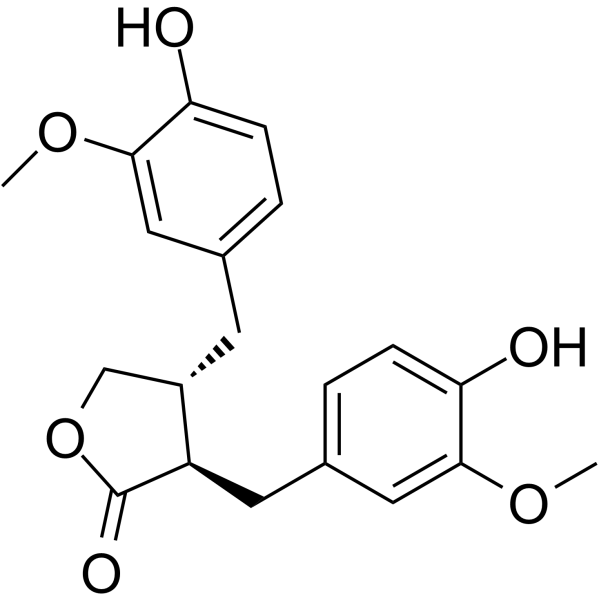
Matairesinol

Based on 1 Customer Validation
Matairesinol is an orally active bioactive compound with anti-inflammatory, antioxidant and anticancer activities. Matairesinol inhibits the phosphorylation of MAPK, JNK and NF-κB, downregulates RANKL-induced NFATc1 expression and activity, and suppresses the activation of the PI3K/AKT/FOXO1 pathway. Matairesinol can be used in research related to sepsis-mediated brain injury, osteoporosis, heart failure, atopic dermatitis and cancer.
商品は「研究用試薬」です。人や動物の医療用・臨床診断用・食品用の製品ではありません。
研究用途以外に使用した場合、当社は一切の責任を負いかねます。
- 純度: 98.78%
- CAS 番号: 580-72-3
- 分子式: C20H22O6
- 分子量:358.39
-
保管条件:
4°C, protect from light
* In solvent : -80°C, 6 months; -20°C, 1 month (protect from light)

To place orders, for customer services and technical support, please contact: MedChemExpress USA
Tel: 609-228-6898 E-mail: [email protected] [email protected]


-
 生物活性
生物活性
-
化学情報
-
溶剤 & 溶解度
- 純度とドキュメンテーション
- 参考文献
-
 Help & FAQs





生物活性
|
Cell Line

|
Type | Value | Description | References |
|---|---|---|---|---|
| A549 | IC50 |
23.8 μM
Compound: 10
|
Anticancer activity against human A549 cells by SRB assay
Anticancer activity against human A549 cells by SRB assay
|
[PMID: 21420296] |
| BV-2 | IC50 |
94.53 μM
Compound: 10
|
Antiinflammatory activity in mouse BV2 cells assessed as inhibition of lipopolysaccharide induced NO production
Antiinflammatory activity in mouse BV2 cells assessed as inhibition of lipopolysaccharide induced NO production
|
[PMID: 21420296] |
| H9 | EC50 |
2 μM
Compound: 1
|
Antiviral activity against HIV1 in human H9 cells assessed as inhibition of viral replication
Antiviral activity against HIV1 in human H9 cells assessed as inhibition of viral replication
|
[PMID: 11473435] |
| H9 | IC50 |
21.9 μM
Compound: 1
|
Cytotoxicity against human H9 cells
Cytotoxicity against human H9 cells
|
[PMID: 11473435] |
| HeLa | EC50 |
>100 μM
Compound: 2
|
Cytotoxicity against human HeLa cells assessed as reduction in cell viability after 48 hrs by WST-8 assay
Cytotoxicity against human HeLa cells assessed as reduction in cell viability after 48 hrs by WST-8 assay
|
[PMID: 28754364] |
| HeLa | CC50 |
>50 μM
Compound: 9
|
Cytotoxicity against human HeLa cells assessed as growth inhibition after 2 days by SRB assay
Cytotoxicity against human HeLa cells assessed as growth inhibition after 2 days by SRB assay
|
[PMID: 30676026] |
| HepG2 | IC50 |
15.1 μg/mL
Compound: 8
|
Antiproliferative activity against human HepG2 cells assessed as inhibition of cell viability by MTT assay
Antiproliferative activity against human HepG2 cells assessed as inhibition of cell viability by MTT assay
|
[PMID: 32223924] |
| HL-60 | EC50 |
74 μM
Compound: 2
|
Cytotoxicity against human HL60 cells assessed as reduction in cell viability after 48 hrs by WST-8 assay
Cytotoxicity against human HL60 cells assessed as reduction in cell viability after 48 hrs by WST-8 assay
|
[PMID: 28754364] |
| Neutrophil | IC50 |
4.3 μg/mL
Compound: 19
|
Anti-inflammatory activity in human neutrophils assessed as inhibition of fMLP/CB-induced superoxide anion generation by measuring superoxide dismutase SOD-inhibitable ferricytochrome c reduction incubated for 5 mins before fMLP/CB stimulation for 3 mins
Anti-inflammatory activity in human neutrophils assessed as inhibition of fMLP/CB-induced superoxide anion generation by measuring superoxide dismutase SOD-inhibitable ferricytochrome c reduction incubated for 5 mins before fMLP/CB stimulation for 3 mins
|
[PMID: 28218000] |
| Neutrophil | IC50 |
7.3 μg/mL
Compound: 19
|
Anti-inflammatory activity in human neutrophils assessed as inhibition of fMLP/CB-induced elastase release pre-incubated for 5 mins before fMLP/CB stimulation using MeO-Suc-Ala-Ala-Pro-Val-pnitroanilide as substrate
Anti-inflammatory activity in human neutrophils assessed as inhibition of fMLP/CB-induced elastase release pre-incubated for 5 mins before fMLP/CB stimulation using MeO-Suc-Ala-Ala-Pro-Val-pnitroanilide as substrate
|
[PMID: 28218000] |
| Neutrophil | IC50 |
2.7 μM
Compound: 8
|
Anti-inflammatory activity against human neutrophils assessed as inhibition of fMLF/CB-induced superoxide anion generation preincubated for 5 mins followed by fMLF addition after priming with CB for 3 mins and measured after 10 mins by spectrophotometric
Anti-inflammatory activity against human neutrophils assessed as inhibition of fMLF/CB-induced superoxide anion generation preincubated for 5 mins followed by fMLF addition after priming with CB for 3 mins and measured after 10 mins by spectrophotometric
|
[PMID: 32223924] |
| Neutrophil | IC50 |
6.6 μM
Compound: 8
|
Anti-inflammatory activity against human neutrophils assessed as inhibition of fMLF/CB-induced elastase release preincubated for 5 mins followed by fMLF addition after priming with CB for 3 mins and measured after 10 mins by spectrophotometric analysis
Anti-inflammatory activity against human neutrophils assessed as inhibition of fMLF/CB-induced elastase release preincubated for 5 mins followed by fMLF addition after priming with CB for 3 mins and measured after 10 mins by spectrophotometric analysis
|
[PMID: 32223924] |
| RAW264.7 | IC50 |
0.005 mM
Compound: 9
|
Antiinflammatory activity in mouse RAW264.7 cells assessed as inhibition of LPS-induced nitric oxide production after 24 hrs
Antiinflammatory activity in mouse RAW264.7 cells assessed as inhibition of LPS-induced nitric oxide production after 24 hrs
|
[PMID: 18986199] |
| RAW264.7 | IC50 |
0.005 μM/mL
Compound: 9
|
Antiinflammatory activity in mouse RAW264.7 cells assessed as inhibition of LPS-induced nitric oxide production after 24 hrs
Antiinflammatory activity in mouse RAW264.7 cells assessed as inhibition of LPS-induced nitric oxide production after 24 hrs
|
[PMID: 18986199] |
| SK-MEL-2 | IC50 |
>30 μM
Compound: 10
|
Anticancer activity against human SK-MEL-2 cells by SRB assay
Anticancer activity against human SK-MEL-2 cells by SRB assay
|
[PMID: 21420296] |
| SK-OV-3 | IC50 |
>30 μM
Compound: 10
|
Anticancer activity against human SKOV3 cells by SRB assay
Anticancer activity against human SKOV3 cells by SRB assay
|
[PMID: 21420296] |
| XF498 | IC50 |
23.65 μM
Compound: 10
|
Anticancer activity against human XF498 cells by SRB assay
Anticancer activity against human XF498 cells by SRB assay
|
[PMID: 21420296] |
Matairesinol (1-80 μM; 48 h) exhibits minimal toxicity to NSC-34 and HT22 neuronal cells at concentrations up to 40 μM, with significant cytotoxicity only at 80 μM after 48 h of treatment[1].
Matairesinol (5-20 μM; 48 h) reverses the anti-proliferative and pro-apoptotic effects of LPS on NSC-34 and HT22 neuronal cells, with effects detectable at 24, 48, and 72 h post-treatment[1].
Matairesinol (5-20 μM; 48 h) attenuates LPS-mediated oxidative stress and inflammation in BV2 microglia, while modulating the expression of Nrf2/HO-1 and inhibiting MAPK/JNK/NF-κB pathway activation[1].
Matairesinol (0.3-30 μM; 4 days) dose-dependently inhibits RANKL-induced differentiation of mouse bone marrow-derived macrophages into osteoclasts, with significant inhibition observed at concentrations ≥10 μM for osteoclast formation and ≥1 μM for TRAP activity[2].
Matairesinol (0.3-30 μM; 3 days) does not reduce the viability of mouse bone marrow-derived macrophages[2].
Matairesinol (10 μM; 1-3 days) suppresses RANKL-induced expression of NFATc1 and downstream osteoclastogenesis-associated genes (TRAP, OSCAR, v-ATPasev0d2) in mouse bone marrow-derived macrophages over 1-3 days of treatment[2].
Matairesinol (10 μM; 4 days, following 8 h retroviral infection) has its inhibitory effect on RANKL-induced osteoclast differentiation reversed by ectopic overexpression of constitutively active NFATc1 in mouse bone marrow-derived macrophages, confirming NFATc1 as a key mediator of its anti-osteoclastogenic activity[2].
Matairesinol (10 μM; 1 h pre-incubation, followed by RANKL stimulation for 5, 15, 30 min) suppresses RANKL-induced activation of p38 and ERK (but not JNK) MAPK signaling pathways in mouse bone marrow-derived macrophages[2].
Matairesinol (0-100 μM) at 50 μM maintains viability in Ang II-stimulated NRVMs, while 100 μM reduces viability under basal conditions[3].
Matairesinol (50 μM) attenuates Ang II-induced hypertrophy in NRVMs by reducing cell size and suppressing hypertrophy-related gene expression[3].
Matairesinol (50 μM) inhibits Ang II-induced activation of NRCFs by reducing fibrotic marker expression and suppressing the TGF-β/Smad3 pathway[3].
Matairesinol (50 μM) ameliorates oxidative stress in Ang II-stimulated NRVMs by reducing ROS levels[3].
Matairesinol (10-500 μM; 72 h) inhibits proliferation of HUVECs (IC50 75 μM) more potently than HeLa cells (IC50 200 μM)[5].
Matairesinol (10-100 μM; 48 h, 72 h) does not induce cytotoxicity in HUVECs at concentrations up to 50 μM when treated for 72 h, or at 100 μM when treated for 48 h[5].
Matairesinol (10-20 μM; 3-16 h) dose-dependently inhibits VEGF-induced capillary tube formation in serum-starved HUVECs[5].
Matairesinol (20-80 μM) dose-dependently reduces PCNA protein expression in PANC-1 and MIA PaCa-2 pancreatic cancer cells, with 80 μM causing a 30% and 33% reduction in the respective cell lines[6].
Matairesinol (80 μM; 3 days) inhibits 3D spheroid formation in PANC-1 and MIA PaCa-2 pancreatic cancer cells, reducing spheroid area by 78% and 61% in the respective cell lines[6].
Matairesinol (20-80 μM; 48 h) dose-dependently induces late apoptosis in PANC-1 and MIA PaCa-2 pancreatic cancer cells, with 80 μM increasing late apoptosis by 196% and 261% in the respective cell lines over 48 h[6].
Matairesinol (20-80 μM; 1 h) dose-dependently increases intracellular ROS production in PANC-1 and MIA PaCa-2 pancreatic cancer cells, with 80 μM increasing ROS by 447% and 548% in the respective cell lines after 1 h[6].
Matairesinol (20-80 μM; 48 h) dose-dependently increases cytosolic calcium levels in PANC-1 and MIA PaCa-2 pancreatic cancer cells, with 80 μM increasing levels by 280% and 551% in the respective cell lines over 48 h[6].
MedChemExpress (MCE) has not independently confirmed the accuracy of these methods. They are for reference only.
-
Cell Line:NSC-34, HT22
-
Concentration:1, 2, 40, 80 μM
-
Incubation Time:48 h
-
Result:Showed no significant cytotoxicity at 1, 2, and 40 μM compared to the control group.
Significantly hindered cell viability at 80 μM compared to the control group.
-
Cell Line:human umbilical vein endothelial cells (HUVECs), HeLa cells
-
Concentration:10-500 μM
-
Incubation Time:72 h
-
Result:Inhibited HUVEC proliferation with an IC50 of 75 μM.
Inhibited HeLa cell proliferation with an IC50 of 200 μM.
-
Cell Line:HUVECs (VEGF-stimulated, serum-starved)
-
Concentration:10-20 μM
-
Incubation Time:18 h
-
Result:Dose-dependently inhibited VEGF-induced HUVEC invasiveness without cytotoxic effects.
-
Cell Line:PANC-1, MIA PaCa-2 human pancreatic ductal adenocarcinoma cells
-
Concentration:5-100 μM; 80 μM (optimal dose)
-
Incubation Time:48 h
-
Result:Inhibited cell proliferation by 48% in PANC-1 cells and 50% in MIA PaCa-2 cells (p < 0.001 for both cell lines).
-
Cell Line:PANC-1, MIA PaCa-2 cells
-
Concentration:20-80 μM
-
Incubation Time:48 h
-
Result:Increased relative late apoptosis by 196% in PANC-1 cells and 261% in MIA PaCa-2 cells, with late apoptosis increasing in a dose-dependent manner.
-
Cell Line:PANC-1, MIA PaCa-2 cells
-
Concentration:80 μM
-
Incubation Time:24 h
-
Result:Reduced the number of migrated cells by 79% in PANC-1 cells and 86% in MIA PaCa-2 cells.
-
Cell Line:PANC-1, MIA PaCa-2 cells
-
Concentration:80 μM (in combination with 20 μM 5-FU)
-
Incubation Time:48 h
-
Result:Reduced cell proliferation from 73% to 34% in PANC-1 cells and from 74% to 30% in MIA PaCa-2 cells compared to 5-FU alone.
-
Cell Line:MIA PaCa-2 cells
-
Concentration:80 μM (in combination with 20 μM 5-FU)
-
Incubation Time:48 h
-
Result:Increased relative late apoptosis from 473% to 704% in MIA PaCa-2 cells compared to 5-FU alone.
Matairesinol (100 mg·kg−1·d−1; intraperitoneal injection; daily; 3 weeks) improves cardiac function, reduces cardiac hypertrophy and remodeling, inhibits cardiomyocyte apoptosis, and mitigates oxidative stress in TAC-induced mice by upregulating Prdx1 and inhibiting the PI3K/AKT/FOXO1 pathway, with these effects blunted by Prdx1 knockdown[3].
Matairesinol (topical; daily; 11 days) effectively suppresses DfE-induced atopic dermatitis in NC/Nga mice by reducing ear swelling, serum IgE levels, inflammatory cell infiltration, mast cell numbers, and normalizing IL-4 and IFN-γ mRNA expression[4].
MedChemExpress (MCE) has not independently confirmed the accuracy of these methods. They are for reference only.
-
Animal Model:unspecified (6-8 weeks old)[1]
-
Dosage:5 mg/kg; 10 mg/kg; 20 mg/kg
-
Administration:p.o.; single dose
-
Result:Reduced serum concentrations of S100β, GFAP, and NSE relative to CLP-only rats, with significant effects at 10 and 20 mg/kg for all three markers.
Reduced brain tissue expression of Caspase-3 relative to CLP-only rats, with significant effects at 10 and 20 mg/kg.
Reduced serum and brain tissue levels of pro-inflammatory cytokines TNF-α, IL-1β, IL-6, IFN-γ, IL-8, and MCP1 relative to CLP-only rats, with significant effects at 10 and 20 mg/kg for all cytokines.
Reduced the number of Iba-1-positive activated microglia in brain tissue relative to CLP-only rats, with significant effects at 10 and 20 mg/kg.
-
Animal Model:C57BL/6 (male, 8-10 weeks old, 23-28 g, transverse aortic constriction surgery-induced)[3]
-
Dosage:100 mg·kg-1·d-1
-
Administration:intraperitoneal injection; daily; 3 weeks
-
Result:Restored left ventricular ejection fraction (EF) and fractional shortening (FS), and reduced left ventricular end-diastolic dimension (LVEDd) in TAC-induced mice.
Reduced heart weight-to-body weight ratio (HW/BW) and heart weight-to-tibia length ratio (HW/TL).
Suppressed mRNA expression of hypertrophy markers ANP, BNP, and β-MHC.
Normalized protein expression of apoptosis-related markers (reduced Bax and Caspase3, increased Bcl-2).
Reduced myocardial reactive oxygen species (ROS) levels.
Restored protein expression of antioxidant markers HO-1 and SOD2.


化学情報
-
CAS 番号 580-72-3
-
性状 Solid
-
分子量 358.39
-
分子式 C20H22O6
-
Color White to yellow
-
SMILES
O=C1OC[C@H](CC2=CC=C(O)C(OC)=C2)[C@H]1CC3=CC=C(O)C(OC)=C3
-
別名
マタイレシノール
-
Structure Classification
-
Initial Source
-
輸送条件
Room temperature in continental US; may vary elsewhere.
-
保管条件
4°C, protect from light
* In solvent : -80°C, 6 months; -20°C, 1 month (protect from light)


溶剤 & 溶解度
DMSO : 200 mg/mL (558.05 mM; Need ultrasonic; Hygroscopic DMSO has a significant impact on the solubility of product, please use newly opened DMSO)
Please refer to the solubility information to select the appropriate solvent. Once prepared, please aliquot and store the solution to prevent product inactivation from repeated freeze-thaw cycles.
Storage method and period of stock solution: -80°C, 6 months; -20°C, 1 month (protect from light). When stored at -80°C, please use it within 6 months. When stored at -20°C, please use it within 1 month.
Please refer to the solubility information to select the appropriate solvent. Once prepared, please aliquot and store the solution to prevent product inactivation from repeated freeze-thaw cycles.
Storage method and period of stock solution: -80°C, 6 months; -20°C, 1 month (protect from light). When stored at -80°C, please use it within 6 months. When stored at -20°C, please use it within 1 month.
濃度 (開始) × 体積 (開始) = 濃度 (終了) × 体積 (終了)


純度とドキュメンテーション
-
データシート (297 KB)
-
SDS (394 KB)
- English - EN (394 KB)
- Français - FR (394 KB)
- Deutsch - DE (394 KB)
- Norwegian - NO (394 KB)
- Español - ES (394 KB)
- Swedish - SV (394 KB)
- Italian - IT (394 KB)
- Korean - KR (394 KB)
- Portuguese - PT (394 KB)
-
取扱説明書 (2659 KB)
参考文献
[1]. Wu Q, et al. Matairesinol exerts anti-inflammatory and antioxidant effects in sepsis-mediated brain injury by repressing the MAPK and NF-κB pathways through up-regulating AMPK. Aging (Albany NY). 2021;13(20):23780-23795. [Content Brief]
[2]. Choi SW, et al. Anti-osteoclastogenic activity of matairesinol via suppression of p38/ERK-NFATc1 signaling axis. BMC Complement Altern Med. 2014;14:35. Published 2014 Jan 21. [Content Brief]
[3]. Zhang T, et al. Matairesinol blunts adverse cardiac remodeling and heart failure induced by pressure overload by regulating Prdx1 and PI3K/AKT/FOXO1 signaling. Phytomedicine. 2024;135:156054. [Content Brief]
[4]. Sung YY, et al. Forsythia suspensa fruit extracts and the constituent matairesinol confer anti-allergic effects in an allergic dermatitis mouse model. J Ethnopharmacol. 2016;187:49-56. [Content Brief]
[5]. Lee B, et al. Matairesinol inhibits angiogenesis via suppression of mitochondrial reactive oxygen species. Biochem Biophys Res Commun. 2012;421(1):76-80. [Content Brief]
[6]. Lee W, et al. Matairesinol Induces Mitochondrial Dysfunction and Exerts Synergistic Anticancer Effects with 5-Fluorouracil in Pancreatic Cancer Cells. Mar Drugs. 2022;20(8):473. Published 2022 Jul 25. [Content Brief]


Complete Stock Solution Preparation Table
Please refer to the solubility information to select the appropriate solvent. Once prepared, please aliquot and store the solution to prevent product inactivation from repeated freeze-thaw cycles.
Storage method and period of stock solution: -80°C, 6 months; -20°C, 1 month (protect from light). When stored at -80°C, please use it within 6 months. When stored at -20°C, please use it within 1 month.
| Optional Solvent | Concentration Solvent Mass | 1 mg | 5 mg | 10 mg | 25 mg |
|---|---|---|---|---|---|
| DMSO | 1 mM | 2.7903 mL | 13.9513 mL | 27.9026 mL | 69.7564 mL |
| 5 mM | 0.5581 mL | 2.7903 mL | 5.5805 mL | 13.9513 mL | |
| 10 mM | 0.2790 mL | 1.3951 mL | 2.7903 mL | 6.9756 mL | |
| 15 mM | 0.1860 mL | 0.9301 mL | 1.8602 mL | 4.6504 mL | |
| 20 mM | 0.1395 mL | 0.6976 mL | 1.3951 mL | 3.4878 mL | |
| 25 mM | 0.1116 mL | 0.5581 mL | 1.1161 mL | 2.7903 mL | |
| 30 mM | 0.0930 mL | 0.4650 mL | 0.9301 mL | 2.3252 mL | |
| 40 mM | 0.0698 mL | 0.3488 mL | 0.6976 mL | 1.7439 mL | |
| 50 mM | 0.0558 mL | 0.2790 mL | 0.5581 mL | 1.3951 mL | |
| 60 mM | 0.0465 mL | 0.2325 mL | 0.4650 mL | 1.1626 mL | |
| 80 mM | 0.0349 mL | 0.1744 mL | 0.3488 mL | 0.8720 mL | |
| 100 mM | 0.0279 mL | 0.1395 mL | 0.2790 mL | 0.6976 mL |


Matairesinol 関連分類
HY-N3312 関連分類
 Powered by Bioz