



Kojic acid (Standard)
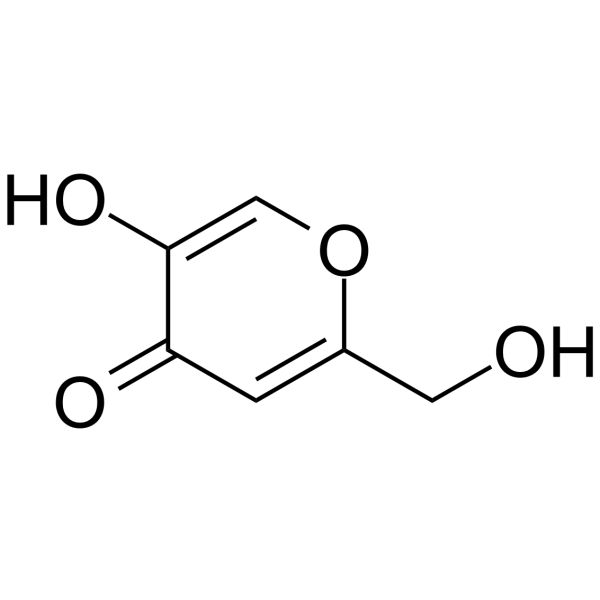
Kojic acid (Standard) is the analytical standard of Kojic acid. This product is intended for research and analytical applications. Kojic acid is a substance produced by Aspergillus oryzae, with various biological activities including antitumor, insecticidal, antibacterial, antioxidant, and radioprotective effects. Kojic acid exhibits tyrosinase inhibition activity by capturing copper ions that bind to the active site of tyrosinase, preventing its activation. Tyrosinase is a key enzyme in the biosynthesis of melanin, so kojic acid can block melanin production. Additionally, kojic acid shows potential inhibition of NF-κB activity in human keratinocytes, which may also be related to the anti-melanogenic effect induced by kojic acid. Kojic acid is effective when administered orally and can also be absorbed transdermally. Nano-carrier systems prepared with kojic acid demonstrate effective delivery of anticancer drugs. Kojic acid holds promise for research in cancer, infectious diseases, and skin whitening among other fields.
연구목적의 판매만을 진행합니다. 환자를 대상으로 한 판매는 하지 않습니다.
- Purity : 98%
- CAS No.: 501-30-4
- 화학식: C₆H₆O₄
- 분자량:142.11
-
보관:
Please store the product under the recommended conditions in the Certificate of Analysis.


To place orders, for customer services and technical support, please contact: MedChemExpress USA
Tel: 609-228-6898 E-mail: [email protected] [email protected]


-
 Product Information
-
Chemical Information
- 순도&문서
-
 Help & FAQs


-
HY-W050154
Kojic acidTyrosinase Inhibitor -
HY-B0316
AvobenzoneLong-Wave UVA Filter -
HY-30272
MonobenzoneSkin Depigmenting Agent -

HY-B0316R
Avobenzone (Standard)Long-Wave UVA Filter -
HY-W012788
MaltolAntioxidant Agent -
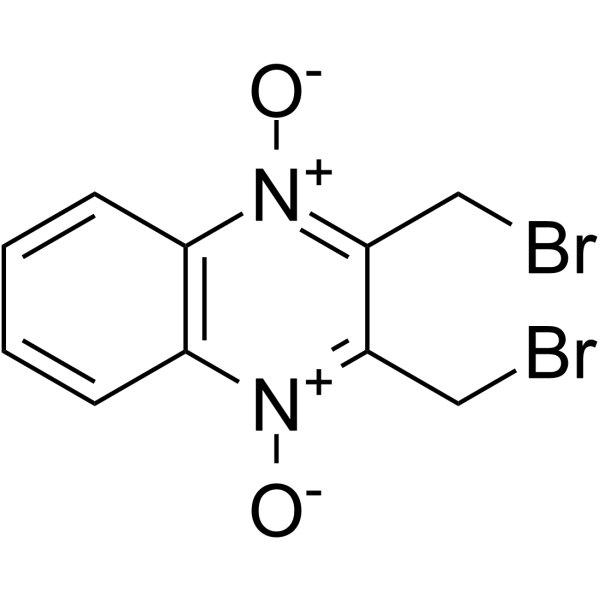
HY-116090
Conoidin ATgPrxII Inhibitor -
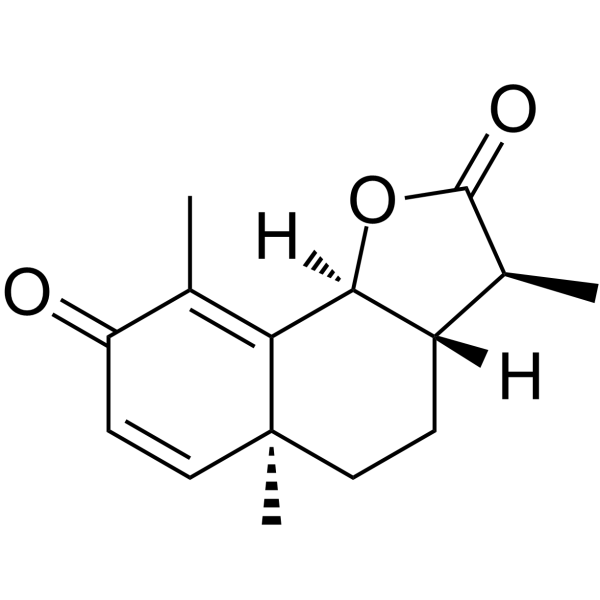
HY-B1761
SantoninParasite Inhibitor -

HY-B1761R
Santonin (Standard)Parasite Inhibitor -
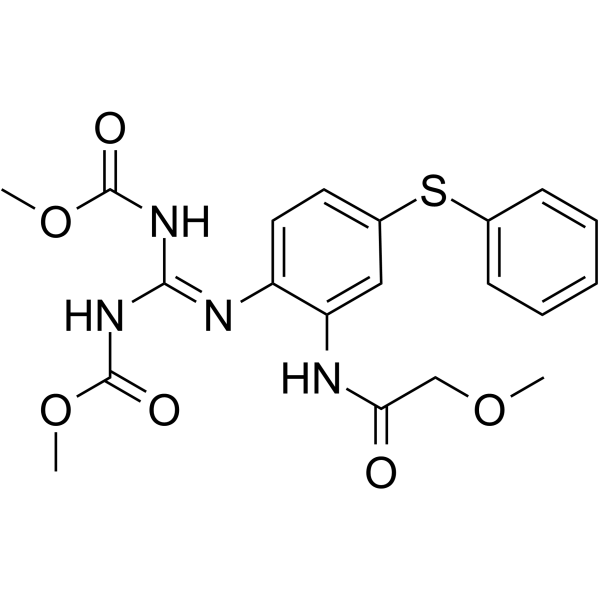
HY-17597
FebantelParasite Inhibitor -
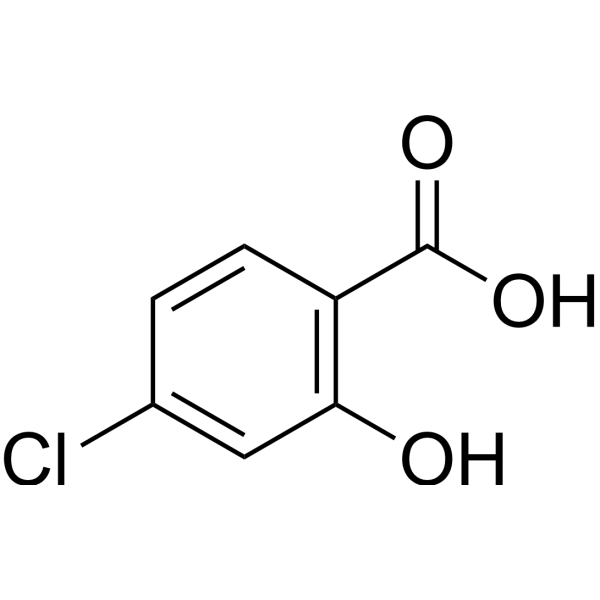
HY-W016867
4-Chlorosalicylic acid -
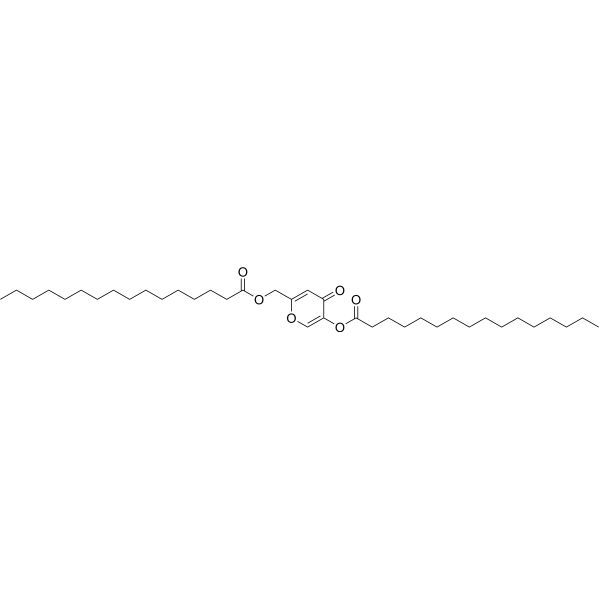
HY-W099579
Kojic acid dipalmitateTyrosinase Inhibitor -
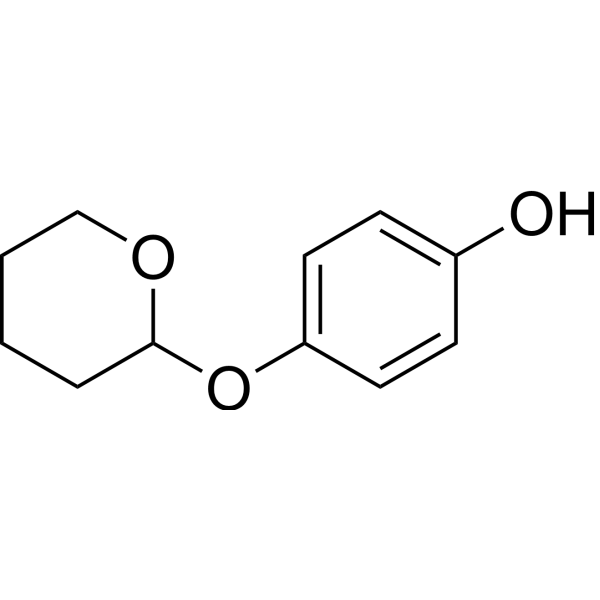
HY-B1461
DeoxyarbutinTyrosinase Inhibitor


Product Information
Information
신청
The compound is the grade of analytical standard, which is the reference standard supplied assay. It is commonly used in qualitative, quantitative and methodological research experiments in HPLC, GC and MS.


Chemical Information
-
CAS No. 501-30-4
-
분자량 142.11
-
화학식 C₆H₆O₄
-
SMILES
O=C1C=C(CO)OC=C1O
-
Structure Classification
-
Initial Source
-
선적
Room temperature in continental US; may vary elsewhere.
-
보관
Please store the product under the recommended conditions in the Certificate of Analysis.


순도&문서
References
[1]. Wei X, et al. Kojic acid inhibits senescence of human corneal endothelial cells via NF-κB and p21 signaling pathways. Exp Eye Res. 2018 Dec 28;180:174-183. [Content Brief]
[2]. Burnett C L, et al. Final report of the safety assessment of kojic acid as used in cosmetics[J]. International journal of toxicology, 2010, 29(6_suppl): 244S-273S. [Content Brief]
[3]. Saeedi M, et al. Kojic acid applications in cosmetic and pharmaceutical preparations. Biomed Pharmacother. 2019 Feb;110:582-593. doi: 10.1016/j.biopha.2018.12.006. [Content Brief]
[4]. Kim T Y, et al. Nematicidal activity of kojic acid produced by Aspergillus oryzae against Meloidogyne incognita[J]. Journal of Microbiology and Biotechnology, 2016, 26(8): 1383-1391. [Content Brief]
[5]. Zilles J C, et al. Biological activities and safety data of kojic acid and its derivatives: A review[J]. Experimental dermatology, 2022, 31(10): 1500-1521. [Content Brief]
[7]. Karakaya G, et al. Synthesis and cytotoxic evaluation of kojic acid derivatives with inhibitory activity on melanogenesis in human melanoma cells[J]. Anti-Cancer Agents in Medicinal Chemistry (Formerly Current Medicinal Chemistry-Anti-Cancer Agents), 2018, 18(15): 2137-2148. [Content Brief]
[8]. Khan A, et al. Antioxidative and Anti-inflammatory Effects of Kojic Acid in Aβ-Induced Mouse Model of Alzheimer's Disease. Mol Neurobiol. 2021 Oct;58(10):5127-5140. [Content Brief]

Calculators
Concentration (start) × Volume (start) = Concentration (final) × Volume (final)


Kojic acid (Standard) Related Classifications
HY-W050154R Related Classifications
 Powered by Bioz
Keywords
- Kojic acid (Standard)
- 501-30-4
- Reference Standards
- Parasite
- Tyrosinase
- NF-κB
- CDK
- HCEC-B4G12?cells
- B16-4A5 cells
- HMV-II cells
- β-Amyloid (1-42)
- human (HY-P1363A)-Induced Mouse Model of Alzheimer's Disease
- Anti-aging activity
- Anti-cancer activity
- Anti-nematode activity
- Antimicrobial activity
- Antioxidant activity
- and Anti-inflammatory activity,
- Inhibitor
- inhibitor
- inhibit