



Maculosin

Based on 1 Customer Validation
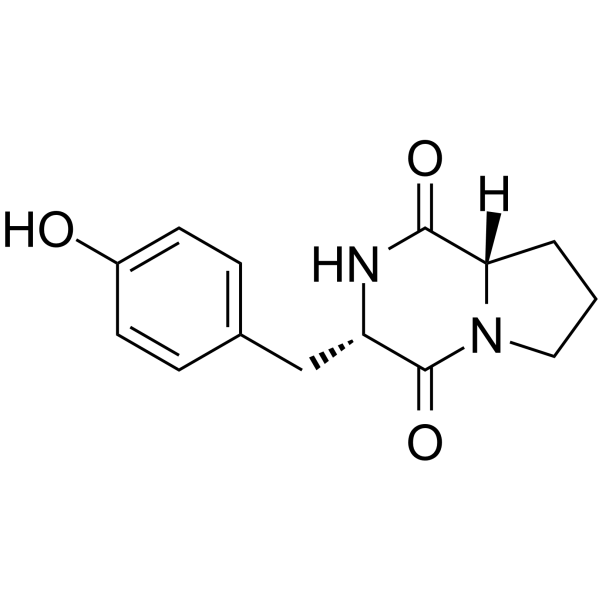
Maculosin (Cyclo (Tyr-Pro)) is a host-specific phytotoxin for spotted knapweed from Alternaria alternata. Maculosin is a quorum-sensing molecule involved in cell-cell communication. Maculosin also acts as a signaling molecule regulating virulence gene expression. Maculosin shows antimicrobial, antifungal, antioxidant and anti-cancer properties.Maculosin (Cyclo (Tyr-Pro)) is a host-specific phytotoxin for spotted knapweed from Alternaria alternata. Maculosin is a quorum-sensing molecule involved in cell-cell communication. Maculosin also acts as a signaling molecule regulating virulence gene expression. Maculosin shows antimicrobial, antifungal, antioxidant and anti-cancer properties.
For research use only. We do not sell to patients.
- Purity : 98.96%
- CAS No.: 4549-02-4
- Formula: C14H16N2O3
- Molecular Weight:260.29
-
Storage:
Sealed storage, away from moisture and light, under nitrogen.
Powder -80°C, 2 years , -20°C, 1 year* In solvent : -80°C, 6 months; -20°C, 1 month (sealed storage, away from moisture and light, under nitrogen)

To place orders, for customer services and technical support, please contact: MedChemExpress USA
Tel: 609-228-6898 E-mail: [email protected] [email protected]


-
 Biological Activity
-
Chemical Information
-
Solvent & Solubility
- Protocols
- Purity & Documentation
- References
-
 Help & FAQs


-
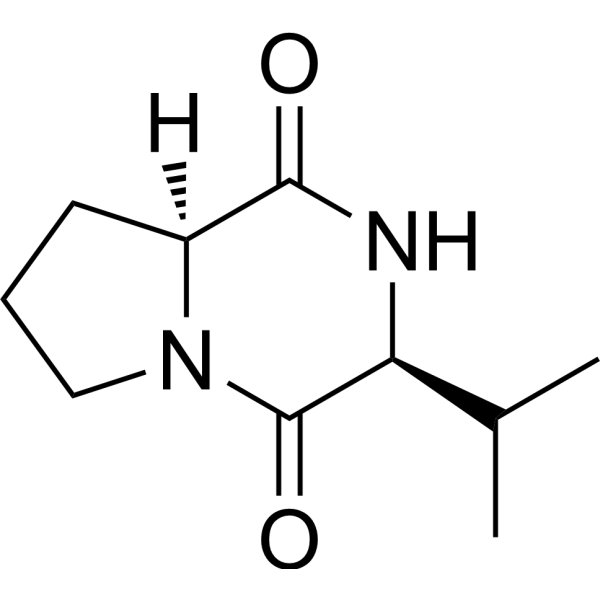
HY-P1938
Cyclo(L-Pro-L-Val)Bacterial Inhibitor/Anti-inflammatory Agent -
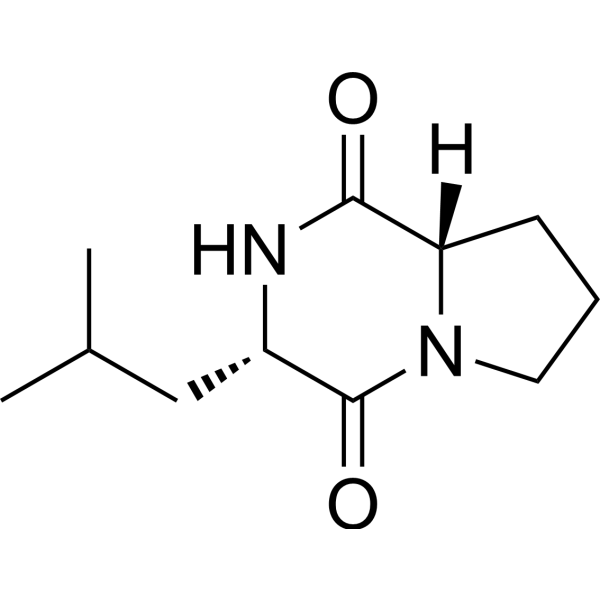
HY-P1939
Cyclo(L-Leu-L-Pro)Antifungal/Antibacterial/Antiviral Agent -
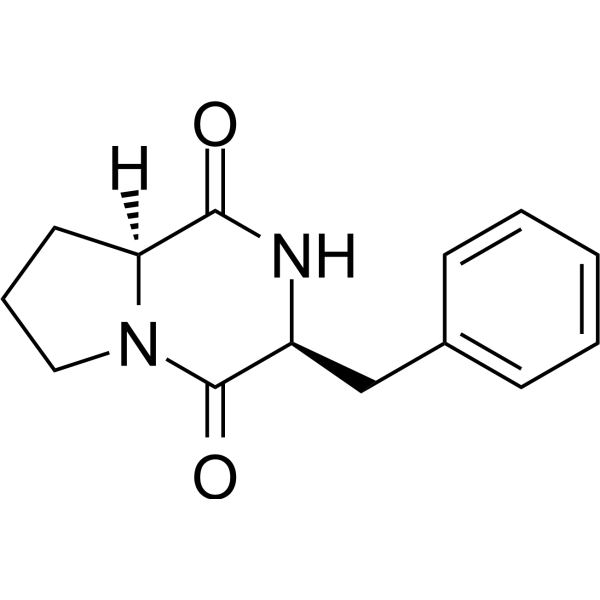
HY-P1934A
Cyclo(L-Phe-L-Pro)Antifungal Cyclic Dipeptide -
HY-P1934
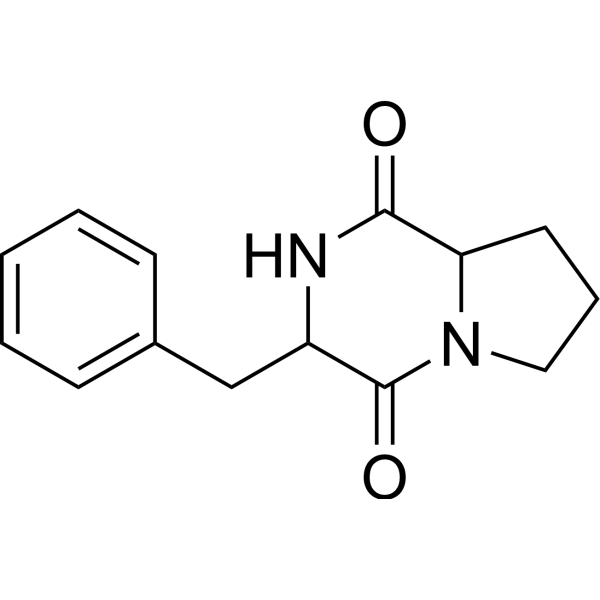
Cyclo(Phe-Pro)Antifungal Cyclic Dipeptide -
HY-128483
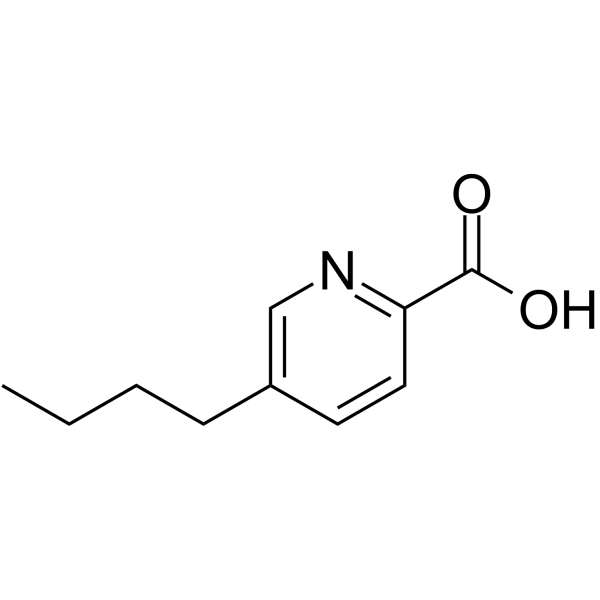
Fusaric acidDopamine β-hydroxylase Inhibitor -
HY-131115
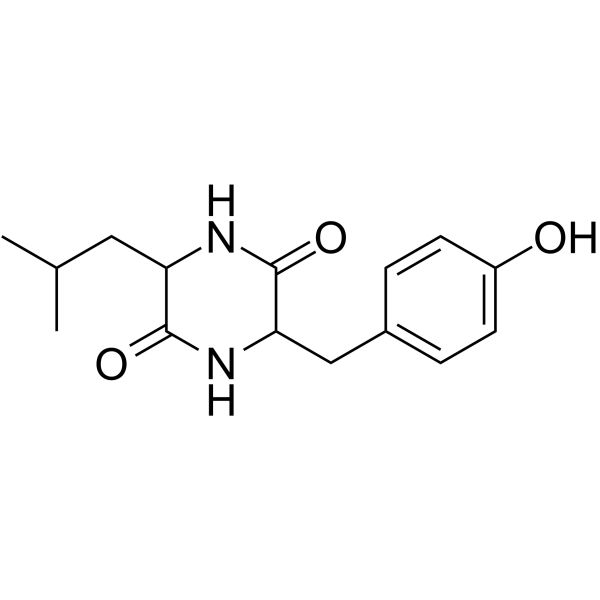
Cyclo(Tyr-Leu)Peptide -
HY-W549438
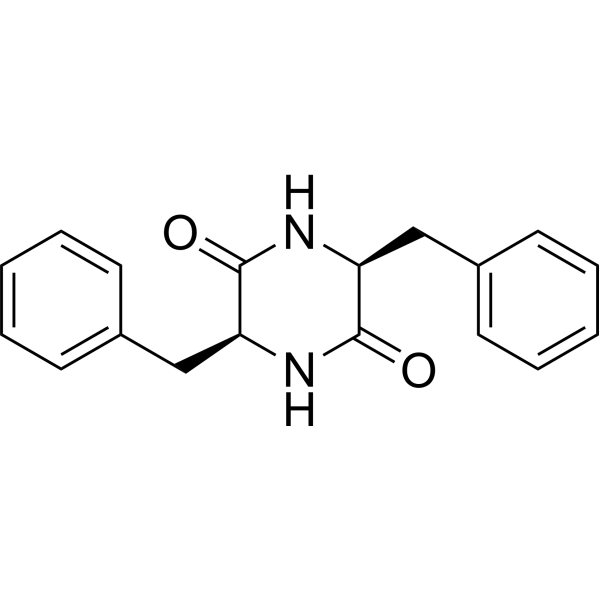
Cyclo(Phe-Phe)Polypeptide -
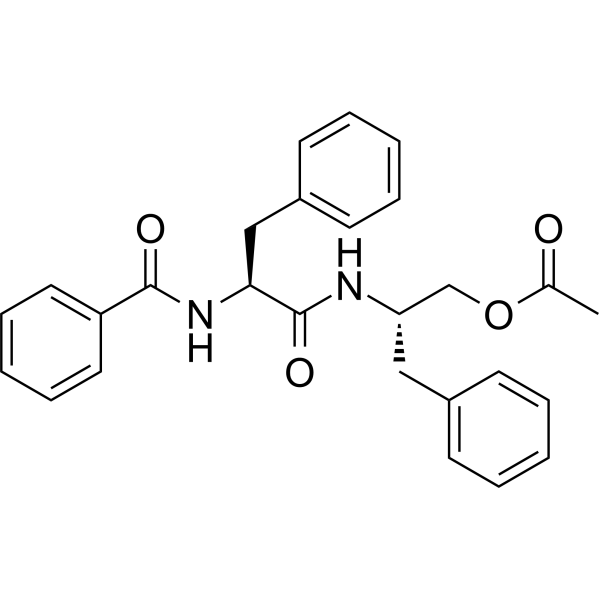
HY-N2905
Aurantiamide acetateCathepsin Inhibitor -
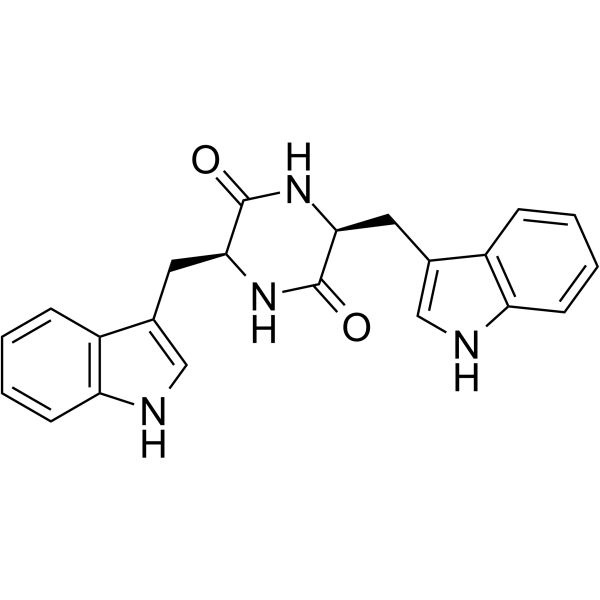
HY-P2124
Cyclo(L-Trp-L-Trp)Antibiotic -

HY-P1940R
Maculosin (Standard)Anti-Bacterial Agent -

HY-P2124R
Cyclo(L-Trp-L-Trp) (Standard)Antibiotic
All Endogenous Metabolite Isoforms
More

Biological Activity
Description
Cellular Effect
|
Cell Line

|
Type | Value | Description | References |
|---|---|---|---|---|
| Neutrophil | IC50 |
11.72 μg/mL
Compound: 31
|
Anti-inflammatory activity in human neutrophils assessed as inhibition of FMLP/CB-induced elastase release
Anti-inflammatory activity in human neutrophils assessed as inhibition of FMLP/CB-induced elastase release
|
[PMID: 21848266] |
| Neutrophil | IC50 |
5.65 μg/mL
Compound: 31
|
Anti-inflammatory activity in human neutrophils assessed as inhibition of FMLP/CB-induced superoxide anion generation
Anti-inflammatory activity in human neutrophils assessed as inhibition of FMLP/CB-induced superoxide anion generation
|
[PMID: 21848266] |
In Vitro
Maculosin shows cytotoxic activity against the human liver cancer cell lines, with an IC50 of 48.90 µg/mL[3].
Maculosin (0-128 μg/mL) shows stronger antioxidant activity than the commercially used Butylated hydroxyanisole (BHA) (HY-B1066), with IC50s of 2.16 and 4.8 µg/mL[3].
Maculosin (0-128 μg/mL, 24 h) shows no toxicity (LD50, <128 µg/mL) in brine shrimp lethality assay (BSLA)[3].
Maculosin (10-100 μg/mL) reduces the growth of the plant pathogenic bacteria X. axonopodis and R. solanacearum (MICs = 31.25 μg/mL) as well as the pathogenic oomycetes P. cactorum, P. capsici, P. cinnamomi, P. infestans, and P. ultimum[4][5].
Maculosin inhibits the growth of M. luteus, M. smegmatis, S. cerevisiae, C. albicans, C. neoformans, and A. niger when used in combination with Pyrrolnitrin (HY-133704) or Banegasin[6].
Maculosin (0.5-100 μg/mL) shows antibacterial activity against certain multidrug-resistant pathogenic bacteria, with MICs of 5-15 mg/mL[7].
Maculosin shows specific antioxidant activity, with the DPPH scavenging activities of 38.22% at 7.5 μg/mL[8].
Maculosin (10 μM-1 mM) exhibits lesion inductive abilities when applied to knapweed leaves and hypocotyls[9].
MedChemExpress (MCE) has not independently confirmed the accuracy of these methods. They are for reference only.
-
Cell Line:S. aureus ATCC 25923, S. aureus MRSA2, S. aureus MRSA C363, and S. aureus VRSAS1, S. aureus ATCC 43,300, B. subtilis ATCC 6633, Enterococcus faecalis, E. coli ATCC 25,922, and E. coli E52, Enterobacter cloacae E13, Klebsiella pneumoniae E40, and Pseudomonas aeruginosa CIPA
-
Concentration:0.5, 1, 2, 3, 4, 5, 10, 20, 30, 50, 75, and 100 μg/mL
-
Incubation Time:24 h
-
Result:Showed a MIC value of 5 μg/mL against S. aureus ATCC 25923, S. aureus MRSA2, S. aureus MRSA C363, and S. aureus VRSAS1.
Showed a MIC value of 10 μg/mL against S. aureus ATCC 43,300, B. subtilis ATCC 6633, Enterococcus faecalis, E. coli ATCC 25,922, and E. coli E52.
Showed a MIC value of 15 μg/mL against Enterobacter cloacae E13, Klebsiella pneumoniae E40, and Pseudomonas aeruginosa CIPA.


Chemical Information
-
CAS No. 4549-02-4
-
Appearance Solid
-
Molecular Weight 260.29
-
Formula C14H16N2O3
-
Color White to off-white
-
Synonyms
Cyclo(Tyr-Pro)
-
Structure Classification
-
Initial Source
Streptomyces sp. KTM18
-
Shipping
Room temperature in continental US; may vary elsewhere.
-
Storage
Sealed storage, away from moisture and light, under nitrogen
Powder -80°C 2 years -20°C 1 year * In solvent : -80°C, 6 months; -20°C, 1 month (sealed storage, away from moisture and light, under nitrogen)


Solvent & Solubility
In Vitro:
DMSO : 100 mg/mL (384.19 mM; Need ultrasonic; Hygroscopic DMSO has a significant impact on the solubility of product, please use newly opened DMSO)
Please refer to the solubility information to select the appropriate solvent. Once prepared, please aliquot and store the solution to prevent product inactivation from repeated freeze-thaw cycles.
Storage method and period of stock solution: -80°C, 6 months; -20°C, 1 month (sealed storage, away from moisture and light, under nitrogen). When stored at -80°C, please use it within 6 months. When stored at -20°C, please use it within 1 month.
Please refer to the solubility information to select the appropriate solvent. Once prepared, please aliquot and store the solution to prevent product inactivation from repeated freeze-thaw cycles.
Storage method and period of stock solution: -80°C, 6 months; -20°C, 1 month (sealed storage, away from moisture and light, under nitrogen). When stored at -80°C, please use it within 6 months. When stored at -20°C, please use it within 1 month.
Concentration (start) × Volume (start) = Concentration (final) × Volume (final)
In Vivo:
Select the appropriate dissolution method based on your experimental animal and administration route.
- For the following dissolution methods, please ensure to first prepare a clear stock solution using an In Vitro approach and then sequentially add co-solvents:
- To ensure reliable experimental results, the clarified stock solution can be appropriately stored based on storage conditions. As for the working solution for In Vivo experiments, it is recommended to prepare freshly and use it on the same day.
- The percentages shown for the solvents indicate their volumetric ratio in the final prepared solution. If precipitation or phase separation occurs during preparation, heat and/or sonication can be used to aid dissolution.
Add each solvent one by one: 10% DMSO 90% (20% SBE-β-CD in Saline)
Solubility: ≥ 2.5 mg/mL (9.60 mM); Clear solution
This protocol yields a clear solution of ≥ 2.5 mg/mL (saturation unknown).
Taking 1 mL working solution as an example, add 100 μL DMSO stock solution (25.0 mg/mL) to 900 μL 20% SBE-β-CD in Saline, and mix evenly.
Preparation of 20% SBE-β-CD in Saline (4°C, storage for one week): 2 g SBE-β-CD powder is dissolved in 10 mL Saline, completely dissolve until clear.
In Vivo Dissolution Calculator
Please enter the basic information of animal experiments:
-
-
-
-
Recommended: Prepare an additional quantity of animals to account for potential losses during experiments.
Please enter your animal formula composition:
-
%DMSO +
Recommended: Keep the proportion of DMSO in working solution below 2% if your animal is weak.
-
%+
-
+%Tween-80 + +
-
%Saline +
The co-solvents required include: DMSO, . All of co-solvents are available by MedChemExpress (MCE). , Tween 80. All of co-solvents are available by MedChemExpress (MCE).
Working solution concentration: 0.22 mg/mL
Method for preparing stock solution: mg drug dissolved in μL DMSO. Stock solution concentration: mg/mL. * In solvent : -80°C, 6 months; -20°C, 1 month (sealed storage, away from moisture and light, under nitrogen)
1. Take μL DMSO stock solution;
2. Add μL .
μL , mix evenly;
3. Then add μL Tween 80, mix evenly;
4. Then add μL
Please ensure that the stock solution in the first step is dissolved to a clear state, and add co-solvents in sequence. You can use ultrasonic heating (ultrasonic cleaner, recommended frequency 20-40 kHz), vortexing, etc. to assist dissolution.


Purity & Documentation
-
Data Sheet (279 KB)
-
SDS (645 KB)
- English - EN (645 KB)
- Français - FR (645 KB)
- Deutsch - DE (645 KB)
- Norwegian - NO (645 KB)
- Español - ES (645 KB)
- Swedish - SV (645 KB)
- Italian - IT (645 KB)
- Korean - KR (645 KB)
- Portuguese - PT (645 KB)
-
Handling Instructions (2659 KB)
References
[1]. Lee W, et al. Vibrio vulnificus quorum-sensing molecule cyclo(Phe-Pro) inhibits RIG-I-mediated antiviral innate immunity. Nat Commun. 2018 Apr 23;9(1):1606. [Content Brief]
[2]. Stierle AC, et al. Maculosin, a host-specific phytotoxin for spotted knapweed from Alternaria alternata. Proc Natl Acad Sci U S A. 1988 Nov;85(21):8008-11. [Content Brief]
[3]. Paudel B, et al. Maculosin, a non-toxic antioxidant compound isolated from Streptomyces sp. KTM18. Pharm Biol. 2021 Dec;59(1):933-936. [Content Brief]
[4]. Puopolo G, et al. Lysobacter capsici AZ78 produces cyclo(L-Pro-L-Tyr), a 2,5-diketopiperazine with toxic activity against sporangia of Phytophthora infestans and Plasmopara viticola. J Appl Microbiol. 2014 Oct;117(4):1168-80. [Content Brief]
[5]. Wattana-Amorn P, et al. Antibacterial activity of cyclo(L-Pro-L-Tyr) and cyclo(D-Pro-L-Tyr) from Streptomyces sp. strain 22-4 against phytopathogenic bacteria. Nat Prod Res. 2016 Sep;30(17):1980-3. [Content Brief]
[6]. Cain CC, et al. Synergistic antimicrobial activity of metabolites produced by a nonobligate bacterial predator. Antimicrob Agents Chemother. 2003 Jul;47(7):2113-7. [Content Brief]
[7]. Driche EH, et al. A New Saharan Strain of Streptomyces sp. GSB-11 Produces Maculosin and N-acetyltyramine Active Against Multidrug-Resistant Pathogenic Bacteria. Curr Microbiol. 2022 Aug 24;79(10):298. [Content Brief]
[8]. Wang X, et al. Analysis of the Antioxidant Composition of Low Molecular Weight Metabolites from the Agarolytic Bacterium Alteromonas macleodii QZ9-9: Possibilities for High-Added Value Utilization of Macroalgae. Antioxidants (Basel). 2022 Oct 3;11(10):1977. [Content Brief]
[9]. Wang Y, et al. Developments around the bioactive diketopiperazines: a patent review. Expert Opin Ther Pat. 2013 Nov;23(11):1415-33. [Content Brief]


Complete Stock Solution Preparation Table
Please refer to the solubility information to select the appropriate solvent. Once prepared, please aliquot and store the solution to prevent product inactivation from repeated freeze-thaw cycles.
Storage method and period of stock solution: -80°C, 6 months; -20°C, 1 month (sealed storage, away from moisture and light, under nitrogen). When stored at -80°C, please use it within 6 months. When stored at -20°C, please use it within 1 month.
| Optional Solvent | Concentration Solvent Mass | 1 mg | 5 mg | 10 mg | 25 mg |
|---|---|---|---|---|---|
| DMSO | 1 mM | 3.8419 mL | 19.2093 mL | 38.4187 mL | 96.0467 mL |
| 5 mM | 0.7684 mL | 3.8419 mL | 7.6837 mL | 19.2093 mL | |
| 10 mM | 0.3842 mL | 1.9209 mL | 3.8419 mL | 9.6047 mL | |
| 15 mM | 0.2561 mL | 1.2806 mL | 2.5612 mL | 6.4031 mL | |
| 20 mM | 0.1921 mL | 0.9605 mL | 1.9209 mL | 4.8023 mL | |
| 25 mM | 0.1537 mL | 0.7684 mL | 1.5367 mL | 3.8419 mL | |
| 30 mM | 0.1281 mL | 0.6403 mL | 1.2806 mL | 3.2016 mL | |
| 40 mM | 0.0960 mL | 0.4802 mL | 0.9605 mL | 2.4012 mL | |
| 50 mM | 0.0768 mL | 0.3842 mL | 0.7684 mL | 1.9209 mL | |
| 60 mM | 0.0640 mL | 0.3202 mL | 0.6403 mL | 1.6008 mL | |
| 80 mM | 0.0480 mL | 0.2401 mL | 0.4802 mL | 1.2006 mL | |
| 100 mM | 0.0384 mL | 0.1921 mL | 0.3842 mL | 0.9605 mL |


Maculosin Related Classifications
HY-P1940 Related Classifications
 Powered by Bioz