



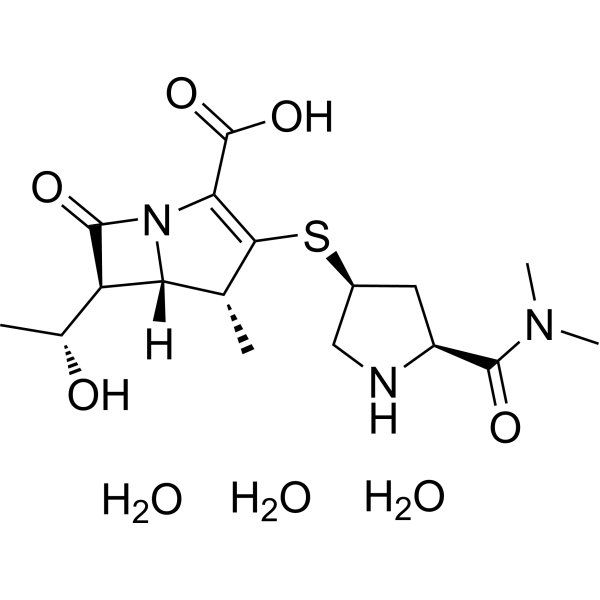
Meropenem trihydrate
Based on 38 publication(s) in Google Scholar
Meropenem trihydrate (SM 7338 trihydrate) is a carbapenem antibiotic with broad-spectrum antibacterial activity. Meropenem trihydrate has activity against susceptible and resistant N. gonorrhoeae (MIC value of 0.02-0.06 mg/mL), H. influenzae (MIC value of 0.03-0.12 mg/mL), and H. ducreyi (MIC value of 0.015-0.12 mg/mL).
For research use only. We do not sell to patients.
- Purity : 99.85%
- CAS No.: 119478-56-7
- Formula: C17H31N3O8S
- Molecular Weight:437.51
-
Storage:Powder -20°C, 3 years , 4°C, 2 years ; In solvent -80°C, 6 months , -20°C, 1 month

To place orders, for customer services and technical support, please contact: MedChemExpress USA
Tel: 609-228-6898 E-mail: [email protected] [email protected]


-
 Biological Activity
-
Chemical Information
-
Solvent & Solubility
- Protocols
- Purity & Documentation
- References
-
 Help & FAQs


-
HY-B0129
AztreonamBacterial Inhibitor -
HY-B1369
Imipenem monohydrateAntibiotic -
HY-B0593A
Ceftazidime pentahydrateAntibotic -
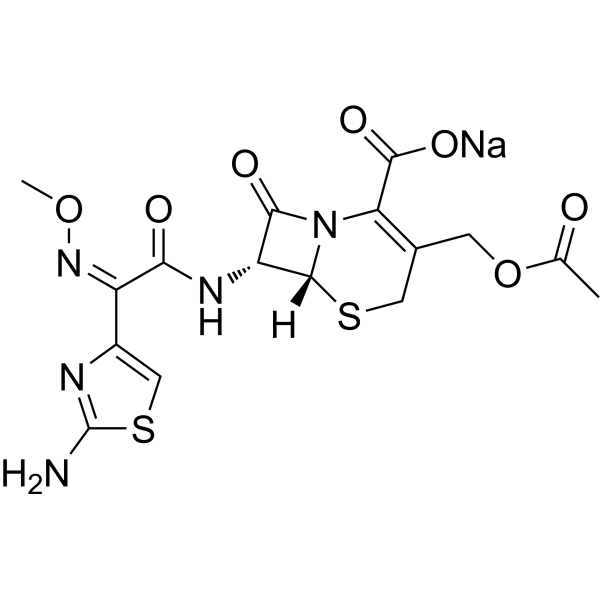
HY-A0088
Cefotaxime sodiumBacterial Inhibitor -
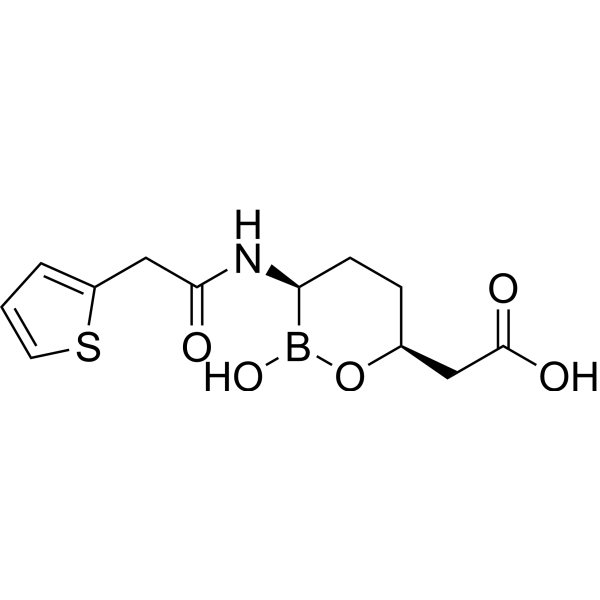
HY-19930
Vaborbactamβ-lactamase Inhibitor -
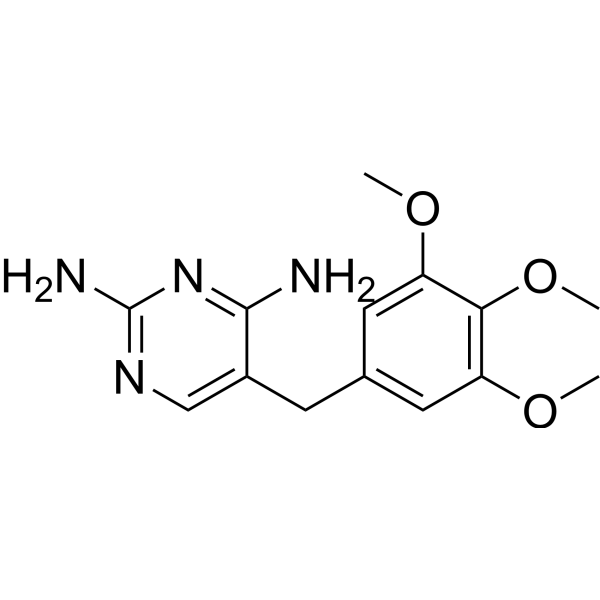
HY-B0510
TrimethoprimBacteriostatic Antibiotic -
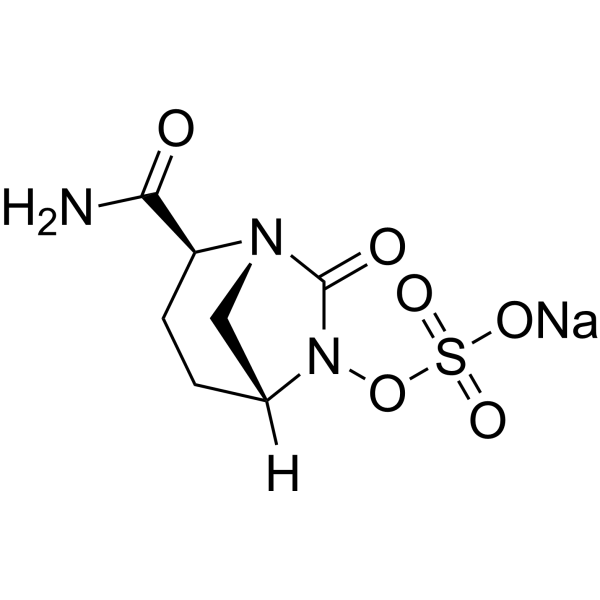
HY-14879A
Avibactam sodiumBeta-lactamase Inhibitor -
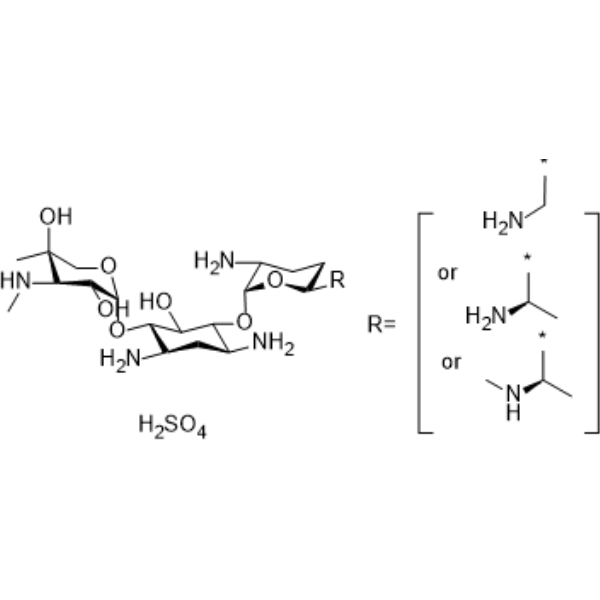
HY-A0276
Gentamicin sulfateAminoglycoside Antibiotic -
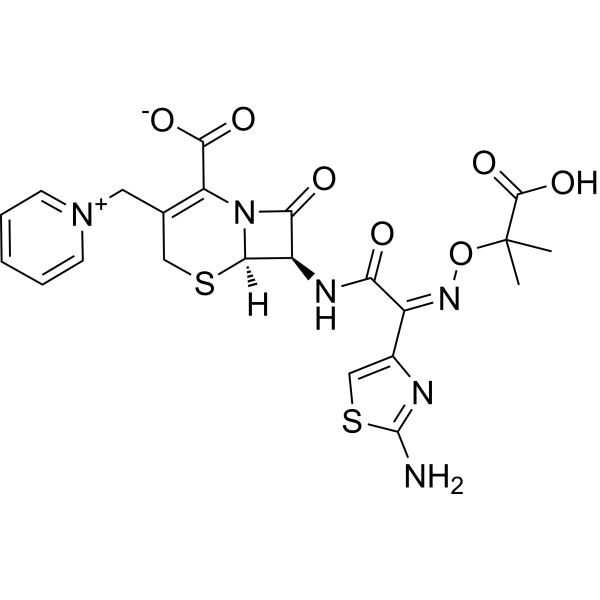
HY-B0593
CeftazidimeAntibiotic -
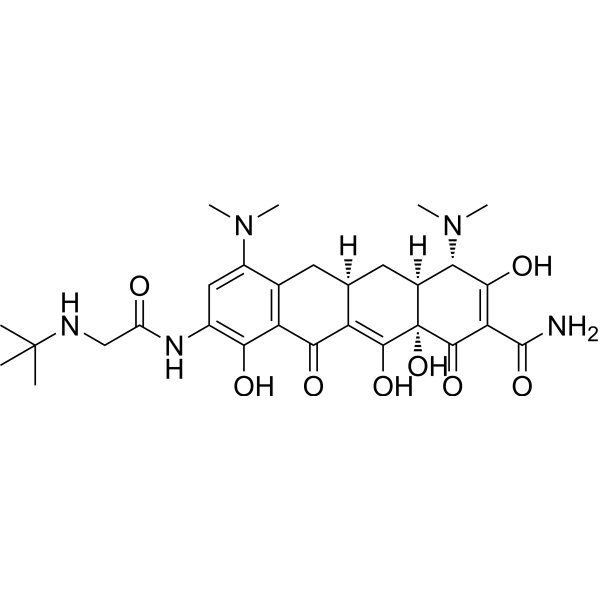
HY-B0117
TigecyclineBacterial Inhibitor -
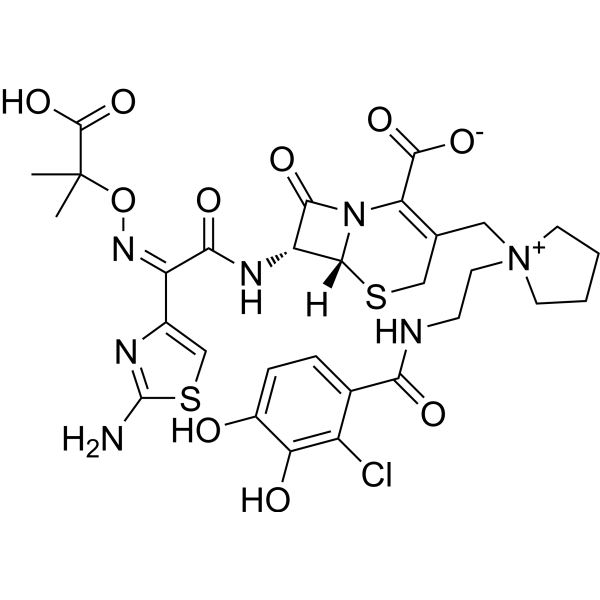
HY-17628
CefiderocolAntibiotic -
HY-17362
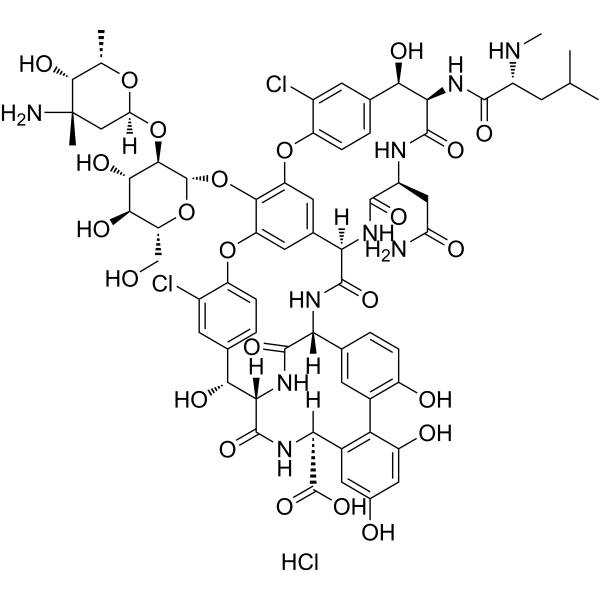
Vancomycin hydrochlorideAntibiotic
Publications Citing Use of MedChemExpress (MCE) Meropenem trihydrate
More- Nat Microbiol. 2023 Mar;8(3):410-423. [Abstract]
- Nat Commun. 2022 Mar 2;13(1):1116. [Abstract]
- J Exp Med. 2026 Mar 2;223(3):e20241287. [Abstract]
- Nano Today. 2024 Dec.
- Proc Natl Acad Sci U S A. 2024 Jan 16;121(3):e2314514121. [Abstract]
- Emerg Microbes Infect. 2024 Dec;13(1):2321981. [Abstract]
- Virulence. 2026 Dec 31;17(1):2646808. [Abstract]
- mLife. 2025 Apr 15;4(2):155-168. [Abstract]
- BMC Microbiol. 2025 Apr 29;25(1):257. [Abstract]
- Bioorg Chem. 2025 Jun 1:159:108421. [Abstract]
- Int J Antimicrob Agents. 2025 Oct;66(4):107551. [Abstract]
- Int J Antimicrob Agents. 2018 Aug;52(2):269-271. [Abstract]
- Spectrochim Acta A Mol Biomol Spectrosc. 2020 Apr 5:230:118066. [Abstract]
- Microorganisms. 2024 Mar 13;12(3):575. [Abstract]
- iScience. 2025 Mar 28;28(5):112311. [Abstract]
- FASEB J. 2026 Jan 31;40(2):e71438. [Abstract]
- Antimicrob Agents Chemother. 2018 Jul 27;62(8):e00414-18. [Abstract]
- J Antimicrob Chemother. 2026 Jun 3;81(7):dkag204. [Abstract]
- J Antimicrob Chemother. 2026 Feb 2;81(3):dkag034. [Abstract]
- J Antimicrob Chemother. 2025 Nov 5:dkaf408. [Abstract]
- Microbiol Spectr. 2025 Oct 16:e0160325. [Abstract]
- Microbiol Spectr. 2024 Aug 6;12(8):e0397923. [Abstract]
- J Antimicrob Chemother. 2020 Jul 1;75(7):1850-1858. [Abstract]
- Open Forum Infect Dis. 2023 Jan 27;10(2):ofad038. [Abstract]
- J Glob Antimicrob Resist. 2026 Jul 8:50:195-203.
- J Glob Antimicrob Resist. 2025 Apr 26:S2213-7165(25)00088-8. [Abstract]
- Infect Drug Resist. 2026 May 8;19.
- Eur J Clin Microbiol Infect Dis. 2025 Sep 29. [Abstract]
- Infect Drug Resist. 2021 Jun 30;14:2499-2507. [Abstract]
- Infect Genet Evol. 2025 Sep:133:105780. [Abstract]
- J Antibiot (Tokyo). 2026 Feb 17. [Abstract]
- Biofouling. 2026 Aug;42(7):771-781.
- J Microbiol Methods. 2026 Feb 25:107441. [Abstract]
- Diagn Microbiol Infect Dis. 2026 Nov;116(3):117584.
- Diagn Microbiol Infect Dis. 2026 Feb;114(2):117181. [Abstract]
- Authorea. 2026 May 12.
- bioRxiv. 2024 May 10.
- Biomed Pharmacother. 2023 Dec 31:169:115856. [Abstract]
 Customer Validation & Images

-
Microbiological Assay
-
Microbiological Assay
-
Microbiological Assay
-
Microbiological Assay
-
Microbiological Assay
All Antibiotic Isoforms
More

Biological Activity
Description
IC50 & Target
|
β-lactam |
In Vitro
Meropenem is intrinsically stable to dehydropeptidase-1 (DHP-1) degradation and Meropenem acts by inhibiting bacterial cell wall synthesis by binding to and inactivating penicillin-binding proteins (PBPs). Meropenem possesses broad-spectrum in vitro activity, which includes activity against many Gram-positive, Gram-negative and anaerobic bacteria; Meropenem lacks activity against Enterococcus faecium, methicillin-resistant Staphylococcus aureus and Stenotrophomonas maltophilia[2].
MedChemExpress (MCE) has not independently confirmed the accuracy of these methods. They are for reference only.
In Vivo
MedChemExpress (MCE) has not independently confirmed the accuracy of these methods. They are for reference only.
-
Animal Model:Male Sprague-Dawley rats (250-350 g) induced acute necrotizing pancreatitis[3]
-
Dosage:60 mg/kg
-
Administration:Intraperitoneal injection; once
-
Result:Significantly reduced the incidence of pancreatic infection.


Chemical Information
-
CAS No. 119478-56-7
-
Appearance Solid
-
Molecular Weight 437.51
-
Formula C17H31N3O8S
-
Color White to yellow
-
SMILES
O=C(C(N12)=C(S[C@@H]3CN[C@H](C(N(C)C)=O)C3)[C@H](C)[C@]2([H])[C@@H]([C@H](O)C)C1=O)O.O.O.O
-
Synonyms
SM 7338 trihydrate
-
Shipping
Room temperature in continental US; may vary elsewhere.
-
Storage
Powder -20°C 3 years 4°C 2 years In solvent -80°C 6 months -20°C 1 month


Publications (38)
-
Journal Impact Factor
-
Most Recent
-
Nat Microbiol
Characterization of antibiotic resistomes by reprogrammed bacteriophage-enabled functional metagenomics in clinical strains. [Abstract]2023 Mar;8(3):410-423. PMID: 36759752 -
Nat Commun
Antimicrobial resistance and population genomics of multidrug-resistant Escherichia coli in pig farms in mainland China. [Abstract]2022 Mar 2;13(1):1116. PMID: 35236849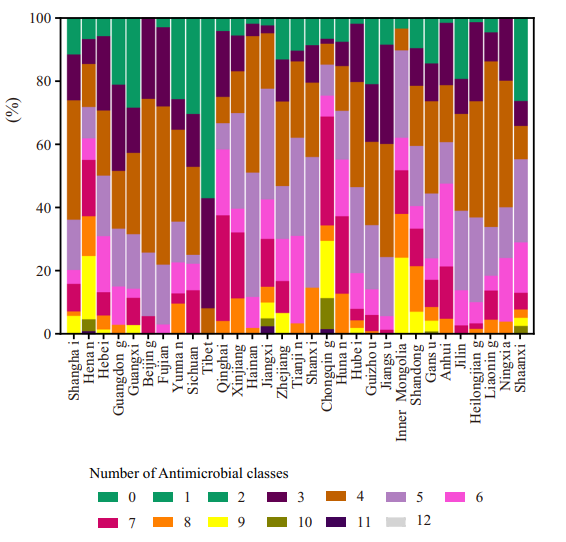
Meropenem trihydrate purchased from MedChemExpress. Usage Cited in: Nat Commun. 2022 Mar 2;13(1):1116. [Abstract]
Resistance rates of Escherichia coli isolates from farms in different provinces of mainland China to different classes of antibiotics, including Meropenem.
-
J Exp Med
2026 Mar 2;223(3):e20241287. PMID: 41400657 -
-
Proc Natl Acad Sci U S A
In-patient evolution of a high-persister Escherichia coli strain with reduced in vivo antibiotic susceptibility. [Abstract]2024 Jan 16;121(3):e2314514121. PMID: 38190524 -
Emerg Microbes Infect
AMXT-1501 targets membrane phospholipids against Gram-positive and -negative multidrug-resistant bacteria. [Abstract]2024 Dec;13(1):2321981. PMID: 38422452
Meropenem trihydrate purchased from MedChemExpress. Usage Cited in: Emerg Microbes Infect. 2024 Dec;13(1):2321981. [Abstract]
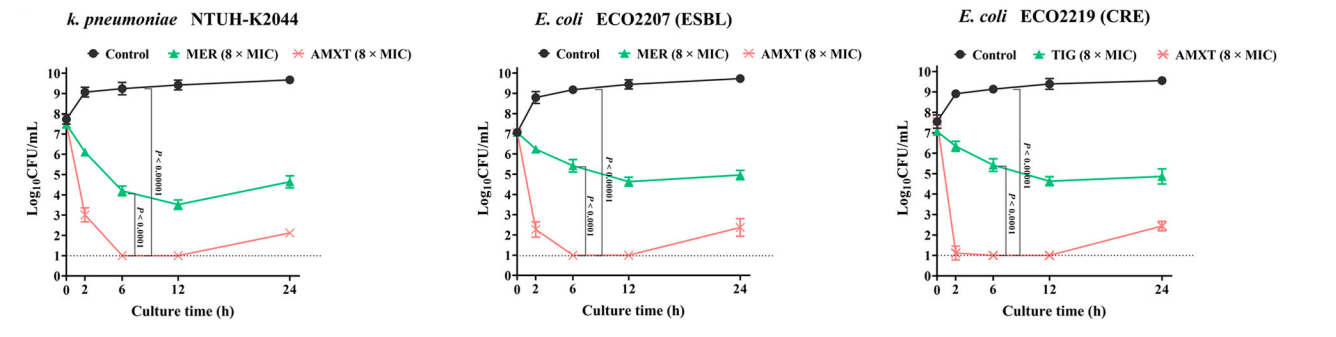
Antibacterial activity of AMXT-1501 against K. pneumoniae, an ESBL-producing E. coli, and carbapenem-resistant Enterobacteriaceae E. coli detected by time-killing assays; compared with meropenem or tigecycline (final concentration at 8× MIC); The dashed lines indicated the limit of detection of time-killing assays. Antibacterial activity of AMXT-1501 against abdominal infected with E. coli ECO2219 (n = 15/group); compared with TIG.
-
Virulence
Antibacterial efficacy and mechanism of the novel antimicrobial peptide lachnospirin-1 against Acinetobacter baumannii. [Abstract]2026 Dec 31;17(1):2646808. PMID: 41838520 -
mLife
Identification of a phenyl ester covalent inhibitor of caseinolytic protease and analysis of the ClpP1P2 inhibition in mycobacteria. [Abstract]2025 Apr 15;4(2):155-168. PMID: 40313980
Meropenem trihydrate purchased from MedChemExpress. Usage Cited in: mLife. 2025 Apr 15;4(2):155-168. [Abstract]
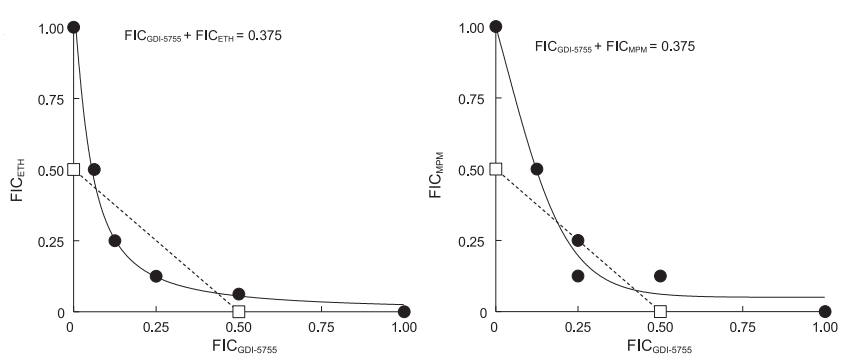
Treatment of wild-type BCG with the ClpP-targeting compound GDI-5755 and Ethambutol (ETH) or Meropenem (MPM) significantly reduced the minimum inhibitory concentration (MIC) of each drug.
-
BMC Microbiol
Klebsiella pneumoniae under xylose pressure: the growth adaptation, antimicrobial susceptibility, global proteomics analysis and role of XylA and XylB proteins. [Abstract]2025 Apr 29;25(1):257. PMID: 40301709
Meropenem trihydrate purchased from MedChemExpress. Usage Cited in: BMC Microbiol. 2025 Apr 29;25(1):257. [Abstract]
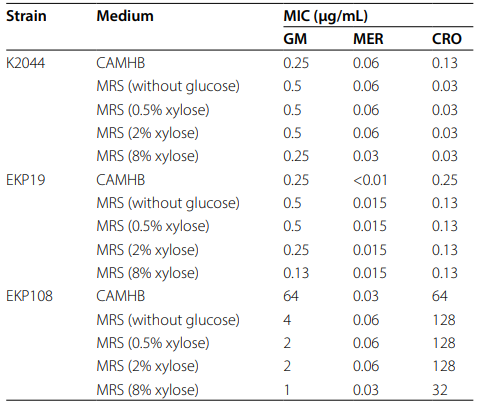
To evaluate the influence of various concentrations of xylose on the antimicrobial susceptibility of K. pneumoniae, the MIC values of K. pneumoniaetoward commonly used antibiotics, including Meropenem, Gentamicin, and Ceftriaxone, were determined after xylose exposure at various concentrations.
-
Bioorg Chem
Repurposing tavaborole to combat resistant bacterial infections through competitive inhibition of KPC-2 and metabolic disruption. [Abstract]2025 Jun 1:159:108421. PMID: 40179579 -
Int J Antimicrob Agents
Elucidating adaptive compensatory tigecycline resistance mechanisms of RamA, RarA and SoxS in Klebsiella pneumoniae. [Abstract]2025 Oct;66(4):107551. PMID: 40499596 -
Int J Antimicrob Agents
Activity of TP-6076 against carbapenem-resistant Acinetobacter baumannii isolates collected from inpatients in Greek hospitals. [Abstract]2018 Aug;52(2):269-271. PMID: 29559273 -
Spectrochim Acta A Mol Biomol Spectrosc
Spectral signal processing approaches for selective quantification of the recently FDA approved brand-new combination of Vaborbactam and Meropenem; for conformity assessment of bulk and batch release. [Abstract]2020 Apr 5:230:118066. PMID: 31958602 -
Microorganisms
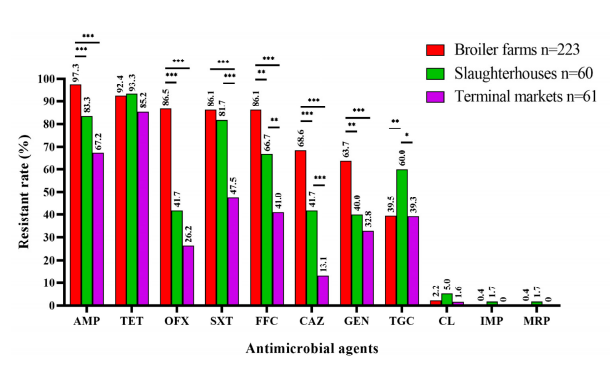
Antimicrobial Resistance and Genomic Characteristics of Escherichia coli Strains Isolated from the Poultry Industry in Henan Province, China. [Abstract]2024 Mar 13;12(3):575. PMID: 38543626
Meropenem trihydrate purchased from MedChemExpress. Usage Cited in: Microorganisms. 2024 Mar 13;12(3):575. [Abstract]
Percentages of E. coli strains showing antimicrobial resistance to different antimicrobial agents. AMP, Ampicillin; CAZ, Ceftazidime; IPM, Imipenem; MRP, Meropenem; GEN, Gentamicin; OFX, Ofloxacin; SXT, Trimethoprim–sulfamethoxazole; TET, Tetracycline; TGC, Tigecycline; CL, Colistin; FFC, Florfenicol.
-
iScience
The oxacillinase variant, OXA-1152, in Pandoraea sputorum contributes to discrepancies in carbapenem resistance. [Abstract]2025 Mar 28;28(5):112311. PMID: 40454099 -
FASEB J
Enhancing the Susceptibility of Methicillin-Resistant Staphylococcus aureus to β-Lactam Antibiotics Through the Use of 4-Methoxysalicyl Aldehyde. [Abstract]2026 Jan 31;40(2):e71438. PMID: 41524623 -
Antimicrob Agents Chemother
Aztreonam-Avibactam Combination Restores Susceptibility of Aztreonam in Dual-Carbapenemase-Producing Enterobacteriaceae. [Abstract]2018 Jul 27;62(8):e00414-18. PMID: 29760136 -
J Antimicrob Chemother
Harnessing metabolic dependence-driven antibiotic synergy to eradicate tolerant Pseudomonas aeruginosa. [Abstract]2026 Jun 3;81(7):dkag204. PMID: 42267541 -
J Antimicrob Chemother
Comparative activity of established versus new-generation β-lactams against AmpC-hyperproducing clinical isolates of Enterobacter cloacae complex and Klebsiella aerogenes: a multicentre study. [Abstract]2026 Feb 2;81(3):dkag034. PMID: 41648989 -
J Antimicrob Chemother
Unravelling the triad of penicillin-binding proteins, β-lactamase activity, and mRNA dynamics in Pseudomonas aeruginosa AmpC induction. [Abstract]2025 Nov 5:dkaf408. PMID: 41206063 -
Microbiol Spectr
The adaptive growth and mechanisms of Klebsiella pneumoniae under sucrose and glucose exposure. [Abstract]2025 Oct 16:e0160325. PMID: 41099518 -
Microbiol Spectr
Antimicrobial peptide A20L: in vitro and in vivo antibacterial and antibiofilm activity against carbapenem-resistant Klebsiella pneumoniae. [Abstract]2024 Aug 6;12(8):e0397923. PMID: 38980018 -
J Antimicrob Chemother
In vitro activity of the novel β-lactamase inhibitor taniborbactam (VNRX-5133), in combination with cefepime or meropenem, against MDR Gram-negative bacterial isolates from China. [Abstract]2020 Jul 1;75(7):1850-1858. PMID: 32154866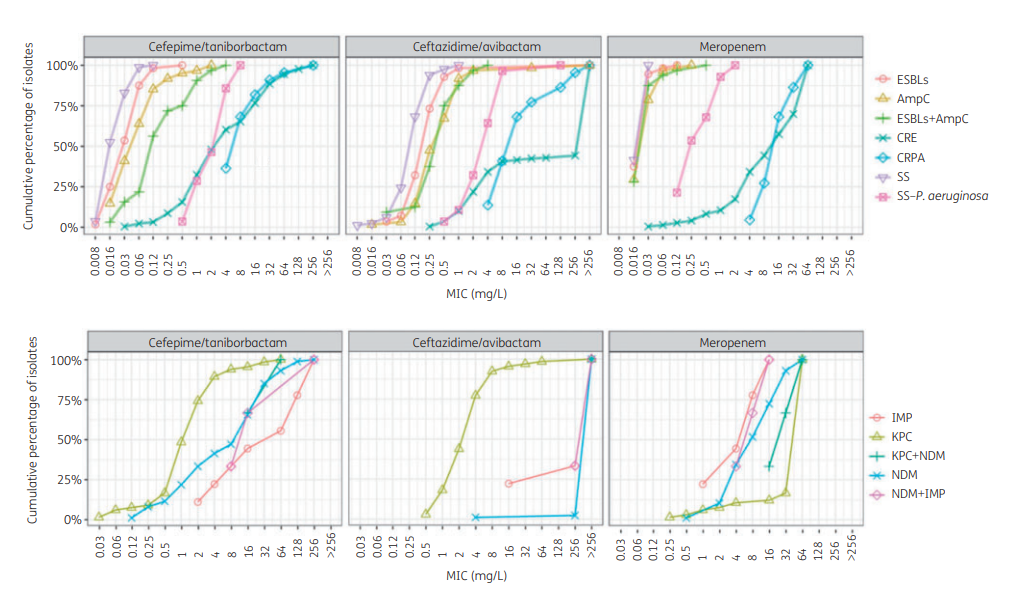
Meropenem trihydrate purchased from MedChemExpress. Usage Cited in: J Antimicrob Chemother. 2020 Jul 1;75(7):1850-1858. [Abstract]
The cumulative MIC distributions of Cefepime/Taniborbactam, Ceftazidime/Avibactam and comparator Meropenem for 500 tested isolates. The MICs of cefepime and Cefepime/Taniborbactam shown in the figure were tested by the broth microdilution method. The MICs of Meropenem shown in the figure were tested by the agar dilution method. SS, susceptible to all tested β-lactams. SS-P. aeruginosa, meropenem-susceptible P. aeruginosa. Nine IMP producers included three blaIMP-producing P. aeruginosa.
-
Open Forum Infect Dis
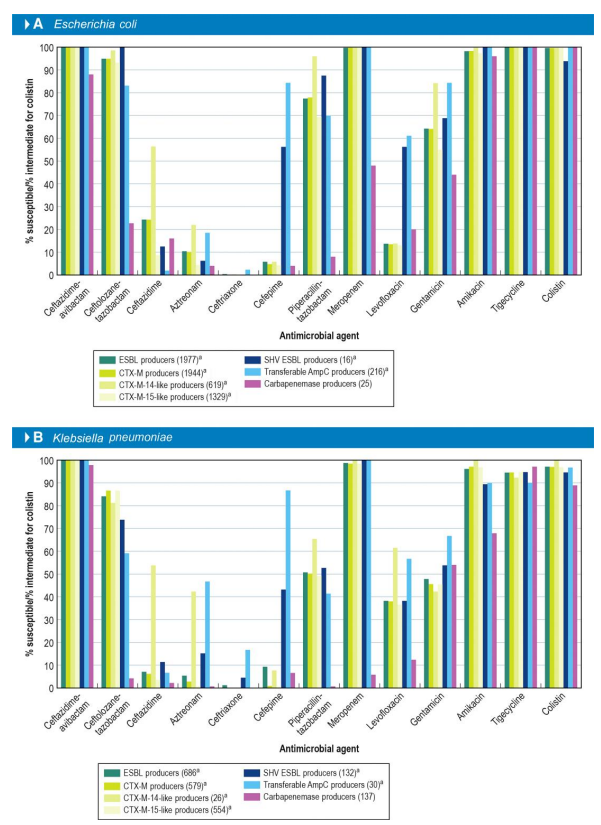
Trends of β-Lactamase Occurrence Among Escherichia coli and Klebsiella pneumoniae in United States Hospitals During a 5-Year Period and Activity of Antimicrobial Agents Against Isolates Stratified by β-Lactamase Type. [Abstract]2023 Jan 27;10(2):ofad038. PMID: 36776778
Meropenem trihydrate purchased from MedChemExpress. Usage Cited in: Open Forum Infect Dis. 2023 Jan 27;10(2):ofad038. [Abstract]
Ceftazidime-avibactam, Meropenem, and Imipenem were the most active β-lactam agents tested against 2663 ESBL-producing E. coli and K. pneumoniae isolates that were carbapenem susceptible
-
-
J Glob Antimicrob Resist
Exogenous hydrogen sulphide sensitizes carbapenemase-producing Acinetobacter baumannii to gentamicin. [Abstract]2025 Apr 26:S2213-7165(25)00088-8. PMID: 40294863 -
-
Eur J Clin Microbiol Infect Dis
Evaluation of EUCAST rapid antimicrobial susceptibility testing (RAST) for carbapenemase-producing Klebsiella pneumoniae with focus on KPC variants. [Abstract]2025 Sep 29. PMID: 41023358 -
Infect Drug Resist
In vitro Activity of Meropenem-Vaborbactam versus Other Antibiotics Against Carbapenem-Resistant Escherichia coli from Southeastern China. [Abstract]2021 Jun 30;14:2499-2507. PMID: 34234477 -
Infect Genet Evol
Polymyxin B combined with amikacin delays the resistance of Klebsiella pneumoniae to polymyxin B by modulating the expression of NlpE. [Abstract]2025 Sep:133:105780. PMID: 40480594 -
J Antibiot (Tokyo)
Meropenem, Ceftazidime, and Polymyxin B combination therapy: a novel approach to combat antimicrobial resistance in MDR, XDR and PDR Escherichia coli. [Abstract]2026 Feb 17. PMID: 41703045 -
-
J Microbiol Methods
Comparison of agar-based and checkerboard methods to assess phage-antimicrobial synergy in Pseudomonas aeruginosa. [Abstract]2026 Feb 25:107441. PMID: 41759663 -
-
Diagn Microbiol Infect Dis
2026 Feb;114(2):117181. PMID: 41205476 -
-
-
Biomed Pharmacother
The enhancement effect of small molecule Lyb24 reveals AzoR as a novel target of polymyxin B. [Abstract]2023 Dec 31:169:115856. PMID: 37949698


Solvent & Solubility
In Vitro:
DMSO : 100 mg/mL (228.57 mM; Need ultrasonic; Hygroscopic DMSO has a significant impact on the solubility of product, please use newly opened DMSO)
H2O : 4.35 mg/mL (9.94 mM; ultrasonic and warming and heat to 60°C)
Please refer to the solubility information to select the appropriate solvent. Once prepared, please aliquot and store the solution to prevent product inactivation from repeated freeze-thaw cycles.
Storage method and period of stock solution: -80°C, 6 months; -20°C, 1 month. When stored at -80°C, please use it within 6 months. When stored at -20°C, please use it within 1 month.
* Note: If you choose water as the stock solution, please dilute it to the working solution, then filter and sterilize it with a 0.22 μm filter before use.
Please refer to the solubility information to select the appropriate solvent. Once prepared, please aliquot and store the solution to prevent product inactivation from repeated freeze-thaw cycles.
Storage method and period of stock solution: -80°C, 6 months; -20°C, 1 month. When stored at -80°C, please use it within 6 months. When stored at -20°C, please use it within 1 month.
* Note: If you choose water as the stock solution, please dilute it to the working solution, then filter and sterilize it with a 0.22 μm filter before use.
Concentration (start) × Volume (start) = Concentration (final) × Volume (final)
In Vivo:
Select the appropriate dissolution method based on your experimental animal and administration route.
- For the following dissolution methods, please ensure to first prepare a clear stock solution using an In Vitro approach and then sequentially add co-solvents:
- To ensure reliable experimental results, the clarified stock solution can be appropriately stored based on storage conditions. As for the working solution for In Vivo experiments, it is recommended to prepare freshly and use it on the same day.
- The percentages shown for the solvents indicate their volumetric ratio in the final prepared solution. If precipitation or phase separation occurs during preparation, heat and/or sonication can be used to aid dissolution.
Add each solvent one by one: 10% DMSO 40% PEG300 5% Tween-80 45% Saline
Solubility: ≥ 2.5 mg/mL (5.71 mM); Clear solution
This protocol yields a clear solution of ≥ 2.5 mg/mL (saturation unknown).
Taking 1 mL working solution as an example, add 100 μL DMSO stock solution (25.0 mg/mL) to 400 μL PEG300, and mix evenly; then add 50 μL Tween-80 and mix evenly; then add 450 μL Saline to adjust the volume to 1 mL.
Preparation of Saline: Dissolve 0.9 g sodium chloride in ddH₂O and dilute to 100 mL to obtain a clear Saline solution.
Add each solvent one by one: 10% DMSO 90% (20% SBE-β-CD in Saline)
Solubility: ≥ 2.5 mg/mL (5.71 mM); Clear solution
This protocol yields a clear solution of ≥ 2.5 mg/mL (saturation unknown).
Taking 1 mL working solution as an example, add 100 μL DMSO stock solution (25.0 mg/mL) to 900 μL 20% SBE-β-CD in Saline, and mix evenly.
Preparation of 20% SBE-β-CD in Saline (4°C, storage for one week): 2 g SBE-β-CD powder is dissolved in 10 mL Saline, completely dissolve until clear.
For the following dissolution methods, please prepare the working solution directly:
It is recommended to prepare fresh solutions and use them promptly within a short period of time.
The percentages shown for the solvents indicate their volumetric ratio in the final prepared solution. If precipitation or phase separation occurs during preparation, heat and/or sonication can be used to aid dissolution.
Add each solvent one by one: PBS
Solubility: 10 mg/mL (22.86 mM); Clear solution; Need ultrasonic and warming and heat to 60°C
In Vivo Dissolution Calculator
Please enter the basic information of animal experiments:
-
-
-
-
Recommended: Prepare an additional quantity of animals to account for potential losses during experiments.
Please enter your animal formula composition:
-
%DMSO +
Recommended: Keep the proportion of DMSO in working solution below 2% if your animal is weak.
-
%+
-
+%Tween-80 + +
-
%Saline +
The co-solvents required include: DMSO, . All of co-solvents are available by MedChemExpress (MCE). , Tween 80. All of co-solvents are available by MedChemExpress (MCE).
Working solution concentration: 0.22 mg/mL
Method for preparing stock solution: mg drug dissolved in μL DMSO. Stock solution concentration: mg/mL.
1. Take μL DMSO stock solution;
2. Add μL .
μL , mix evenly;
3. Then add μL Tween 80, mix evenly;
4. Then add μL
Please ensure that the stock solution in the first step is dissolved to a clear state, and add co-solvents in sequence. You can use ultrasonic heating (ultrasonic cleaner, recommended frequency 20-40 kHz), vortexing, etc. to assist dissolution.


Purity & Documentation
-
Data Sheet (293 KB)
-
SDS (394 KB)
- English - EN (394 KB)
- Français - FR (394 KB)
- Deutsch - DE (394 KB)
- Norwegian - NO (394 KB)
- Español - ES (394 KB)
- Swedish - SV (394 KB)
- Italian - IT (394 KB)
- Korean - KR (394 KB)
- Portuguese - PT (394 KB)
-
Handling Instructions (2659 KB)
References
[1]. L Slaney, et al. In-vitro activity of meropenem against Neisseria gonorrhoeae, Haemophilus influenzae and H. ducreyi from Canada and Kenya. J Antimicrob Chemother. 1989 Sep;24 Suppl A:183-6. [Content Brief]
[2]. George G Zhanel, et al. Comparative review of the carbapenems. Drugs. 2007;67(7):1027-52. [Content Brief]
[3]. Umit Ateskan, et al. Deferoxamine and meropenem combination therapy in experimental acute pancreatitis. Pancreas. 2003 Oct;27(3):247-52. [Content Brief]


Complete Stock Solution Preparation Table
Please refer to the solubility information to select the appropriate solvent. Once prepared, please aliquot and store the solution to prevent product inactivation from repeated freeze-thaw cycles.
Storage method and period of stock solution: -80°C, 6 months; -20°C, 1 month. When stored at -80°C, please use it within 6 months. When stored at -20°C, please use it within 1 month.
| Optional Solvent | Concentration Solvent Mass | 1 mg | 5 mg | 10 mg | 25 mg |
|---|---|---|---|---|---|
| H2O / DMSO | 1 mM | 2.2857 mL | 11.4283 mL | 22.8566 mL | 57.1415 mL |
| 5 mM | 0.4571 mL | 2.2857 mL | 4.5713 mL | 11.4283 mL | |
| DMSO | 10 mM | 0.2286 mL | 1.1428 mL | 2.2857 mL | 5.7142 mL |
| 15 mM | 0.1524 mL | 0.7619 mL | 1.5238 mL | 3.8094 mL | |
| 20 mM | 0.1143 mL | 0.5714 mL | 1.1428 mL | 2.8571 mL | |
| 25 mM | 0.0914 mL | 0.4571 mL | 0.9143 mL | 2.2857 mL | |
| 30 mM | 0.0762 mL | 0.3809 mL | 0.7619 mL | 1.9047 mL | |
| 40 mM | 0.0571 mL | 0.2857 mL | 0.5714 mL | 1.4285 mL | |
| 50 mM | 0.0457 mL | 0.2286 mL | 0.4571 mL | 1.1428 mL | |
| 60 mM | 0.0381 mL | 0.1905 mL | 0.3809 mL | 0.9524 mL | |
| 80 mM | 0.0286 mL | 0.1429 mL | 0.2857 mL | 0.7143 mL | |
| 100 mM | 0.0229 mL | 0.1143 mL | 0.2286 mL | 0.5714 mL |
* Note: If you choose water as the stock solution, please dilute it to the working solution, then filter and sterilize it with a 0.22 μm filter before use.


Meropenem trihydrate Related Classifications
HY-13678A Related Classifications
 Powered by Bioz