



TCL053

Based on 1 Customer Validation
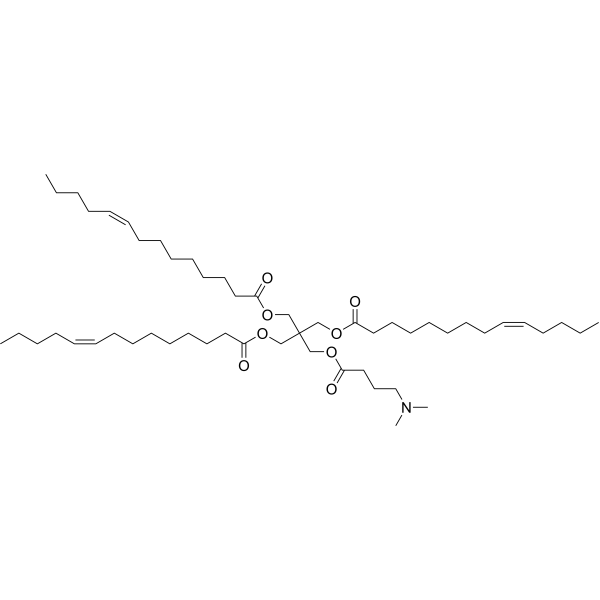
TCL053 is an ionizable lipid carrier and used to introduce active components, in particular nucleic acids, into cells with excellent efriciency. TCL053, together with DPPC (Dipalmitoylphosphatidylcholine), PEG-DMG (Polyethylene glycoldimyristoyl glycerol), and cholesterol, forms lipid nanoparticle (LNP) which is able to deliver Cas9 mRNA and sgRNA into skeletal muscle.
For research use only. We do not sell to patients.
- Purity : 99.97%
- CAS No.: 2361162-70-9
- Formula: C53H95NO8
- Molecular Weight:874.32
-
Storage:Pure form -20°C, 3 years ; In solvent -80°C, 6 months , -20°C, 1 month

To place orders, for customer services and technical support, please contact: MedChemExpress USA
Tel: 609-228-6898 E-mail: [email protected] [email protected]


-
 Biological Activity
-
Chemical Information
-
Solvent & Solubility
- Protocols
- Purity & Documentation
- References
-
 Help & FAQs


-
HY-46760
LP01Cationic Lipid -
HY-112251
D-Lin-MC3-DMAsiRNA Delivery Vehicle -
HY-138171
Lipid 5Amino Lipid -
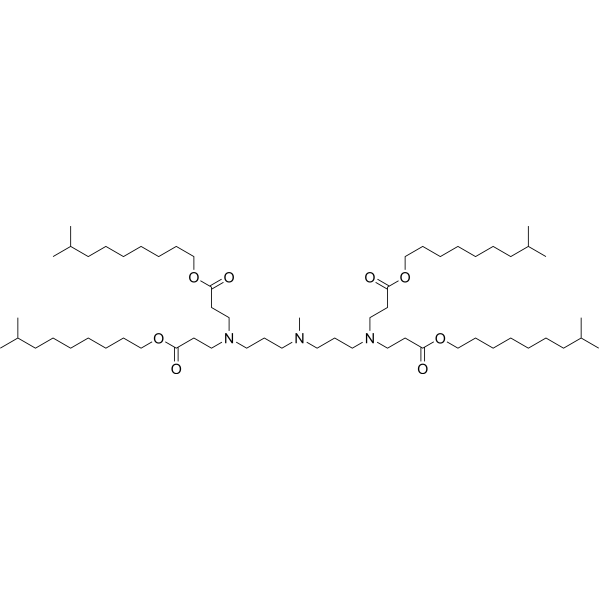
HY-151507
306Oi10Ionizable Lipidoid -
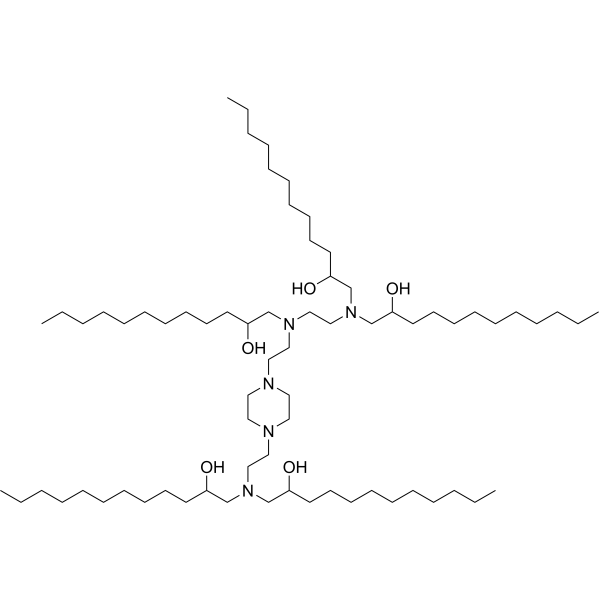
HY-145405
C12-200Cationic Lipidoid -
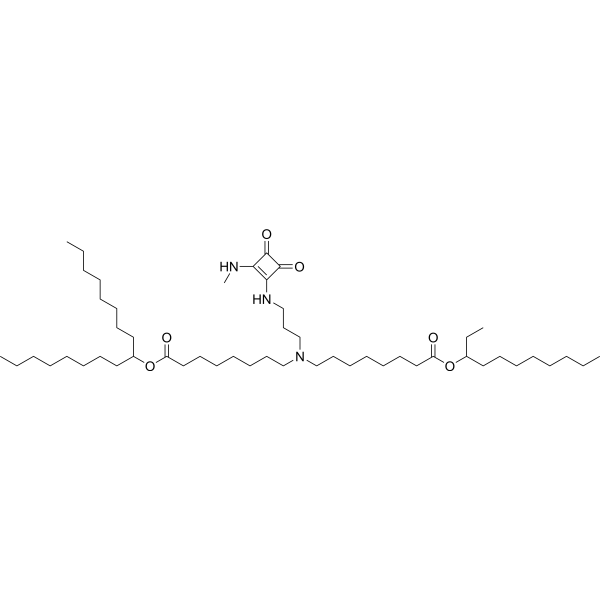
HY-148648
Lipid 29Lipid -
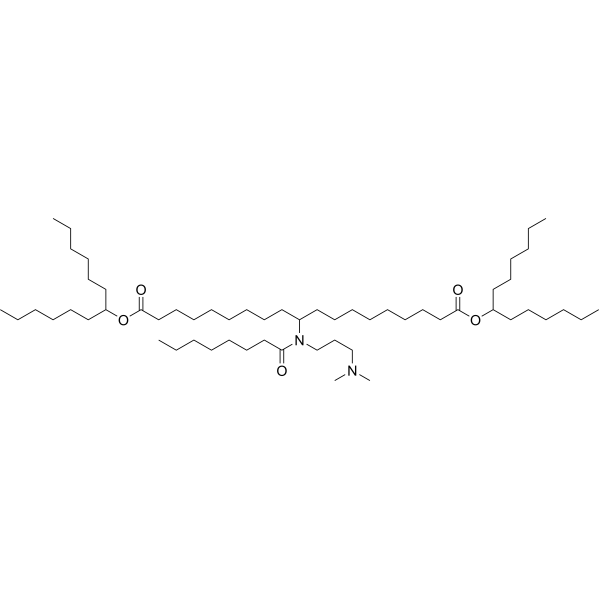
HY-156630
Ionizable lipid-1Ionizable Lipid -
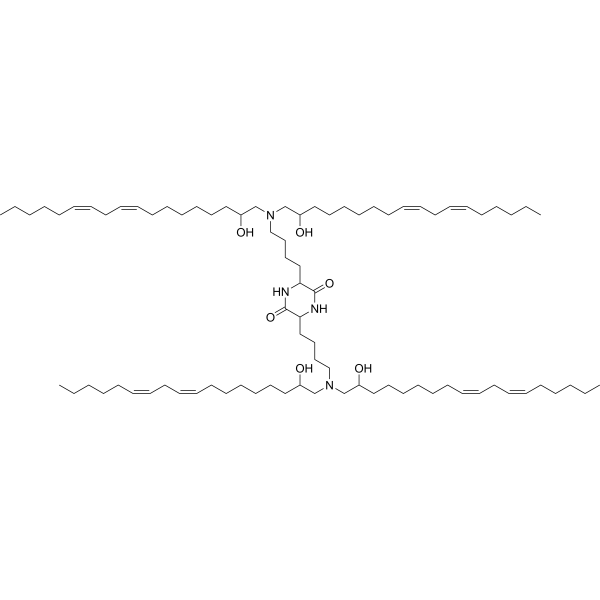
HY-145795
OF-02Ionizable Lipid -
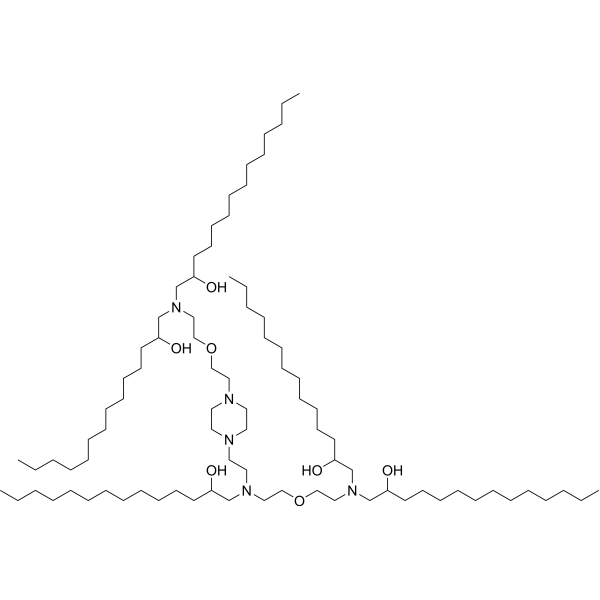
HY-148842
C14-4Ionizable lipid -
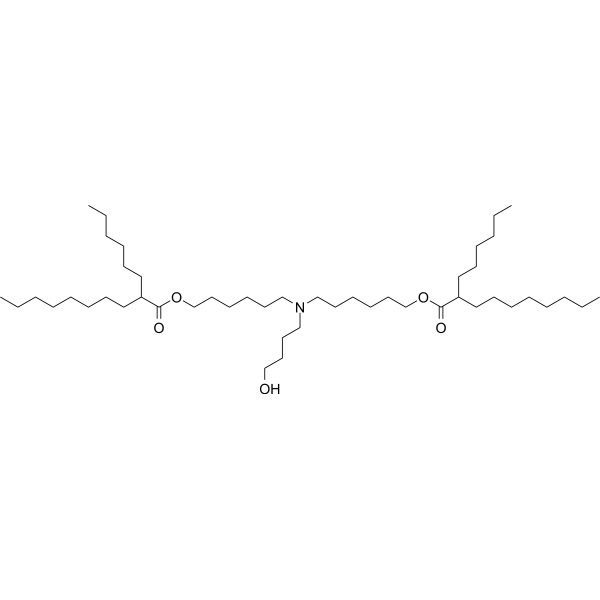
HY-138170
ALC-0315Lipid Nanoparticle Component -
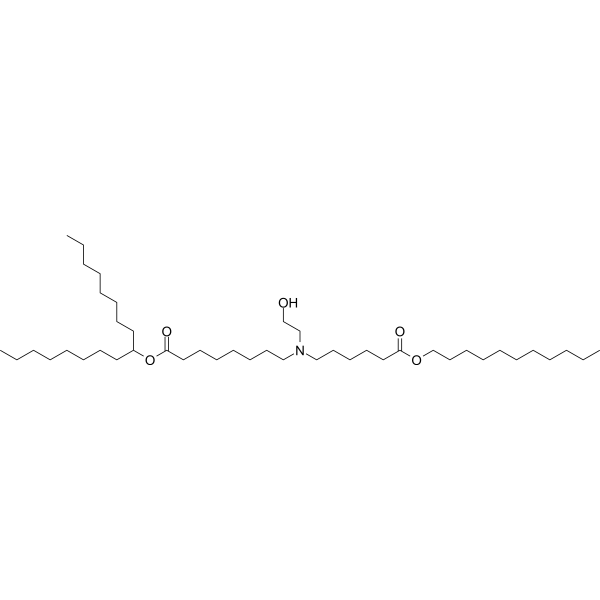
HY-134541
SM-102Ionizable Amino Lipid -
HY-D0858
MESBuffer


Biological Activity
Description
In Vitro
TCL053 shows a dissociation constant pKa =6.8[1].
TCL053 : DPPC : Cholesterol : DMG-PEG =60 : 10.6 : 27.3 : 2.1, shows an encapsulation rate of 96%, and a size of 79.1 nM[1].
MedChemExpress (MCE) has not independently confirmed the accuracy of these methods. They are for reference only. Further protocols information, click here.
In Vivo
TCL053-based LNP, via limb perfusion method, can target multiple muscle groups, with repeated administration and low immunogenicity features[1].
TCL053-based LNP can be used for skeletal muscle disorders research[1].
TCL053-based LNP induces stable genomic exon skipping and restore dystrophin protein in a DMD mouse model that harbors a humanized exon sequence[1].
MedChemExpress (MCE) has not independently confirmed the accuracy of these methods. They are for reference only.


Chemical Information
-
CAS No. 2361162-70-9
-
Appearance Liquid (Density: 0.965±0.06 g/cm3)
-
Molecular Weight 874.32
-
Formula C53H95NO8
-
Color Colorless to light yellow
-
SMILES
CN(C)CCCC(OCC(COC(CCCCCCC/C=C\CCCC)=O)(COC(CCCCCCC/C=C\CCCC)=O)COC(CCCCCCC/C=C\CCCC)=O)=O
-
Shipping
Room temperature in continental US; may vary elsewhere.
-
Storage
Pure form -20°C 3 years In solvent -80°C 6 months -20°C 1 month


Solvent & Solubility
In Vitro:
Ethanol : ≥ 100 mg/mL (114.37 mM)
DMSO : 100 mg/mL (114.37 mM; Need ultrasonic; Hygroscopic DMSO has a significant impact on the solubility of product, please use newly opened DMSO)
* "≥" means soluble, but saturation unknown.
Please refer to the solubility information to select the appropriate solvent. Once prepared, please aliquot and store the solution to prevent product inactivation from repeated freeze-thaw cycles.
Storage method and period of stock solution: -80°C, 6 months; -20°C, 1 month. When stored at -80°C, please use it within 6 months. When stored at -20°C, please use it within 1 month.
Please refer to the solubility information to select the appropriate solvent. Once prepared, please aliquot and store the solution to prevent product inactivation from repeated freeze-thaw cycles.
Storage method and period of stock solution: -80°C, 6 months; -20°C, 1 month. When stored at -80°C, please use it within 6 months. When stored at -20°C, please use it within 1 month.
Concentration (start) × Volume (start) = Concentration (final) × Volume (final)
In Vivo:
Select the appropriate dissolution method based on your experimental animal and administration route.
- For the following dissolution methods, please ensure to first prepare a clear stock solution using an In Vitro approach and then sequentially add co-solvents:
- To ensure reliable experimental results, the clarified stock solution can be appropriately stored based on storage conditions. As for the working solution for In Vivo experiments, it is recommended to prepare freshly and use it on the same day.
- The percentages shown for the solvents indicate their volumetric ratio in the final prepared solution. If precipitation or phase separation occurs during preparation, heat and/or sonication can be used to aid dissolution.
Add each solvent one by one: 10% DMSO 40% PEG300 5% Tween-80 45% Saline
Solubility: 2.5 mg/mL (2.86 mM); Clear solution; Need ultrasonic
This protocol yields a clear solution of 2.5 mg/mL.
Taking 1 mL working solution as an example, add 100 μL DMSO stock solution (25.0 mg/mL) to 400 μL PEG300, and mix evenly; then add 50 μL Tween-80 and mix evenly; then add 450 μL Saline to adjust the volume to 1 mL.
Preparation of Saline: Dissolve 0.9 g sodium chloride in ddH₂O and dilute to 100 mL to obtain a clear Saline solution.
Add each solvent one by one: 10% DMSO 90% (20% SBE-β-CD in Saline)
Solubility: 2.5 mg/mL (2.86 mM); Clear solution; Need ultrasonic
This protocol yields a clear solution of 2.5 mg/mL.
Taking 1 mL working solution as an example, add 100 μL DMSO stock solution (25.0 mg/mL) to 900 μL 20% SBE-β-CD in Saline, and mix evenly.
Preparation of 20% SBE-β-CD in Saline (4°C, storage for one week): 2 g SBE-β-CD powder is dissolved in 10 mL Saline, completely dissolve until clear.
In Vivo Dissolution Calculator
Please enter the basic information of animal experiments:
-
-
-
-
Recommended: Prepare an additional quantity of animals to account for potential losses during experiments.
Please enter your animal formula composition:
-
%DMSO +
Recommended: Keep the proportion of DMSO in working solution below 2% if your animal is weak.
-
%+
-
+%Tween-80 + +
-
%Saline +
The co-solvents required include: DMSO, . All of co-solvents are available by MedChemExpress (MCE). , Tween 80. All of co-solvents are available by MedChemExpress (MCE).
Working solution concentration: 0.22 mg/mL
Method for preparing stock solution: mg drug dissolved in μL DMSO. Stock solution concentration: mg/mL.
1. Take μL DMSO stock solution;
2. Add μL .
μL , mix evenly;
3. Then add μL Tween 80, mix evenly;
4. Then add μL
Please ensure that the stock solution in the first step is dissolved to a clear state, and add co-solvents in sequence. You can use ultrasonic heating (ultrasonic cleaner, recommended frequency 20-40 kHz), vortexing, etc. to assist dissolution.

Protocols
-
Gene Editing
Gene editing modify specific sites within the genome through gene deletions, insertions or conversions to study functionally unknown genes or conduct gene therapy. It is also used to change the biological traits of organisms to establish new varieties. Gene editing techniques include zinc finger nuclease (ZFN), transcription activator-like effector nuclease (TALEN), and clustered regularly interspaced short palindromic repeats (CRISPR)/CRISPR-associated protein 9 (Cas 9) (CRISPR/Cas9).
-
RNA extraction experimental
By lysing cells, releasing RNA, and removing impurities such as proteins and DNA, high-purity RNA products are finally obtained. The commonly used traditional method is the guanidine isothiocyanate/phenol/chloroform method (Trizol), which is suitable for a variety of animal materials including animal tissues, microorganisms, cultured cells, etc., and most plant materials.


Purity & Documentation
-
Data Sheet (273 KB)
-
SDS (394 KB)
- English - EN (394 KB)
- Français - FR (394 KB)
- Deutsch - DE (394 KB)
- Norwegian - NO (394 KB)
- Español - ES (394 KB)
- Swedish - SV (394 KB)
- Italian - IT (394 KB)
- Korean - KR (394 KB)
- Portuguese - PT (394 KB)
-
Handling Instructions (2659 KB)
References


Complete Stock Solution Preparation Table
Please refer to the solubility information to select the appropriate solvent. Once prepared, please aliquot and store the solution to prevent product inactivation from repeated freeze-thaw cycles.
Storage method and period of stock solution: -80°C, 6 months; -20°C, 1 month. When stored at -80°C, please use it within 6 months. When stored at -20°C, please use it within 1 month.
| Optional Solvent | Concentration Solvent Mass | 1 mg | 5 mg | 10 mg | 25 mg |
|---|---|---|---|---|---|
| Ethanol / DMSO | 1 mM | 1.1437 mL | 5.7187 mL | 11.4375 mL | 28.5936 mL |
| 5 mM | 0.2287 mL | 1.1437 mL | 2.2875 mL | 5.7187 mL | |
| 10 mM | 0.1144 mL | 0.5719 mL | 1.1437 mL | 2.8594 mL | |
| 15 mM | 0.0762 mL | 0.3812 mL | 0.7625 mL | 1.9062 mL | |
| 20 mM | 0.0572 mL | 0.2859 mL | 0.5719 mL | 1.4297 mL | |
| 25 mM | 0.0457 mL | 0.2287 mL | 0.4575 mL | 1.1437 mL | |
| 30 mM | 0.0381 mL | 0.1906 mL | 0.3812 mL | 0.9531 mL | |
| 40 mM | 0.0286 mL | 0.1430 mL | 0.2859 mL | 0.7148 mL | |
| 50 mM | 0.0229 mL | 0.1144 mL | 0.2287 mL | 0.5719 mL | |
| 60 mM | 0.0191 mL | 0.0953 mL | 0.1906 mL | 0.4766 mL | |
| 80 mM | 0.0143 mL | 0.0715 mL | 0.1430 mL | 0.3574 mL | |
| 100 mM | 0.0114 mL | 0.0572 mL | 0.1144 mL | 0.2859 mL |


TCL053 Related Classifications
HY-147332 Related Classifications
 Powered by Bioz