



IGF-I/IGF-1 Protein, Mouse
Based on 12 publication(s) in Google Scholar
IGF-I/IGF-1 Protein is an insulin-like growth factor that possesses both growth-promoting and metabolic-regulating functions. IGF-I/IGF-1 Protein is also a neurotrophic factor with neuroprotective and neuroplasticity-regulating activities. IGF-I/IGF-1 Protein plays a key role in growth and development, cell proliferation, metabolic regulation and other aspects. IGF-I/IGF-1 Protein, Mouse is a recombinant IGF-I/IGF-1 protein expressed by E. coli without a tag.
- Species: Mouse
- Source: E. coli
-
Storage:Stored at -20°C for 2 years from date of receipt. After reconstitution, it is stable at 4°C for 1 week or -20°C for longer (with carrier protein). It is recommended to freeze aliquots at -20°C or -80°C for extended storage.


To place orders, for customer services and technical support, please contact: MedChemExpress USA
Tel: 609-228-6898 E-mail: [email protected] [email protected]


-
 Biological Activity
-
Technical Parameters
-
Product Properties
- Documentation
- References
- Help & FAQs


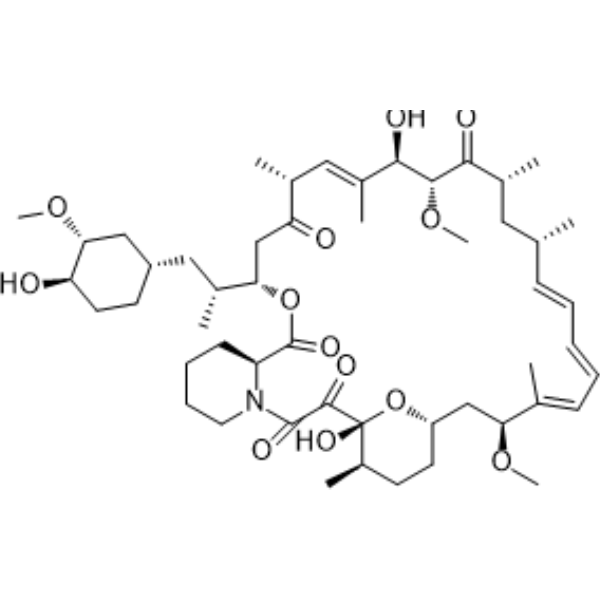
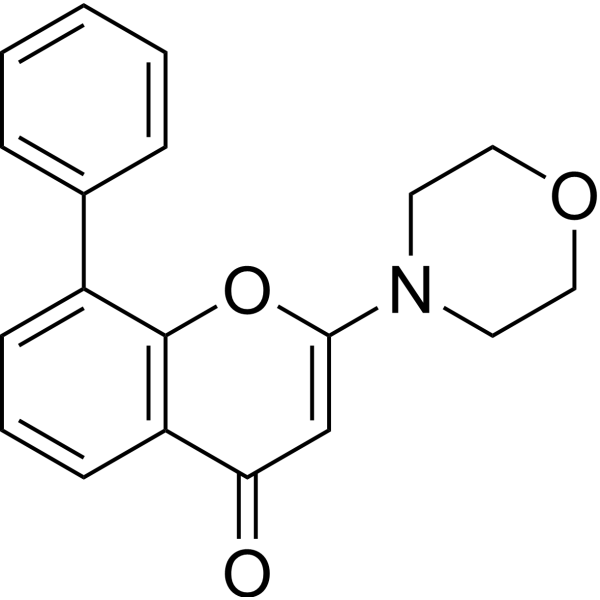
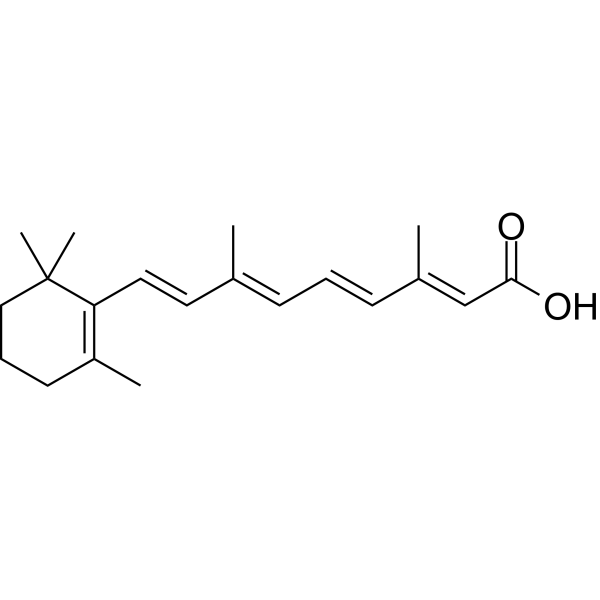
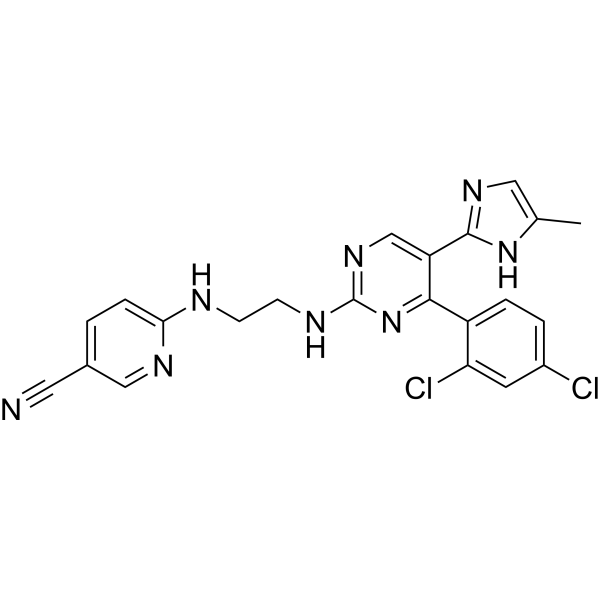


Biological Activity
Description
IGF-I/IGF-1 Protein is an insulin-like growth factor that possesses both growth-promoting and metabolic-regulating functions. IGF-I/IGF-1 Protein is also a neurotrophic factor with neuroprotective and neuroplasticity-regulating activities. IGF-I/IGF-1 Protein plays a key role in growth and development, cell proliferation, metabolic regulation and other aspects. IGF-I/IGF-1 Protein, Mouse is a recombinant IGF-I/IGF-1 protein expressed by E. coli without a tag[1][2].
Background
IGF system has been demonstrated to regulate the growth of numerous tissues, such as neural tissue, lymphoid tissue, reproductive tissue, smooth muscle, endothelium, and bone. IGF-I/IGF-1, a key growth factor involved in cell growth, differentiation, survival, and cell cycle regulation, is secreted by mature osteoblasts, stored in the bone matrix, and released during bone resorption. The mitogenic effect of IGF-I/IGF-1 is mediated through its binding to IGF plasma membrane receptors. IGF-I/IGF-1 can stimulate osteoblast proliferation and differentiation, and also promote neuronal survival[1][2].
In Vitro
IGF-I/IGF-1 Protein (Mouse; 1 ng/mL; 6 h) can promote the proliferation of thyroid epithelial cells in in vitro mouse thyroid tissues[3].
IGF-I/IGF-1 Protein (Mouse; 10 nM; 1 h) does not affect the level of PKCδ in H9C2 cells[4].
Verified Bioactivity
1.The ED50 is <10 ng/mL as measured by FDC-P1 cells, corresponding to a specific activity of >1 × 10⁵ units/mg.
2.Measured in a serum-free cell proliferation assay using MCF-7 human breast cancer cells. The ED50 for this effect is ≤9.923 ng/mL. corresponding to a specific activity is ≥1.007×10⁵ units/mg.
MCE Validation Data
-
Purity - SDS-PAGE
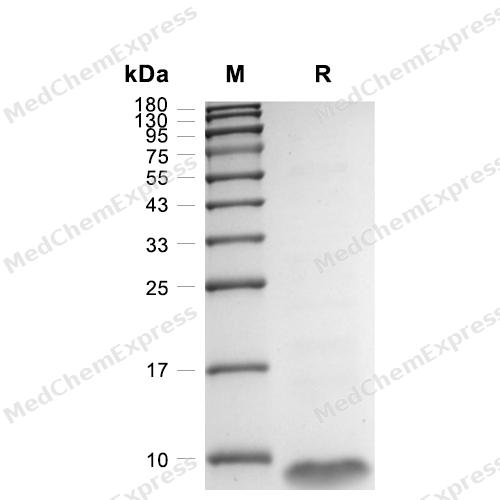
Purity - SDS-PAGE
-
Bioactivity - Cell-Based Assay
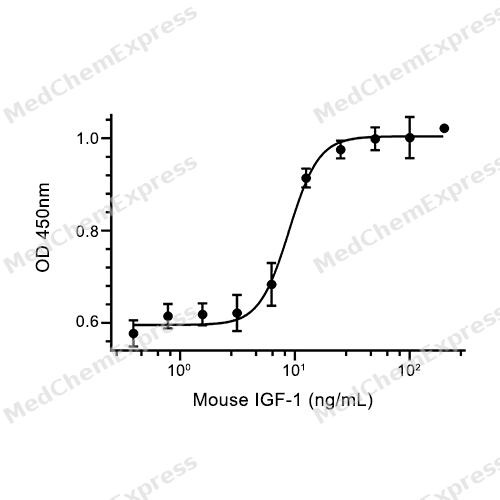
Bioactivity - Cell-Based Assay


Publications (12)
-
Journal Impact Factor
-
Most Recent
-
Adv Sci (Weinh)
2024 Feb;11(6):e2305913. PMID: 38059822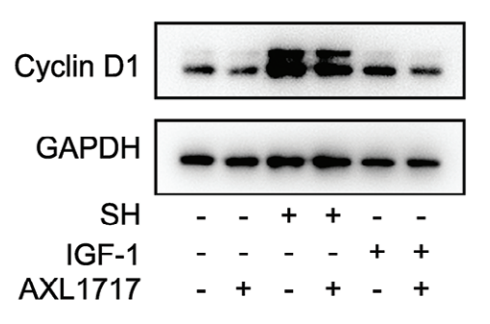
IGF-I/IGF-1 Protein, Mouse purchased from MedChemExpress. Usage Cited in: Adv Sci (Weinh). 2024 Feb;11(6):e2305913. [Abstract]
Western blotting analysis of the Cyclin D1 expression in thyroid tissues after co-incubation with spleen homogenate (SH), IGF-I/IGF-1 Protein (1 ng/mL, 6 h), and the inhibitor of the IGF-1 receptor (picropodophyllin, AXL1717).
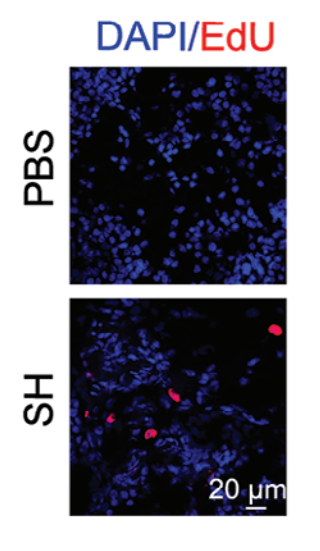
IGF-I/IGF-1 Protein, Mouse purchased from MedChemExpress. Usage Cited in: Adv Sci (Weinh). 2024 Feb;11(6):e2305913. [Abstract]
The proliferative activity of thyroid tissue blocks after co-incubation with spleen homogenate (SH) was determined by EdU staining, comprising soluble components of IGF-I/IGF-1 Protein (1 ng/mL, 6 h), demonstrated their ability to enhance the proliferation of thyroid epithelial cells.2J stain.
-
-
BMC Med
IGF1-mediated mesenchymal-endothelial transition as a potential regulatory target in calcific aortic valve disease. [Abstract]2025 Nov 3;23(1):600. PMID: 41184837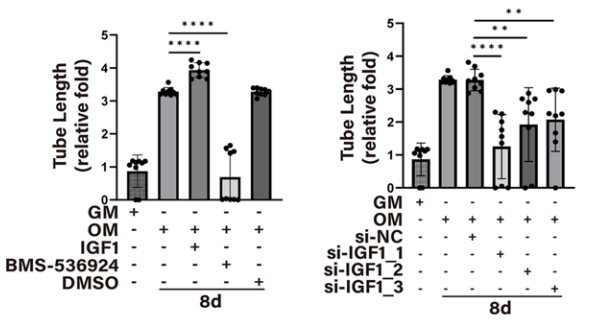
IGF-I/IGF-1 Protein, Mouse purchased from MedChemExpress. Usage Cited in: BMC Med. 2025 Nov 3;23(1):600. [Abstract]
Statistical analysis of tube formation assays of pVICs with exogenous addition of IGF-I/IGF-1 Protein (100 ng/ml) and BMS-536924 during OM induction, and after knockdown of IGF1 expression.
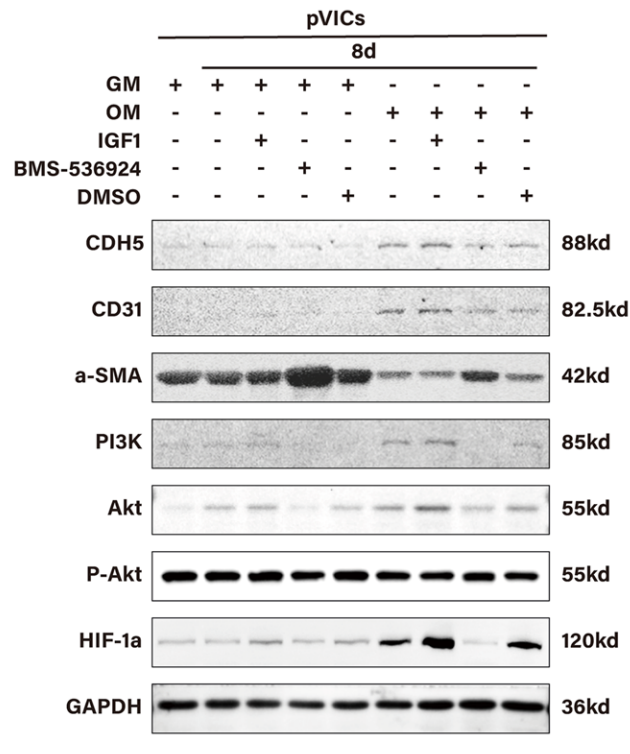
IGF-I/IGF-1 Protein, Mouse purchased from MedChemExpress. Usage Cited in: BMC Med. 2025 Nov 3;23(1):600. [Abstract]
Assessed the changes in protein expression of CDH5, CD31, α-SMA, PI3K, Akt, P-Akt, and HIF-1α in pVICs after the exogenous addition of recombinant IGF-I/IGF-1 Protein (100 ng/ml) and inhibitor BMS-536924 in GM and OM.
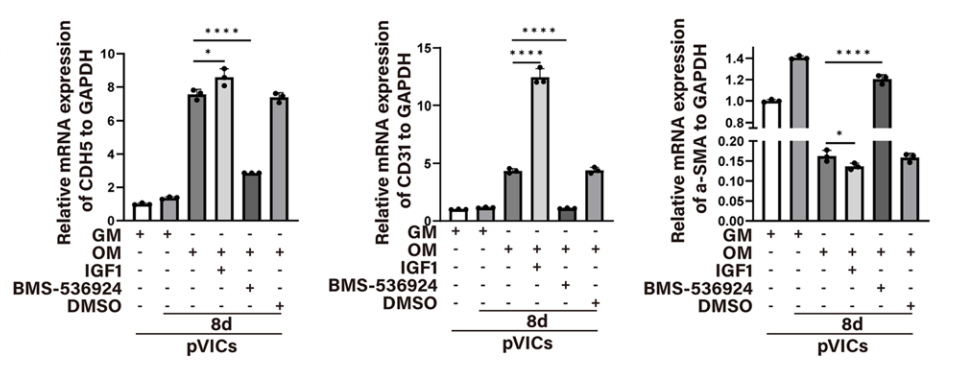
IGF-I/IGF-1 Protein, Mouse purchased from MedChemExpress. Usage Cited in: BMC Med. 2025 Nov 3;23(1):600. [Abstract]
Assessed the changes mRNA expression levels of CDH5, CD31, α-SMA, PI3K, Akt, P-Akt, and HIF-1α in pVICs after the exogenous addition of recombinant IGF-I/IGF-1 Protein (100 ng/ml) and inhibitor BMS-536924 in GM and OM.
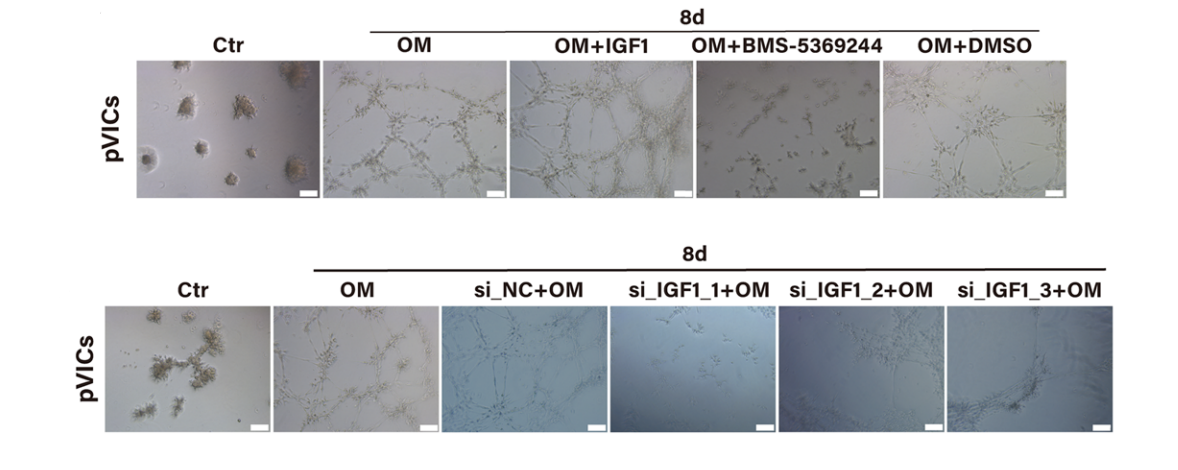
IGF-I/IGF-1 Protein, Mouse purchased from MedChemExpress. Usage Cited in: BMC Med. 2025 Nov 3;23(1):600. [Abstract]
Tube formation assays in pVICs with exogenous addition of IGF-I/IGF-1 Protein (100 ng/ml) and BMS-536924 during OM induction, and after knockdown of IGF1 expression.
-
J Headache Pain
Targeting IGF1/IGF1r signaling relieve pain and autophagic dysfunction in NTG-induced chronic migraine model of mice. [Abstract]2024 Sep 20;25(1):156. PMID: 39304806 -
Stem Cell Res Ther
Dental pulp stem cell-derived intracellular vesicles prevent orthodontic relapse by inhibiting PI3K/Akt/NF-κB-mediated osteoclast activity. [Abstract]2025 Jan 23;16(1):22. PMID: 39849611 -
Ecotoxicol Environ Saf
Triclosan exposure exacerbates muscle wasting via senescence and IGF-1 pathway suppression: A combined epidemiological and experimental study. [Abstract]2025 Oct 1:304:119142. PMID: 41045744 -
-
J Cell Mol Med
EGFR marks a subpopulation of dermal mesenchymal cells highly expressing IGF1 which enhances hair follicle regeneration. [Abstract]2023 Jun;27(12):1697-1707. PMID: 37165726 -
Front Physiol
High Glucose Attenuates Cardioprotective Effects of Glucagon-Like Peptide-1 Through Induction of Mitochondria Dysfunction via Inhibition of β-Arrestin-Signaling. [Abstract]2021 May 13:12:648399. PMID: 34054568 -
Diabetes Metab Syndr Obes
Essential Role Of High Glucose-Induced Overexpression Of PKCβ And PKCδ In GLP-1 Resistance In Rodent Cardiomyocytes. [Abstract]2019 Nov 4:12:2289-2302. PMID: 31807042 -
Physiol Behav
Exogenous IGF-1 alleviates depression-like behavior and hippocampal mitochondrial dysfunction in high-fat diet mice. [Abstract]2021 Feb 1:229:113236. PMID: 33137345 -


Technical Parameters
-
Species Mouse
-
Source E. coli
-
Tag Tag Free
-
Accession
P05017-1 (G49-A118)
-
Molecular Construction
-
N-term
-
IGF1 (G49-A118)
Accession # P05017-1 -
C-term
-
-
Protein Length
Full Length of Isoform-1
-
Synonyms
IGF1; Somatomedin-C; Insulin Like Growth Factor 1; IGF1A; IGF-I; MGF; Insulin-Like Growth Factor 1; Insulin-Like Growth Factor IB; Insulin-Like Growth Factor I; Insulin-Like Growth Factor-I; IGFI; Alternative Protein IGF1; IGF; Somatomedin C; Insulin-Like
-
AA Sequence
GPETLCGAELVDALQFVCGPRGFYFNKPTGYGSSIRRAPQTGIVDECCFRSCDLRRLEMYCAPLKPTKAA
-
Predicted Molecular Mass
7.7 kDa
-
Molecular Weight
Approximately 8 kDa, based on SDS-PAGE under reducing conditions.
-
Purity
≥ 95%, as determined by reducing SDS-PAGE.


Product Properties
Lyophilized powder
1.Lyophilized from a 0.22 μm filtered solution of PBS.
2.Lyophilized from a 0.22 μm filtered solution of PBS, pH 7.4, 8% trehalose.
Please refer to the lot-specific COA for specific buffer information.
<1 EU/μg, determined by LAL method.
It is not recommended to reconstitute to a concentration less than 100 μg/mL in ddH2O. For long term storage it is recommended to add a carrier protein (0.1% BSA, 5% HSA, 10% FBS or 5% Trehalose).
Stored at -20°C for 2 years from date of receipt. After reconstitution, it is stable at 4°C for 1 week or -20°C for longer (with carrier protein). It is recommended to freeze aliquots at -20°C or -80°C for extended storage.
Room temperature in continental US; may vary elsewhere.


Documentation
-
Data Sheet (263 KB)
-
SDS (252 KB)
- English - EN (252 KB)
- Français - FR (252 KB)
- Deutsch - DE (252 KB)
- Norwegian - NO (252 KB)
- Español - ES (252 KB)
- Swedish - SV (252 KB)
- Italian - IT (252 KB)
- Korean - KR (252 KB)
- Portuguese - PT (252 KB)
-
Handling Instructions (2659 KB)


References
[1]. Richman C, et al. Recombinant human insulin-like growth factor-binding protein-5 stimulates bone formation parameters in vitro and in vivo. Endocrinology. 1999 Oct;140(10):4699-705. [Content Brief]
[2]. Carlson SW, et al. Central Infusion of Insulin-Like Growth Factor-1 Increases Hippocampal Neurogenesis and Improves Neurobehavioral Function after Traumatic Brain Injury. J Neurotrauma. 2018 Jul 1;35(13):1467-1480. [Content Brief]
[3]. Tian XJ, et al. Regeneration of Thyroid Glands in the Spleen Restores Homeostasis in Thyroidectomy Mice. Adv Sci (Weinh). 2024 Feb;11(6):e2305913. [Content Brief]
[4]. Pan X, et al. Essential Role Of High Glucose-Induced Overexpression Of PKCβ And PKCδ In GLP-1 Resistance In Rodent Cardiomyocytes. Diabetes Metab Syndr Obes. 2019 Nov 4;12:2289-2302. [Content Brief]

Calculators
Concentration (start) × Volume (start) = Concentration (final) × Volume (final)


 Powered by Bioz

