199 Results for "

proteasome complex

" in MedChemExpress (MCE) Product Catalog:
Products (199)

199 Results for "proteasome complex" in MCE Product Catalog:

Cat. No.: HY-148369
CAS No.: 3094177-94-0
Purity:  99.68%
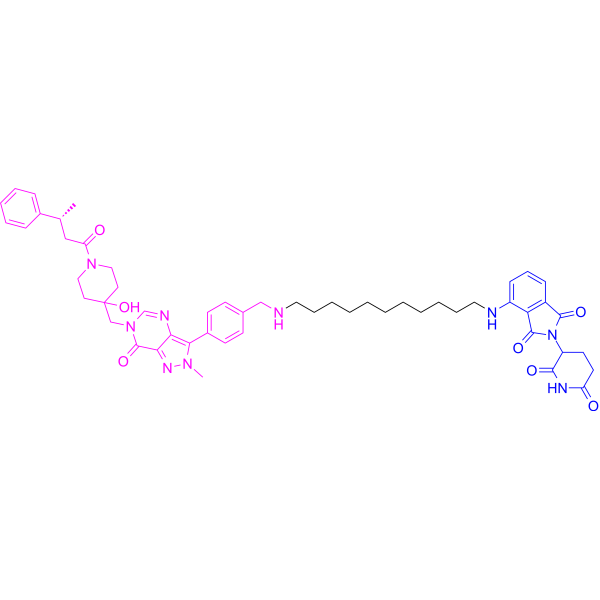
U7D-1 is a USP7 PROTAC degrader that induces selective proteasomal degradation of USP7. U7D-1 destabilizes and downregulates the expression of variant PRC1 complex subunits PCGF1, RING1A and PCGF6, and also slightly reduces the protein level of KDM2B. U7D-1 decreases cell viability, arrests neuroblastoma cells at the G0/G1 cell cycle phase, and downregulates the expression of target genes of PAX3::FOXO1 in FP-RMS cells. U7D-1 increases the level of cleaved PARP in FP-RMS cells, induces cell apoptosis, and upregulates the expression of muscle differentiation markers MYH1 and MYF5. U7D-1 inhibits the growth and proliferation of p53 wild-type and mutant cancer cells, and regulates the apoptosis pathway and E2F pathway. U7D-1 is applicable to studies on neuroblastoma, fusion-positive rhabdomyosarcoma, p53-mutant cancers and cancer-related research .
loading...
    loading...
Cat. No.: HY-163944
CAS No.: 3081311-94-3
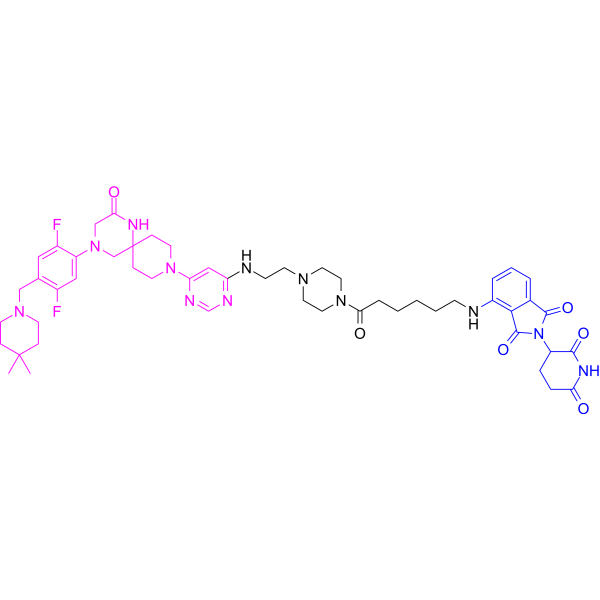
LL-K12-18 is a CDK12 kinase inhibitor and a dual-site molecular glue. LL-K12-18 inhibits human CDK12 with an IC50 value of 283.9 nM, and selectively degrades cyclin K via the ubiquitin-proteasome system by stabilizing the CDK12-DDB1 complex. LL-K12-18 downregulates DNA damage response genes, reduces the phosphorylation level of CTD Ser2 in RNA polymerase II, and modulates biomarkers such as ATM, RAD51, γ-H2AX and cleaved PARP, thereby effectively inducing apoptosis and inhibiting proliferation of breast cancer cells. LL-K12-18 exhibits high target selectivity and serves as a research tool for studies on triple-negative breast cancer .
loading...
    loading...
Cat. No.: HY-172767
Target:  

PROTACs STAT Apoptosis

Research Areas:  

Cancer

STAT3-D11-PROTAC-VHL (Compound D11-PROTAC) is a PROTAC degrader targeting Signal Transducer and Activator of Transcription 3 (STAT3). STAT3-D11-PROTAC-VHL exhibits anti-tumor activity with IC50 values of 1335 nM and 1973 nM against HeLa and MCF-7 cells, respectively. STAT3-D11-PROTAC-VHL binds to the DNA-binding domain of STAT3 and recruits the E3 ligase VHL to form a ternary complex, leading to the ubiquitination of STAT3 and subsequent degradation by the proteasome. STAT3-D11-PROTAC-VHL also inhibits tumor cell growth, induces cell cycle arrest and apoptosis, and suppresses tumor immune evasion .
loading...
    loading...
Cat. No.: HY-179424
CAS No.: 3095636-64-6
PROTAC HIF-1α degrader-2 is a highly efficient and selective PROTAC degrader targeting HIF-1α. PROTAC HIF-1α degrader-2 promotes HIF-1α degradation via the ubiquitin-proteasome pathway by facilitating the formation of a HIF-1α/VHL ternary complex. PROTAC HIF-1α degrader-2 inhibits HeLa cell proliferation, migration, and colony formation, and induces apoptosis. PROTAC HIF-1α degrader-2 reduces p-MEK and p-AKT expression in the MAPK and PI3K/AKT pathways. PROTAC HIF-1α degrader-2 can be used for the study of cervical cancer .
loading...
    loading...
Cat. No.: HY-181164
Research Areas:  

Infection

PROTAC BRD4 Degrader-43 is a BRD4 PROTAC degrader. PROTAC BRD4 Degrader-43 recruits the DCAF1-DDB1-Cul4A E3 ligase complex via a Vpr-derived peptide moiety to induce BRD4 ubiquitination and degradation through the ubiquitin-proteasome system. PROTAC BRD4 Degrader-43 exhibits potent HIV latency-reversing activity. PROTAC BRD4 Degrader-43 can be used for the research of HIV-1 latent infection . (Pink: BRD4 ligand (HY-13030); Blue: Cul4A-DDB1-DCAF1 ligand (HY-P11640); Black: conjugate of PEG linker + cell-penetrating peptide (HY-P2483))
loading...
    loading...
Cat. No.: HY-184915
CAS No.: 3065495-08-8
APH003 is an orally active IRAK4 PROTAC degrader with a DC50 of 0.74 nM in human peripheral blood mononuclear cells (hPBMCs). APH003 recruits IRAK4 to CRBN to form a ternary complex, mediates the ubiquitination and degradation of IRAK4 via the ubiquitin-proteasome pathway, and inhibits the kinase activity of IRAK4. APH003 inhibits LPS- or IL-1β/LPS-induced phosphorylation of ERK, JNK and NF-κB. APH003 inhibits the secretion of TNF-α, IL-6, IL-8 and IL-13 by stimulated hPBMCs. APH003 exhibits anti-inflammatory activity in rat TNBS-induced intestinal inflammation models and mouse IL-33-induced skin inflammation models. APH003 can be used in research related to inflammatory bowel disease and skin inflammation .
loading...
    loading...
Cat. No.: HY-L137
124 compounds

Targeted protein degradation(TPD) is a novel and promising approach to new drug discovery and development. It shows great potential for treating diseases with “undruggable” pathogenic protein targets and for overcoming drug resistance. Molecular glues and PROTACs are both targeted protein degraders that have attracted the most attention.

Molecular glues are small molecular degraders that mainly induce novel interaction between an E3 ligase and a target protein to form a ternary complex, leading to protein ubiquitination and subsequent proteasome degradation. Compared with PROTACs, molecular glues generally possess more favorable drug-like properties, such as lower MW, higher cell permeability, and better oral absorption. Molecular glues are emerging as a promising new therapeutic strategy.

MCE supplies a unique collection of 124 molecular glues which target various proteins. MCE Molecular Glue Compound Library is a useful tool to conduct scientific research and disease mechanism study.

Cat. No.: HY-172930B
CAS No.: 2991023-13-1
Research Areas:  

Cancer

(R)-PVTX-405 is a IKZF2 molecular glue degrader with a DC50 of 4.1 nM. (R)-PVTX-405 is the (R)-enantiomer of PVTX-405 (HY-172930). PVTX-405 is an orally active IKZF2 molecular glue degrader that significantly inhibits MC38 tumor growth in mouse tumor xenograft models. (R)-PVTX-405 can be used in cancer-related research .
loading...
    loading...
Cat. No.: HY-173366
Research Areas:  

Neurological Disease

dGEM3 is a selective GEMIN3 Molecular glue degrader with a DC50 of 680 nM. dGEM3 recruits GEMIN3 to the VHL E3 ligase, and mediates the targeted ubiquitination and degradation of GEMIN3 via the ubiquitin-proteasome system. dGEM3 induces extensive transcriptomic changes, including upregulation of ER stress response genes and downregulation of mRNA splicing genes. dGEM3 can be used in research related to amyotrophic lateral sclerosis, spinal muscular atrophy and neuromuscular dysfunction .
loading...
    loading...
Cat. No.: HY-177784
Research Areas:  

Cancer

iDeg-3 is a potent IDO1 molecular glue degrader. iDeg-3 binds to apo-IDO1 and alters its C-terminal conformation, promoting CRL2-KLHDC3 E3 ligase-mediated ubiquitination and degradation of IDO1. iDeg-3 is suitable for cancer-related research .
loading...
    loading...
Cat. No.: HY-186267
CAS No.: 3037514-35-2
Research Areas:  

Cancer

BD-7148 is a potent, highly selective BRD4 PROTAC degrader with a DC50 of 0.9 nM. BD-7148 binds to recombinant human BRD2-BD1, BRD2-BD2, BRD3-BD1, BRD3-BD2, BRD4-BD1 and BRD4-BD2 domain proteins, with Kd values ranging from 26 nM to 240 nM, and shows no binding preference for BRD4 domains over BRD2 or BRD3 domains. BD-7148 inhibits the growth of leukemia and breast cancer cells. BD-7148 can be used in the research of leukemia and breast cancer .
loading...
    loading...
Cat. No.: HY-163609
Target:  

PROTACs 17β-HSD

Research Areas:  

Cancer

PROTAC AKR1C3 degrader-1 is a PROTAC degrader targeting AKR1C3, with a DC50 of 52 nM. PROTAC AKR1C3 degrader-1 induces proteasome-dependent degradation of AKR1C3 and inhibits the enzymatic activities of AKR1C3, AKR1C1 and AKR1C2. PROTAC AKR1C3 degrader-1 degrades ARv7 by disrupting the stable AKR1C3/ARv7 complex. PROTAC AKR1C3 degrader-1 reduces the viability of prostate cancer cells expressing AKR1C3 and sensitizes Enzalutamide (HY-70002)-resistant prostate cancer cells. PROTAC AKR1C3 degrader-1 can be used in the research of prostate cancer .
loading...
    loading...
Cat. No.: HY-L128
187 compounds

Proteolysis-targeting chimera (PROTAC) has been developed to be a useful technology for targeted protein degradation. PROTACs consist of a ligand for E3 ligase (E3 ligase binder), a linker and a ligand (mostly small-molecule inhibitor) for protein of interest(target binder). Upon binding to the target protein, the PROTACs can recruit E3 for target protein ubiquitination, which is subjected to proteasome-mediated degradation.

Although there are more than 600 E3 ubiquitin ligases, only several with small molecule ligands have been used for designing PROTACs, including Skp1-Cullin-F box complex containing Hrt1 (SCF), Von Hippel-Lindau tumor suppressor (VHL), Cereblon (CRBN), inhibitor of apoptosis proteins (IAPs), and mouse double minute 2 homolog (MDM2).

MCE carefully prepared a unique collection of 187 ligands for E3 ligase, which have been reported to be used in PROTAC design. MCE E3 ligase ligand library is a useful tool for PROTAC development.

Cat. No.: HY-145514R
CAS No.: 2624313-15-9
Research Areas:  

Cancer

dTAGV-1 TFA (Standard) is the analytical standard of dTAGV-1 TFA (HY-145514). This product is intended for research and analytical applications. dTAGV-1 TFA is a selective FKBP12 F36V PORTAC degrader. dTAGV-1 TFA induces rapid degradation of FKBP12 F36V-tagged oncogenic fusion proteins, triggering collapse of downstream cellular signaling pathways, reduced proliferative capacity of cancer cells, and decreased levels of target proteins. dTAGV-1 TFA is applicable to functional validation studies of cancer and undegradable oncoproteins .
loading...
    loading...
Cat. No.: HY-175370
Target:  

PROTACs RIP kinase

Research Areas:  

Cancer

PROTAC RIPK1 Degrader-1 is a selective RIPK1 PROTAC degrader. PROTAC RIPK1 Degrader-1 induces complete degradation of RIPK1 through the ubiquitin-proteasome system by bridging the target protein RIPK1 and VHL E3 ubiquitin ligase. PROTAC RIPK1 Degrader-1 is applicable to melanoma-related research .
loading...
    loading...
Cat. No.: HY-L934
122 compounds

CRBN, namely cereblon, is the substrate recognition subunit of the E3 ubiquitin ligase complex in the ubiquitin-proteasome system. A CRBN ligand library refers to a collection of numerous fragments that can specifically bind to the CRBN protein.

These ligands are mostly designed based on validated CRBN-binding warheads and modified through AI-driven molecular generation optimization systems. They not only include classic lenalidomide-derived structures but also cover novel non-lenalidomide scaffolds. After drug-likeness filtering, these ligands exhibit structural diversity and favorable druggable properties. They can be further optimized and modified to facilitate the development of novel molecular glue degraders, accelerate the discovery of molecular glues that induce interactions between CRBN and new substrate proteins, and enable the exploration of novel CRBN substrates for identifying previously unknown CRBN-binding proteins.

MCE compiles 122 fragments that can specifically bind to the CRBN protein, with molecular weights ranging from 200 to 500. Compounds developed based on the library ligands target multiple disease targets such as cancer and autoimmune diseases, further advancing the development of Molecular Glues and PROTACs therapeutic agents.

Cat. No.: HY-181413
CAS No.: 3093642-25-9
PROTAC EZH2 Degrader-44 (compound 60) is a highly efficient PROTAC degrader targeting the EZH2-PRC2 complex. By recruiting the CRBN E3 ligase and relying on the proteasome system, PROTAC EZH2 Degrader-44 simultaneously induces the degradation of core components EZH2, SUZ12 and EED, thereby significantly reducing the levels of H3K27me3 and CARM1. PROTAC EZH2 Degrader-44 exerts antiproliferative effects through a dual mechanism: on the one hand, it triggers mitochondrial dysfunction leading to decreased membrane potential; on the other hand, it strongly promotes apoptosis by regulating Bcl-2 family proteins (upregulating Bax, Caspase-3 and PARP, and downregulating Bcl-2). PROTAC EZH2 Degrader-44 exhibits only extremely low cytotoxicity in human normal mammary epithelial, liver and kidney cells, showing a favorable safety window. PROTAC EZH2 Degrader-44 is an ideal tool molecule for exploring the mechanisms of targeted therapy for triple-negative breast cancer .
loading...
    loading...
Cat. No.: HY-162282
CAS No.: 3039554-79-2
Target:  

PROTACs METTL3

Research Areas:  

Cancer

PROTAC METTL3-14 degrader 1 is a METTL3-METTL14 heterodimer complex PROTAC degrader. PROTAC METTL3-14 degrader 1 binds to the E3 ubiquitin ligase CRBN, forms a ternary complex with METTL3-METTL14, and promotes the ubiquitination and degradation of METTL3. PROTAC METTL3-14 degrader 1 is applicable to the research of acute myeloid leukemia and prostate cancer .
loading...
    loading...
Cat. No.: HY-170820
CAS No.: 3006788-11-7
XYD049 is a CRBN-based molecular glue degrader targeting GSPT1, with a DC50 of 19 nM. XYD049 mediates the formation of a ternary complex between CRBN and GSPT1, thereby triggering CRBN- and proteasome-dependent degradation of GSPT1. By degrading GSPT1, XYD049 downregulates castration-resistant prostate cancer (CRPC)-related oncogenes, including BCL2, CDK2, E2F3, EGFR, HSP90B1, TMPRSS2, AR, AR-V7, PSA and c-Myc. XYD049 inhibits cancer cell growth and suppresses tumor growth in mice. XYD049 can be used for research on castration-resistant prostate cancer. XYD049 consists of a linker (black part) NH2-C5-NH-Boc (HY-W004710), a CRBN-based E3 ligase ligand (blue part) Thalidomide 4-fluoride (HY-41547), and a target protein ligand (red part) GSPT1 ligand-1 (HY-170821), among which the E3 ligase ligand plus linker forms the conjugate E3 Ligase Ligand-linker Conjugate 158 (HY-170822) .
loading...
    loading...

