2217 Results for "

Good's buffer

" in MedChemExpress (MCE) Product Catalog:
Products (2217)

2217 Results for "Good's buffer" in MCE Product Catalog:

Cat. No.: HY-174425
CAS No.: 3077254-39-5
Target:  

Cytochrome P450

Research Areas:  

Cancer

CYP1B1-IN-9 is a highly selective and competitive CYP1B1 Inhibitor with IC50 values of 1.48 nM, > 100 μM, and > 80 μM for CYP1B1, CYP1A1, and CYP1A2, respectively. CYP1B1-IN-9 significantly inhibits the migration and invasion of A549/T cells. CYP1B1-IN-9 has the ability to resensitize Paclitaxel (HY-B0015)-resistant cells, and good metabolic stability and safety, and shows favorable pharmacokinetic parameters. CYP1B1-IN-9 can be used for the study of tumor-drug resistance .
loading...
    loading...
Cat. No.: HY-180581
LOXL2/sGC modulator-1 (Compound 11k) is a LOXL2 inhibitor (IC₅₀ = 0.13 μM) and an sGC activator. LOXL2/sGC modulator-1 shows good selectivity for LOX (IC₅₀ > 45.9 μM) and LOXL3 (IC₅₀ = 1.30 μM). LOXL2/sGC modulator-1 significantly increases intracellular cGMP levels in the presence of the gGC inhibitor ODQ (HY-101255). LOXL2/sGC modulator-1 significantly inhibits hypoxia-induced collagen deposition and cross-linking, while promoting vasodilation. LOXL2/sGC modulator-1 can be used for the study of pulmonary arterial hypertension .
loading...
    loading...
Cat. No.: HY-184617
Due to their unique physical and chemical properties, noble metal nanoparticles, represented by platinum, gold, silver, and palladium, have been extensively studied by many scientists. Palladium is a noble metal belonging to the platinum group elements. Its elemental form is a silvery-white transition metal, soft in texture and possessing good ductility and malleability. Palladium nanoparticles, due to their unique physical, chemical, and electronic properties, have shown remarkable application potential in multiple fields. The preparation methods for palladium nanoparticles mainly include chemical reduction and physical reduction methods. Chemical reduction generally involves adding a reducing agent to reduce palladium ions to elemental palladium. Common reducing agents used include sodium citrate, sodium borohydride, and hydrogen gas. Because the chemical reduction process is relatively fast, protective agents such as polyvinylpyrrolidone (PVP) are generally added to prevent palladium particles from agglomerating.
loading...
    loading...
Cat. No.: HY-184626
Thiol-modified magnetite nanoparticles are prepared via high-temperature pyrolysis and surface-modified with thiol functional groups. Magnetite is widely used in magnetic resonance imaging, magnetic separation, targeted drug delivery, tumor hyperthermia, cell labeling and separation, as a contrast agent, and in retinal detachment repair surgery due to its stable properties, good biocompatibility, high strength, and lack of toxicity. It is also used as a catalyst carrier, microwave absorbing material, and magnetic recording material. Xianfeng has developed numerous derivatives of magnetite, including oleic acid-modified magnetite, magnetite with different PEG ends, DMSA-modified magnetite, polylysine-modified magnetite, carboxylated dextran-modified magnetite nanoparticles, streptavidin-modified magnetite particles, thiol-modified magnetite magnetic nanoparticles, and polyethyleneimine (PEI)-modified magnetic magnetite nanoparticles, among others.
loading...
    loading...
Cat. No.: HY-19500
CAS No.: 215122-74-0
Target:  

COX

Research Areas:  

Others

SC-75416 is a selective cyclooxygenase-2 inhibitor. Its pharmacokinetic/pharmacodynamic (PK/PD) model was used for development and clinical trial simulation to design a study protocol to verify its analgesic effect in a post-oral surgery pain model. The simulation results showed that 360 mg of SC-75416 may provide better pain relief than 400 mg of ibuprofen. The actual clinical trial results confirmed this hypothesis, and 360 mg of SC-75416 was indeed superior to 400 mg of ibuprofen in pain relief. The PK/PD model of SC-75416 showed good predictive performance and successfully predicted its clinical effect. These research results show that SC-75416, as a new selective COX-2 inhibitor, has potential clinical application value in the management of post-oral surgery pain.
loading...
    loading...
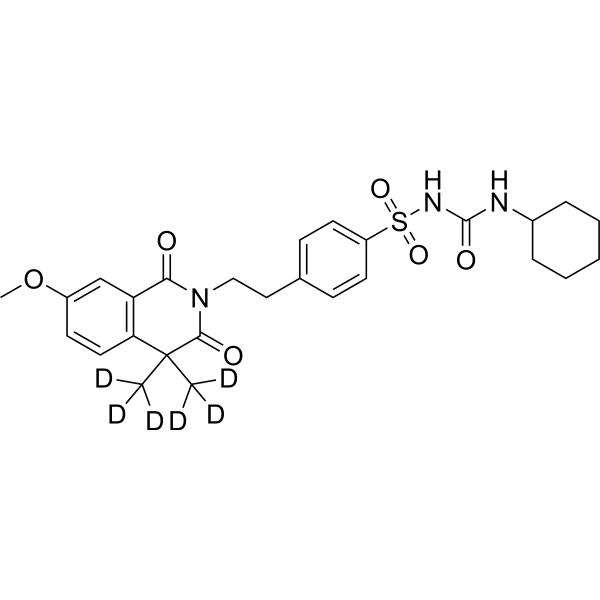
Cat. No.: HY-B1114S
Synonyms: AR-DF 26-d6
Gliquidone-d6 (AR-DF 26-d6) is the deuterated-labeled Gliquidone (HY-B1114). Gliquidone can bind to the pancreatic β-cells and increases insulin release to regulate blood glucose levels. Gliquidone significantly decreases LPS (HY-D1056)-induced proinflammatory responses and inhibits ERK/STAT3/NF-κB phosphorylation in BV2 microglial cells. Gliquidone can suppress microgliosis, microglial hypertrophy mediated by LPS, and proinflammatory cytokine COX-2 and IL-6 levels in murine model. Gliquidone also exhibits good anticancer activity in lung carcinoma cells. Gliquidone has antioxidant property. Gliquidone can be studied in research for type 2 diabetes and cancers .
loading...
    loading...
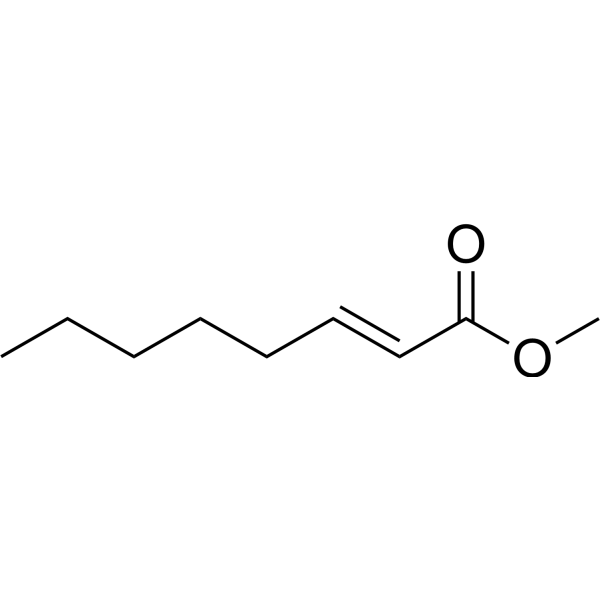
Cat. No.: HY-W039379
CAS No.: 7367-81-9
Synonyms: trans-2-Octenoic acid methyl ester
Methyl (E)-oct-2-enoate is commonly used as an ingredient in perfume, cologne, and food flavor in the perfume and fragrance industry. Its pleasant fragrance and low volatility make it a good choice for adding fruit to various products. A popular choice for incense, in addition to its application in the fragrance and fragrance industry, Methyl (E)-oct-2-enoate is also used as a raw material for the synthesis of other organic compounds, it can be oxidized to form methyl 3-oxobutyrate, Used in the production of pharmaceuticals and agrochemicals. Overall, Methyl (E)-oct-2-enoate is a versatile compound that is used in various industries for its pleasant aroma and reactivity, its fruity and floral notes in fragrances and essences Industry is highly sought after, and its ability to serve as a starting material for other compounds makes it useful in organic synthesis.
loading...
    loading...
Cat. No.: HY-122058
CAS No.: 1097732-62-1
Target:  

HIV

Research Areas:  

Infection

KRH-3955 is a CXCR4 antagonist with good bioavailability and potent anti-HIV-1 activity. KRH-3955 can effectively inhibit the replication of X4 HIV-1, including clinical isolates from different donors. KRH-3955 also shows activity against recombinant X4 HIV-1 containing reverse transcriptase, protease and tyrosinase resistance mutations. KRH-3955 can inhibit the binding of SDF-1alpha to CXCR4 and calcium ion signaling through this receptor. KRH-3955 inhibits the binding of an antibody against CXCR4 to CXCR4, showing a potent antagonistic effect on CXCR4. KRH-3955 shows an oral bioavailability of 25.6% in rats and can inhibit the replication of X4 HIV-1 in vivo .
loading...
    loading...
Cat. No.: HY-13590
CAS No.: 402857-58-3
Target:  

VEGFR

Research Areas:  

Cancer

CEP-7055 (compound 21) is a novel vascular endothelial growth factor R2 (VEGF-R2) tyrosine kinase inhibitor with potent inhibitory activity. Studies have found that the inhibitor activity can be significantly improved by optimizing the R9 substituent. Compound 21 has potent low nanomolar inhibition of human VEGF-R tyrosine kinase and shows good selectivity against multiple tyrosine and serine/threonine kinases. N,N-dimethylglycine ester 40 was prepared to improve its water solubility and oral bioavailability. In animal pharmacokinetic studies, a significant increase in the plasma level of 21 was observed after oral administration of 40. Compound 21 showed significant in vivo antitumor activity in multiple tumor models and has entered phase I clinical trials as a water-soluble N,N-dimethylglycine ester proagent of 40 (CEP-7055).
loading...
    loading...
Cat. No.: HY-15334
CAS No.: 402857-39-0
Target:  

VEGFR

Research Areas:  

Cancer

CEP-5214, derived from a new indenopyrrolocarbazole template, is a potent inhibitor of vascular endothelial growth factor R2 (VEGF-R2) tyrosine kinase. Structurally, it features optimal substitutions at positions 9 (ethoxymethyl) and 12 (hydroxypropyl) on the indeno[2,1-a]pyrrolo[3,4-c]carbazole-5-one scaffold, leading to high potency against VEGF-R2 (IC50 8 nM). Compound 21 (CEP-5214) exhibits low-nanomolar inhibition of human VEGF-R tyrosine kinases (IC50 4 nM for VEGF-R2/KDR), with good selectivity over other kinases. The compound demonstrated significant cellular and in vivo antitumor activity across various models and advanced into phase I clinical trials as a water-soluble prodrug (CEP-7055) to enhance oral bioavailability .
loading...
    loading...
Cat. No.: HY-163913
Target:  

SARS-CoV

Research Areas:  

Infection

SARS-CoV-IN-5 (compound 49) is a highly selective, nonpeptidic and noncovalent 3CL pro inhibitor with IC50s of 38 nM, 21.1 nM and 86 nM for 3CL pro of SARS-CoV-1, SARS-CoV-2, Bat coronavirus WIV1, respectively. SARS-CoV-IN-5 inhibits the replication of the SARS-CoV-2 delta variant with an EC50 of 0.272 μM. SARS-CoV-IN-5 significantly reduces the lung viral copies in a K18-hACE2 transgenic mouse model. SARS-CoV-IN-5 has good target-specific and potential broad-spectrum anticoronavirus activities against SARS-CoV-1, WIV1, MERS, HCoV-OC43, HCoV-229E, and HKU9 .
loading...
    loading...
Cat. No.: HY-170926
Target:  

RET Apoptosis

Research Areas:  

Cancer

CQ1373 is a potent RET inhibitor, demonstrating cellular potency with IC50 values of 13.0, 25.7 and 28.4 nM against BaF3 cells expressing CCDC6-RET, CCDC6-RET-G810C and CCDC6-RET-G810R, respectively. CQ1373 exhibits good selectivity toward wild-type RET and solvent front mutants G810C/R with IC50 values of 4.2, 7.1 and 32.4 nM, respectively. CQ1373 inhibits RET phosphorylation and downstream signaling through SHC. CQ1373 induces Apoptosis and cell cycle arrest in BaF3 cells. CQ1373 exhibits anti-tumor efficacy and can be used for cancer research .
loading...
    loading...
Cat. No.: HY-182287
PRDX1-IN-4 is a PRDX1 inhibitor with an IC50 of 122 nM against human targets and high subtype selectivity. PRDX1-IN-4 covalently binds to PRDX1 to promote ROS accumulation. PRDX1-IN-4 inhibits NLRP3 inflammasome activation, blocks hepatic stellate cell activation and reduces collagen deposition. PRDX1-IN-4 induces apoptosis in activated hepatic stellate cells. PRDX1-IN-4 has good safety profile, with no significant body weight loss or hepatotoxicity observed in mice at a dose of 20 mg/kg. PRDX1-IN-4 ameliorates CCl4-induced liver injury and liver fibrosis in mice at a dose of 1 mg/kg. PRDX1-IN-4 can be used for the research of liver fibrosis .
loading...
    loading...
Cat. No.: HY-N0260R
CAS No.: 110642-44-9
Synonyms: Epimedin-C (Standard); Baohuoside-VI (Standard)
Epmedin C (Standard) is the analytical standard of Epmedin C. This product is intended for research and analytical applications. Epmedin C (Epimedin-C; Baohuoside-VI) is an orally active anti-inflammatory agent and immunomodulator that binds to multiple key proteins including UCP1, Caspase-1, CDK2 and Keap1. Epmedin C inhibits epithelial cell proliferation by disrupting the complex function of CDK2/Cyclin E. Epmedin C also upregulates Nrf2 expression, reduces ROS levels and inhibits pro-inflammatory cytokine secretion, thereby effectively restoring antibody production and alleviating tissue damage. Epmedin C has good safety with no hepatotoxicity or skin sensitization, and it has been used in studies on diseases such as obesity, Deoxynivalenol (HY-N6684)-induced immunotoxicity and mammary hyperplasia .
loading...
    loading...
Cat. No.: HY-N10159
CAS No.: 60941-76-6
1-Benzyl-I3C is a NEDD4-1 inhibitor with significant anticancer activity. 1-Benzyl-I3C can directly inhibit the ubiquitination activity of NEDD4-1 with an IC50 of 12.3μM, which is significantly better than its precursor compound I3C of 284μM. 1-Benzyl-I3C and its analogs showed good effects in inhibiting the proliferation of human melanoma cells, which is roughly related to their potency as NEDD4-1 enzyme inhibitors. By combining in vitro ubiquitination experiments and thermal stability analysis, 1-Benzyl-I3C was shown to be able to bind to the catalytic HECT domain of NEDD4-1 .
loading...
    loading...
Cat. No.: HY-P11617
CLP-d2 is a multi-target anti-inflammatory agent, osteoclastogenesis inhibitor and immunomodulator with superior pharmacokinetic properties to Daptomycin (HY-B0108) and good safety profiles. CLP-d2 inhibits the NF-κB and MAPK signaling pathways by reducing the expression levels of c-Fos and NFATc1, and decreasing the phosphorylation levels of IκBα, p65, ERK and JNK, thereby reducing the secretion of pro-inflammatory cytokines such as IL-6, TNF-α and IL-1β to exert anti-inflammatory activity. CLP-d2 inhibits intra-articular osteoclastogenesis in mice, alleviates bone erosion and joint swelling, reduces synovial hyperplasia and inflammatory cell infiltration, and decreases serum rheumatoid factor (RF) levels. CLP-d2 is applicable to related research on rheumatoid arthritis .
loading...
    loading...
Cat. No.: HY-P990774
CAS No.: 2768386-15-6
Synonyms: ASP-7266; TRAB-1; UPB-101

Target:  

Interleukin Related

Research Areas:  

Inflammation/Immunology

Verekitug (ASP-7266; TRAB-1; UPB-101) is a human monoclonal antibody targeting the thymic stromal lymphopoietin receptor (TSLPR), with a mean half-life of approximately 20 days. At doses of Verekitug ≥100 mg, complete and sustained TSLPR-specific occupancy is achieved, and the antibody does not bind to IL-7Rα. By inhibiting TSLP-driven inflammatory responses, Verekitug blocks TSLP-induced cell proliferation and TARC expression, while reducing fractional exhaled NO levels, blood eosinophil counts, and levels of IL-5 and IgE. Verekitug significantly improves scores for nasal polyps, nasal congestion and olfactory dysfunction, with favorable safety and good tolerability; potential adverse reactions include headache, upper respiratory tract infection, sinusitis and nasopharyngitis. Verekitug is used in relevant studies on asthma, chronic rhinosinusitis with nasal polyps and chronic obstructive pulmonary disease .
loading...
    loading...
Cat. No.: HY-W1128879
CAS No.: 2271314-01-1
Synonyms: SKPer1
Research Areas:  

Cancer

XMU-MP-8 (SKPer1) is a potent molecular glue degrader that targets the oncoprotein SKP2. XMU-MP-8 simultaneously binds to the F-box domain of SKP2 (Kd ≈ 36 μM) and the N-terminal TPR domain of the E3 ligase STUB1 (Kd ≈ 2.5 μM), forming a stable SKP2-SKPer1-STUB1 ternary complex (Kd ≈ 8.9 nM) that induces SKP2 ubiquitination and proteasomal degradation. XMU-MP-8 selectively eliminates SKP2-expressing cancer cells. XMU-MP-8 exhibits substantial tumour suppression with good safety profiles in vivo. XMU-MP-8 can be used for cancer research, such as non-small cell lung adenocarcinoma (NSCLC) and prostatic adenocarcinoma .
loading...
    loading...
Cat. No.: HY-L197
136 compounds

Vitamins are a category of trace organic compounds essential for maintaining normal physiological functions in living organisms. They are classified into fat-soluble and water-soluble vitamins. Fat-soluble vitamins play a role in maintaining vision, bone health, reproductive functions, and blood coagulation. Water-soluble vitamins are involved in energy metabolism, nervous system function, and cellular repair processes. Most vitamins cannot be synthesized by the organism and must be obtained through diet. In recent years, vitamins and their derivatives have become increasingly important in the field of drug development due to their extensive physiological activities. Additionally, vitamins and their derivatives can be used to construct research platforms for vitamin metabolism, which helps to delve into the metabolic pathways and dynamic changes of vitamins within the body and aids in identifying new biomarkers for certain diseases.

MCE included 136 vitamins and their derivatives, including Vitamin A, Vitamin B, Vitamin D, etc., which is a good tool for studying vitamin metabolism.

Cat. No.: HY-L901P
80,000 compounds
A Lead-like, diverse library is the foundation for achieving biological activity diversity. The MCE Lead-like Diverse Library Plus is a further supplement to the 50K Lead-like Compound Library (HY-L901), consisting of over 80,000 lead-like compounds, with an additional 30,000 structurally novel lead-like molecules. These compounds occupy a broader "chemical space", making it a powerful tool for new drug discovery.

