

246 Results for "

ionization

" in MedChemExpress (MCE) Product Catalog:
Products (246)

246 Results for "ionization" in MCE Product Catalog:

Cat. No.: HY-P1698B
Synonyms: AB-103 TFA
Target:  

Bacterial CD28

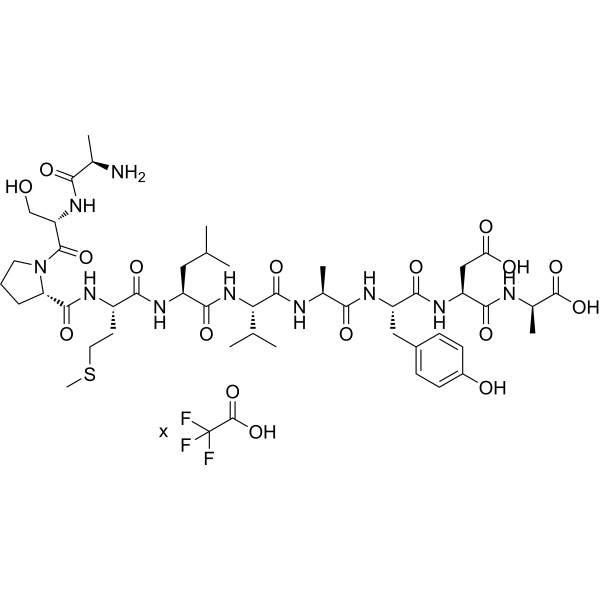
Reltecimod (AB-103) TFA is a T-cell-specific surface glycoprotein CD28 (TP44) antagonist. Reltecimod TFA has beneficial effects against different bacterial infections, their exotoxins and endotoxins, and ionizing radiation. Reltecimod TFA modulates the inflammatory response by targeting and attenuating the critical CD28/B7-2 co-stimulatory pathway, without inhibiting it. Reltecimod TFA can be used to research necrotizing soft-tissue infections (NSTIs) .
loading...
    loading...
Cat. No.: HY-W1130459
CAS No.: 1226777-45-2
Target:  

Liposome

Research Areas:  

Cancer

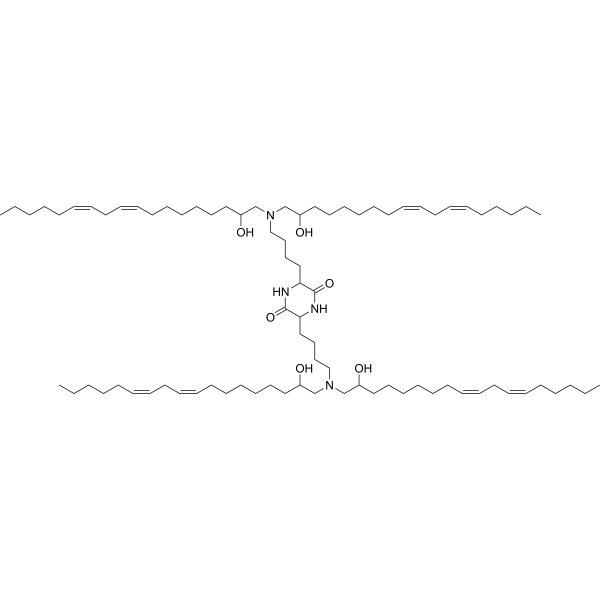
(R)-C12-200 is the (R)-isomer of C12-200 (HY-145405), an ionizable cationic lipid and helper lipid. (R)-C12-200 enables functional mRNA delivery to head and neck squamous cell carcinoma xenograft tumor cells in NU/J immunocompromised mice, with minimal off-target delivery to liver or spleen. (R)-C12-200 can be utilized in the formation of lipid nanoparticles and mRNA delivery .
loading...
    loading...
Cat. No.: HY-Y0030A
CAS No.: 874-24-8
Synonyms: 3-HPA
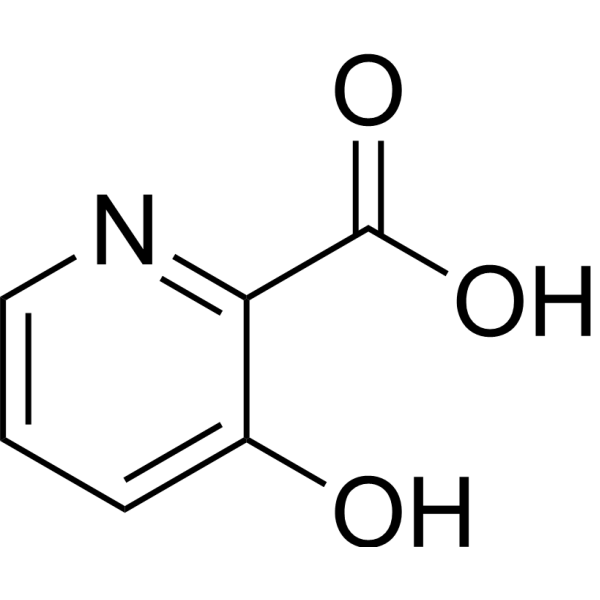
3-Hydroxypicolinic acid, matrix substance for MALDI-MS is a matrix. 3-Hydroxypicolinic acid, matrix substance for MALDI-MS coordinates with metal ions such as copper to form complexes with cytotoxic and antimycobacterial activity. 3-Hydroxypicolinic acid, matrix substance for MALDI-MS is used for the analysis of oligodeoxynucleotides in matrix-assisted laser desorption ionization time-of-flight mass spectrometry (MALDI-TOF MS). 3-Hydroxypicolinic acid, matrix substance for MALDI-MS is useful for nucleic acid analysis and anti-tuberculosis compound development .
loading...
    loading...
Cat. No.: HY-145795
CAS No.: 1883431-67-1
Purity:  ≥98.0%
Target:  

Liposome

Research Areas:  

Others

OF-02 is an ionizable lipid for mRNA delivery and a key component of lipid nanoparticles (LNPs). OF-02 is protonated in the acidic endosomal environment to promote endosomal escape of mRNA and efficiently induce protein expression in target cells. OF-02 relies on the pH-responsive membrane fusion properties to form a complex with mRNA and destroy the endosomal membrane structure to achieve mRNA release in the cytoplasm. OF-02 is mainly used in the development of mRNA vaccines, gene editing, and protein replacement therapy[1][2][3].
loading...
    loading...
Cat. No.: HY-183334
CAS No.: 3115524-78-9
TDP1-IN-5 is a tyrosyl-DNA phosphodiesterase 1 (TDP1) inhibitor with an IC50 of 2.2 μM. By targeting TDP1 both intracellularly and extracellularly, TDP1-IN-5 inhibits the NHEJ repair pathway, arrests the cell cycle at the G2/M phase, upregulates PIG3 to enhance ROS, and ultimately significantly potentiates ionizing radiation (IR)-induced DNA damage and apoptosis. TDP1-IN-5 can be used in the research of colorectal cancer .
loading...
    loading...
Cat. No.: HY-P11614
Target:  

Liposome

Research Areas:  

Cancer

LCA-H10 is a lithocholic acid-histidine decapeptide conjugate, a biocompatible lipid nanoparticle (LNP) additive that reduces ionizable lipid proportions, functions as an endosomal escape inducer, and enhances siRNA encapsulation. LCA-H10 increases hepatic accumulation of LNPs in mice after intravenous injection when incorporated into LiLNP-LH and reduces proinflammatory cytokines (IL-6, TNF, IL-1β) in mouse serum. LCA-H10 can be used for the research of prostate cancer .
loading...
    loading...
Cat. No.: HY-165604
CAS No.: 2639634-82-3
Target:  

Liposome

Research Areas:  

Others

C14-490 is an ionizable cationic lipid used for the formulation of lipid nanoparticles (LNPs) for mRNA delivery. C14-490 LNPs can be surface-functionalized with CD45 antibodies to enable targeted delivery to hematopoietic stem cells (HSCs), mediate efficient mRNA delivery and CRISPR-Cas9 gene editing in fetal HSCs in utero, with potent and durable genome modulation in HSCs and their progeny. C14-490 is a key component of the Systematically optimized Targeted Editing Machinery (STEM) LNPs for in vivo HSC gene editing applications .
loading...
    loading...
Cat. No.: HY-180573
Target:  

Arf Family GTPase

Research Areas:  

Cancer

ART5537 is a selective EXO1 inhibitor with a IC50 of 3.4 nM and a Kd of 6.8 nM. ART5537 exerts cellular homologous recombination (HR) inhibition with EC50 of 7.2 nM in HAP1 parental cells. ART5537 shows >200-fold selectivity over a panel of the wider nuclease superfamily. ART5537 exerts biological effects that are exclusively driven by EXO1 inhibition. ART5537 demonstrates sensitization to ionizing radiation and synergy with Olaparib (HY-10162). ART5537 can be used for research in breast cancer and colorectal adenocarcinoma .
loading...
    loading...
Cat. No.: HY-153737
Purity:  ≥98.0%
113-N16B is an ionizable cationic lipid that can be used for the synthesis of lipid nanoparticles. 113-N16B delivers mRNA to pulmonary endothelial cells. 113-N16B can be formulated as a component into hybrid lipid nanoparticles for lung-specific delivery of mRNA (including MFSD7C mRNA and luciferase mRNA) in mice. 113-N16B is applicable to research related to lymphangioleiomyomatosis, sickle cell disease, and hemolysis-induced lung injury .
loading...
    loading...
Cat. No.: HY-171900
Target:  

Liposome

Research Areas:  

Inflammation/Immunology

Lipid 114 is an ionizable cationic lipid with a pKa of approximately 6.8. Lipid 114 can be used to generate lipid nanoparticles (LNP) to deliver siRNA in vitro as well as in vivo. Lipid 114 LNPs encapsulating siRNA that targets IL-1β can reduce IL-1β expression in macrophages. Lipid 114 LNPs encapsulating siRNA that targets IL-1β also reduces hepatic and renal expression of IL-1β, as well as decreasing hepatic inflammation in mouse model with LPS-induced acute liver failure .
loading...
    loading...
Cat. No.: HY-159709
CAS No.: 2765519-47-7
Target:  

Liposome

Research Areas:  

Metabolic Disease

VL-422 is an ionizable cationic lipid. VL-422 delivers CRISPR complementary single-guide RNA (sgRNA) and Cas9 mRNA to enable in vitro and in vivo gene editing. LNPs containing VL-422 loaded with Cas9 mRNA and sgRNA targeting the ANGPTL3 gene induce the deletion of premature stop codons within the ANGPTL3 gene in the liver of cynomolgus monkeys. Loss-of-function of ANGPTL3 leads to decreased levels of LDL, HDL and cholesterol in plasma. The VL-422 delivery system can be used for the research of gene editing strategies targeting lipid metabolism diseases .
loading...
    loading...
Cat. No.: HY-185751
CAS No.: 2760467-77-2
Target:  

Liposome

Research Areas:  

Cancer

10A1P16 is an ionizable phospholipid composed of a tertiary amine, a phosphate group and three hydrophobic tails. As a spleen-selective RNA delivery vector, 10A1P16 successfully transfects approximately 30% of splenic macrophages and 6% of splenic B cells in vivo. 10A1P16 can be used to prepare spleen-selective 10A1P16-MDOA lipid nanoparticles, which effectively mediate mRNA delivery and gene editing in mouse models. This delivery system retains potent spleen-targeted mRNA delivery efficacy and can be applied to ovarian cancer research .
loading...
    loading...
Cat. No.: HY-185760
Target:  

Liposome

Research Areas:  

Others

F-L319 is an ionizable lipid and spleen-targeting mRNA delivery vector. F-L319 can be formulated into lipid nanoparticles (LNPs) to drive spleen-restricted reporter protein expression in mice. F-L319 modulates mRNA encapsulation efficiency, cellular uptake efficiency, and delivery efficiency, with effects varying depending on the composition of LNP formulations. When prepared as pure LNPs, F-L319 shows poor mRNA delivery efficiency in cells; in contrast, hybrid LNPs containing F-L319 and L319 significantly enhance mRNA delivery efficiency in cells .
loading...
    loading...
Cat. No.: HY-126359
CAS No.: 27098-24-4
Purity:  ≥98.0%
Synonyms: SLPC; 18:0-18:2 PC
1-Stearoyl-2-linoleoyl-sn-glycero-3-phosphocholine (SLPC; 18:0-18:2 PC) is an endogenous phospholipid marker molecule in the glycerophospholipid metabolic pathway. 1-Stearoyl-2-linoleoyl-sn-glycero-3-phosphocholine is a core component of the phospholipid bilayer of biological membranes and a key responsive lipid for radiation injury and cardiometabolic diseases. 1-Stearoyl-2-linoleoyl-sn-glycero-3-phosphocholine constitutes the phospholipid bilayers of cell membranes and high-density lipoprotein (HDL), and regulates the core activity of lipoprotein functional homeostasis. The content of 1-Stearoyl-2-linoleoyl-sn-glycero-3-phosphocholine in mouse serum shows a significant dose-dependent decrease with increasing ionizing radiation dose, and its level in human HDL also decreases significantly in metabolic syndrome. 1-Stearoyl-2-linoleoyl-sn-glycero-3-phosphocholine can serve as a biological dosimeter marker for ionizing radiation injury, and is used for rapid and accurate assessment of radiation absorbed dose in exposed individuals. 1-Stearoyl-2-linoleoyl-sn-glycero-3-phosphocholine can also act as a lipidomics research target for cardiometabolic diseases such as lipid metabolic syndrome and early-onset coronary heart disease .
loading...
    loading...
Cat. No.: HY-185984
Research Areas:  

Others

a12k4E-Ca is a C-terminal glutamate-modified peptidogenic ionizable lipid that can be used for the preparation of lipid nanoparticles (LNPs). a12k4E-Ca preferentially accumulates in the spleen in vivo, acts as a carrier to mediate spleen-selective mRNA delivery, and enables spleen-specific Cre recombinase-mediated gene editing. a12k4E-Ca restores serum biochemical parameters and cytokines/chemokines. a12k4E-Ca can be used in studies related to LNP preparation .
loading...
    loading...
Cat. No.: HY-164158
CAS No.: 240491-19-4
Target:  

Drug Derivative

Research Areas:  

Others

N,N-Dimethyl psychosine is a derivative of Psychosine (HY-136490). N,N-Dimethyl psychosine can be used as an internal standard compound to quantify Psychosine in alkaline-treated lipid extracts .
loading...
    loading...
Cat. No.: HY-184793
CAS No.: 16260-09-6
Research Areas:  

Others

Oleyl palmitamide is a fatty acid amide and slip additive. Oleyl palmitamide exerts a lubricating effect to prevent film blocking and reduce static charges in food packaging plastics .
loading...
    loading...
Cat. No.: HY-185985
CAS No.: 3113145-60-8
Target:  

Liposome

Research Areas:  

Neurological Disease

Am-Ka12K4 is a weakly positively charged peptide-based ionizable lipid. Am-Ka12K4 induces membrane disruption under endosomal pH conditions and possesses high lipid fusion capacity. Am-Ka12K4 forms tightly packed, stable lipid nanoparticles. Am-Ka12K4 mediates in vivo mRNA delivery, exhibits inherent liver tropism, and can be modified to adjust organ tropism, enabling selective mRNA delivery to the spleen, lung, or thymus. Am-Ka12K4 is applicable to research related to repetitive mild traumatic brain injury .
loading...
    loading...
Cat. No.: HY-W391671
CAS No.: 1333317-99-9
Research Areas:  

Others

Poly[bis(4-phenyl)(2,4,6-trimethylphenyl)amine] is a poly(triarylamine) that is an organic p-type semiconductor with hole mobilities ranging from 10 3 to 10 2 cm 2/V/s, which significantly improves carrier mobility. This stable, glassy polymer has an ionization potential suitable for thick film diodes. Committed to providing green alternatives that meet one or more of the 12 principles of green chemistry, this material falls into the enabling category of green alternatives, in line with the principle of "energy efficient design". In addition, while hole transport organic materials like these ensure optimal energy level alignment with the absorber layer for efficient charge collection, they can be susceptible to degradation under ambient conditions.
loading...
    loading...
Cat. No.: HY-153924
CAS No.: 319003-15-1
Research Areas:  

Metabolic Disease

Di-22:6-BMP is a bisphospholipid and also a structural isomer of phosphatidylglycerol. Di-22:6-BMP serves as a biomarker for drug-induced phospholipidosis in rats .
loading...
    loading...

