2729 Results for "

Complexation

" in MedChemExpress (MCE) Product Catalog:
Products (2729)

2729 Results for "Complexation" in MCE Product Catalog:

Cat. No.: HY-181762
Multitarget AD-IN-6 (Compound 39) is a multi-target inhibitor, with an IC50 of 15.54 μM against PDE4B, 15.15 μM against PDE7A, 8.39 μM against PDE3A, and a Kd of 37.7 μM against CHIT1. Multitarget AD-IN-6 acts as a TRPA1 antagonist, reduces the level of the NLRP3 inflammasome multiprotein complex to inhibit its activation, while inhibiting PDE4B, PDE7A and CHIT1, and decreasing the phosphorylation of NF-κB. Multitarget AD-IN-6 improves the pathology of elastase-induced emphysema in mice. Multitarget AD-IN-6 is applicable for the research of chronic obstructive pulmonary disease .
loading...
    loading...
Cat. No.: HY-182331
CAS No.: 3059574-58-9
WCF-598 is a RXRγ (Kd: 234.2 nM) PROTAC degrader. WCF-598 induces RXRγ degradation via the ubiquitin-proteasome pathway and binds directly to RXRγ. WCF-598 indirectly induces AR-V7 degradation, impairs the stability of the RXRγ-AR-V7 complex, downregulates AR-V7 levels, and inhibits the transcription of downstream target genes of AR-V7. WCF-598 induces tumor cell apoptosis, inhibits cell proliferation, activates the p53 signaling pathway, and suppresses cell cycle progression. WCF-598 can be used for the research of prostate cancer .
loading...
    loading...
Cat. No.: HY-183105
CAS No.: 2133291-32-2
Research Areas:  

Cancer

DC551040 is an orally active and selective lysine demethylase 1 (LSD1) inhibitor with a human IC50 of 2.14 nM. DC551040 binds to LSD1 via π-π stacking with Trp552, polar interactions with Phe538, and covalent adduct formation with FAD, and disrupts the LSD1-GFI1B-CoREST complex. DC551040 induces H3K4me2 accumulation, apoptosis, and cell differentiation, activates STAT5, NF-κB, AKT, and IL6-STAT3 pathways, and upregulates IL6 expression. DC551040 can be used for the research of acute myeloid leukemia .
loading...
    loading...
Cat. No.: HY-187102
CAS No.: 19866-38-7
Research Areas:  

Metabolic Disease

2-Hydrazinyl-3-methylbutanoic acid is a diamine oxidase (DAO) inhibitor. 2-Hydrazinyl-3-methylbutanoic acid acts as a non-competitive inhibitor of diamine oxidase (with histamine as the substrate), achieving an inhibition rate of up to 76%. This inhibition can be prevented by pre-incubation with 2-Ketoglutaric acid (HY-W013636) to form a non-inhibitory complex. 2-Hydrazinyl-3-methylbutanoic acid also inhibits glutamate decarboxylase and 5-hydroxytryptophan decarboxylase, and exhibits moderate inhibitory activity against monoamine oxidase. 2-Hydrazinyl-3-methylbutanoic acid can be used in studies related to amino acid metabolic enzymes .
loading...
    loading...
Cat. No.: HY-189151
CAS No.: 3057302-21-0
Research Areas:  

Cancer

PROTAC HDAC8 Degrader-5 is a selective HDAC8 PROTAC degrader that mediates ubiquitination and proteasomal degradation through the formation of a ternary complex. PROTAC HDAC8 Degrader-5 degrades HDAC8 with a DC50 of 1.8 nM in MDA-MB-231 cells and a DC50 of 4.7 nM in Jurkat cells. PROTAC HDAC8 Degrader-5 inhibits cancer cell migration and proliferation, induces apoptosis through caspase 3/7 activation, and increases acetylated SMC3 and α-tubulin. PROTAC HDAC8 Degrader-5 is useful for cancer-related research, such as leukemia, triple-negative breast cancer, etc. .
loading...
    loading...
Cat. No.: HY-D3125
Target:  

Fluorescent Dye

Research Areas:  

Others

NtHzBtd is a fluorescent probe for detecting Fe 3+. NtHzBtd is applicable to the selective fluorescent detection of Fe 3+ ions and live cell imaging studies. NtHzBtd can selectively coordinate with Fe 3+ to form a 1:1 complex, triggering chelation enhanced quenching (CHEQ) and intramolecular charge transfer (ICT) processes, which result in fluorescence turn-off, thereby enabling sensitive detection of Fe 3+ and live cell fluorescence imaging. After binding to Fe 3+, NtHzBtd reduces fluorescence intensity, exhibits a rapid response property, with a limit of detection of 0.036 μM and a response time of approximately 55 s. The detection wavelengths are Ex/Em = 334/401 nm (solution system) .
loading...
    loading...
Cat. No.: HY-DY2024
Target:  

Fluorescent Dye

Research Areas:  

Neurological Disease

0.5% Evans Blue Staining Solution is an azo dye solution that strongly binds to serum albumin to form a high-molecular-weight tracer complex. 0.5% Evans Blue Staining Solution can passively leak with albumin and produce color when the blood-brain barrier or vascular barrier is damaged in vivo, and it is used for permeability assessment. 0.5% Evans Blue Staining Solution is excluded by living cells but enters dead cells to stain them in vitro due to the loss of membrane integrity in dead cells. 0.5% Evans Blue Staining Solution can be used for studies related to the identification of dead/necrotic cells and blood-brain barrier (BBB) permeability .
loading...
    loading...
Cat. No.: HY-P990610

Target:  

Akt mTOR PI3K

Research Areas:  

Cancer

KHK-2898 is a monoclonal antibody targeting CD98, which binds to the extracellular domain of CD98 on the tumor cell membrane in a non-covalent antigen-specific mode. KHK-2898 can disrupt the heterodimeric complex formed by CD98 with LAT1 and xCT light chains, reduce the amino acid uptake capacity of tumor cells, block the PI3K/AKT/mTOR proliferative signaling cascade, and mediate antibody-dependent cytotoxicity. KHK-2898 can be used for cancer-related research. The isotype control of KHK-2898 can be found in Human IgG1 kappa, Isotype Control (HY-P99001) .
loading...
    loading...
Cat. No.: HY-P992382
IC 100 is a humanized IgG4κ monoclonal antibody targeting apoptosis-associated speck-like protein (ASC) with blood-brain barrier permeability. IC 100 specifically inhibits ASC after being endocytosed via its Fc segment, blocks ASC polymerization and inflammasome activation, suppresses IL-1β release, forms complexes with ASC and TRIM21, and evades TRIM21-mediated proteasomal degradation. IC 100 alleviates symptoms associated with autoimmune encephalomyelitis, reduces immune cell infiltration and microglial activation in the mouse EAE model. IC 100 is suitable for research on neuroinflammatory and inflammasome-related diseases such as multiple sclerosis. Isotype comparison: HY-P99003 .
loading...
    loading...
Cat. No.: HY-W010514
CAS No.: 1460-57-7
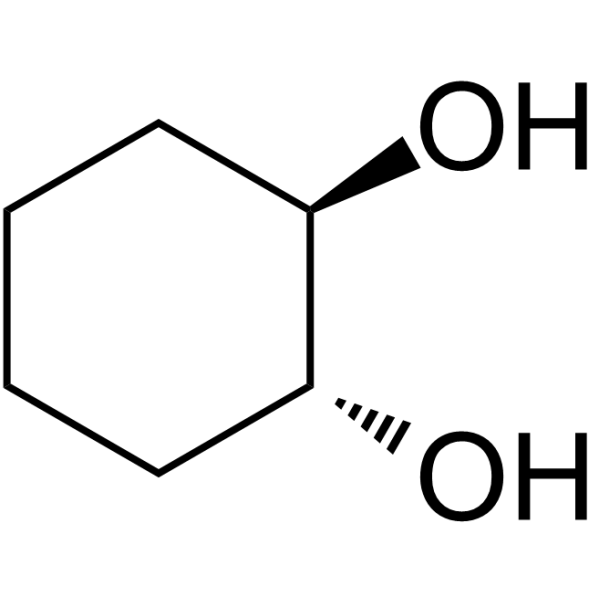
trans-Cyclohexane-1,2-diol (TCHD) is a transient dilator of the nuclear pore complex (NPC). By interacting with the hydrophobic core (FG nucleoporin) of the NPC, trans-Cyclohexane-1,2-diol can disrupt the NPC structure and reversibly increase the permeability of the nuclear pore, allowing macromolecules larger than 40 kDa (such as plasmid DNA) to enter the cell nucleus by passive diffusion, thereby enhancing the nuclear import efficiency of non-viral vectors. trans-Cyclohexane-1,2-diol can improve the efficiency of in vitro electrotransfection or lipid-mediated gene transfection, especially significantly increasing gene expression in differentiated airway epithelial cells .
loading...
    loading...
Cat. No.: HY-W127776
CAS No.: 176736-49-5
Synonyms: Ethylenediaminetetraacetic acid zinc disodium tetrahydrate
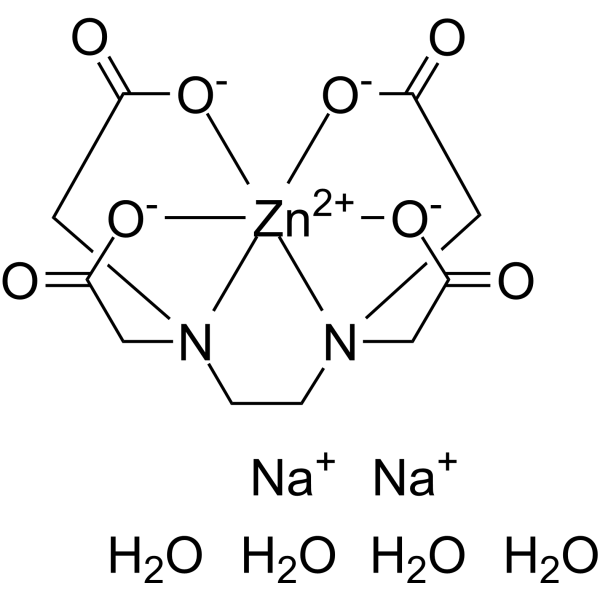
Zn(II)-EDTA (Ethylenediaminetetraacetic acid zinc) disodium tetrahydrate is a coordinating agent. Zn(II)-EDTA disodium tetrahydrate coordinates with Zn 2+ to modify its solvated structure, provides pre-synthesized EDTA-Zn complexes that release Zn 2+ to repair zinc anode defects under interfacial electric field, adsorbs onto zinc anode surface to block oxygen and water molecules, inhibits corrosion and hydrogen evolution reactions, promotes uniform Zn 2+ deposition, suppresses zinc dendrite formation, and modulates the hydrogen bonding network within the electrolyte. Zn(II)-EDTA disodium tetrahydrate acts as an electrolyte additive to enhance reversibility and stability of zinc anodes in aqueous zinc-ion batteries .
loading...
    loading...
Cat. No.: HY-10279
CAS No.: 179755-65-8
Target:  

Factor Xa

Research Areas:  

Cardiovascular Disease

YM-60828 hydrochloride is an orally active, selective and competitive factor Xa inhibitor with a Ki of 1.3 nM and an IC50 of 2.3 nM. YM-60828 hydrochloride inhibits thrombus formation and platelet aggregation. YM-60828 hydrochloride can be used for the research of venous thrombosis, arterial thrombosis, and thromboembolic disorders .
loading...
    loading...
Cat. No.: HY-10281
CAS No.: 209187-02-0
Target:  

Factor Xa

Research Areas:  

Cardiovascular Disease

YM-60828 methanesulfonate is an orally active, selective and competitive factor Xa inhibitor with a Ki of 1.3 nM and an IC50 of 2.3 nM. YM-60828 methanesulfonate inhibits thrombus formation and platelet aggregation. YM-60828 methanesulfonate can be used for the research of venous thrombosis, arterial thrombosis, and thromboembolic disorders .
loading...
    loading...
Cat. No.: HY-173561
CAS No.: 3109377-60-5
Research Areas:  

Cancer

MS115 is a selective PRMT5/MEP50 PROTAC degrader, with DC50 values of 17.4 nM and 11.3 nM for PRMT5 and MEP50, respectively. MS115 promotes PRMT5/MEP50 ubiquitination and degradation. MS115 shows anticancer activity against breast cancer .
loading...
    loading...
Cat. No.: HY-181391
CAS No.: 2653338-71-5
Research Areas:  

Cancer

PROTAC EZH2 Degrader-34 (compound E7 (13)) is an EZH2-target PROTAC degrader with a human EZH2 IC50 of 6.30 μM. PROTAC EZH2 Degrader-34 can be used for the research of pfeiffer cancer, prostate cancer .
loading...
    loading...
Cat. No.: HY-181765
TLR4/NF-κB-IN-2 is an orally active TLR4/NF-κB inhibitor and Nrf2/HO-1 activator. TLR4/NF-κB-IN-2 combats oxidative stress and exerts anti-inflammatory effects by regulating the Nrf2/HO-1 and TLR4/NF-κB pathways. TLR4/NF-κB-IN-2 reduces aggregation and protects neurons. TLR4/NF-κB-IN-2 can be used in the research of Alzheimer's disease .
loading...
    loading...
Cat. No.: HY-183354
Research Areas:  

Cancer

HLC40 is a MLL1 histone methyltransferase inhibitor with an IC50 of 0.82 μM by binding to WDR5. HLC40 inhibits proliferation of cancer cells, induces apoptosis and upregulates cleaved caspase-3 levels. HLC40 exhibits antitumor efficacy in a murine AML xenograft model .
loading...
    loading...
Cat. No.: HY-183581
CAS No.: 3064481-29-1
Research Areas:  

Cancer

USP1-IN-18 is an orally active USP1 inhibitor with a human IC50 of 17.0 nM. USP1-IN-18 inhibits USP1-UAF1 deubiquitinase activity and drives ubiquitinated PCNA accumulation. USP1-IN-18 induces DNA damage, replication stress, and G2-M phase cell cycle arrest. USP1-IN-18 can be used for the research of triple-negative breast cancer .
loading...
    loading...
Cat. No.: HY-184195
PROTAC AR Degrader-13 is a proteolysis-targeting chimera (PROTACs) that targets the androgen receptor (AR). PROTAC AR Degrader-13 has a DC50 of 0.90 nM in LNCaP cells and a DC50 of 0.23 nM in hDPC cells. PROTAC AR Degrader-13 induces AR degradation, downregulates TGF-β1 expression, upregulates β-catenin levels, and restores the Wnt/β-catenin pro-proliferation signaling in hair follicles. In a testosterone-induced androgenetic alopecia mouse model, PROTAC AR Degrader-13 accelerates hair regeneration rate, increases hair density and hair diameter. PROTAC AR Degrader-13 can be used for the research of androgenetic alopecia .
loading...
    loading...
Cat. No.: HY-189149
Target:  

Beta-secretase

Research Areas:  

Neurological Disease

BACE1-IN-16 is a BACE1 inhibitor with pIC50 values ranging from 7.09 to 9.70. BACE1-IN-16 can be used for research on Alzheimer's disease .
loading...
    loading...

