2543 Results for "

Class

" in MedChemExpress (MCE) Product Catalog:
Products (2543)

2543 Results for "Class" in MCE Product Catalog:

Cat. No.: HY-P704960
Purity:  ≥ 95%, as determined by reducing SDS-PAGE.
Synonyms: Mafa-AG; MHC Class I antigen; CD3E; T3E; CD3 Epsilon Subunit Of T-Cell Receptor Complex; T-Cell Antigen Receptor Complex, Epsilon Subunit Of T3; T-Cell Surface Glycoprotein CD3 Epsilon Chain; CD3e Molecule; CD3-Epsilon; CD3e Antigen; CD3epsilon; CD3E Prot
Species:  
Mouse
Source:  
HEK293
loading...
    loading...
Cat. No.: HY-P704992
Purity:  ≥ 90%, as determined by reducing SDS-PAGE.
Synonyms: Mafa-AG; MHC Class I antigen; CD3E; T3E; CD3 Epsilon Subunit Of T-Cell Receptor Complex; T-Cell Antigen Receptor Complex, Epsilon Subunit Of T3; T-Cell Surface Glycoprotein CD3 Epsilon Chain; CD3e Molecule; CD3-Epsilon; CD3e Antigen; CD3epsilon; CD3E Prot
Species:  
Cynomolgus
Source:  
HEK293
loading...
    loading...
Cat. No.: HY-P705111
Purity:  ≥ 90%, as determined by reducing SDS-PAGE.
Synonyms: Mafa-AG; MHC Class I antigen; CD3E; T3E; CD3 Epsilon Subunit Of T-Cell Receptor Complex; T-Cell Antigen Receptor Complex, Epsilon Subunit Of T3; T-Cell Surface Glycoprotein CD3 Epsilon Chain; CD3e Molecule; CD3-Epsilon; CD3e Antigen; CD3epsilon; CD3E Prot
Species:  
Mouse
Source:  
HEK293
loading...
    loading...
Cat. No.: HY-P705226
Purity:  ≥ 90%, as determined by reducing SDS-PAGE.
Synonyms: IFNLR1; IFN-Lambda Receptor 1; Prev. IL28RA; IL-28R-Alpha; CRF2/12; CRF2-12; IL-28R1; IL-28RA; IFNLR; LICR2; Interleukin 28 Receptor, Alpha (Interferon, Lambda Receptor); Class II Cytokine Receptor CRF2/12; Likely Interleukin Or Cytokine Receptor 2; Inter
Species:  
Human
Source:  
HEK293
loading...
    loading...
Cat. No.: HY-P81475A
Synonyms: TCF3; BHLHB21, E2A, ITF1; Transcription factor E2-alpha; Class B basic helix-loop-helix protein 21 (bHLHb21); Immunoglobulin enhancer-binding factor E12/E47; Immunoglobulin transcription factor 1; Kappa-E2-binding factor; Transcription factor 3 (TCF-3); Transcription factor ITF-1

Host:  

Rabbit

Application:  

IHC-P

Reactivity:  

Human

loading...
    loading...
Cat. No.: HY-P811000
Synonyms: UNQ5793/PRO19598/PRO19822, IL22RA2, Interleukin-22 receptor subunit alpha-2, IL-22 receptor subunit alpha-2, IL-22R-alpha-2, IL-22RA2, Cytokine receptor Class-II member 10, Cytokine receptor family 2 member 10, Interleukin-22-binding protein, ZcytoR16, CRF2-10, CRF2-S1, IL-22BP, IL22BP

Host:  

Rabbit

Application:  

WB, ICC/IF

Reactivity:  

Human, Mouse, Rat

loading...
    loading...
Cat. No.: HY-170944
Target:  

HSP Apoptosis Caspase

Research Areas:  

Cancer

BAG3/HSP70-IN-1 (compound 16) is the first-in-class BAG3 and HSP70 dual inhibitor. BAG3/HSP70-IN-1 binds to BAG3 full-length, BAG3-BD, and HSP70 proteins with Kds of 33.10 μM, 27.90 μM, and 33.80 μM, respectively. BAG3/HSP70-IN-1 inhibits HeLa cells with an IC50 of 49.46 μM. BAG3/HSP70-IN-1 induces apoptosis by activating caspase 3 and caspase 9 levels in HeLa cells. BAG3/HSP70-IN-1 elevates p21 levels while reduces FOXM1 expression in HeLa cells. BAG3/HSP70-IN-1 decreases ATPase activity .
loading...
    loading...
Cat. No.: HY-B0110
CAS No.: 60282-87-3
Synonyms: SHB 331; WL 70
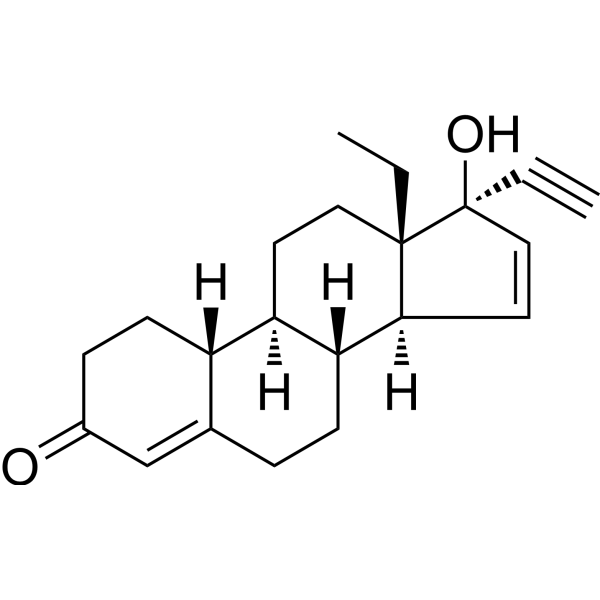
Gestodene (SHB 331; WL 70) is an orally active synthetic progestogen compound of the 19-nortestosterone class. Gestodene binds with high affinity to the progesterone receptor, inhibits 5α-reductase, binds to androgen and aldosterone receptors, and inactivates CYP3A. Gestodene acts as a positive allosteric modulator of PAR1, enhances PAR1-mediated signaling pathways, and is capable of increasing the activation potency of PAR1-AP toward PAR1, thereby promoting ERK1/2 phosphorylation, receptor internalization, cell morphological changes, and human platelet aggregation. Gestodene and its A-ring reduced metabolites promote the proliferation, differentiation, and mineralization of neonatal rat osteoblasts. Gestodene itself has no binding capacity for estrogen receptors, and this osteogenic activity depends on intracellular metabolism to generate A-ring reduced products with estrogen-like agonistic activity. Gestodene is useful for research on diseases related to progesterone secretion and diseases related to thrombosis .
loading...
    loading...
Cat. No.: HY-B1953R
CAS No.: 111988-49-9
Research Areas:  

Infection

Thiacloprid (Standard) is the analytical standard of Thiacloprid. This product is intended for research and analytical applications. Thiacloprid is an orally active neurotoxic insecticide and also a nAChR agonist. Thiacloprid reduces the viability of healthy cells, depletes reduced glutathione, and increases MDA levels, thereby inducing cytotoxicity and oxidative stress damage. In practical applications, Thiacloprid has lower acute toxicity to honeybees than other compounds of the same class such as Imidacloprid (HY-B0838), but it still significantly impairs the learning and memory function, immune capacity and survival status of honeybees. Thiacloprid induces intestinal microbial dysbiosis and reduces survival rate in middle-aged honeybees, increases the risk of premature collapse in bumblebee colonies, and significantly decreases the final colony weight and reproductive output. Thiacloprid is used in broad-spectrum agricultural pest control, often alone or in combination with Deltamethrin (HY-B1971), and meets the pest management needs of various crops including potatoes, cabbages, various fruits and vegetables, and nuts .
loading...
    loading...
Cat. No.: HY-L237
338 compounds

Pattern Recognition Receptors (PRRs) are a crucial class of protein molecules expressed in cells of the innate immune system. The core function of Pattern Recognition Receptors is to recognize Pathogen-Associated Molecular Patterns (PAMPs) and Damage-Associated Molecular Patterns (DAMPs). Upon recognizing and binding to PAMPs or DAMPs, PRRs rapidly initiate intracellular signaling pathways (such as the NF-κB, IRF, and inflammasome pathways). This triggers the production of inflammatory factors, chemokines, and type I interferons, thereby initiating inflammatory responses to eliminate pathogens or repair damage. PRRs represent the body's first line of defense against infection, and the rapidity and broad specificity of their response are crucial for host survival. However, aberrant activation of PRR signaling is also a cause of many chronic inflammatory diseases, autoimmune disorders, and neurodegenerative diseases. Therefore, precisely regulating PRR activity has become a key therapeutic strategy for these conditions.

MCE has cataloged 338 inhibitors targeting key PRRs, such as NLRs, TLRs, C-type Lectin Receptors (CLRs), and cGAS, to support drug discovery efforts for chronic inflammatory diseases.

Cat. No.: HY-L161
1,416 compounds

Cytokines are a kind of low molecular soluble proteins synthesized and secreted by immunogen, mitogen or other factors. They have functions of regulating innate and adaptive immune responses, promoting hematopoiesis, stimulating cell activation, proliferation and differentiation. The process of releasing a large number of cytokines is also called “Cytokine storm”, which can cause damage to many tissues and organs in the body. Cytokine is involved in the pathogenesis of many human diseases, including cancer, diabetes, chronic inflammatory diseases and so on. Cytokine inhibitors are a class of essential compounds that act by directly inhibiting the synthesis and release of cytokine or blocking the binding of cytokine to their receptors. Cytokine inhibitors are important compounds for the study of tumor and autoimmune diseases.

MCE designs a unique collection of 1,416 cytokine inhibitors, mainly targeting the receptor interleukin (IL), colony-stimulating factor (CSF), interferon (IFN), tumor necrosis factor (TNF), growth factor (GF) and chemokine, which is an effective tool for development and research of anti-cancer, anti-chronic inflammatory diseases and anti-autoimmune diseases compounds.

Cat. No.: HY-L262
4,412 compounds

Natural products are small-molecule compounds produced in nature, derived from animals, plants, and microorganisms, including both primary and secondary metabolites. With their structural diversity and favorable biological activities, natural products have long been an important source for drug discovery. Traditional natural product research has often focused on isolating single active components, whereas metabolomics emphasizes a holistic approach—comprehensively detecting all metabolites in a sample and systematically capturing both known and unknown constituents. Consequently, mass spectrometry‑based metabolomics databases have become a key technological support for screening known components and identifying unknown compounds from natural sources.

MCE Mass Spectrometry Natural Product Library contains 4,412 natural products, covering multiple structural classes, including sugars and glycosides, phenylpropanoids, quinones, flavonoids, terpenoids, etc. All compounds have undergone rigorous quality control by LC/MS and other analytical methods, and can serve as high‑purity reference standards for metabolite identification.

Cat. No.: HY-L058
1,379 compounds

Glycolysis is a series of metabolic processes by which one molecule of glucose is catabolized to two molecules of pyruvate with a net gain of two ATP. Glycolysis takes place in 10 steps and catalyzed by a series of enzyme, such as hexokinase, Glucose-6-phosphate isomerase, Phosphofructokinase, etc. Glycolysis is used by all cells in the body for energy generation.

Most cancer cells exhibit increased glycolysis and use this metabolic pathway for generation of ATP as a main source of their energy supply. This phenomenon is known as the Warburg effect and is considered as one of the most fundamental metabolic alterations during malignant transformation. Because increased aerobic glycolysis is commonly seen in a wide spectrum of human cancers, development of novel glycolytic inhibitors as a new class of anticancer agents is likely to have broad therapeutic applications.

MCE provides a unique collection of 1,379 glycolysis compounds that mainly target hexokinase, glucokinase, enolase, pyruvate kinase, PDHK, etc. MCE Glycolysis Compound Library is a useful tool for glucose metabolism research and anti-cancer drug discovery.

Cat. No.: HY-L011
2,278 compounds

Most of molecules enter or leave cells mainly via membrane transport proteins, which play important roles in several cellular functions, including cell metabolism, ion homeostasis, signal transduction, the recognition process in the immune system, energy transduction, etc. There are three major types of transport proteins, ATP-powered pumps, channel proteins and transporters. Transport proteins such as channels and transporters play important roles in the maintenance of intracellular homeostasis, and mutations in these transport protein genes have been identified in the pathogenesis of a number of hereditary diseases. In the central nervous system, ion channels have been linked to, but not limited to, many diseases such asataxias, paralyses, epilepsies, and deafness. This indicates the roles of ion channels in the initiation and coordination of movement, sensory perception, and encoding and processing of information. Ion channels are a major class of drug targets in drug development.

MCE designs a unique collection of 2,278 smal-molecule modulators that can be used for the research of Ion Channel and Membrane Transporter or high throughput screening (HTS) related drug discovery.

Cat. No.: HY-P70434
Purity:  ≥ 95%, as determined by reducing SDS-PAGE.
Synonyms: Mafa-AG; MHC Class I antigen; CD3E; T3E; CD3 Epsilon Subunit Of T-Cell Receptor Complex; T-Cell Antigen Receptor Complex, Epsilon Subunit Of T3; T-Cell Surface Glycoprotein CD3 Epsilon Chain; CD3e Molecule; CD3-Epsilon; CD3e Antigen; CD3epsilon; CD3E Prot
Species:  
Human
Source:  
HEK293
loading...
    loading...
Cat. No.: HY-P72727
Purity:  ≥ 95%, as determined by reducing SDS-PAGE.
Synonyms: Mafa-AG; MHC Class I antigen; CD3E; T3E; CD3 Epsilon Subunit Of T-Cell Receptor Complex; T-Cell Antigen Receptor Complex, Epsilon Subunit Of T3; T-Cell Surface Glycoprotein CD3 Epsilon Chain; CD3e Molecule; CD3-Epsilon; CD3e Antigen; CD3epsilon; CD3E Prot
Species:  
Cynomolgus
Source:  
HEK293
loading...
    loading...
Cat. No.: HY-P74326
Purity:  ≥ 95%, as determined by reducing SDS-PAGE.
Synonyms: CD1D; HMC Class I Antigen-Like Glycoprotein CD1D; CD1d Molecule; T-Cell Surface Glycoprotein CD1d; Antigen-Presenting Glycoprotein CD1d; Thymocyte Antigen CD1D; CD1D Antigen, D Polypeptide; CD1d; CD1d Antigen; R3; R3G1; B2M; Beta 2-Microglobulin; Beta-2-M
Species:  
Human
Source:  
HEK293
loading...
    loading...
Cat. No.: HY-P74837
Purity:  ≥ 95%, as determined by reducing SDS-PAGE.
Synonyms: IL10RB; CDW210B; Prev. D21S58; IL-10 Receptor Subunit Beta; Prev. D21S66; IL-10R Subunit Beta; Prev. CRFB4; IL-10R Subunit 2; IL-10R2; IL-10RB; CRF2-4; Cytokine Receptor Family II, Member 4; Interleukin-10 Receptor Subunit Beta; Cytokine Receptor Class-II
Species:  
Mouse
Source:  
HEK293
loading...
    loading...
Cat. No.: HY-P74838
Purity:  ≥ 90%, as determined by reducing SDS-PAGE.
Synonyms: IL10RB; CDW210B; Prev. D21S58; IL-10 Receptor Subunit Beta; Prev. D21S66; IL-10R Subunit Beta; Prev. CRFB4; IL-10R Subunit 2; IL-10R2; IL-10RB; CRF2-4; Cytokine Receptor Family II, Member 4; Interleukin-10 Receptor Subunit Beta; Cytokine Receptor Class-II
Species:  
Mouse
Source:  
HEK293
loading...
    loading...
Cat. No.: HY-P74839
Purity:  ≥ 90%, as determined by reducing SDS-PAGE.
Synonyms: IL10RB; CDW210B; Prev. D21S58; IL-10 Receptor Subunit Beta; Prev. D21S66; IL-10R Subunit Beta; Prev. CRFB4; IL-10R Subunit 2; IL-10R2; IL-10RB; CRF2-4; Cytokine Receptor Family II, Member 4; Interleukin-10 Receptor Subunit Beta; Cytokine Receptor Class-II
Species:  
Human
Source:  
HEK293
loading...
    loading...

