283 Results for "

loop

" in MedChemExpress (MCE) Product Catalog:
Products (283)

283 Results for "loop" in MCE Product Catalog:

Cat. No.: HY-134560
CAS No.: 147795-40-2
Purity:  99.62%
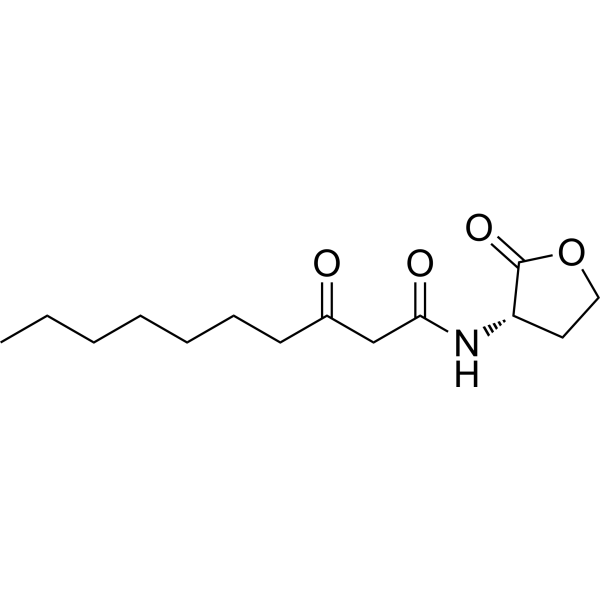
Synonyms: 3-Oxo-C10-HSL
N-(3-Oxodecanoyl)-L-homoserine lactone (3-Oxo-C10-HSL) is a bacterial signaling molecule with quorum-sensing agonistic activity and competitive antagonistic activity against short-chain AHLs. N-(3-Oxodecanoyl)-L-homoserine lactone binds to VanR to form a complex, activates the transcription of the vanI gene, and establishes an autoregulatory loop for its own synthesis. N-(3-Oxodecanoyl)-L-homoserine lactone inhibits the synthesis of violacein induced by short-chain AHLs. N-(3-Oxodecanoyl)-L-homoserine lactone serves as the sole carbon and nitrogen source for Rhodococcus erythropolis W2 and can be completely degraded. N-(3-Oxodecanoyl)-L-homoserine lactone can be used in studies related to bacterial infections .
loading...
    loading...
Cat. No.: HY-159805
CAS No.: 2813260-27-2
Target:  

CDK

Research Areas:  

Cancer

CDK2-IN-31 is a CCNE1:CDK2 complex inhibitor with an IC50 of 0.13 μM. CDK2-IN-31 binds to a cryptic allosteric pocket at the CCNE1:CDK2 interface, inducing structural rearrangements of the CDK2 A-loop that disrupt the kinase's active conformation and interfere with substrate binding. CDK2-IN-31 inhibits phosphorylation of retinoblastoma protein 1 (RB1) in CCNE1-dependent ovarian cancer cells. CDK2-IN-31 impairs coenrichment of protein PRC1 with CCNE1-N112C:CDK2 complexes. CDK2-IN-31 can be used for the research of ovarian cancer .
loading...
    loading...
Cat. No.: HY-161577
CAS No.: 701231-39-2
Target:  

Bcl-2 Family

Research Areas:  

Cancer

BFC1103 is a small-molecule compound whose primary mechanism of action involves interaction with a specific domain of Bcl-2, particularly its loop domain. This interaction induces a conformational change in Bcl-2, exposing its BH3 (Bcl-2 homology 3) domain, thereby switching Bcl-2's function from anti-apoptotic to pro-apoptotic. The cell death induced by BFC1103 is dependent on the presence of Bax or Bak, both of which are key proteins involved in the intrinsic apoptotic pathway mediated by mitochondria. BFC1103 has successfully inhibited lung metastasis of triple-negative breast cancer in mouse models. It can be utilized in studying the roles of Bcl-2 family proteins in cancer development and how they impact the survival and proliferation of cancer cells .
loading...
    loading...
Cat. No.: HY-183069
Research Areas:  

Cancer

FKL-137 is a GLUT1 and PI3K/AKT signaling pathway inhibitor. FKL-137 binds to GLUT1, reduces glucose uptake and lactate secretion, downregulates glucose metabolism-related proteins, and inhibits erythroleukemia cell proliferation. FKL-137 downregulates PI3K, p-PI3K, AKT, p-AKT levels, disrupts the PI3K/AKT-GLUT1 positive feedback loop, and suppresses erythroleukemia cell proliferation. FKL-137 induces apoptosis via upregulated Bax, Cleaved-PARP and downregulated Bcl-2, PARP. FKL-137 can be used for the research of erythroleukemia .
loading...
    loading...
Cat. No.: HY-187810
Synonyms: LC-04-118
Research Areas:  

Cancer

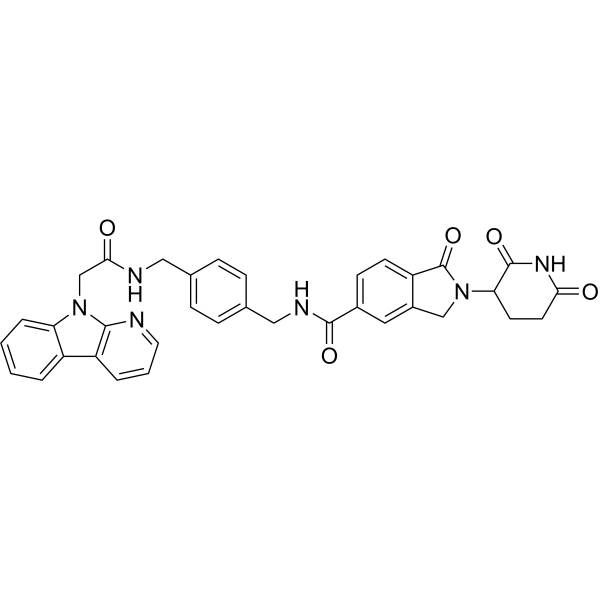
dWBP4-1 (LC-04-118) is a CRBN-dependent molecular glue degrader targeting WBP4. dWBP4-1 binds to the IMiD site of CRBN via its glutarimide ring, induces the formation of the CRBN-WBP4 ternary complex (EC50 = 224 nM), and mediates the rapid degradation of WBP4 through the G-loop dependent ubiquitin-proteasome pathway, a process that can be rescued by MLN4924 (HY-70062), Lenalidomide (HY-A0003) or Bortezomib (HY-10227). dWBP4-1 causes almost no perturbation at the transcriptome and alternative splicing levels, exhibits no obvious cytotoxicity, and produces no hook effect. dWBP4-1 can be used for the construction of chemical genetic protein degradation platforms and research related to acute T-lymphoblastic leukemia .
loading...
    loading...
Cat. No.: HY-W110910
CAS No.: 1787-61-7
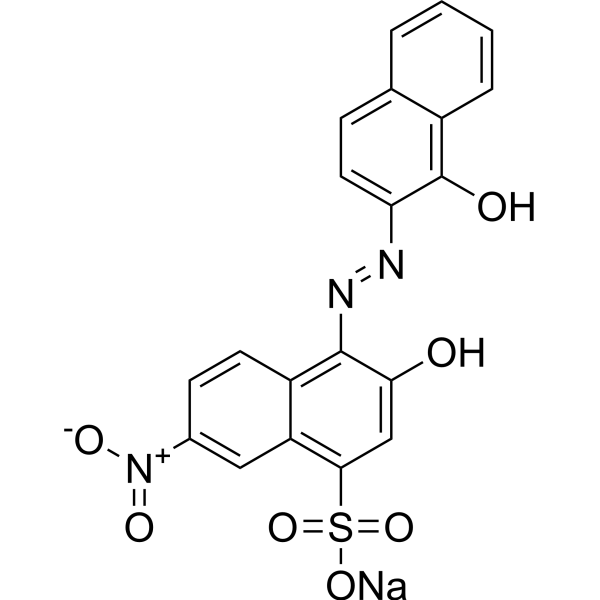
Eriochrome black T, Indicator is a complexing agent for metal ions (e.g., Ca 2+, Mg 2+) and is used as an indicator in complexometric titrations. Eriochrome black T, Indicator forms colored complexes with metal ions through covalent coordination bonds, and indicates the endpoint of the titration by color change. Eriochrome black T, Indicator can be used as an anionic azo dye in photocatalytic degradation studies to evaluate the performance of photocatalysts. The reaction solution of Eriochrome black T, Indicator combined with Mg 2+ is initially purple. During loop-mediated isothermal amplification (LAMP), the color changes from purple to sky blue due to the consumption of Mg 2+ by the formation of magnesium pyrophosphate, indicating a positive reaction. The optimal concentration of Eriochrome black T, Indicator in LAMP is 60 μM, and the detection limit for Mycobacterium tuberculosis is 1 pg DNA/reaction .
loading...
    loading...
Cat. No.: HY-156696
CAS No.: 215183-03-2
Research Areas:  

Metabolic Disease

S3226 is a highly selective NHE-3 inhibitor (IC50<1 μM) that specifically blocks NHE-3-mediated sodium transport. S3226 significantly inhibits blastocyst formation and expansion in mouse embryos, and reduces fluid and electrolyte reabsorption in rat proximal tubules in a dose-dependent manner. S3226 effectively alleviates ischemia-induced acute renal failure by improving renal function parameters, reducing renal tubular injury and restoring intracellular pH homeostasis, without interfering with the normal tubuloglomerular feedback response. S3226 is widely used in studies of acute renal failure and related pathological mechanisms .
loading...
    loading...
Cat. No.: HY-18398
CAS No.: 24719-82-2
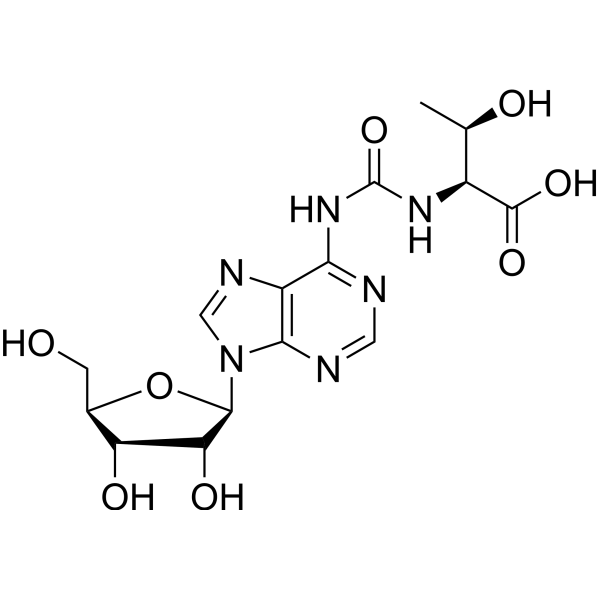
Synonyms: N6-(N-Threonylcarbonyl)adenosine
Research Areas:  

Others

N6-Threonylcarbamoyladenosine (N6-(N-Threonylcarbonyl) adenosine) is a ubiquitous nucleoside that modifies tRNA .
loading...
    loading...
Cat. No.: HY-W244398
CAS No.: 13239-97-9
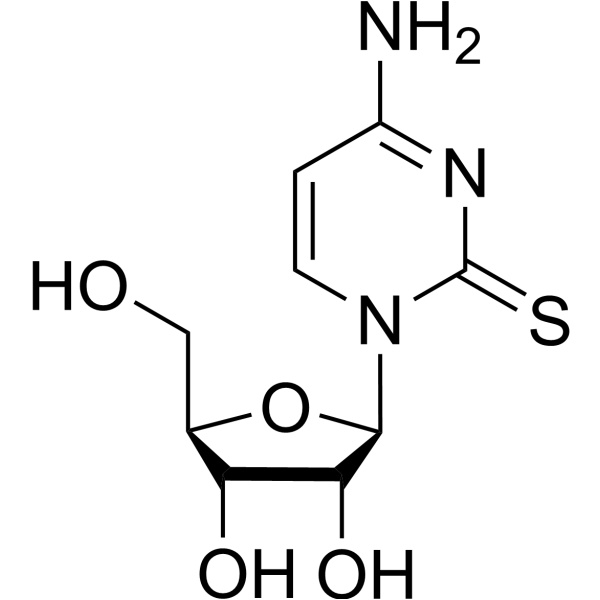
2-Thiocytidine is a natural thionucleoside in prokaryotic tRNA, which is biosynthesized under the catalysis of intracellular sulfur transferase systems and possesses multiple activities such as metal coordination and nucleic acid conformation regulation. 2-Thiocytidine forms stable Zn 2+ and Cd 2+ complexes via its (C2) S group, with partial involvement of N3; metal binding acidifies the deprotonation process of (C4) NH2. 2-Thiocytidine can be used in related research in various fields including nanotechnology and click chemistry for interstrand DNA crosslinking .
loading...
    loading...
Cat. No.: HY-P80339
Synonyms: BHLHE74, SRC1, NCOA1, Nuclear receptor coactivator 1, NCoA-1, Class E basic helix-loop-helix protein 74, Protein Hin-2, RIP160, Renal carcinoma antigen NY-REN-52, Steroid receptor coactivator 1, bHLHe74, SRC-1

Host:  

Rabbit

Application:  

WB, IHC-P, IP

Reactivity:  

Human

loading...
    loading...
Cat. No.: HY-P81175
Synonyms: Myogenic differentiation 1; AI503393; bHLHc1; MD1; MGC156574; MYF3; MYOD; MYOD1; PUM; MYOD1_HUMAN; Class C basic helix-loop-helix protein 1; bHLHc1; Myogenic factor 3; Myf-3.

Host:  

Rabbit

Application:  

WB, ELISA

Reactivity:  

Human, Mouse, Rat, Chicken

loading...
    loading...
Cat. No.: HY-P73832
Purity:  ≥ 85%, as determined by reducing SDS-PAGE.
Synonyms: MAX; BHLHd5; MYC Associated Transcriptional Regulator X; BHLHd6; MYC Associated Factor X; BHLHd7; BHLHd4; BHLHd8; Protein Max; MAX Protein; Class D Basic Helix-loop-Helix Protein 4; BHLHD4; Myc-Associated Factor X; PDMCS
Species:  
Human
Source:  
Sf9 insect cells
loading...
    loading...
Cat. No.: HY-P700514
Purity:  ≥ 90%, as determined by reducing SDS-PAGE.
Synonyms: USF1; Upstream Transcription Factor 1; BHLHb11; Major Late Transcription Factor 1; Upstream Stimulatory Factor 1; MLTFI; UEF; Class B Basic Helix-loop-Helix Protein 11; HYPLIP1; BHLHB11; FCHL1; FCHL; MLTF; USF
Species:  
Human
Source:  
E. coli
loading...
    loading...
Cat. No.: HY-P702776
Purity:  ≥ 90%, as determined by reducing SDS-PAGE.
Synonyms: MYCN; Neuroblastoma MYC Oncogene; Prev. NMYC; Oncogene NMYC; BHLHe37; MYCNsORF; N-Myc; MYCNsPEP; V-Myc Avian Myelocytomatosis Viral Oncogene Neuroblastoma Derived Homolog; BHLHE37; Class E Basic Helix-loop-Helix Protein 37; FGLDS1; N-Myc Proto-Oncogene Pr
Species:  
Human
Source:  
Sf9 insect cells
loading...
    loading...
Cat. No.: HY-P85195
Synonyms: HAND1; BHLHA27; EHAND; Heart- and neural crest derivatives-expressed protein 1; Class A basic helix-loop-helix protein 27; bHLHa27; Extraembryonic tissues; heart, autonomic nervous system and neural crest derivatives-expressed protein 1; eH

Host:  

Mouse

Application:  

FC, ELISA

Reactivity:  

Human

loading...
    loading...
Cat. No.: HY-148837
CAS No.: 2883535-99-5
GT19630 is an orally active c-Myc PROTAC targeted degrader based on the cereblon E3 ubiquitin ligase, with an IC50 of 1.5 nM against human c-Myc. GT19630 mediates the degradation of MYC, GSPT1, GSPT2, CK1 alpha, N-Myc, B7-H3 and XIAP, and disrupts the MYC-GSPT1 synergistic regulatory feedback loop. GT19630 inhibits cell proliferation, blocks S-phase progression of the cell cycle, promotes cell apoptosis, reduces cell migration capacity, induces integrated stress response, and blocks oxidative phosphorylation by inhibiting the TCA cycle. GT19630 can be used in the research of Myc-driven hematological cancers, small cell lung cancer, breast cancer, TP53-mutant cancers, and venetoclax-resistant cancers .
loading...
    loading...
Cat. No.: HY-183399
CAS No.: 95669-35-5
Wy 27127 is a potent and selective α2-adrenergic receptor antagonist. Wy 27127 competitively blocks α2-adrenergic receptors, interrupts the negative feedback loop of sympathetic nerve endings, enhances stimulus-evoked norepinephrine release, and blocks agonist-induced inhibition of vas deferens contraction. Wy 27127 shows weak antagonistic effects on α1 receptors, and exhibits no significant antagonistic activity against 5-hydroxytryptamine, muscarinic, presynaptic dopamine, histamine or β1-adrenergic receptors in vitro. Wy 27127 blocks saphenous vein contraction mediated by postsynaptic α2-adrenergic receptor agonists. Wy 27127 is applicable to studies related to sympathetic neurotransmission and vascular adrenergic responses .
loading...
    loading...
Cat. No.: HY-184717
Target:  

Atg4 Autophagy

Research Areas:  

Cancer

Atg4B-IN-3 (compound a25) is a ATG4B inhibitor with a Kd value of 18.01 nM against the human target. Atg4B-IN-3 stably regulates the closed conformation of the loop, prevents substrates from accessing the catalytic site Cys74, and thereby inhibits the proteolytic activity of ATG4B. Atg4B-IN-3 blocks autophagic flux, reduces LC3-II levels, promotes p62 accumulation, disrupts autophagy homeostasis and enhances cell death. Atg4B-IN-3 inhibits cell proliferation, migration and clonogenic survival capacity. Atg4B-IN-3 can be used in studies related to esophageal squamous cell carcinoma .
loading...
    loading...
Cat. No.: HY-46286
CAS No.: 352560-76-0
Synonyms: N-(4-tert-butyl-1,3-thiazol-2-yl)-3-fluorobenzamide
TTFB (N-(4-tert-butyl-1,3-thiazol-2-yl)-3-fluorobenzamide) is a selective, non-competitive zinc-activated channel (ZAC) antagonist. TTFB inhibits Zn 2+- and H +-induced ZAC currents with IC50 values of 3 μM and 8.5 μM, respectively, and has an IC50 of 4.7 μM against spontaneous activity. TTFB shows no significant agonistic, antagonistic or modulatory activity towards representative classical Cys-loop receptors including m5-HT3AR, hα3β4 nAChR, hα1β2γ2S GABAAR and hα1 GlyR. TTFB can be used to investigate the physiological and pathological functions of ZAC.
loading...
    loading...
Cat. No.: HY-L0119V
3,253 compounds

Protein protein interactions (PPI) have pivotal roles in life processes. The studies showed that aberrant PPI are associated with various diseases. However, the design of modulators targeting PPI still faces tremendous challenges, such the difficult PPI interfaces for the drug design, lack of ligands reference, lack of guidance rules for the PPI modulators development and high-resolution PPI proteins structures.

The PPI Library comprises molecules of various sizes, frameworks, and shapes ranging from fragment-like entities to macrocyclic derivatives designed as secondary structure mimetics or as epitope mimetics. The designs cover β-turn / loop mimetics and α-helix mimetics. Since helices present at the interface in 62% of all protein-protein interactions. This library focused on designs including mimics with the substitution geometry of an a-helices, as well as designs that mimic the location of “hot-spot” side chains in helix-mediated PPIs.

