
361 Results for "

Sample

" in MedChemExpress (MCE) Product Catalog:
Products (361)

361 Results for "Sample" in MCE Product Catalog:

Cat. No.: HY-P10943
CAS No.: 3051946-11-0
Target:  

Fluorescent Dye

Research Areas:  

Inflammation/Immunology Cancer

APO-15 is a phosphatidylserine-binding fluorescent probe and apoptosis imaging reagent. APO-15 exhibits high chemical stability under proteolytic and oxidative conditions, enables quantification and imaging of drug-induced apoptosis in preclinical mouse models, and is applicable to fixed tissue samples and multiple in vivo administration routes (Ex = 488 nm; Em = 525 nm). APO-15 can be used in studies related to acute lung injury and breast cancer .
loading...
    loading...
Cat. No.: HY-W090065
CAS No.: 93324-65-3
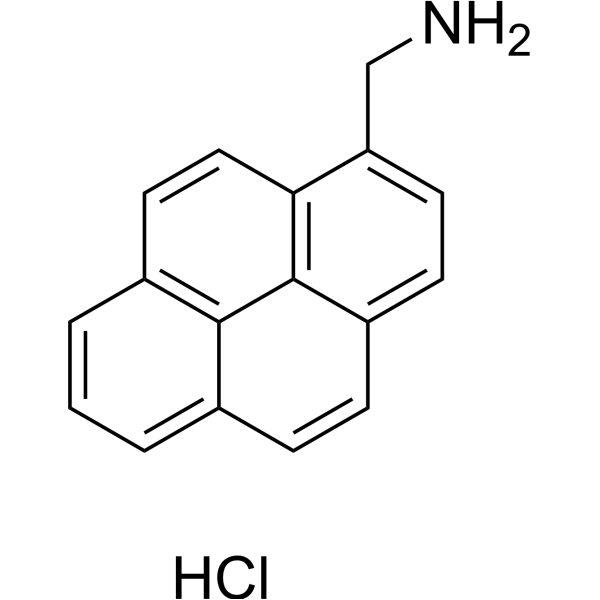
Synonyms: 1-Pyrenemethylamine hydrochloride
Pyren-1-ylmethanamine hydrochloride, Pyren-1-ylmethanamine hydrochloride is commonly used as a fluorescent probe in biochemistry and molecular biology to detect and study nucleic acids, proteins and other biomolecules, moreover, it has been used in analytical chemistry Among them, for the detection of heavy metals and other pollutants in environmental samples, the pyrene group in the molecule exhibits strong fluorescence properties, which makes it useful as a sensitive and selective detector in various applications.
loading...
    loading...
Cat. No.: HY-W415108
CAS No.: 161006-14-0
10-Methyl-9-(phenoxycarbonyl) acridinium trifluoromethanesulfonate is an acridinium ester that produces fluorescent 10-methyl-9-acridone upon oxidation with hydrogen peroxide, persulfate, and other oxidants under alkaline conditions. 10-Methyl-9-(phenoxycarbonyl) acridinium trifluoromethanesulfonate can be used in chemiluminescent assays, enzyme, antigen, antibody, and hormone immunoassays, and for the detection of oxidants in environmental, biological, and pharmaceutical samples .
loading...
    loading...
Cat. No.: HY-W585926
CAS No.: 56524-76-6
Disperse Polyester Dark Blue is a chemical compound extensively employed in scientific research. It serves as a redox-active agent and functions as a probe for identifying reactive oxygen species (ROS) in cells and tissues. By accepting electrons from ROS and undergoing oxidation, Disperse Polyester Dark Blue demonstrates its redox activity. Consequently, a chemiluminescent signal is generated, which can be measured using a luminometer. The intensity of the signal directly correlates with the quantity of ROS detected within the sample.
loading...
    loading...
Cat. No.: HY-K0552A

MCE Mycoplasma Detection Plus Kit (PCR) employs polymerase chain reaction (PCR) technology for rapid and sensitive detection of mycoplasma contamination in cultured cells and related biological samples. The kit contains a PCR premix and mycoplasma-specific primers designed against conserved regions of the 16S rRNA gene. Cell culture supernatant or cell lysates can be used directly as templates for specific amplification of mycoplasma DNA, enabling rapid identification of mycoplasma contamination.

loading...
    loading...
Cat. No.: HY-K0538

MCE Animal Tissue Direct PCR Kit (with Dye) is specifically designed for direct amplification from a variety of animal tissue samples. It enables rapid release of genomic DNA from animal tissues (such as insect legs/wings, mouse tails, ears, toes, skin, and internal organs) in a single step, allowing the lysate to be used directly for downstream PCR amplification without the need for conventional DNA extraction and purification procedures, thereby significantly simplifying the workflow.

loading...
    loading...
Cat. No.: HY-131937
CAS No.: 96182-53-5
Target:  

Insecticide

Research Areas:  

Infection

Tebupirimfos is an insecticide .
loading...
    loading...
Cat. No.: HY-133823
CAS No.: 2271-34-3
Synonyms: C16:1 (cis-11/trans-11) Fatty acid
Category:  

Microorganisms

Target:  

Endogenous Metabolite

11-Hexadecenoic acid is a monounsaturated fatty acid. 11-cis-Hexadecenoic acid and 11-trans-hexadecenoic acid have been found in ewe milk fat, and levels of each increase with dietary lipid supplementation of linseed, sunflower, olive, or fish oils. 11-trans-Hexadecenoic acid has also been found in intramuscular fat samples isolated from male and female foals. This product is a mixture of 11-cis- and 11-trans-hexadecenoic acids.
loading...
    loading...
Cat. No.: HY-137249
CAS No.: 95079-19-9
Purity:  98.32%
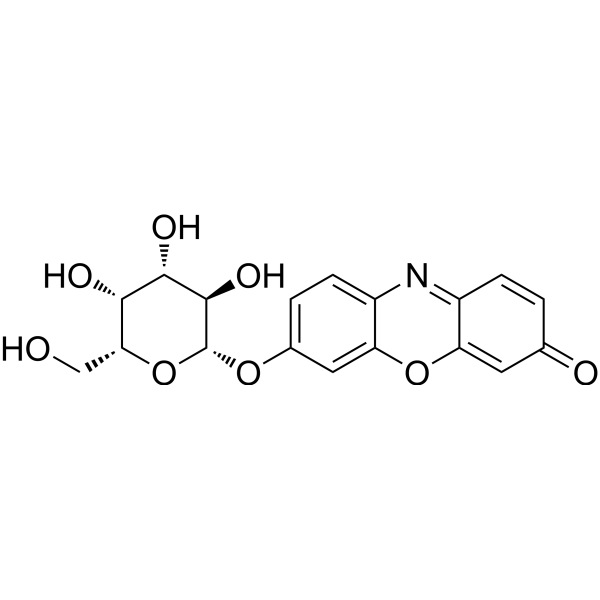
Resorufin-β-D-galactopyranoside is a commonly used substrate in various biochemical assays to measure the activity of β-galactosidase, an important enzyme involved in lactose metabolism and regulation of gene expression. Resorufin-β-D-galactopyranoside has unique chemical properties and can be hydrolyzed by β-galactosidase to form a red fluorescent product called resorufin. This makes it a useful tool for detecting and quantifying β-galactosidase activity in biological samples such as bacteria or mammalian cells.
loading...
    loading...
Cat. No.: HY-137855
CAS No.: 15220-11-8
Purity:  99.29%
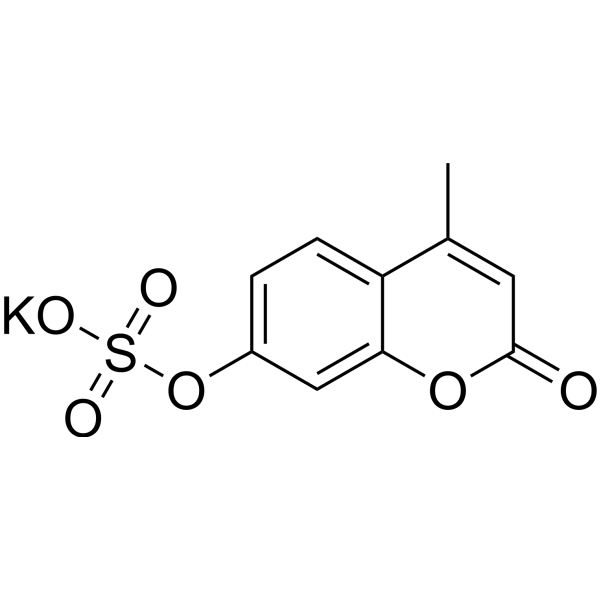
4-Methylumbelliferyl sulfate (potassium), a fluorescent substrate, is commonly used to detect sulfatase activity in biochemical and biomedical research. It consists of a sulfate group attached to a fluorescent molecule, which can be cleaved by sulfatase enzymes. Upon cleavage, 4-Methylumbelliferyl sulfate releases a highly fluorescent product that can be detected using fluorescence microscopy or spectroscopy. The use of 4-Methylumbelliferyl sulfate as a substrate for sulfatase enzymes allows accurate detection and quantification of these enzymes in a variety of biological samples.
loading...
    loading...
Cat. No.: HY-184642
Titanium dioxide magnetic beads are magnetic microparticle carriers whose surface is coated with titanium dioxide nanoparticles. This material is commonly used in protein digests of biological samples for the simple, convenient, efficient, highly specific, and reproducible enrichment of phosphorylated peptides. The surface properties of titanium dioxide magnetic beads make them show no significant preference for monophosphorylated or polyphosphorylated peptides, making them ideal for single-step enrichment of phosphorylated peptides in mass spectrometry-based proteomics analysis.
loading...
    loading...
Cat. No.: HY-D1317
CAS No.: 1803099-44-6
Target:  

Fluorescent Dye

Research Areas:  

Others

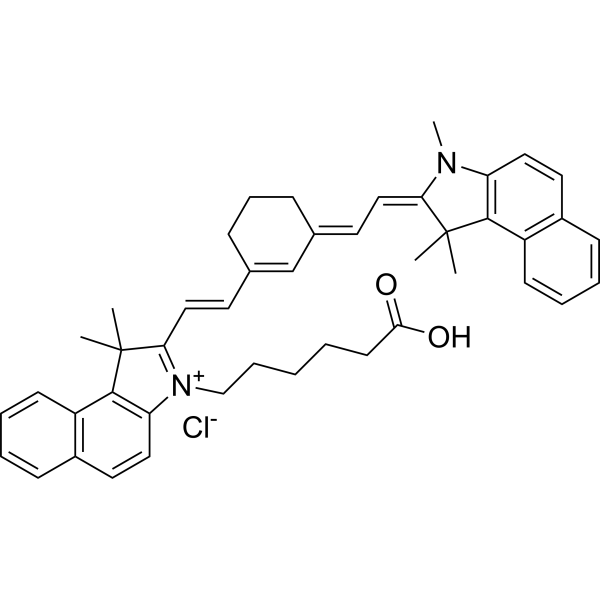
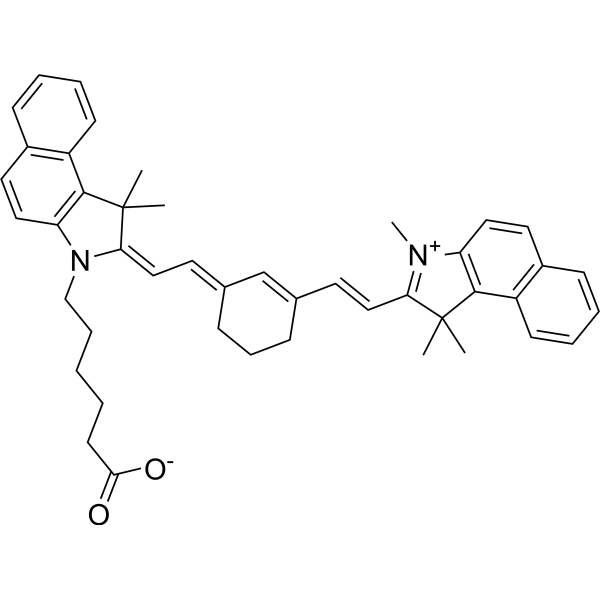
Cyanine7.5 carboxylic acid chloride is a dye derivative of Cyanine 7.5 (Cy7.5) (HY-D0926) with carboxylic acid functional groups. Cy7.5 is a near-infrared fluorescent dye commonly used in biomedical research areas such as biomarkers and cell imaging. Cyanine7.5 carboxylic acid chloride can be covalently bound to some biological molecules (especially antibodies, proteins, etc.) to track their location and dynamic changes in biological samples.
loading...
    loading...
Cat. No.: HY-D1317A
CAS No.: 1686147-68-1
Cyanine7.5 carboxylic is a dye derivative of Cyanine 7.5 (Cy7.5) (HY-D0926) with carboxylic acid functional groups. Cy7.5 is a near-infrared fluorescent dye commonly used in biomedical research areas such as biomarkers and cell imaging. Cyanine7.5 carboxylic can be covalently bound to some biological molecules (especially antibodies, proteins, etc.) to track their location and dynamic changes in biological samples.
loading...
    loading...
Cat. No.: HY-D1852
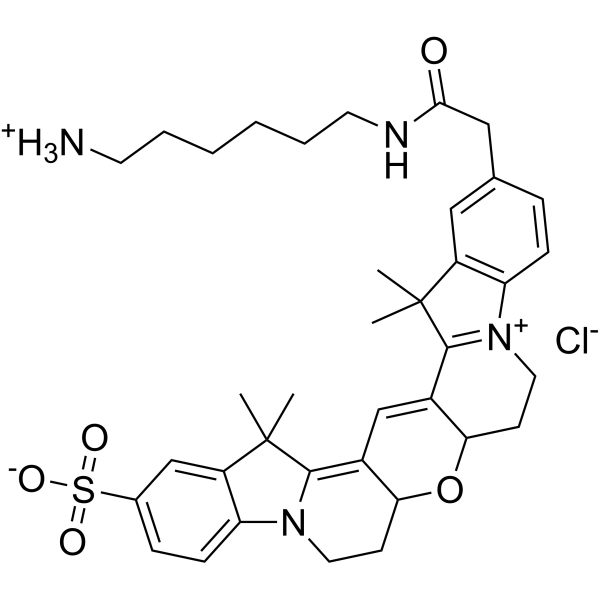
Cy3B amine chloride is a dye derivative of Cyanine 3 (Cy3) (HY-D0822) bearing an amine group. Cy3 is a fluorescent dye with a fluorescence spectrum typically in the green to orange wavelength range. The amine functionality of Sulfo-Cy3 amine can react with carboxyl groups to form covalent bonds. Sulfo-Cy3 amine can bind to biological molecules such as proteins and antibodies to track their location and dynamic changes in biological samples.
loading...
    loading...
Cat. No.: HY-DY1087
CAS No.: 874748-20-6
Coppersensor 1 (solution) is a membrane-permeable fluorescent dye. Coppersensor-1 has a picomolar affinity for Cu + with high selectivity over competing cellular metalions. Coppersensor-1 as a probe, can selective and sensitive detection of copper(I) ions (Cu +) in biological samples, including live cells. Coppersensor-1 can be used for the research of imaging of severe diseases such as cancer, cardiovascular disorders and neurogenerative diseases .
Solvent and concentration: DMSO: 2 mM
loading...
    loading...
Cat. No.: HY-P3185
CAS No.: 9028-54-0
Research Areas:  

Metabolic Disease

Beta-galactose dehydrogenase is a selective catalyst for β-galactose. Under pH 8.6 conditions, beta-galactose dehydrogenase catalyzes the oxidation of β-galactose, produced by the hydrolysis of lactose by β-galactosidase, with nicotinamide adenine dinucleotide (NAD) to produce reduced nicotinamide adenine dinucleotide (NADH). Beta-galactose dehydrogenase specifically mediates this oxidation reaction for the quantitative detection of the substrate, used in the analysis of lactose concentration in samples such as breast milk .
loading...
    loading...
Cat. No.: HY-P9983
CAS No.: 166089-32-3
Synonyms: SGN-33; HuM-195; GLK-33 Antibody
Lintuzumab (HUM-195) is an anti-CD33 humanized monoclonal antibody. Lintuzumab reduces the production of TNFα-induced pro-inflammatory cytokines and chemokines by AML cells. Lintuzumab promotes tumor cell killing through antibody-dependent cellular cytotoxicity (ADCC) and phagocytosis (ADCP) activities against MDR and MDR+ AML cell lines and primary AML patient samples. Lintuzumab enhances survival and reduces tumor burden in mice .
loading...
    loading...
Cat. No.: HY-W585888
CAS No.: 87304-79-8
Research Areas:  

Others

Fructose-isoleucine is a non-volatile Amadori compound and Maillard reaction intermediate. Fructose-isoleucine is associated with roasted flavor and roasted odor in chicken soup samples as well as chicken soup supplemented with yeast-derived flavor products. Fructose-isoleucine is formed via the amino-carbonyl reaction and induces oxidative browning in miso, white wine and Saké. In malt, Fructose-isoleucine acts as a precursor via Strecker degradation to generate flavor compounds with roasted and sweet aromas .
loading...
    loading...
Cat. No.: HY-KD1004A
Multiplex immunohistochemistry is also known as Tyramide Signal Amplification (TSA, Tyramide dignal amplification). It has been used for more than 20 years as an enzymatic assay for high-density in situ labelling of target proteins or nucleic acids by horseradish peroxidase (HRP). The method is based on multiple cis-immunostaining with tyramide signal amplification, which allows the detection of multiple target sites in cell or tissue samples in situ, and elucidation of their interaction mechanism through the study of the combination and positional relationship of these target sites.
loading...
    loading...
Cat. No.: HY-188092
Target:  

Drug Intermediate

Research Areas:  

Others

Cortisol-selective aptamer is a nucleic acid that selectively binds to cortisol. Cortisol-selective aptamer undergoes conformational transition upon binding to cortisol, inducing fluorescence quenching of quantum dots. Cortisol-selective aptamer can be integrated into gold nanoparticle colorimetric assays in buffer solutions to distinguish cortisol from other biomarkers of stress and liver dysfunction .
loading...
    loading...

