
361 Results for "

Sample

" in MedChemExpress (MCE) Product Catalog:
Products (361)

361 Results for "Sample" in MCE Product Catalog:

Cat. No.: HY-K0535

MCE Mouse Tissue Direct PCR Plus Kit is specifically designed for direct PCR amplification from tissue samples. It enables rapid, one-step release of genomic DNA from various mouse tissues (such as tail, ear, toe, and muscle), which can be directly used for downstream PCR amplification and analysis without the need for conventional DNA extraction and purification steps, thereby significantly simplifying the experimental workflow.

loading...
    loading...
Cat. No.: HY-K0539

MCE Plant Tissue Direct PCR Kit (with Dye) is specifically designed for direct amplification from various plant leaf samples. The kit enables rapid release of genomic DNA from plant tissues (such as rice, maize, tobacco, rapeseed, etc.) in a single step. The resulting lysate can be directly used for downstream PCR amplification without the need for conventional DNA extraction and purification, thereby significantly simplifying the experimental workflow.

loading...
    loading...
Cat. No.: HY-K3031

Hanks’ Balanced Salt Solution (HBSS) is widely used in various cell culture applications, including washing cells prior to dissociation, transporting cells or tissue samples, diluting cells for cell counting, and preparing a variety of reagent solutions. Formulations without calcium and magnesium are suitable for washing chelating agents prior to cell dissociation procedures. The 500 mL is defined as the base specification. All larger sizes correspond to incremental volumes of this base.

loading...
    loading...
Cat. No.: HY-K3032

Hanks’ Balanced Salt Solution (HBSS) is widely used in various cell culture applications, including washing cells prior to dissociation, transporting cells or tissue samples, diluting cells for cell counting, and preparing a variety of reagent solutions. Formulations without calcium and magnesium are suitable for washing chelating agents prior to cell dissociation procedures. The 500 mL is defined as the base specification. All larger sizes correspond to incremental volumes of this base.

loading...
    loading...
Cat. No.: HY-K3033

Hanks’ Balanced Salt Solution (HBSS) is widely used in various cell culture applications, including washing cells prior to dissociation, transporting cells or tissue samples, diluting cells for cell counting, and preparing a variety of reagent solutions. Formulations without calcium and magnesium are suitable for washing chelating agents prior to cell dissociation procedures. The 500 mL is defined as the base specification. All larger sizes correspond to incremental volumes of this base.

loading...
    loading...
Cat. No.: HY-K3034

Hanks’ Balanced Salt Solution (HBSS) is widely used in various cell culture applications, including washing cells prior to dissociation, transporting cells or tissue samples, diluting cells for cell counting, and preparing a variety of reagent solutions. Formulations without calcium and magnesium are suitable for washing chelating agents prior to cell dissociation procedures. The 500 mL is defined as the base specification. All larger sizes correspond to incremental volumes of this base.

loading...
    loading...
Cat. No.: HY-K3125

MCE Extracellular Vesicle (EV) Ultrafiltration Concentrator (500 μL, 100 kDa) features a polyethersulfone (PES) ultrafiltration membrane with a molecular weight cutoff (MWCO) of 100 kDa. It provides rapid filtration, high concentration efficiency, and high exosome recovery. Its specialized anti-dry-spin design effectively minimizes sample loss caused by excessive centrifugation and membrane drying, thereby helping maintain high exosome recovery.

loading...
    loading...
Cat. No.: HY-187587
CAS No.: 105791-89-7
Research Areas:  

Others

Cu (II) Pyropheophytin a is a chlorophyll derivative. Copper-chlorophyll derivatives are absent in olive oil. Cu (II) Pyropheophytin a can be applied in the research of olive oil adulteration .
loading...
    loading...
Cat. No.: HY-D0151
CAS No.: 174568-67-3
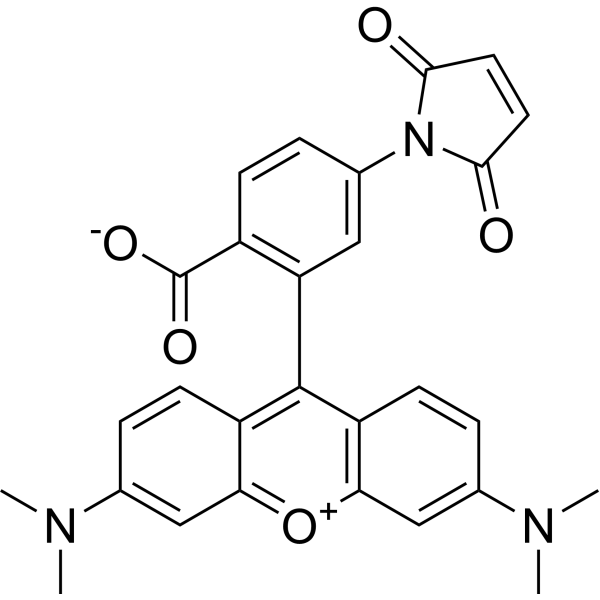
Tetramethylrhodamine-5-maleimide is a fluorescent probe with high specificity for cysteine thiol (SH) groups. Tetramethylrhodamine-5-maleimide has high sensitivity, responds rapidly to negatively charged nanoparticles, and shows a concentration-dependent decrease in fluorescence intensity, but it is susceptible to interference from humic acids .
loading...
    loading...
Cat. No.: HY-114729
CAS No.: 6403-35-6
Synonyms: Leu-Pro
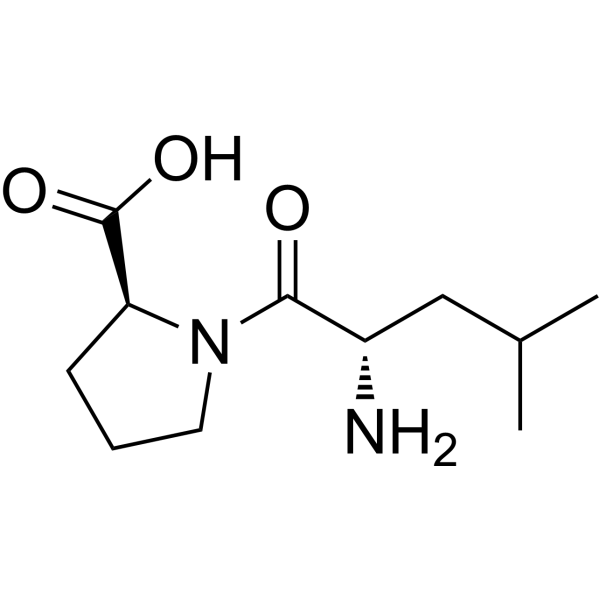
Leucylproline (Leu‑Pro) is a dipeptide composed of L‑leucine and L‑proline, and it is a fecal secondary metabolite associated with the gut microbiota. Leucylproline is taken up by Lactococcus lactis cells via the di‑tripeptide transport system, and mediates transcriptional repression of the prtP/prtM promoter after intracellular accumulation. The content of leucylproline is significantly decreased in fecal samples related to hepatolenticular degeneration. Leucylproline can be used for the study of metabolism‑related diseases .
loading...
    loading...
Cat. No.: HY-P2602
CAS No.: 117592-45-7
Target:  

GABA Receptor

Research Areas:  

Neurological Disease

α-Casozepine is an orally effective anxiolytic that binds to the benzodiazepine site of the GABAA receptor in bovine samples with an IC50 of 88 μM. α-Casozepine exerts anxiolytic and anti-stress effects on cats exposed to unfamiliar environments and dogs undergoing road transport . α-Casozepine exhibits significant anxiolytic activity in rats. α-Casozepine can be used in studies related to fear, anxiety and stress .
loading...
    loading...
Cat. No.: HY-P990182

Target:  

Inhibitory Antibodies

Research Areas:  

Others

Mouse IgG2b (LALA-PG) kappa, isotype control is a mouse-derived IgG2b, κ type antibody inhibitor. Mouse IgG2b (LALA-PG) kappa, isotype control reacts with hen egg lysozyme and has low or no specific binding to any mouse sample. Mouse IgG2b (LALA-PG) kappa, isotype control is commonly used as an isotype control .
loading...
    loading...
Cat. No.: HY-W011730
CAS No.: 87178-63-0
Synonyms: Leu-Pro hydrochloride
Leucylproline hydrochloride (Leu‑Pro hydrochloride) is a dipeptide composed of L‑leucine and L‑proline, and it is a fecal secondary metabolite associated with the gut microbiota. Leucylproline hydrochloride is taken up by Lactococcus lactis cells via the di‑tripeptide transport system, and mediates transcriptional repression of the prtP/prtM promoter after intracellular accumulation. The content of Leucylproline hydrochloride is significantly decreased in fecal samples related to hepatolenticular degeneration. Leucylproline hydrochloride can be used for the study of metabolism‑related diseases .
loading...
    loading...
Cat. No.: HY-W344380
CAS No.: 73464-18-3
Tetrahydro-2,5-dioxo-3-furansulfonic acid, sodium is a chemical reagent with excellent water determination activity. Tetrahydro-2,5-dioxo-3-furansulfonic acid, sodium is widely used as a titrant in Karl Fischer titration to determine the water content in various samples. Tetrahydro-2,5-dioxo-3-furansulfonic acid, sodium has important application value in chemical analysis.
loading...
    loading...
Cat. No.: HY-B1306S
CAS No.: 1219805-41-0
Synonyms: p-Aminohippuric acid-d4
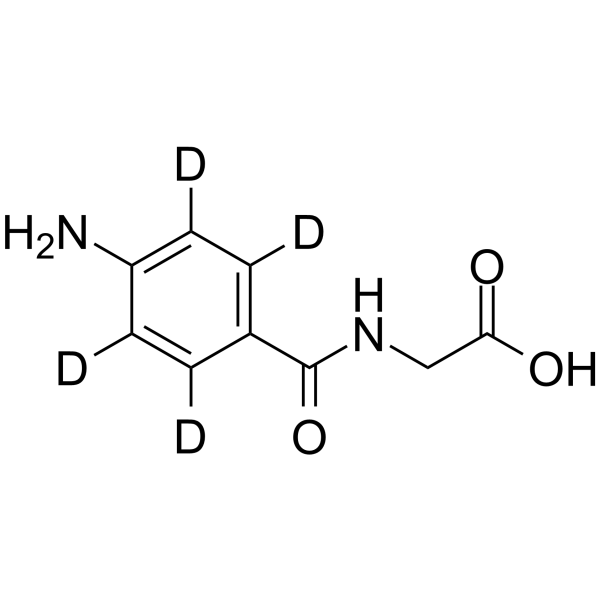
4-Aminohippuric acid-d4 (p-Aminohippuric acid-d4) is the deuterium labeled 4-Aminohippuric acid (HY-B1306). 4-Aminohippuric acid (p-Aminohippuric acid) is a coordination ligand for metal ions (such as Cu 2+, Fe 3+, Hg 2+) and a functionalization reagent for nanomaterials. 4-Aminohippuric acid can coordinate with metal ions or modify the surface of materials such as carbon nanotubes and gold nanoparticles through amino and carboxyl groups. 4-Aminohippuric acid can form stable complexes with metal ions or participate in the synthesis of nanomaterials as a reducing agent/stabilizer, enriching metal ions or giving nanoparticles peroxidase-mimicking activity. 4-Aminohippuric acid can be used to construct highly sensitive electrochemical sensors or colorimetric sensors to detect and quantitatively analyze heavy metal ions such as copper, iron, and mercury in environmental water samples and biological samples. 4-Aminohippuric acid may also be a biomarker for attention-deficit/hyperactivity disorder (ADHD) .
loading...
    loading...
Cat. No.: HY-113139S
Purity:  ≥99.0%
Synonyms: N1-Methylinosine-d3
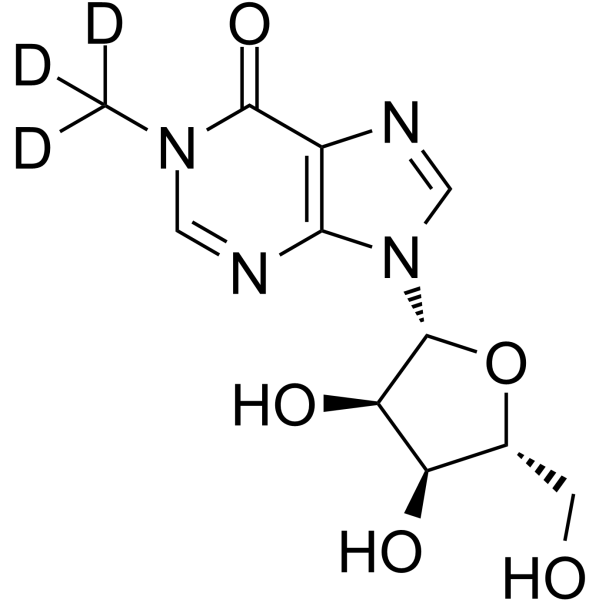
1-Methylinosine-d3 (N1-MetHYlinosine-d3) is the deuterium labeled 1-Methylinosine. 1-Methylinosine is a modified nucleotide located at position 37 of eukaryotic tRNA, 3' to the tRNA anticodon. 1-Methylinosine is a minor metabolite of 1-methyladenosine (HY-113081). The level of 1-Methylinosine is significantly elevated in urine samples from breast cancer models.
loading...
    loading...
Cat. No.: HY-133970
CAS No.: 481-21-0
Purity:  99.34%
5α-Cholestane is a steroidal hydrocarbon and fecal stanol, and is used as an internal standard for gas chromatographic sterol analysis. 5α-Cholestane is the parent steroidal skeleton of polyhydroxylated brassinosteroids of plant origin. It is used as an internal standard for GC-FID and GC-MS analysis of fecal sterols in urine and sludge samples. 5α-Cholestane can be used in studies of age- or disease-related skeletal muscle atrophy .
loading...
    loading...
Cat. No.: HY-151759
CAS No.: 2129525-69-3
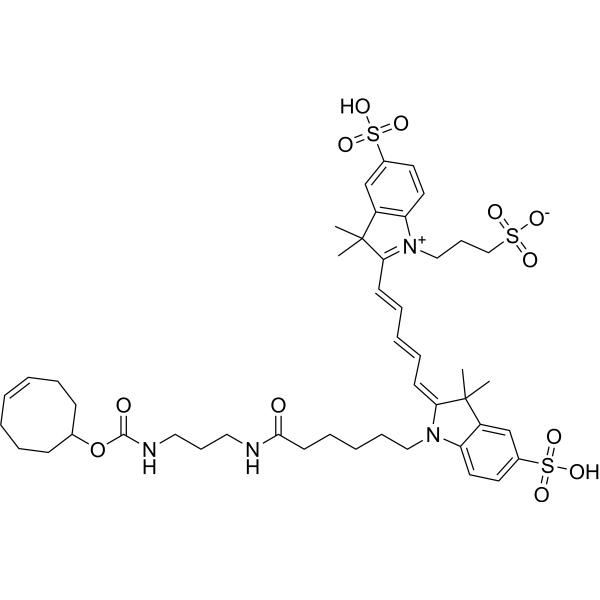
Sulfo-Cy5-TCO is a water-soluble sulfonated Cy5 fluorescent reagent containing trans-cyclooctene (TCO). Sulfo-Cy5-TCO undergoes an inverse electron demand Diels‑Alder reaction with tetrazine-labeled fixed breast cancer cells to achieve cell labeling. Sulfo-Cy5-TCO is used for fluorescent labeling and imaging of biological samples such as proteins and cells .
loading...
    loading...
Cat. No.: HY-165093
CAS No.: 81655-42-7
Synonyms: 1-Arachidin-2-olein-3-palmitin; TG(20:0/18:1/16:0)
Target:  

Others

Research Areas:  

Others

1-Arachidoyl-2-oleoyl-3-palmitoyl-rac-glycerol (1-Arachidin-2-olein-3-palmitin) is a triglyceride characterized by regioisomerism by silver ion HPLC/MS. The method can be applied to the analysis of complex samples of vegetable oils and animal fats, and the results show that plant and animal fats have different preferences for fatty acid occupancy at the sn-2 position.
loading...
    loading...
Cat. No.: HY-D1865
CAS No.: 25470-94-4
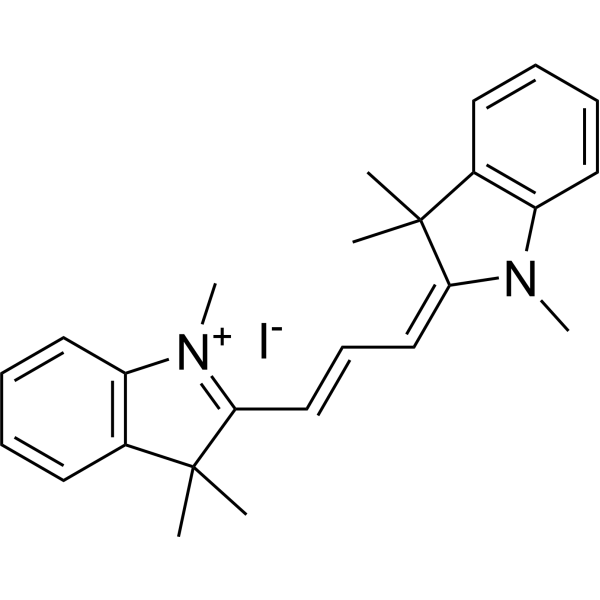
Cy3 dimethyl iodide is a dye derivative of Cyanine 3 (Cy3) (HY-D0822) with a dimethyl group in the iodide salt form. The iodide salt form increases the water solubility of the compound, making it suitable for use in aqueous solutions. Cy3 is a near-infrared fluorescent dye commonly used in biolabeling and cell imaging. Cy3 dimethyl iodide binds to biomolecules such as proteins and antibodies to track their location and dynamic changes in biological samples.
loading...
    loading...

