271 Results for "

Zebrafish.

" in MedChemExpress (MCE) Product Catalog:
Products (271)

271 Results for "Zebrafish." in MCE Product Catalog:

Cat. No.: HY-114849R
CAS No.: 27314-13-2
Synonyms: SAN 9789 (Standard)
Norflurazon (Standard) (SAN 9789 (Standard)) is the analytical standard of Norflurazon (HY-114849). This product is intended for research and analytical applications. Norflurazon (SAN 9789) is a pre-emergence Herbicide. Norflurazon non-competitively inhibits phytoene desaturase by competing with the enzyme cofactor and disrupts carotenoid biosynthesis, thereby leading to chlorophyll photodegradation and chlorosis. Norflurazon inhibits MGDG synthase, CDP-choline phosphotransferase, Omega-3 FAD7 desaturase, and PG delta-3-trans desaturase, and activates LysoPC-acyltransferase and Omega-3 FAD3 desaturase. Norflurazon inhibits photosynthetic membrane organization, mitochondrial respiration, ATP production, PI3K signaling, and ERK1/2 phosphorylation. Norflurazon activates MAPK P38 phosphorylation and ER stress signaling. Norflurazon induces morphological malformations and cardiovascular effects in zebrafish embryos .
loading...
    loading...
Cat. No.: HY-118160
CAS No.: 65240-86-0
Synonyms: NSC 73233
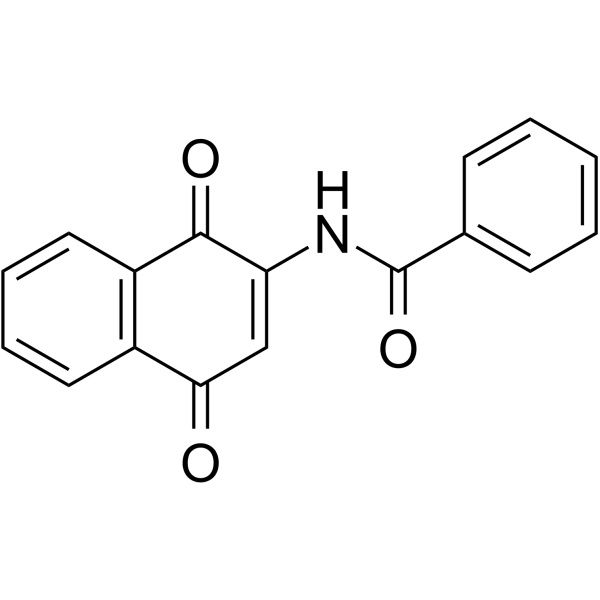
PPM-18 (NSC 73233) is a Vitamin K (HY-B2172) analog. PPM-18 prevents LPS-induced IκBα degradation, thereby inhibiting NF-κB activation and nuclear translocation of NF-κB. PPM-18 inhibits LPS-induced nitrite production and iNOS expression. PPM-18 inhibits HDAC6. PPM-18 induces ROS accumulation, activates AMPK, inhibits the mTORC1 and PI3K/AKT pathways, initiates Autophagy, and induces Apoptosis. PPM-18 suppresses seizures in zebrafish and mouse epilepsy models. PPM-18 prevents LPS-induced lethal toxicity and delayed hypotension. PPM-18 exhibits anticancer activity against leukemia and bladder cancer. PPM-18 can be used in research related to septic shock, bladder cancer and atherosclerosis .
loading...
    loading...
Cat. No.: HY-D3003
CAS No.: 2522921-17-9
M-H2S is an endoplasmic reticulum-targeted ratio-type near-infrared fluorescent probe (Ex/Em : 480 nm/560 nm) specifically designed for the detection of hydrogen sulfide (H2S) in living cells and zebrafish. M-H2S exhibits detection limit for H2S of 39.1 nM, and the fluorescence intensity ratio (F₆₅₀/F₅₆₀) within the range of 0-40 μM shows a linear relationship with the H2S concentration. M-H2S responds best under pH = 7.2 (the normal physiological pH of the endoplasmic reticulum) conditions, making it suitable for the detection of the microenvironment of the endoplasmic reticulum. M-H2S can be used to study the role of H2S in endoplasmic reticulum function, stress response, and related diseases .
loading...
    loading...
Cat. No.: HY-138185
CAS No.: 158792-24-6
Synonyms: SF 2738A
Target:  

Bacterial Apoptosis

Research Areas:  

Cancer

Collismycin A is a bacterial metabolite originally isolated from Streptomyces that has diverse biological activities, including antibacterial, antiproliferative, and neuroprotective properties. It is active against a variety of bacteria (MICs=6.25 and 100 μg/mL) and fungi (MICs=12.5-100 μg/mL). It inhibits proliferation of A549 lung, HCT116 colon, and HeLa cervical cancer cells (IC50s=0.3, 0.6, and 0.3 μM, respectively) and NIH373 fibroblasts (IC50=56.6 μM) but not MDA-MD-231 breast cancer cells (IC50=>100 μM). Collismycin A forms a complex with Fe(II) and Fe(III) at a 2:1 ratio, and the addition of iron ions inhibits the antiproliferative effect of collismycin A on HeLa cells, an effect that does not occur with the addition of zinc, manganese, copper, or magnesium ions.3 Collismycin A (1 μM) prevents apoptosis in the brain region of zebrafish larvae in a model of neuronal cell death induced by all-trans retinoic acid.
loading...
    loading...
Cat. No.: HY-180155
CAS No.: 3105470-83-2
Keap1/Nrf2/ARE activator 2 is an activator of Keap1/Nrf2/ARE pathway and non-competitively inhibits AChE with an IC50 of 14.79 μM and a Ki of 1.35 μM. Keap1/Nrf2/ARE activator 2 promotes Nrf2 nuclear translocation, leading to antioxidant gene upregulation and enhanced cellular defense against oxidative stress. Keap1/Nrf2/ARE activator exhibits robust neuroprotection against both H2O2- and Scopolamine (SCA) (HY-N0296)-induced injury in PC12 cells. Keap1/Nrf2/ARE activator 2 ameliorates memory impairment and the neuro-inflammation associated with SCA-initiated cognitive dysfunction in a zebrafish model. Keap1/Nrf2/ARE activator 2 can be used for the research of Alzheimer's disease .
loading...
    loading...
Cat. No.: HY-N0427
CAS No.: 6873-13-8
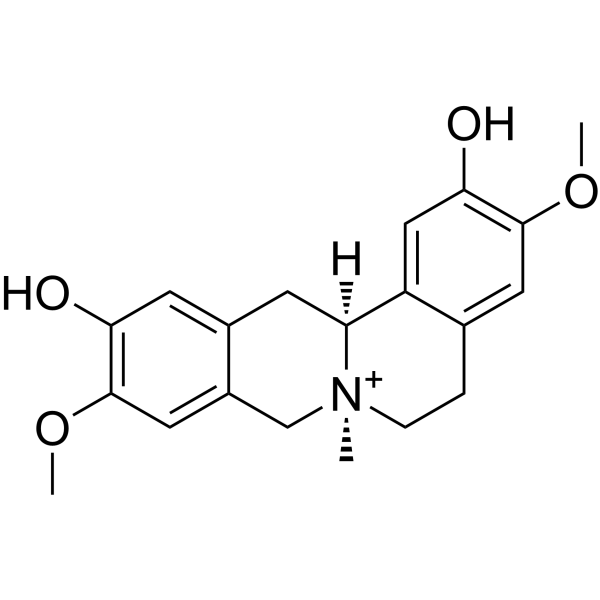
Phellodendrine is an orally active plant alkaloid. Phellodendrine inhibits the proliferation of KRAS-mutated pancreatic cancer cells by suppressing macropinocytosis and glutamine metabolism, inducing ROS accumulation and mitochondrial apoptosis. Phellodendrine promotes autophagy by activating the AMPK/mTOR pathway, alleviating intestinal damage in ulcerative colitis. Phellodendrine can alleviate gouty arthritis by inhibiting the IL-6/STAT3 signaling pathway. Phellodendrine suppresses allergic reactions by altering the conformation of MRGPRB3/MRGPRX2 protein, thereby inhibiting the activation of PKC and subsequent downstream MAPK and NF-κB signaling. Phellodendrine inhibits the AKT/NF-κB pathway and down-regulates the expression of COX-2, thereby protecting zebrafish embryos from oxidative stress. Phellodendrine has an anti-major depressive disorder (MDD) effect by down-regulating CHRM1, HTR1A, and the PI3K/Akt signaling pathway .
loading...
    loading...
Cat. No.: HY-N0735R
CAS No.: 104112-82-5
Phellodendrine chloride (Standard) is the analytical standard of Phellodendrine chloride (HY-N0735). Phellodendrine chloride is an orally active plant alkaloid. Phellodendrine chloride inhibits the proliferation of KRAS-mutated pancreatic cancer cells by suppressing macropinocytosis and glutamine metabolism, inducing ROS accumulation and mitochondrial apoptosis. Phellodendrine chloride promotes autophagy by activating the AMPK/mTOR pathway, alleviating intestinal damage in ulcerative colitis. Phellodendrine chloride can alleviate gouty arthritis by inhibiting the IL-6/STAT3 signaling pathway. Phellodendrine chloride suppresses allergic reactions by altering the conformation of MRGPRB3/MRGPRX2 protein, thereby inhibiting the activation of PKC and subsequent downstream MAPK and NF-κB signaling. Phellodendrine chloride inhibits the AKT/NF-κB pathway and down-regulates the expression of COX-2, thereby protecting zebrafish embryos from oxidative stress. Phellodendrine chloride has an anti-major depressive disorder (MDD) effect by down-regulating CHRM1, HTR1A, and the PI3K/Akt signaling pathway.
loading...
    loading...
Cat. No.: HY-W778236
CAS No.: 1346603-47-1
Synonyms: SAN 9789-13C,d3
Norflurazon- 13C,d3 (SAN 9789- 13C,d3) is the d3, 13C-labeled Norflurazon (HY-114849). Norflurazon (SAN 9789) is a pre-emergence Herbicide. Norflurazon non-competitively inhibits phytoene desaturase by competing with the enzyme cofactor and disrupts carotenoid biosynthesis, thereby leading to chlorophyll photodegradation and chlorosis. Norflurazon inhibits MGDG synthase, CDP-choline phosphotransferase, Omega-3 FAD7 desaturase, and PG delta-3-trans desaturase, and activates LysoPC-acyltransferase and Omega-3 FAD3 desaturase. Norflurazon inhibits photosynthetic membrane organization, mitochondrial respiration, ATP production, PI3K signaling, and ERK1/2 phosphorylation. Norflurazon activates MAPK P38 phosphorylation and ER stress signaling. Norflurazon induces morphological malformations and cardiovascular effects in zebrafish embryos .
loading...
    loading...
Cat. No.: HY-W011927
CAS No.: 80-09-1
Synonyms: Bisphenol S; Bis(4-hydroxyphenyl) sulfone
4,4'-Sulfonyldiphenol (Bisphenol S; Bis(4-hydroxyphenyl) sulfone), a substitute for Bisphenol A (HY-18260), is widely used in industrial and consumer products. 4,4'-Sulfonyldiphenol is an oally ative estrogen receptor (ER) agonist and can competitively bind to thyroid hormone receptors (TR) with IC50 values for TRα and TRβ are 2650 μM and 2294 μM respectively, thereby affecting breast development and reducing the expression of androgen receptor (AR) in fetal testes. 4,4'-Sulfonyldiphenol promotes the progression of glioblastoma by upregulating the EZH2 mediated PI3K/AKT/mTOR pathway. Under chronic exposure, 4,4'-Sulfonyldiphenol can cause significant lipid deposition and dyslipidemia in the mouse liver by upregulating JunB and Atf3, and has a role in causing obesity at low doses. 4,4'-Sulfonyldiphenol induces intestinal inflammation by altering the intestinal microbiome. 4,4'-Sulfonyldiphenol accelerates the progression of atherosclerosis in zebrafish embryo larvae .
loading...
    loading...
Cat. No.: HY-W011927R
CAS No.: 80-09-1
Synonyms: Bisphenol S (Standard); Bis(4-hydroxyphenyl) sulfone (Standard)
4,4'-Sulfonyldiphenol (Bisphenol S; Bis(4-hydroxyphenyl) sulfone) (Standard) is the analytical standard of 4,4'-Sulfonyldiphenol (HY-W011927). This product is intended for research and analytical applications. 4,4'-Sulfonyldiphenol, a substitute for Bisphenol A (HY-18260), is widely used in industrial and consumer products. 4,4'-Sulfonyldiphenol is an estrogen receptor (ER) agonist and can competitively bind to thyroid hormone receptors (TR) with IC50 values for TRα and TRβ are 2650 μM and 2294 μM respectively, thereby affecting breast development and reducing the expression of androgen receptor (AR) in fetal testes. 4,4'-Sulfonyldiphenol promotes the progression of glioblastoma by upregulating the EZH2 mediated PI3K/AKT/mTOR pathway. Under chronic exposure, 4,4'-Sulfonyldiphenol can cause significant lipid deposition and dyslipidemia in the mouse liver by upregulating JunB and Atf3, and has a role in causing obesity at low doses. 4,4'-Sulfonyldiphenol induces intestinal inflammation by altering the intestinal microbiome. 4,4'-Sulfonyldiphenol accelerates the progression of atherosclerosis in zebrafish embryo larvae.
loading...
    loading...
Cat. No.: HY-W002199
CAS No.: 647-42-7
Synonyms: 6:2 FTOH; 1H,1H,2H,2H-Perfluoro-1-octanol; 2-(Perfluorohexyl)ethanol
6:2 Fluorotelomer alcohol (6:2 FTOH) is an orally active, blood-brain barrier-permeable modulator of cyclin D1 and ETS1. 6:2 Fluorotelomer alcohol downregulates cyclin D1 expression, upregulates ETS1 via the TNF-α/ERK 1/2 pathway, impairs mitochondrial membrane potential and respiratory function, increases reactive oxygen species levels, disrupts calcium homeostasis and activates endoplasmic reticulum stress markers, and induces cell proliferation inhibition and endothelial-mesenchymal transition. Furthermore, 6:2 Fluorotelomer alcohol induces morphological abnormalities in zebrafish embryos and liver developmental damage, while disrupting the brain immune microenvironment in mice, causing systemic toxicity and delayed pup maturation in CD-1 mice. 6:2 Fluorotelomer alcohol also induces cortical neuron apoptosis, glial cell activation, synaptic abnormalities, colonic barrier damage, intestinal dysbiosis and autism spectrum disorder-like symptoms in mice. 6:2 Fluorotelomer alcohol shows no mutagenic, clastogenic, primary skin/eye irritation or skin sensitizing effects, exhibits no selective reproductive toxicity in CD-1 mice, and is classified as GHS Category 4 for acute oral toxicity. 6:2 Fluorotelomer alcohol can be used in studies of neurodevelopmental disorders and autism spectrum disorders .
loading...
    loading...

