356 Results for "

yield

" in MedChemExpress (MCE) Product Catalog:
Products (356)

356 Results for "yield" in MCE Product Catalog:

Cat. No.: HY-100536
CAS No.: 687561-60-0
Purity:  99.27%
Research Areas:  

Cancer

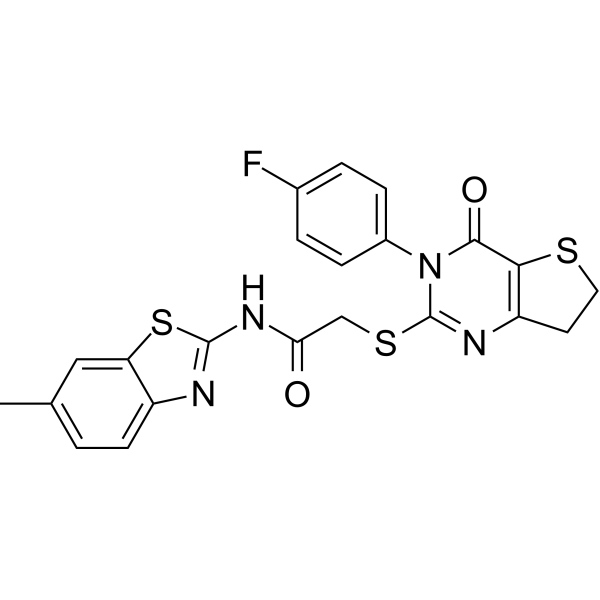
IWP-3 is a Wnt production inhibitor with an IC50 of 40 nM. IWP-3 also acts as a CK1δ inhibitor, with an IC50 of 1.89 μM against rat full-length CK1δ. IWP-3 inhibits the function of Porcupine (Porcn), thereby blocking the palmitoylation of Wnt proteins, suppressing the canonical Wnt signaling pathway, reducing the proliferative capacity of cancer cells, promoting the differentiation of mesoderm into cardiomyocytes and increasing cardiomyocyte yield. IWP-3 reduces embryonic cell division, alters the cell movement along the anterior-posterior axis of embryos, and causes embryonic shortening. IWP-3 can be used in studies related to cancers such as pancreatic cancer .
loading...
    loading...
Cat. No.: HY-79587
CAS No.: 134-81-6
Research Areas:  

Others

Benzil is a 1,2-diketone compound with multiple functions including photo-peroxidation initiator, crosslinking initiator and pattern-forming agent, and is commonly used as a precursor for photodegradable network crosslinkers. In oxygen-purged polymer films or glassy matrices, Benzil reacts with molecular oxygen under illumination at wavelengths greater than 370 nm or 400 nm, and converts to benzoyl peroxide in nearly quantitative yield. Subsequently, the generated benzoyl peroxide groups produce free radicals via thermal or photochemical decomposition, thereby enabling crosslinking of polymer chains, grafting of new monomers, and preparation of patterned polymers on solid surfaces using mask irradiation. Benzil also induces crosslinking of photodegradable poly (phenyl vinyl ketone) to form a stable photodegradable polymer network .
loading...
    loading...
Cat. No.: HY-D3404
CAS No.: 169454-13-1
BODi-1 is a fluorescent modulator targeting dsDNA, which binds to dsDNA via a bis-intercalation mechanism (Ex=465 nm, Em=490 nm). BODi-1 exhibits a fluorescence enhancement effect upon binding to nucleic acids, but its fluorescence intensity, anisotropy and average lifetime decrease at higher dye/DNA ratios. When BODi-1 binds to DNA in liposome complexes, it also shows red-shifted emission spectra, along with reduced quantum yield and average lifetime. BODi-1 does not induce significant DNA conformational changes when the dye/DNA ratio is below 0.01. BODi-1 can be used as a fluorescent probe for the characterization of liposome complexes and FRET studies at this ratio .
loading...
    loading...
Cat. No.: HY-161804
Target:  

PROTACs Dengue Virus

Research Areas:  

Infection

GNF-2-deg is a PROTAC degrader targeting the dengue virus envelope protein (DENV E protein), with a DC50 of 0.83 μM in Huh7.5 cells. GNF-2-deg induces CRBN- and proteasome-dependent proteolysis of intracellular E protein. GNF-2-deg inhibits E protein-mediated membrane fusion and blocks viral particle production. GNF-2-deg reduces viral yield in infected cells and retains activity against E protein βOG pocket mutant virus-like particles (VLP). GNF-2-deg can be used in the research of dengue virus infection, Zika virus infection, Japanese encephalitis, West Nile virus infection and yellow fever .
loading...
    loading...
Cat. No.: HY-DY1097
CAS No.: 107091-89-4
Thiazole Orange (solution) is an asymmetric anthocyanin dye that can be coupled with oligonucleotides (ONs) to prepare fluorescent hybridization probes. Thiazole Orange has been widely used in biomolecular detection and staining of DNA/ RNA in gels and can be used for reticulocyte analysis. Thiazole orange generates a significant fluorescence enhancement and high quantum yield when it binds with nucleic acids, especially RNA. Thiazole orange can permeate living cell membranes. Thiazole orange can use UV light for detection, but can also be detected with blue light. The excitation and emission of Thiazole orange are λex = 510 nm (488 nm and 470 nm also show strong excitation) and λem = 527 nm, respectively .
Solvent and concentration: DMSO: 10 mM
The 1 mL volume is defined as the base specification. All larger sizes correspond to incremental volumes of this base.
loading...
    loading...
Cat. No.: HY-W391506
CAS No.: 9011-14-7
Synonyms: Poly(methyl methacrylate), beads; PMMA
Research Areas:  

Others

Poly (methyl methacrylate) (Poly(methyl methacrylate), beads; PMMA) is an amorphous glassy acrylic thermoplastic polymer belonging to the acrylate family, synthesized from methyl methacrylate monomers. Poly (methyl methacrylate) drives biochemical processes including free volume expansion induced by inelastic deformation, yield stress and strain softening regulated by physical aging, acid hydrolysis to polymethacrylic acid, multi-stage combustion, oxygen-dependent thermal decomposition, primary amine-mediated polypentanimide formation, and grafting/crosslinking-based copolymer and composite formation. Poly (methyl methacrylate) exhibits histocompatibility, low toxicity, low inflammatory potential, and fracture resistance; it can form functional blends and composites for biomedical and dental applications; it also allows performance-enhancing chemical and mechanical modifications. Poly (methyl methacrylate) is applicable to studies related to cranial repair .
loading...
    loading...
Cat. No.: HY-D1773
CAS No.: 156312-20-8
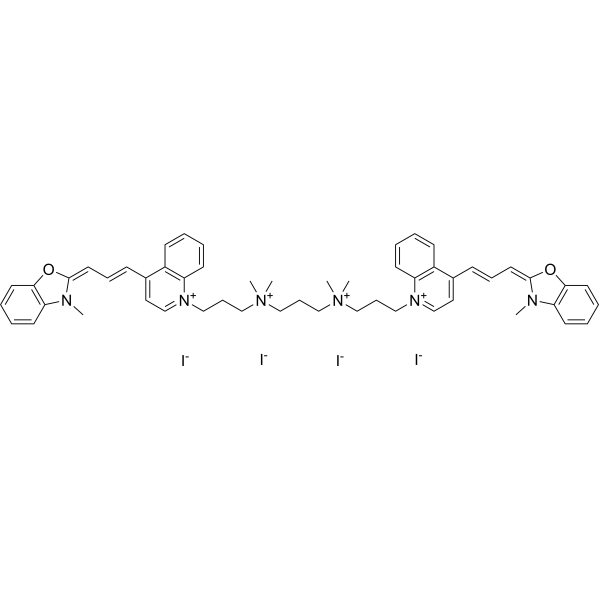
YOYO-3 is a trimethine cyanine homodimer dye. YOYO-3 intercalates into AF488-tagged dsDNA molecules at the single-molecule level. YOYO-3 has a greater affinity for DNA than do EB and other Cyanine dyes .
loading...
    loading...
Cat. No.: HY-W513043
CAS No.: 2679-01-8
Research Areas:  

Others

Methylene green is a cationic phenothiazine dye and a nitro derivative of Methylene blue (HY-14536), which exhibits a strong absorption band in the ~550-690 nm range. Methylene green supports photodynamic processes, cell staining, and biomolecule identification .
loading...
    loading...
Cat. No.: HY-111224
CAS No.: 878197-98-9
Target:  

HIV CXCR

Research Areas:  

Infection

GSK812397 is a CXCR4 antagonist with potential for the treatment of HIV infection. To evaluate the clinical potential of GSK812397, kilogram-scale agent candidates are needed. Here, an improved, scalable synthetic route for the CXCR4 antagonist GSK812397 is described. This new route has been scaled up in a 50-liter stationary facility to obtain 1.2 kg of agent substance in 20% overall yield and >99% chemical and enantiomeric purity in five steps. CXC chemokine receptor 4 (CXCR4) is a 7-transmembrane protein that functions in part as a host co-receptor for multiple strains of HIV-1. It is thought that targeting CXCR4 will help inhibit the replication of several late cytopathic viruses; therefore, CXCR4 antagonists are one of the most promising new classes of experimental anti-HIV agents. GSK812397 is a potent CXCR4 antagonist and is therefore a candidate for investigation for the treatment of HIV infection.
loading...
    loading...
Cat. No.: HY-DY1007
CAS No.: 3326-32-7
Target:  

Fluorescent Dye

Research Areas:  

Inflammation/Immunology

FITC (Fluorescein Isothiocyanate) (solution) , is one of the green fluorescein derivatives widely used in biology. FITC has the characteristics of high absorptivity and excellent fluorescence quantum yield. The isothiocyanate group of FITC can be combined with amino, sulfhydryl, imidazole, tyrosyl, carbonyl and other groups on the protein, so as to achieve protein labeling including antibodies and lectins. In addition to its use as a protein marker, FITC can also be used as a fluorescent protein tracer to rapidly identify pathogens by labeling antibodies, or for microsequencing of proteins and peptides (HPLC). The maximum excitation wavelength of FITC is 494 nm. Once excited, it fluoresces yellow-green at a maximum emission wavelength of 520 nm. In addition, FITC is also a hapten that can induce contact hypersensitivity (CHS) and induce an atopic dermatitis model .
Solvent and concentration: DMSO: 20 mM
The 1 mL volume is defined as the base specification. All larger sizes correspond to incremental volumes of this base.
loading...
    loading...
Cat. No.: HY-155927
CAS No.: 474922-82-2
Synonyms: 14:0 PEG1000 PE ammonium; 1,2-Dimyristoyl-sn-glycero-3-phosphoethanolamine-N-[methoxy(polyethylene glycol)-1000] ammonium
Target:  

Liposome

Research Areas:  

Others

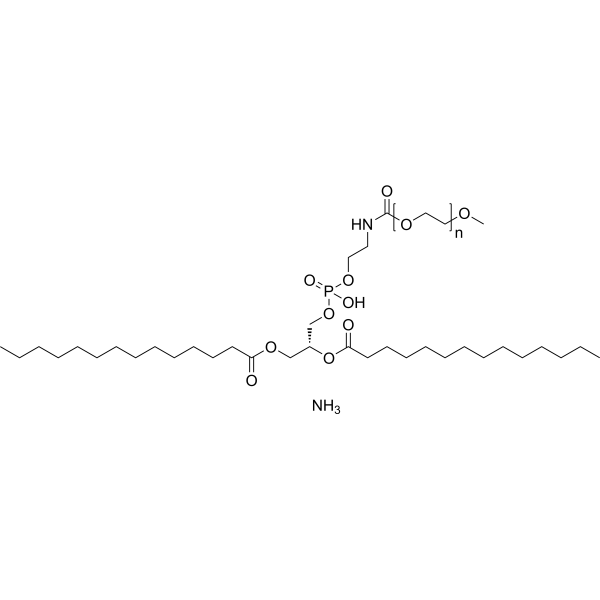
DMPE-PEG1000 ammonium (14:0 PEG1000 PE ammonium) is a methoxy-capped PEGylated phospholipid containing two C14 lipid chains and a PEG1000 group. DMPE-PEG1000 can be incorporated as a PEG-lipid component into conjugated polymer nanoparticles for nanoparticle surface modification. DMPE-PEG1000 ammonium is applicable for researches related to PEGylated nanoparticle preparation and fluorescence imaging .
loading...
    loading...
Cat. No.: HY-182671
CAS No.: 2409965-28-0
Target:  

PI3K Btk Apoptosis

Research Areas:  

Cancer

SRX3305 is an BTK/PI3K/BRD4 inhibitor with IC50s of 6.5 nM, 15 nM, and 4 nM toward BTK, PI3Kɑ and PI3Kδ, respectively. SRX3305 attenuates chronic lymphocytic leukemia (CLL) and mantle cell lymphoma (MCL) cell proliferation and promotes apoptosis in a dose-dependent fashion. SRX3305 yields potent anti-tumor effects but spares healthy bystander cells. SRX3305 inhibits the activation-induced proliferation of primary CLL cells in vitro and effectively blocks microenvironment-mediated survival signals. SRX3305 blocks CLL cell migration toward CXCL-12 and CXCL-13. SRX3305 maintains its anti-tumor effects in Ibrutinib (HY-10997)-resistant CLL cells. SRX3305 can be used for research in CLL, diffuse large B-cell lymphoma (DLBCL) and MCL .
loading...
    loading...
Cat. No.: HY-164919
CAS No.: 2847102-44-5
Synonyms: XMT-2056
Calotatug ginistinag (XMT-2056) is an antibody-drug conjugate (ADC) targeting HER2, linked to a payload composed of XMT-1519 conjugate-1 (HY-148067) and STING agonist-20 (HY-148068). Calotatug ginistinag activates the STING signaling pathway in tumor cells and tumor-resident immune cells, induces the production of type I interferons and cytokines (CXCL10, IFN-β, IL-6, TNF-α, triggers innate anti-tumor immune responses, and exerts a bystander effect. Calotatug ginistinag exhibits efficacy against HER2-expressing cancer cells in co-culture with PBMCs. Calotatug ginistinag induces tumor regression and reduces systemic inflammation in various tumor models. Combination treatment with Calotatug ginistinag, Trastuzumab (HY-P9907) and T-DXd (HY-138298) yields benefits. Calotatug ginistinag can be used in studies related to HER2-expressing solid tumors such as breast cancer, gastric cancer and ovarian cancer .
loading...
    loading...
Cat. No.: HY-P5415
CAS No.: 127134-13-8
Target:  

HIV

Research Areas:  

Others

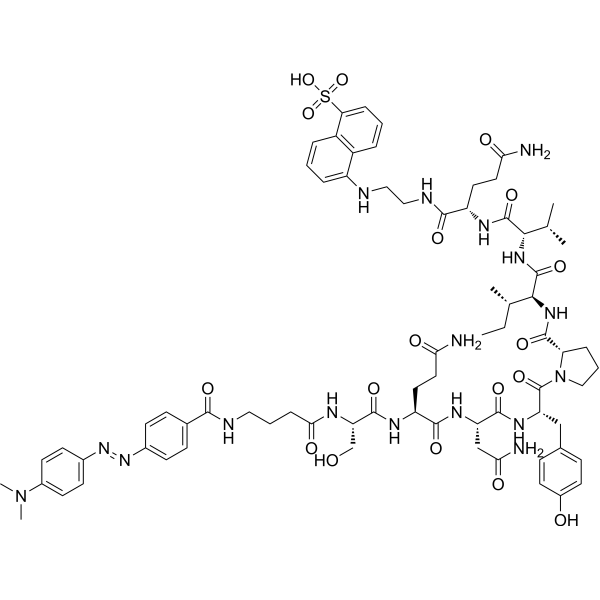
DABCYL-GABA-Ser-Gln-Asn-Tyr-Pro-Ile-Val-Gln-EDANS is a biological active peptide. (DABCYL-GABA-Ser-Gln-Asn-Tyr-Pro-Ile-Val-Gln-EDANS is also called HIV protease substrate I in some literature. It is widely used for the continuous assay for HIV protease activity. The 11-Kd protease (PR) encoded by the human immunodeficiency virus 1 (HIV-1) is essential for the correct processing of viral polyproteins and the maturation of infectious virus, and is therefore a target for the design of selective acquired immunodeficiency syndrome (AIDS) therapeutics. The FRET-based fluorogenic substrate is derived from a natural processing site for HIV-1 PR. Incubation of recombinant HIV-1 PR with the fluorogenic substrate resulted in specific cleavage at the Tyr-Pro bond and a time-dependent increase in fluorescence intensity that is linearly related to the extent of substrate hydrolysis. The fluorescence quantum yields of the HIV-1 PR substrate in the FRET assay increased by 40.0- and 34.4-fold, respectively, per mole of substrate cleaved. Because of its simplicity and precision in the determination of reaction rates required for kinetic analysis, this substrate offers many advantages over the commonly used HPLC or electrophoresis-based assays for peptide substrate hydrolysis by retroviral PRs. Abs/Em = 340nm/490nm.)
loading...
    loading...
Cat. No.: HY-L917
5,619 compounds

RNA is crucial for the regulation of numerous cellular processes and functions. With the in-depth study of disease mechanisms, processes such as RNA expression, splicing, translation, and stability regulation have become new targets for disease intervention. RNA has provided new therapeutic modalities for metabolic diseases, genetic disorders, and cancer patients, resulting in several innovative drugs.

MCE R&D team collected small molecules targeting RNA from the PDB, R-BIND, ROBIN, and internal database as the positive dataset, and non-targeting RNA small molecules from ROBIN as the negative dataset. Based on the GeminiMol pre-trained model, we encoded the molecules and calculated over 1700 molecular descriptors using Mordred as inputs for the model. Subsequently, we employed 13 deep learning models to learn from the data. All of which yielded good training results, with AUROCs greater than 0.75. Ultimately, we selected the Finetune model to screen HY-L901P, which exhibited the best classification performance, achieving an AUROC of 0.82 and a prediction accuracy of 0.76. We then applied filtering based on StaR rules (with at least two of the following properties: cLogP ≥ 1.5, Molar Refractivity ≥ 4, Relative Polar Surface Area ≤ 0.3) to obtain a library containing approximately 5,000 small molecule compounds targeting RNA. This library serves as a valuable tool for screening small molecules that interact with RNA.

Cat. No.: HY-L935
1039 compounds

POI (Protein of Interest) refers to the target protein, namely the disease-causing protein or key functional protein that undergoes degradation or functional modulation in molecular glue-mediated processes. The Molecular Glue POI Library consists of a series of fragments that can specifically bind to different types of POIs. As key components of molecular glues, these ligands form stable interactions with target proteins, laying the foundation for molecular glues to induce the interaction between POIs and E3 ubiquitin ligases. The covered POIs include various types such as cancer-associated GSPT1, androgen receptors, and abnormally aggregated proteins linked to neurodegenerative diseases.

This fragment library can be applied to the screening and optimization of targeted protein degraders. By screening ligands with high affinity and strong selectivity for specific POIs from the library, core structures can be identified to develop novel molecular glues. For instance, optimization of ligands targeting GSPT1 has yielded molecular glue degraders with enhanced degradation activity. Since many POIs are difficult to drug due to the lack of traditional small-molecule binding pockets, some ligands in the POI Ligand Library can modulate such POIs by inducing protein-protein interactions, thereby further expanding the scope of drug discovery for undruggable targets.

MCE has compiled a POI Fragment Library comprising thousands of POI fragments with molecular weights ranging from 150 to 400. This compound library can be widely applied in Molecular Glue research and development.

