
101 Results for "

IMPACT

" in MedChemExpress (MCE) Product Catalog:
Products (101)

101 Results for "IMPACT" in MCE Product Catalog:

Cat. No.: HY-137910
CAS No.: 335104-84-2
Purity:  98.84%
Research Areas:  

Infection

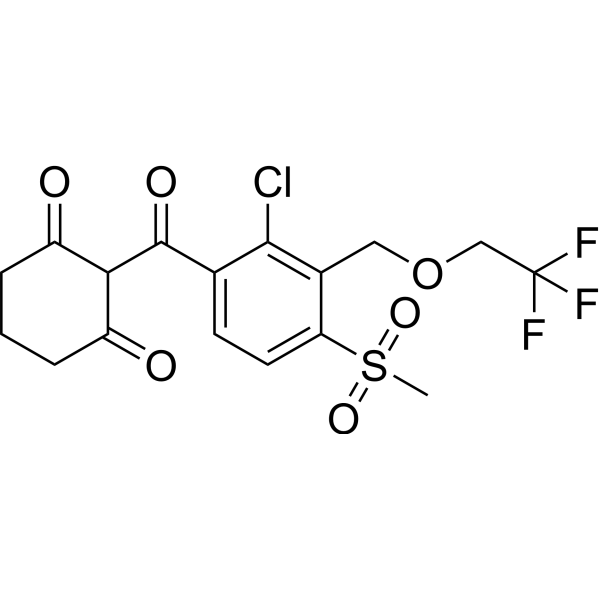
Tembotrione is a herbicide belonging to the HPPD (dioxygenase) inhibitor class with crop selectivity. Tembotrione effectively controls a variety of weeds including broadleaf and gramineous species by disrupting carotenoid synthesis, which leads to chlorophyll degradation and leaf whitening. Mixing Tembotrione with isoxaflutole or adding surfactants optimizes its efficacy and reduces phytotoxicity, with no residual impact on subsequent cruciferous crops, thus helping to increase maize grain yield. The activity of Tembotrione decreases under drought conditions, and under specific conditions (such as double-dose treatment), it may cause reversible yellowing and even yield reduction in crops such as poppy .
loading...
    loading...
Cat. No.: HY-P3688A
Synonyms: Aβ (1-38) TFA; Aβ38 TFA
Target:  

Amyloid-β

Research Areas:  

Neurological Disease

β-Amyloid (1-38) (Aβ (1-38)) TFA is a β-Amyloid (Aβ) peptide. β-Amyloid (1-38) TFA interferes with the conversion of Aβ(1-42) to a β-sheet-rich aggregate. β-Amyloid (1-38)TFA reverses the negative impact of Aβ(1-42) on long-term potentiation in acute hippocampal slices and on membrane conductance in primary neurons, and mitigates an Aβ(1-42) phenotype in Caenorhabditis elegans .
loading...
    loading...
Cat. No.: HY-W250147
CAS No.: 2580-56-5
Synonyms: Victoria blue B
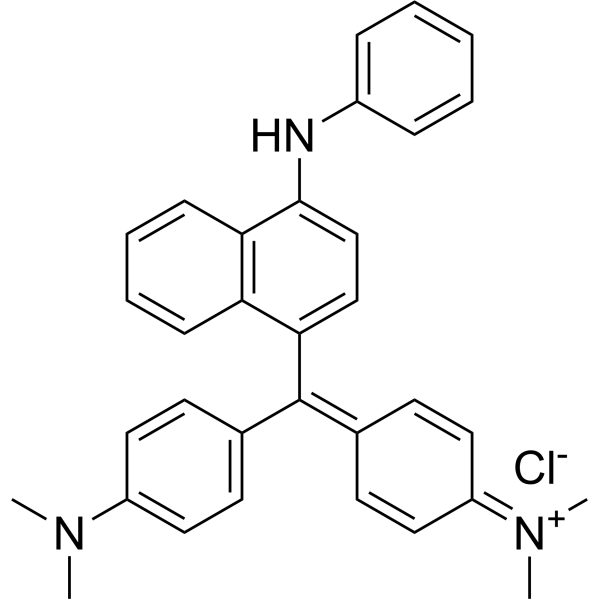
Basic blue 26 (Victoria blue B) is a synthetic cationic dye belonging to the class of triarylmethane dyes. It has a bright blue color and is commonly used as a colorant for a variety of applications, including textiles, paper and leather. Basic Blue 26 is also used as a biological stain for DNA and protein detection in laboratories. Due to its ability to bind negatively charged materials, it can be used as an indicator of the presence of specific molecules in biological samples. However, Basic blue 26 has been reported to have potentially harmful effects on human health and the environment and its use is regulated in some countries. Proper handling and disposal procedures are necessary to minimize its impact on the environment.
loading...
    loading...
Cat. No.: HY-W782399
CAS No.: 17363-08-5
Synonyms: Sodium boranocarbonate
CORM-A1 (Sodium boranocarbonate) is a water-soluble carbon monoxide (CO) releasing molecule that facilitates the investigation of CO's impact on cellular systems. As CO is generated from heme degradation by the enzyme heme oxygenase, it serves as a crucial gaseous signaling mediator in mammalian cells. CORM-A1 not only exhibits anti-oxidant and anti-inflammatory properties but also regulates CO release in a manner dependent on pH and temperature, promoting mild vasorelaxation and hypotension. Furthermore, CORM-A1 has been shown to provide cytoprotection in primary cultures of astrocytes under oxidative stress while also enhancing autophagy due to its boron-containing composition.
loading...
    loading...
Cat. No.: HY-163707
CAS No.: 866127-80-2
Target:  

Apoptosis

Research Areas:  

Cancer

UR778Br targets the GTPase-activating protein-related domain (GRD domain) of IQGAP1 proteins. UR778Br inhibits the proliferation of human acute myeloid leukemia (AML), arrests the cell cycle at the G2/M phase, and induces apoptosis. UR778Br inhibits colony formation of primary and AML cells, without significant impacts on normal bone marrow cells .
loading...
    loading...
Cat. No.: HY-B1839R
CAS No.: 79622-59-6
Fluazinam (Standard) is the analytical standard of Fluazinam (HY-B1839). This product is intended for research and analytical applications. Fluazinam is a broad spectrum pyridinamine fungal inhibitor. Fluazinam is an orally active dinitroaniline fungicide. Fluazinam induces phosphorylation of JNK, activates p38 pathway, decreases Bcl-2, activates caspase-3, decreases complex I activity, increases Autophagy and Apoptosis. Fluazinam has strong antifungal activity against F. fujikuroi and B. maydis. Fluazinam has a negative impact on Brachydanio rerio and worker bees .
loading...
    loading...
Cat. No.: HY-163854
CAS No.: 3048341-44-9
Target:  

HSP Apoptosis

Research Areas:  

Cancer

HSP70-IN-6 (JL-15) is an inhibitor of Hsp70-Bim protein-protein interaction, with an IC50 value of 0.07 μM against Hsp70-Bim PPI, an IC50 of 4.89 μM and a Kd of 0.123 μM for BimBH3-stimulated Hsp70 ATPase activity. HSP70-IN-6 selectively blocks the binding of Hsp70-Bim without affecting the Hsp70-Bag3 interaction, and inhibits BimBH3-stimulated Hsp70 ATPase activity but has no impact on basal ATPase activity. HSP70-IN-6 induces apoptosis (apoptosis) in chronic myeloid leukemia cells in an Hsp70-Bim-dependent manner. HSP70-IN-6 can be used in research related to chronic myeloid leukemia .
loading...
    loading...
Cat. No.: HY-W250169
CAS No.: 84133-50-6
Secondary alcohol polyoxyethylene ether is a sedimentation accelerator. Secondary alcohol polyoxyethylene ether improves the sedimentation performance of carbon black, iron powder, grinding wheel dust and their mixtures in fully synthetic grinding fluids. Secondary alcohol polyoxyethylene ether is compatible with anionic surfactants and does not have a negative impact on the rust prevention of parts .
loading...
    loading...
Cat. No.: HY-B0439S1
CAS No.: 1262770-70-6
Synonyms: Sulphadoxine d3
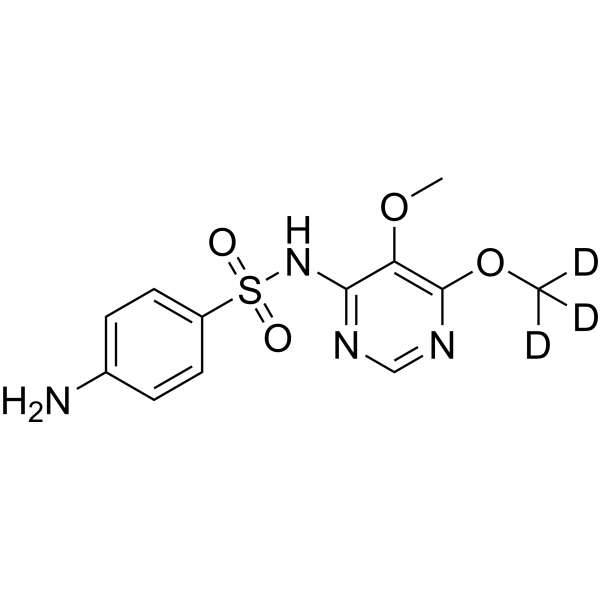
Sulfadoxine-d3 is a deuterium labeled Sulfadoxine (HY-B0439). Sulfadoxine is a sulfonamide that is used, usually in combination with Pyrimethamine(HY-18062), for multidrug-resistant Plasmodium falciparum and P. vivax inhibition. Unlike PYR, Sulfadoxine has no impact on HIV replication or MT-2 cell cycle progression. But also Sulfadoxine exhibits suppression on respiratory, and urinary tract infections .
loading...
    loading...
Cat. No.: HY-177758
Target:  

PROTACs HDAC

Research Areas:  

Cancer

PROTAC HDAC6 degrader 8 is a potent and selective HDAC6 PROTAC degrader with a DC50 of 1.94 nM. PROTAC HDAC6 degrader 8 induces HDAC6 degradation in cancer cells with a hook effect, and exerts no impact on other HDAC subtypes, IKZF1, IKZF3 or GSPT1. PROTAC HDAC6 degrader 8 can be used in studies related to multiple myeloma .
loading...
    loading...
Cat. No.: HY-P3688
CAS No.: 131438-74-9
Synonyms: Aβ (1-38); Aβ38
Target:  

Amyloid-β

Research Areas:  

Neurological Disease

β-Amyloid (1-38) (Aβ (1-38)) is a β-Amyloid (Aβ) peptide. β-Amyloid (1-38) interferes with the conversion of Aβ(1-42) to a β-sheet-rich aggregate. β-Amyloid (1-38) reverses the negative impact of Aβ(1-42) on long-term potentiation in acute hippocampal slices and on membrane conductance in primary neurons, and mitigates an Aβ(1-42) phenotype in Caenorhabditis elegans .
loading...
    loading...
Cat. No.: HY-139898
CAS No.: 1217341-48-4
Target:  

Taste Receptor

Research Areas:  

Others

S7958 is a selective and orally active antagonist of the TAS2R8 bitter taste receptor, with its IC50 being 0.06 μM. S7958 only has a weak inhibitory effect on TASR8 and TAS2R39, and has no significant impact on other receptors. S7958 significantly inhibits the perception of bitterness caused by substances such as coffee and drug active ingredients (API) by selectively antagonizing the human bitter taste receptor TAS2R8. S7958 can be used in the medical field to improve the research on the bitterness of oral preparations .
loading...
    loading...
Cat. No.: HY-158220C
Synonyms: HAMA (MW 50000)
Hyaluronic acid methacryloyl (HAMA) (MW 50000) is a methacrylate-modified hyaluronic acid that serves as a hydrogel former, hydrolysis-resistant material, photocrosslinkable hydrogel scaffold, and drug delivery carrier for tissue engineering. Hyaluronic acid methacryloyl (MW 50000) forms hydrogels via photocrosslinking; when combined with AuMA NPs through a one-step photocrosslinking method, its effective swelling ratio increases, and the mechanical reinforcement effect of Au NPs compensates for the impact caused by reduced crosslinking density. Hyaluronic acid methacryloyl (MW 50000) can be combined with AuMA NPs via a one-step photocrosslinking method, enabling non-invasive monitoring of hydrogel degradation with contrast-enhanced micro-CT .
loading...
    loading...
Cat. No.: HY-178176
Research Areas:  

Cancer

PROTAC CB1R Degrader-1 is a potent and selective CB1R PROTAC degrader that exploits the ubiquitin-proteasome system (UPS) achieving a DC50 of 3.37 μM in MCF-7 cells and showing no impact on CB2R. PROTAC CB1R Degrader-1 reduces CB1R-associated downstream signaling (p-AKT, p-ERK, BCL2, and MCM5), thereby inhibiting breast cancer cell proliferation and inducing apoptosis. PROTAC CB1R Degrader-1 can be used for breast cancer research .
loading...
    loading...
Cat. No.: HY-B2122R
CAS No.: 585-88-6
Maltitol (Standard) is the analytical standard of Maltitol (HY-B2122). This product is intended for research and analytical applications. Maltitol is an orally active polyol and sugar alcohol sweetener produced by the hydrogenation of maltose. Maltitol can replace sucrose and has characteristics of having a minor impact on blood sugar and potential prebiotic effects .
loading...
    loading...
Cat. No.: HY-W587768R
CAS No.: 60589-06-2
Synonyms: S-21074 (Standard)
Research Areas:  

Others

Metoxadiazone (Standard) is the analytical standard of Metoxadiazone. This product is intended for research and analytical applications. Metoxadiazone is a type of insecticide that effectively controls a wide range of insects, including cockroaches and ants. Metoxadiazone exerts its insecticidal effect by impacting the nervous system of insects. Metoxadiazone can be used for research into its potential toxicity to humans and other non-target organisms .
loading...
    loading...
Cat. No.: HY-113958
CAS No.: 104653-34-1
Synonyms: LM-2219
Target:  

VD/VDR

Research Areas:  

Others

Difethialone (LM-2219) is an anticoagulant rodenticide. Difethialone shows high rodenticide activity in warfarin-sensitive and resistant strains of rats and mice. Difethialone interferes with the circulation of vitamin K in the liver, preventing the synthesis of coagulation factors, resulting in the inability of the blood to coagulate properly, ultimately causing internal bleeding and death. Difethialone can be used in studies of ecological impacts .
loading...
    loading...
Cat. No.: HY-178937
Target:  

RIP kinase

Research Areas:  

Cancer

Anticancer agent 284 exhibits cytotoxicity against osteosarcoma cell line (Hos), non-small cell lung cancer cell line (A549), and colon cancer cell line (HCT-116). Anticancer agent 284 can impact the pRIPK3 kinase concentration in the A549 (2.97 pg/mL). Anticancer agent 284 can be used for the study of cancer .
loading...
    loading...
Cat. No.: HY-178174
Research Areas:  

Cancer

MGB4 is a DNA minor groove binder. MGB4 binds to ARE-containing DNA and inhibition of topoisomerase I activity. MGB4 can impacts key cellular pathways, including inhibition oftranslation and alterations in sphingolipid and amino acid metabolism. MGB4 also reduces spermine and spermidine metabolism companied with Doxorubicin (HY-15142A). MGB4 can be used for the research of cancer, such as Prostate cancer .
loading...
    loading...
Cat. No.: HY-113958R
CAS No.: 104653-34-1
Synonyms: LM-2219 (Standard)
Research Areas:  

Others

Difethialone (Standard) is the analytical standard of Difethialone. This product is intended for research and analytical applications. Difethialone (LM-2219) is an anticoagulant rodenticide. Difethialone shows high rodenticide activity in warfarin-sensitive and resistant strains of rats and mice. Difethialone interferes with the circulation of vitamin K in the liver, preventing the synthesis of coagulation factors, resulting in the inability of the blood to coagulate properly, ultimately causing internal bleeding and death. Difethialone can be used in studies of ecological impacts .
loading...
    loading...

