42 Results for "

exercise

" in MedChemExpress (MCE) Product Catalog:
Products (42)

42 Results for "exercise" in MCE Product Catalog:

Cat. No.: HY-159802
CAS No.: 38103-61-6
Target:  

Adrenergic Receptor

Research Areas:  

Endocrinology

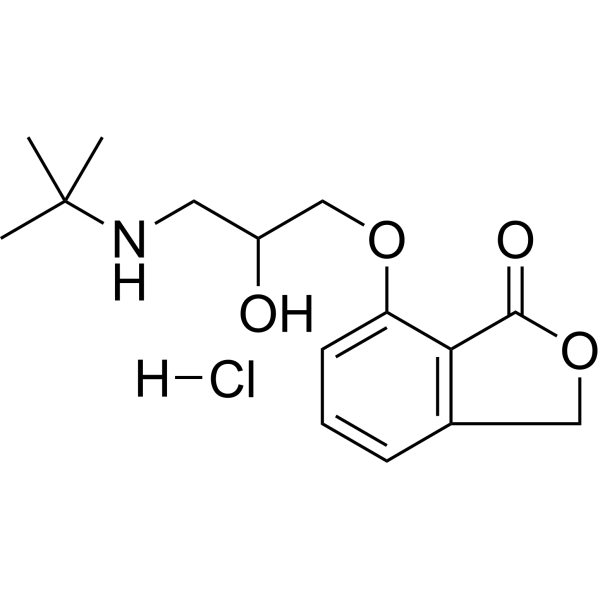
Tolamolol is a selective beta-adrenergic antagonist with significant activity in reducing exercise-induced ST-segment depression. Tolamolol is clinically equivalent to propranolol in suppressing angina and exhibits greater cardiac selectivity. Tolamolol is effective in reducing the frequency of angina attacks and the amount of glyceryl trinitrate used. Tolamolol is effective in lowering blood pressure and has a positive effect on increasing the amount of exercise that can be performed before angina attacks. The use of Tolamolol also helps improve the suppression of arrhythmias .
loading...
    loading...
Cat. No.: HY-116790B
CAS No.: 36507-48-9
Synonyms: (Rac)-Penbutolol; (±)-Isopenbutolol
Target:  

Adrenergic Receptor

Research Areas:  

Cardiovascular Disease

(±)-Penbutolol ((Rac)-Penbutolol) is the racemic mixture of Penbutolol. (±)-Penbutolol is an orally active β-adrenergic receptor antagonist. (±)-Penbutolol antagonizes exercise-induced tachycardia, reduces the increase in peak expiratory flow rate (PEFR) caused by exercise, and decreases resting plasma renin activity (PRA). (±)-Penbutolol reaches peak plasma concentration 1 hour after oral administration, with a half-life of 4.5 hours, and is converted into an active metabolite in the body. (±)-Penbutolol can be used in cardiovascular-related disease research .
loading...
    loading...
Cat. No.: HY-145528
CAS No.: 162041-08-9
Target:  

Endogenous Metabolite

Research Areas:  

Metabolic Disease

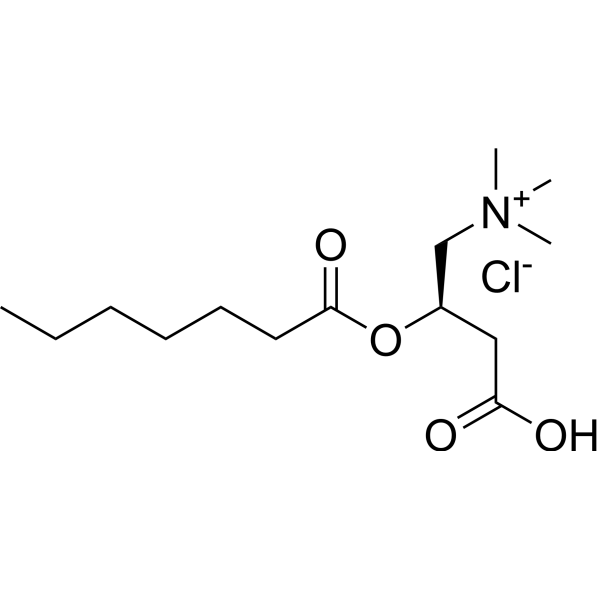
Heptanoyl-L-carnitine chloride (trans-3,4-methylene-heptanoylcarnitine) is an acylcarnitine. Heptanoyl-L-carnitine chloride causes exercise-induced alterations in the human metabolome in plasma and skeletal muscle tissue .
loading...
    loading...
Cat. No.: HY-N11972
CAS No.: 489-29-2
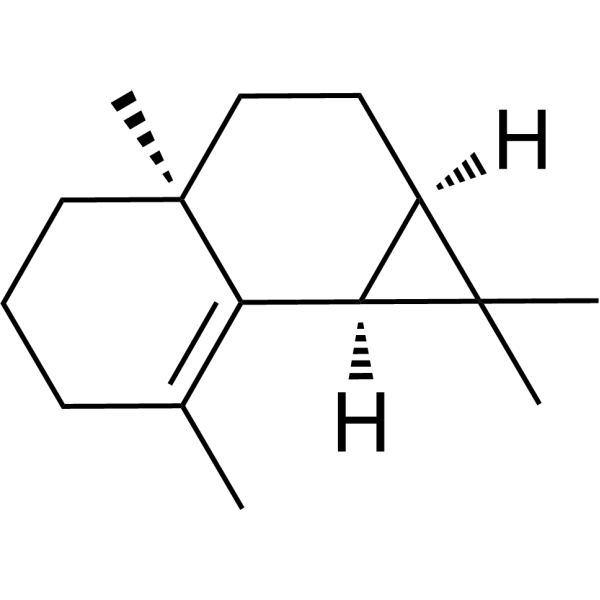
β-Maaliene can be isolated from the fresh leaves of Vitex densiflora (Maaliene) and is the main component in the isolate. β-Maaliene can significantly reduce the exercise capacity of mice at certain doses .
loading...
    loading...
Cat. No.: HY-107010
CAS No.: 396654-09-4
Target:  

Adrenergic Receptor

Research Areas:  

Cardiovascular Disease

Esprolol is an orally active and potent β-adrenergic receptor antagonist. Esprolol is rapidly metabolized by blood and tissue esterases to form the active metabolite amoxolol. Esprolol holds potential for research in exercise-induced angina .
loading...
    loading...
Cat. No.: HY-106667
CAS No.: 55104-39-7
Purity:  98.81%
Target:  

Adrenergic Receptor

DL 071IT is a potent non-selective beta-adrenergic receptor blocker. DL 071IT exhibits intrinsic sympathomimetic activity and weak membrane stabilizing activity. DL 071IT reduces exercise heart rate and systolic blood pressure, and even significantly lowers resting heart rate .
loading...
    loading...
Cat. No.: HY-150012R
CAS No.: 183241-73-8
Synonyms: Lac-Phe (Standard)
N-Lactoyl-phenylalanine (Standard) is the analytical standard of N-Lactoyl-phenylalanine. This product is intended for research and analytical applications. N-Lactoyl-phenylalanine, a N-lactoyl-amino acid, is a blood-derived signaling metabolite that can be induced by exercise. N-Lactoyl-phenylalanine can reduce obesity and improve glucose tolerance .
loading...
    loading...
Cat. No.: HY-117119
CAS No.: 259857-99-3
Target:  

5-HT Receptor

Research Areas:  

Metabolic Disease

VER-3323 is an oral active 5-HT2C agonist and belongs to the class of indoline analogs. VER-3323 reduces food intake in rats by inducing swallowing dysfunction, with no significant impact on energy expenditure generated through thermogenesis or exercise. VER-3323 can be utilized in obesity research .
loading...
    loading...
Cat. No.: HY-159686
CAS No.: 727649-81-2
Aclidinium is a long-acting muscarinic antagonist and long-acting β2-adrenoceptor2-AR) agonist with bronchodilator activity. Aclidinium can reduce hyperinflation of the lungs and increase lung function and exercise endurance time. Aclidinium is used in research on chronic obstructive pulmonary disease (COPD) .
loading...
    loading...
Cat. No.: HY-W012241S
CAS No.: 89613-32-1
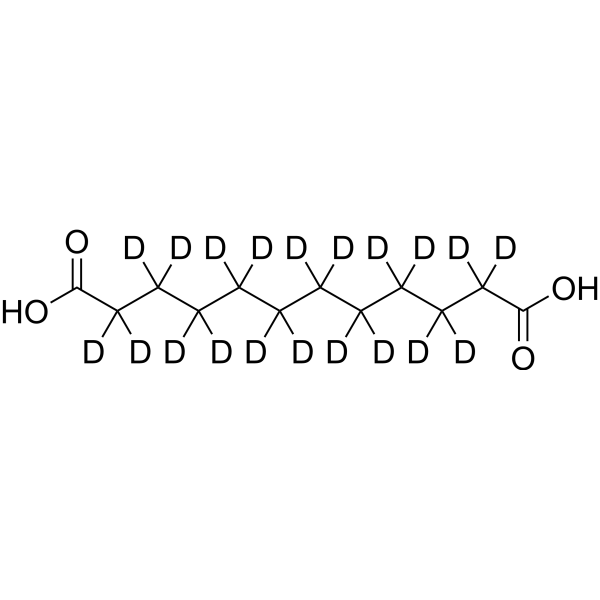
Dodecanedioic acid-d20 is the deuterium labeled Dodecanedioic acid (HY-W012241). Dodecanedioic acid is an orally active straight-chain dicarboxylic acid. As an alternative energy substrate between lipids and carbohydrates, Dodecanedioic acid can be rapidly oxidized during exercise, reducing muscle fatigue without stimulating insulin secretion. Dodecanedioic acid also exhibits blood glucose-lowering activity in non-insulin-dependent diabetes mellitus .
loading...
    loading...
Cat. No.: HY-W704968
CAS No.: 372078-42-7
Research Areas:  

Cardiovascular Disease

2-Oxo-zoniporide hydrochloride is an oral active sodium-hydrogen exchanger type 1 (NHE-1) inhibitor and can be used for study of myocardial ischemic injury .
loading...
    loading...
Cat. No.: HY-W777762
CAS No.: 1173019-20-9
Dodecanedioic Acid- 13C12 is the 13C-labeled Dodecanedioic acid (HY-W012241). Dodecanedioic acid is an orally active straight-chain dicarboxylic acid. As an alternative energy substrate between lipids and carbohydrates, Dodecanedioic acid can be rapidly oxidized during exercise, reducing muscle fatigue without stimulating insulin secretion. Dodecanedioic acid also exhibits blood glucose-lowering activity in non-insulin-dependent diabetes mellitus .
loading...
    loading...
Cat. No.: HY-15344A
CAS No.: 1251829-99-8
Target:  

Drug Isomer

Research Areas:  

Neurological Disease

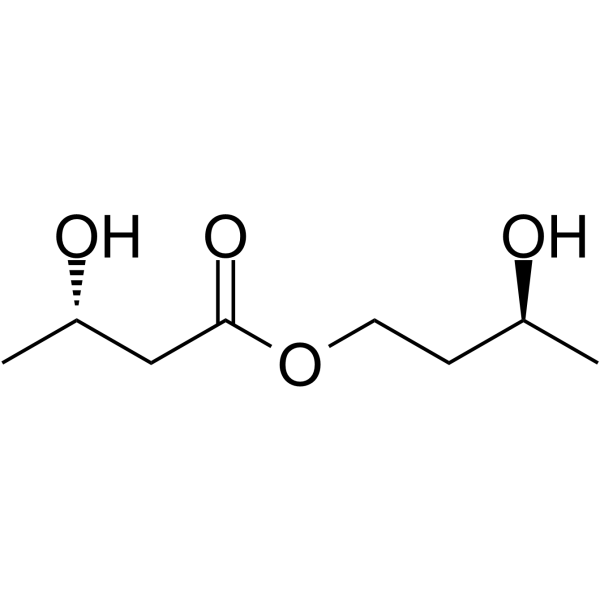
(S,S)-Ketone monoester is a (S,S)-enantiomer of Ketone monoester (HY-15344). Ketone monoester elevates the AcAc and acetone levels, thereby produces sustained ketosis and significantly delays central nervous system oxygen toxicity (CNS-OT) seizures .
loading...
    loading...
Cat. No.: HY-17428A
CAS No.: 91-81-6
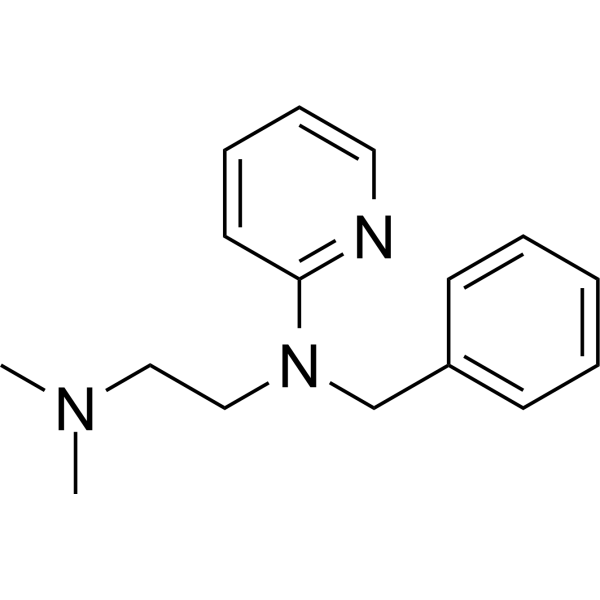
Tripelennamine is a histamine H1-receptor antagonist. Tripelennamine effectively reverses histamine-induced bronchoconstriction, increased transpulmonary pressure, elevated pulmonary vascular resistance and reduced dynamic compliance. Tripelennamine does not significantly affect arterial hypoxemia, hemoglobin desaturation and hypercapnia in horses undergoing short-term high-intensity exercise. Tripelennamine exhibits local and central analgesic activity. Tripelennamine can be used in studies related to emphysema, urticaria and acute laminitis .
loading...
    loading...
Cat. No.: HY-17428B
CAS No.: 6138-56-3
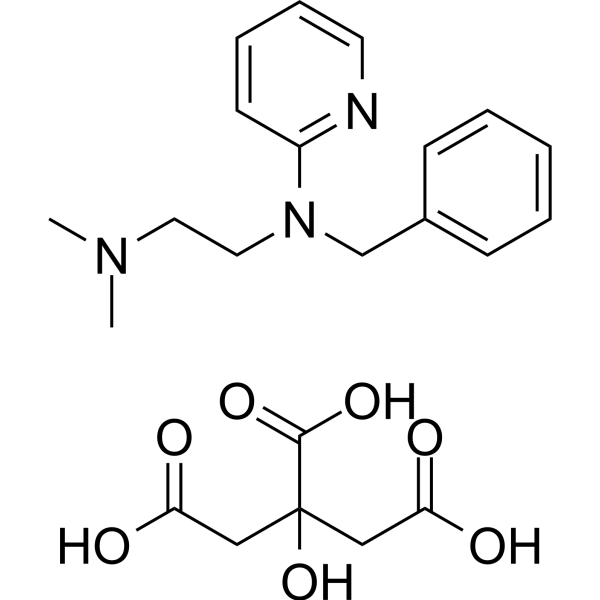
Tripelennamine citrate is a histamine H1-receptor antagonist. Tripelennamine citrate effectively reverses histamine-induced bronchoconstriction, increased transpulmonary pressure, elevated pulmonary vascular resistance and reduced dynamic compliance. Tripelennamine citrate does not significantly affect arterial hypoxemia, hemoglobin desaturation and hypercapnia in horses undergoing short-term high-intensity exercise. Tripelennamine citrate exhibits local and central analgesic activity. Tripelennamine citrate can be used in studies related to emphysema, urticaria and acute laminitis .
loading...
    loading...
Cat. No.: HY-17428R
CAS No.: 154-69-8
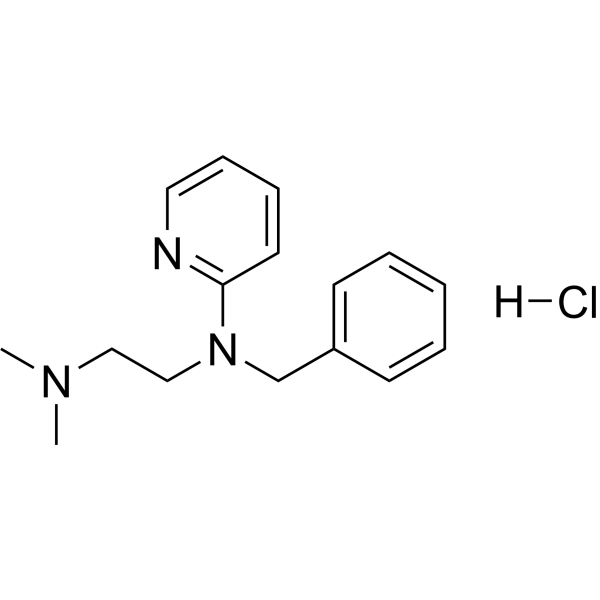
Tripelennamine hydrochloride (Standard) is the analytical standard of Tripelennamine hydrochloride (HY-17428). This product is intended for research and analytical applications. Tripelennamine hydrochloride is a histamine H1-receptor antagonist. Tripelennamine hydrochloride effectively reverses histamine-induced bronchoconstriction, increased transpulmonary pressure, elevated pulmonary vascular resistance and reduced dynamic compliance. Tripelennamine hydrochloride does not significantly affect arterial hypoxemia, hemoglobin desaturation and hypercapnia in horses undergoing short-term high-intensity exercise. Tripelennamine hydrochloride exhibits local and central analgesic activity. Tripelennamine hydrochloride can be used in studies related to emphysema, urticaria and acute laminitis .
loading...
    loading...
Cat. No.: HY-103164A
CAS No.: 148589-13-3
Synonyms: CSC
Target:  

Endogenous Metabolite

Research Areas:  

Neurological Disease

8-(3-Chlorostyryl)caffeine (CSC) is an adenosine antagonist with selective activity at the A2a adenosine receptor. 8-(3-Chlorostyryl)caffeine showed 520-fold selectivity in radioligand binding experiments in rat brain. Antagonism of adenylylase by 8-(3-Chlorostyryl)caffeine shows 22-fold selectivity in rat chromaffin cells When 8-(3-Chlorostyryl)caffeine is co-administered with the A1-selective antagonist CPX, It can also further increase exercise activity. 8-(3-Chlorostyryl)caffeine exhibits good MAO-B inhibitory activity in primate mitochondria. 8-(3-Chlorostyryl)caffeine also has excellent A2A receptor affinity .
loading...
    loading...
Cat. No.: HY-109121R
CAS No.: 1345410-31-2
Synonyms: CK-2127107 (Standard)
Reldesemtiv (Standard) is the analytical standard of Reldesemtiv (HY-109121). This product is intended for research and analytical applications. Reldesemtiv (CK-2127107) is a selective, orally active and next-generation fast skeletal muscle troponin activator (FSTA). Reldesemtiv selectively activates fast skeletal myofibrils with an EC50 of 3.4 μM. Reldesemtiv increases exercise performance in a heart failure model .
loading...
    loading...
Cat. No.: HY-150012S2
CAS No.: 3080778-97-5
Synonyms: Lac-Phe-d5
N-Lactoyl-phenylalanine-d5 (Lac-Phe-d5) is the deuterium labeled N-Lactoyl-phenylalanine (HY-150012). N-Lactoyl-phenylalanine, a N-lactoyl-amino acid, is a blood-derived signaling metabolite that can be induced by exercise. N-Lactoyl-phenylalanine can reduce obesity and improve glucose tolerance.
loading...
    loading...
Cat. No.: HY-111259
CAS No.: 81228-35-5
Target:  

Endogenous Metabolite

Research Areas:  

Cardiovascular Disease

Ro 31-1118 Free base is a compound exhibiting weak antihypertensive activity in patients with mild hypertension. Ro 31-1118 Free base demonstrated a reduction in heart rates and blood pressure post-exercise at varying doses. Ro 31-1118 Free base exhibited linear pharmacokinetics within the 10-80 mg dose range. Ro 31-1118 Free base showed no significant impact on diastolic blood pressure or adverse effects during the study.
loading...
    loading...

