
72 Results for "

interferon pathway

" in MedChemExpress (MCE) Product Catalog:
Products (72)

72 Results for "interferon pathway" in MCE Product Catalog:

1
1 Cited Publications
Cat. No.: HY-113308S1
CAS No.: 2410279-96-6
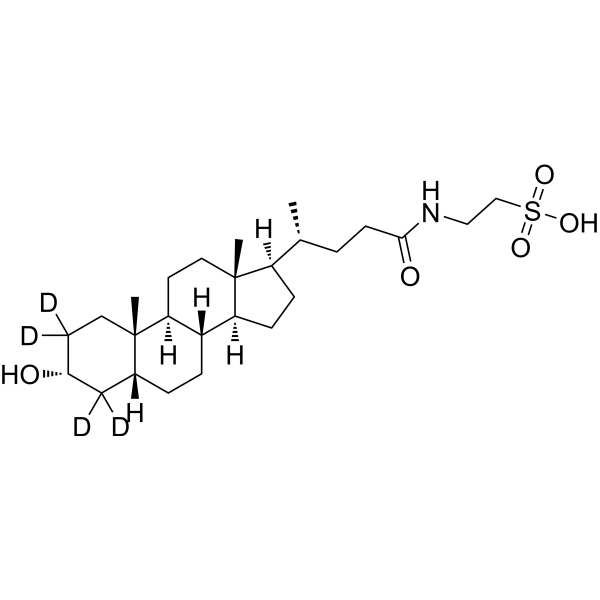
Taurolithocholic acid-d4 is deuterium labeled Taurolithocholic acid. Taurolithocholic acid is an orally active bile acid and antiviral agent. Taurolithocholic acid upregulates FADS2 by activating the TGR5-PI3K/AKT-SREBP2 signaling axis, inhibits SFTSV-induced ferroptosis, viral replication and viral entry of HBV/HDV, while reducing the release of IL-1β, lipid ROS and LDH. While exerting antiviral protective effects, Taurolithocholic acid also stimulates the recycling of hepatocellular membrane transporters, impairs canalicular bile acid secretion function, and induces hepatocyte cholestasis, apoptosis and acute hepatocellular injury. Taurolithocholic acid serves as an experimental model compound for hepatocellular cholestasis. At concentrations ≤200 μM, Taurolithocholic acid shows no cytotoxicity and does not activate the interferon pathway. Taurolithocholic acid not only protects mice from lethal SFTSV infection but also is suitable for studies related to severe fever with thrombocytopenia syndrome and cholestasis .
loading...
    loading...
1
1 Cited Publications
Cat. No.: HY-113308AS
CAS No.: 2410279-97-7
Purity:  99.4%
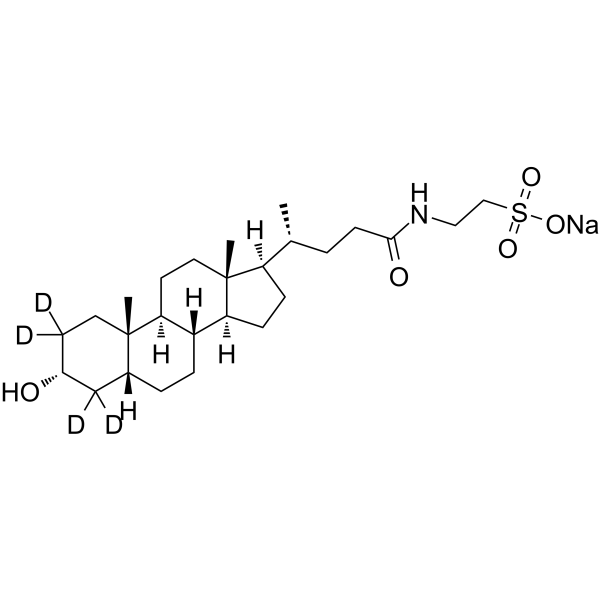
Taurolithocholic acid-d4 (sodium) is the deuterium labeled Taurolithocholic acid (sodium salt). Taurolithocholic acid sodium is an orally active bile acid and antiviral agent. Taurolithocholic acid sodium upregulates FADS2 by activating the TGR5-PI3K/AKT-SREBP2 signaling axis, inhibits SFTSV-induced ferroptosis, viral replication and viral entry of HBV/HDV, while reducing the release of IL-1β, lipid ROS and LDH. While exerting antiviral protective effects, Taurolithocholic acid sodium also stimulates the recycling of hepatocellular membrane transporters, impairs canalicular bile acid secretion function, and induces hepatocyte cholestasis, apoptosis and acute hepatocellular injury. Taurolithocholic acid sodium serves as an experimental model compound for hepatocellular cholestasis. At concentrations ≤200 μM, Taurolithocholic acid sodium shows no cytotoxicity and does not activate the interferon pathway. Taurolithocholic acid sodium not only protects mice from lethal SFTSV infection but also is suitable for studies related to severe fever with thrombocytopenia syndrome and cholestasis .
loading...
    loading...
Cat. No.: HY-172736
CAS No.: 3005272-36-3
Synonyms: BMS-986458
Target:  

PROTACs BCL6 CD20

Research Areas:  

Cancer

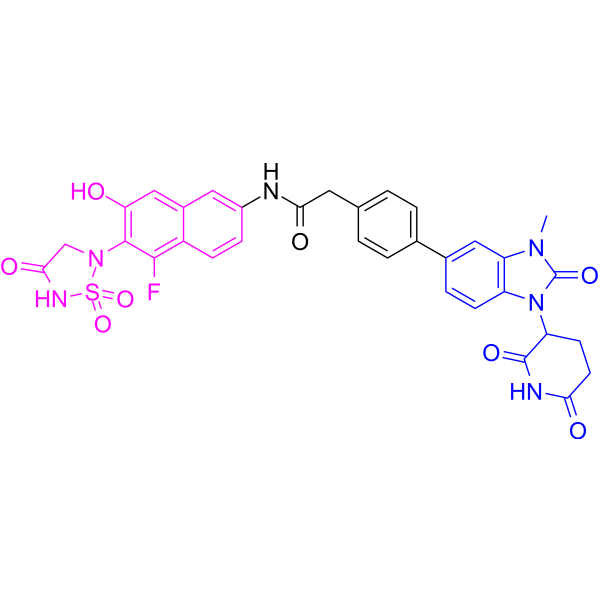
Toviblideg (BMS-986458) is a highly selective, orally active cereblon-based BCL6 PROTAC degrader and antitumor agent. Toviblideg selectively degrades BCL6 by binding cereblon to the BTB domain of BCL6, thereby regulating the cell cycle, antiproliferative and interferon signaling pathways, and upregulating the expression and distribution of CD20. Toviblideg modulates the phenotype of follicular helper T cells and reduces circulating tumor DNA levels. The combination of Toviblideg with CD20xCD3 bispecific antibody also enhances the efficiency of T cell tumor infiltration and expansion. Toviblideg induces regression of BCL6-positive tumors and prolongs survival, and it is suitable for research related to B-cell non-Hodgkin lymphoma, diffuse large B-cell lymphoma, follicular lymphoma, and relapsed/refractory lymphoma .
loading...
    loading...
Cat. No.: HY-164919
CAS No.: 2847102-44-5
Synonyms: XMT-2056
Calotatug ginistinag (XMT-2056) is an antibody-drug conjugate (ADC) targeting HER2, linked to a payload composed of XMT-1519 conjugate-1 (HY-148067) and STING agonist-20 (HY-148068). Calotatug ginistinag activates the STING signaling pathway in tumor cells and tumor-resident immune cells, induces the production of type I interferons and cytokines (CXCL10, IFN-β, IL-6, TNF-α, triggers innate anti-tumor immune responses, and exerts a bystander effect. Calotatug ginistinag exhibits efficacy against HER2-expressing cancer cells in co-culture with PBMCs. Calotatug ginistinag induces tumor regression and reduces systemic inflammation in various tumor models. Combination treatment with Calotatug ginistinag, Trastuzumab (HY-P9907) and T-DXd (HY-138298) yields benefits. Calotatug ginistinag can be used in studies related to HER2-expressing solid tumors such as breast cancer, gastric cancer and ovarian cancer .
loading...
    loading...
Cat. No.: HY-176426
Research Areas:  

Cancer

Subquinocin is a tumor suppressor CYLD inhibitor that inhibits USP family deubiquitinases (DUBs) activity of CYLD with an IC50 of 30 μM. Subquinocin enhances the activation of NF-κB and IFN pathways by inhibiting CYLD. Subquinocin promotes RIG-I-mediated activation of IRF3/IRF7 in the interferon pathway. Subquinocin can be used for the research of cancer and neurodegenerative diseases .
loading...
    loading...
Cat. No.: HY-P9990
CAS No.: 2407378-48-5
Synonyms: BIIB059
Litifilimab (BIIB059) is a humanized IgG1 monoclonal antibody targeting BDCA2. Litifilimab induces internalization of BDCA2 receptors on the membrane of plasmacytoid dendritic cells, inhibits the TLR7/TLR9 signaling pathway, and suppresses the production of type I interferons. Litifilimab can be used in the research of systemic and cutaneous lupus erythematosus .
loading...
    loading...
Cat. No.: HY-177338
CAS No.: 2361424-97-5
STING agonist-45 is a selective STING agonist (EC50 = 0.28 μM). STING agonist-45 activates the innate immune response through the cGAS-STING pathway, upregulating key markers such as p-TBK1 and IRF3. STING agonist-45 exhibits robust STING activation in human peripheral blood mononuclear cells (PBMCs), inducing the production of type I interferons (such as IFN-β) and downstream cytokines (such as TNF-α and IL-6). STING agonist-45 enhances anti-tumor immunity, inhibits tumor growth, and increases CD8 + T cell infiltration in mouse models. STING agonist-45 is promising for the study of STING-related diseases .
loading...
    loading...
Cat. No.: HY-Y0148
CAS No.: 1679-53-4
Synonyms: NSC 15139; 10-HDAA
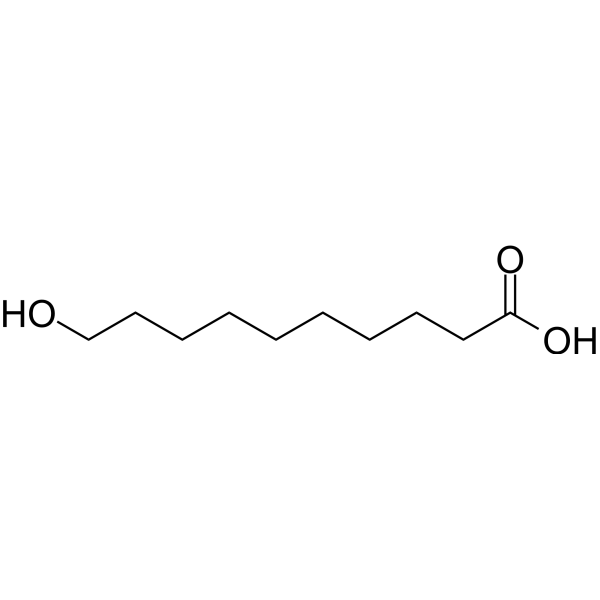
10-Hydroxydecanoic acid (10-HDAA) is a saturated fatty acid derived from 10-hydroxy-trans-2-decenoic acid, which can be isolated from royal jelly. 10-Hydroxydecanoic acid exhibits various biological activities, including anti-inflammatory, insecticidal, anti-malarial, and anti-Leishmania properties, as well as enhancing antigen-specific immune responses. The anti-inflammatory effects of 10-Hydroxydecanoic acid are primarily mediated by inhibiting the activation of NF-κB and the translation of interferon regulatory factor 1 (IRF-1), which reduces the production of interleukin 6 (IL-6) and nitric oxide (NO) in inflammatory cells. Additionally, 10-Hydroxydecanoic acid alleviates neuroinflammatory responses through the p53-autophagy pathway and the p53-NLRP3 pathway. Finally, 10-Hydroxydecanoic acid enhances antigen-specific immune responses by promoting the effective uptake of antigens by microfold cells .
loading...
    loading...
Cat. No.: HY-148691
CAS No.: 2655638-07-4
Purity:  95.01%
Target:  

PROTACs Phosphatase

Research Areas:  

Metabolic Disease Cancer

PROTAC PTPN2 degrader-1 is a PROTAC degrader targeting non-receptor protein tyrosine phosphatase 2 (PTPN2), with a DC50 of 18 nM in 293T cells. It exhibits an IC50 of 22 nM against PTPN2. Through highly selective degradation and inhibition of PTPN2 phosphatase, PROTAC PTPN2 degrader-1 relieves the negative regulation of the IFNγ pathway, upregulates interferon signaling, activates effector T cells, and enhances anti-tumor immunity. PROTAC PTPN2 degrader-1 can be used in melanoma-related research .
loading...
    loading...
Cat. No.: HY-173679
CAS No.: 2569517-30-0
Research Areas:  

Infection Cancer

RBN012811 is a highly selective PROTAC-based PARP14 degrader. RBN012811 forms a ternary complex with cereblon by binding to the NAD + site of PARP14, and mediates the specific degradation of PARP14 via the ubiquitin-proteasome pathway (IC50=10 nM). RBN012811 effectively depletes endogenous PARP14 in various cell lines and primary human macrophages, thereby downregulating IL-10 production and IFN-β mRNA levels, increasing phosphorylated STAT1 levels to enhance inflammatory signaling, and inhibiting interferon-induced ADPr condensate formation. RBN012811 also modulates viral replication, exhibiting increased HSV1 replication while reducing VSV replication. RBN012811 has important application value in research related to cancer and viral infections .
loading...
    loading...
Cat. No.: HY-164288
CAS No.: 2287331-29-5
Synonyms: TDI-006570
TDI-6570 (TDI-006570) is a blood-brain barrier-permeable, orally active cGAS inhibitor with an IC50 of 1.64 μM. TDI-6570 exhibits high gastrointestinal absorption and a long brain half-life in mice, and shows no toxicity to primary neurons. By inhibiting the cGAS-STING-IFN signaling pathway, TDI-6570 reduces STING levels and the activation of TBK1, blocks double-stranded DNA-induced cGAS activation and downstream interferon-stimulated gene expression, thereby reducing tau protein spread and improving synaptic loss. TDI-6570 reverses memory deficits, increases the amplitude of long-term potentiation, enhances the MEF2C transcriptional network, restores PSD-95 and vGAT punctate structures, and significantly improves cognitive resilience. TDI-6570 can be applied to the research of Alzheimer's disease, Parkinson's disease, systemic lupus erythematosus, as well as various central nervous system and autoimmune diseases .
loading...
    loading...
Cat. No.: HY-158432
CAS No.: 3057627-63-8
Purity:  99.84%
Research Areas:  

Cancer

GT-653 is a selective KDM5B PROTAC degrader. GT-653 induces ubiquitination and degradation of KDM5B without altering the transcriptional level of KDM5B. GT-653 upregulates the level of H3K4me3. GT-653 activates the type I Interferon signaling pathway. GT-653 can be used for the research of prostate cancer .
loading...
    loading...
Cat. No.: HY-162465
CAS No.: 335401-44-0
Target:  

STING IFNAR

Research Areas:  

Cancer

BDW568 is a selective STING A230 agonist with an EC50 of 5.7 μM. BDW568 triggers the interferon signaling pathway and induces the expression of interferon-stimulated genes including MX1 and OAS1. BDW568 is applicable for cancer-related research .
loading...
    loading...
Cat. No.: HY-169853
CAS No.: 1189495-81-5
M351-0056 is an orally active VISTA agonist with a Kd value of 12.60 μM. M351-0056 inhibits the activation of the JAK2-STAT2 pathway, reduces the phosphorylation levels of JAK2 and STAT2, and regulates type I interferon (IFN-I) and non-canonical NF-κB pathways. M351-0056 decreases the levels of cytokines (IFN-γ, IL-17A, TNF-α, IL-2 and IL-1β). M351-0056 improves imiquimod (HY-B0180)-induced psoriasis-like skin inflammation, reduces autoantibody levels, kidney damage and immune cell expansion in mice susceptible to chronic graft-versus-host disease and lupus, and delays the progression of systemic lupus erythematosus. M351-0056 can be used in research related to psoriasis-like dermatitis and systemic lupus erythematosus .
loading...
    loading...
Cat. No.: HY-P2114
CAS No.: 173959-12-1
Target:  

Inhibitory Antibodies

Research Areas:  

Cancer

IT9302 is a synthetic IL-10 agonist with the activity of inducing tolerogenic dendritic cells. IT9302 is able to mimic multiple effects of IL-10, including downregulating the antigen presentation machinery and increasing the sensitivity of tumor cells to natural killer cell-mediated lysis. IT9302 can also hinder the response of human monocytes to differentiation factors and reduce the antigen presentation and co-stimulatory capacity of dendritic cells. Dendritic cells treated with IT9302 showed a weakened ability to stimulate T cell proliferation and interferon-γ production. IT9302 exerts its effects through mechanisms that are partially different from IL-10, involving STAT3 inactivation and regulation of the NF-κB intracellular pathway. IT9302-treated dendritic cells showed enhanced expression of membrane-bound TGF-β, associated with the effective induction of foxp3+ regulatory T cells .
loading...
    loading...
Cat. No.: HY-105067A
CAS No.: 922174-60-5
Synonyms: GV-1001 hydrochloride
Tertomotide hydrochloride (GV-1001 hydrochloride) is a 16-amino acid peptide derived from hTERT, with both cell-penetrating and immunostimulatory activities, and it can cross the blood-brain barrier. Tertomotide hydrochloride binds to STING, HO-1, eHSP70, eHSP90, bradykinin receptor 1, VEGFR-2, NF-κB, p38 MAPK and Smad2. Tertomotide hydrochloride induces type I interferon production, mitochondrial DNA stress and T-cell responses; inhibits HBV replication, angiogenesis, TGF-β signaling pathway, NF-κB activation, endothelial-mesenchymal transition (EndMT) and fibrosis; regulates microglia; and exerts neuroprotective, anti-inflammatory, antioxidant, anti-apoptotic and anti-tumor effects. Tertomotide hydrochloride can be used in research related to hepatitis B virus infection, Alzheimer's disease, non-small cell lung cancer, atherosclerosis and depression .
loading...
    loading...
Cat. No.: HY-151264
CAS No.: 2727249-47-8
Purity:  98.3%
Target:  

STING

Research Areas:  

Cancer

BSP16 is a potent, orally active stimulator of interferon genes (STING) agonist. BSP16 can selectively stimulate the STING pathway. BSP16 can be used for the research of cancer .
loading...
    loading...
Cat. No.: HY-113308AR
CAS No.: 6042-32-6
Taurolithocholic acid (sodium salt) (Standard) is the analytical standard of Taurolithocholic acid (sodium salt). This product is intended for research and analytical applications. Taurolithocholic acid sodium salt is an orally active bile acid and antiviral agent. Taurolithocholic acid sodium salt upregulates FADS2 by activating the TGR5-PI3K/AKT-SREBP2 signaling axis, inhibits SFTSV-induced ferroptosis, viral replication and viral entry of HBV/HDV, while reducing the release of IL-1β, lipid ROS and LDH. While exerting antiviral protective effects, Taurolithocholic acid sodium salt also stimulates the recycling of hepatocellular membrane transporters, impairs canalicular bile acid secretion function, and induces hepatocyte cholestasis, apoptosis and acute hepatocellular injury. Taurolithocholic acid sodium salt serves as an experimental model compound for hepatocellular cholestasis. At concentrations ≤200 μM, Taurolithocholic acid sodium salt shows no cytotoxicity and does not activate the interferon pathway. Taurolithocholic acid sodium salt not only protects mice from lethal SFTSV infection but also is suitable for studies related to severe fever with thrombocytopenia syndrome and cholestasis .
loading...
    loading...
Cat. No.: HY-P5522
CAS No.: 877462-71-0
Synonyms: L-Ala-γ-D-Glu-meso-diaminopimelic acid
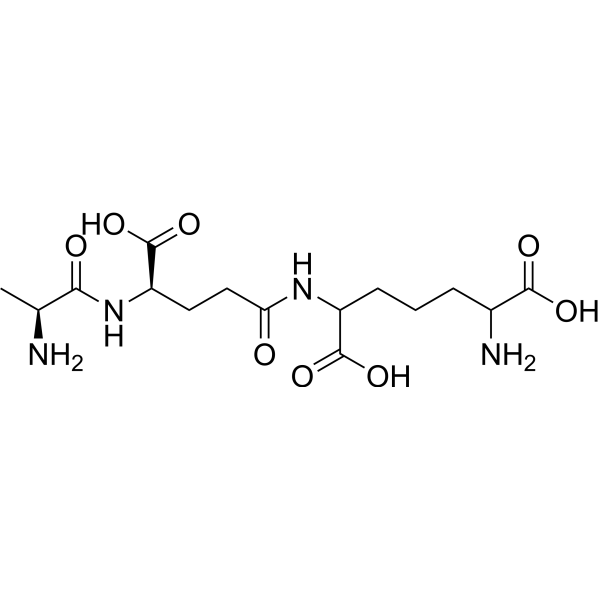
TriDAP (L-Ala-γ-D-Glu-meso-diaminopimelic acid) is a NOD1 agonist with a Kd value of 34.5 μM. TriDAP enhances the binding of NOD1-RICK, promotes RICK phosphorylation, and activates the NF-κB, TAK1, MEK/ERK, p38 and interferon response pathways. TriDAP downregulates Runx2 via increasing ubiquitination and reduces trabecular bone parameters. TriDAP decreases IκBα levels and increases p65 levels. TriDAP induces the secretion of proinflammatory mediators IL-8 and prostaglandins, triggers tissue inflammation and innate immune activation, and inhibits SARS-CoV-2 replication in lung epithelial cells. TriDAP increases the RANKL/OPG ratio in mice, reduces bone mass and enhances osteoclast activity, and inhibits new bone formation by decreasing the mineralization deposition rate in mice. TriDAP can be used in research related to pulpitis, chronic ulcerative colitis, Crohn's disease and SARS-CoV-2 infection .
loading...
    loading...
Cat. No.: HY-176257
CAS No.: 3078213-34-7
Target:  

STING

Research Areas:  

Cancer

STING agonist-44 (Compound 4) is a potent and selective STING agonist with an EC50 value of 5.68 for IRF induction in THP1 cells and 2.212 μM in RAW cells. STING agonist-44 activates the STING pathway, inducing the production of type I interferons and pro-inflammatory cytokines (e.g., CXCL10, TNFα). STING agonist-44 is promising for research of cancers .
loading...
    loading...

