37 Results for "

nitrogen source

" in MedChemExpress (MCE) Product Catalog:
Products (37)

37 Results for "nitrogen source" in MCE Product Catalog:

Cat. No.: HY-Y0271R
CAS No.: 57-13-6
Synonyms: Carbonyl diamide (Standard)
Urea (Standard) is the analytical standard of Urea. This product is intended for research and analytical applications. Urea is a powerful protein denaturant via both direct and indirect mechanisms . A potent emollient and keratolytic agent . Used as a diuretic agent. Blood urea nitrogen (BUN) has been utilized to evaluate renal function . Widely used in fertilizers as a source of nitrogen and is an important raw material for the chemical industry.
loading...
    loading...
Cat. No.: HY-134560
CAS No.: 147795-40-2
Purity:  99.62%
Synonyms: 3-Oxo-C10-HSL
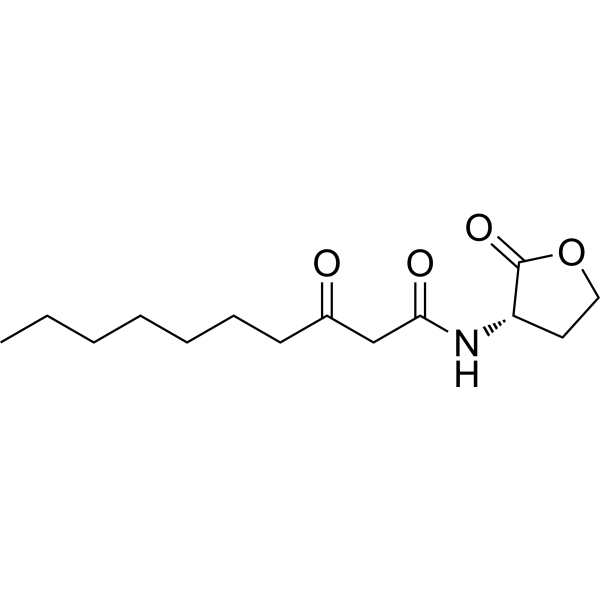
N-(3-Oxodecanoyl)-L-homoserine lactone (3-Oxo-C10-HSL) is a bacterial signaling molecule with quorum-sensing agonistic activity and competitive antagonistic activity against short-chain AHLs. N-(3-Oxodecanoyl)-L-homoserine lactone binds to VanR to form a complex, activates the transcription of the vanI gene, and establishes an autoregulatory loop for its own synthesis. N-(3-Oxodecanoyl)-L-homoserine lactone inhibits the synthesis of violacein induced by short-chain AHLs. N-(3-Oxodecanoyl)-L-homoserine lactone serves as the sole carbon and nitrogen source for Rhodococcus erythropolis W2 and can be completely degraded. N-(3-Oxodecanoyl)-L-homoserine lactone can be used in studies related to bacterial infections .
loading...
    loading...
Cat. No.: HY-157372
Peptone Bacteriological is used as a medium material to provide nitrogen source and amino acid for bacterial growth .
loading...
    loading...
Cat. No.: HY-B0504S5
Synonyms: NSC13123-15N
Creatinine- 15N (NSC13123- 15N) is the 15N-labeled Creatinine (HY-B0504). Creatinine (NSC13123) is an orally active, blood-brain barrier-permeable modulator of GABAA and NMDA receptors, with activities of antioxidation and metabolic regulation. Creatinine is generated via non-enzymatic conversion of creatine and phosphocreatine in muscle. Creatinine serum levels correlate with muscle mass, glomerular filtration rate, and extrarenal clearance, serving as an evaluation biomarker for renal function, muscle mass, and clinical outcomes, and used for perioperative renal risk assessment. In addition, Creatinine can induce specific Cryptococcus species to produce creatinine deiminase and act as their nitrogen source, while it can be secreted via renal tubules. Creatinine is widely used in research related to various diseases such as neurodegenerative diseases, psychiatric disorders, acute kidney injury, chronic kidney disease, and renal failure .
loading...
    loading...
Cat. No.: HY-117293
CAS No.: 19792-91-7
Target:  

Drug Intermediate

Research Areas:  

Others

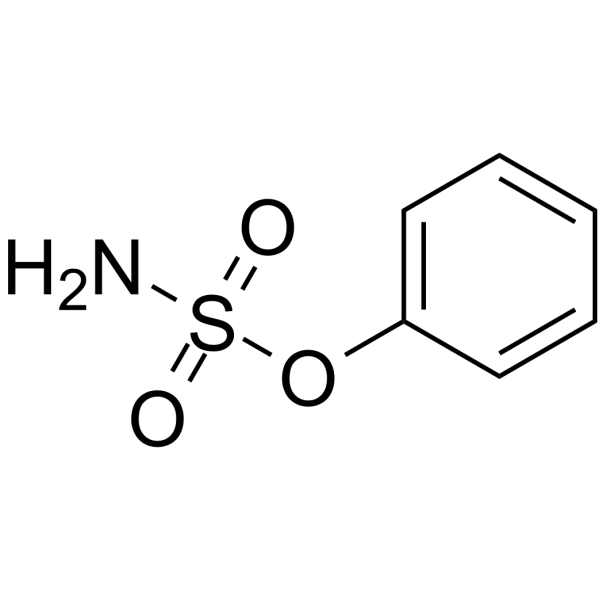
Phenyl sulfamate is a nitrogen source that can be used in the amination of intermolecular .
loading...
    loading...
Cat. No.: HY-W010378R
CAS No.: 2058-58-4
Synonyms: H-D-Asn-OH (Standard)
D-Asparagine (Standard) (H-D-Asn-OH (Standard)) is the analytical standard of D-Asparagine (HY-W010378). This product is intended for research and analytical applications. D-Asparagine (H-D-Asn-OH) is a competitive inhibitor of L-Asparagine hydrolysis with a Ki value of 0.24 mM. D-Asparagine is a source of nitrogen for yeast strains. D-Asparagine is a good substrate for the external yeast asparaginase but is a poor substrate for the internal enzyme.
loading...
    loading...
Cat. No.: HY-W008150R
CAS No.: 4026-18-0
Synonyms: α-Hydroxyisovaleric acid (Standard)
2-Hydroxy-3-methylbutanoic acid (α-Hydroxyisovaleric acid) (Standard) is the analytical standard of 2-Hydroxy-3-methylbutanoic acid (HY-W008150). This product is intended for research and analytical applications. 2-Hydroxy-3-methylbutanoic acid is an α-hydroxy analogue of valine and a valine precursor that reduces urea excretion. 2-Hydroxy-3-methylbutanoic acid can promote the growth of chickens and rats, and is converted into valine in the body, participating in protein synthesis and maintaining nitrogen balance, thereby supporting animal growth and development. 2-Hydroxy-3-methylbutanoic acid has a more significant effect on the valine-deficient dietary model. 2-Hydroxy-3-methylbutanoic acid is mainly used in animal nutrition research to evaluate its potential application as a nitrogen source substitute in feed.
loading...
    loading...
Cat. No.: HY-W794670
CAS No.: 61430-14-6
Target:  

Aminopeptidase

Research Areas:  

Others

H-Ala-Pro-Ala-OH, tripeptide, is a substrate for Escherichia coli PepP (Xaa-Pro aminopeptidase). H-Ala-Pro-Ala-OH acts as a nitrogen source for wild-type Escherichia coli .
loading...
    loading...
Cat. No.: HY-W002114
CAS No.: 2374-03-0
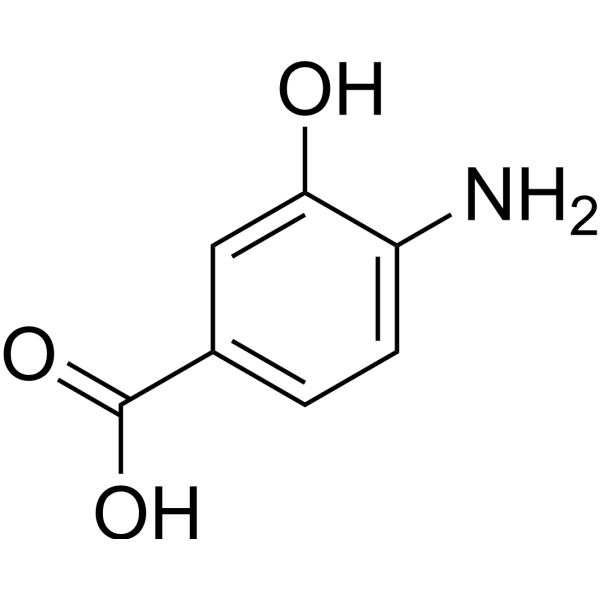
4-Amino-3-hydroxybenzoic acid is an aromatic substrate degradable by Bordetella sp. strain 10d. 4-Amino-3-hydroxybenzoic acid can serve as a carbon source, nitrogen source and energy source for the growth of Bordetella sp. strain 10d. 4-Amino-3-hydroxybenzoic acid acts as a substrate for 2-amino-5-carboxymuconate-6-semialdehyde deaminase and 4-amino-3-hydroxybenzoate 2,3-dioxygenase .
loading...
    loading...
Cat. No.: HY-W145053
CAS No.: 149358-73-6
Synonyms: Sodium chloro(4-methylbenzenesulfonyl)azanide hydrate
Target:  

Factor Xa Bacterial

Research Areas:  

Infection

ChloraMine-T hydrate (Sodium chloro(4-methylbenzenesulfonyl)azanide (hydrate)) is a common reagent in various synthetic processes. It has been used as a reagent in aminohydroxylation and allylic amination reactions, a nitrogen source in aziridination reactions of alkenes and alkenes, and deprotection of sulfur groups in sulfur-containing compounds. It has been used as a reagent in the synthesis of factor Xa inhibitors. ChloraMine-T hydrate (Sodium chloro(4-methylbenzenesulfonyl)azanide (hydrate)) (0.2% w/v) is also an antimicrobial agent that kills Staphylococcus epidermidis, Staphylococcus aureus, Enterococcus faecalis, Escherichia coli, Proteus mirabilis, and Enterococcus cloacae.
loading...
    loading...
Cat. No.: HY-P3170
CAS No.: 61461-61-8
Research Areas:  

Infection

β-alanine-pyruvate transaminase is an enzyme. Dihydrouracil and dihydrothymine, as nitrogen sources, increase the activity of β-alanine-pyruvate transaminase in cultured B. cepacia cells. The activity of β-alanine-pyruvate transaminase can be measured by tracking the release of L-α-alanine during the reaction .
loading...
    loading...
Cat. No.: HY-Y1269I
CAS No.: 12125-02-9
Synonyms: Salmiac (Pharmaceutical primary standard, USP)
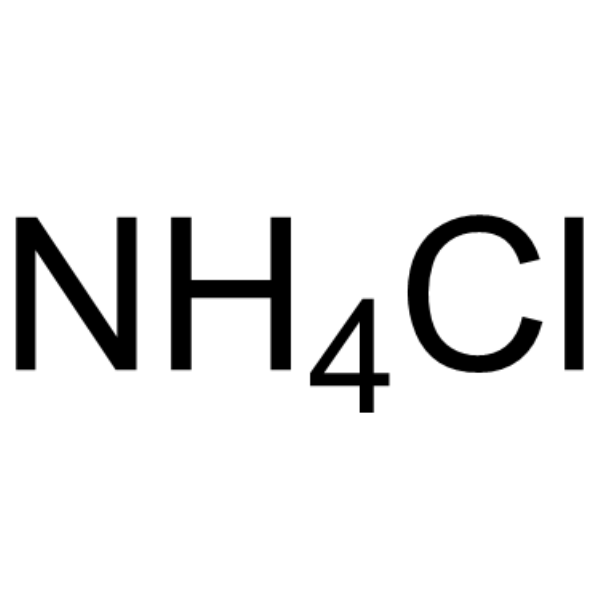
Ammonium chloride United States Pharmacopeia (USP) Reference Standard (Salmiac, Pharmaceutical primary standard, USP) is a reagent that can be used in cell culture to provide a source of nitrogen. Ammonium chloride can be used as a heteropolar compound to regulate pH value, which can cause intracellular alkalination and metabolic acidosis, thus affecting the activity of enzymes and affecting the process of biological systems. Ammonium chloride is also a lysosome inhibitor .
loading...
    loading...
Cat. No.: HY-W725504
2-Hydroxy-3-methylbutanoic acid-d7 is the deuterium labeled 2-Hydroxy-3-methylbutanoic acid (HY-W008150). 2-Hydroxy-3-methylbutanoic acid is an α-hydroxy analogue of valine and a valine precursor that reduces urea excretion. 2-Hydroxy-3-methylbutanoic acid can promote the growth of chickens and rats, and is converted into valine in the body, participating in protein synthesis and maintaining nitrogen balance, thereby supporting animal growth and development. 2-Hydroxy-3-methylbutanoic acid has a more significant effect on the valine-deficient dietary model. 2-Hydroxy-3-methylbutanoic acid is mainly used in animal nutrition research to evaluate its potential application as a nitrogen source substitute in feed .
loading...
    loading...
Cat. No.: HY-P11920
Target:  

Bacterial

Research Areas:  

Others

KEGIHAQ is a novel signal peptide and an effector of the dipeptide transporter DppA. KEGIHAQ binds to the oligopeptide transporter OppA and inhibits OppA expression, which leads to compensatory up-regulation of DppA and thereby promotes dipeptide uptake. KEGIHAQ enhances the acid tolerance of bacteria by regulating the expression of transcriptional regulators rmal and spxA, thus promoting bacterial growth. KEGIHAQ can up-regulate genes related to amino acid metabolism to facilitate amino acid synthesis, energy production and various bacterial physiological activities. KEGIHAQ can serve as a nitrogen source-targeting peptide in high-density culture of lactic acid bacteria .
loading...
    loading...
Cat. No.: HY-118572
CAS No.: 3844-67-5
(S)-Allantoin is the S-isomer of Allantoin (HY-N0543). (S)-Allantoin binds selectively in the active site of urate oxidase. (S)-Allantoin can be converted to Allantoate by the action of allantoicase. (S)-Allantoin serves as a source of nitrogen in Arabidopsis thaliana .
loading...
    loading...
Cat. No.: HY-Y0271S3
CAS No.: 78405-35-3
Synonyms: Carbonyl diamide-13C,15N
Urea- 13C, 15N is the 13C- and 15N-labeled Urea (HY-Y0271). Urea is a powerful protein denaturant via both direct and indirect mechanisms. A potent emollient and keratolytic agent. Used as a diuretic agent. Blood urea nitrogen (BUN) has been utilized to evaluate renal function. Widely used in fertilizers as a source of nitrogen and is an important raw material for the chemical industry .
loading...
    loading...
Cat. No.: HY-W587486A
CAS No.: 75350-40-2
N-Acetyltaurine hemimagnesium is an orally active endogenous sulfonate that is synthesized from taurine and acetate in the renal cortex. N-Acetyltaurine hemimagnesium supports bacterial growth as a sole fixed nitrogen or carbon source. N-Acetyltaurine hemimagnesium buffers acetyl moieties of mitochondrial acetyl‑CoA in skeletal muscle. N-Acetyltaurine hemimagnesium reduces food intake and body weight in obese and lean wild‑type mice in a GFRAL‑dependent manner. N-Acetyltaurine hemimagnesium can be used for the research of diet‑induced obesity, hyperacetatemia and diabetes .
loading...
    loading...

