31 Results for "

radiosensitivity

" in MedChemExpress (MCE) Product Catalog:
Products (31)

31 Results for "radiosensitivity" in MCE Product Catalog:

Cat. No.: HY-121648
CAS No.: 140448-29-9
Research Areas:  

Cancer

PK 130 is a 2-nitroimidazole derivative that has radiosensitizing effects on hypoxic cells. PK 130 increases the radiosensitivity of Chinese hamster V79 cells under hypoxic conditions .
loading...
    loading...
Cat. No.: HY-W008449R
CAS No.: 6136-37-4
1-Methylxanthine (Standard) is the analytical standard of 1-Methylxanthine. This product is intended for research and analytical applications. 1-Methylxanthine, a caffeine derivative, is an essential human urinary metabolite of caffeine and theophylline (1,3-dimethylxanthine, TP) . 1-Methylxanthine enhances the radiosensitivity of tumor cells .
loading...
    loading...
Cat. No.: HY-W008449S2
CAS No.: 1216430-61-3
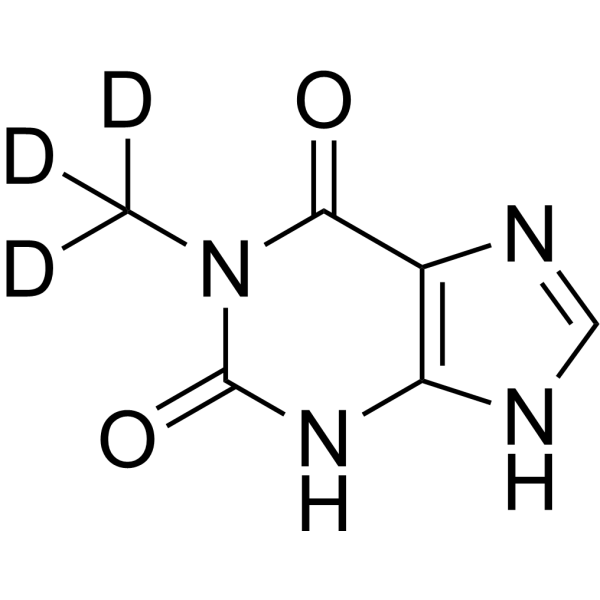
1-Methylxanthine-d3 is deuterated labeled 1-Methylxanthine (HY-W008449). 1-Methylxanthine, a caffeine derivative, is an essential human urinary metabolite of caffeine and theophylline (1,3-dimethylxanthine, TP) . 1-Methylxanthine enhances the radiosensitivity of tumor cells .
loading...
    loading...
Cat. No.: HY-W008449S1
CAS No.: 1173018-69-3
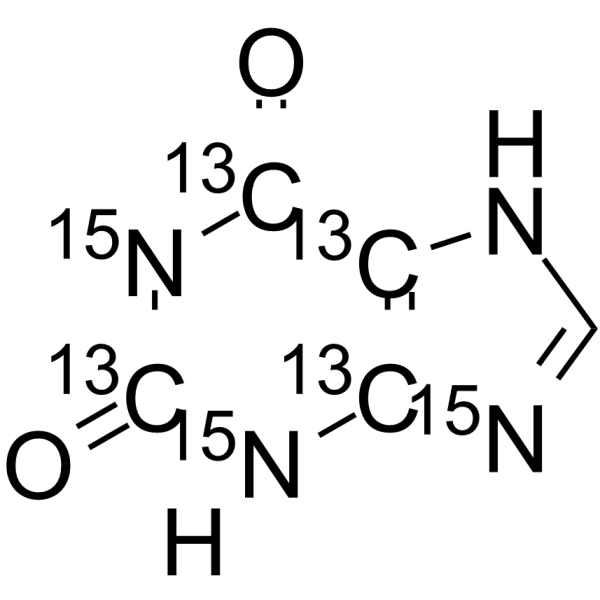
1-Methylxanthine- 13C4, 15N3 is the 13C-labeled and 15N-labeled 1-Methylxanthine. 1-Methylxanthine, a caffeine derivative, is an essential human urinary metabolite of caffeine and theophylline (1,3-dimethylxanthine, TP) . 1-Methylxanthine enhances the radiosensitivity of tumor cells .
loading...
    loading...
Cat. No.: HY-10180A
CAS No.: 869366-15-4
Target:  

Aurora Kinase

Research Areas:  

Cancer

MLN8054 sodium is an Aurora A inhibitor with radiosensitivity-enhancing activity. MLN8054 sodium can activate the DNA double-strand break reaction of prostate cancer cells in in vitro experiments. The application of MLN8054 sodium is closely related to accumulation in the G2/M phase of the cell cycle and polyploid formation. In vivo experiments show that MLN8054 sodium can significantly delay the growth of prostate cancer tumors and promote tumor cell apoptosis when used in combination with radiotherapy .
loading...
    loading...
Cat. No.: HY-119169
CAS No.: 84697-22-3
Synonyms: R 46846
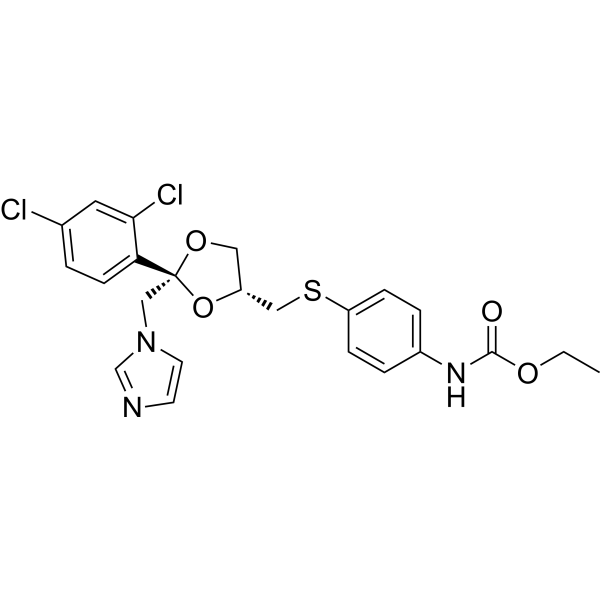
Tubulozole (R 46846) is an orally active inhibitor of tubulin polymerization with an ID50 of 0.34 μM. Tubulozole induces activation of the Chk1 kinase and phosphorylation of ERK1/2, which is required for microtubule formation. Tubulozole arrests Mitosis at the metaphase stage. Tubulozole causes cells to accumulate in the radiosensitive mitotic phase of the cell cycle. Tubulozole exerts anticancer activity against colon cancer. Tubulozole produces a radiosensitizing effect in mouse tumor models and enhances the tumor growth delay effect when combined with γ-ray irradiation. Tubulozole is used in studies related to colon cancer, fascioliasis, MO4 fibrosarcoma, and Lewis lung carcinoma .
loading...
    loading...
Cat. No.: HY-105095
CAS No.: 149838-23-3
Synonyms: PR 350; RP 343
Research Areas:  

Cancer

Doranidazole (PR 350) is a radiosensitizer. Doranidazole increases the radiosensitivity of hypoxic SCCVII cells. Doranidazole significantly enhances radiation-induced growth delay in SCCVII tumors when administered intravenously before tumor irradiation. Doranidazole radiosensitizes tumors to an extent that depends on the tumor's oxygenation status. Doranidazole can be used for the study of lymphoma and hypoxic pancreatic tumors .
loading...
    loading...
Cat. No.: HY-106509R
CAS No.: 77858-21-0
Synonyms: BW 12C (Standard); 12C79 (Standard); BW 12C79 (Standard)
Research Areas:  

Others

Velaresol (Standard) is the analytical standard of Velaresol. This product is intended for research and analytical applications. Velaresol (BW 12C) is a small molecule oxyhemoglobin stabilizer. Velaresol stabilizes hemoglobin’s oxy-conformation, shifts oxygen dissociation curves left, induces tumor hypoxia, alters radiosensitivity, protects normal tissues from radiation damage, and reduces sickled cell counts. Velaresol can be used for the research of cancer and sickle cell disease .
loading...
    loading...
Cat. No.: HY-119169A
CAS No.: 83086-73-1
Synonyms: R 46846 hydrochloride
Tubulozole hydrochloride (R 46846 hydrochloride) is an orally active inhibitor of tubulin polymerization with an ID50 of 0.34 μM. Tubulozole hydrochloride induces activation of the Chk1 kinase and phosphorylation of ERK1/2, which is required for microtubule formation. Tubulozole hydrochloride arrests Mitosis at the metaphase stage. Tubulozole hydrochloride causes cells to accumulate in the radiosensitive mitotic phase of the cell cycle. Tubulozole hydrochloride exerts anticancer activity against colon cancer. Tubulozole hydrochloride produces a radiosensitizing effect in mouse tumor models and enhances the tumor growth delay effect when combined with γ-ray irradiation. Tubulozole hydrochloride is used in studies related to colon cancer, fascioliasis, MO4 fibrosarcoma, and Lewis lung carcinoma .
loading...
    loading...
Cat. No.: HY-P2819A
CAS No.: 9001-80-3
Phosphofructokinase,Bacillus stearothermophilus is a glycolytic enzyme and also an allosteric activation target of fructose-2,6-bisphosphate. PFK1 supports cardiac glycolysis to maintain normal cardiac function and mediates adaptive responses to pressure overload. Upregulated expression and activity of PFK1 are associated with the alleviation of pathological changes induced by pressure overload, including diastolic dysfunction, interstitial fibrosis and myocardial hypertrophy. Inhibition of PFK1 redirects glucose carbon flux to the pentose phosphate pathway. PFK1 promotes proliferation, migration and glycolysis of colorectal cancer cells, reduces apoptosis and decreases their radiosensitivity, and shows higher expression levels in radioresistant tumors. PFK1 can be used in research related to diastolic dysfunction heart failure and colorectal cancer .
loading...
    loading...
Cat. No.: HY-L179
39 compounds

Radiotherapy is a common treatment for various cancers, and more than 50% of cancer patients require radiotherapy during the disease treatment. With advances in radiation technology and a better understanding of tumor biology, the efficacy of radiation therapy has gradually improved, and more and more patients have benefited from it. However, even with the use of advanced radiotherapy techniques, there are still many malignant tumor cells with low sensitivity to radiation, leading to the radiation effect is not ideal. To solve this problem, radiosensitizers have received more and more attention. Radiosensitizer is a kind of drug that can enhance the radiosensitivity of tumor cells and improve the effect of radiotherapy. Radiation sensitizers act in a variety of ways, such as killing hypoxic cells, enhancing DNA damage, inhibiting DNA damage repair, and blocking cell cycle progression, making tumor cells more susceptible to radiation damage and death than surrounding normal cells.

MCE designs a unique collection of 39 compounds with definite reported radiosensitization. It can be used for drug combination research in anti-cancer treatment.

