43 Results for "

structure factor

" in MedChemExpress (MCE) Product Catalog:
Products (43)

43 Results for "structure factor" in MCE Product Catalog:

Cat. No.: HY-100008R
CAS No.: 81485-25-8
Synonyms: NIK333 (Standard)
Research Areas:  

Infection Cancer

Peretinoin (Standard) is the analytical standard of Peretinoin. This product is intended for research and analytical applications. Peretinoin is an oral acyclic retinoid with a vitamin A-like structure that targets retinoid nuclear receptors such as retinoid X receptor (RXR) and retinoic acid receptor (RAR). Peretinoin reduces the mRNA level of sphingosine kinase 1 (SPHK1) in vitro by downregulating a transcription factor, Sp1[1]. Peretinoin prevents the progression of non-alcoholic steatohepatitis (NASH) and the development of hepatocellular carcinoma (HCC) through activating the autophagy pathway by increased Atg16L1 expression[2]. Peretinoin inhibits HCV RNA amplification and virus release by altering lipid metabolism with a EC50 of 9 μM[3].
loading...
    loading...
Cat. No.: HY-147339
CAS No.: 3047739-39-6
Target:  

DNA/RNA Synthesis

Research Areas:  

Others

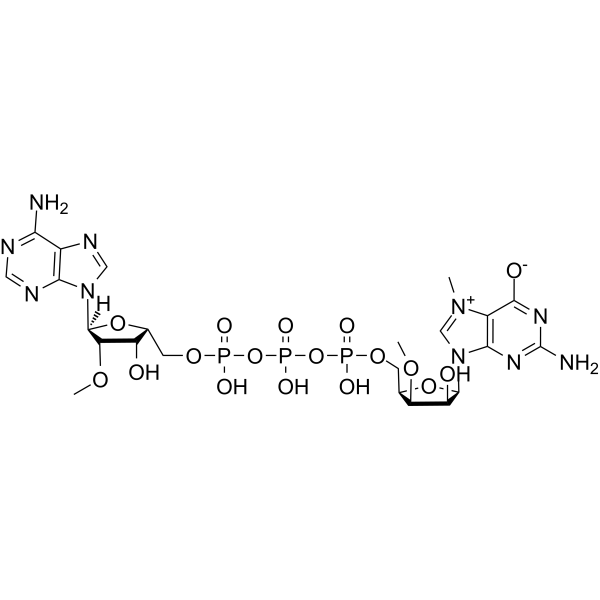
M7G (3'-OMe-5') pppA (2'-OMe) is a modified cap analog. M7G (3'-OMe-5') pppA (2'-OMe) enhances the stability and translation efficiency of mRNA by maintaining the correct orientation of the mRNA cap, promoting cap-dependent translation initiation, and mimicking the Cap-1 structure to reduce immunogenicity. M7G (3'-OMe-5') pppA (2'-OMe) can be used in molecular biology research, vaccine development, and gene therapy applications .
loading...
    loading...
Cat. No.: HY-10751
CAS No.: 209954-52-9
Target:  

Factor Xa

Research Areas:  

Others

FXa-IN-4 is a Factor Xa inhibitor containing a benzamidine structure .
loading...
    loading...
Cat. No.: HY-P85602
Synonyms: DNase IV; FEN-1; FEN1; FEN1_HUMAN; Flap endonuclease 1; Flap structure specific endonuclease 1; Flap structure-specific endonuclease 1; hFEN-1; hFEN1; Maturation factor 1; MF1; Rad2.

Host:  

Mouse

Application:  

WB, ICC/IF

Reactivity:  

Human, Mouse, Rat, Monkey, Hamster

loading...
    loading...
Cat. No.: HY-P85603
Synonyms: DNase IV; FEN-1; FEN1; FEN1_HUMAN; Flap endonuclease 1; Flap structure specific endonuclease 1; Flap structure-specific endonuclease 1; hFEN-1; hFEN1; Maturation factor 1; MF1; Rad2.

Host:  

Mouse

Application:  

WB, IP

Reactivity:  

Human, Mouse, Rat

loading...
    loading...
Cat. No.: HY-P80669
Synonyms: FEN1; RAD2; Flap endonuclease 1; FEN-1; DNase IV; Flap structure-specific endonuclease 1; Maturation factor 1; MF1; hFEN-1

Host:  

Mouse

Application:  

WB, IP

Reactivity:  

Human, Mouse, Rat

loading...
    loading...
Cat. No.: HY-W698224
CAS No.: 31418-71-0
Target:  

Fungal

Coprogen is an iron growth factor with growth-promoting activity. Coprogen promotes the growth of Pilobolus kleinii and coprophilous fungal, and its activity depends on its own organic iron structure .
loading...
    loading...
Cat. No.: HY-P70348
Purity:  ≥ 95%, as determined by reducing SDS-PAGE.
Synonyms: FEN1; Flap Endonuclease 1; Prev. RAD2; Maturation factor-1; FEN-1; Maturation factor 1; MF1; HFEN-1; Flap structure-Specific Endonuclease 1; DNase IV
Species:  
Human
Source:  
E. coli
loading...
    loading...
Cat. No.: HY-N21529
CAS No.: 850560-45-1
Euphorbia factor L11 is a lathyrane-type diterpenoid found in the seeds of Euphorbia lathyris. Euphorbia factor L11 serves as the biosynthetic precursor of Lathyranoic acid A, which can be converted into Lathyranoic acid A via Baeyer-Villiger oxidation. This biosynthetic conversion may be mediated by cytochrome P450 or FAD-dependent enzymes. Euphorbia factor L11 can be used in studies on the structure of lathyrane-type diterpenoids and the biosynthetic transformation of natural products .
loading...
    loading...
Cat. No.: HY-P80669A
Synonyms: FEN1; RAD2; Flap endonuclease 1; FEN-1; DNase IV; Flap structure-specific endonuclease 1; Maturation factor 1; MF1; hFEN-1

Host:  

Mouse

Application:  

WB, IP

Reactivity:  

Human, Mouse, Rat

loading...
    loading...
Cat. No.: HY-P700010
Purity:  ≥ 95%, as determined by reducing SDS-PAGE.
Synonyms: FEN1; Flap Endonuclease 1; Prev. RAD2; Maturation factor-1; FEN-1; Maturation factor 1; MF1; HFEN-1; Flap structure-Specific Endonuclease 1; DNase IV
Species:  
Human
Source:  
E. coli
loading...
    loading...
Cat. No.: HY-165180
CAS No.: 70005-46-8
Synonyms: Psychosine 3′-O-sulfate sodium; Psychosine 3′-sulfate sodium
Research Areas:  

Metabolic Disease

Lyso-sulfatide (bovine) sodium is a phospholipid component derived from sphingolipid catabolism and a potent factor Xa inhibitor and anticoagulant. Lyso-sulfatide (bovine) sodium binds directly to factor Xa and inhibits prothrombin activation mediated by the prothrombinase complex, thereby prolonging factor Xa-induced plasma clotting time and suppressing thrombin generation. Lyso-sulfatide (bovine) sodium serves as a reliable lipid membrane mimic for studying cell membrane structure, function, and molecular interactions .
loading...
    loading...
Cat. No.: HY-P991949

Target:  

c-Fms

Research Areas:  

Inflammation/Immunology

EV1007 is a fully human antibody with a neutralizing effect on GM-CSF activity. EV1007 can be used for the research of autoimmune diseases .
loading...
    loading...
Cat. No.: HY-185928
CAS No.: 2659211-29-5
Research Areas:  

Neurological Disease

Pinzodirsen (Compound ENTR-Oligo-0034) is a dystrophia myotonica protein kinase (DMPK) steric blocker. Pinzodirsen reduces the nuclear sequestration of toxic DMPK mRNA with splicing factors such as MBNL1 via steric blocking/relocation, or interferes with the secondary structure of CUG repeat RNA, instead of being cleaved by RNase H, thereby ameliorating systemic aberrant splicing in DM1. Pinzodirsen is applicable to the research of myotonic dystrophy .
loading...
    loading...
Cat. No.: HY-P811765
Synonyms: FACT80, SSRP1, FACT complex subunit SSRP1, Chromatin-specific transcription elongation factor 80 kDa subunit, Facilitates chromatin transcription complex 80 kDa subunit, Facilitates chromatin transcription complex subunit SSRP1, Recombination signal sequence recognition protein 1, structure-specific recognition protein 1, T160, FACT 80 kDa subunit, FACTp80, hSSRP1

Host:  

Rabbit

Application:  

WB, IHC-P, ICC/IF, IP, FC

Reactivity:  

Human, Mouse, Rat

loading...
    loading...
Cat. No.: HY-P811765A
Synonyms: FACT80, SSRP1, FACT complex subunit SSRP1, Chromatin-specific transcription elongation factor 80 kDa subunit, Facilitates chromatin transcription complex 80 kDa subunit, Facilitates chromatin transcription complex subunit SSRP1, Recombination signal sequence recognition protein 1, structure-specific recognition protein 1, T160, FACT 80 kDa subunit, FACTp80, hSSRP1

Host:  

Rabbit

Application:  

WB, IHC-P, ICC/IF, IP, FC

Reactivity:  

Human, Mouse, Rat

loading...
    loading...
Cat. No.: HY-L090
2,569 compounds

Transcription is the essential first step in the conversion of the genetic information in the DNA into protein and the major point at which gene expression is controlled. Transcription of protein-coding genes is accomplished by the multi-subunit enzyme RNA polymerase II and an ensemble of ancillary proteins, called transcription factors (TFs). Transcription factors play an important role in the long-term regulation of cell growth, differentiation and responses to environmental cues. Deregulated transcription factors contribute to the pathogenesis of a plethora of human diseases, ranging from diabetes, inflammatory disorders and cardiovascular disease to many cancers, and thus these proteins hold great therapeutic potential.

MCE offers a unique collection of 2,569 compounds with validated transcription factor targets modulating properties. MCE transcription factor-targeted compound library is an effective tool for researching transcription factors as drug targets as well as modulation of TFs for different therapeutic applications.

Cat. No.: HY-L138
6,553 compounds

Heterocyclic compounds are cyclic organic compounds which contain at least one hetero atom, the most common heteroatoms are nitrogen, oxygen ,and sulfur. Heterocycles are common in biology, featuring a wide range of structures from enzyme co-factors to amino acids and proteins. On the one hand, heterocycles are common structural units in approved drugs and in medicinal chemistry targets in the drug discovery process. In addition, heterocycles have been found as a key structure in medical chemistry and also they are frequently found in large percent of biomolecules such as vitamins, natural products ,and biologically active compounds including antifungal, anti-inflammatory, antibacterial, antioxidant, antiallergic, anti-HIV, antidiabetic, anticancer activity.

MCE offers a unique collection of 6,553 heterocyclic compounds which can be used for drug discovery for high throughput screening (HTS) and high content screening (HCS). MCE heterocyclic compound library is critical for drug discovery and development.

Cat. No.: HY-L161
1,416 compounds

Cytokines are a kind of low molecular soluble proteins synthesized and secreted by immunogen, mitogen or other factors. They have functions of regulating innate and adaptive immune responses, promoting hematopoiesis, stimulating cell activation, proliferation and differentiation. The process of releasing a large number of cytokines is also called “Cytokine storm”, which can cause damage to many tissues and organs in the body. Cytokine is involved in the pathogenesis of many human diseases, including cancer, diabetes, chronic inflammatory diseases and so on. Cytokine inhibitors are a class of essential compounds that act by directly inhibiting the synthesis and release of cytokine or blocking the binding of cytokine to their receptors. Cytokine inhibitors are important compounds for the study of tumor and autoimmune diseases.

MCE designs a unique collection of 1,416 cytokine inhibitors, mainly targeting the receptor interleukin (IL), colony-stimulating factor (CSF), interferon (IFN), tumor necrosis factor (TNF), growth factor (GF) and chemokine, which is an effective tool for development and research of anti-cancer, anti-chronic inflammatory diseases and anti-autoimmune diseases compounds.

Cat. No.: HY-L903
5,281 compounds

Fragment-based drug discovery (FBDD) is well suited for discovering both drug leads and chemical probes of protein function. 3-dimensionality (3D) diversity is pivotal because the molecular shape is one of the most important factors in molecular recognition by a biomolecule. There is a developing appreciation that 3D fragments could offer opportunities that are not provided by 2D fragments.

MCE 3D Diverse Fragment Library consists of 5,400 non-flat fragment-like molecules (average Fsp3 value 0.58). More than 4,700 fragment compounds contain at least one chiral center in the structure. The key concepts that underlie the library design were 3D shape, structural diversity, reactive functionality and fragment-like. This 3D Diverse Fragment Library brings higher fragment hit optimization and increases the likelihood to find innovative hits in FBDD.

