
241 Results for "

food processing

" in MedChemExpress (MCE) Product Catalog:
Products (241)

241 Results for "food processing" in MCE Product Catalog:

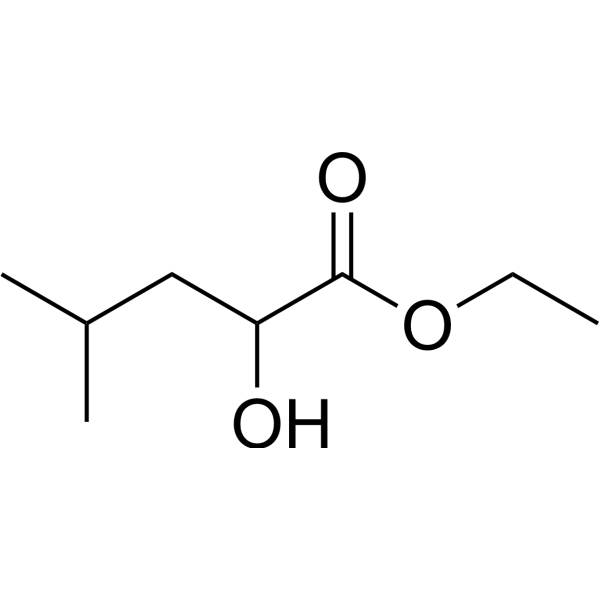
Cat. No.: HY-W114581
CAS No.: 10348-47-7
Ethyl2-hydroxy-4-methylpentanoate has a fruity odor and is commonly used as a flavoring agent in the food and beverage industry. In addition, it can be used as an intermediate in the synthesis of various organic compounds, including pharmaceuticals and agrochemicals. Its unique chemical properties make it an important ingredient in a variety of industrial processes, including the production of cosmetics and personal care products.
loading...
    loading...
Cat. No.: HY-Y0537K
CAS No.: 7447-40-7
Potassium chloride, ACS, 99.0% is a metal halide salt composed of potassium and chlorine. Potassium chloride, ACS, 99.0% replenishes electrolytes, corrects water-electrolyte imbalance, and is used in hypokalemia research. Potassium chloride, ACS, 99.0% is also used to prepare buffer solutions and produce fertilizers, with applications in the fields of medicine, scientific research and food processing. Potassium chloride, ACS, 99.0% plays a key role in protein extraction and dissolution .
loading...
    loading...
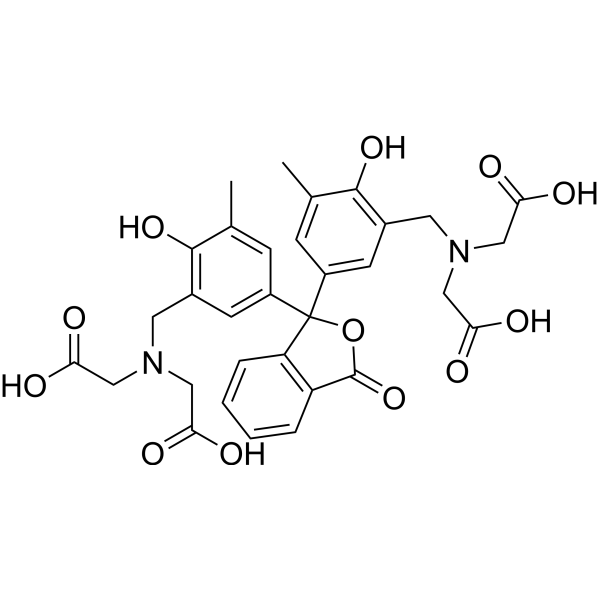
Cat. No.: HY-D0250
CAS No.: 2411-89-4
o-Cresolphthalein complexone is a multifunctional dye. Dyes are important tools in biological experiments. They can help researchers observe and analyze cell structures, track biomolecules, evaluate cell functions, distinguish cell types, detect biomolecules, study tissue pathology and monitor microorganisms. Their applications range from basic scientific research to clinical A wide range of diagnostics. Dyes are also widely used in traditional fields such as textile dyeing, as well as in emerging fields such as functional textile processing, food pigments and dye-sensitized solar cells.
loading...
    loading...
Cat. No.: HY-Y1039
CAS No.: 123-94-4
Synonyms: 1-Monostearin; 2,3-Dihydroxypropyl stearate
Stearic acid 1-monoglyceride is an ester composed of stearic acid and glycerin, commonly known as glyceryl monostearate. 1-Monoglyceride stearate has unique chemical properties that make it an important ingredient in a variety of industrial processes, including food production, cosmetics, and pharmaceuticals. It acts as an emulsifier, stabilizer and thickener in these products, enhancing their texture and shelf life.
loading...
    loading...
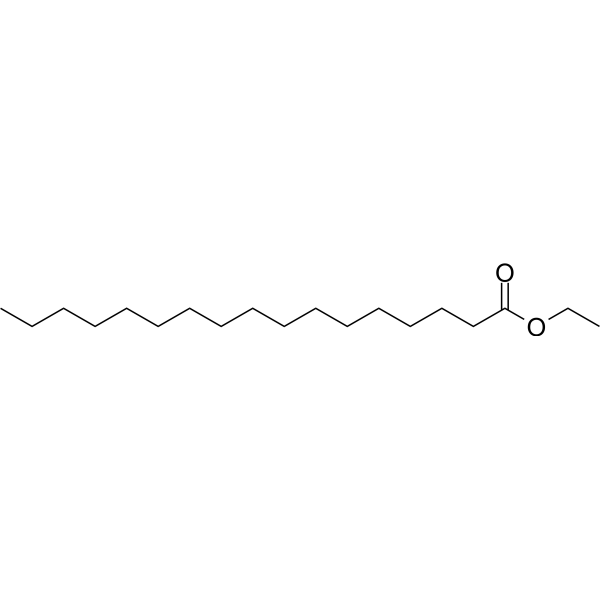
Cat. No.: HY-W127374
CAS No.: 14010-23-2
Synonyms: Margaric acid ethyl ester
Research Areas:  

Others

Ethyl heptadecanoate is an ester compound with a fruity odor commonly used as a flavoring agent in the food and beverage industry. In addition, it can be used as an intermediate in the synthesis of various organic compounds, including fragrances, pharmaceuticals, and agrochemicals. Its unique chemical properties make it an important ingredient in a variety of industrial processes, notably in the production of cosmetics, personal care products and cleaning agents.
loading...
    loading...
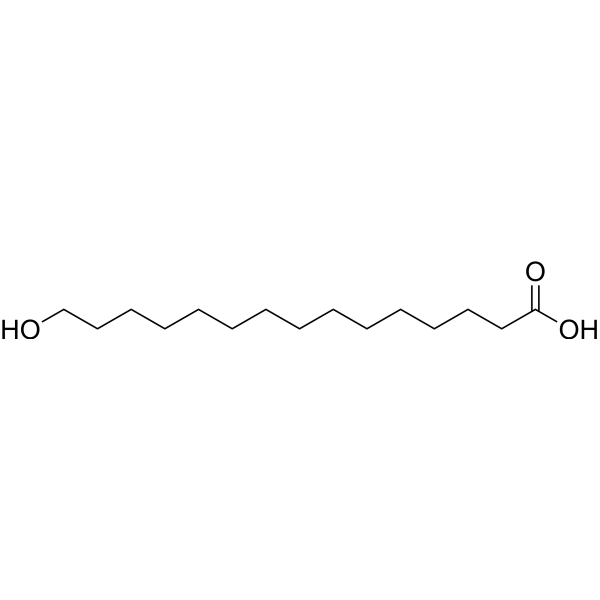
Cat. No.: HY-W105734
CAS No.: 4617-33-8
15-Hydroxypentadecanoic acid is a long-chain fatty acid found in various plant and animal sources and also produced by bacteria and fungi. It has potential health benefits and is used as an intermediate in the synthesis of other organic compounds, including pharmaceuticals, agrochemicals and surfactants. Its unique chemical properties make it an essential ingredient in several industrial processes, especially in the fields of food science and nutrition.
loading...
    loading...
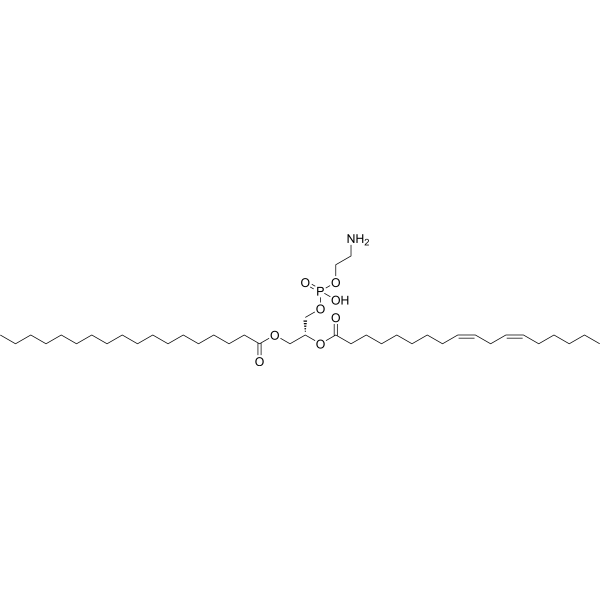
Cat. No.: HY-143203
CAS No.: 7266-53-7
Purity:  ≥98.0%
Synonyms: 1-Stearoyl-2-linoleoyl-sn-glycero-3-phosphoethanolamine
Target:  

Liposome

Research Areas:  

Cardiovascular Disease Cancer

18:0-18:2 PE (1-Stearoyl-2-linoleoyl-sn-glycero-3-phosphoethanolamine) is a glycerophospholipid compound and an essential component of biological cell membranes. 18:0-18:2 PE possesses biological activities including regulation of phospholipid metabolism, antioxidant activity, maintenance of cell membrane fluidity, immune protection, and regulation of signaling pathways. 18:0-18:2 PE in the hot processing process, its unsaturated fatty acids will degrade to form a variety of odor active compounds. 18:0-18:2 PE can be applied in food processing and research on phospholipid metabolism-related diseases .
loading...
    loading...
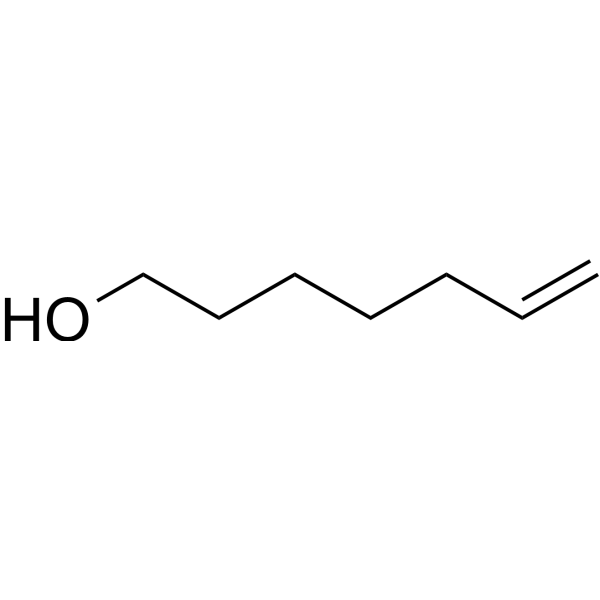
Cat. No.: HY-W127475
CAS No.: 4117-10-6
6-Hepten-1-ol has a floral and green odor and is commonly used as a flavoring agent in the food and beverage industry. In addition, it can be used as an intermediate in the synthesis of various organic compounds, including fragrances, pharmaceuticals, and agrochemicals. Its unique chemical properties make it an important ingredient in a variety of industrial processes, notably in the production of perfumes, air fresheners and cleaning agents.
loading...
    loading...
Cat. No.: HY-P3261
CAS No.: 9025-67-6
Research Areas:  

Others

Inulinase is a fructan hydrolase (fructan hydrolase) that catalyzes the hydrolysis of β-(2→1) fructosidic linkages in inulin, producing fructose and oligosaccharides depending on the enzyme's source and type. Inulinase also exhibits hydrolytic activity toward fructose-containing substrates such as sucrose, raffinose and stachyose. Inulinase can be used in studies related to inulin degradation, production of fructose and fructooligosaccharides (FOS), carbohydrate metabolism and food processing .
loading...
    loading...
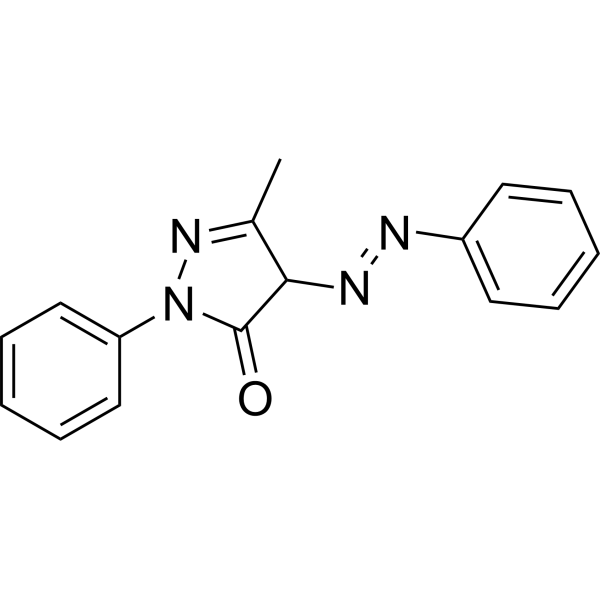
Cat. No.: HY-D0370
CAS No.: 4314-14-1
Solvent Yellow 16 is a disperse dye. Dyes are important tools in biological experiments. They can help researchers observe and analyze cell structures, track biomolecules, evaluate cell functions, distinguish cell types, detect biomolecules, study tissue pathology and monitor microorganisms. Their applications range from basic scientific research to clinical A wide range of diagnostics. Dyes are also widely used in traditional fields such as textile dyeing, as well as in emerging fields such as functional textile processing, food pigments and dye-sensitized solar cells .
loading...
    loading...
Cat. No.: HY-D0563
CAS No.: 50925-42-3
Direct yellow 86 is a multifunctional dye. Dyes are important tools in biological experiments. They can help researchers observe and analyze cell structures, track biomolecules, evaluate cell functions, distinguish cell types, detect biomolecules, study tissue pathology and monitor microorganisms. Their applications range from basic scientific research to clinical A wide range of diagnostics. Dyes are also widely used in traditional fields such as textile dyeing, as well as in emerging fields such as functional textile processing, food pigments and dye-sensitized solar cells.
loading...
    loading...
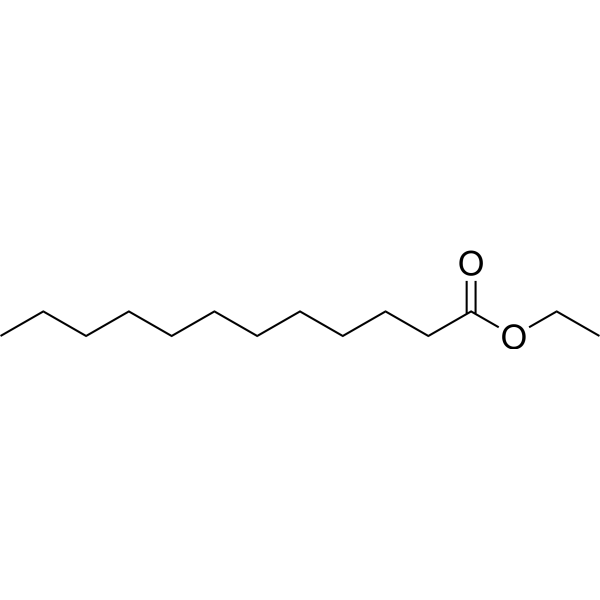
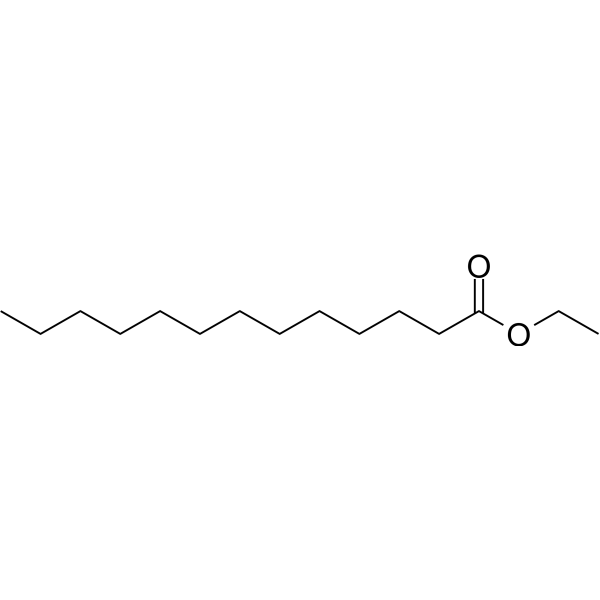
Cat. No.: HY-W009684
CAS No.: 106-33-2
Synonyms: Ethyl dodecanoate
Ethyl Laurate is an organic compound commonly used as a flavoring and food additive. It can be used to make fruit, mint and sweet flavors, and is widely used in some food processing and cosmetic production. In addition, this compound is also used as a reagent and intermediate in some organic synthesis reactions.
loading...
    loading...
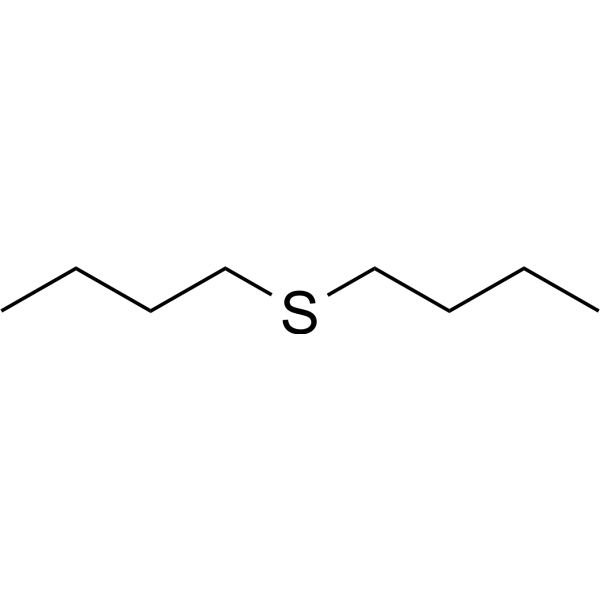
Cat. No.: HY-W250123
CAS No.: 544-40-1
Dibutyl sulfide is an oily liquid commonly used as a solvent, extractant and flavoring agent in various industrial processes, especially in the production of petroleum products, polymers and food additives. Dibutyl sulfide has unique chemical properties that make it an active ingredient in many applications requiring high solvency and low volatility.
loading...
    loading...
Cat. No.: HY-W127439
CAS No.: 28267-29-0
Synonyms: Tridecanoic acid ethyl ester
Ethyl Tridecanoate is an ester compound with a fruity odor commonly used as a flavoring agent in the food and beverage industry. In addition, it can be used as an intermediate in the synthesis of various organic compounds, including fragrances, pharmaceuticals, and agrochemicals. Its unique chemical properties make it an important ingredient in a variety of industrial processes, notably in the production of cosmetics, personal care products and cleaning agents.
loading...
    loading...
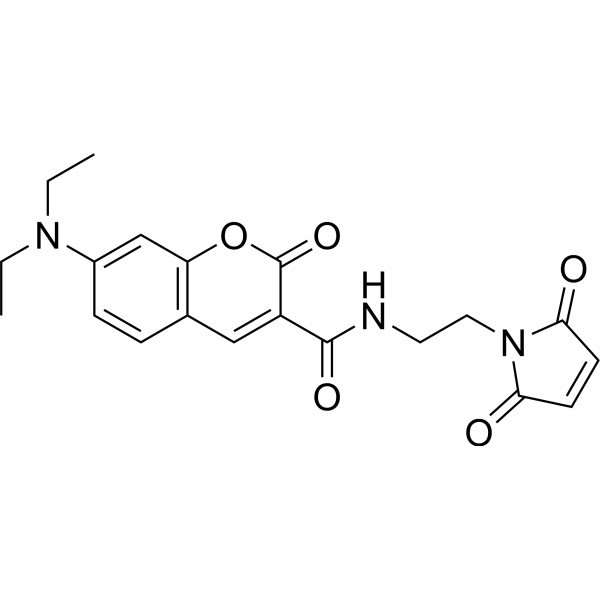
Cat. No.: HY-D0087
CAS No.: 156571-46-9
MDCC is a multifunctional dye. Dyes are important tools in biological experiments. They can help researchers observe and analyze cell structures, track biomolecules, evaluate cell functions, distinguish cell types, detect biomolecules, study tissue pathology and monitor microorganisms. Their applications range from basic scientific research to clinical A wide range of diagnostics. Dyes are also widely used in traditional fields such as textile dyeing, as well as in emerging fields such as functional textile processing, food pigments and dye-sensitized solar cells.
loading...
    loading...
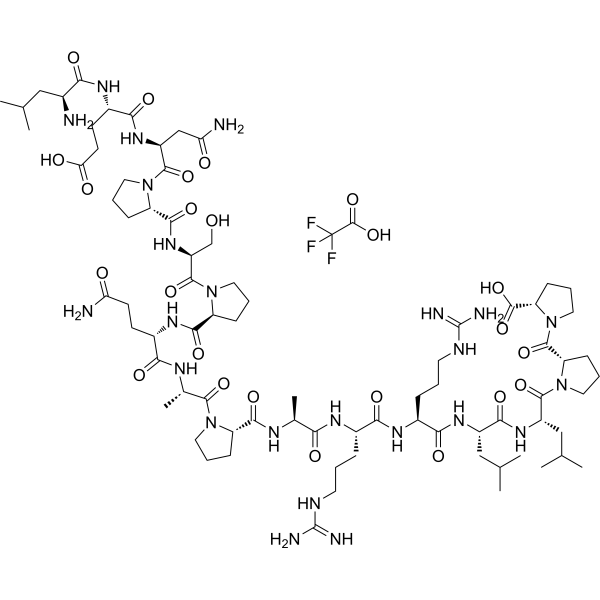
Cat. No.: HY-P2210A
Target:  

GPR171

Research Areas:  

Neurological Disease

BigLEN(mouse) TFA is a GPR171 agonist. BigLEN(mouse) TFA is a proSAAS-derived neuropeptide. BigLEN(mouse) TFA regulates food intake in mice. BigLEN(mouse) inhibits the release of glutamate onto parvocellular neurons of the paraventricular nucleus in a process dependent upon activation of postsynaptic G proteins.
loading...
    loading...
Cat. No.: HY-W129199
CAS No.: 591-64-0
Synonyms: Calcium levulinate
Target:  

Drug Intermediate

Research Areas:  

Metabolic Disease

Calcium 4-Oxopentanoate (levulinic acid calcium) is an effective oral calcium supplement and is commonly used as a food additive. Calcium 4-Oxopentanoate can be reduced in the liver to 4-hydroxypentanoate (HY-W107263), and ethanol enhances this reduction process. Calcium 4-Oxopentanoate can be used for studies on calcium deficiency .
loading...
    loading...
Cat. No.: HY-W093399S
Ammonium bicarbonate- 15N is the 15N labeled isotope of Ammonium bicarbonate,AR,99% (HY-W093399). Ammonium bicarbonate,AR,99% is an analytical reagent-grade ammonium bicarbonate. Ammonium bicarbonate has antifungal activity. Ammonium bicarbonate is widely used in laboratory analysis, food processing, agricultural fertilization and other fields .
loading...
    loading...
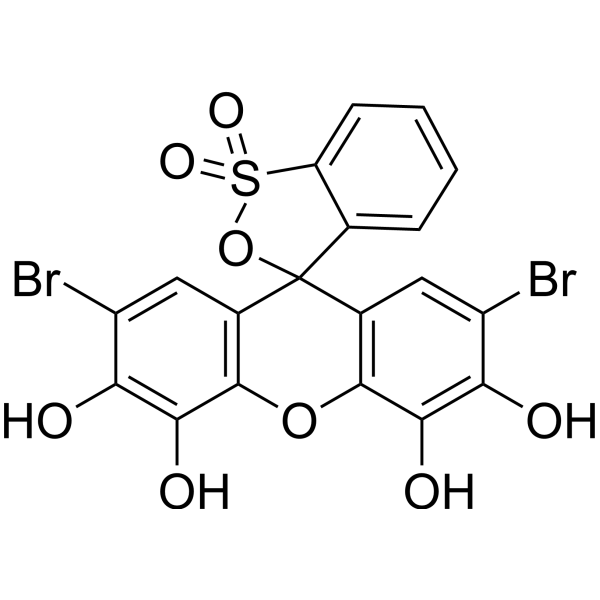
Cat. No.: HY-D0010
CAS No.: 16574-43-9
Synonyms: Dibromopyrogallolsulfonphthaleine
Bromopyrogallol red (Dibromopyrogallolsulfonphthaleine) is a multifunctional dye. Dyes are important tools in biological experiments. They can help researchers observe and analyze cell structures, track biomolecules, evaluate cell functions, distinguish cell types, detect biomolecules, study tissue pathology and monitor microorganisms. Their applications range from basic scientific research to clinical A wide range of diagnostics. Dyes are also widely used in traditional fields such as textile dyeing, as well as in emerging fields such as functional textile processing, food pigments and dye-sensitized solar cells.
loading...
    loading...
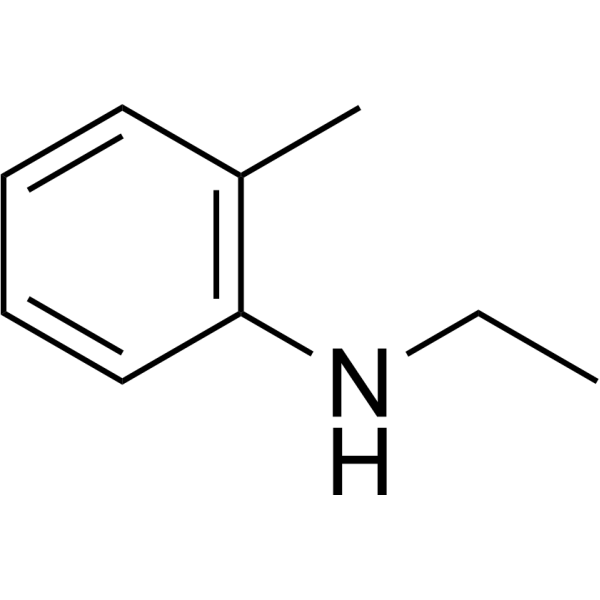
Cat. No.: HY-D0210
CAS No.: 94-68-8
N-Ethyl-o-toluidine is a multifunctional dye. Dyes are important tools in biological experiments. They can help researchers observe and analyze cell structures, track biomolecules, evaluate cell functions, distinguish cell types, detect biomolecules, study tissue pathology and monitor microorganisms. Their applications range from basic scientific research to clinical A wide range of diagnostics. Dyes are also widely used in traditional fields such as textile dyeing, as well as in emerging fields such as functional textile processing, food pigments and dye-sensitized solar cells.
loading...
    loading...

