80 Results for "

azide functional groups

" in MedChemExpress (MCE) Product Catalog:
Products (80)

80 Results for "azide functional groups" in MCE Product Catalog:

Cat. No.: HY-B2091A
CAS No.: 35334-12-4
Target:  

Bacterial Antibiotic

Research Areas:  

Infection

Azidocillin sodium, a semi-synthetic Penicillin, is an orally active β-lactam antibiotic. Azidocillin sodium bears an azide functionality and retains on-target activity within bacteria. Azidocillin sodium can be used to research osteitis caused by dental surgery, otitis media, enterococcal septicemia and other bacterial infectious diseases . Azidocillin sodium is a click chemistry reagent, it contains an Azide group and can undergo copper-catalyzed azide-alkyne cycloaddition reaction (CuAAc) with molecules containing Alkyne groups. It can also undergo strain-promoted alkyne-azide cycloaddition (SPAAC) reactions with molecules containing DBCO or BCN groups.
loading...
    loading...
Cat. No.: HY-147206
Target:  

Fluorescent Dye

Research Areas:  

Others

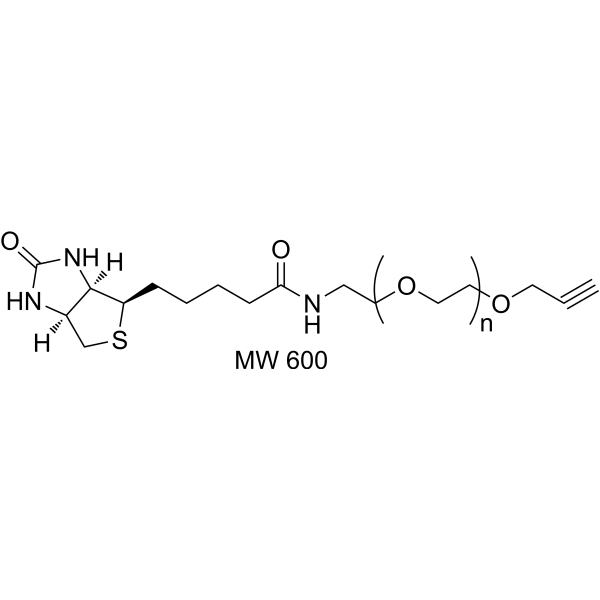
Biotin-PEG600-Alk is a Biotin-labeled Alkyne functionalized polyethylene glycol. Biotin-PEG600-Alk can be used to modify proteins, peptides, and oligonucleotides . Biotin-PEG600-Alk is a click chemistry reagent, it contains an Alkyne group and can undergo copper-catalyzed azide-alkyne cycloaddition (CuAAc) with molecules containing Azide groups.
loading...
    loading...
Cat. No.: HY-154361
CAS No.: 2389988-70-7
Research Areas:  

Cancer

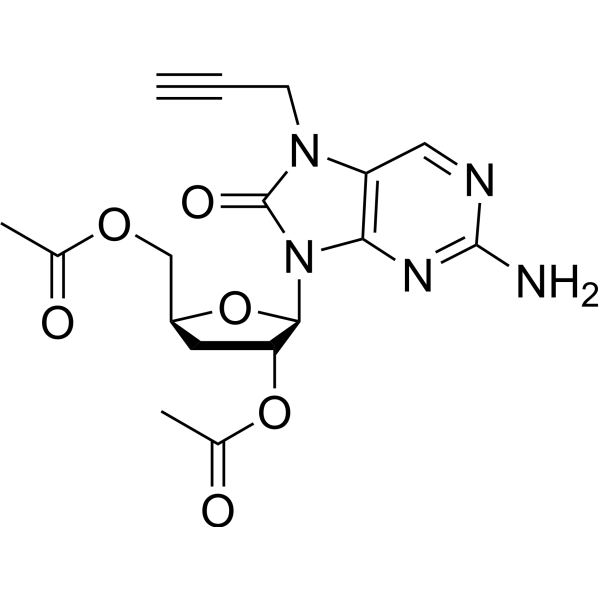
TLR7 agonist 13 is a guanosine analog. Some guanosine analogs have immunostimulatory activity. In some animal models, they also induce type I interferons, producing antiviral effects. Studies have shown that the functional activity of guanosine analogs is dependent on the activation of Toll-like receptor 7 (TLR7) . TLR7 agonist 13 is a click chemistry reagent, it contains an Alkyne group and can undergo copper-catalyzed azide-alkyne cycloaddition (CuAAc) with molecules containing Azide groups.
loading...
    loading...
Cat. No.: HY-D1862
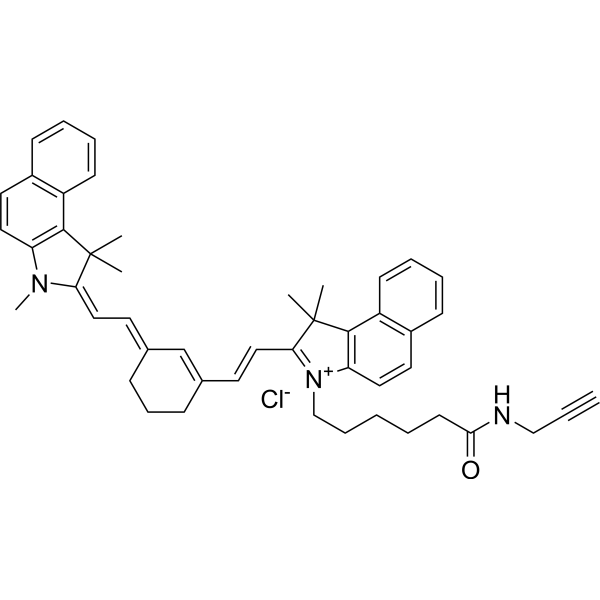
Cy7.5 alkyne chloride is a dye derivative of Cyanine 7.5 (Cy7.5) (HY-D0926) containing a sulfonate ion and an alkyne functional group. Cy7.5 is a near-infrared fluorescent dye commonly used for biolabeling and cell imaging. The alkyne functional group of Cy7.5 alkyne chloride can react with molecules containing the azide functional group to form covalent bonds. Cy7.5 alkyne chloride can bind to biological molecules such as proteins and antibodies to track their location and dynamic changes in biological samples.
loading...
    loading...
Cat. No.: HY-154349
CAS No.: 2095417-55-1
Research Areas:  

Cancer

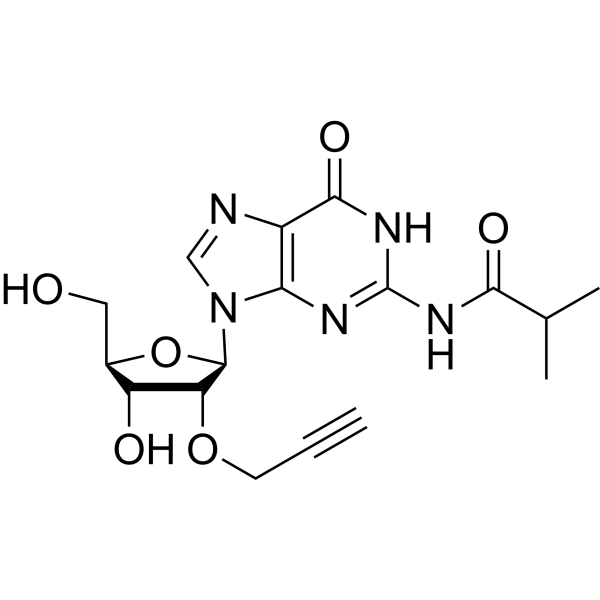
N2-iso-Butyroyl-2’-O-propargylguanosine is a guanosine analog. Some guanosine analogs have immunostimulatory activity. In some animal models, they also induce type I interferons, producing antiviral effects. Studies have shown that the functional activity of guanosine analogs is dependent on the activation of Toll-like receptor 7 (TLR7) . N2-iso-Butyroyl-2’-O-propargylguanosine is a click chemistry reagent, it contains an Alkyne group and can undergo copper-catalyzed azide-alkyne cycloaddition (CuAAc) with molecules containing Azide groups.
loading...
    loading...
Cat. No.: HY-151754
CAS No.: 2109751-74-6
Target:  

ADC Linkers

Research Areas:  

Others

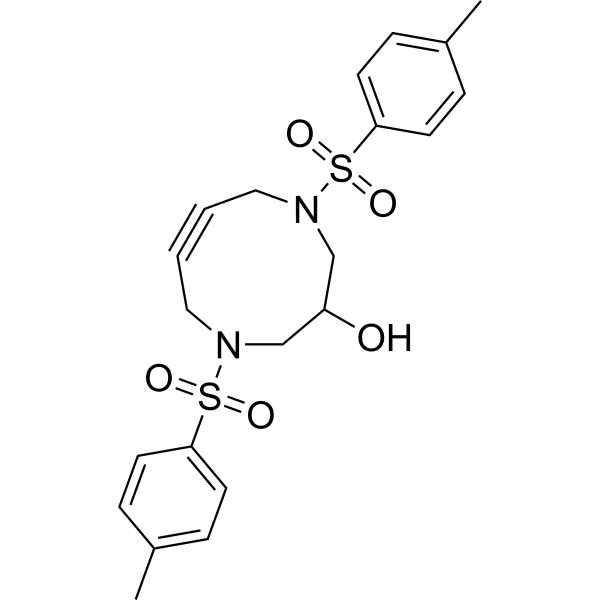
DACN(Tos2,6-OH) is a click chemistry reagent containing an Azide. The alkyne moiety within the ring has a unique bent structure and high reactivity toward cycloaddition reactions. The reactivity of an alkyne heavily depends on the electronic and steric characteristics of the substituents as well as structural strain. In comparison to nonbent acyclic alkynes, cyclononyne alkynes show remarkably high reactivity. Such strain-promoted azide-alkyne cycloadditions (SPAAC) using cycloalkynes have served for reliable molecular conjugation in a broad range of fields. The nitrogens are used as connection points for a variety of functional units. In comparison to cyclooctynes, DACNs possess high thermal and chemical stability along with comparable click reactivity . DACN(Tos2,6-OH) is a click chemistry reagent, it contains an Alkyne group and can undergo copper-catalyzed azide-alkyne cycloaddition (CuAAc) with molecules containing Azide groups.
loading...
    loading...
Cat. No.: HY-174359A
Alkyne-PEG2000-NH2 is an alkyne-functionalized bifunctional PEG derivative that can be used to modify proteins, peptides, and other materials. The alkyne group reacts with azides in aqueous solution in a copper-catalyzed manner. PEGylation can increase solubility and stability and reduce the immunogenicity of peptides and proteins .
loading...
    loading...
Cat. No.: HY-174359H
Alkyne-PEG40000-NH2 is an alkyne-functionalized bifunctional PEG derivative that can be used to modify proteins, peptides, and other materials. The alkyne group reacts with azides in aqueous solution in a copper-catalyzed manner. PEGylation can increase solubility and stability and reduce the immunogenicity of peptides and proteins .
loading...
    loading...
Cat. No.: HY-D2758
CAS No.: 1911598-65-6
TAMRA DBCO, 5-isomer is a derivative of TAMRA fluorescent isomer with a DBCO functional group. TAMRA DBCO, 5-isomer undergoes strain-promoted azide-alkyne cycloaddition (SPAAC) under copper-free catalytic conditions. TAMRA DBCO, 5-isomer serves as a FRET acceptor for FAM fluorophores. TAMRA DBCO, 5-isomer can label proteins, peptides, nucleic acids and all azide-modified biomolecules, and is suitable for fluorescence imaging and flow cytometry to quantify intracellular SPAAC reactions .
loading...
    loading...
Cat. No.: HY-D1859
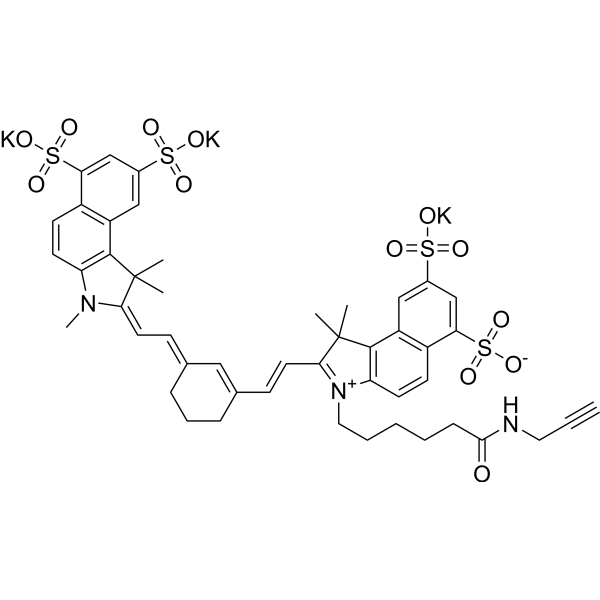
Sulfo-Cy7.5 alkyne is a dye derivative of Cyanine 7.5 (Cy7.5) (HY-D0926) containing a sulfonate ion and an alkyne functional group. The sulfonate ion increases the water solubility of the compound, making it suitable for use in aqueous solutions. Cy7.5 is a near-infrared fluorescent dye commonly used for biolabeling and cell imaging. The alkyne functionality of Sulfo-Cy7.5 alkyne can react with molecules containing the azide functionality to form covalent bonds. Sulfo-Cy7.5 alkyne can bind to biomolecules such as proteins and antibodies to track their location and dynamic changes in biological samples.
loading...
    loading...
Cat. No.: HY-W440835C
Research Areas:  

Inflammation/Immunology

DSPE-PEG1000-DBCO is a phospholipid PEG polymer that combines a hydrophobic phospholipid (DSPE), a hydrophilic polyethylene glycol spacer with a molecular weight of 1000 Da, and a reactive click chemistry terminal group (DBCO). DSPE-PEG-DBCO migrates to lymph nodes via the endogenous albumin transport system, implants bioorthogonal DBCO docking sites, and enables the enrichment of azide-functionalized vesicles in lymph nodes mediated by click chemistry. DSPE-PEG-DBCO can be used in studies related to atherosclerosis .
loading...
    loading...
Cat. No.: HY-W440835A
Research Areas:  

Inflammation/Immunology

DSPE-PEG400-DBCO is a phospholipid PEG polymer that combines a hydrophobic phospholipid (DSPE), a hydrophilic polyethylene glycol spacer with a molecular weight of 400 Da, and a reactive click chemistry terminal group (DBCO). DSPE-PEG-DBCO migrates to lymph nodes via the endogenous albumin transport system, implants bioorthogonal DBCO docking sites, and enables the enrichment of azide-functionalized vesicles in lymph nodes mediated by click chemistry. DSPE-PEG-DBCO can be used in studies related to atherosclerosis .
loading...
    loading...
Cat. No.: HY-W440835B
Research Areas:  

Inflammation/Immunology

DSPE-PEG600-DBCO is a phospholipid PEG polymer that combines a hydrophobic phospholipid (DSPE), a hydrophilic polyethylene glycol spacer with a molecular weight of 600 Da, and a reactive click chemistry terminal group (DBCO). DSPE-PEG-DBCO migrates to lymph nodes via the endogenous albumin transport system, implants bioorthogonal DBCO docking sites, and enables the enrichment of azide-functionalized vesicles in lymph nodes mediated by click chemistry. DSPE-PEG-DBCO can be used in studies related to atherosclerosis .
loading...
    loading...
Cat. No.: HY-W440835H
Research Areas:  

Inflammation/Immunology

DSPE-PEG10000-DBCO is a phospholipid PEG polymer that combines a hydrophobic phospholipid (DSPE), a hydrophilic polyethylene glycol spacer with a molecular weight of 10000 Da, and a reactive click chemistry terminal group (DBCO). DSPE-PEG-DBCO migrates to lymph nodes via the endogenous albumin transport system, implants bioorthogonal DBCO docking sites, and enables the enrichment of azide-functionalized vesicles in lymph nodes mediated by click chemistry. DSPE-PEG-DBCO can be used in studies related to atherosclerosis .
loading...
    loading...
Cat. No.: HY-DY1109
CAS No.: 1010386-62-5
Target:  

Fluorescent Dye

Research Areas:  

Others

CY3-YNE (solution) is a fluorescent alkyne dye for click chemistry-based fluorescent labeling of azide functional groups .
Solvent and concentration: DMSO: 10 mM
loading...
    loading...
Cat. No.: HY-D1861
CAS No.: 2144762-62-7
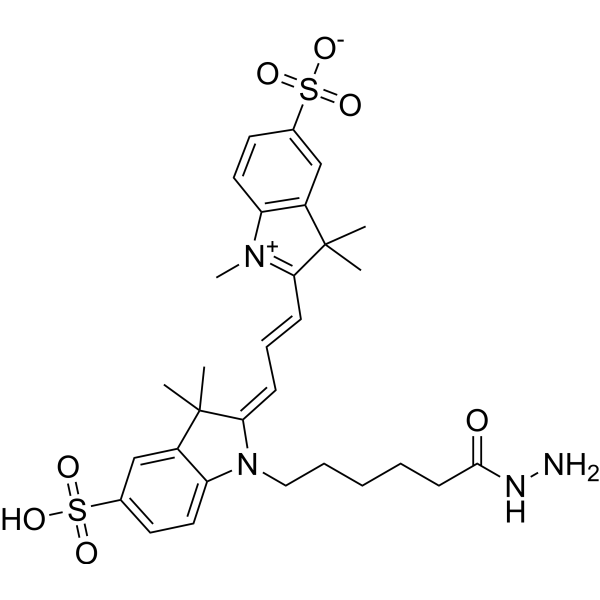
Sulfo-Cy3 hydrazide is a Cyanine 3 (Cy3) (HY-D0822) dye derivative with hydrazine functionality. The sulfonate ion increases the water solubility of the compound, making it suitable for use in aqueous solutions. Cy3 is a fluorescent dye with a fluorescence spectrum typically in the green to orange wavelength range. The hydrazide group of Sulfo-Cy3 hydrazide can form hydrazinone coupling with molecules containing aldehydes or ketones to form covalent bonds. Therefore, Cy3 azide plus can bind to biomolecules such as proteins and antibodies to track their location and dynamic changes in biological samples.
loading...
    loading...
Cat. No.: HY-N15824
CAS No.: 3077081-53-6
Target:  

Fluorescent Dye

Research Areas:  

Others

Cyanine 3.5 azide is a cyanine dye functionalized with an azide. Cyanine 3.5 azide is a click chemistry reagent, it contains an Azide group and can undergo copper-catalyzed azide-alkyne cycloaddition reaction (CuAAc) with molecules containing Alkyne groups. It can also undergo strain-promoted alkyne-azide cycloaddition (SPAAC) reactions with molecules containing DBCO or BCN groups (Ex/Em = 591/604 nm).
loading...
    loading...
Cat. No.: HY-W598195
CAS No.: 122161-09-5
Research Areas:  

Others

11-Azido-1-undecanol is a compound with an azide head and a undecanol tail. The azide (N3) group can react with alkyne, BCN, DBCO via Click Chemistry to yield a stable triazole linkage. The hydroxyl group enables further derivatization or replacement with other reactive functional groups.
loading...
    loading...
Cat. No.: HY-134107
CAS No.: 103348-49-8
Research Areas:  

Others

Azido-erythro-sphingosines is an intermidate for synthesis of lipid molecules with two hydroxyl groups and a terminal azide group. Azide (N3) group can react with alkyne, BCN, DBCO via Click Chemistry. The hydroxyl groups enable further derivatization or replacement with other reactive functional groups. Azido-erythro-sphingosine is a derivative of Sphingosine, which is a selective inhibitor of protein kinase C activity and phorbol dibutyrate binding in vitro in human platelets.
loading...
    loading...
Cat. No.: HY-W800664
CAS No.: 2468714-96-5
Research Areas:  

Others

5-(Azido-PEG4)-pent-2-yn-1-Ol is a PEG linker containing an azide group and a terminal hydroxyl group. The hydrophilic PEG spacer increases solubility in aqueous media. The azide group can react with alkyne, BCN, DBCO via Click Chemistry to yield a stable triazole linkage. The hydroxyl group enables further derivatization or replacement with other reactive functional groups.
loading...
    loading...

