

102 Results for "

liver dysfunction

" in MedChemExpress (MCE) Product Catalog:
Products (102)

102 Results for "liver dysfunction" in MCE Product Catalog:

Cat. No.: HY-178015
CAS No.: 3051970-23-8
THR-β agonist 11 is an orally active and selective thyroid hormone receptor (THR-β) agonist. THR-β agonist 11 shows potent cholesterol-lowering activity in cholesterol-fed rats. THR-β agonist 11 significantly reduces serum total TG, LDL-cholesterol, liver total TC and TG levels, and alleviates hepatic steatosis, inflammation and fibrosis in HFD-CCl4-induced Metabolic dysfunction-associated steatohepatitis (MASH) model mice. THR-β agonist 11 can be used for the study of metabolic dysfunction-associated steatohepatitis (MASH) and other fibrotic diseases .
loading...
    loading...
Cat. No.: HY-P11208
Target:  

GABA Receptor

Research Areas:  

Inflammation/Immunology

mNLS-CPP-WSTF is a nuclear localization signal (NLS)-cell-penetrating peptide based on the mouse WSTF sequence. mNLS-CPP-WSTF significantly inhibits the GABARAP-WSTF interaction, WSTF degradation and inflammatory gene expression. mNLS-CPP-WSTF effectively attenuates chronic inflammation, liver fibrosis and cartilage damage in metabolic-dysfunction-associated steatohepatitis (MASH) and osteoarthritis (OA) mice model. mNLS-CPP-WSTF is promising for research of chronic inflammatory diseases such as MASH and OA .
loading...
    loading...
Cat. No.: HY-P990990
CAS No.: 2803875-75-2
Synonyms: YN011; YN012; YN015

Target:  

GLP Receptor

Efsubaglutide alfa is a long-acting humanised GLP-1 receptor agonist . Efsubaglutide alfa binds specifically to the GLP-1 receptor, enhancing glucose-dependent insulin secretion, suppressing glucagon release, and promoting β-cell proliferation and increased β-cell mass. Efsubaglutide alfa improves glucose tolerance, increases pancreatic insulin content, and enhances β-cell secretory responses in isolated human islets. Efsubaglutide alfa reduces liver steatosis, lowers NAFLD Activity Scores, improves perisinusoidal collagen features, reduces serum ALT and AST levels, improves fasting glucose and triglyceride levels, and reduces body weight, liver weight and liver-to-body weight ratio. Efsubaglutide alfa can be used for the research of type 2 diabetes. Efsubaglutide alfa can be used for the research of metabolic dysfunction-associated steatohepatitis .
loading...
    loading...
Cat. No.: HY-173599
Target:  

Molecular Glues PNPLA3

Research Areas:  

Metabolic Disease

NUV-244 is a molecular glue degrader of PNPLA3 I148M. NUV-244 induces degradation via the ubiquitin-proteasome system involving the E3 ligase BFAR. NUV-244 promotes 26S proteasome-dependent degradation of PNPLA3 I148M. NUV-244 restores lipid droplet morphology and cellular fitness in hepatocytes expressing PNPLA3 I148M. NUV-244 can be used in the research of metabolic dysfunction-associated fatty liver disease .
loading...
    loading...
Cat. No.: HY-P1624S1
Synonyms: ALX-0600-Leu(13C6,15N) sodium
Teduglutide-Leu( 13C6, 15N) (ALX-0600-Leu( 13C6, 15N)) sodium is the 13C- and 15N-labeled Teduglutide (HY-P1624). Teduglutide (ALX-0600) is an analog of human glucagon like peptide-2 (GLP-2). Teduglutide can activate the expression of nuclear receptor subfamily 4 group a member 1 (NR4a1)/nur77 and intestinal FXR signaling in human hepatic stellate cells, thereby improving liver inflammation and fibrosis in mice with sclerosing cholangitis. Teduglutide can alleviate intestinal dysfunction in mice, improve lung injury, alleviate obesity related neuroinflammation and cell apoptosis .
loading...
    loading...
Cat. No.: HY-P1624A
Synonyms: ALX-0600 TFA
Teduglutide TFA is a dipeptidyl peptidase IV resistant glucagon-like peptide 2 (GLP-2) analogue. Teduglutide TFA can activate the expression of nuclear receptor subfamily 4 group a member 1 (NR4a1)/nur77 and intestinal FXR signaling in human hepatic stellate cells, thereby improving liver inflammation and fibrosis in mice with sclerosing cholangitis. Teduglutide TFA can alleviate intestinal dysfunction in mice, improve lung injury, alleviate obesity related neuroinflammation and cell apoptosis .
loading...
    loading...
Cat. No.: HY-179278
Target:  

LXR

LXR agonist 4 is a selective LXR inverse agonist with IC50 values of 7.6 (LXRα) and 2.9 μM (LXRβ), respectively. LXR agonist 4 exhibits selectivity over RORα and FXR. LXR agonist 4 robustly suppresses SREBP1c expression without altering ABCA1 or APOE. LXR agonist 4 displays antilipogenic properties and resolves fatty acid-induced steatosis. LXR agonist 4 can be used for the research of atherosclerosis and metabolic dysfunction-associated steatotic liver disease (MASLD) .
loading...
    loading...
Cat. No.: HY-18282R
CAS No.: 898800-26-5
Target:  

LXR

AZ876 (Standard) is the analytical standard of AZ876. This product is intended for research and analytical applications. AZ876 is a selective, orally active agonist of liver X receptor (LXRα/β) (Ki=0.007 μM [LXRα, human], 0.011 μM [LXRβ, human]. AZ876 induces the expression of target genes such as ABCA1 and ABCG1, promotes reverse cholesterol transport (RCT) and regulates lipid metabolism and anti-inflammatory effects. AZ876 increases cardiac polyunsaturated fatty acid levels, reduces myocardial fibrosis, and reduces lesion area and monocyte adhesion in atherosclerosis models. AZ876 can be used in cardiovascular disease research, such as preventing and treating β-adrenergic-induced cardiac diastolic dysfunction and inhibiting the progression of atherosclerosis .
loading...
    loading...
Cat. No.: HY-B0402AR
CAS No.: 665-66-7
Synonyms: 1-Adamantanamine hydrochloride (Standard); 1-Adamantylamine hydrochloride (Standard); 1-Aminoadamantane hydrochloride (Standard)
Amantadine (hydrochloride) (Standard) is the analytical standard of Amantadine (hydrochloride). This product is intended for research and analytical applications. Amantadine (1-Adamantanamine) hydrochloride is an orally avtive and potent antiviral agent with activity against influenza A viruses. Amantadine hydrochloride inhibits several ion channels such as NMDA and M2, and also inhibits Coronavirus ion channels. Amantadine hydrochloride also has anti-orthopoxvirus and anticancer activity. Amantadine hydrochloride can be used for Parkinson's disease, postoperative cognitive dysfunction (POCD) and COVID-19 research .
loading...
    loading...
Cat. No.: HY-B0402R1
CAS No.: 768-94-5
Synonyms: 1-Adamantanamine in Methanol (Standard); 1-Aminoadamantane in Methanol (Standard)
Amantadine in Methanol (Standard) is the solution of Amantadine (Standard). This product is intended for research and analytical applications. Amantadine (1-Adamantanamine) is an orally avtive and potent antiviral agent with activity against influenza A viruses. Amantadine inhibits several ion channels such as NMDA and M2, and also inhibits Coronavirus ion channels. Amantadine also has anti-orthopoxvirus and anticancer activity. Amantadine can be used for Parkinson's disease, postoperative cognitive dysfunction (POCD) and COVID-19 research [4] .
loading...
    loading...
Cat. No.: HY-113402AR
CAS No.: 283159-88-6
Synonyms: γ-Glu-Cys TFA (Standard)
Gamma-glutamylcysteine (TFA) (Standard) is the analytical standard of Gamma-glutamylcysteine (TFA). This product is intended for research and analytical applications. Gamma-glutamylcysteine TFA (γ-Glu-Cys TFA) is an orally active, blood-brain barrier permeable dipeptide . Gamma-glutamylcysteine TFA activates AMPK, SIRT1, IL-4/STAT6, AC/cAMP/PI3K, IGF-1R/IRS1/PI3K, and Nrf2 signaling pathways; it inhibits NF-κB, JAK1/STAT1/3, MAPKs, cadmium-induced p38 MAPK, JNK, and PI3K/Akt signaling pathways. Gamma-glutamylcysteine TFA regulates macrophage polarization, modulates the trafficking of CD36 and GLUT4, induces glutathione synthesis, improves metabolic dysfunction, reduces lipid deposition, ameliorates glucose homeostasis, inhibits apoptosis (Apoptosis), stabilizes mitochondria, suppresses lipid peroxidation, iron accumulation and ferroptosis (Ferroptosis), reduces ds-HMGB1 levels, reverses mechanical hyperalgesia, and alleviates hepatic lipid droplet formation. Gamma-glutamylcysteine TFA is applicable to research related to inflammatory bowel disease, type 2 diabetes, cadmium-induced neurotoxicity, Alzheimer's disease, cerebral ischemia/reperfusion injury, neuropathy, and alcoholic liver disease.
loading...
    loading...
Cat. No.: HY-108056
CAS No.: 547770-05-8
Target:  

Dopamine Receptor

Research Areas:  

Endocrinology

PF 219061 is an selective agonist for dopamine 3 receptor with an EC50 of 15 nM. PF 219061 exhibits a rapid absorption and a good liver blood clearance, and can be used for research of female sexual dysfunction .
loading...
    loading...
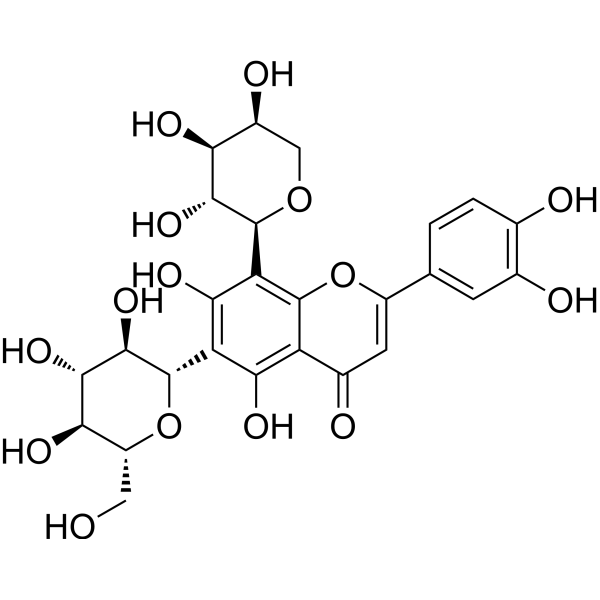
Cat. No.: HY-125129
CAS No.: 59952-97-5
Carlinoside is a flavone glycoside with hepatoprotective efficiency. Carlinoside reduces hepatic bilirubin accumulation by stimulating bilirubin-UGT activity through Nrf2 gene expression. Carlinoside has the potential to intervene hyperbilirubinemia due to liver dysfunction .
loading...
    loading...
Cat. No.: HY-173265
Target:  

Cyclophilin

CypB-IN-1 (Compound 11) is an inhibitor of cyclophilin B (cyclophilin B) with a Kd value of 12 nM. CypB-IN-1 can be applied to the research field of metabolic dysfunction-associated steatohepatitis (MASH) and the liver fibrosis diseases resulting from it .
loading...
    loading...
Cat. No.: HY-111338R
CAS No.: 321-64-2
Tacrine (Standard) is the analytical standard of Tacrine. This product is intended for research and analytical applications. Tacrine is an effective oral acetylcholine (AChE) inhibitor (IC50 = 109 nM) and also acts as an active substrate for CYP1A2. Tacrine can restore cognitive dysfunction in elderly rats. Tacrine can cause liver toxicity and is used in research related to Alzheimer's disease .
loading...
    loading...
Cat. No.: HY-147406A
CAS No.: 2589926-21-4
Synonyms: ION-904 sodium
Tonlamarsen (ION-904) sodium is a GalNAc-conjugated antisense oligonucleotide and Angiotensinogen synthesis inhibitor. Tonlamarsen sodium specifically reduces the production of Angiotensinogen in the liver and plasma, and exhibits extremely low activity in the kidneys. Tonlamarsen sodium can be used in research related to hypertension and heart failure .
loading...
    loading...
Cat. No.: HY-161647
Antitumor agent-156 (Compound 20) causes DNA damage and mitochondrial dysfunction, promotes reactive oxygen species generation, activates endoplasmic reticulum stress, and induce apoptosis, autophagy and ferroptosis. Antitumor agent-156 shows superior antitumor activity against cancer cells including Cisplatin (HY-17394) resistance cells. Antitumor agent-156 displayS good liver-targeting ability .
loading...
    loading...
Cat. No.: HY-162122
CAS No.: 3027045-35-5
Target:  

PPAR

Research Areas:  

Inflammation/Immunology

PPARα/γ agonist 3 (Compound 4) is a dual agonist of PPARα/γ. PPARα/γ agonist 3 has anti-inflammatory activity, significantly reducing inflammatory markers such as IL-6 and MCP-1 on THP-1 macrophages through NF-κB activation. PPARα/γ agonist 3 can be used in the study of metabolic syndrome and metabolic dysfunction-related fatty liver disease (MAFLD) .
loading...
    loading...
Cat. No.: HY-162963
CAS No.: 2982696-04-6
Synonyms: PPARδ agonist 11
DN203316 (PPARδ agonist 11) is a potent, selective, orally active PPARδ agonist (EC50 = 20 nM) with high selectivity over PPARα and PPARγ. DN203316 suppresses NF-κB-mediated inflammatory signaling, inhibits ferroptosis by upregulating xCT and GPX4, and attenuates STING-TBK1-IRF3-driven fibrogenic responses. DN203316 is useful for research on inflammatory disorders, metabolic dysfunction-associated steatohepatitis (MASH), and liver fibrosis .
loading...
    loading...
Cat. No.: HY-W040194R
CAS No.: 81777-89-1
Research Areas:  

Metabolic Disease

Clomazone (Standard) is the analytical standard of Clomazone (HY-W040194). This product is intended for research and analytical applications. Clomazone is a broad spectrum herbicide, mainly used to control annual broadleaf weeds and grass weeds in various crops such as rice, soybeans, and peanuts. Clomazone inhibits carotenoid biosynthesis, and treated plants show typical "albinism" symptoms due to the destruction of chloroplast membrane structure leading to chlorophyll degradation. Clomazone exhibits multiple toxic effects on non-target organisms, including aquatic lethality, developmental malformations, liver damage, mitochondrial dysfunction, and hematotoxicity.
loading...
    loading...

