102 Results for "

liver dysfunction

" in MedChemExpress (MCE) Product Catalog:
Products (102)

102 Results for "liver dysfunction" in MCE Product Catalog:

Cat. No.: HY-172883
CAS No.: 3104894-76-7
Target:  

FABP PPAR

ABP/PPAR modulator 1 is an orally active FABP and PPAR multiple modulator (IC50s of 0.65  μM and 1.08  μM for FABP1 and FABP4, EC50 s of 9.19  μM, 2.20  μM and 1.58 μM for PPARα, PPARγ and PPARδ). ABP/PPAR modulator 1 has potent anti-metabolic dysfunction-associated steatohepatitis (MASH) activity. ABP/PPAR modulator 1 dose-dependently ameliorates multiple pathological characteristics of fatty liver in WD + Carbon tetrachloride-induced MASH mice model .
loading...
    loading...
Cat. No.: HY-133676S
CAS No.: 679789-44-7
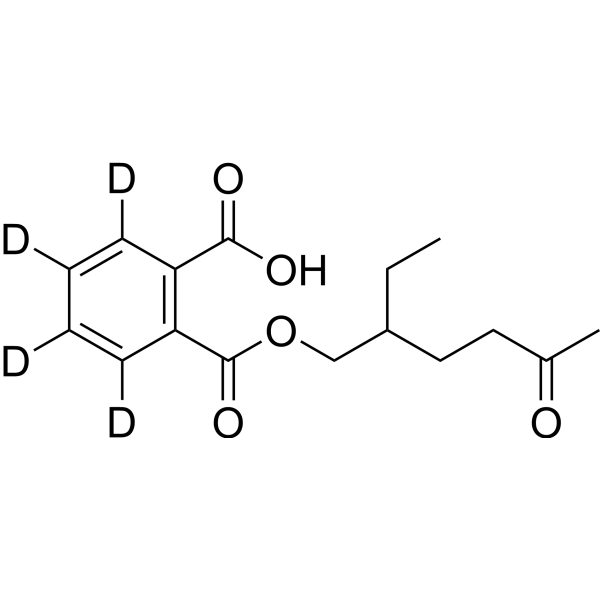
Synonyms: MEOHP-d4; 5-oxo-MEHP-d4
Mono(2-ethyl-5-oxohexyl) phthalate-d4 (MEOHP-d4; 5-oxo-MEHP-d4) is the deuterated-labeled Mono(2-ethyl-5-oxohexyl) phthalate (HY-133676). Mono (2-ethyl-5-oxohexyl) phthalate (MEOHP; 5-oxo-MEHP) is a secondary metabolite produced by cytochrome P450 enzyme-mediated oxidation of di(2-ethylhexyl) phthalate. Exposure levels of Mono (2-ethyl-5-oxohexyl) phthalate are associated with late-onset hypogonadism. Mono (2-ethyl-5-oxohexyl) phthalate can be used for research on mechanisms related to male reproductive endocrine disorders .
loading...
    loading...
Cat. No.: HY-172883A
Target:  

FABP PPAR

(E/Z)-ABP/PPAR modulator 1 is a mixture of the E and Z isomers of ABP/PPAR modulator 1 (HY-172883). ABP/PPAR modulator 1 is an orally active FABP and PPAR multiple modulator (IC50s of 0.65  μM and 1.08  μM for FABP1 and FABP4, EC50 s of 9.19  μM, 2.20  μM and 1.58 μM for PPARα, PPARγ and PPARδ). ABP/PPAR modulator 1 has potent anti-metabolic dysfunction-associated steatohepatitis (MASH) activity. ABP/PPAR modulator 1 dose-dependently ameliorates multiple pathological characteristics of fatty liver in WD + Carbon tetrachloride-induced MASH mice model .
loading...
    loading...
Cat. No.: HY-N15415
CAS No.: 16838-87-2
Zaluzanin C is a sesquiterpene lactone and antifungal agent. Zaluzanin C is isolated from the leaves of Vernonia arborea. Zaluzanin C inhibits mtROS-mediated NF-κB activity, as well as LPS- and TNF-α-induced mtROS production. Zaluzanin C alleviates mtROS-mediated mitochondrial dysfunction, enhances Mitophagy, and increases the mRNA levels of fatty acid oxidation genes and mitochondrial biogenesis factors. Zaluzanin C inhibits the formation of advanced glycation end products and α-glucosidase activity. Zaluzanin C improves intracellular lipid accumulation. Zaluzanin C exhibits anti-inflammatory, antioxidant, antifungal, anticancer and pro-osteogenic activities. Zaluzanin C can be used in studies related to non-alcoholic fatty liver disease and obesity .
loading...
    loading...
Cat. No.: HY-P1624S
Synonyms: ALX-0600-Ala(13C3,15N) sodium
Teduglutide-Ala( 13C3, 15N) (ALX-0600-Ala( 13C3, 15N)) sodium is the 13C- and 15N-labeled Teduglutide (HY-P1624). Teduglutide (ALX-0600) is an analog of human glucagon like peptide-2 (GLP-2). Teduglutide can activate the expression of nuclear receptor subfamily 4 group a member 1 (NR4a1)/nur77 and intestinal FXR signaling in human hepatic stellate cells, thereby improving liver inflammation and fibrosis in mice with sclerosing cholangitis. Teduglutide can alleviate intestinal dysfunction in mice, improve lung injury, alleviate obesity related neuroinflammation and cell apoptosis .
loading...
    loading...
Cat. No.: HY-N0732R
CAS No.: 37905-08-1
Jolkinolide B (Standard) is the analytical standard of Jolkinolide B (HY-N0732). This product is intended for research and analytical applications. Jolkinolide B is a bioactive diterpene isolated from the roots of Euphorbia fischeriana Steud with oral activity. Jolkinolide B downregulates XIAP, cIAP1, cIAP2, and phosphorylated Akt, upregulates Smac, activates caspase-3 and caspase-9, and inhibits NF-κB, TGFβ/smad3 and JAK/STAT3 pathways. Jolkinolide B exerts comprehensive biological effects including inducing cancer cell apoptosis, suppressing inflammatory responses, improving lung function, alleviating hepatic steatosis and eliminating intracellular Mycobacterium tuberculosis. Jolkinolide B can be used for the research of leukemia, histiocytic lymphoma, asthma, metabolic dysfunction-associated steatotic liver disease and tuberculosis .
loading...
    loading...
Cat. No.: HY-179015
Target:  

17β-HSD PPAR

HSD17B13/PPAR modulator-1 (Compound 17) is a HSD17B13/PPAR multitarget modulator. HSD17B13/PPAR modulator-1 is an inhibitor of HSD17B13, with its IC50 value being 0.91 μM. HSD17B13/PPAR modulator-1 is a PPAR agonist, with the EC50 values for PPARα, PPARδ, and PPARγ being 1.55, 0.12, and 0.01 μM respectively. HSD17B13/PPAR modulator-1 can significantly improve liver function, regulate lipid metabolism, alleviate fibrosis, and exert antioxidant and anti-inflammatory effects in the model of metabolic dysfunction-related steatohepatitis (MASH). HSD17B13/PPAR modulator-1 can be used for the study of MASH .
loading...
    loading...
Cat. No.: HY-B0402R
CAS No.: 768-94-5
Synonyms: 1-Adamantanamine (Standard); 1-Aminoadamantane (Standard)
Amantadine (Standard) is the analytical standard of Amantadine. This product is intended for research and analytical applications. Amantadine (1-Adamantanamine) is an orally avtive and potent antiviral agent with activity against influenza A viruses. Amantadine inhibits several ion channels such as NMDA and M2, and also inhibits Coronavirus ion channels. Amantadine also has anti-orthopoxvirus and anticancer activity. Amantadine can be used for Parkinson's disease, postoperative cognitive dysfunction (POCD) and COVID-19 research [4] .
loading...
    loading...
Cat. No.: HY-W653905
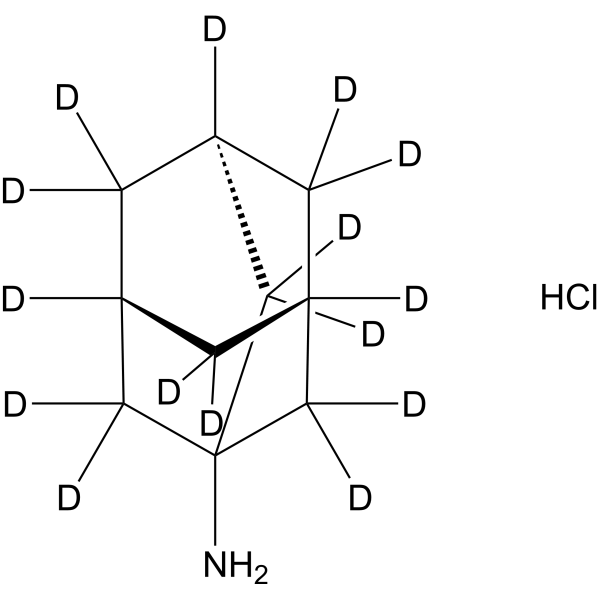
Synonyms: 1-Adamantanamine hydrochloride-d15
Amantadine-d15 hydrochloride is deuterated labeled Amantadine. Amantadine (1-Adamantanamine) is an orally avtive and potent antiviral agent with activity against influenza A viruses. Amantadine inhibits several ion channels such as NMDA and M2, and also inhibits Coronavirus ion channels. Amantadine also has anti-orthopoxvirus and anticancer activity. Amantadine can be used for Parkinson's disease, postoperative cognitive dysfunction (POCD) and COVID-19 research .
loading...
    loading...
Cat. No.: HY-113402B
Synonyms: γ-Glu-Cys ammonium
Gamma-glutamylcysteine ammonium (γ-Glu-Cys ammonium) is an orally active, blood-brain barrier permeable dipeptide . Gamma-glutamylcysteine ammonium activates AMPK, SIRT1, IL-4/STAT6, AC/cAMP/PI3K, IGF-1R/IRS1/PI3K, and Nrf2 signaling pathways; it inhibits NF-κB, JAK1/STAT1/3, MAPKs, cadmium-induced p38 MAPK, JNK, and PI3K/Akt signaling pathways. Gamma-glutamylcysteine ammonium regulates macrophage polarization, modulates the trafficking of CD36 and GLUT4, induces glutathione synthesis, improves metabolic dysfunction, reduces lipid deposition, ameliorates glucose homeostasis, inhibits apoptosis (Apoptosis), stabilizes mitochondria, suppresses lipid peroxidation, iron accumulation and ferroptosis (Ferroptosis), reduces ds-HMGB1 levels, reverses mechanical hyperalgesia, and alleviates hepatic lipid droplet formation. Gamma-glutamylcysteine ammonium is applicable to research related to inflammatory bowel disease, type 2 diabetes, cadmium-induced neurotoxicity, Alzheimer's disease, cerebral ischemia/reperfusion injury, neuropathy, and alcoholic liver disease .
loading...
    loading...
Cat. No.: HY-186252
CAS No.: 3103571-04-3
GPR133 agonist 1 is an orally active GPR133/ADGRD1 agonist with an EC50 of 1.6 nM (293T cells). GPR133 agonist 1 activates GPR133, thereby regulating the downstream cAMP signaling pathway. GPR133 agonist 1 enhances muscle strength and endurance in mice. GPR133 agonist 1 can be used in research related to muscular atrophy, myasthenia, sarcopenia, erectile dysfunction, vestibular dysfunction, obesity, and non-alcoholic fatty liver disease .
loading...
    loading...
Cat. No.: HY-181599
XAN-5 is a mitochondrial DNA G-quadruplex (mtG4) ligand with a Kd of 3.8 μM. XAN-5 selectively binds and stabilizes mtG4 structures, disrupting mitochondrial gene transcription and DNA replication. XAN-5 triggers mitochondrial dysfunction, ROS overproduction, G0 phase arrest and caspase-dependent apoptosis. XAN-5 inhibits autophagy and induces immunogenic cell death. XAN-5 inhibits tumor growth in a mouse liver cancer model while enhancing tumor-infiltrating CD4 + and CD8 + T cells. XAN-5 targets two cancer resistance mechanisms simultaneously. XAN-5 can be used for the research of liver cancer .
loading...
    loading...
Cat. No.: HY-187385
Target:  

GPR35

Research Areas:  

Metabolic Disease

GPR35 agonist 8 is a cross-species, highly potent GPR35 agonist (human EC50: 12 nM; murine EC50: 2 nM). GPR35 agonist 8 reduces lipid accumulation, ameliorates lipid metabolism disorders, alleviates hepatic inflammation and liver fibrosis, and relieves hepatic steatosis. GPR35 agonist 8 can be used for research on metabolic dysfunction-associated fatty liver disease and metabolic dysfunction-associated steatohepatitis .
loading...
    loading...
Cat. No.: HY-184053
CAS No.: 2390512-47-5
Research Areas:  

Metabolic Disease

Mezodriton is a sulfonamidobenzamide derivative and mitochondrial uncoupler with an EC50 of 5587.82 nM. Mezodriton is applicable to research related to diseases mediated by mitochondrial dysfunction, such as non-alcoholic fatty liver disease .
loading...
    loading...
Cat. No.: HY-181563
Target:  

Acyltransferase

Research Areas:  

Metabolic Disease

MGAT2-IN-6 (Compound 23AX) is an orally active MGAT2 inhibitor. MGAT2-IN-6 reduces triglyceride levels and liver fibrosis. MGAT2-IN-6 can be used in the research of metabolic dysfunction-associated fatty liver disease .
loading...
    loading...
Cat. No.: HY-181564
CAS No.: 3115123-06-0
Target:  

Acyltransferase

Research Areas:  

Metabolic Disease

MGAT2-IN-7 is an orally active monoacylglycerol acyltransferase 2 (MGAT2) inhibitor. MGAT2-IN-7 is used for research on obesity and metabolic dysfunction-associated steatotic liver disease (MASLD) .
loading...
    loading...
Cat. No.: HY-187262S
[U- 15N]-Transferrin is the 15N-labeled Transferrin. Dysfunction of transferrin is closely associated with conditions such as iron-deficiency anemia and liver disease. This isotope can be used in NMR studies to investigate disease mechanisms and in mass spectrometry analysis.
loading...
    loading...
Cat. No.: HY-181862
Research Areas:  

Metabolic Disease

SHK1112218 is an orally active mitochondrial proton carrier with an EC50 of 0.48 μM. SHK1112218 restores proton transport and increases oxygen consumption rate. SHK1112218 can be used for the research of diabetes, obesity, and metabolic dysfunction-associated steatotic liver disease .
loading...
    loading...
Cat. No.: HY-L076
641 compounds

Drug-induced liver injury (DILI; also known as drug-induced hepatotoxicity) is caused by medications (prescription or OTC), herbal and dietary supplements (HDS), or other xenobiotics that result in abnormalities in liver tests or in hepatic dysfunction that cannot be explained by other causes. Drugs are an important cause of liver injury. Drug-induced hepatic injury is the most common reason cited for withdrawal of an approved drug.

DILI is thought to occur via several different mechanisms. Among these are direct impairment of the structural (e.g., mitochondrial dysfunction) and functional integrity of the liver; production of a metabolite that alters hepatocellular structure and function; production of a reactive drug metabolite that binds to hepatic proteins to produce new antigenic drug-protein adducts, which are targeted by hosts’ defenses (the hapten hypothesis); and initiation of a systemic hypersensitivity response (i.e., drug allergy) that damages the liver.

MCE Drug-induced Liver Injury (DILI) Compound Library contains a unique collection of 641 hepatotoxicity causing compounds and is a powerful tool to research DILI and other drug toxicities. This library can be used to understand the mechanisms of DILI, identify biomarkers for early DILI prediction, and allow timely recognition during drug development, thus finally achieving successful DILI prevention and assessment in the pre-marketing phase.

Cat. No.: HY-180921
CAS No.: 2845278-33-1
Target:  

Ketohexokinase

Research Areas:  

Metabolic Disease Endocrinology

GS-1291269 is a potent and neutral ketohexokinase (KHK) inhibitor, with IC50s of 0.38 and 2.1 nM against KHK-C and KHK-A, respectively. GS-1291269 demonstrates liver and kidney fructose-1-phosphate (F1P) reduction in a fructose challenge model in rats. GS-1291269 can be used for kidney disease and metabolic-dysfunction-associated steatotic liver disease (MASLD) research .
loading...
    loading...

