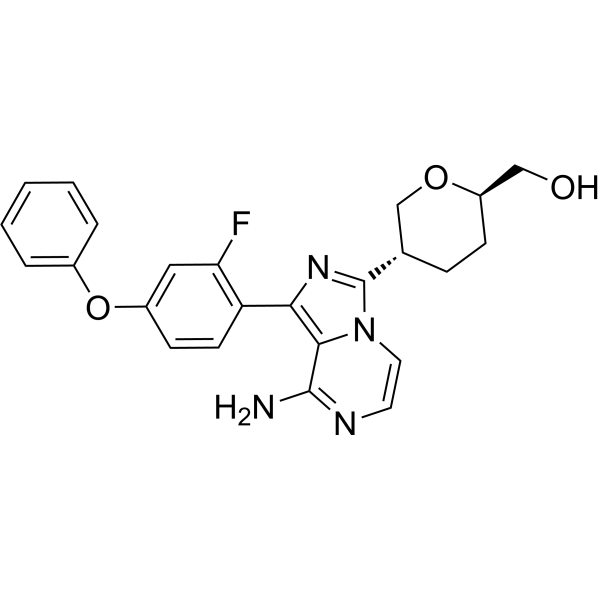
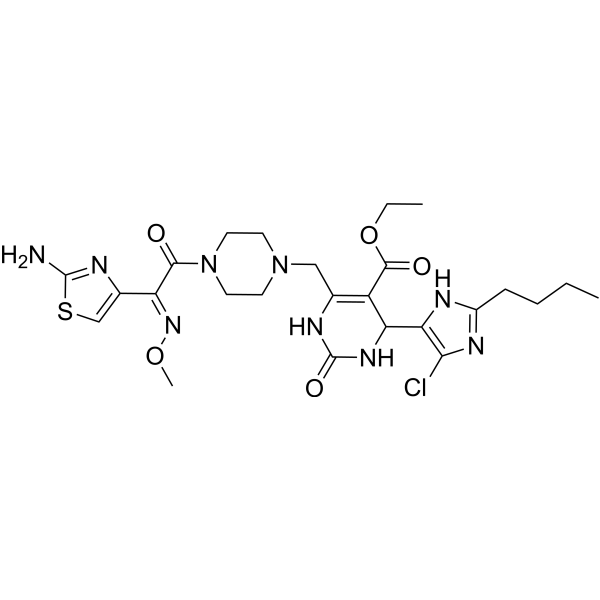
107 Results for "

metabolic dysfunction

" in MedChemExpress (MCE) Product Catalog:
Products (107)

107 Results for "metabolic dysfunction" in MCE Product Catalog:

Cat. No.: HY-178015
CAS No.: 3051970-23-8
THR-β agonist 11 is an orally active and selective thyroid hormone receptor (THR-β) agonist. THR-β agonist 11 shows potent cholesterol-lowering activity in cholesterol-fed rats. THR-β agonist 11 significantly reduces serum total TG, LDL-cholesterol, liver total TC and TG levels, and alleviates hepatic steatosis, inflammation and fibrosis in HFD-CCl4-induced Metabolic dysfunction-associated steatohepatitis (MASH) model mice. THR-β agonist 11 can be used for the study of metabolic dysfunction-associated steatohepatitis (MASH) and other fibrotic diseases .
loading...
    loading...
Cat. No.: HY-P11237
CAS No.: 2869147-44-2
Synonyms: CT-388
Enicepatide (CT-388) is a cAMP signal-biased dual GLP-1R and GIPR agonist peptide, with an EC50 value of 0.087 nM for GLP-1R cAMP, and an EC50 value of 2.47 nM for GIPR cAMP. Enicepatide activates the cAMP signaling pathway, while recruiting only minimal amounts of β-arrestin-2 at both targets and reducing receptor internalization levels. Enicepatide improves glycemic control, reduces body weight, suppresses appetite, and ameliorates the pathological conditions of metabolic dysfunction-associated steatohepatitis. Enicepatide can be used in the research of obesity, type 2 diabetes, and metabolic dysfunction-associated steatohepatitis .
loading...
    loading...
Cat. No.: HY-P11208
Target:  

GABA Receptor

Research Areas:  

Inflammation/Immunology

mNLS-CPP-WSTF is a nuclear localization signal (NLS)-cell-penetrating peptide based on the mouse WSTF sequence. mNLS-CPP-WSTF significantly inhibits the GABARAP-WSTF interaction, WSTF degradation and inflammatory gene expression. mNLS-CPP-WSTF effectively attenuates chronic inflammation, liver fibrosis and cartilage damage in metabolic-dysfunction-associated steatohepatitis (MASH) and osteoarthritis (OA) mice model. mNLS-CPP-WSTF is promising for research of chronic inflammatory diseases such as MASH and OA .
loading...
    loading...
Cat. No.: HY-173599
Target:  

Molecular Glues PNPLA3

Research Areas:  

Metabolic Disease

NUV-244 is a molecular glue degrader of PNPLA3 I148M. NUV-244 induces degradation via the ubiquitin-proteasome system involving the E3 ligase BFAR. NUV-244 promotes 26S proteasome-dependent degradation of PNPLA3 I148M. NUV-244 restores lipid droplet morphology and cellular fitness in hepatocytes expressing PNPLA3 I148M. NUV-244 can be used in the research of metabolic dysfunction-associated fatty liver disease .
loading...
    loading...
Cat. No.: HY-174306
Research Areas:  

Metabolic Disease

MARY1 is a selective 5-HT2BR antagonist with an IC50 of 380 nM and a Ki of 764 nM (human 5-HT2BR). MARY1 induces renal mitochondrial biogenesis (MB) and enhances renal mitochondrial function by increasing mitochondrial respiratory capacity, mitochondrial protein levels, and mitochondrial number in renal proximal tubular cells (RPTCs). MARY1 induces MB through 5-HT2BR and dual PI3K/AKT and RAS/MEK/ERK cell signaling pathways in RPTCs. MARY1 can be used to study renal diseases associated with metabolic and mitochondrial dysfunction .
loading...
    loading...
Cat. No.: HY-P990990
CAS No.: 2803875-75-2
Synonyms: YN011; YN012; YN015

Target:  

GLP Receptor

Efsubaglutide alfa is a long-acting humanised GLP-1 receptor agonist . Efsubaglutide alfa binds specifically to the GLP-1 receptor, enhancing glucose-dependent insulin secretion, suppressing glucagon release, and promoting β-cell proliferation and increased β-cell mass. Efsubaglutide alfa improves glucose tolerance, increases pancreatic insulin content, and enhances β-cell secretory responses in isolated human islets. Efsubaglutide alfa reduces liver steatosis, lowers NAFLD Activity Scores, improves perisinusoidal collagen features, reduces serum ALT and AST levels, improves fasting glucose and triglyceride levels, and reduces body weight, liver weight and liver-to-body weight ratio. Efsubaglutide alfa can be used for the research of type 2 diabetes. Efsubaglutide alfa can be used for the research of metabolic dysfunction-associated steatohepatitis .
loading...
    loading...
Cat. No.: HY-174862
CAS No.: 3064086-31-0
Target:  

PROTACs ASK1

Research Areas:  

Inflammation/Immunology

dASK1 is a PROTAC degrader of ASK1 that recruits cereblon. dASK1 promotes ASK1 degradation in a dose- and time-dependent manner via the ubiquitin-proteasome pathway. dASK1 can be used in studies of metabolic dysfunction-associated steatohepatitis .
loading...
    loading...
Cat. No.: HY-P11207
CAS No.: 1228086-59-6
Synonyms: NLS-cell penetrating peptide
Target:  

Inhibitory Antibodies

Research Areas:  

Inflammation/Immunology

NLS-CPP is a nuclear localization signal (NLS)-cell-penetrating peptide, which contains the NLS of OCT6. NLS-CPP facilitates nuclear delivery. NLS-CPP can be used for chronic inflammatory diseases s research, such as metabolic-dysfunction-associated steatohepatitis (MASH) and osteoarthritis (OA) .
loading...
    loading...
Cat. No.: HY-11074
CAS No.: 870615-40-0
Research Areas:  

Metabolic Disease

CE-326597 is a small molecule agonist of the cholecystokinin A receptor (CCKAR). CE-326597 occupies only the lower half of the TMD pocket and cannot mimic the crucial interaction between CCK-8 and ECL1-3. CE-326597 can be used to study metabolic diseases and gastrointestinal dysfunction .
loading...
    loading...
Cat. No.: HY-N0035R
CAS No.: 7770-78-7
Synonyms: (-)-Arctigenin (Standard)
Arctigenin (Standard) is the analytical standard of Arctigenin. This product is intended for research and analytical applications. Arctigenin ((-)-Arctigenin), a biologically active lignan, can be used as an antitumor agent. Arctigenin exhibits potent antioxidant, anti-inflammatory and antiviral (influenza A virus) activities. Arctigenin can be used for the research of metabolic disorders, and central nervous system dysfunctions .
loading...
    loading...
Cat. No.: HY-170369
CAS No.: 3066237-61-1
Research Areas:  

Metabolic Disease

SHO1122147 (Compound 7m) affects the mitochondrial electron transport chain, exhibits mitochondrial uncoupling activity (EC50=3.6 μM), and increases the oxygen consumption rate (OCR=69%) and promotes cellular respiration. SHO1122147 is orally active, and can be used in reaearch of obesity and metabolic dysfunction-associated steatohepatitis (MASH) .
loading...
    loading...
Cat. No.: HY-174858
Target:  

PROTACs ASK1 p38 MAPK

Research Areas:  

Inflammation/Immunology

dASK1-VHL is an ASK1 PROTAC degrader that recruits VHL. dASK1-VHL induces ubiquitination and proteasomal degradation of ASK1 by forming a ternary complex, and inhibits the downstream p38 MAPK signaling pathway. dASK1-VHL can be used in studies of metabolic dysfunction-associated steatohepatitis .
loading...
    loading...
Cat. No.: HY-175676
THR-β agonist 10 is an orally active and selective THR-β agonist, with an EC50 of 11 nM. THR-β agonist 10 significantly reduces ALT (Alanine Aminotransferase), TC (Total Cholesterol), and LDL-C (Low-Density Lipoprotein Cholesterol) levels, and improves steatosis, ballooning, inflammation and fibrosis in the metabolic dysfunction-associated steatohepatitis (MASH) mouse model. THR-β agonist 10 can be used for the study of MASH .
loading...
    loading...
Cat. No.: HY-174887
CAS No.: 2920045-74-3
THR-β agonist 9 is a potent, selective, and His435 mutation-sensitive THR-β (EC50: 3.2 nM) agonist. THR-β agonist 9 has moderate selectivity (approximately 10-fold) and good activation capacity (EC50: 134.2 nM to 515.5 nM) for multiple His435 mutants (H435A, H435Y, and H435R). THR-β agonist 9 has the potential to be used in the study of dyslipidemia, metabolic dysfunction-associated steatohepatitis (MASH), or resistance to thyroid hormone (RTH) .
loading...
    loading...
Cat. No.: HY-179278
Target:  

LXR

LXR agonist 4 is a selective LXR inverse agonist with IC50 values of 7.6 (LXRα) and 2.9 μM (LXRβ), respectively. LXR agonist 4 exhibits selectivity over RORα and FXR. LXR agonist 4 robustly suppresses SREBP1c expression without altering ABCA1 or APOE. LXR agonist 4 displays antilipogenic properties and resolves fatty acid-induced steatosis. LXR agonist 4 can be used for the research of atherosclerosis and metabolic dysfunction-associated steatotic liver disease (MASLD) .
loading...
    loading...
Cat. No.: HY-160168
CAS No.: 2662512-02-7
BTK-IN-31 (Compound 2) is a selective, non-covalently reversible, and blood-brain barrier (BBB) permeable Btk inhibitor. BTK-IN-31 has research potential in immune disorders, cancer, cardiovascular disease, viral infections, inflammation, metabolic/endocrine dysfunction, and neurological disorders .
loading...
    loading...
Cat. No.: HY-161279
Antibiofilm agent-5 (compound 6c) is a multitargeting antibacterial agent with potent antibiofilm activity. Antibiofilm agent-5 could induce metabolic dysfunction by deactivating lactate dehydrogenase and promote the accumulation of reactive oxygen species to decrease the reduced glutathione and ultimately cause oxidative damage in bacteria. Antibiofilm agent-5 can be used for the research of refractory biofilm-intensified bacterial infections .
loading...
    loading...
Cat. No.: HY-106661
CAS No.: 320777-05-7
Target:  

Amyloid-β

GLY-230 is an orally active compound. GLY-230 can inhibit nonenzymatic glycation and reduce glycated albumin. GLY-230 can reduce brain Aβ42 levels. GLY-230 can be used for the researches of metabolic and neurological disease, such as diabetic renal dysfunction .
loading...
    loading...
Cat. No.: HY-159881
Target:  

Mitophagy

Research Areas:  

Metabolic Disease

SHS206 (compound 6n) is an orally active mitochondrial uncoupler that reduces hepatic triglyceride levels. SHS206 exhibits in vivo efficacy in the GAN mouse model and shows inhibitory effects on metabolic dysfunction-associated steatohepatitis (MASH) .
loading...
    loading...
Cat. No.: HY-173265
Target:  

Cyclophilin

CypB-IN-1 (Compound 11) is an inhibitor of cyclophilin B (cyclophilin B) with a Kd value of 12 nM. CypB-IN-1 can be applied to the research field of metabolic dysfunction-associated steatohepatitis (MASH) and the liver fibrosis diseases resulting from it .
loading...
    loading...

