115 Results for "

surface expression

" in MedChemExpress (MCE) Product Catalog:
Products (115)

115 Results for "surface expression" in MCE Product Catalog:

Cat. No.: HY-P991660

Target:  

c-Met/HGFR

Research Areas:  

Cancer

ARGX-111 is an anti-MET antibody. ARGX-111 blocks HGF-dependent and -independent signaling, downregulating MET expression on the tumor cell surface. ARGX-111 depletes MET-expressing circulating tumor cells through enhanced antibody-dependent cell-mediated cytotoxicity (ADCC), thereby inhibiting tumor metastasis. ARGX-111 depletes circulating tumor cells and inhibits bone and lung metastasis in an orthotopic mouse model of metastatic breast cancer. ARGX-111 is promising for research in breast cancer and other cancers .
loading...
    loading...
Cat. No.: HY-W1123936C
Synonyms: DBCO-PEG2000-Folate
DBCO-PEG2000-FA (DBCO-PEG2000-Folate) is a multifunctional bioconjugation reagent, which is a copolymer of DBCO and Folic acid (FA) (HY-16637) and can target folate receptors (FR). Folate receptors are highly overexpressed on the surface of many cancer cells (such as lung cancer, nasopharyngeal cancer, ovarian cancer, etc.), but exhibit extremely low expression levels in normal tissues. DBCO-PEG-FA can be used for click chemistry conjugation via its DBCO terminal, and thus applies to various bioconjugation and drug delivery applications .
loading...
    loading...
Cat. No.: HY-W062109S
CAS No.: 1231979-85-3
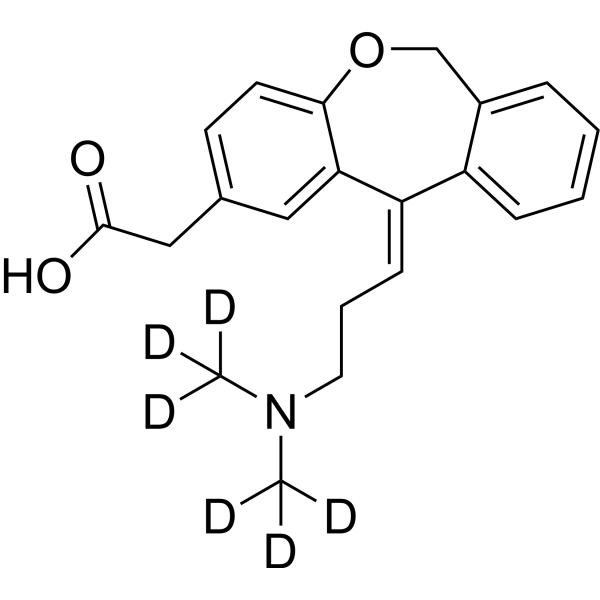
Olopatadine-d6 is the deuterium labeled Olopatadine. Olopatadine hydrochloride (ALO4943A; KW4679) is an orally active histamine H1 receptor antagonist and mast cell stabilizer. Olopatadine hydrochloride exerts antiallergic effects by blocking histamine H1 receptor-mediated activities. Olopatadine hydrochloride inhibits exocytosis, chemokine release, F-actin polymerization, CXCL10-induced calcium influx, and T cell chemotactic activity. Olopatadine hydrochloride also reduces the expression levels of CXCR3 on the surface of CD4 + and CD8 + T cells. Olopatadine hydrochloride inhibits scratching behavior, improves dermatitis scores, and suppresses intraepidermal neurite outgrowth. Olopatadine hydrochloride simultaneously decreases the levels of inflammatory markers, growth factors, histamine, and specific IgE, while increasing the expression of ErbB3A/HER3A. Olopatadine hydrochloride can be used in research related to seasonal pollinosis, chronic rhinitis, urticaria, allergic conjunctivitis, alopecia areata, and atopic dermatitis .
loading...
    loading...
Cat. No.: HY-178166
CAS No.: 2773474-99-8
ETI41 is an orally active, selective TLR inhibitor that targets the nucleoside-binding Site I on TLR7 (IC50 = 0.63 μM) and TLR9 (IC50 = 0.16 μM), sparing surface TLRs (including TLR1/TLR2, TLR2/TLR6, TLR4 and TLR5). ETI41 potently inhibits endosomal TLR-mediated pro-inflammatory signaling with nanomolar activity in cellular, biophysical and in vivo assays. ETI41 suppresses the expression of inflammation-associated genes and effectively ameliorates symptoms in mouse models of psoriasis, and systemic lupus erythematosus (SLE). ETI41 can be used for autoimmune and inflammatory diseases research .
loading...
    loading...
Cat. No.: HY-179211
Target:  

HSP MHC

Research Areas:  

Cancer

CliMB-325 is an HSP90 inhibitor that can induce MHC-I (EC50 = 498 nM) expression on the surface of CT26 murine colorectal cancer cells. CliMB-325 enhances T cell activation and exhibits lower toxicity. CliMB-325 can be used for the study of colorectal cancer .
loading...
    loading...
Cat. No.: HY-179065
CAS No.: 882235-30-5
Target:  

Potassium Channel

Research Areas:  

Cardiovascular Disease

VU0494372 is an activator of potassium ion channel KCNQ1. VU0494372 can significantly enhance the cell surface expression and transport efficiency of KCNQ1. VU0494372 does not alter KCNQ1 mRNA levels and protein degradation rate, and has no significant cytotoxicity. VU0494372 can be used for research on cardiovascular conditions .
loading...
    loading...
Cat. No.: HY-172544
CAS No.: 2857982-34-2
Target:  

Tau Protein

Research Areas:  

Neurological Disease

TTBK1/2-IN-3 (Compound 10) is a potent inhibitor of tau tubulin kinase 1 (TTBK1) and TTBK2, with IC50 values of 579 nM and 258 nM, respectively. TTBK1/2-IN-3 inhibits the phosphorylation of TDP-43. TTBK1/2-IN-3 reduces the expression of primary cilia on the surface of iPSCs .
loading...
    loading...
Cat. No.: HY-171859
CAS No.: 3066893-65-7
Target:  

PROTACs HIV

Research Areas:  

Infection

FC-14367 is a PROTAC degrader targeting the HIV-1 Nef protein. FC-14367 forms a ternary complex between HIV-1 Nef and CRBN, inducing ubiquitination and proteolytic degradation of Nef. FC-14367 restores the expression of CD4 and MHC-I on the cell surface and inhibits Nef-dependent enhancement of HIV-1 replication. FC-14367 can be used in studies related to HIV-1 infection .
loading...
    loading...
Cat. No.: HY-W1123936D
Synonyms: DBCO-PEG3400-Folate
DBCO-PEG-FA (DBCO-PEG-Folate) (MW 3400) is a multifunctional bioconjugation reagent, which is a copolymer of DBCO and Folic acid (FA) (HY-16637) and can target folate receptors (FR). Folate receptors are highly overexpressed on the surface of many cancer cells (such as lung cancer, nasopharyngeal cancer, ovarian cancer, etc.), but exhibit extremely low expression levels in normal tissues. DBCO-PEG-FA can be used for click chemistry conjugation via its DBCO terminal, and thus applies to various bioconjugation and drug delivery applications .
loading...
    loading...
Cat. No.: HY-B0426AR
CAS No.: 140462-76-6
Synonyms: ALO4943A (Standard); KW4679 (Standard)
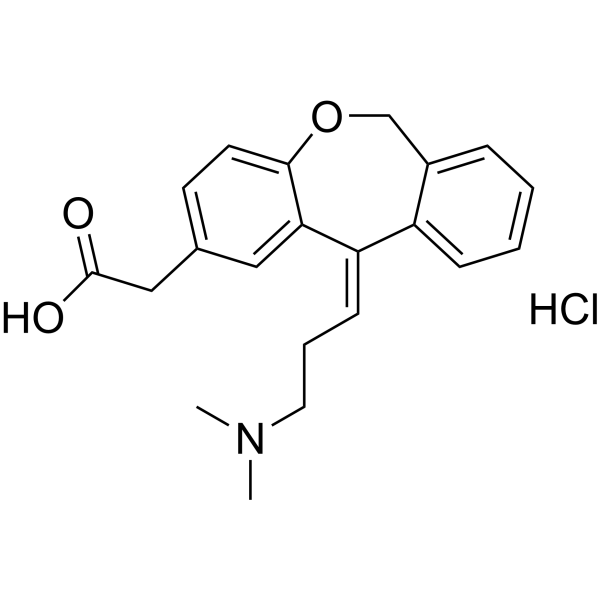
Olopatadine (hydrochloride) (Standard) is the analytical standard of Olopatadine (hydrochloride). This product is intended for research and analytical applications. Olopatadine hydrochloride (ALO4943A; KW4679) is an orally active histamine H1 receptor antagonist and mast cell stabilizer. Olopatadine hydrochloride exerts antiallergic effects by blocking histamine H1 receptor-mediated activities. Olopatadine hydrochloride inhibits exocytosis, chemokine release, F-actin polymerization, CXCL10-induced calcium influx, and T cell chemotactic activity. Olopatadine hydrochloride also reduces the expression levels of CXCR3 on the surface of CD4 + and CD8 + T cells. Olopatadine hydrochloride inhibits scratching behavior, improves dermatitis scores, and suppresses intraepidermal neurite outgrowth. Olopatadine hydrochloride simultaneously decreases the levels of inflammatory markers, growth factors, histamine, and specific IgE, while increasing the expression of ErbB3A/HER3A. Olopatadine hydrochloride can be used in research related to seasonal pollinosis, chronic rhinitis, urticaria, allergic conjunctivitis, alopecia areata, and atopic dermatitis .
loading...
    loading...
Cat. No.: HY-B0426AS
CAS No.: 1331635-21-2
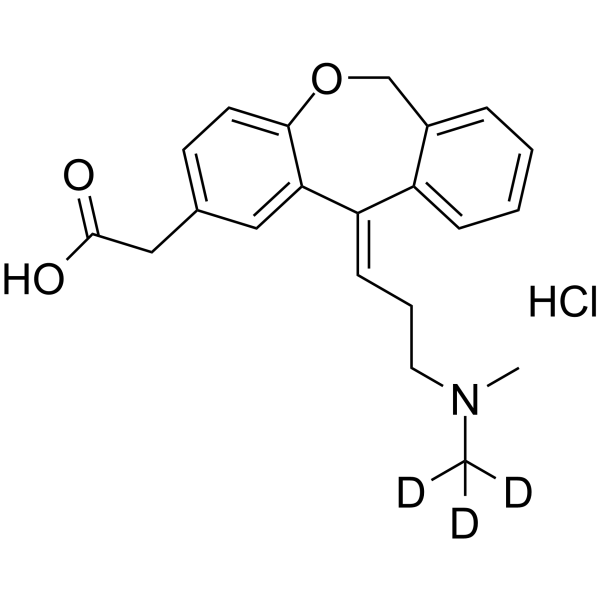
Olopatadine-d3 hydrochloride (ALO4943A-d3) is the deuterium labeled Olopatadine hydrochloride. Olopatadine hydrochloride (ALO4943A; KW4679) is an orally active histamine H1 receptor antagonist and mast cell stabilizer. Olopatadine hydrochloride exerts antiallergic effects by blocking histamine H1 receptor-mediated activities. Olopatadine hydrochloride inhibits exocytosis, chemokine release, F-actin polymerization, CXCL10-induced calcium influx, and T cell chemotactic activity. Olopatadine hydrochloride also reduces the expression levels of CXCR3 on the surface of CD4 + and CD8 + T cells. Olopatadine hydrochloride inhibits scratching behavior, improves dermatitis scores, and suppresses intraepidermal neurite outgrowth. Olopatadine hydrochloride simultaneously decreases the levels of inflammatory markers, growth factors, histamine, and specific IgE, while increasing the expression of ErbB3A/HER3A. Olopatadine hydrochloride can be used in research related to seasonal pollinosis, chronic rhinitis, urticaria, allergic conjunctivitis, alopecia areata, and atopic dermatitis .
loading...
    loading...
Cat. No.: HY-N0466R
CAS No.: 58543-16-1
Rebaudioside A (Standard) is the analytical standard of Rebaudioside A. This product is intended for research and analytical applications. Rebaudioside A is an orally effective steviol glycoside with high sweetness. Rebaudioside A acts as an inhibitor of α-glucosidase with an IC50 value of 35.01 μg/mL. Rebaudioside A increases the ATP/ADP ratio in β cells in a glucose-dependent manner, thereby inhibiting KATP channels, leading to membrane depolarization, calcium influx, and ultimately stimulating insulin secretion. Rebaudioside A activates the SREBP signaling pathway by inhibiting HMGCR, the rate-limiting enzyme in cholesterol synthesis, resulting in increased expression of LDLR on the cell surface, thus promoting the uptake of LDL-C in the blood. Rebaudioside A can be used for studies on blood glucose and lipid regulation as well as anti-obesity.
loading...
    loading...
Cat. No.: HY-178169
CAS No.: 2773475-11-7
ETI60 is an orally active, selective TLR inhibitor that targets the nucleoside-binding Site I on TLR7 (IC50 = 0.68 μM) and TLR9 (IC50 = 0.12 μM), sparing surface TLRs (including TLR1/TLR2, TLR2/TLR6, TLR4 and TLR5). ETI60 potently inhibits endosomal TLR-mediated pro-inflammatory signaling with nanomolar activity in cellular, biophysical and in vivo assays. ETI60 modulates the expression of genes associated with inflammation. ETI60 effectively ameliorates symptoms in mouse models of psoriasis, and systemic lupus erythematosus (SLE). ETI60 can be used for autoimmune and inflammatory diseases research .
loading...
    loading...
Cat. No.: HY-129317
CAS No.: 1233923-95-9
Target:  

Prokineticin Receptor

Research Areas:  

Others

A457 is a prokineticin receptor PKR2 antagonist, with an IC50 of 102 nM. A457 can rescue the cell surface expression and function of P290S PKR2, but not W178S and G234D PKR2 .
loading...
    loading...
Cat. No.: HY-NP077A
Phaseolus vulgaris Lectin-P is the protein form of Phytohemagglutinin before the separation and purification of Phytohemagglutinin-L (PHA-L) and PHA-E. Phaseolus vulgaris Lectin-P can be used to stimulate the proliferation of peripheral mononuclear cells, promote the production of certain cytokines and the expression of membrane surface proteins .
loading...
    loading...
Cat. No.: HY-136727A
Target:  

Caspase Apoptosis

Research Areas:  

Cancer

Ac-LEVD-CHO (TFA) is an inhibitor of caspase-4. Ac-LEVD-CHO (TFA) can inhibit the expression and secretion of IL-1α expression as well as the activation of caspase-4 induced by the T. denticola periodontal pathogen surface protein Td92 in human gingival fibroblasts. Ac-LEVD-CHO (TFA) can also reduce the apoptosis due to the expression of the dominant negative adenoviral RNA-dependent protein kinase in A549 and PC3 cancer cell lines .
loading...
    loading...
Cat. No.: HY-W699533
CAS No.: 188259-69-0
Synonyms: Valeryl-4-hydroxyvalsartan; CGP 71580
Target:  

Drug Metabolite

Research Areas:  

Cardiovascular Disease

4-Hydroxy valsartan is a metabolite of Valsartan (HY-18204). 4-Hydroxy valsartan regulates the expression of platelet surface receptors and inhibits conventional plasma or whole blood collagen induced platelet aggregation. 4-Hydroxy valsartan has antiplatelet activity .
loading...
    loading...
Cat. No.: HY-106890
CAS No.: 135070-05-2
Synonyms: 57G709
Research Areas:  

Cardiovascular Disease

E4177 (57G709) is an orally active angiotensin II receptor antagonist. E4177 can inhibit the growth of vascular smooth muscle cells (HASMC) and the increase of cell surface area. In addition, E4177 can also increase the expression of platelet-derived growth factor (PDGF) receptor. E4177 can be used in the study of vascular diseases .
loading...
    loading...
Cat. No.: HY-124703
CAS No.: 65004-42-4
Target:  

Ferroportin

Research Areas:  

Others

Pyrimidinone 8 is a reversible linear non-competitive inhibitor of divalent metal transporter 1 (DMT1), with a Ki of 20 μM (hDMT1). Pyrimidinone 8 does not affect hDMT1 cell surface expression and shows no dependence with the extracellular pH. Pyrimidinone 8 can inhibit hDMT1-mediated iron uptake, with an IC50 of 13.8 μM .
loading...
    loading...
Cat. No.: HY-174592
Target:  

mRNA

Research Areas:  

Cancer

Human kruppel like factor 4 (KLF4) mRNA encodes a protein that belongs to the Kruppel family of transcription factors. KLF4 protein is thought to regulate the expression of key transcription factors during embryonic development and play an important role in maintaining embryonic stem cells, and in preventing their differentiation. In addition it is also required for establishing the barrier function of the skin and for postnatal maturation and maintenance of the ocular surface.
loading...
    loading...

