

97 Results for "

ADME

" in MedChemExpress (MCE) Product Catalog:
Products (97)

97 Results for "ADME" in MCE Product Catalog:

Art. -Nr.: HY-154635
CAS. Nr.: 68476-81-3
Forschungsgebiete:  

Others

Oxidized paraffin (calcium) can be used as an excipient, such as ointment base, hardening agent. Pharmaceutical excipients, or pharmaceutical auxiliaries, refer to other chemical substances used in the pharmaceutical process other than pharmaceutical ingredients. Pharmaceutical excipients generally refer to inactive ingredients in pharmaceutical preparations, which can improve the stability, solubility and processability of pharmaceutical preparations. Pharmaceutical excipients also affect the absorption, distribution, metabolism, and elimination (ADME) processes of co-administered drugs .
loading...
    loading...
Art. -Nr.: HY-154637
CAS. Nr.: 25168-73-4
Forschungsgebiete:  

Others

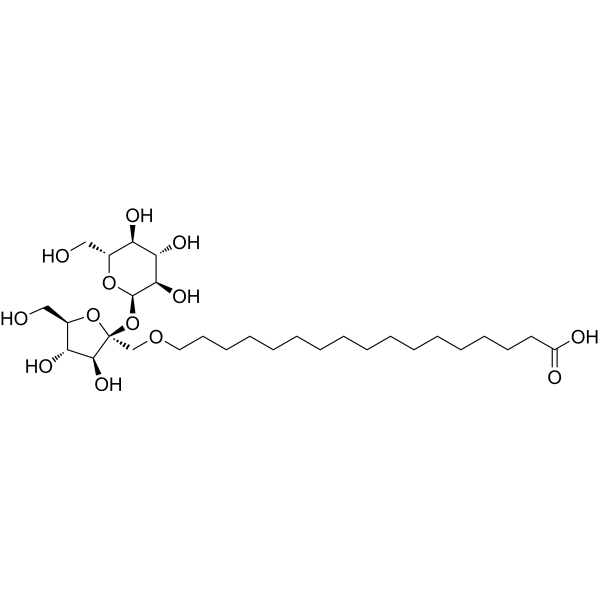
Sucrose Stearate can be used as an excipient, such as Surfactants, emulsifiers, solubilizers, etc. Pharmaceutical excipients, or pharmaceutical auxiliaries, refer to other chemical substances used in the pharmaceutical process other than pharmaceutical ingredients. Pharmaceutical excipients generally refer to inactive ingredients in pharmaceutical preparations, which can improve the stability, solubility and processability of pharmaceutical preparations. Pharmaceutical excipients also affect the absorption, distribution, metabolism, and elimination (ADME) processes of co-administered drugs .
loading...
    loading...
Art. -Nr.: HY-W250795A
CAS. Nr.: 9050-36-6
Maltodextrin, dextrose equivalent 13.0-17.0 can be used as an excipient. Pharmaceutical excipients, or pharmaceutical auxiliaries, refer to other chemical substances used in the pharmaceutical process other than pharmaceutical ingredients. Pharmaceutical excipients generally refer to inactive ingredients in pharmaceutical preparations, which can improve the stability, solubility and processability of pharmaceutical preparations. Pharmaceutical excipients also affect the absorption, distribution, metabolism, and elimination (ADME) processes of co-administered drugs .
loading...
    loading...
Art. -Nr.: HY-154739
CAS. Nr.: 14464-46-1
Forschungsgebiete:  

Others

Cristobalite can be used as an excipient, such as disintegrants, anti-adhesives, glidants, suspending agents, thickeners, defoamers. Pharmaceutical excipients, or pharmaceutical auxiliaries, refer to other chemical substances used in the pharmaceutical process other than pharmaceutical ingredients. Pharmaceutical excipients generally refer to inactive ingredients in pharmaceutical preparations, which can improve the stability, solubility and processability of pharmaceutical preparations. Pharmaceutical excipients also affect the absorption, distribution, metabolism, and elimination (ADME) processes of co-administered drugs .
loading...
    loading...
Art. -Nr.: HY-Y1316R
CAS. Nr.: 532-32-1
Forschungsgebiete:  

Others

Sodium benzoate (Standard) is the analytical standard of Sodium benzoate. This product is intended for research and analytical applications. Sodium benzoate can be used as an excipient, such as antimicrobial agent, preservative, lubricant. Pharmaceutical excipients, or pharmaceutical auxiliaries, refer to other chemical substances used in the pharmaceutical process other than pharmaceutical ingredients. Pharmaceutical excipients generally refer to inactive ingredients in pharmaceutical preparations, which can improve the stability, solubility and processability of pharmaceutical preparations. Pharmaceutical excipients also affect the absorption, distribution, metabolism, and elimination (ADME) processes of co-administered drugs .
loading...
    loading...
Art. -Nr.: HY-10486
CAS. Nr.: 361444-66-8
Target:  

Opioid Receptor

Forschungsgebiete:  

Neurological Disease

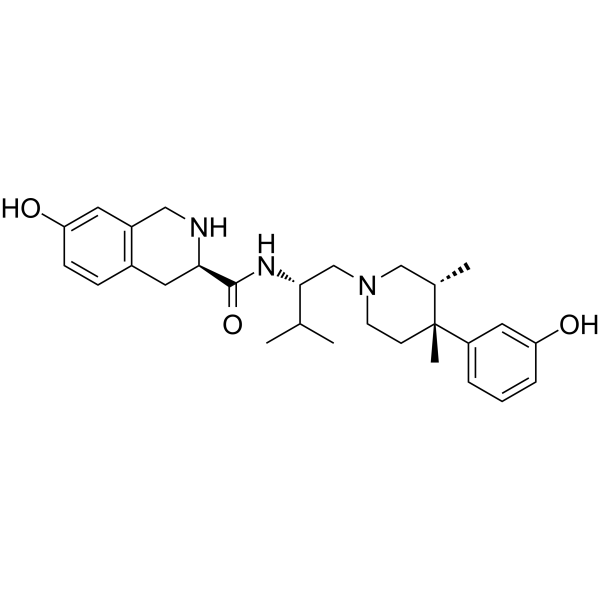
JDTic is a blood-brain barrier-permeable κ-opioid receptor antagonist (Ki=0.02 nM) with favorable in vitro ADME properties. JDTic blocks agonist-mediated Gi and β-arrestin signaling pathways as well as analgesic effects by stabilizing the inactive conformation of hKOR and activating JNK. JDTic may also induce transient asymptomatic ventricular tachycardia. JDTic is widely applicable to studies related to depression, anxiety, stress-induced addictive behaviors, and nicotine withdrawal .
loading...
    loading...
Art. -Nr.: HY-W250721E
CAS. Nr.: 9007-20-9
Synonyms: Carboxy polymethylene (copolymer)
Forschungsgebiete:  

Others

Carbomer copolymer can be used as an excipient, such as Bioadhesives, emulsifiers, release modifiers, suspending agents, tablet binders, viscosity enhancers, etc. Pharmaceutical excipients, or pharmaceutical auxiliaries, refer to other chemical substances used in the pharmaceutical process other than pharmaceutical ingredients. Pharmaceutical excipients generally refer to inactive ingredients in pharmaceutical preparations, which can improve the stability, solubility and processability of pharmaceutical preparations. Pharmaceutical excipients also affect the absorption, distribution, metabolism, and elimination (ADME) processes of co-administered drugs .
loading...
    loading...
Art. -Nr.: HY-Y1054R
CAS. Nr.: 557-04-0
Synonyms: Stearic Acid Magnesium(II) Salt (Standard)
Forschungsgebiete:  

Others

Magnesium stearate (Standard) is the analytical standard of Magnesium stearate. This product is intended for research and analytical applications. Magnesium stearate is a commonly used pharmaceutical lubricant. But Magnesium stearate leads to an adverse effect on bonding between particles. Magnesium stearate can be used as an excipient, such as lubricant. Pharmaceutical excipients, or pharmaceutical auxiliaries, refer to other chemical substances used in the pharmaceutical process other than pharmaceutical ingredients. Pharmaceutical excipients generally refer to inactive ingredients in pharmaceutical preparations, which can improve the stability, solubility and processability of pharmaceutical preparations. Pharmaceutical excipients also affect the absorption, distribution, metabolism, and elimination (ADME) processes of co-administered drugs .
loading...
    loading...
Art. -Nr.: HY-176287
Forschungsgebiete:  

Neurological Disease

ARN25657 is a dual-acting D3R/GSK-3β modulator. ARN25657 has both partial D3R agonist activity (EC50 = 15.2 nM, Ki =1.5 nM) and potent GSK-3β inhibitor activity (IC50 = 19.3 nM). ARN25657 exhibits excellent GSK-3β selectivity over FYN, PKA, and CDK5/p35. ARN25657 inhibits P-glycoprotein (P-gP)-mediated acetoxymethyl calcein efflux and improves in vitro ADME properties while maintaining a balanced dual-target profile. ARN25657 is useful for studying bipolar disorder and related neuropsychiatric disorders .
loading...
    loading...
Art. -Nr.: HY-179221
Target:  

HIV

Forschungsgebiete:  

Infection

HIV-1-IN-89 (Compound 20a-D) is a prodrug of 20a (an HIV-1 protease inhibitor). HIV-1-IN-89 has better pharmacokinetic properties. HIV-1-IN-89 can be used for studying the resistance to HIV-1 .
loading...
    loading...
Art. -Nr.: HY-18172A
CAS. Nr.: 1228439-71-1
Target:  

Potassium Channel

Forschungsgebiete:  

Neurological Disease

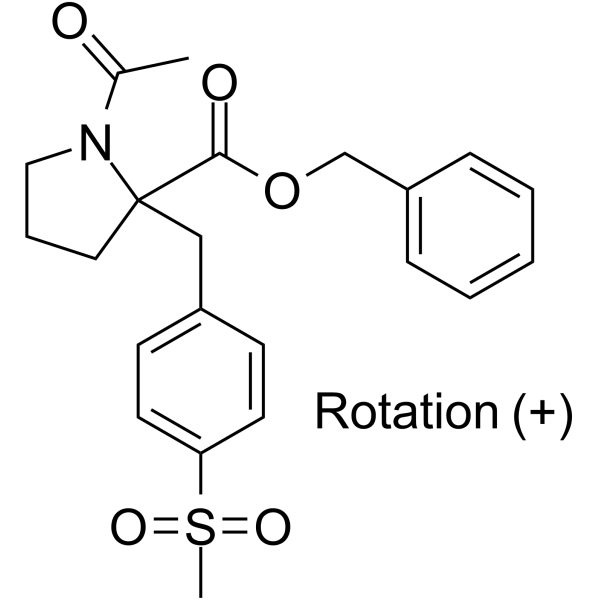
(+)-KCC2 blocker 1 is a selective K +-Cl - cotransporter KCC2 blocker with an IC50 of 0.4 μM. (+)-KCC2 blocker 1 is a benzyl prolinate and a enantiomer of KCC2 blocker 1 .
loading...
    loading...
Art. -Nr.: HY-401721
CAS. Nr.: 204852-67-5
Forschungsgebiete:  

Others

5-CNAC is an orally active enhancer of absorption, with no pharmacological activity on its own. 5-CNAC can significantly enhance the absorption efficiency of the drug (such as Salmon calcitonin (HY-P0090)) when administered together with it in the gastrointestinal tract. 5-CNAC binds reversibly and non-covalently to peptide drugs, protecting them from degradation by gastrointestinal enzymes, increasing their lipid solubility, promoting passive transcellular absorption, and not damaging the integrity of the intestinal epithelium. 5-CNAC can be used in the research of adjuvants for orally administered peptide agents .
loading...
    loading...
Art. -Nr.: HY-143295
CAS. Nr.: 2803505-57-7
Target:  

Pim Apoptosis

Forschungsgebiete:  

Cancer

Pim-1 kinase inhibitor 1 is a Pim-1 kinase inhibitor with an IC50 of 0.11 μM for Pim-1 kinase. Pim-1 kinase inhibitor 1 shows anticancer activity to several cancer cell lines by promotes cell apoptosis. Pim-1 kinase inhibitor 1 can be used for the research of cancer .
loading...
    loading...
Art. -Nr.: HY-178171
Target:  

AMPK CDK

Forschungsgebiete:  

Neurological Disease

ARUK2010489 (Compound 23) is a potent, selective and brain-penetrant NUAK1 inhibitor with a pIC50 of 8.7. ARUK2010489 also inhibits CDK2, CDK4 and CDK6 activity, with inhibitory rate of 7%, 39% and 26% at 1 μM. ARUK2010489 can be used for the research of neurological disease, such as Alzheimer’s disease (AD) .
loading...
    loading...
Art. -Nr.: HY-178994
Target:  

Flavivirus Dengue Virus

Forschungsgebiete:  

Infection

DENV-IN-14 (Compound 3c) is a thiazole hydrazone derivative with anti-dengue virus (DENV) activity with an EC50 of 0.01 μM and the selectivity index (SI) of 200. DENV-IN-14 exhibits rapid plasma clearance and its metabolic stability is limited. DENV-IN-14 can be used for research on dengue fever .
loading...
    loading...
Art. -Nr.: HY-154704
CAS. Nr.: 9050-04-8
Reinheit:  99.6%
Forschungsgebiete:  

Others

Calcium carboxymethyl cellulose can be used as an excipient. Pharmaceutical excipients, or pharmaceutical auxiliaries, refer to other chemical substances used in the pharmaceutical process other than pharmaceutical ingredients. Pharmaceutical excipients generally refer to inactive ingredients in pharmaceutical preparations, which can improve the stability, solubility and processability of pharmaceutical preparations. Pharmaceutical excipients also affect the absorption, distribution, metabolism, and elimination (ADME) processes of co-administered drugs .
loading...
    loading...
Art. -Nr.: HY-154632
Forschungsgebiete:  

Others

Omega 3 fatty acid triglycerides can be used as an excipient. Pharmaceutical excipients, or pharmaceutical auxiliaries, refer to other chemical substances used in the pharmaceutical process other than pharmaceutical ingredients. Pharmaceutical excipients generally refer to inactive ingredients in pharmaceutical preparations, which can improve the stability, solubility and processability of pharmaceutical preparations. Pharmaceutical excipients also affect the absorption, distribution, metabolism, and elimination (ADME) processes of co-administered drugs .
loading...
    loading...
Art. -Nr.: HY-163665
CAS. Nr.: 3052113-26-2
Forschungsgebiete:  

Others

AHR antagonist 8 (compound SG-02) is a regulator of utrophin, a homolog of dystrophin, and an AhR antagonist (Kd: 41.68 nM). Studies have shown that 800 nM of AHR antagonist 8 can upregulate utrophin by 2.7 times. AHR antagonist 8 also stimulates increased MyHC expression, suggesting that it has the potential to enhance myogenesis. After ADME evaluation, AHR antagonist 8 also has a certain oral bioavailability .
loading...
    loading...
Art. -Nr.: HY-W127624B
CAS. Nr.: 874945-84-3
Forschungsgebiete:  

Others

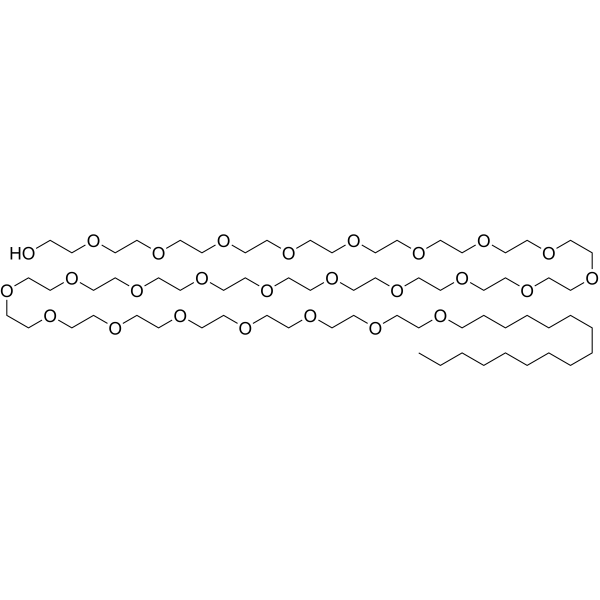
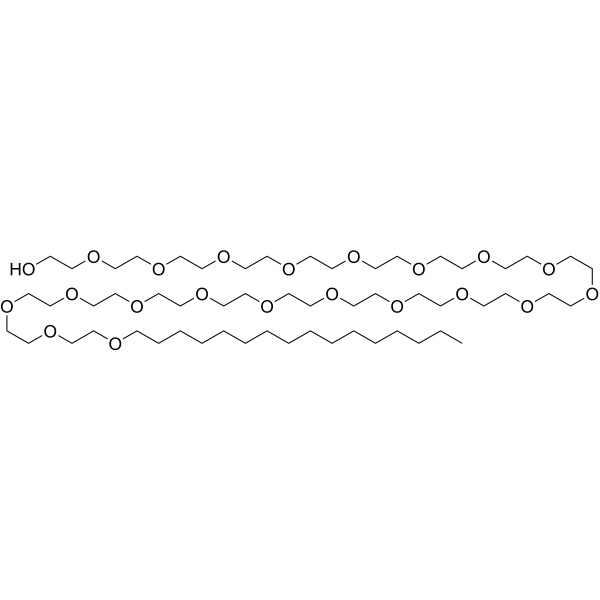
PEG 25 cetostearyl ether can be used as an excipient. Pharmaceutical excipients, or pharmaceutical auxiliaries, refer to other chemical substances used in the pharmaceutical process other than pharmaceutical ingredients. Pharmaceutical excipients generally refer to inactive ingredients in pharmaceutical preparations, which can improve the stability, solubility and processability of pharmaceutical preparations. Pharmaceutical excipients also affect the absorption, distribution, metabolism, and elimination (ADME) processes of co-administered drugs .
loading...
    loading...
Art. -Nr.: HY-W127624C
CAS. Nr.: 198563-32-5
Forschungsgebiete:  

Others

PEG 20 cetostearyl ether can be used as an excipient. Pharmaceutical excipients, or pharmaceutical auxiliaries, refer to other chemical substances used in the pharmaceutical process other than pharmaceutical ingredients. Pharmaceutical excipients generally refer to inactive ingredients in pharmaceutical preparations, which can improve the stability, solubility and processability of pharmaceutical preparations. Pharmaceutical excipients also affect the absorption, distribution, metabolism, and elimination (ADME) processes of co-administered drugs .
loading...
    loading...

