
777 Results for "

polypeptides

" in MedChemExpress (MCE) Product Catalog:
Products (777)

777 Results for "polypeptides" in MCE Product Catalog:

Cat. No.: HY-P2263A
Target:  

Inhibitory Antibodies

Research Areas:  

Inflammation/Immunology

KLD-12 TFA is the TFA salt form of KLD-12 (HY-P2263). KLD-12 TFA is a self a 12-residue self-assembling peptide that is used in tissue-engineering. KLD-12 TFA combined with SDF-1 self-assembled polypeptide enhances chondrogenic differentiation of bone marrow stromal cells (BMSCs). KLD-12 TFA hydrogel can fill full-thickness osteochondral defects in situ and improve cartilage repair .
loading...
    loading...
Cat. No.: HY-186131
CAS No.: 1640013-00-8
Target:  

Drug Derivative HBV

Research Areas:  

Infection

Val-CDCA is a chenodeoxycholate (CDCA) and C-24 L-Valine (HY-N0717) conjugate. Val-CDCA inhibits taurocholate uptake in human NTCP-stably transfected HEK293 cells. Val-CDCA can be used for HBV infection .
loading...
    loading...
Cat. No.: HY-151646
Purity:  99.59%
Synonyms: Alkyne-PEG5-BG
Target:  

ADC Linkers

Research Areas:  

Others

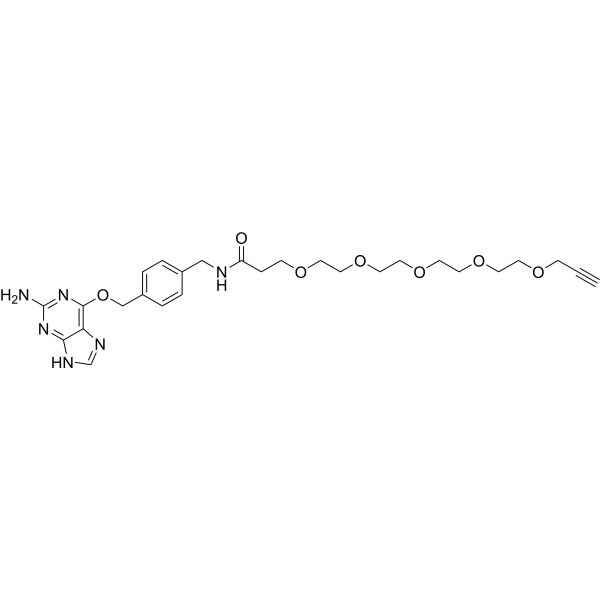
Alkyne-PEG5-SNAP is a click chemistry reagent containing an alkyne group. Alkyne-PEG5-SNAP can alkyne conjugated benzylguanine (BG), the BG moiety reacts specifically and rapidly with SNAP-tag, a polypeptide protein tag, allowing irreversible and covalent labeling of SNAP fusion proteins with an additional alkyne functionality suitable for further conjugation . Alkyne-PEG5-SNAP is a click chemistry reagent, it contains an Alkyne group and can undergo copper-catalyzed azide-alkyne cycloaddition (CuAAc) with molecules containing Azide groups.
loading...
    loading...
Cat. No.: HY-174744
Target:  

mRNA

Research Areas:  

Inflammation/Immunology

Human CCR4 mRNA encodes the human C-C motif chemokine receptor 4 (CCR4) protein, a member of G protein-coupled receptors family. CCR4 is a receptor for the CC chemokine - MIP-1, RANTES, TARC and MCP-1. Chemokines are a group of small polypeptide, structurally related molecules that regulate cell trafficking of various types of leukocytes. The chemokines also play fundamental roles in the development, homeostasis, and function of the immune system, and they have effects on cells of the central nervous system as well as on endothelial cells involved in angiogenesis or angiostasis.
loading...
    loading...
Cat. No.: HY-P0165B
CAS No.: 1022150-16-8
Synonyms: ITM077 acetate; R1583 acetate; BIM51077 acetate
Target:  

GLP Receptor

Research Areas:  

Metabolic Disease

Taspoglutide (R1583) acetate is an agonist of the glucagon-like peptide 1 receptor (GLP-1R) with an Ki value of 1.1 nM. Taspoglutide acetate induces cAMP accumulation in CHO-K1 cells expressing human GLP-1R (EC50 = 0.06 nM). Taspoglutide acetate decreases blood levels of glucose and increases blood levels of insulin in a glucose tolerance test in Zucker diabetic obese rats. Taspoglutide acetate reduces blood levels of gastric inhibitory polypeptide (GIP), plasma levels of triglycerides, and body weight in the same model .
loading...
    loading...
Cat. No.: HY-P10229
Target:  

Phytohormone

Research Areas:  

Others

RALF1 peptide, a polypeptide found in plant kingdom (as well as in fungi and bacteria), is a FERONIA (FER) modulator. RALF1 peptide mediates rapid net H + influx across the plasma membrane, apoplast alkalinization, rapid reversible root growth inhibition, and non-transcriptional regulation.RALF1 peptide up-regulates auxin biosynthesis genes, activates canonical TIR1/AFB auxin signaling, and mediates sustained root growth inhibition. RALF1 peptide can be used for research on the regulation of plant growth and development .
loading...
    loading...
Cat. No.: HY-164231
CAS No.: 132014-80-3
Synonyms: 1-Stearoyl-2-arachidonoyl-sn-glycero-3-phospho-L-serine; SAPS (18:0/20:4(5Z,8Z,11Z,14Z))
Research Areas:  

Others

18:0,20:4 PS (1-Stearoyl-2-arachidonoyl-sn-glycero-3-phospho-L-serine) is a phosphatidylserine component for RNA particle formulations. 18:0,20:4 PS can be used as RNA delivery vehicles .
loading...
    loading...
Cat. No.: HY-187872
CAS No.: 1632047-03-0
Uceglifam is an antihyperglycemic agent. Uceglifam can be used in the research of diabetes .
loading...
    loading...
Cat. No.: HY-D3581
Target:  

Fluorescent Dye

Research Areas:  

Others

AF594 Picolyl Azide is a composite fluorescent probe formed by covalent linkage of the Alexa Fluor 594 fluorophore and the Picolyl Azide functional group via chemical bonds. AF594 Picolyl Azide contains a copper chelation domain, and through the copper-catalyzed azide-alkyne cycloaddition click chemistry reaction, it can covalently label alkyne-bearing target molecules and generate fluorescent detection signals. AF594 Picolyl Azide can be used for the detection of alkyne-modified sialylated glycoconjugates, and can also label nascent bacterial polypeptides to determine bacterial protein synthesis rates .
loading...
    loading...
Cat. No.: HY-P10143
CAS No.: 99828-55-4
Synonyms: Ac-Pro-Leu-Gly-[(S)-2-mercapto-4-methyl-pentanoyl]-Leu-Gly-OEt
Target:  

MMP

Research Areas:  

Others

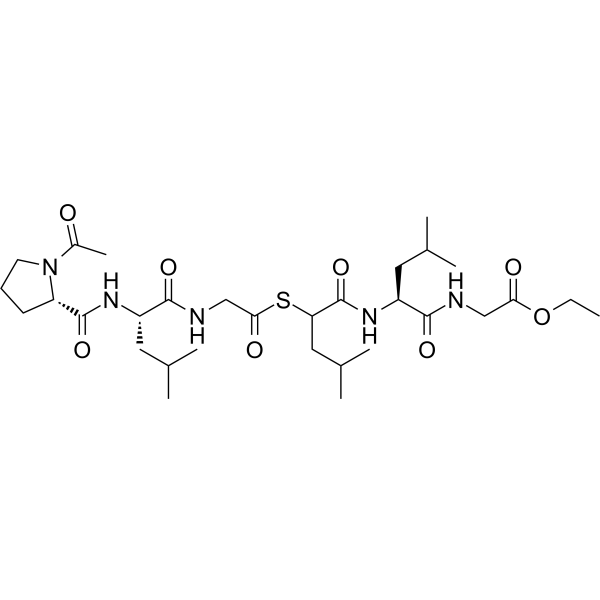
MMP-2/MMP-9 Substrate (Ac-Pro-Leu-Gly-[(S)-2-mercapto-4-methyl-pentanoyl]-Leu-Gly-OEt) is a synthetic chromogenic polypeptide substrate whose core structure mimics the cleavage sites of MMP-2 and MMP-9 (gelatinase A and B) in collagen. After being hydrolyzed by collagenase, MMP-2/MMP-9 Substrate reacts with 4,4'-dithiodipyridine or Ellman's Reagent via its thiol fragment to produce a product with ultraviolet absorption properties .
loading...
    loading...
Cat. No.: HY-P11129
CAS No.: 289905-22-2
Target:  

Inhibitory Antibodies

Research Areas:  

Cancer

MAGE-A4 (286-294) is a polypeptide derived from the 286th to 294th amino acids of the MAGE-A4 protein. MAGE-A4 (286-294) binds HLA-­A*02 with an affinity of 560.08 nM and an IC50 of 8.52 nM. MAGE-A4 (286-294) can be detected in various types of cancers (such as esophageal cancer, lung squamous cell carcinoma, bladder cancer). MAGE-A4 (286-294) can be used to produce CAR-T cells and to develop CAR-T cell therapy .
loading...
    loading...
Cat. No.: HY-P12336
MPQPPAK is a polypeptide obtained from the enzymatic hydrolysis of C-phycocyanin (HY-D1025) and possesses neuroprotective activity. MPQPPAK enhances the activities of antioxidant enzymes SOD, CAT, and GSH-Px, reduces ROS, inhibits apoptosis and acetylcholinesterase (AChE) activity in brain tissue, and decreases protein carbonyl content. In the MPTP (HY-W114750)-induced zebrafish Parkinson's disease model, MPQPPAK exhibits antioxidant effects, inhibits autophagy and apoptosis, reverses the loss of dopaminergic neurons and cerebral blood vessels, and alleviates motor deficits. MPQPPAK can be used for research on Parkinson's disease .
loading...
    loading...
Cat. No.: HY-P12337
MTAAAR is a polypeptide obtained from the enzymatic hydrolysis of C-phycocyanin (HY-D1025) and possesses neuroprotective activity. MTAAAR enhances the activities of antioxidant enzymes SOD, CAT, and GSH-Px, reduces ROS, inhibits apoptosis and acetylcholinesterase (AChE) activity in brain tissue, and decreases protein carbonyl content. In the MPTP (HY-W114750)-induced zebrafish Parkinson's disease model, MTAAAR exhibits antioxidant effects, inhibits autophagy and apoptosis, reverses the loss of dopaminergic neurons and cerebral blood vessels, and alleviates motor deficits. MTAAAR can be used for research on Parkinson's disease .
loading...
    loading...
Cat. No.: HY-P4581
CAS No.: 128802-78-8
Synonyms: Suc-ALPF-pNA
Target:  

FKBP

Research Areas:  

Others

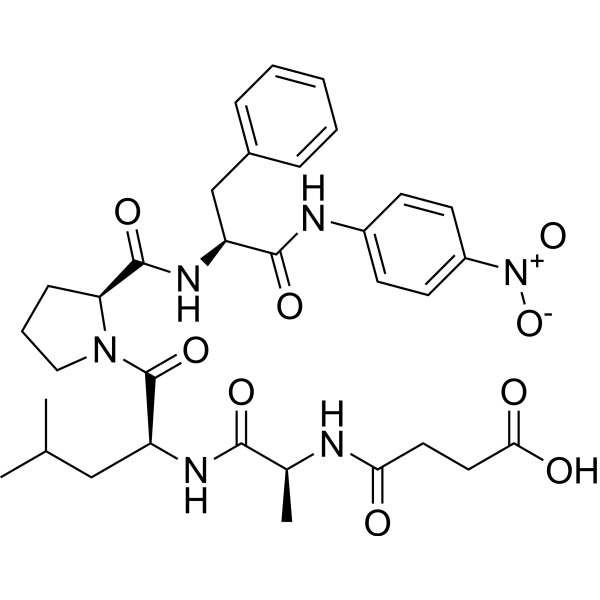
Suc-Ala-Leu-Pro-Phe-pNA (Suc-ALPF-pNA) is a synthetic polypeptide substrate that targets FK506-binding protein (FKBP). Suc-Ala-Leu-Pro-Phe-pNA can be used to determine peptidyl-prolyl cis-trans isomerase activity via the chymotrypsin-coupled assay. Suc-Ala-Leu-Pro-Phe-pNA serves as a substrate for human FK506-binding protein hFKBP-12 in the chymotrypsin-FKBP coupled PPIase assay. Suc-Ala-Leu-Pro-Phe-pNA is applicable for the detection and research of PPIase activity .
loading...
    loading...
Cat. No.: HY-140661
Purity:  ≥95.0%
Research Areas:  

Cancer

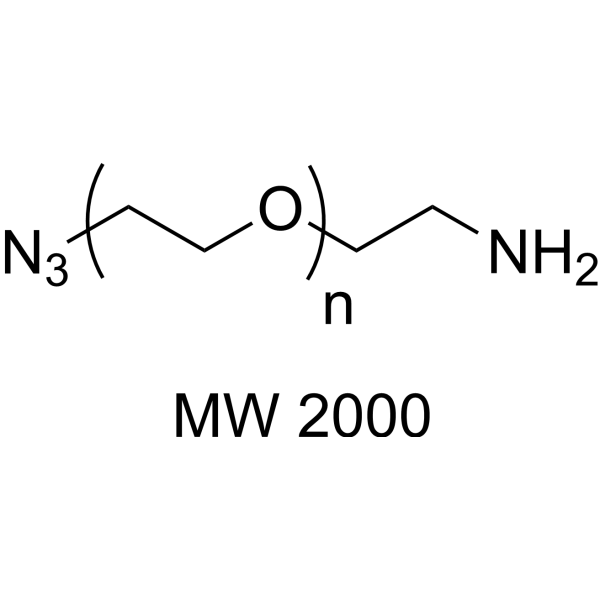
Azide-PEG2000-amine is a class of functionalized polymers composed of a methoxy-terminated polyethylene glycol backbone and a terminal primary amine group. Azide-PEG2000-amine serves as an important intermediate for constructing functionalized nanocarriers, modifying proteins or polypeptides, and developing novel drug delivery systems. Azide-PEG2000-amine is a click chemistry reagent, it contains an Azide group and can undergo copper-catalyzed azide-alkyne cycloaddition reaction (CuAAc) with molecules containing Alkyne groups. It can also undergo strain-promoted alkyne-azide cycloaddition (SPAAC) reactions with molecules containing DBCO or BCN groups.
loading...
    loading...
Cat. No.: HY-140662
Research Areas:  

Cancer

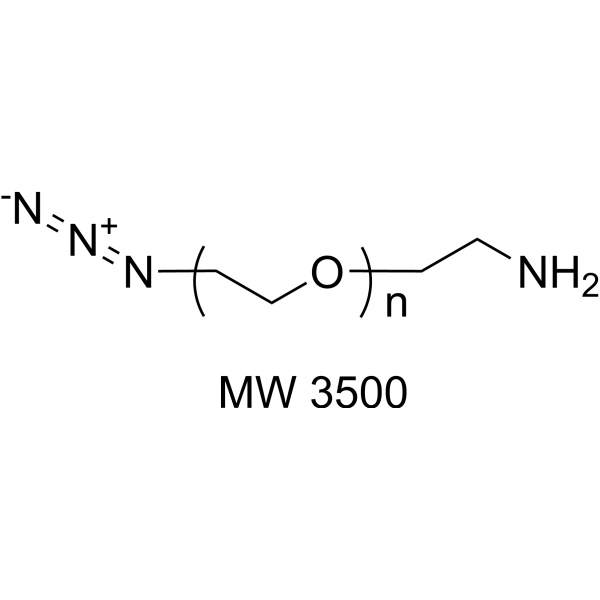
Azide-PEG3500-amine is a class of functionalized polymers composed of a methoxy-terminated polyethylene glycol backbone and a terminal primary amine group. Azide-PEG3500-amine serves as an important intermediate for constructing functionalized nanocarriers, modifying proteins or polypeptides, and developing novel drug delivery systems. Azide-PEG3500-amine is a click chemistry reagent, it contains an Azide group and can undergo copper-catalyzed azide-alkyne cycloaddition reaction (CuAAc) with molecules containing Alkyne groups. It can also undergo strain-promoted alkyne-azide cycloaddition (SPAAC) reactions with molecules containing DBCO or BCN groups.
loading...
    loading...
Cat. No.: HY-140663
Purity:  ≥95.0%
Research Areas:  

Cancer

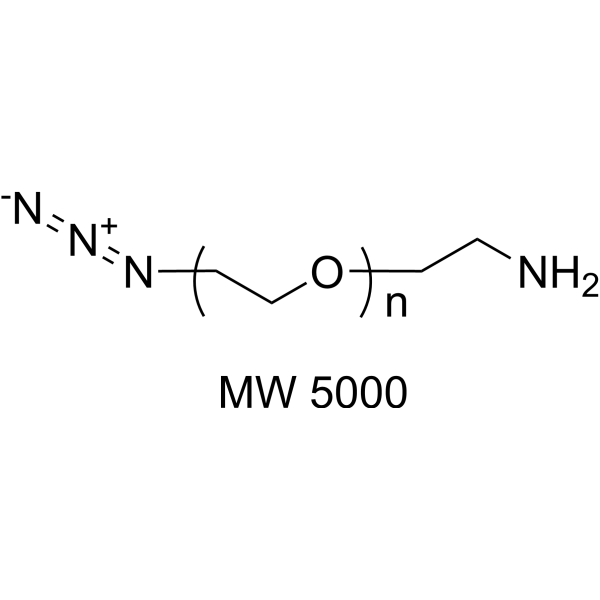
Azide-PEG5000-amine is a class of functionalized polymers composed of a methoxy-terminated polyethylene glycol backbone and a terminal primary amine group. Azide-PEG5000-amine serves as an important intermediate for constructing functionalized nanocarriers, modifying proteins or polypeptides, and developing novel drug delivery systems. Azide-PEG5000-amine is a click chemistry reagent, it contains an Azide group and can undergo copper-catalyzed azide-alkyne cycloaddition reaction (CuAAc) with molecules containing Alkyne groups. It can also undergo strain-promoted alkyne-azide cycloaddition (SPAAC) reactions with molecules containing DBCO or BCN groups.
loading...
    loading...
Cat. No.: HY-186311
CAS No.: 3079716-11-0
Target:  

c-Myc JNK

Research Areas:  

Cancer

IDB-003 is an orally active inhibitor of the human ribosomal peptidyl transferase center (PTC). IDB-003 exhibits antiproliferative activity against MYC-dependent cancer cells. IDB-003 binds to PTC, maintains ribosomal RNA interactions, blocks translation via context-dependent nascent polypeptide chain interactions, depletes MYC and CCND1, activates JNK phosphorylation through ribosomal collision, and downregulates the MYC target pathway. IDB-003 inhibits the growth of triple-negative breast cancer xenografts in mice. IDB-003 can be used for the research of triple-negative breast cancer .
loading...
    loading...
Cat. No.: HY-P10416
Synonyms: Q14 peptide
Research Areas:  

Others Neurological Disease

Q14 is a polypeptide derived from the USP30 (ubiquitin specific peptidase 30) transmembrane (TM) domain with the ability to inhibit the deubiquitination activity of USP30 (IC50=57.2 nM). Q14 reduces USP30 activity by inhibiting the interaction between the USP30 transmembrane domain and its catalytic domain. Q14 peptide contains the LC3 interaction region (LIR) motif, which enables it to bind to the LC3 and accelerate the formation of autophagosomes, thereby promoting mitophagy. Q14 can be used in the study of neurodegenerative diseases as well as mitochondrial quality control and cell metabolism .
loading...
    loading...
Cat. No.: HY-P3269
CAS No.: 178805-91-9
Target:  

Calcium Channel

Research Areas:  

Cardiovascular Disease

Calciseptine is a natural polypeptide toxin found in the venom of the black mamba snake (Dendroaspis p. polylepis). Calciseptine is a highly effective and selective blocker of the L-type channel of the Cav1.2 subtype, with an IC50 value of 92 nM. Calciseptine has no effect on Cav3.1, Cav2.2, Cav2.1, Cav1.1, voltage-sensitive sodium channels and potassium channels. Calciseptine exhibits negative inotropic and negative relaxant effects on mice, and does not affect heart rate or the action potential of sinoatrial node pacemaker cells. Calciseptine can be used for research on cardiovascular diseases[1].
loading...
    loading...

