796 Results for "

Inactivation

" in MedChemExpress (MCE) Product Catalog:
Products (796)

796 Results for "Inactivation" in MCE Product Catalog:

Cat. No.: HY-113293BS
CAS No.: 2734919-86-7
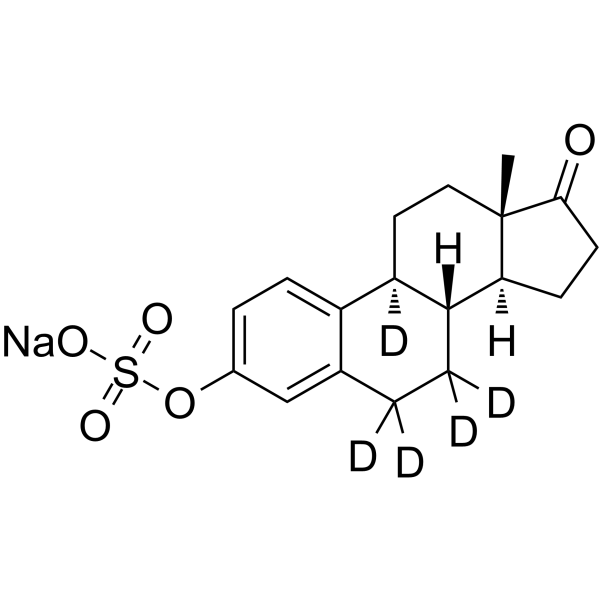
Estrone sulfate-d5 sodium is the deuterium labeled Estrone sulfate sodium (HY-113293B). Estrone sulfate sodium is an inactive endogenous estrogen that can be converted into Estrone (HY-B0234) and Estradiol (HY-B0141). Estrone sulfate sodium is also a substrate of the OATP1B3 transporter. Estrone sulfate sodium can be converted into Estrone and Estradiol in normal mammary parenchymal cells. Estrone sulfate sodium stimulates the growth of nitrosomethylurea-induced mammary tumors in ovariectomized rats and the colony formation of dispersed nitrosomethylurea mammary cells, with conversion into Estrone and Estradiol occurring both in vivo and in vitro during this process. Estrone sulfate sodium is applicable to breast cancer-related research .
loading...
    loading...
Cat. No.: HY-113293BS1
CAS No.: 285979-80-8
Purity:  99.38%
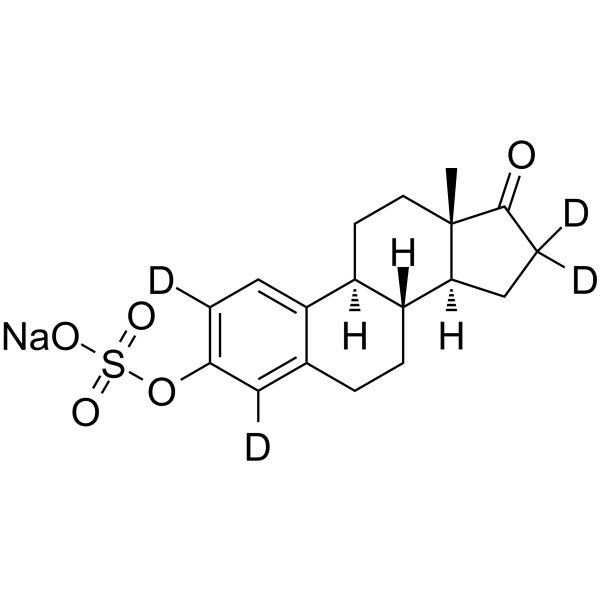
Estrone sulfate-d4 sodium is the deuterium labeled Estrone sulfate sodium (HY-113293B). Estrone sulfate sodium is an inactive endogenous estrogen that can be converted into Estrone (HY-B0234) and Estradiol (HY-B0141). Estrone sulfate sodium is also a substrate of the OATP1B3 transporter. Estrone sulfate sodium can be converted into Estrone and Estradiol in normal mammary parenchymal cells. Estrone sulfate sodium stimulates the growth of nitrosomethylurea-induced mammary tumors in ovariectomized rats and the colony formation of dispersed nitrosomethylurea mammary cells, with conversion into Estrone and Estradiol occurring both in vivo and in vitro during this process. Estrone sulfate sodium is applicable to breast cancer-related research .
loading...
    loading...
Cat. No.: HY-158107A
CAS No.: 2893809-52-2
Target:  

Drug Isomer Ras

Research Areas:  

Cancer

(4R)-BBO-8520 (Compound 314), an isomer of BBO-8520 (HY-158107), is a selective KRAS G12C inhibitor. BBO-8520 has the characteristics of KRAS G12C (OFF) inhibitor and the function of blocking KRAS G12C (ON) signal. BBO-8520 inhibits cell proliferation by inhibiting KRAS G12C (ON) by binding GTP protein. BBO-8520 can block RAS-RAF1 interaction and return KRAS G12C to the inactive (OFF) state. (4R)-BBO-8520 can be used for the research of cancer .
loading...
    loading...
Cat. No.: HY-181965
CAS No.: 3023465-20-2
Target:  

Ras ERK p38 MAPK

Research Areas:  

Cancer

KRAS G12C-IN-78 is a selective SWII-binding KRASG12C dual inhibitor targeting both inactive and active states. KRAS G12C-IN-78 rapidly inhibits ERK1/2 phosphorylation, induces covalent adduct formation with endogenous KRASG12C, suppresses MAPK pathway gene expression, and inhibits cellular proliferation in KRASG12C mutant cells. KRAS G12C-IN-78 can be used for the research of KRASG12C mutant solid tumors, including pancreatic ductal adenocarcinoma and non-small cell lung cancer .
loading...
    loading...
Cat. No.: HY-B1128B
CAS No.: 58648-57-0
Synonyms: Cephamandole lithium
Target:  

Antibiotic Bacterial

Research Areas:  

Infection

Cefamandole (Cephamandole) lithium is a semi-synthetic second-generation cephalosporin antibiotic with broad-spectrum antimicrobial activity. Cefamandole lithium is resistant to hydrolysis by β-lactamases produced by some Gram-negative bacteria. Cefamandole lithium kills Gram-positive cocci and various Gram-negative bacilli mainly by inhibiting cell wall synthesis, but it is inactive against Pseudomonas, Proteus vulgaris and Providencia stuartii, and its efficacy is affected by inoculum size. The plasma elimination half-life of Cefamandole lithium in rats is only 0.4 h, it is mainly excreted in urine in biologically active form, and it hardly penetrates the non-inflamed blood-brain barrier. Cefamandole lithium is widely used in studies related to bacterial infections .
loading...
    loading...
Cat. No.: HY-B1167A
CAS No.: 4410-48-4
Synonyms: Cardiorythmine hydrochloride; (+)-Ajmaline hydrochloride
Ajmaline hydrochloride is a Class Ia antiarrhythmic agent. It inhibits HERG potassium channels with IC50s of 1.0 μmol/l and 42.3 μmol/l in HEK cells and moth spider oocytes respectively. The inhibitory effect of Ajmaline hydrochloride is rapid, reversible, and positive frequency dependent. It acts primarily on the open state of the HERG channel and may also be combined with the inactivated state. The inhibitory effect of ajmaline hydrochloride is dependent on aromatic residues in the S6 domain, and the sensitivity is significantly reduced in the inactivation-deficient HERG S620T channel. It can also slightly affect the activation voltage of HERG channels. Ajmaline hydrochloride's inhibitory effect on HERG channels may contribute to both its potent antiarrhythmic effects and its potential proarrhythmic risk.
loading...
    loading...
Cat. No.: HY-P0112
CAS No.: 1027141-02-1
Target:  

Deubiquitinase

Research Areas:  

Neurological Disease Cancer

Z-VAE (OMe)-FMK is a selective inhibitor of UCHL1, with better selectivity over UCHL3 and UCHL5. Z-VAE (OMe)-FMK binds to the active site cleft, covalently modifies the active site cysteine C90 to form a thioether bond, binds to inactive UCHL1 with a misaligned catalytic triad, and acts via a two-step addition-folding/migration/displacement mechanism. Z-VAE (OMe)-FMK stabilizes interactions through hydrogen bonding with oxyanion hole residues and van der Waals interactions with surrounding residues. Z-VAE (OMe)-FMK can be used in research related to colorectal cancer, lung cancer, pancreatic cancer, and Alzheimer's disease .
loading...
    loading...
Cat. No.: HY-P2310
CAS No.: 148093-65-6
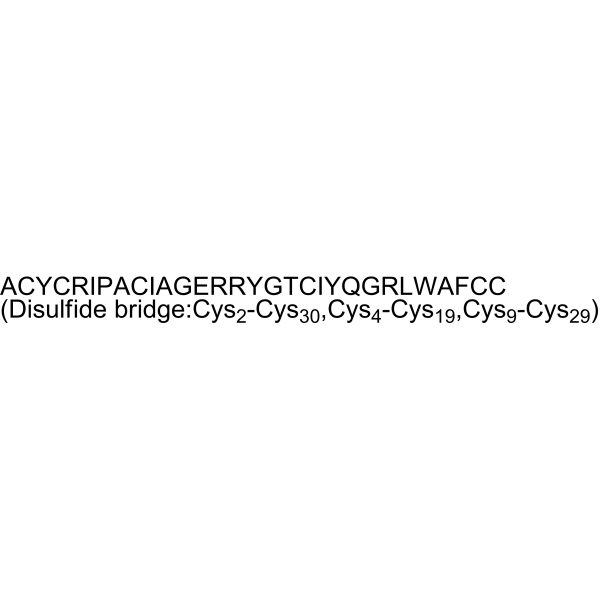
Defensin HNP-1 human is a type of human neutrophil peptide (HNPs). Defensin HNP-1 human possesses immunomodulatory functions and can delay the apoptosis of neutrophils. Defensin HNP-1 human inhibits DNA/RNA/protein synthesis and interferes with metabolic pathways, thus exhibiting broad antibacterial activity. Defensin HNP-1 human has direct inactivation effects on HIV, HSV-1, HSV-2, CMV, influenza virus, etc. Defensin HNP-1 human has antileishmanial activity. Defensin HNP-1 human is involved in endothelial cell dysfunction during the early development of atherosclerosis .
loading...
    loading...
Cat. No.: HY-W747060
CAS No.: 2724427-09-0
Synonyms: Benzyl Paraben-13C6
Benzyl 4-hydroxybenzoate- 13C6 (Benzyl Paraben- 13C6) is the 13C-labeled Benzyl 4-hydroxybenzoate (HY-W013482). Benzyl 4-hydroxybenzoate is a prominent material. Benzyl 4-hydroxybenzoate can be used as an excipient, such as bacteriostatic agent, preservative. Pharmaceutical excipients, or pharmaceutical auxiliaries, refer to other chemical substances used in the pharmaceutical process other than pharmaceutical ingredients. Pharmaceutical excipients generally refer to inactive ingredients in pharmaceutical preparations, which can improve the stability, solubility and processability of pharmaceutical preparations. Pharmaceutical excipients also affect the absorption, distribution, metabolism, and elimination (ADME) processes of co-administered drugs .
loading...
    loading...
Cat. No.: HY-W929472
CAS No.: 87984-82-5
13 (S)-HOTrE is an oxylipin metabolite of α-Linolenic acid (HY-N0728). 13 (S)-HOTrE mediates the inactivation of the NLRP3 inflammasome through the PPAR-γ pathway to exert anti-inflammatory effects. 13 (S)-HOTrE inhibits NF-κB nuclear translocation, ROS production, autophagy and IL-1β levels, induces apoptosis, and increases IL-10 levels. 13 (S)-HOTrE alleviates LPS-induced inflammatory responses in macrophages, prolongs the survival time of septic mice, and regulates the immunometabolic phenotype in parenteral nutrition mouse models. 13 (S)-HOTrE can be used in the research of immune and inflammation-related diseases .
loading...
    loading...
Cat. No.: HY-10968R
CAS No.: 1094042-01-9
Target:  

LPL Receptor

Research Areas:  

Neurological Disease

CYM5442 (Standard) is the analytical standard of CYM5442. This product is intended for research and analytical applications. CYM5442 is a potent, highly-selective and orally active sphingosine 1-phosphate (S1P1) receptor agonist with an EC50 of 1.35 nM. CYM5442 is inactive against S1P2, S1P3, S1P4, and S1P5. CYM5442 activates S1P1-dependent p42/p44-MAPK phosphorylation. CYM5442 exerts retinal neuroprotection. CYM5442 can easily penetrate the central nervous system (CNS) .
loading...
    loading...
Cat. No.: HY-111175
CAS No.: 905978-63-4
IG-105 is an orally active and potent tubulin inhibitor that competitively inhibits [ 3H] colchicine binding to tubulin with an IC50 of 0.6 μM and inhibits tubulin polymerization with an IC50 of 3 μM. IG-105 inhibits microtubule polymerization by binding to the colchicine pocket of tubulin, induces G2-M phase arrest, and subsequently activates the caspase cascade through Bcl-2 inactivation and p53 upregulation, inducing apoptosis. IG-105 effectively overcomes multidrug resistance as a non-Pgp substrate. IG-105 can be used for research on leukemia, breast cancer, liver cancer, prostate cancer, lung cancer, melanoma, pancreatic cancer, and colon cancer .
loading...
    loading...
Cat. No.: HY-115596
CAS No.: 2413939-96-3
Target:  

Calcium Channel

Research Areas:  

Neurological Disease

BTT-369 is a CaVα1·CaVβ3 protein-protein complex antagonist with a Ki of 2.0 μM. BTT-369 inhibits CaV2.2 currents, with an apparent IC50 value of 31 μM. BTT-369 disrupts the interaction between CaVα1 and CaVβ3 subunits. BTT-369 reduces the current density of CaV2.2, and shifts the voltage dependence of steady-state inactivation and activation of CaV2.2 to more positive potentials. BTT-369 alleviates mechanical hyperalgesia in a rat model of tibial nerve injury. BTT-369 can be used for the study of neuropathic pain .
loading...
    loading...
Cat. No.: HY-131763R
CAS No.: 55443-13-5
Synonyms: 2'-O-Monobutyryl cyclic AMP sodium (Standard)
Research Areas:  

Cancer

2'-O-MB-cAMP sodium (Standard) (2'-O-Monobutyryl cyclic AMP sodium (Standard)) is the analytical standard of 2'-O-MB-cAMP sodium (HY-131763). This product is intended for research and analytical applications. 2'-O-MB-cAMP (2'-O-Monobutyryl cyclic AMP) sodium is an inactive analog of Cyclic AMP. 2'-O-MB-cAMP sodium serves as a reference standard in FAB/MIKE mass spectrometry for the characterization of butyryl derivatives of cyclic nucleotides. 2'-O-MB-cAMP sodium does not induce differentiation or upregulate Nm23-R1 in glioma cells. 2'-O-MB-cAMP sodium can be used as a negative control cAMP analog for glioma-related research .
loading...
    loading...
Cat. No.: HY-139124
CAS No.: 35864-81-4
Synonyms: 15(R)-Carboprost; 15(R)-15-methyl PGF2α
Research Areas:  

Metabolic Disease

15(R)-15-Methyl Prostaglandin F2α (15(R)-Carboprost; 15(R)-15-methyl PGF2α) is a metabolically stable analog of PGF2α. 15(R)-15-Methyl Prostaglandin F2α is an inactive, prodrug PGF agonist designed for activation by gastric acid after oral administration. Acid-catalyzed epimerization of 15(R)-15-Methyl Prostaglandin F2α converts it into the active 15(S)-isomer. The 15(S)-isomer induces luteolysis when injected in rhesus monkeys at a dose of about 12 mg/animal, while the 15(R)-isomer does not.
loading...
    loading...
Cat. No.: HY-141581S
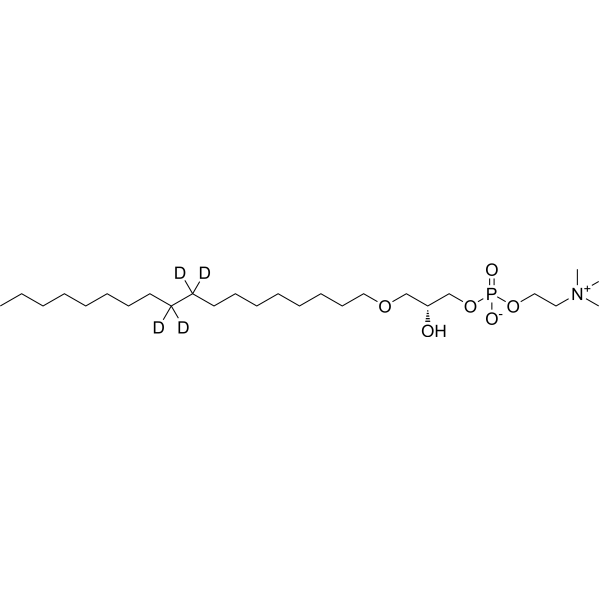
Lyso-PAF C-18-d4 is the deuterated-labeled Lyso-PAF C-18 (HY-141581). Lyso-PAF C-18 is a single-chain ether phospholipid with membrane regulatory activity, and Lyso-PAF is the deacetylated inactive precursor of PAF. Lyso-PAF C-18 regulates the activity of plasma membrane Ca 2+-ATPase, and its mechanism of action may involve altering the lipid microenvironment of this enzyme. Lyso-PAF C-18 activates the calcium ATPase in rat synaptosomal membranes and inhibits the calcium ATPase in rat leukocyte membranes. Lyso-PAF C-18 can be used in cell membrane-related research .
loading...
    loading...
Cat. No.: HY-183723
Research Areas:  

Metabolic Disease

GAA-4OH is a potent and irreversible dihydroceramide desaturase-1 (DES1) inhibitor with an IC50 of 0.6 μM and a Ki of 139.5 nM. GAA-4OH undergoes oxidation to form a reactive iminoquinone that covalently blocks DES1’s catalytic cavity, causing permanent enzyme inactivation. GAA-4OH modulates sphingolipid balance by reducing ceramide-to-dihydroceramide ratios in liver tissue. GAA-4OH improves liver steatosis, inflammation, fibrosis, and reduces pro-inflammatory and pro-fibrogenic gene expression. GAA-4OH can be used for the research of metabolic dysfunction-associated steatotic liver disease (MASLD) .
loading...
    loading...
Cat. No.: HY-184502
CAS No.: 3034295-80-9
Target:  

STING

DDO-88109 is a STING inhibitor with a Kd value of 317 nM for hSTING and 0.625 μM for mSTING. DDO-88109 competitively occupies the CDN-binding pocket of STING, thereby maintaining STING in an inactive state. It inhibits cGAS-STING signaling—including STING translocation from the endoplasmic reticulum to the Golgi apparatus, STING oligomerization, and the phosphorylation of IRF3, p65, TBK1, and STING—and attenuates the production of inflammatory cytokines and tissue inflammation in mouse models of TREX1-deficiency-driven autoinflammation and cisplatin (HY-17394)-induced acute kidney injury. DDO-88109 is suitable for research on inflammatory diseases, autoimmune disorders, and acute kidney injury driven by the cGAS-STING pathway .
loading...
    loading...
Cat. No.: HY-B0710R
CAS No.: 107-43-7
Synonyms: Trimethylglycine (Standard); carboxy-N,N,N-trimethylmethanaminium (Standard)
Betaine (Standard) is the analytical standard of Betaine. This product is intended for research and analytical applications. Betaine (Trimethylglycine) is a natural compound found in many foods and also an active methyl-donor which can maintain normal DNA methylation patterns [1,2]. Betaine is found ubiquitously in plants, animals, microorganisms, and rich dietary sources including seafood, spinach, and wheat bran. Betaine also acts as an osmolyte, to maintain the avian’s cellular water and ion balance to improve the avian’s capacity against heat stress via preventing dehydration and osmotic inactivation. It helps in maintaining the protective osmolytic activity, especially in heat-stressed birds. Betaine may promote various intestinal microbes against osmotic variations and thus improve microbial fermentation activity .
loading...
    loading...
Cat. No.: HY-B1128AR
CAS No.: 30034-03-8
Synonyms: Cephamandole sodium (Standard)
Research Areas:  

Infection

Cefamandole (sodium) (Standard) is the analytical standard of Cefamandole (sodium). This product is intended for research and analytical applications. Cefamandole (Cephamandole) sodium is a semi-synthetic second-generation cephalosporin antibiotic with broad-spectrum antimicrobial activity. Cefamandole sodium is resistant to hydrolysis by β-lactamases produced by some Gram-negative bacteria. Cefamandole sodium kills Gram-positive cocci and various Gram-negative bacilli mainly by inhibiting cell wall synthesis, but it is inactive against Pseudomonas, Proteus vulgaris and Providencia stuartii, and its efficacy is affected by inoculum size. The plasma elimination half-life of Cefamandole sodium in rats is only 0.4 h, it is mainly excreted in urine in biologically active form, and it hardly penetrates the non-inflamed blood-brain barrier. Cefamandole sodium is widely used in studies related to bacterial infections .
loading...
    loading...

