105 Results for "

structured RNA

" in MedChemExpress (MCE) Product Catalog:
Products (105)

105 Results for "structured RNA" in MCE Product Catalog:

Cat. No.: HY-167011
CAS No.: 3055572-07-8
Target:  

Liposome

Research Areas:  

Others

Al-28 is an ionizable lipid. The ability of ionizable lipids to form unstable non-bilayer structures at acidic pH is key for endosomal escape and cytosolic delivery of RNA. Al-28 can be used in the preparation of liposomes .
loading...
    loading...
Cat. No.: HY-113061S
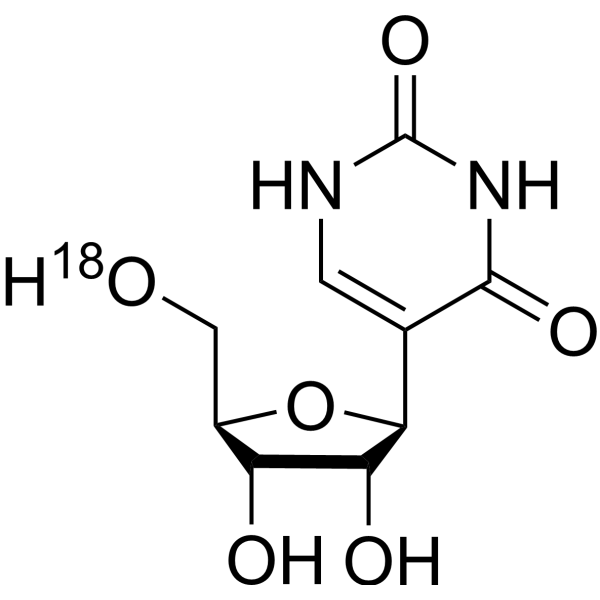
Pseudouridine- 18O is the 18O labeled Pseudouridine (HY-113061). Pseudouridine is an isomer of the nucleoside uridine, and the most abundant modified nucleoside in non-coding RNAs. Pseudouridine in rRNA and tRNA can fine-tune and stabilize the regional structure and help maintain their functions in mRNA decoding, ribosome assembly, processing and translation.
loading...
    loading...
Cat. No.: HY-111647S1
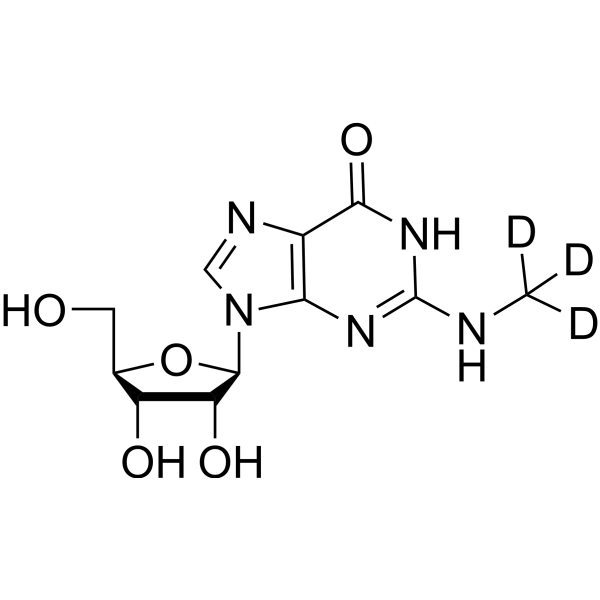
N2-Methylguanosine-d3 is deuterium labeled N2-Methylguanosine (HY-111647). N2-Methylguanosine is a commonly modified nucleoside in rRNA and tRNA, with specific distributions in both E. coli rRNA and eukaryotic tRNA. N2-Methylguanosine can be found in urine. N2-Methylguanosine affects the structure and stability of RNA .
loading...
    loading...
Cat. No.: HY-111647R
CAS No.: 2140-77-4
N2-Methylguanosine (Standard) is the analytical standard of N2-Methylguanosine (HY-111647). This product is intended for research and analytical applications. N2-Methylguanosine is a commonly modified nucleoside in rRNA and tRNA, with specific distributions in both E. coli rRNA and eukaryotic tRNA. N2-Methylguanosine can be found in urine. N2-Methylguanosine affects the structure and stability of RNA .
loading...
    loading...
Cat. No.: HY-164986
Target:  

DNA/RNA Synthesis

Research Areas:  

Others

m3227G(5)ppp(5')m6Am is a specific RNA molecule structure, which is composed of a 3227-methylguanine (m3227G) cap, a triphosphate group and a N6,2'-O-dimethyladenosine. m6Am is a reversible modification located on the first coding nucleotide near the 5' cap of mRNA, that can affect the stability of mRNA .
loading...
    loading...
Cat. No.: HY-W014120R
CAS No.: 92-85-3
Thianthrene (Standard) is the analytical standard of Thianthrene. This product is intended for research and analytical applications. Thianthrene is a potent and orally active inhibitor of Leishmania donovani pteridine reductase 1 (PTR1). Thianthrene is a sulfur-containing tricyclic molecule distributed widely within the macro-structure of hydrocarbon fossil fuels. Thianthrene inhibits the intracellular amastigotes of Leishmania donovani (IC50 = 23 μM). Thianthrene has a moderate anthelmintic activity. Thianthrene appears to inhibit RNA function and subsequent protein production. Thianthrene can stimulate liver regeneration in vivo .
loading...
    loading...
Cat. No.: HY-W728005
CAS No.: 1225177-95-6
Target:  

SARS-CoV

Research Areas:  

Infection

Covidcil-19 (compound C5) avidly binds to the revised attenuator hairpin structure of the SARS-CoV-2 frameshifting element (FSE) with a Kd of 11 nM. Covidcil-19 stabilizes the hairpin’s folded state and impairs frameshifting in cells. Covidcil-19 reduces frameshifting efficiency of the SARS-CoV-2 FSE and does not affect SARS-CoV-2 FSE RNA levels. Covidcil-19 inhibits a process essential for SARS-CoV-2 viral propagation .
loading...
    loading...
Cat. No.: HY-100008R
CAS No.: 81485-25-8
Synonyms: NIK333 (Standard)
Research Areas:  

Infection Cancer

Peretinoin (Standard) is the analytical standard of Peretinoin. This product is intended for research and analytical applications. Peretinoin is an oral acyclic retinoid with a vitamin A-like structure that targets retinoid nuclear receptors such as retinoid X receptor (RXR) and retinoic acid receptor (RAR). Peretinoin reduces the mRNA level of sphingosine kinase 1 (SPHK1) in vitro by downregulating a transcription factor, Sp1[1]. Peretinoin prevents the progression of non-alcoholic steatohepatitis (NASH) and the development of hepatocellular carcinoma (HCC) through activating the autophagy pathway by increased Atg16L1 expression[2]. Peretinoin inhibits HCV RNA amplification and virus release by altering lipid metabolism with a EC50 of 9 μM[3].
loading...
    loading...
Cat. No.: HY-147339
CAS No.: 3047739-39-6
Target:  

DNA/RNA Synthesis

Research Areas:  

Others

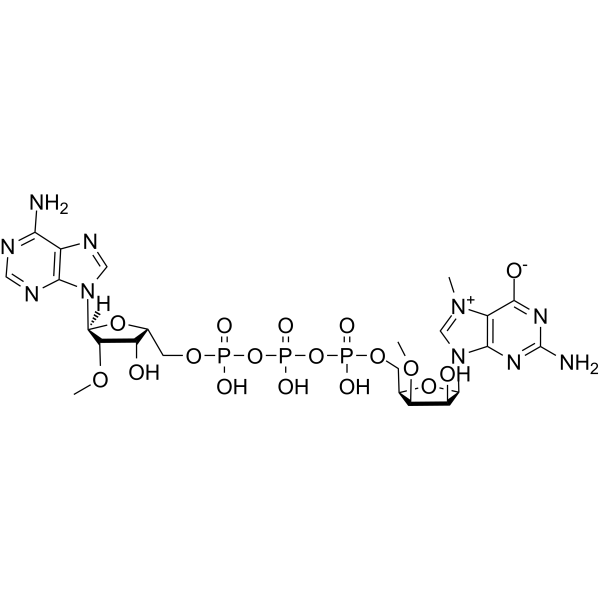
M7G (3'-OMe-5') pppA (2'-OMe) is a modified cap analog. M7G (3'-OMe-5') pppA (2'-OMe) enhances the stability and translation efficiency of mRNA by maintaining the correct orientation of the mRNA cap, promoting cap-dependent translation initiation, and mimicking the Cap-1 structure to reduce immunogenicity. M7G (3'-OMe-5') pppA (2'-OMe) can be used in molecular biology research, vaccine development, and gene therapy applications .
loading...
    loading...
Cat. No.: HY-168066
Target:  

Fungal

Research Areas:  

Infection

Antifungal agent 117 is a bis-pyrazole carboxamide derivative with antifungal activity, exhibiting an EC50 value of 11.58 mg/L against Sclerotinia sclerotiorum. Antifungal agent 117 increases cell membrane permeability, causing an imbalance in osmotic pressure inside and outside the cell, and induces the accumulation of reactive oxygen species (ROS), leading to oxidative damage to the cell membrane, resulting in leakage of cellular contents and eventually cell death. RNA sequencing analysis reveals that Antifungal agent 117 downregulates catalase genes and upregulates neutral ceramidase genes, disrupting cell membrane structure, accelerating sphingolipid metabolism, and promoting cell death. Antifungal agent 117 shows great potential in the fields of plant protection and antifungal infection .
loading...
    loading...
Cat. No.: HY-B0420AR
CAS No.: 3160-91-6
Synonyms: ABOB hydrochloride (Standard)
Moroxydine (ABOB) hydrochloride (Standard) is the analytical standard of Moroxydine (ABOB) hydrochloride (HY-B0420A). Moroxydine (ABOB) hydrochloride is a broad-spectrum agent with multi-antiviral activities against DNA and RNA viruses, including influenza virus, herpes simplex, varicella zoster, measles, mumps disease, hepatitis C virus, etc. Moroxydine hydrochloride exhibits excellent antiviral activity and shows low cytotoxicity to cells infected by dsRNA viruses (grass carp reovirus, GCRV) and large DNA viruses (giant salamander iridovirus, GSIV). Moroxydine hydrochloride blocks the GCRV-induced cytopathic effects and eliminates nucleocapsids in ctenopharyngodon idella kidney (CIK) cells to keep the normal morphological structure. Moroxydine hydrochloride significantly inhibits the apoptosis, the caspase 3 activity, Bax expression and down-regulates Bcl-2 levels.
loading...
    loading...
Cat. No.: HY-W713297
CAS No.: 2469734-82-3
Synonyms: ABOB hydrochloride-d8
Moroxydine hydrochloride-d8 (ABOB hydrochloride-d8) is the deuterium labeled Moroxydine (ABOB) hydrochloride (HY-B0420A). Moroxydine hydrochloride is a broad-spectrum agent with multi-antiviral activities against DNA and RNA viruses, including influenza virus, herpes simplex, varicella zoster, measles, mumps disease, hepatitis C virus, etc. Moroxydine hydrochloride exhibits excellent antiviral activity and shows low cytotoxicity to cells infected by dsRNA viruses (grass carp reovirus, GCRV) and large DNA viruses (giant salamander iridovirus, GSIV). Moroxydine hydrochloride blocks the GCRV-induced cytopathic effects and eliminates nucleocapsids in ctenopharyngodon idella kidney (CIK) cells to keep the normal morphological structure. Moroxydine hydrochloride significantly inhibits the apoptosis, the caspase 3 activity, Bax expression and down-regulates Bcl-2 levels [1][2][3].
loading...
    loading...
Cat. No.: HY-D3415
CAS No.: 3030070-69-7
TOR-G4 is a Fluorescent probe that binds to G-quadruplex (G4) nucleic acid structures. TOR-G4 exhibits a unique fluorescence lifetime when bound to G4 compared to other structures, enabling sensitive discrimination between G4-bound and non-G4-bound states. TOR-G4 mainly colocalizes with RNA in the cytoplasm and nucleolus. TOR-G4 can be used to investigate the roles of RNA G4 in cells. TOR-G4 shows cytotoxicity against osteosarcoma cells .
loading...
    loading...
Cat. No.: HY-L248
858 compounds

The RNA-targeted bioactive compound library is a high-quality collection of small molecules specifically designed and curated to target RNA structures and functions. It is widely applied in cutting-edge drug discovery and life science research. Unlike traditional strategies that focus on protein targets, RNA-targeted compounds can directly modulate various functional RNA molecules by influencing their splicing, translation, stability, or structural conformation, thereby enabling precise intervention in key biological processes. In the field of drug development, these compounds provide a novel approach to addressing previously “undruggable” targets and have demonstrated significant potential in areas such as oncology, antiviral therapies, and neurodegenerative diseases. For example, by targeting disease-associated RNA structural domains or regulating the aberrant expression of non-coding RNAs, these compounds can effectively inhibit disease progression or restore normal cellular function. In mechanistic studies, RNA-targeted compounds serve as valuable chemical biology tools to elucidate the roles of RNA in gene expression regulation, cellular signaling pathways, and disease development.

The MCE RNA-targeted bioactive compound library contains 858 compounds, sourced from databases such as TargetRX Atlas and R-BIND. The library features excellent structural diversity and biological activity, making it suitable for high-throughput screening (HTS), target validation, phenotypic screening, and lead compound discovery. It represents a valuable resource for RNA-related research and innovative drug development.

Cat. No.: HY-185724
Target:  

PROTACs G-quadruplex

Research Areas:  

Others

rG4 mut_AHPC_PEG2 is a structure-disruptive negative control PROTAC. rG4 mut_AHPC_PEG2 demonstrates that the RNA G-quadruplex conformation is an absolute prerequisite for the recruitment and degradation of DHX36 by retaining the E3-recruiting moiety (AHPC-PEG2) while disrupting the secondary structure of the nucleic acid moiety (mutated RNA G-quadruplex), .
loading...
    loading...
Cat. No.: HY-122524AS1
7-Methylguanosine- 13C iodide is the 13C-labeled 7-Methylguanosine iodide (HY-122524A). 7-Methylguanosine iodide is an iodide of 7-Methylguanosine (HY-122524). 7-Methylguanosine is a modified nucleoside widely present in various RNAs and a key metabolite of the 5'-cap structure of eukaryotic mRNA. 7-Methylguanosine plays important roles in stabilizing RNA structures, regulating translation, and other aspects.
loading...
    loading...
Cat. No.: HY-122524AS
7-Methylguanosine- 13C,d3 iodide is the 13C- and deuterium labeled 7-Methylguanosine iodide (HY-122524A). 7-Methylguanosine iodide is an iodide of 7-Methylguanosine (HY-122524). 7-Methylguanosine is a modified nucleoside widely present in various RNAs and a key metabolite of the 5'-cap structure of eukaryotic mRNA. 7-Methylguanosine plays important roles in stabilizing RNA structures, regulating translation, and other aspects.
loading...
    loading...
Cat. No.: HY-183981
Research Areas:  

Others

RNA binder 4 is an RNA-binding agent that can be used for the synthesis of MJ-NR-27 (HY-183980). MJ-NR-27 is a bifunctional ribonuclease-targeting chimera (RIBOTAC) small molecule that targets NRAS mRNA containing a G-quadruplex structure, and it can be used in cancer research .
loading...
    loading...
Cat. No.: HY-181987
Research Areas:  

Infection

PSCdb01560 is a Dengue virus NS5 RNA-dependent RNA polymerase (RdRp) inhibitor. PSCdb01560 binds stably to the conserved allosteric N-pocket of the polymerase, maintains persistent interactions with key residues Arg729 and Arg737, and induces polymerase structure stabilization. PSCdb01560 can be used for the research of dengue virus infection .
loading...
    loading...
Cat. No.: HY-167002
CAS No.: 3117189-62-2
Target:  

Liposome

Research Areas:  

Others

RM 137-15 is an ionizable lipid. The ability of ionizable lipids to form unstable non-bilayer structures at acidic pH is key for endosomal escape and cytosolic delivery of RNA. RM 137-15 can be used in the preparation of liposomes .
loading...
    loading...

