104 Results for "

azide functionalization

" in MedChemExpress (MCE) Product Catalog:
Products (104)

104 Results for "azide functionalization" in MCE Product Catalog:

Cat. No.: HY-174289
CAS No.: 2408481-83-2
Research Areas:  

Others

TMTHSI succinimide NHS ester is a highly efficient cyclic alkyne click reagent. TMTHSI succinimide NHS ester has the primary activity to rapidly undergo strain-promoted cycloaddition reactions with azides. TMTHSI succinimide NHS ester is easily functionalized and can be linked to a variety of small molecules and (peptides, nucleic acids) biologics via a variety of linkers .
loading...
    loading...
Cat. No.: HY-D1862
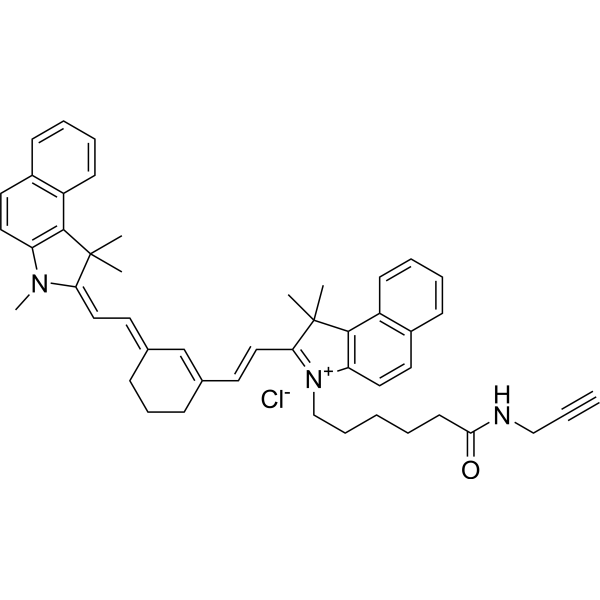
Cy7.5 alkyne chloride is a dye derivative of Cyanine 7.5 (Cy7.5) (HY-D0926) containing a sulfonate ion and an alkyne functional group. Cy7.5 is a near-infrared fluorescent dye commonly used for biolabeling and cell imaging. The alkyne functional group of Cy7.5 alkyne chloride can react with molecules containing the azide functional group to form covalent bonds. Cy7.5 alkyne chloride can bind to biological molecules such as proteins and antibodies to track their location and dynamic changes in biological samples.
loading...
    loading...
Cat. No.: HY-154349
CAS No.: 2095417-55-1
Research Areas:  

Cancer

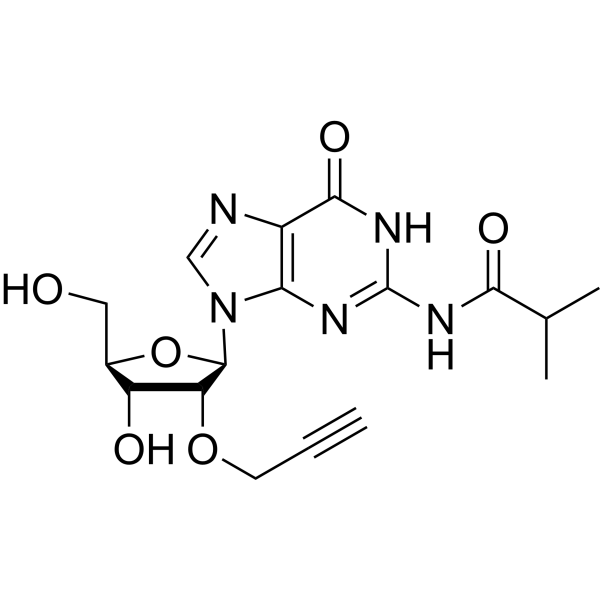
N2-iso-Butyroyl-2’-O-propargylguanosine is a guanosine analog. Some guanosine analogs have immunostimulatory activity. In some animal models, they also induce type I interferons, producing antiviral effects. Studies have shown that the functional activity of guanosine analogs is dependent on the activation of Toll-like receptor 7 (TLR7) . N2-iso-Butyroyl-2’-O-propargylguanosine is a click chemistry reagent, it contains an Alkyne group and can undergo copper-catalyzed azide-alkyne cycloaddition (CuAAc) with molecules containing Azide groups.
loading...
    loading...
Cat. No.: HY-D1859
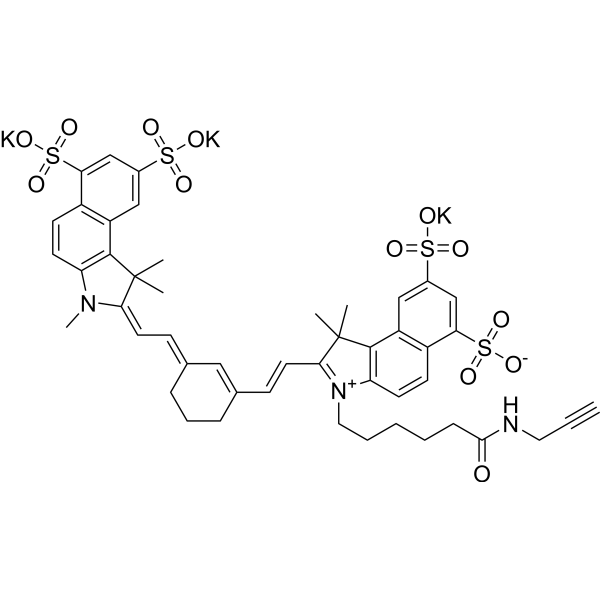
Sulfo-Cy7.5 alkyne is a dye derivative of Cyanine 7.5 (Cy7.5) (HY-D0926) containing a sulfonate ion and an alkyne functional group. The sulfonate ion increases the water solubility of the compound, making it suitable for use in aqueous solutions. Cy7.5 is a near-infrared fluorescent dye commonly used for biolabeling and cell imaging. The alkyne functionality of Sulfo-Cy7.5 alkyne can react with molecules containing the azide functionality to form covalent bonds. Sulfo-Cy7.5 alkyne can bind to biomolecules such as proteins and antibodies to track their location and dynamic changes in biological samples.
loading...
    loading...
Cat. No.: HY-W440835C
Research Areas:  

Inflammation/Immunology

DSPE-PEG1000-DBCO is a phospholipid PEG polymer that combines a hydrophobic phospholipid (DSPE), a hydrophilic polyethylene glycol spacer with a molecular weight of 1000 Da, and a reactive click chemistry terminal group (DBCO). DSPE-PEG-DBCO migrates to lymph nodes via the endogenous albumin transport system, implants bioorthogonal DBCO docking sites, and enables the enrichment of azide-functionalized vesicles in lymph nodes mediated by click chemistry. DSPE-PEG-DBCO can be used in studies related to atherosclerosis .
loading...
    loading...
Cat. No.: HY-D1313
CAS No.: 1807521-02-3
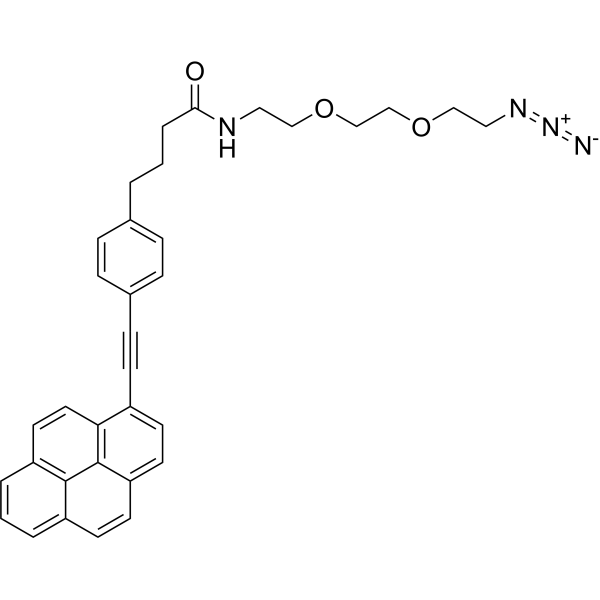
PEP azide is a multifunctional dye. Dyes are important tools in biological experiments. They can help researchers observe and analyze cell structures, track biomolecules, evaluate cell functions, distinguish cell types, detect biomolecules, study tissue pathology and monitor microorganisms. Their applications range from basic scientific research to clinical A wide range of diagnostics. Dyes are also widely used in traditional fields such as textile dyeing, as well as in emerging fields such as functional textile processing, food pigments and dye-sensitized solar cells.
loading...
    loading...
Cat. No.: HY-D1355
CAS No.: 1188332-22-0
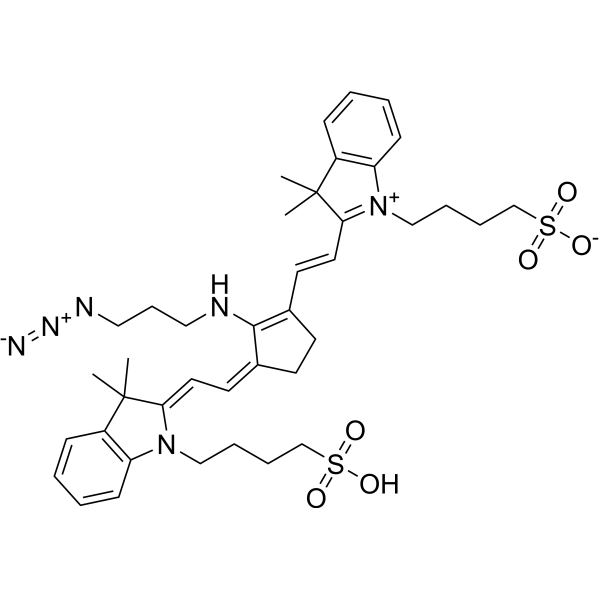
Azide cyanine dye 728 is a multifunctional dye. Dyes are important tools in biological experiments. They can help researchers observe and analyze cell structures, track biomolecules, evaluate cell functions, distinguish cell types, detect biomolecules, study tissue pathology and monitor microorganisms. Their applications range from basic scientific research to clinical A wide range of diagnostics. Dyes are also widely used in traditional fields such as textile dyeing, as well as in emerging fields such as functional textile processing, food pigments and dye-sensitized solar cells.
loading...
    loading...
Cat. No.: HY-D1356
CAS No.: 1246853-82-6
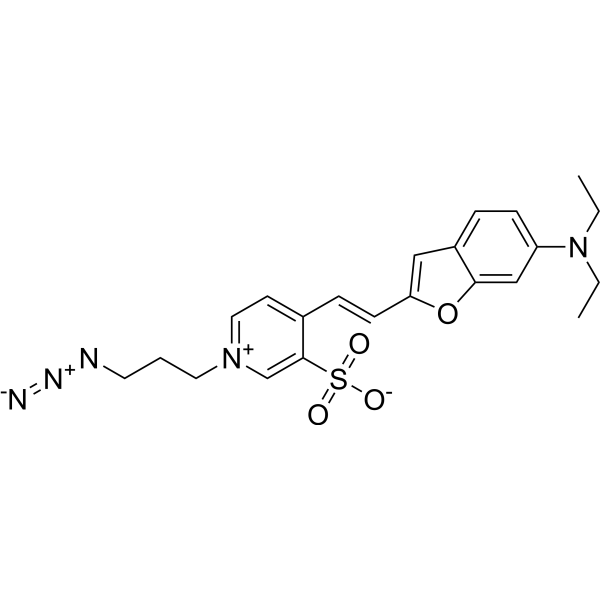
Azide MegaStokes dye 735 is a multifunctional dye. Dyes are important tools in biological experiments. They can help researchers observe and analyze cell structures, track biomolecules, evaluate cell functions, distinguish cell types, detect biomolecules, study tissue pathology and monitor microorganisms. Their applications range from basic scientific research to clinical A wide range of diagnostics. Dyes are also widely used in traditional fields such as textile dyeing, as well as in emerging fields such as functional textile processing, food pigments and dye-sensitized solar cells.
loading...
    loading...
Cat. No.: HY-W440835A
Research Areas:  

Inflammation/Immunology

DSPE-PEG400-DBCO is a phospholipid PEG polymer that combines a hydrophobic phospholipid (DSPE), a hydrophilic polyethylene glycol spacer with a molecular weight of 400 Da, and a reactive click chemistry terminal group (DBCO). DSPE-PEG-DBCO migrates to lymph nodes via the endogenous albumin transport system, implants bioorthogonal DBCO docking sites, and enables the enrichment of azide-functionalized vesicles in lymph nodes mediated by click chemistry. DSPE-PEG-DBCO can be used in studies related to atherosclerosis .
loading...
    loading...
Cat. No.: HY-W440835B
Research Areas:  

Inflammation/Immunology

DSPE-PEG600-DBCO is a phospholipid PEG polymer that combines a hydrophobic phospholipid (DSPE), a hydrophilic polyethylene glycol spacer with a molecular weight of 600 Da, and a reactive click chemistry terminal group (DBCO). DSPE-PEG-DBCO migrates to lymph nodes via the endogenous albumin transport system, implants bioorthogonal DBCO docking sites, and enables the enrichment of azide-functionalized vesicles in lymph nodes mediated by click chemistry. DSPE-PEG-DBCO can be used in studies related to atherosclerosis .
loading...
    loading...
Cat. No.: HY-W440835H
Research Areas:  

Inflammation/Immunology

DSPE-PEG10000-DBCO is a phospholipid PEG polymer that combines a hydrophobic phospholipid (DSPE), a hydrophilic polyethylene glycol spacer with a molecular weight of 10000 Da, and a reactive click chemistry terminal group (DBCO). DSPE-PEG-DBCO migrates to lymph nodes via the endogenous albumin transport system, implants bioorthogonal DBCO docking sites, and enables the enrichment of azide-functionalized vesicles in lymph nodes mediated by click chemistry. DSPE-PEG-DBCO can be used in studies related to atherosclerosis .
loading...
    loading...
Cat. No.: HY-W800700
CAS No.: 1006592-63-7
Target:  

Fluorescent Dye

Research Areas:  

Others

BP Fluor 488 Azide is a multifunctional dye. Dyes are important tools in biological experiments, helping researchers observe and analyze cell structures, track biomolecules, evaluate cell functions, distinguish cell types, detect biomolecules, study tissue pathology, and monitor microorganisms. Their applications cover a wide range of fields from basic scientific research to clinical diagnosis. Dyes are also widely used in traditional fields such as textile dyeing, as well as emerging fields such as functional textile processing, food pigments, and dye-sensitized solar cells .
loading...
    loading...
Cat. No.: HY-DY1109
CAS No.: 1010386-62-5
Target:  

Fluorescent Dye

Research Areas:  

Others

CY3-YNE (solution) is a fluorescent alkyne dye for click chemistry-based fluorescent labeling of azide functional groups .
Solvent and concentration: DMSO: 10 mM
loading...
    loading...
Cat. No.: HY-D2955
CAS No.: 2432950-51-9
Synonyms: CLIP-azide
BC-AZIDE (CLIP-AZIDE) is a nitrogen-functionalized protein labeling probe based on the CLIP-tag system. BC-AZIDE can be used for bioorthogonal click chemistry and intracellular orthogonal labeling .
loading...
    loading...
Cat. No.: HY-N15824
CAS No.: 3077081-53-6
Target:  

Fluorescent Dye

Research Areas:  

Others

Cyanine 3.5 azide is a cyanine dye functionalized with an azide. Cyanine 3.5 azide is a click chemistry reagent, it contains an Azide group and can undergo copper-catalyzed azide-alkyne cycloaddition reaction (CuAAc) with molecules containing Alkyne groups. It can also undergo strain-promoted alkyne-azide cycloaddition (SPAAC) reactions with molecules containing DBCO or BCN groups (Ex/Em = 591/604 nm).
loading...
    loading...
Cat. No.: HY-D3574
Target:  

Fluorescent Dye

Research Areas:  

Others

AF488 Picolyl Azide is a Fluorescent dye designed for bioorthogonal visualization applications. AF488 Picolyl Azide functions via copper (I)-catalyzed azide-alkyne cycloaddition click chemistry, where its azide group undergoes covalent reaction with alkyne-functionalized molecules to form fluorescent triazole conjugates. AF488 Picolyl Azide enables the visualization of metabolically labeled isoprenoids in bacteria, which localize to the cell membrane and division septum .
loading...
    loading...
Cat. No.: HY-137073
CAS No.: 1998119-13-3
Cy7 alkyne chloride is a dye derivative of Cyanine 7 (Cy7) containing an alkyne functional group (Ex/Em = 740/770 nm). The alkyne functionality of Cy7 alkyne chloride can react with molecules containing the azide functionality to form covalent bonds .
loading...
    loading...
Cat. No.: HY-D3581
Target:  

Fluorescent Dye

Research Areas:  

Others

AF594 Picolyl Azide is a composite fluorescent probe formed by covalent linkage of the Alexa Fluor 594 fluorophore and the Picolyl Azide functional group via chemical bonds. AF594 Picolyl Azide contains a copper chelation domain, and through the copper-catalyzed azide-alkyne cycloaddition click chemistry reaction, it can covalently label alkyne-bearing target molecules and generate fluorescent detection signals. AF594 Picolyl Azide can be used for the detection of alkyne-modified sialylated glycoconjugates, and can also label nascent bacterial polypeptides to determine bacterial protein synthesis rates .
loading...
    loading...
Cat. No.: HY-W598195
CAS No.: 122161-09-5
Research Areas:  

Others

11-Azido-1-undecanol is a compound with an azide head and a undecanol tail. The azide (N3) group can react with alkyne, BCN, DBCO via Click Chemistry to yield a stable triazole linkage. The hydroxyl group enables further derivatization or replacement with other reactive functional groups.
loading...
    loading...
Cat. No.: HY-180122
CAS No.: 146877-36-3
Target:  

Drug Derivative

Research Areas:  

Inflammation/Immunology

(Rac)-Azide-deoxy-ascomycin-O-ethylene, a nitrogen-containing compound, is a derivative of a macrolide-type immunosuppressant.
loading...
    loading...

