1112 Results for "

basic

" in MedChemExpress (MCE) Product Catalog:
Products (1112)

1112 Results for "basic" in MCE Product Catalog:

Cat. No.: HY-112411
CAS No.: 216163-53-0
Purity:  98.35%
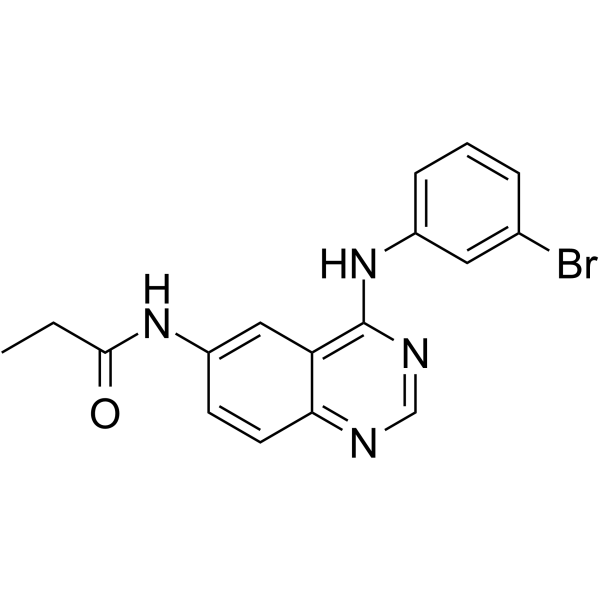
PD 174265 is a highly selective, reversible EGFR/ErbB2 tyrosine kinase inhibitor (IC50=0.45 nM) and cell differentiation inducer. By blocking receptor autophosphorylation and the downstream ERK signaling pathway (with an IC50 of 0.45 μM for full-length ERK), PD 174265 effectively inhibits tumor growth and exhibits antitumor activity without obvious toxicity in in vivo models. PD 174265 drives oligodendrocyte precursor cells to switch from a proliferative state to a differentiated state, significantly upregulates the expression of myelin proteins such as CNP, PLP and MBP, and induces neurite branching. PD 174265 shows no inhibitory effect on other kinases including insulin, PDGF and basic FGF receptors, and serves as a crucial tool molecule for investigating the treatment of human epidermoid carcinoma and the mechanism of myelin repair in multiple sclerosis .
loading...
    loading...
Cat. No.: HY-D1291
CAS No.: 2255329-06-5
Photoacoustic contrast agent-1 (Compound F-1) is a photo/sono-sensitizer that can produce a significant cell killing effect under illuminated conditions. Photoacoustic contrast agent-1 can be used in the research of tumor diagnosis and treatment. Photoacoustic contrast agent-1 is a multifunctional dye. Dyes are important tools in biological experiments. They can help researchers observe and analyze cell structures, track biomolecules, evaluate cell functions, distinguish cell types, detect biomolecules, study tissue pathology and monitor microorganisms. Their applications range from basic scientific research to clinical A wide range of diagnostics. Dyes are also widely used in traditional fields such as textile dyeing, as well as in emerging fields such as functional textile processing, food pigments and dye-sensitized solar cells .
loading...
    loading...
Cat. No.: HY-D1291A
CAS No.: 2255329-07-6
Photoacoustic contrast agent-1 perchlorate (Compound F-1) is a photo/sono-sensitizer that can produce a significant cell killing effect under illuminated conditions. Photoacoustic contrast agent-1 perchlorate can be used in the research of tumor diagnosis and treatment. Photoacoustic contrast agent-1 perchlorate is a multifunctional dye. Dyes are important tools in biological experiments. They can help researchers observe and analyze cell structures, track biomolecules, evaluate cell functions, distinguish cell types, detect biomolecules, study tissue pathology and monitor microorganisms. Their applications range from basic scientific research to clinical A wide range of diagnostics. Dyes are also widely used in traditional fields such as textile dyeing, as well as in emerging fields such as functional textile processing, food pigments and dye-sensitized solar cells .
loading...
    loading...
Cat. No.: HY-N15826
CAS No.: 3077081-47-8
Research Areas:  

Cancer

RBM1-151, a 1-deoxy derivative and vinilog of RBM14-C12 (HY-150163), as a fluorogenic substrate of Amidases (HY-P2736) (Ex/Em). RBM1-151 is hydrolyzed by acid ceramidase (AC) (( appKm = 7.0 μM; appVmax = 99.3 nM/min), N-acylethanolamine-hydrolyzing acid amidase ( appKm = 0.73 μM; appVmax = 0.24 nM/min), and fatty Acid amide hydrolase (FAAH) ( appKm = 3.6 μM; appVmax = 7.6 nM/min) but not by other ceramidases. RBM1-151 is applicable for basic biological studies of lipid amidase function, as well as potential diagnostic/prognostic evaluations of diseases involving dysregulated AC, NAAA, or FAAH (Farber disease, cancer) .
loading...
    loading...
Cat. No.: HY-P70797
Purity:  ≥ 95%, as determined by reducing SDS-PAGE.
Synonyms: SEMA3A; Sema III; Prev. SEMAD; Semaphorin D; Hsema-I; Semaphorin L; Coll-1; Collapsin 1; SEMA1; Hsema-III; SemD; SEMAIII; Sema Domain, Immunoglobulin Domain (Ig), Short basic Domain, Secreted, (Semaphorin) 3A; COLL1; Semaphorin III; SEMAL; Semaphorin-3A;
Species:  
Human
Source:  
HEK293
loading...
    loading...
Cat. No.: HY-P77660
Purity:  ≥ 95%, as determined by Bis-Tris PAGE.
Synonyms: FGFR1; H3; Prev. FLT2; H5; Prev. KAL2; Heparin-Binding Growth Factor Receptor; BFGFR; Fibroblast Growth Factor Receptor; CEK; Receptor Protein-Tyrosine Kinase; FLG; FMS-Like Tyrosine Kinase 2; basic Fibroblast Growth Factor Receptor 1; Hydroxyaryl-Protein
Species:  
Human
Source:  
HEK293
loading...
    loading...
Cat. No.: HY-P78350
Purity:  ≥ 95%, as determined by Bis-Tris PAGE.
Synonyms: SEMA3A; Sema III; Prev. SEMAD; Semaphorin D; Hsema-I; Semaphorin L; Coll-1; Collapsin 1; SEMA1; Hsema-III; SemD; SEMAIII; Sema Domain, Immunoglobulin Domain (Ig), Short basic Domain, Secreted, (Semaphorin) 3A; COLL1; Semaphorin III; SEMAL; Semaphorin-3A;
Species:  
Mouse
Source:  
HEK293
loading...
    loading...
Cat. No.: HY-P700297
Purity:  ≥ 95%, as determined by reducing SDS-PAGE.
Synonyms: SEMA3A; Sema III; Prev. SEMAD; Semaphorin D; Hsema-I; Semaphorin L; Coll-1; Collapsin 1; SEMA1; Hsema-III; SemD; SEMAIII; Sema Domain, Immunoglobulin Domain (Ig), Short basic Domain, Secreted, (Semaphorin) 3A; COLL1; Semaphorin III; SEMAL; Semaphorin-3A;
Species:  
Human
Source:  
HEK293
loading...
    loading...
Cat. No.: HY-P700720
Purity:  ≥ 95%, as determined by reducing SDS-PAGE.
Synonyms: FGFR1; H3; Prev. FLT2; H5; Prev. KAL2; Heparin-Binding Growth Factor Receptor; BFGFR; Fibroblast Growth Factor Receptor; CEK; Receptor Protein-Tyrosine Kinase; FLG; FMS-Like Tyrosine Kinase 2; basic Fibroblast Growth Factor Receptor 1; Hydroxyaryl-Protein
Species:  
Human
Source:  
HEK293
loading...
    loading...
Cat. No.: HY-P85127
Synonyms: TCF3; BHLHB21; E2A; ITF1; Transcription factor E2-alpha; Class B basic helix-loop-helix protein 21; bHLHb21; Immunoglobulin enhancer-binding factor E12/E47; Immunoglobulin transcription factor 1; Kappa-E2-binding factor; Transcription facto

Host:  

Mouse

Application:  

WB, FC, ELISA

Reactivity:  

Human

loading...
    loading...
Cat. No.: HY-P85560
Synonyms: CKMT 2; basic-type mitochondrial creatine kinase; CKMT 2; CKMT2; CPK; Creatine kinase mitochondrial 2; Creatine kinase mitochondrial 2; sarcomeric; Creatine kinase S-type; creatine kinase S-type, mitochondrial; KCRS_HUMAN; Mib CK; Mib-CK; mitochondrial; OTTHUMP00000147542; S-MtCK; Sarcomeric mitochondrial creatine kinase; SMTCK.

Host:  

Mouse

Application:  

WB

Reactivity:  

Rat

loading...
    loading...
Cat. No.: HY-P704874
Purity:  ≥ 95%, as determined by reducing SDS-PAGE.
Synonyms: SEMA3A; Sema III; Prev. SEMAD; Semaphorin D; Hsema-I; Semaphorin L; Coll-1; Collapsin 1; SEMA1; Hsema-III; SemD; SEMAIII; Sema Domain, Immunoglobulin Domain (Ig), Short basic Domain, Secreted, (Semaphorin) 3A; COLL1; Semaphorin III; SEMAL; Semaphorin-3A;
Species:  
Human
Source:  
HEK293
loading...
    loading...
Cat. No.: HY-P705822
Purity:  ≥ 90%, as determined by reducing SDS-PAGE.
Synonyms: FGFR1; H3; Prev. FLT2; H5; Prev. KAL2; Heparin-Binding Growth Factor Receptor; BFGFR; Fibroblast Growth Factor Receptor; CEK; Receptor Protein-Tyrosine Kinase; FLG; FMS-Like Tyrosine Kinase 2; basic Fibroblast Growth Factor Receptor 1; Hydroxyaryl-Protein
Species:  
Human
Source:  
sf9 insect cells
loading...
    loading...
Cat. No.: HY-P705824
Purity:  ≥ 90%, as determined by reducing SDS-PAGE.
Synonyms: FGFR1; H3; Prev. FLT2; H5; Prev. KAL2; Heparin-Binding Growth Factor Receptor; BFGFR; Fibroblast Growth Factor Receptor; CEK; Receptor Protein-Tyrosine Kinase; FLG; FMS-Like Tyrosine Kinase 2; basic Fibroblast Growth Factor Receptor 1; Hydroxyaryl-Protein
Species:  
Human
Source:  
sf9 insect cells
loading...
    loading...
Cat. No.: HY-P78350Y
Purity:  ≥ 95%, as determined by Bis-Tris PAGE.
Synonyms: SEMA3A; Sema III; Prev. SEMAD; Semaphorin D; Hsema-I; Semaphorin L; Coll-1; Collapsin 1; SEMA1; Hsema-III; SemD; SEMAIII; Sema Domain, Immunoglobulin Domain (Ig), Short basic Domain, Secreted, (Semaphorin) 3A; COLL1; Semaphorin III; SEMAL; Semaphorin-3A;
Species:  
Mouse
Source:  
HEK293
loading...
    loading...
Cat. No.: HY-W040129R
CAS No.: 7059-24-7
Chromomycin A3 (Standard) is the analytical standard of Chromomycin A3 (HY-W040129). This product is intended for research and analytical applications. Chromomycin A3 is an inhibitor that selectively binds to GC-rich DNA sequences. Chromomycin A3 targets the DNA minor groove after forming a dimer with Mg 2+. Chromomycin A3 inhibits DNA replication and transcription, blocks the binding of Sp1 transcription factor to target gene promoters, downregulates the expression of anti-apoptotic proteins such as FLIP, Mcl-1, and XIAP, and induces S-phase cycle arrest and caspase-dependent apoptosis in tumor cells. Chromomycin A3 can antagonize oxidative stress induced by glutathione depletion and neuronal apoptosis induced by Camptothecin (HY-15660). Chromomycin A3 can be used in basic research on malignant tumors such as cholangiocarcinoma, and is a potential chemosensitizer and GC-rich region probe .
loading...
    loading...
Cat. No.: HY-L060
2,313 compounds

The cytoskeleton is responsible for contraction, cell motility, movement of organelles and vesicles through the cytoplasm, cytokinesis, intracellular signal transduction, and many other functions that are essential for cellular homeostasis and survival. It accomplishes these tasks through three basic structures: F-actin, microtubules, and intermediate filaments (IFs). The cytoskeleton is a dynamic structure where the three major filaments and tubules are under the influence of proteins that regulate their length, state of polymerization, and level of cross-linking. Since cytoskeleton is involved in virtually all cellular processes, cytoskeletal protein aberrations are the underlying reason for many pathological phenotypes, including several cardiovascular disease syndromes, neurodegeneration, cancer, liver cirrhosis, pulmonary fibrosis, and blistering skin diseases.

MCE designs a unique collection of 2,313 cytoskeleton-related compounds mainly focusing on the key targets in the cytoskeleton signal pathway and can be used in the research of cytoskeleton signal pathway and related diseases.

Cat. No.: HY-L207
661 compounds

Metabolomics is the large-scale study of cellular metabolic complement, with proven utility in both basic and applied studies of plants, microorganisms, and mammals. As an important tool for the study of complex biological systems, metabolomics monitors the complex molecular networks that exist in the natural flow of information from genes to mRNA and proteins to organisms. The metabolome is composed of biomolecules that most closely resemble the phenotype of an organism, and changes in its composition can easily lead to the production of diseases. Therefore, metabolomics has received much attention in drug target discovery, drug response and translational research of disease mechanisms. Mass spectrometry-based metabolomics methods can simultaneously detect and quantify thousands of metabolite signatures, thereby characterizing the pathophysiological mechanisms of various biomedical symptoms.

MCE can provide 661 mass spectrometry human endogenous metabolites that can be used for metabolite identification and quantification, functional cell detection and phenotypic screening of mass spectrometry.

Cat. No.: HY-P705472
Purity:  ≥ 95%, as determined by Bis-Tris PAGE.
Synonyms: Fibroblast growth factor receptor 1; EC:2.7.10.1; FGFR-1; basic fibroblast growth factor receptor 1; BFGFR; bFGF-R-1; Fms-like tyrosine kinase 2; FLT-2; N-sam; CD331; FGFR1; BFGFR, CEK, FGFBR; FLG; FLT2; HBGFR
Species:  
Human
Source:  
HEK293
loading...
    loading...
Cat. No.: HY-L021
5,121 compounds

Natural products are small molecules produced naturally by any organism including primary and secondary metabolites. Natural sources may lead to basic research on potential bioactive components for commercial development as lead compounds in drug discovery.

Nature has been a source of medicinal agents for thousands of years, and an impressive number of modern drugs have been isolated from natural sources, many based on their use in traditional medicine. With the development of new molecular targets, there is an increasing demand for novel molecular diversity for screening. Natural products will play a crucial role in meeting this demand through the continued investigation of world’s bio-diversity, much of which remains unexplored.

MCE provides a unique collection of 5,121 natural compounds that contain Saccharides and Glycosides, Phenylpropanoids, Quinones, Flavonoids, Terpenoids and Glycosides, Steroids, Alkaloid, Phenols, Acids and Aldehydes. Natural Product Library is a useful tool for drug discovery that can be used for high throughput screening (HTS) and high content screening (HCS).

